
Jon Spira | 101 mins | streaming (HD) | 1.78:1 | UK / English | 12

In a studio near London in the summer of 1976, filming took place for a movie that the crew regarded as a children’s flick and several cast members assumed would be a flop. They couldn’t’ve been more wrong, because that film was Star Wars, probably the most influential movie of the last 40 years. You know the names of many of the people who were there: George Lucas, Harrison Ford, Mark Hamill, Carrie Fisher, Alec Guinness… But there was also an army of supporting actors and extras. This is their story.
Here’s where the point of Elstree 1976 runs aground for some viewers. It is not The Making of Star Wars; nor is it The Secret Making of Star Wars, where the “little people” dish the dirt on what really happened. There is a bit of that in here — a section where the interviewees tell their tales from the set — but it’s not what the film is about. Rather, it’s a study of what it’s like to be tangentially attached to something great; to be a bit player in a cultural phenomenon. Most of the contributors here just took any old job to earn some cash, but by happening to be in the right place at the right time they found themselves attached to something huge for the entire rest of their lives. How does that change the course of someone’s life? How does it change the very fabric of who they are as a person?

There are reviews of Elstree 1976 that espouse a “why should we care” perspective. “These people aren’t the leads, they were just little people, why should we give a hoot about their lives?” Well, isn’t that the point? They’re people, like you and I — people who have lives. They were involved with one of the largest, most enduring pop culture events of our time, and yet they were so on the periphery that it’s a tiny part of their lives… or it should have been. Star Wars may be this huge, defining thing for its lead actors and high-profile crew members, but there were also dozens (probably hundreds) of people who “just happened to work on it”, and who otherwise have led ordinary lives. Or haven’t, because of the effect the film has had.
You see, here’s the thing: some of these people were only on screen for a frame or two, or they were hidden under a prosthetic that means you never even saw their face… and yet they still attend conventions where people want to meet them, get their autograph, all that jazz. For all the people who don’t understand the appeal of a movie telling these performers’ life stories, there are fans who are so much more interested in them for so much less. I don’t know how much the documentary actually explores the psychology of that, but it does touch on some aspects — the behind-the-scenes hierarchy of conventions, for instance, and how some actors don’t think others are worthy of putting in an appearance.

Providing you approach it with the right expectations, Elstree 1976 is interesting in its way. As a portrait of ordinary lives that were touched by something extraordinary it’s got an interesting thematic point to make, but the lives covered are still ordinary, and we therefore hear a lot about that ordinariness. Well, maybe that’s harsh — some of these people certainly have stories to tell. Still, it’s probably a bit too long, and a greater focus on the behind-the-scenes stories and conventions, plus a trim to the general life stuff, might’ve been beneficial. Nonetheless, it offers a unique perspective on a much-discussed movie and the culture that surrounds it.

Elstree 1976 is available on Sky Cinema from today.

 #21
#21 
 #36 Noah (2014)




























 Favourite Film of the Month
 British Academy Film Awards 2016
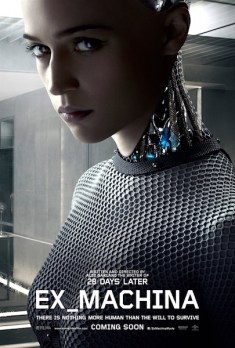 A British sci-fi movie from a first-time director will tomorrow take a place at the table (well, in the auditorium) alongside 2015’s biggest awards contenders, as it vies for multiple gongs at this year’s BAFTAs — and it stands a very plausible chance of walking away with several of them, too. I hope it does, because, after a year that brought us awards-quality sci-fi bombast (
 In truth, it’s not the most thorough deconstruction of what it means to be human and whether artificial intelligence can have that right, but it does touch on these issues and, in so doing, leaves them open for the viewer to mull over for themselves, or debate with friends, or however else one likes to consider their movies post-viewing (like, I dunno, writing about them on the internet or something).
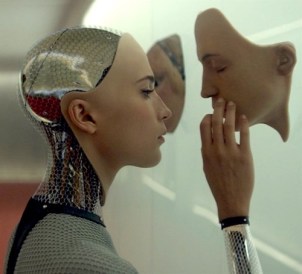 And his dance scene is surely one of 2015’s highlights (there’s an extended version hidden on the US Blu-ray, which is a treat). Garnering the most praise (and awards) is Alicia Vikander’s take on an AI. It’s a tricky role to tackle, because she’s not just a robot — that would defeat the point of Nathan’s exercise — but nor is she fully human. It’s a tightrope of a role, a fine line to walk, and Vikander negotiates it with aplomb. To say too much more would be to spoil it.
 Those after a dissertation-like hard-science deconstruction of the meaning and possibilities of AI will likely find Ex Machina slightly lacking, as will anyone after the crash-bang thrills most mainstream sci-fi provides. Viewers prepared for a decently thought-provoking dramatic thriller about near-future tech, however, should be both engrossed, and grateful that movies like this are (for the time being) still getting made.
 2016 Academy Awards
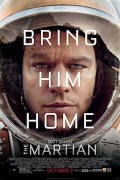
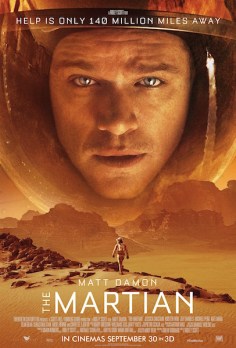 Ridley Scott’s latest arrives on Blu-ray in the UK today, with a disappointing dearth of special features (disliked
  Whether that’s appropriate or not is another matter. A well-argued
 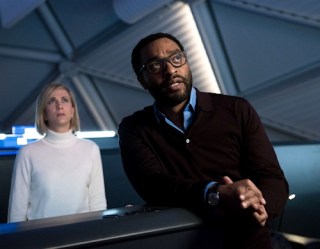 While Damon is stuck on Mars by himself, a starry supporting cast actually get to interact with each other. This is a quality ensemble and, short of writing an epic essay of a review where I just praise them all one by one, there’s little to do but list their names. That said, Jessica Chastain gets the most brazenly emotional beats as the commander who chose to leave Watney behind and has to face the consequences of her decision; Jeff Daniels treads a line between being an evil bureaucrat and just a regular bureaucrat (apparently consideration was given to turning him into a full-blown villain; thank goodness they swerved that bullet); Chiwetel Ejiofor brings easy gravitas to NASA’s director of Mars missions; Michael Peña provides some additional comic relief, if not as strikingly as he did in
  I’ve read at least one review that described The Martian as “an instant sci-fi classic”, and at least one other that described it as “no sci-fi classic”. I’m going to sit on the fence of that debate for the time being. What I will say is that it is undoubtedly an accomplished piece of entertainment. For a film that primarily concerns itself with a man applying scientific principles to tasks like “growing potatoes”, that’s surely some kind of achievement. In our current climate (both in society in general and in the “more explosions less talking, please” state of blockbuster cinema), to make space travel — and science in general — seem fun and appealing to the masses is no bad thing whatsoever.
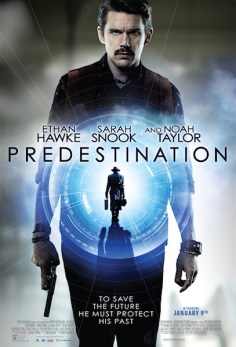 A man walks into a bar in ’70s New York. The bartender strikes up a conversation, which leads to a wager: if the man’s story is the most incredible the bartender has ever heard, he’ll give him a free bottle of whiskey. It had better be pretty good, because what we know that the man doesn’t is that the bartender, played by Ethan Hawke, is an agent for the Temporal Agency, travelling through time to stop crime before it happens; and he’s just had his face burnt off and completely rebuilt while failing to stop a notorious terrorist known as the Fizzle Bomber. Beat that.
 I don’t know how many people will remember, but the pair got a bit of attention back in the early ’00s with their debut feature

 Score:




 Adapted from the classic young adult sci-fi novel by Orson Scott “bigoted idiot” Card, Ender’s Game is the story of Andrew “Ender” Wiggin (Asa Butterfield), who displays uncommon aptitude in a military programme to train children to fight against an alien race that attacked Earth decades earlier. Sent to a training centre in space, Ender must battle his fellow candidates to prove their worth to their hardened commander, Colonel Hyrum Graff (Harrison Ford), ready for the real battle to come.
 It tips its hat to things like drone warfare, child soldiers, and understanding our enemy, but that’s all it does: acknowledge those parallels exist, then refuse to explore them. Conversely, the music is too heavy-handed, taking on the burden of providing emotion that’s lacking from the screenplay.
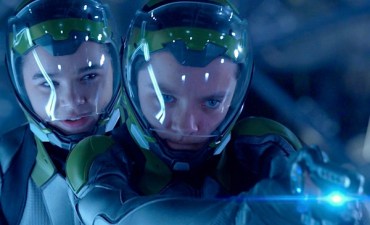 Sadly, after all that training fun, once the cadets jet off to the other side of the galaxy for a rushed third act, interest evaporates speedily. It even has to work hard to sell its own twist as a twist! (Spoilers follow in this paragraph.) In a simulation for a war, Ender does what he’d do to win that war. Then he’s told it wasn’t a simulation, it was the actual war… and he’s all cross. I mean, okay, the fella kinda has a point when he gets angry afterwards: they’ve lied to him, and maybe he would’ve behaved differently if he’d known. But the point of the training was to teach them what they needed to do to win, and it taught them that, and he did it. Maybe this twist works in the book, but in the film it felt somehow unearned.
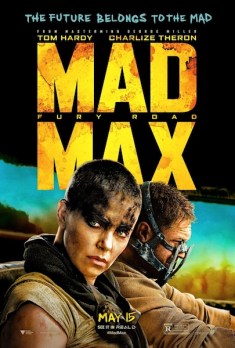 After a decades-long diversion into children’s movies like
 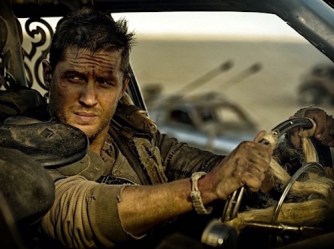 I say that, but the finished film is visually stunning on two levels: cinematography and editing. It was shot by John Seale, and Miller had him amp up the saturation. The point was to do the opposite of most post-apocalyptic blockbusters, which are normally desaturated to heck, and it indeed creates something strikingly different. Conversely, Miller has intimated the ideal version of the movie is in black and white with no dialogue, just the score — completely visually-focused storytelling. I have a feeling he’s right, or that it would at least work well. Some nuance would be lost, but all the major plot points and character arcs would be followable.
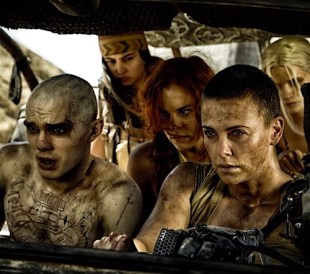 but all are deftly executed. That it doesn’t expound on these at length, or linger on their detail, means you have to pay attention to get the most out of that side of the film. I guess some would counter that with, “you have to look hard because you’re reading something that isn’t there,” but I refute that. That it doesn’t spell everything out at length, or hammer home its points and themes heavy-handedly, is a good thing.
 (Ooh, that turned a bit philosophical, didn’t it?)
 After making his live-action directorial debut with the unlikely sidestep of
  and there’s a moral lesson that’s arguably a little heavy-handed, but as it’s a moral lesson some people aren’t bloody listening to, I can’t say I blame Bird for that. The characters and performances are likeable, with Raffey Cassidy standing out as a marvellous young find, though Laurie is a little undersold. There are some suitably entertaining action scenes, some moments of visual splendour thanks to the future city, and one long take that is exquisite. I know I’m a sucker for a long take, but this is a really exceptional one, that deserves to be mentioned alongside the year’s more-praised unbroken shot, the opening of
  100Films.co.uk