
John Krasinski | 90 mins | download (UHD) | 2.39:1 | USA / American Sign Language & English | 15 / PG-13
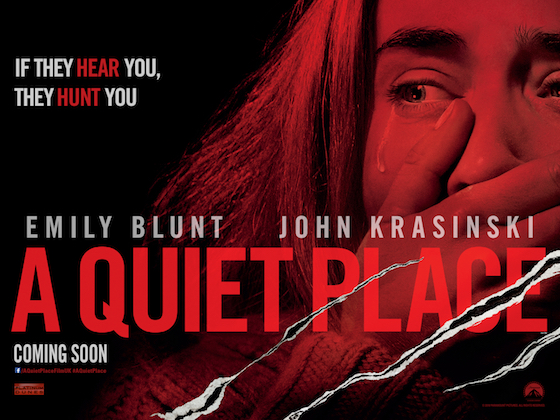
Not, in fact, the directorial debut of John Krasinski (aka Jim from the US remake of The Office, aka Mr Emily Blunt, aka Jack Ryan Mk.V later this month), but the first one that’s really gained any attention (to the tune of a sizeable $332.6 million off a budget of just $17 million), A Quiet Place is a post-apocalypse survival movie cum horror thriller. In the near future, the human race has been seemingly decimated by a race of aliens that hunt via sound. The film introduces us to a family — parents Emily Blunt and John Krasinski, kids Millicent Simmonds, Noah Jupe, and Cade Woodward — who have managed to survive by living on an isolated farm and communicating via sign language, which they’re fortunate to know thanks to a deaf daughter. Naturally, their carefully-constructed safety is threatened when Something Goes Wrong and the creatures are attracted to the farm.
A Quiet Place’s USP is the “must stay quiet” aspect, which reportedly led to less chatter and popcorn-munching during cinema screenings. If only all moviegoing experiences were so blessed. Of course, a similar conceit was only recently deployed in Don’t Breathe, but here the threat level is upped by the almost supernatural enemy. The film’s PG-13 rating in the US means it occasionally pulls its punches on going all-out terrifying, but, as the UK 15 certificate may indicate, it’s still loaded with sequences of tension and suspense.

Some have questioned the film’s adherence to its own rules, or the practicalities of the characters’ decisions, or the ‘luck’ of them having a deaf child and so being able to communicate via sign language. I don’t hold much truck with any of those criticisms. In the latter case, is it not logical that those who already know non-verbal communication have an advantage when it comes to silent survival? Maybe everyone who didn’t know sign language just got killed already. In the first, I think the film sticks closely enough to its conceit: small or disguised noises can go unnoticed, but anything big or obviously human is going to attract attention. Besides, there are only two or three of the creatures in the area — even with their super-hearing, surely some stuff is going to pass them by.
The issue with the characters’ decisions perhaps comes down to the fact that the film leaves a lot unsaid (ho-ho) when it comes to their relationships and thought processes. Big events and the emotional fallout have occurred offscreen, leaving the family in the position we follow them for most of the film. Those viewers demanding 100% foolproof logic from every aspect of the movie are clearly left out in the cold by the lack of exposition, but more creative minds can fill in the blanks. Arguably it leaves the film wanting as a character drama, even as it strives for the kind of subtly and understatedness that is usually lauded in such a genre.
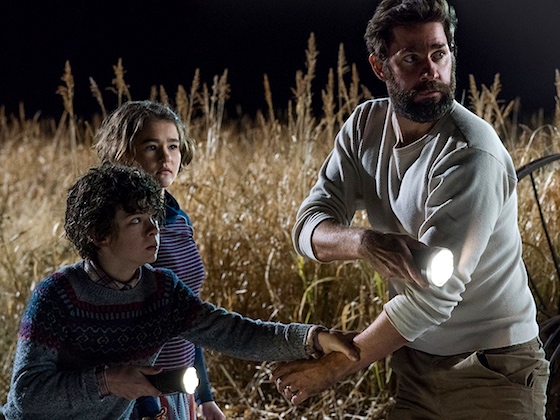
But, really, it’s a horror-thriller, designed to have you biting your nails and on the edge of your seat as you wonder where the monster will spring from next and whether the characters can survive the assault. As a genre piece of that kind, half the running time is the film’s climax, and it’s an effective one at that.

A Quiet Place is released on DVD, Blu-ray and UHD in the UK this week.
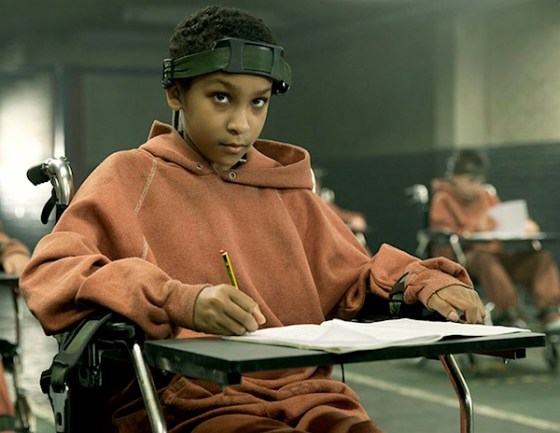

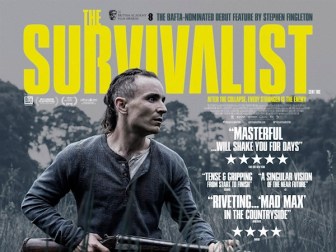 ’70s self-sufficiency sitcom
  Based on a novella by esteemed author Harlan Ellison, this is a low-budget sci-fi comedy-drama about a horny teenager (Don Johnson) and his telepathic dog (voiced by Tim McIntire) surviving in a post-apocalyptic wilderness, who are lured into a weird underground world. It’s a film fuelled by weirdness, left-field ideas, and a controversial tragicomic ending.
 I’ve observed before that the ’80s seem to be everywhere in film these days, and here’s another example: Turbo Kid is in every respect an homage to low-budget ’80s genre fare.
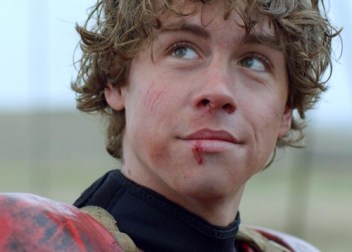 Then there’s the score, which is of course all ’80s synths, in a similar style to the score of
 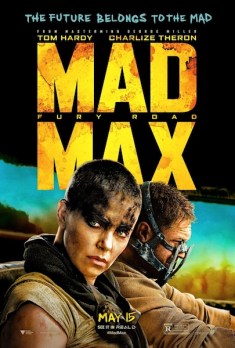 After a decades-long diversion into children’s movies like
 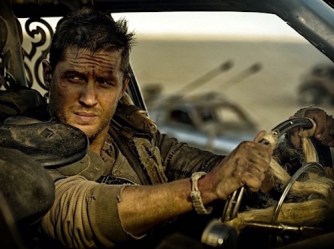 I say that, but the finished film is visually stunning on two levels: cinematography and editing. It was shot by John Seale, and Miller had him amp up the saturation. The point was to do the opposite of most post-apocalyptic blockbusters, which are normally desaturated to heck, and it indeed creates something strikingly different. Conversely, Miller has intimated the ideal version of the movie is in black and white with no dialogue, just the score — completely visually-focused storytelling. I have a feeling he’s right, or that it would at least work well. Some nuance would be lost, but all the major plot points and character arcs would be followable.
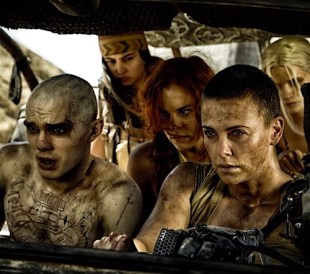 but all are deftly executed. That it doesn’t expound on these at length, or linger on their detail, means you have to pay attention to get the most out of that side of the film. I guess some would counter that with, “you have to look hard because you’re reading something that isn’t there,” but I refute that. That it doesn’t spell everything out at length, or hammer home its points and themes heavy-handedly, is a good thing.
 (Ooh, that turned a bit philosophical, didn’t it?)
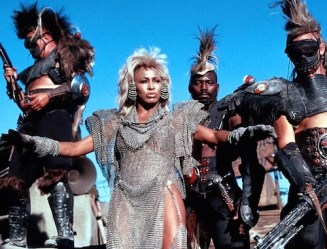
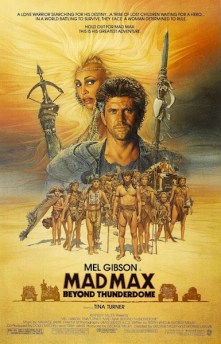 The third (and, for 30 years, final) Mad Max movie sees the titular post-apocalyptic drifter (Mel Gibson) rock up at last-outpost-of-humanity Bartertown in search of his pilfered car and camels. Max finds himself dragged before the town’s ruler, Aunty (Tina Turner), who has a job for him: kill the mutinous overseer of the city’s power supply, Master Blaster. As payment, she’ll arrange for the return of his belongings. The only conditions are he can’t reveal Aunty has employed him, and he has to do it in a fair fight in the town’s arena of combative justice — the Thunderdome. And then the story goes beyond that, funnily enough.
 I didn’t even notice the change in level until I read those comments afterwards. The film still reaches a 15 certificate in the UK, so clearly it isn’t toned down that much. And the lack of visible blood doesn’t mean it lacks creativity: Roger Ebert
 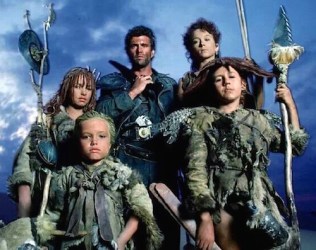 that have been forced to coexist because neither was enough to sustain an entire feature, but at least neither part feels unduly padded, meaning the narrative keeps on rolling. It doesn’t hit the same heights as the exceptional Mad Max 2 — especially with a climax that invites a direct comparison, and is good but not as good — but, as a post-apocalyptic action-adventure movie in its own right, it’s a good film.
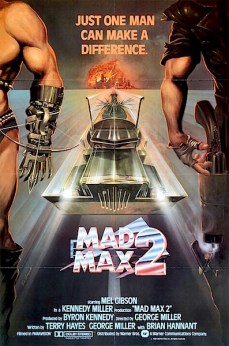 Roaming the outback of a gasoline-desperate post-apocalyptic Australia, “Mad” Max Rockatansky (Mel Gibson) comes across a commune-like oil refinery, whose inhabitants are under siege by a brutally violent gang. Max strikes a bargain: he’ll help them escape with their oil, in exchange for a tank full for himself.
 The most memorable part, however, is the climax. They escape the oil refinery, Max driving the tanker — fitted out with weaponry and defences — and the gang give chase. An almighty action sequence follows, a speeding battle through the outback. It feels wrong to just call it “an action sequence”, like that’s selling it short. You get the sense that this is why the movie exists; that co-writer/director George Miller’s goal with the entire rest of the film has been to get us to this point. It’s not just “the climax”, it’s “the third act”, and it’s stunning — the choreography of it, the editing, the stunts, as dozens of vehicles chase each other, people run around on top of them, jump between them… I don’t think it’s hyperbolic to say it must be one of the greatest action sequences ever committed to film. One of the reasons
  100Films.co.uk