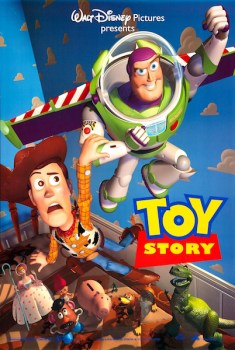
Toy Story (1995)

100 Films’ 100 Favourites #92

The toys are back in town.

Country: USA
Language: English
Runtime: 81 minutes
BBFC: PG
MPAA: G

Original Release: 22nd November 1995 (USA)
UK Release: 22nd March 1996
First Seen: cinema, 1996

Stars
Tom Hanks (Sleepless in Seattle, Catch Me If You Can)
Tim Allen (Galaxy Quest, The Shaggy Dog)

Director
John Lasseter (A Bug’s Life, Cars)

Screenwriters
Joss Whedon (Alien Resurrection, Avengers: Age of Ultron)
Andrew Stanton (A Bug’s Life, John Carter)
Joel Cohen (Cheaper by the Dozen, Garfield)
Alec Sokolow (Cheaper by the Dozen, Garfield: A Tale of Two Kitties)

Story by
John Lasseter (Toy Story 2, Planes)
Pete Docter (Monsters, Inc., Up)
Andrew Stanton (Finding Nemo, Toy Story 3)
Joe Ranft (Beauty and the Beast, Cars)

The Story
In a world where toys come to life when humans aren’t around, Woody is six-year-old Andy’s favourite doll… until he gets Buzz Lightyear, a space ranger action figure, for his birthday. An upset Woody clashes with Buzz, but when the bickering pair are left behind during a house move they must work together to get back to their kid.

Our Heroes
Woody is a cowboy doll, the favourite of his kid, Andy, and consequently the leader of all Andy’s toys. That is until Andy gets a shiny new Buzz Lightyear action figure, whose newness ingratiates him with all the other toys. Plus, to Woody’s continued annoyance, Buzz believes he really is a space ranger and has no idea he’s just a toy.

Our Villain
Sid, Andy’s nasty neighbour kid who does terrible, terrible things to toys…

Best Supporting Character
Mr Potato Head, whose various body parts are slotted on and therefore removable and interchangeable. Hilarity ensues. Also has a nice line in snarky comments.

Memorable Quote
“To infinity, and beyond!” — Buzz Lightyear

Quote Most Likely To Be Used in Everyday Conversation
“You are a sad, strange little man, and you have my pity.” — Buzz Lightyear

Memorable Scene
One of Buzz’s claims as a real space ranger is that he can fly, so Woody challenges him to prove it. Buzz closes his eyes, dives off the bed… and, through a series of flukes, bounces and coasts his way around the room, landing back on the bed. “That wasn’t flying,” cries Woody, “that was falling with style!”

Memorable Song
The film’s themes are perfectly reflected in Randy Newman’s Oscar-nominated and endlessly catchy song, You’ve Got a Friend in Me. Both Toy Story sequels have tried to emulate it, with… less success.

Technical Wizardry
Only the whole movie — it was the first feature-length wholly-computer-generated animated film. As such, we have it to thank/blame for the current entire state of popular Western animation.

Making of
The animators perfected the movement of the toy soldiers by nailing a pair of shoes to a wooden plank and trying to walk around in them.

Previously on…
Toy Story was the first feature-length computer-animated film — there is, in that sense, literally nothing before it.

Next time…
Two feature film sequels, both of which are at least as artistically successful as this first, with a fourth set to follow in 2018. Also, three short films and two TV specials to date, plus direct-to-video spin-off movie Buzz Lightyear of Star Command: The Adventure Begins and the TV series that follows it. You could also argue the entirety of Pixar’s highly-praised output is a follow-up to the success of Toy Story, as well as American feature animation’s almost entire conversion from traditional cel animation to 3D CGI.

Awards
1 Special Achievement Oscar to John Lasseter for “the development and inspired application of techniques that have made possible the first feature-length computer-animated film.”
3 Oscar nominations (Original Screenplay, Song, Musical or Comedy Score)
1 BAFTA nomination (Visual Effects)
8 Annie Awards (Animated Feature, Directing, Writing, Producing, Music, Production Design, Animation, Technical Achievement)
1 Annie Awards nomination (Voice Acting (Tom Hanks))
2 Saturn nominations (Fantasy Film, Writing)
Nominated for the Hugo for Best Dramatic Presentation

What the Critics Said
“Far from just a technological breakthrough, this hellzapoppin fairy tale […] is a magically witty and humane entertainment. It has the purity, the ecstatic freedom of imagination, that’s the hallmark of the greatest children’s films. It also has the kind of spring-loaded allusive prankishness that, at times, will tickle adults even more than it does kids. The moment Mr. Potato Head arranges his snap-on features into a Cubist mash and says, ”I’m Picasso,” it’s clear that director John Lasseter and his team of writer-technicians have taken their most anarchic impulses and run with them. […] In its techno-cool photo-realist way, though, this movie, too, invites you to gaze upon the textures of the physical world with new eyes. What Bambi and Snow White did for nature, Toy Story, amazingly, does for plastic — for the synthetic gizmo culture of the modern mall brat. The film’s wit (and resonance) is that it brings toys to life exactly the way children do in their heads. It molds plastic into pure imagination.” — Owen Gleiberman, Entertainment Weekly

Score: 100%

What the Public Say
“The Animation is superb. Given that this was one of the first ever feature length computer animated movies, those guys at Pixar really hit the nail on the head. The colours are vibrant and the characters are dynamic. An excellent use of Blues, Yellows and Reds really accentuate the ‘children’ and ‘toys’ feel. There are also beautiful realistic elements such as a scene where Woody and Buzz find themselves under a lorry in a petrol station. With this, I was simply amazed at the attention to detail with the stones, tarmac and oil stains on the textures. It really looks like you are close-up to the ground and I love it!” — Alexander Potter, Pottercraft’s Pictures

Verdict

Just because something’s the first to do something doesn’t necessarily mean it’s any good, but Pixar didn’t strike gold with Toy Story just because computer animation was New. It’s the likeable characters, how they develop and learn, the amusing situations they’re put in, plus some heartwarming messages about friendship. There’s more emotion and character development in these wooden-and-plastic toys generated with pixels in a computer than many a film can achieve with real human beings, and that’s why Pixar came to revolutionise and dominate the Western animation genre.

Some would say “the original is still the best”, and it is up there, but on Sunday I will beg to differ…

#93 will be… a superior sequel.
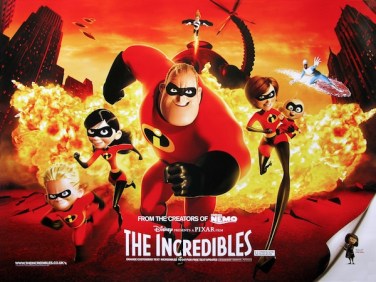

The Incredibles (2004)

100 Films’ 100 Favourites #44

Expect the incredible.

Country: USA
Language: English
Runtime: 115 minutes
BBFC: U
MPAA: PG

Original Release: 5th November 2004 (USA)
UK Release: 26th November 2004
First Seen: DVD, 2005

Stars
Craig T. Nelson (Poltergeist, Action Jackson)
Holly Hunter (Raising Arizona, The Piano)
Samuel L. Jackson (Pulp Fiction, Snakes on a Plane)
Jason Lee (Mallrats, Alvin and the Chipmunks)

Director
Brad Bird (The Iron Giant, Mission: Impossible – Ghost Protocol)

Screenwriter
Brad Bird (*batteries not included, Ratatouille)
(I bet you could count on one hand the number of Western animated movies written by one person.)

The Story
After public opinion forced superheroes into a civilian relocation programme, Bob and Helen Parr — formerly Mr Incredible and Elastigirl — live a quiet domestic life with their three children. Bob is dissatisfied, however, and easily tempted back to heroic ways by a call to defeat an evil robot. When it emerges this is part of a plan to kill retired superheroes and give powers to everyone in the world, Bob’s wife and superpowered kids must enter the fray to save the world.

Our Heroes
The fantastic four titular heroes: Bob Parr, aka Mr Incredible, who has super strength and limited invulnerability; his wife Helen, aka Elastigirl, who can stretch her body like rubber; their daughter Violet, who can become invisible and generate a force shield; and her younger brother Dash, who has super-speed (name/power coincidencetastic!) There’s also their chum Lucius Best, aka Frozone, who can form ice from the air. He’s very cool, hence casting Samuel L. Jackson.

Our Villain
Disillusioned superhero fanboy Buddy Pine, who grew up and used technology to give himself powers, dubbing himself Syndrome. Wants to give everyone in the world powers, because when everyone’s super, no one will be.

Best Supporting Character
Fashion designer Edna Mode, who makes the superheroes’ costumes. Inspired by Hollywood costume designer Edith Head, Bird wanted Lily Tomlin to voice her, and provided an example of how she should sound. Tomlin thought it was perfect, so she instead persuaded Bird to play the role himself.

Memorable Quote
“No matter how many times you save the world, it always manages to get back in jeopardy again. Sometimes I just want it to stay saved! You know, for a little bit? I feel like the maid — ‘I just cleaned up this mess! Can we keep it clean for ten minutes?!’” — Mr. Incredible

Memorable Scene
After tearing his old costume, Bob visits Edna for a new one. He wants a cape. Cue montage of why capes are a bad idea.

Technical Wizardry
The film presented a whole host of new technical challenges for Pixar, not least fully animating a whole cast of humans for the first time — they had to develop new technology to animate detailed anatomy, clothing, skin, and hair. The latter was a particular challenge. On Monsters, Inc., the animators persuaded director Pete Docter to give Boo pigtails to make her hair easier to animate, but Brad Bird accepted no such compromises, particularly as Violet’s long, face-covering hair was integral to her character — and it had to be depicted underwater and blowing in the wind, too. Ultimately, Violet’s hair was only successfully animated toward the end of production.

Next time…
One of the few Pixar sequels people actually wanted, The Incredibles 2 is in development for a 2019 release. That’s only a 15-year wait.

Awards
2 Oscars (Animated Film, Sound Editing)
2 Oscar nominations (Original Screenplay, Sound Mixing)
1 BAFTA Children’s Award (Best Film)
10 Annie Awards (Feature, Directing, Writing, Voice Acting (Brad Bird), Music, Production Design, Animated Effects, Character Animation, Character Design, Storyboarding)
6 Annie nominations (Voice Acting (Samuel L. Jackson), Character Animation (again, x3), Character Design (again), Storyboarding (again))
1 Saturn Award (Animated Film)
2 Saturn nominations (Writer, Music)
Won the Hugo for Best Dramatic Presentation Long Form

What the Critics Said
“what really makes The Incredibles work is the wit of Bird [though] much of it will be over the heads of very young viewers who account for so much repeat business. Bird’s satiric take on suburbia, conformity and forced notions of equality is surprisingly sophisticated and biting for an animated feature, matched by a visual panache that is often breathtaking.” — Kevin Lally, Film Journal International

Score: 97%

What the Public Say
“Most Disney films are about people meeting and falling in love. Incredibles is one of the only ones I can think of about how important marriage is. It shows a couple fighting, getting along, and working together.” — Rachel Wagner, Reviewing All 54 Disney Animated Films and More!

Verdict

Even before the present glut of big-screen super-heroics, Pixar were in on the game with this affectionate genre entry. Writer-director Brad Bird mixes together classical superhero antics with elements of 1960s spy-fi to create a retro world of optimistic heroics and larger-than-life villainy — at odds with the dark-and-serious tone of so many superhero movies of the past 17+ years, but all the more memorable for it. It’s also great at the kinds of things Pixar is known for. The combination means it transcends both the kids’ animation and superhero subgenres.

#45 will be… keeping up with the Joneses.

An inside out pair of shorts

Pixar’s latest opus, Inside Out, was naturally accompanied by a short film in cinemas. On Blu-ray (out today in the UK), it’s accompanied by two. These are they, reviewed in nice quick drabbles.


Riley’s First Date?
2015 #179a
Josh Cooley | 5 mins | Blu-ray | 1.78:1 | USA / English | U / G

In this ‘sequel’ to Inside Out, Riley is going to hang out with a friend… who turns out to be a boy, which sends her mum and dad — and their anthropomorphised emotions — into paroxysms of worry. Is this the 12-year-old’s first date?
The straightforward story is built on clichés of male and female parental reactions to their kid growing up and encountering the opposite sex (mum tries to be cool, dad gets protective), but then it’s only got four minutes so needs that shorthand. Nonetheless, it manages roughly as many laughs as the feature, even if they are easy targets.

4 out of 5


Lava
2015 #179b
James Ford Murphy | 7 mins | Blu-ray | 2.35:1 | USA / English | U / G

The short that accompanied Inside Out in cinemas is essentially a music video for a folksy ballad about a pair of volcanoes who are in ‘lava’ (read: love) with each other.
It’s quite beautifully animated, with realistic CGI (apart from, you know, singing volcanoes) that eschews stylisation without giving in to the urge to shallowly emphasise its photorealism, but other than that I didn’t much care for it. The story and song — inspired by an underwater volcano that will one day merge with Hawaii — are a little too twee. It’s not really sweet, nor sickly, just kind of uninspiringly quaint.

3 out of 5

Inside Out (2015)

2015 #179
Pete Docter | 95 mins | Blu-ray | 1.78:1 | USA / English | U / PG

Pixar haven’t had the greatest start to the second decade of the 21st Century. After somehow managing to get lightning to strike thrice with Toy Story 3, they released two mediocre sequels (Cars 2 and Monsters University), and their only original film of the period, Brave, endured a mixed-to-poor reception also (I’ve still not got round to seeing it). This might go some way towards explaining why their release for this year has attracted such acclaim, despite it offering a pretty rote storyline dressed up in some fancy ‘original idea’ clothing (not that it is a truly original idea) and a modicum of genuine emotional resonance.
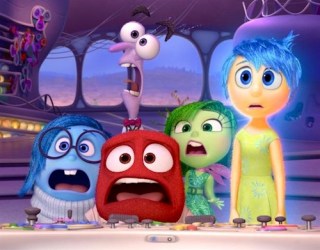
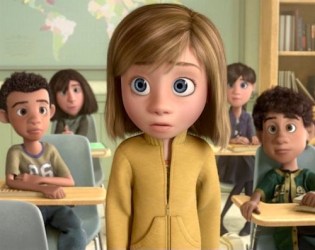
You see, this is the story of Riley (Kaitlyn Dias), an 11-year-old kid who moves from her small home town to San Francisco and struggles to cope. That’s because the anthropomorphised emotions who live in her head and control her moods and memories are thrown for six, especially when de facto leader Joy (Amy Poehler) and the accidentally-ruinous Sadness (Phyllis Smith) get sucked out of the control room and in to the depths of Riley’s memory, from where they have to find their way back in time to sort everything out. Fancy idea: anthropomorphised emotions. Rote storyline: mismatched pair get lost, have to find way back in time to fix things. Genuine emotional resonance: once-happy 11-year-old kid rendered miserable and struggling to find her place.

It surprises me not a jot that a Pixar film has been over-praised by critics and initial viewers. That’s pretty much my view of the their last couple of efforts before the recent doldrums, too. Those were, specifically, WALL-E and Up, both of which feature incredible, innovative, boundary-pushing openings followed by rote, familiar, genre-bound second halves. They’re both good films, but the five-star bits are contained within the first 10 to 30 minutes, followed by three- or four-star entertainments for the rest of the running time. Inside Out isn’t quite the same, because the super-high-quality bits aren’t concentrated anywhere. Instead they’re sprinkled here and there, moments of cleverness (though not genius — as I said, the concepts aren’t exactly original) hung on an easy, well-worn formula.
You don’t have to dig very deep into the Blu-ray’s special features to get an idea of how this happened. The story went through many, many, many iterations over the years and years it was in development. No wonder they wound up beating it into such a familiar shape as the quest narrative. It may also explain why some events don’t quite seem explained. I could’ve missed something, of course, but I was wondering why they were demolishing stuff in Riley’s Imagination Land until a deleted scene (culled from a very different take on the story) explained it. Many of the characters are just built from archetypes, too, like a sports-minded dad who doesn’t actually listen to mom — never seen that anywhere before!

It certainly isn’t as clever or meaningful as some people have tried to make it out to be. For example, a whole internet discussion was sparked by the fact that Riley (an 11-year-old girl, remember) has emotions that are personified as a mix of male and female. When we get a glimpse inside other characters’ heads, their emotions are all of a single gender. ‘What is this saying?’, the internet wonders. Is it to do with the fact that all gender is fluid? That gender is fluid pre-puberty? As Riley is the only one with these mixed genders, are we meant to infer she’s transgender? Fertile ground for discussion. In fact, the answers are: no, no, and no. Director Pete Docter has said he just felt some emotions were more masculine (Anger in particular) and so that’s why they’re male in Riley’s head. Why the single genders in other characters? Shorthand. We only meet them briefly, after all.
Of course, now we’re touching on the issue of the relevance of authorial intent versus consumers’ reading of the final work, which isn’t a discussion I have much interest in engaging with right now. Suffice to say, whatever anyone’s readings of gender issues in Inside Out, none were intended by the filmmakers, and so you’re projecting something on to it rather than being able to unearth a coherent statement.

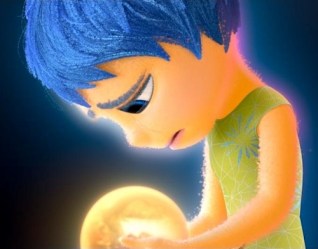
In other matters, there are some nice jokes and nods aimed squarely at adult viewers, the best being a passing reference to a ’70s noir. (Yes, really. Don’t worry, you’ll spot it.) Meanwhile, the animation and design is fine. I feel that’s the best I can say about it, other than that the loose, floating, ‘bubbly’ edges of the emotion characters are quite neat. Apparently the effect was originally meant only for Joy and was immensely difficult to animate, but just as it was to be scrapped John Lasseter commented on how great it was and asked for it to be added to all the characters. Well done Mr Lasseter, though apparently it was an absolute headache for the technical team.
I do wonder if it’s just because this is the first really good original Pixar film for quite a long time (six years and five films on from Up, to be precise) that it’s gone down so well. It is good — there are some neat ideas and a strong moral lesson (even if, as with everything else, it’s not a totally original one; though from the way it’s discussed in some circles (not least the film’s own special features), you’d think it was a philosophical revelation of Nobel-winning proportions). In some respects, these qualities makes it almost a return to Pixar’s early praise-magnet form, which is enough for some to go wild for it. For me, the style and shape of the story those elements are airlifted into is so familiar that there’s little room for surprise (one highly emotional moment excepted). Maybe clearer heads will eventually prevail and people will rein it in a little.

4 out of 5

Inside Out is released on DVD and Blu-ray in the UK tomorrow.

Monsters University (2013)

2015 #48
Dan Scanlon | 100 mins | streaming (HD) | 16:9 | USA / English | U / G

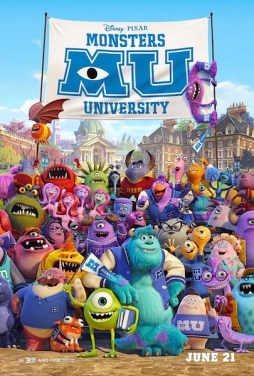
Monsters UniversityPixar’s fourth sequel is more Cars 2 than Toy Story 3.

Taking the heroes of the enjoyable Monsters, Inc. back to their college days may have sounded different, but it just feels uninspired much of the time. It’s not bad per se, merely dully predictable, and not remarkable, memorable, inspiring, or entertaining at a level signficiantly above “passable”.

The possibly-unintentional highlight is a repeated music motif that I swear is Monty Python’s Every Sperm is Sacred. Surely that can’t be deliberate in a family-friendly Disney movie, but it was all I could hear every time it played, which was often.

3 out of 5

Pixar’s latest, Inside Out, is out in a ton of territories now, in the US tomorrow, and in the UK on 24th July.

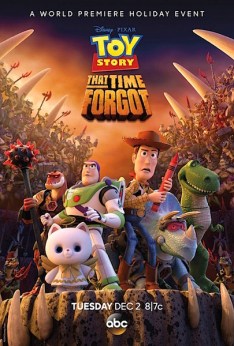
Toy Story That Time Forgot (2014)

2015 #26b
Steve Purcell | 21 mins | streaming (HD) | 16:9 | USA / English | U

Toy Story That Time ForgotThe second Toy Story TV special, and the fifth short adventure for the characters that perhaps should have had their last hurrah in the third feature film, is little more than a crushing disappointment.

When Woody, Buzz, and a selection of the now-extensive supporting cast are taken to a friend of Bonnie’s for a play date, they get lost in his toyroom and come across the Battlesaurs, a line of toys who — ignored by Bonnie’s friend, who does nought but play on a games console — have established a whole society, ignorant of the fact they’re plastic action figures.

Toy Story That Time Forgot manages the tricky feat of feeling both too rushed and too long. There’s no time for mystery or surprise as it hurtles through the plot — not that there’s too much of that, either. Half of it recycles Buzz’s arc from Toy Story 1 (he doesn’t know he’s a toy! Then he finds out, and he comes to love it!); the other half is a villain with what I think is an original idea (he’s delighted the kid doesn’t want to play with them because it means he can rule over the other toys), but isn’t given enough time to be developed.

It’s pretty obvious how all of this will play out, meaning that, even with a frantic pace, it feels like it takes too long to get through it. It doesn’t go anywhere much with the concept, so feels repetitive in the middle — Buzz and Woody are captured then set free three times. Three. If that time was spent building up the world or characters’ motivations, it’d be fine, but those elements are only seen in snatches, or raced past in single lines of exposition, with time instead devoted to adequate but uninspired action sequences.

Battlesaurs!The whole thing just feels undercooked. Apparently it took three years to make, with two of those dedicated to development. The Battlesaurs toy line was imagined in full, for example. There’s evidence of that on screen, but it’s just an impression that there’s a lot of background work we’re not getting to see. A TV special gives them limited time to explore the new world they’ve created, of course, but Toy Story of Terror used the time perfectly, almost feeling longer and more significant than it was. By contrast, Toy Story That Time Forgot feels short, wasteful, and insignificant.
3 out of 5

Tomorrow, Sky Movies Disney are airing the Toy Story trilogy and its two TV spin-offs on a loop from 6am until 2:40am.

Up (2009)

2014 #12
Pete Docter | 96 mins | Blu-ray | 1.78:1 | USA / English | U / PG

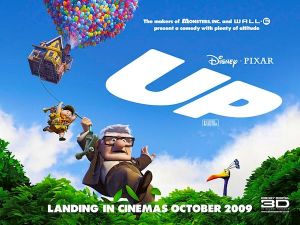
UpYou know Up: it’s the Pixar movie where everyone talks about how amazing the first 10 minutes are, and never seems to have anything to say about the rest of the film.
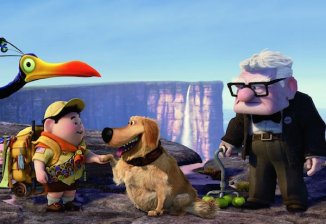
Which sums it up pretty well, to be honest. “The rest of the film” may be where you’ll find the balloon-flying house and talking dogs that played so well on posters, trailers, and clips, but it’s the opening sequence that is artistically outstanding, emotionally affecting and, yes, the thing you’ll remember the film for. Without it, Up is a pretty standard adventure-y kids’ CG movie — good fun while it lasts, but nothing particularly special.

And, if you haven’t seen that opening, to tell you about it would spoil it for you. If you haven’t already heard, try not to find out, because I think knowing where it’s going undermines its impact a bit — though it’s so well-done that it does remain effective nonetheless.

As for the rest of the movie, there’s some amusing situations and dialogue, and the usual unconstrained-camera antics so beloved of CG movies during action sequences. The talking dogs are solidly observed, although for me the concept didn’t pay off as well as the clips promised — Up castthe best bits were shown off in advance. The special features reveal the extent the animators went to when researching real-world locations to influence the film’s strange, alien landscape; sadly, the fact the bizarre rock formations are actually a real thing somewhere in the world is more interesting than how they’re used in the film.

A bit like WALL-E, Pixar start off with something courageously original, but then lets it slide into standard US animated fare. It makes for a must-see, but only thanks to a relatively small portion of the whole; and all round it’s a good film, but not a great one

4 out of 5

Up was viewed as part of my What Do You Mean You Haven’t Seen…? 2014 project, which you can read more about here.

Cars 2 (2011)

2012 #51
John Lasseter | 106 mins | Blu-ray | 2.35:1 | USA / English | U / G

Cars 2Pixar, oh exalted studio of wondrous excellence, who produce naught but critically-acclaimed and audience-beloved films that may as well just be given the Best Animated Feature Oscar without the need for fellow nominees, dropped the ball with Cars. So why did it become only the second Pixar movie to earn a sequel? As most people know, because of the merchandise. Little boys love toy cars (and grown men too, apparently) and the things sold like hot cakes, and continued to do so for years afterwards. Running out of ways to milk the first movie’s characters, the only solution was to make some new ones — and that involves making a new film.
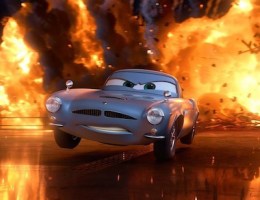
For what is essentially a near-two-hour toy commercial, Cars 2 fares quite well — it’s better than Batman & Robin anyway. Well, it’s less offensive to one’s sensibilities. Not ruining a great character and a once-great franchise helps. And, despite its lowly Rotten Tomatoes rating (which is flat out appalling, and doubly so for a Pixar movie), there’s a solid argument to be made that it’s better than the first Cars.

The plot is just as predictable though: character arcs are so well-trodden they only seem to bother including them because they push the story along; surely everyone will guess who the ‘surprise’ villain is as soon as he/she/it shows up earlier in the film; and so on. But instead of the stock “slick city guy finds his true self in the country” tale told first time round, Caine, Michael Cainehere we get an international spy movie — much more fun. The espionage stuff is clearly inspired by Bond (the primary secret service is British, for starters), and the opening eight minutes — an action sequence starring the film’s Michael Caine-voiced Bond analogy — is probably the best stuff in either Cars movie. Actors like Caine and Emily Mortimer lend the whole affair some much-needed class.
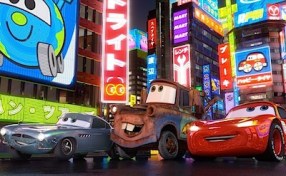
Mater, voiced by Some Idiot (I believe Larry the Cable Guy is actually his ‘name’) was a mildly irritating character in the first film, but at least there was less of him than the marketing suggested. Clearly he clicked with someone — the pre-pre-teen toy-buying audience, I suppose — and so his role is massively bumped up here. In fact, I don’t think anyone would disagree that he’s the main character, with Owen Wilson’s McQueen relegated to a supporting role. Mater isn’t the most irritatingly stupid animated character ever conceived, but he’s not a huge amount of fun either. Like so much else, his whole schtick is tiresomely predictable fullstop, and depressingly familiar from first time round — and it was barely amusing in the first place.

McQueen, then, may still be front-and-centre in the marketing, but his story — the racing aspect of the movie — gets quickly relegated to a subplot. It’s kind of ironic, as the first film was all about races on boring NASCAR loops, whereas here we getting exciting European street circuits and we barely see them. On the bright side, we all know how race movies pan out — Touristythe back-and-forth battling, the last-minute surge, etc etc — so it’s not really any loss.
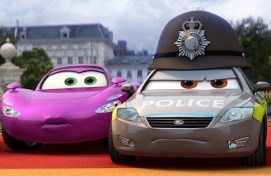
There are a raft of cameos — more than the first film, I think — the most obvious being Lewis Hamilton as a black racing car. He’s joined in a sort-of-double-act by some American voice who I presume is also a racing driver. This is the role picked for localisation, getting region-specific racing drivers in France, Germany, Spain, Australia, Russia, Sweden, Latin America and Brazil. I’d wager at least half of those voices would be infinitely more recognisable to a British audience than that yankee bloke they do have in there — I don’t follow racing and I’ve heard of Fernando Alonso, Sebastian Vettel and Jacques Villeneuve, but I’ve not got the first clue who Jeff Gordon is.

One much-criticised aspect of the first film was its world (who built these cars? where are the humans? etc). It was possible to gloss over it, just about, when the film was doing other things to hold your attention. Here, it’s almost like they don’t want you to forget. It’s plenty exciting and fast-paced enough to leave behind concerns about what’s going on, but then throws in all sorts of unnecessary snatches of dialogue or small details in set design that slap you with a brief remembrance that this world doesn’t make the slightest bit of sense. One I didn’t even notice until I was collating pictures for this review: Why is a CAR wearing a HAT?why is the police car wearing a giant hat?!
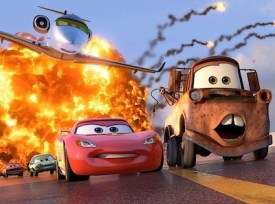
The technical faults don’t stop there: despite its pedigree, direction is strangely amateurish much of the time. The action sequences occasionally sing, but not always, while the entirety of the dialogue scenes are flatly shot, showing a repetitive choice of boring angles. It doesn’t help that they don’t contain much engaging material, especially the instances when they seem to be literally trotting out all the first film’s characters to deliver a single line each in not-that-quick succession. At times it verges on painful.

The Cars films are really aimed at kids no older than about six. They won’t be familiar enough with movies to see the tired plot points, they won’t question the film’s bizarre world, they’ll probably be enamoured of Mater, they’ll certainly be suckered in by the talking cars and the glossy action sequences… It’s their very lack of familiarity or critical faculties that makes the film easily entertaining. And then they’ll want all the toys, which is why this movie exists.

And one of the reasons people heavily criticise the Cars films in spite of that increasingly obvious fact is because they’re made by Pixar. In themselves, these two films are fine — but that’s all they are. When Pixar can make so many innovative, exciting, emotional, Action!entertaining films, how can they also produce something so uninspired?

Cars 2 still suffers from many of the first film’s faults, being lacklustre in vital departments like character, humour and storyline. But it’s shorter, faster-paced and more exciting, which for my money makes it the lesser of two evils.

3 out of 5

Toy Story 3 (2010)

2010 #114
Lee Unkrich | 103 mins | Blu-ray | U / G

Didn’t get Toy Story 3 for Christmas? Pick it up in the sales, then, because it’s bloody good.

Look:

Much was written about Toy Story 3 when it was released this summer, so I’m not sure how much I have to add, but here we go. It’s no surprise either — that’s what happens when a preeminent and popular studio releases a sequel to a beloved and acclaimed film franchise 11 years after the last instalment. High expectations abounded. For once, they weren’t necessarily unrealistic: if anyone could pull off such a feat, it’s Pixar.
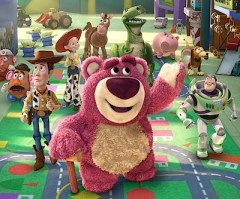
It was somewhat amazing when Toy Story 2 equalled — some (including me) would say bettered — the first film. We may be more used to quality sequels these days but, as major franchises like The Matrix and Pirates of the Caribbean readily prove, they’re still far from guaranteed. To even try again with a threequel seems madness (no one’s told Chris Nolan this either, it seems). But they tried, and they succeeded: Toy Story 3 is at least the equal of the first two, if not once again slightly better — something that is, as far as my memory can muster, unheard of.

Individual adjectives serve admirably: it’s hilarious, emotional, exciting, scary; a great comedy, a great action/adventure. And Ken’s fashion show sequence is worth the price of admission all by itself. It’s kid-friendly, of course, but it’s not just for kids — it’s for young adults, who’ve grown up with these films and these characters and, in a way, are letting them go along with Andy; and for adults, who may have left childish things behind but can hopefully still appreciate the thematic sentiment.

Darker sequences support this interpretation, I think — the furnace climax, for instance, which carries a palpable sense, even to a savvy adult viewer, of “will they really do that?” doom. With the intention being that this is the series’ closing instalment — and with Andy grown up and leaving so that, however things end for the toys, this is The End for viewers — there are times when one wonders just how dark Pixar may be willing to push it. The potential that some or all of the toys may be lost along the way is a genuine fear, a move of blue-moon rarity for modern Children’s Films. This is in addition to the usual Pixar style of including jokes and references to skim over the kids’ heads.

I suppose TS3 may not be quite as effective if the first two films weren’t part of your childhood. I feel they were on the edge of mine — I was certainly too old to actually have any of the toys, for instance; I imagine anyone who had their own Buzz or Woody will feel even more emotional seeing them go through what they do here. Similarly, it pays to be aware of events and jokes in the preceding films. You don’t need to know intricate plot details, but there are plenty of pleasing references to catchphrases and moments.

Is Toy Story 3 faultless? Probably not. But I can’t think of any right now. Sublime.

5 out of 5

Toy Story 3 placed 2nd on my list of The Ten Best Films I Saw For the First Time in 2010, which can be read in full here.