

Among the many, many discussions provoked by the last Ghostbusters movie was the notion of the 1984 original as “a comedy”. In short, people who consider themselves Very Clever were keen to point out that the ’84 film is, in fact, “a comedy”, and not whatever they thought some of its fans thought it was — a serious fantasy-horror film, I guess. But, as I see it, it’s the people insisting the original is “a comedy” who are actually the ones missing the point. It may star a bunch of SNL alumni, and it’s got a few gags, and if definitely doesn’t take itself seriously, but it’s not just a comedy — it’s a fantasy-adventure-horror-comedy. Those other three genres are just as important to the film’s style and tone — and to people’s love for the film — as the funny bits.
I bring all this up because I think it has coloured reactions to Afterlife, a film which isn’t just the franchise’s fourth movie, but is very much a direct sequel to its first. Said reaction has been mixed, with some criticising it as a soulless exercise in nostalgia; a reaction and over-correction to the outright-comedy of the 2016 reboot, which was unpopular in some corners for daring to star women. That’s a dumbass criticism which, in the eyes of some, tars anyone who dislikes that movie — which is unfortunate, because a lot of perfectly rational people didn’t like it simply because it wasn’t very good (personally, I thought it was middling). On the flip side, a lot of people have found Afterlife very enjoyable — and I’m one of them. One of the reasons I’ve laid out that opening argument is because I don’t think Afterlife has been created as a reaction against the 2016 film — it’s tone hasn’t been set in opposition to the previous film, but rather is taking its cue from the 1984 original. In other words: it’s not just a comedy, it’s a fantasy-adventure-horror-comedy.

Set in the present day, it sees a family — mother Callie (Carrie Coon), son Trevor (Finn Wolfhard), and daughter Phoebe (Mckenna Grace) — inherit the remote farmhouse of the kids’ grandfather; the father their mother never even met. Turns out he was a Ghostbuster back in the day, and — surprise surprise — he ended up living in a back-of-beyond small town for a reason. With Callie uninterested in the father who was never interested in her, and Trevor off falling for a local waitress (Celeste O’Connor), it falls to curious Phoebe to investigate her grandfather’s life and, along with her new friend Podcast (Logan Kim) and summer science teacher Gary (Paul Rudd), discover what ghostly secret he was keeping.
Really, Afterlife is a tribute to the original Ghostbusters. It’s full of nods and Easter eggs — some obvious; some subtle; some witty — and so will undoubtedly play best for a viewer who loves the original as much as the filmmakers seem to. That’s me, so I’m pretty much okay with the balance the film strikes. In other words, there’s enough new stuff to hang the old stuff on that I was able to just enjoy it. It would seem the film doesn’t play as well to viewers without that connection to the original, although I really think it depends how critical you’re being. This is a fun film — there are plenty of gags, plus a couple of suitably exciting action sequences — that I think anyone with reasonable expectations should still find it entertaining. As Phoebe, Mckenna Grace is particularly great — a really likeable lead to centre the narrative around.
I’ve avoided stating which of the original Ghostbusters the new characters are related to because the film does the same, but — skip this paragraph and the next if you really want to avoid spoilers! — I don’t think it’s a particular secret, really. I mean, Phoebe’s been given a look that’s clearly reminiscent of her grandfather; and with the whole “he’s dead” plot point, well, that best applies to one of the actors, doesn’t it? So here’s another thing: Afterlife isn’t just a tribute to Ghostbusters ’84, but also to its co-writer and co-star, Harold Ramis. The characterisation of Callie and Phoebe was inspired by the autobiography of Ramis’s real-life daughter, Violet Ramis-Stiel, to the extent the actors were asked to read it as part of their preparation. Ramis-Stiel also signed off on her dad’s posthumous appearance in the film.

Yes, thanks to CGI, the dead walk. This has been a controversial thing recently, mainly thanks to how the Star Wars films and TV series used it. Just last week there was a particularly big hoo-hah about Luke Skywalker being revived in The Book of Boba Fett. Generally, I agree that it’s distasteful. Using computers to ‘resurrect’ dead actors just so their pop-culture-favourite characters can live on? It’s kind of ghoulish. But I think the situation with Afterlife is a little different. Rather than a mega-corporation wanting to keep their space opera franchise stuck in the fan-pleasing past, this has been made by the actor’s friends and family as a tribute to him. If you bear that in mind, coupled with how exactly he’s used in the film, I actually think it’s rather sweet, and liable to bring a tear to the eye (though not to mine, because I am still a hard-hearted cynic in my core).
I don’t know if Afterlife’s detractors will come round to it with time. Frankly, I don’t really care — if they didn’t enjoy it, that’s their business. At worst, it’s their loss, because this is an appropriately fun and affectionate addition to the franchise.





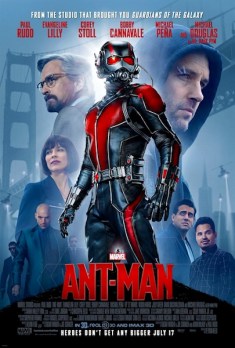 The final film in ‘Phase Two’ of the Marvel Cinematic Universe is perhaps the most fun Marvel movie since
  Nonetheless, some have criticised the film for not being especially original. I mean, originality’s good ‘n’ all, but c’mon, what do you expect when you sit down to a superhero movie from the primary purveyor of superhero movies? Ant-Man may blend elements from a few other genres into the superhero mix, but, yeah, it’s a superhero movie that, at times, plays like a superhero movie — just like everything else Marvel Studios has produced (with the possible exception of
  It remains tough to talk about Ant-Man without referencing The Edgar Wright Situation. I mean, you could ignore it, but then it becomes the elephant in the room. If you somehow missed it: writer-director Edgar Wright pitched Ant-Man to Marvel as a movie before Marvel Studios even existed, back in 2003, and had been developing it on and off ever since. The ideas he brought to the table — an action-adventure-comedy style, being a special effects extravaganza but with a lighthearted tone — influenced how the studio approached Iron Man and, consequently, the whole MCU. Nonetheless, Ant-Man wound up positioned as the 12th film in the studio’s slate, finally going into production after a decade of prep. Wright had a script almost finalised, he’d cast the film, a release date was set… and then he left due to “creative differences”. And the internet was on his side because Edgar Wright has made
  After Wright left, the screenplay was rewritten by a host of scribes (far more than the two extra writers ultimately credited). Other things they’re responsible for include bulking up the supporting characters, especially Hope, which works pretty well, and Lang’s friend Luis (Michael Peña), which we should all be thankful for: Peña’s Luis is one of the best things in the movie, an enthusiastic motormouth who’s consistently entertaining whenever he’s on screen. He’s the standout from an ensemble that is generally strong, with Rudd proving a likeable lead and Douglas committing to the material in a way you wouldn’t necessarily expect an older actor to with ‘just a comic book movie’.
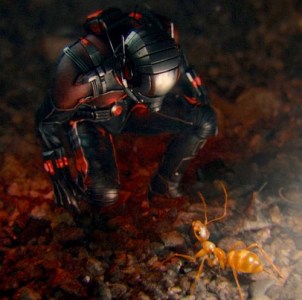 That doesn’t mean it’s a story that doesn’t have stakes, they’re just different stakes. It’s a refreshing change of pace at this point. It’s also pretty much standalone, with nice nods to the shared universe but without being dependent on other films (either before or to come) for its story. Guardians of the Galaxy did that too, but how many other recent Marvel movies is it true of? Even the highly-praised
  There seems to be a certain brand of animated film that I think looks dreadful so avoid, then I hear good things about, so I try it and find that, actually, they are really good. There was
 100Films.co.uk