
George Miller | 120 mins | Blu-ray | 2.40:1 | Australia & USA / English | 15 / R
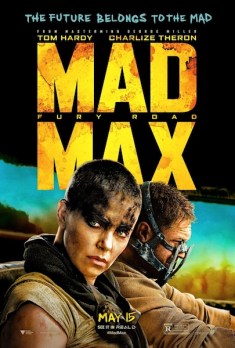 After a decades-long diversion into children’s movies like Babe: Pig in the City and Happy Feet, director George Miller here returns to the post-apocalyptic action series that made his name, and in the process managed to create a blockbuster that was not only critically acclaimed and well-received by audiences, but looks set to be a major award season contender too.
The story sees future drifter and sometime-hero Max (now played by Tom Hardy) arrive in a town ruled by Immortan Joe (Hugh Keays-Byrne), who keeps the populace in check by controlling the flow of water. He’s also created a heavily caste society, including suicidal warriors like Nux (Nicholas Hoult) and his Five Wives (Rosie Huntington-Whiteley, Riley Keough, Zoë Kravitz, Abbey Lee Kershaw, Courtney Eaton), who he keeps locked away for breeding purposes. During a routine run for oil, Joe’s best driver, Imperator Furiosa (Charlize Theron), veers off course, and it’s soon discovered it’s a bid for freedom with the wives. Joe and his amassed forces give chase. For the rest of the film.
You can certainly watch Fury Road as just a two-hour chase and (presuming you like action antics) get something out of it. The volume of action, the style with which it’s executed, and the impressive audacity of the stuntwork, all mean the film functions on a purely visceral level. That said, the action sequences are almost more incredible for how they were achieved than for how they’re presented in the finished film. The end product is perhaps a little too frenetic, the CG boosts a little too heavy-handed — all the talk of “doing it all for real” may be more or less true, but it feels like an awful lot of that ‘reality’ has been augmented with wire/rig removal and the compositing of multiple practically-performed stunts into single shots. The end result is unquestionably better than empty pure-CGI mayhem, but the awe-inspiring impressiveness of the stunt performers’ work is better conveyed in the special features than the film itself.
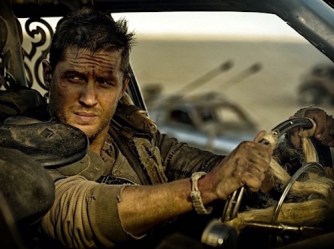 I say that, but the finished film is visually stunning on two levels: cinematography and editing. It was shot by John Seale, and Miller had him amp up the saturation. The point was to do the opposite of most post-apocalyptic blockbusters, which are normally desaturated to heck, and it indeed creates something strikingly different. Conversely, Miller has intimated the ideal version of the movie is in black and white with no dialogue, just the score — completely visually-focused storytelling. I have a feeling he’s right, or that it would at least work well. Some nuance would be lost, but all the major plot points and character arcs would be followable.
This is in part thanks to Margaret Sixel’s editing. Chosen precisely because she’d never edited action before, Sixel brings classical touches to the work — like eye trace and crosshair framing — that keep the film exceptionally followable even in the midst of some fast cutting. The one poor choice, in my opinion, is the occasional use of a ‘step’-y effect, which just makes it look like you’re streaming on a not-quite-fast-enough connection or watching a badly-encoded pirate downloaded. I thought it might’ve been a badly produced Blu-ray at first, but apparently it was like this in cinemas too.
For those after more than just action and visuals, the film does have something to offer — despite what you might’ve heard. I think some more dismissive viewers miss it because, a) you don’t expect it, and b) it’s achieved so economically. The characters, relationships, and situations are quickly sketched in, be it through well-placed snatches of dialogue or with purely visual storytelling, 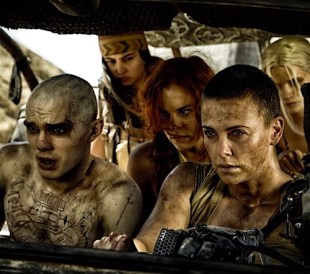 but all are deftly executed. That it doesn’t expound on these at length, or linger on their detail, means you have to pay attention to get the most out of that side of the film. I guess some would counter that with, “you have to look hard because you’re reading something that isn’t there,” but I refute that. That it doesn’t spell everything out at length, or hammer home its points and themes heavy-handedly, is a good thing.
Relatedly, the Mad Max series has always been concerned with legend and mythology, both its own and the classical ideas of such. The latter informs the general style and shape of the narratives: these are legends of heroism, perhaps passed down orally from one teller to the next, emphasising the scale of the derring-do. This endures even though Max is, in some respects, the supporting lead in his own film (it even uses the old Towering Inferno left-low/right-high billing at the start for Hardy and Theron). As for the series’ own mythology, that’s well continued here, with significant additions to Max’s storied array of characters and situations: Immortan Joe, Imperator Furiosa, the Five Wives, the War Boys…
With all that considered, that Fury Road is only the second best film in the Mad Max series is merely testament to the enduring excellence of the first sequel. However, there’s possibly an element of expectation in this opinion: I expected basically nothing of Mad Max 2, particularly after I had mixed feelings about the first film (even though the sequel’s fame and acclaim is greater). Fury Road, on the other hand, has been relentlessly hyped by critics and viewers alike ever since it came out — a very different starting perspective. How much effect did this have? Impossible to say. A true comparison would necessitate watching them back-to-back in a few months, or even years, divorced of that initial build-up. Even then I’d be carrying in my memories of my initial viewings. Point being: it’s impossible to be entirely objective; to divorce a film (or films) from some kind of personal context. (Ooh, that turned a bit philosophical, didn’t it?)
Whatever. There can be no doubt that Fury Road is an exceptional achievement in visuals-driven action-adventure moviemaking, which merits its inclusion in discussions of 2015’s finest works of cinema.

For my review of the “Black & Chrome” version of Fury Road, look here.
Mad Max: Fury Road placed 6th on my list of The Ten Best Films I Saw For the First Time in 2015, which can be read in full here.
This review is part of the 100 Films Advent Calendar 2015. Read more here.
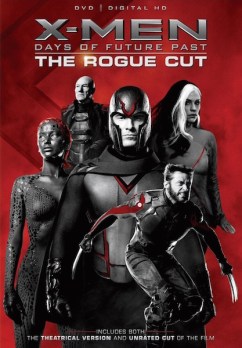 One of the big stories in the run-up to this fifth X-Men film’s release last year (my previous review is
 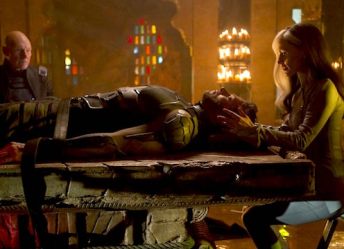 (though the theatrical cut only has 40 chapters, so I’m not entirely sure how that pans out). Most must be teeny extensions, however, and I look forward to
 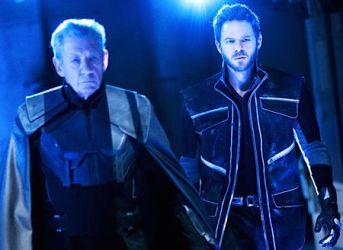 The Rogue Cut is worth seeing for anyone who enjoyed the theatrical version — and, in terms of a copy to own, the Blu-ray comes with both cuts and more special features (though it loses all the extras from the first release, including a few more deleted scenes) — but, unless you’re a huge fan of Rogue or Iceman, it’s not essential.
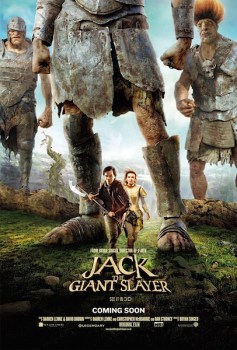 The influence of Peter Jackson’s
 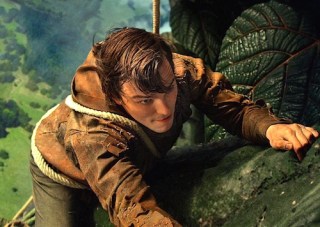 A computer-animated prologue wants to be the one from
  overacted characters, and bright-and-cheerful CGI are more or less acceptable, in a “it’s no classic but it’ll pass two hours just fine” kind of way. Produced on those kinds of terms, this might have passed muster for some. Might.
 I think I’ve previously discussed my life-long love of the X-Men franchise, so I shan’t go into detail again, but suffice to say Days of Future Past has been one of my most-anticipated movies ever since the title (which is that of a classic and influential story from the comics) was announced. Thank goodness, then, that the final result doesn’t disappoint.
 Beyond that, there’s the characters: the younger versions are having to deal with the fall-out from
  Not everyone gets to shine in a cast this big, although pretty much everyone gets a moment. The future-set cast have the least to do, people like Halle Berry turning up to do little more than show their face, though Stewart and McKellen get a moment or two worthy of their talents. After he was the focus of the last film, Fassbender is slightly shortchanged here; but after McAvoy gave him essential support in First Class, Fassbender plays the same service here, informing Charles’ journey. Of the new additions, Evan Peters as Quicksilver (that’s the one who’ll also be played by Aaron Taylor-Johnson in
  Later, there’s the aforementioned ‘slow-mo’ sequence, and the grand climax, which offers more “fly something big around” antics a la First Class’ submarine, only considerably grander. Yet for all the spectacle, the final moments once again come down to character: what is Magneto prepared to do? What is Mystique prepared to do? Will anyone listen to Charles? And so on. Even the much-vaunted Marvel Studios movies tend to base their climaxes in slabs of ‘epic’ CGI crashing into each other; Days of Future Past does that for a bit, then brings the characters back into focus for the real final beats.
 (Jennifer Lawrence being the third pillar of the past triumvirate, as they’ve already focused on Xavier and Magneto). While Days of Future Past does wrap up the majority of its threads (the open-ended ones are answered by previous films, if you want them to be), there’s plenty there to play with in the next film (and, perhaps, ones beyond that) if they want to… which they do.
 I made sure to see
 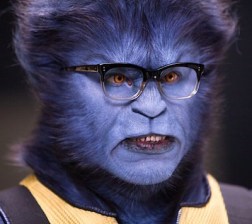 It was blurry, the sound was muffly. I saw a clip in a summer movies trailer just a few days later when I saw
  but that’s fine because here they’re just supporting characters. This is the story of two other young men, Xavier and Lehnsherr, aka Professor X and Magneto.
 the flipside to the Xavier-Lehnsherr relationship working better, if you will. There’s also Kevin Bacon, playing his second superhero villain in as many years, who does sterling work as a former Nazi seeking world domination — remember the ’60s, when world domination was a valid aim for a villain? There’s more than a little Bond in the mix here.
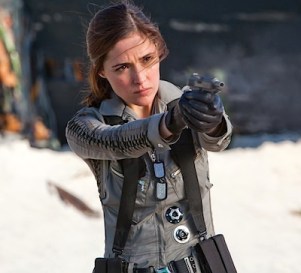 than a superhero movie in many ways — and when it tries to introduce an X-Men team made up of second-string leftover characters it loses its way slightly. But balance is everything with ensemble casts like this, and watching the film again gives a better perspective on its pace and its actual balance. First time through these things are distorted because you don’t know how far through the story you are, how long’s left, how long each scene will last, and so on; a second time, with an idea of where it’s going and so forth, you can better appreciate how it’s all actually weighed up, and I think First Class achieves a balance better than most have given it credit for.
 It’s a complete non-issue for non-fans, and the same for any open-minded fans who realise they’re not trying to faithfully bring the X-Men canon to the big screen. Earlier films should already have shattered that illusion anyway.
 After seeing First Class in the cinema I thought to myself that, while I would dearly love to give it a full five stars, in all good conscience I couldn’t; for whatever reason, it didn’t quite come together enough. Watching it again on Blu-ray, however, I’ve completely changed my mind: I wouldn’t change a thing. All my anticipation is more than paid off — I love this movie.
 100Films.co.uk