November’s Failures

Ridley Scott’s Napoleon was high on the list of titles I thought might tempt me out to the cinema in the closing months of the year, but it hasn’t managed it yet — and, with December being as December is, I doubt it will now. (The one remaining big “maybe” is Godzilla Minus One, which is out on the 15th over here. Come back next month to see if that happens…) A close second was wordily-titled prequel The Hunger Games: The Ballad of Songbirds and Snakes, because I enjoyed the original “trilogy in four parts”, but, again, it couldn’t quite get me over the line (perhaps it’s no surprise, as I watched all of the rest on Blu-ray).

Noticeably less tempting were Disney’s latest flops, The Marvels (I’m so far behind on the MCU now) and Wish (can’t remember when I last saw a Disney animation at the cinema. Always feels a bit weird going alone as a 30-something bloke). Of smaller scale releases that go on my list to catch somewhere eventually, there was the likes of Emerald Fennel’s Saltburn, festival hit Anatomy of a Fall, horror Thanksgiving, much-discussed on Twitter this weekend May December (I believe it’s already on Netflix in the US, but has been condemned to Sky Cinema over here), and a belated UK release for Bottoms.

Streaming had a premiere of more interest to me than any of those, however, in the shape of David Fincher’s latest, The Killer, on Netflix. I was going to cancel my Netflix subscription at the end of October due to the imminent price rise, but kept it going to catch The Killer in early November, but then events conspired against me and I still haven’t got to it. Of course, mentioning it here now gives me extra motivation, as it now qualifies under an additional category in my Challenge. I wish I didn’t think like that about my film viewing, but when I find so little time for it and the Challenge requires so many films…

According to my notes, there was little else brand-new of note on the streamers this past month; just Adam Sandler animation Leo (also Netflix), romantic sci-fi Fingernails getting lost on Apple TV+, and an aged-up Pierce Brosnan as The Last Rifleman on Sky Cinema. The latter continue to dominate in terms of streaming debuts, this month boasting Beau is Afraid, Magic Mike’s Last Dance, Renfield, and Violent Night. All of which said, I don’t currently subscribe to Sky/Now, so probably shouldn’t be noting them as “failures”. Normally I’d pick it up in late January or February for the Oscars, but as those have moved to ITV now, I have considerably less cause to. Sure, there’s all the films, but it’s not as if I don’t have enough to watch as it is.

Of note on the rest of the streamers, Branagh’s latest Poirot, A Haunting in Venice, came to Disney+ in 4K — a format it’s been denied on disc, so I’ll be streaming it instead of buying it. They also had a real oddity: miniseries Faraway Downs, which is Baz Luhrmann’s film Australia extended and re-cut into a six-parter. Mainly, it’s reminded me I’ve never quite got round to watching the film… which is 15 years old. My perception of time is all kinds of messed up. No other streamer can boast anything quite so irritating as the third film in a series not getting a 4K release when the previous two did, nor so unusual as an old movie being recut into a TV series, but of particular note padding out my never-ending watchlist on other providers were Jackass Forever, Reminiscence, and Studio 666 on Netflix; unloved Oscar nominee Extremely Loud and Incredibly Close (which I only feel I need to see to tick that box) on Amazon Prime; 1970s Miyazaki shot Yuki’s Sun on MUBI; on Channel 4, a bunch of foreign titles I’ve heard good things about, like Wheel of Fortune and Fantasy, Riders of Justice, Hit the Road, and Petite Maman; and a French remake of One Cut of the Dead, Final Cut, on iPlayer, along with a load of Shakespeare stuff I’d like to watch thanks to BBC Four’s recent season about the Bard. I’m not going to get into listing all of that, though.

As for physical media purchases, the end of November brings with it Black Friday, and while I didn’t go actively hunting for deals, a few were too good to miss, like Curzon’s 4K box set of Krzysztof Kieślowski’s Three Colours Trilogy, plus their 4K release of his The Double Life of Veronique. Across general two-for-what-have-you offers and other such discount, I also upgraded Interstellar (from Blu-ray) and Event Horizon (from DVD), and picked up a couple of classics I feel I should have seen but that never seem to crop up on streaming anywhere, Rebel Without a Cause and Rosemary’s Baby. I also finally found a price I was happy with for the 4K set of The Godfather Trilogy, which I haven’t watched since the DVD era — which presents a big question for the next rewatch: Parts I and II are easy enough, but do I conclude with Part III or its recent recut, The Godfather Coda: The Death of Michael Corleone? The set now presents that as the definitive version, with the original cuts of Part III relegated to special features status. Maybe that answers the question for me.

There were a few new releases on 4K too, headlined by a pair I thought might never happen. The most egregious would’ve been the fourth and final film in the Rebuild of Evangelion tetralogy, Evangelion:3.0+1.11 Thrice Upon a Time. When Amazon snaffled up the streaming rights, I was concerned I’d never be able to complete my discs collection; but, a couple of years later, here it is. I’m less thorough about my Predator collection, but Prey is one of the best films in that series and so I’m thrilled to see Disney+ titles like that making it to disc now. There are a good few more I hope we’ll see at some point. Maybe they’ll even persuade Netflix to join in eventually (I want Glass Onion, goddammit!) Less startling, but obviously welcome, was Mission: Impossible – Dead Reckoning Part One (which is gonna look silly if they do retitle Part Two now), plus I took a punt on Arrow’s release of Tremors 2: Aftershocks (direct-to-video sequels obviously have a bad rep, but the very fact they’ve decided this was worth doing says something… hopefully…)

Finally for 4K, I imported Kino’s release of The Train, mainly because the film comes strongly recommended by Christopher “director of one of the greatest train sequences of all time” McQuarrie (which, as you may or may not remember, also merited a mention last month because it was on TV right after I placed the order for this disc copy). I rarely order one thing at a time from the States, and so along with that came ’50s sci-fi B-movie Robot Monster in 3D (probably not a great film, but the disc is packed with stereoscopic goodies), and a double bill of Douglas Fairbanks double bills, seeing the silent star swashbuckle his way through Robin Hood, The Black Pirate, The Three Musketeers, and The Iron Mask.

There were two other foursomes this month, too: Arrow’s second box set of sundry Spaghetti Westerns, Blood Money, and Eureka’s amusingly-titled collection of Mr. Vampire sequels, Hopping Mad. Yes, after watching the original back in May to decide whether I wanted to order the sequel set, I finally did. Will it be another six months before I actually watch any of them? Knowing me, no — it’ll be much, much longer.

Napoleon (1927)

aka Napoléon vu par Abel Gance

2016 #184
Abel Gance | 333 mins | Blu-ray | 1.33:1 + 4:1 | France / silent (English) | PG / G

Napoleon

At one point in time, arguments over rights made it seem unlikely you’d ever be able to see Abel Gance’s epic biopic of French leader Napoléon Bonaparte if you were a regular person not prone to attending all-day cinema screenings with a live orchestra and multiple intermissions. But a year ago this week things panned out so that the BFI were finally able to release it on Blu-ray. While a theatrical marathon is probably still the best way to see the film (if only for the full effect of the famed triptych finale), this release is certainly more convenient and accessible. Apparently it sold better than expected, too — I guess that’s what happens when you combine years of anticipation with being a worldwide-exclusive release of a film of this stature. It’s also a daunting film to review — for the aforementioned reasons, plus its length and its artistic importance. Nonetheless, here are what thoughts I had.

At 5½ hours, Napoleon is rather like a miniseries from the silent era — a comparison that feels more apt than ever in this age of binge-watching. It’s divided into four acts, each running anywhere from 49 to 114 minutes, but it could even be subdivided into further episodes: Napoleon’s schooldays; his observation of the French Revolution; his opposition to Corsica being sold to England; the siege of Toulon (which takes up all of Act 2 and is the best bit, in my opinion); the reign of terror (a half-hour section that barely features Napoleon); a chunk where he falls for and woos Josephine that plays like a rom-com; the invasion of Italy… Yet despite that length, the film doesn’t even reach the Napoleonic Wars. No wonder Gance wanted to do six movies — or six seasons, as we might interpret it today. (In the end, he went over-schedule and over-budget on this first film, covering just two-thirds of the story he’d intended and spending the budget for the entire series. I imagine I’d outrage some silent film fans/scholars if I called him the Peter Jackson of his day…)

Albert Dieudonne as Napoleon

Part of the fourth act is that triptych climax, a 21-minute sequence shot with three cameras side-by-side, and therefore designed to projected on three 1.33:1 screens side-by-side, to create a 4:1 widescreen image. It’s undeniably less powerful when rendered as a thin strip across a 16:9 television, suddenly shrinking the height of the image rather than suddenly tripling its width, but what other choice is there? (Well, if you’ve got three sets of equipment, the three-disc Blu-ray contains each screen full size, one per disc, so you could set it up yourself.) Even shrunk like that, the imagery in the sequence remains stunning. I bet the effect is marvellous when seen as intended. (There’s an alternate single-screen ending, which is quite different. It contains fundamentally the same ‘plot’, but there’s one whole new sequence, and the others are truncated or slightly rearranged. Worst of all, it loses the tricolour-inspired finale.)

Widescreen properly arrived when CinemaScope was invented in 1953, so Gance was about 25 years ahead of his time with that technique. It’s Napoleon’s most striking innovation, but the whole film shows off a surfeit of cinematic techniques: a wide variety of shot lengths (close-ups, medium, long, wide, etc, etc); tracks and pans, many of them fast; handheld photography, including what we’d now call ShakyCam; swaying back and forth, in and out of focus, or swinging over a large crowd; mounted on fast-moving vehicles, including dipping under the waves on a boat; in the thick of the action rather than observing it from a distance; multiple exposures and superimposition; animated maps to indicate Napoleon’s strategising; split screen; split-second impressionistically-fast cutting… and most of that’s found in just the first hour! Some of this is stuff that would still feel revolutionary when filmmakers were doing it 20, 30, even 40 years later. The fast-cut pulse-racing action scenes, like a horseback chase on Corsica, are not what you commonly expect from a silent movie, especially an ‘artistic’ one rather than a swashbuckler, say.

Epic

Lest you think a film of this vintage must be in black and white, Napoleon features a lot of tinting and toning, which works very well at times to create striking and meaningful imagery: golden sunlight illuminating the debut of La Marseillaise; the burning red of revolution forged in a furnace; a tumultuous purple ocean… Similarly, Carl Davis’ original score is great, helping to emphasise the emotion and lend the images a storytelling shape. Again, the sequence with La Marseillaise is a good example; a particularly effective tour de force. Davis makes good use of other familiar tunes for shorthand — there are variations on Rule, Britannia whenever the British are involved, for instance.

Making Abel Gance’s Napoleon was an epic undertaking, as was its decades-long reconstruction, as is the viewing experience (it is 5½ hours, after all). It may not be perfect for all of that immense running time (which does not merit adjectives like “indulgent” or “excessive” but is, nonetheless, long), but it is a monumental achievement in cinema that undoubtedly deserves full marks.

5 out of 5

That completes my reviews from 2016, finally.

The Up-to-Date Monthly Update for November 2016

The penultimate monthly update for 2016 has a higher-than-usual compliment of films from 2016. How up-to-date of me.


#172 Bridesmaids (2011)
#173 Love & Friendship (2016)
#174 Batman: Return of the Caped Crusaders (2016)
#175 The Pianist (2002)
#176 Kung Fu Panda 3 (2016)
#177 Swiss Army Man (2016)
#178 Suicide Squad (2016)
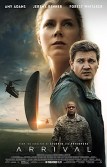
#179 Arrival (2016)
#180 10 Cloverfield Lane (2016)
#181 The Deer Hunter (1978)
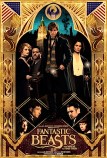
#182 Fantastic Beasts and Where to Find Them (2016)
#183 Star Trek Beyond (2016)
#184 Napoleon (1927), aka Napoléon vu par Abel Gance
#185 Jason Bourne (2016)
Arrival

Fantastic Beasts and Where to Find Them

.


  • I watched 14 new films again this month (same as last). That makes this my 30th consecutive month with 10 or more new films.
  • As I mentioned, there were quite a few films from 2016. The total is ten, to be precise, or 71.4% of this month’s viewing. I’ll rate them when I review them, but scroll down to the Arbies for more about which I liked and disliked.
  • I spent three nights watching the 5½ hours of Abel Gance’s Napoleon, which made its hotly-anticipated Blu-ray debut this month. Still only counts as one film, though.
  • Making up for last month, I found time for two WDYMYHS films. Both are excoriating depictions of wartime: Roman Polanski’s story of life in the Warsaw ghettoes during World War 2, The Pianist; and Michael Cimino’s controversial take on the Vietnam war and its effect on (American) combatants, The Deer Hunter.


The 18th Monthly Arbitrary Awards

Favourite Film of the Month
Quite a few enjoyable films this month, particularly among all those 2016 ones, but the one of the highest quality was definitely Denis Villeneuve’s venture into science-fiction drama, Arrival.

Least Favourite Film of the Month
Conversely, the weakest film this month also comes from 2016. I wanted to find the critics were wrong and side with the audiences who boosted it into the top 75 highest grossing films of all time, but no, Suicide Squad is a disappointing mess.

Longest Film of the Year (So Far)
I watched the ’59 Ben-Hur back in September, a film whose notoriously epic running time — 222 minutes, or 3¾ hours — would, most years, stand as unlikely to be surpassed. Thanks to the BFI, however, it has: Abel Gance’s silent epic Napoleon is a full 111 minutes longer at 333 minutes, aka 5½ hours.

Most Consistent Use of a Song
They’re back again: after 14 years and five films, Jason Bourne still ends with Moby’s Extreme Ways, just like every other film in the series. Never may it end.

The Audience Award for Most-Viewed New Post of the Month
I confess to being slightly surprised by this month’s most-seen post. Besting several new releases (Batman: Return of the Caped Crusaders was 2nd) and all-time favourites (Star Wars was 3rd), this month’s victor was my review of Denis Villeneuve’s arty psychological thriller Enemy.


Films that broke new ground rub shoulders with ones that settled into comfortable grooves, with everything from children’s movies about toys to adult movies about puppets.


As regular readers may have ascertained from the occasional reference I’ve made, I’m going to be away for a chunk of December. It’s not actually some big secret, it just wasn’t especially pertinent ’til now. We’re off on a family holiday to Hogwarts… in sunny Orlando, Florida. And all the other stuff, like Disney World and the Kennedy Space Center, all that jazz; but it was inspired by, as grown-up adult human beings, wanting to go to the Harry Potter theme parks. Something something for all ages, something something young at heart, etc.

So as this is posted, I’m currently… sat at home in the UK, because we fly tomorrow. Anyway, that means this blog will be quieter than normal for a bit — and as I’m away for 72% of the time it would cover, no advent calendar this year. I know I’m severely damaging your enjoyment of the holiday season, but it can’t be helped. Sorry. I’d love to tell you that I nonetheless have a mass of reviews scheduled to post so it’ll be like I’m not even gone, but I don’t. However, my 100 Favourites will continue as advertised (next up: #95 on Sunday), and there will be a couple of other reviews scattered in between, too. I may check in on comments from time to time as well, what with the connectivity of our modern world — so don’t be a stranger, y’hear?

It’ll undoubtedly have an effect on how many films I watch, though — will December destroy the 30-month run of 10+ films?!