
A busy weekend means this post is later than normal. As for the title, yeah, I saw Parasite. (I highlight that just so you don’t go expecting any actual metaphors later in this post.)
Also, as I write this I’ve realised Parasite is the first Best Picture winner I’ve actually seen at the cinema since, of all things, Crash. And the only other one is The Lord of the Rings: The Return of the King. What an elite club to be a member of…

#14 The Nightingale (2018)
#15 Johnny English Strikes Again (2018)
#16 Tag (2018)
#17 Shoplifters (2018), aka Manbiki kazoku
#18 A Star Is Born (2018)
#19 Blockers (2018)
#20 Emma. (2020)
#21 Yesterday (2019)
#21a The Crimson Permanent Assurance (1983)
#22 Monty Python’s The Meaning of Life (1983)
#23 Us (2019)
#24 Escape Room (2019)
#25 The Equalizer 2 (2018)
#26 All Quiet on the Western Front (1930)
#27 Mary Poppins Returns (2018)
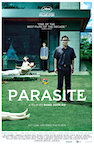
#28 Parasite (2019), aka Gisaengchung
#29 Terminator: Dark Fate (2019)
#30 Mamma Mia! Here We Go Again (2018)



- So, I watched 18 new feature films in February.
- That makes it the best month of 2020 so far. Okay, it only had one to beat, so, looking further afield, it’s the best month since last August.
- It also surpasses February’s average (previously 12.83, now 13.2) and the rolling average of the last 12 months (previously 12.75, now… 12.75, because I also watched 18 films last February. Fancy that).
- Passing #25 means I’ve passed the quarter-way point already. But the last time I didn’t get there in February was 2014 (when it took until April), so it’s not that noteworthy an achievement. Especially as, since last year, I’m meant to be aiming for 120+ films in year.
- But, good news, I’ve reached the quarter-way mark for 120, too! Ending February at #30 means so far I’m behind 2016 and 2018, but marginally ahead of 2015, 2017, and 2019.
- Lots of 2018 films this month — to be precise, nine of them, or 50% of my viewing. That’s because I’m making use of my annual month of Now TV / Sky Cinema to catch up on some misses, and as they get a lot of recent stuff first, currently that means it’s mainly 2018 misses with a smattering from 2019 (overall, 61% of this month’s viewing was via Now TV).
- Monty Python aficionados may have observed that I’ve chosen to list The Crimson Permanent Assurance separately from The Meaning of Life. It’s commonly presented as part of the film these days, but even then it’s still separated from the main feature. It was independently nominated for a BAFTA back in the day, too, so it sort of is part of the film and sort of isn’t. And anyway, while we can argue whether it counts as a standalone work or not, the fact it’s a short means I don’t give it a full number, so even if you do disapprove of listing it separately, at least it doesn’t affect my count for the year.
- This month’s Blindspot film: anti-war WW1 classic, and early Best Picture Oscar winner (so an apt choice for this month), All Quiet on the Western Front.
- As best I can tell, All Quiet on the Western Front is the only film I’ve ever seen from 1930. That’s noteworthy because the only other year since talkies came along for which this is true is 1932. Quite how I’ve ‘missed’ those two years, who knows. (If we go back into the silent era, there’s still only a few more years I’ve missed; but, as we’re talking about years with feature films, it gets a little more complicated for that period.)
- From last month’s “failures” I watched Booksmart, The Nightingale, and Yesterday.

The 57th Monthly Arbitrary Awards
 Favourite Film of the Month
This month’s viewing includes the most recent winner of the Palme d’Or, the first-ever non-English-language film to win the Oscar for Best Picture, and the movie Letterboxd users have rated the #1 of all time… all of which epithets describe the same film, of course: Bong Joon Ho’s Parasite. It’s an awful lot of pressure to put on a film the first time you watch it. I thought it was great, but how great I’m not sure. So a clearer pick here is All Quiet on the Western Front, another Best Picture winner that has stood the test of time — 90 years and counting.
Least Favourite Film of the Month
In contrast to such greatness, there was plenty of choice for the weakest movie this month. On balance, I think the dishonour belongs to Mamma Mia! Here We Go Again — even by the lowly standards set by the first movie, this follow-up is a mess.
Big Name Star Popping In Near the End of a Crummy Musical for a Couple of Minutes to Sing Part of a Song or Two …of the Month
By coincidence and the vagaries of fate, I saw Meryl Streep do this twice this month. Both were in films released in 2018, so this recognition only comes 14 months late.
Best Musical Number of the Month
They may’ve lavished A Star Is Born and Mary Poppins Returns and Mamma Mia 2 with money and star power and all the tricks of modern moviemaking, but the best song-and-dance number I saw this month remains Monty Python’s Every Sperm is Sacred.
The Audience Award for Most-Viewed New Post of the Month
No doubt bolstered by its BAFTA wins and predicted (but unmaterialising) Oscar glory, this month’s top new post was 1917.







With an end goal of 50 in mind, my Rewatchathon stays on course this month…
#6 Sherlock Holmes and the Voice of Terror (1942)
#7 Christopher Robin (2018)
#8 The Karate Kid (1984)
I still quite like Christopher Robin. Yeah, it’s just the plot of Mary Poppins remade with Winnie the Pooh, but I like Pooh bear a lot so that doesn’t bother me too much.
Some thoughts on The Karate Kid on Letterboxd, and I intend to do a ‘Guide To’ post for it some day — mainly because I enjoyed it enough that I’m intending to watch the sequels, which I’m not sure I’ve ever seen, so I’ll number and review them as new films.

Normally I start this section with all the films I missed on the big screen, but the big news nowadays is surely Netflix’s rollout of Studio Ghibli’s back catalogue (seven last month, seven today, the final seven on April 1st). The ones I hadn’t already seen, and still haven’t, from their February lot are Kiki’s Delivery Service (which I own on Blu-ray anyway), Ocean Waves, Only Yesterday, Porco Rosso, and Tales from Earthsea. Also new to Netflix and on my radar last month were Lady Bird, Hostiles, Proud Mary, and Year One (which I only notice because it was on my ‘50 unseen’ in 2009). One of their originals caught my eye, too: The Coldest Game. Sounded like a genre that’s up my street, but that’s literally all I know about it. Considering the variable quality of Netflix originals, the fact no one seems to be talking about it probably doesn’t bode well.
Over on Amazon Prime, higher profile additions this month include Emma Thompson comedy Late Night and Luc Besson actioner Anna. Also drawing my attention was Joe Wright’s Anna Karenina, returning to the streamer after five years away (that’s another from an old ‘50 unseen’ list); Super Size Me 2, the much-less-talked about sequel to the much-talked-about documentary; Anthony Hopkins / Ryan Gosling thriller Fracture (a film I was just about aware existed but had ignored; but, in the sea of mediocrity that’s added to Amazon, that recognition was enough to make me read the blurb and note the decent score it holds on IMDb); and Spy Game, which I’ve seen (it’s in my 100 Favourites, even), but only own on DVD, so here’s my chance to rewatch it in HD.
And, as I mentioned, I’ve currently got Now TV for a little bit yet, so some of the stuff I’d particularly like to catch on there includes Burning, The Kid Who Would Be King, The Wedding Guest, Can You Ever Forgive Me?, Crazy Rich Asians, and Mary Queen of Scots. Plus, all the Karate Kid sequels. And, drawing my attention away from that limited-time offering to something else I’ve paid for, I’ve got rentals of Hustlers and Fast & Furious: Hobbs & Shaw that expire in March (both of those were on my most recent ‘50 unseen’, incidentally).
Away from the internet, I got a bit carried away with Blu-ray purchases this month — there are 16 I could list here. Top of the pops is Joker. Also, Criterion’s release of Roma, which I got more for the special features than the film itself (because I can watch the latter on Netflix in UHD). Also on the rewatch list were Gods of Egypt in 3D (like I said would happen); one of my favourites from last year, Searching, which I got new for just a couple of quid; and Phantom Thread, which I also mentioned last month when it came to Netflix, but I finally got on UHD disc (in a two-for-one with Angel Heart). But the biggest single chunk belongs to 88 Films release of Jackie Chan titles, of which I picked up six this month, including four in a sale (Battle Creek Brawl, Dragon Fist, Snake & Crane Arts of Shaolin, and To Kill with Intrigue) and two newer releases (Crime Story and The Protector).
Finally, ending where I normally begin, the stuff I missed on the big screen. I nearly went to see Birds of Prey, but I’ll surely buy it for my disc collection eventually so I decided to save the money and wait. I’ve already pre-ordered The Lighthouse, which didn’t come to my local at all. I was never likely to bother with Dolittle or Sonic the Hedgehog, though I’m sure I’ll catch them on streaming sometime. I’m less sure about The Call of the Wild, thanks to that terrible looking CG dog. I’m all for using effects for stunts and stuff, but when it’s also in regular scenes interacting with humans, it just looks fake. Finally, The Invisible Man just came out to strong reviews. I don’t normally bother with horror on the big screen (I prefer to get scared in the secrecy of my own home, thanks), but I’m tempted to make an exception.

More ticking off misses from 2018/19 courtesy of Sky Cinema. Cinema trips seem unlikely (maybe for Mulan), with my attention on the month after and the return of Britain’s best-known secret agent.

 On what you might unkindly call a superficial level, the third season of Netflix’s signature series was thoroughly entertaining — it’s frequently funny and exciting, with cool moments aplenty (especially in the last couple of episodes), and many enjoyable callbacks to both ’80s pop culture and within the show itself. But dig any deeper and it begins to seem less surefooted, with what felt to me like muddled themes and character arcs, and a sense that the mythology was treading water. I don’t particularly object to the way any characters were treated, nor the destinations any of them reached (especially as a fourth season was inevitable, so wherever this run finished up was only ever temporary), but I didn’t feel like they were being guided anywhere with any real purpose. There’s something to be said for storylines like that, but when you’re trying to play some kind of redemption arc, or a coming-of-age tale about burgeoning independence (or whatever), I feel like you need to be a bit clearer-eyed. But hey, I still enjoyed it a lot — it’s a fun watch, and I imagine even more so if you have nostalgic memories of an ’80s childhood — I just think there’s still some room for finessing.
 Alan Moore and Dave Gibbons’s graphic novel Watchmen is a seminal work of the form — I’m sure you don’t need me to tell you about that at this point. Over the past decade it’s been
 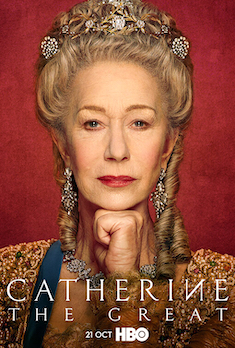 HBO and Sky Atlantic have teamed up for this lavish four-parter about the life of the famous Russian ruler, conceived by and starring Helen Mirren. The big bucks those broadcasters are known for are all over the screen here — it looks suitable sumptuous, with grand locations that positively shine, especially in UHD. Unfortunately, nothing else about the production is up to scratch. The writing is thoroughly mediocre — it most reminded me of The Tudors, although that seemed to know it was a bit of trashy fun, whereas I think Catherine the Great wants to be taken very seriously. But the dialogue is uninspiring, the characters uninteresting and underdeveloped (we’re told the relationship between Catherine and Potemkin is some great love affair, but they strop around like moody, jealous teenagers), and the flat performances do nothing to elevate any of it — and despite her general acclaim, Mirren is probably the weakest of the lot. Pretty, then, but vacant.
 The BBC’s 1970s policy of junking programmes because they supposedly no longer had commercial value is a familiar topic for Doctor Who fans, who’ve spent decades hoping and hunting for copies of missing episodes. But it was an organisation-wide policy, so Who was far from the only show that suffered — Dad’s Army was another. It’s a perennially popular sitcom here (even today repeats land among the most-watched programmes of the week), so you can see why it made commercial sense to invest in recreations of the missing episodes — especially as there’s only three of them.
 Regular readers will surely remember
 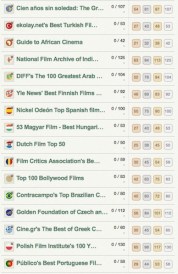 There are pretty obvious reasons why I’ve never seen any films on many of those lists — quite a lot are country or continent specific, and as Western film viewers we’re notoriously poor at having seen movies from, say, Africa. The lack of acclaimed films I’ve seen from the likes of Belgium, Finland, Holland, Hungary, Norway, Poland, Portugal, and Spain is my own fault though, I guess. Anyway, this is something I intend to rectify in the coming days / weeks / months / years / decades — however obscure some of my missing lists may seem, there’s at least one film I’ve heard of on all but one or two of them, so there’s that.
 Why is this film notable? In fact, is it notable? Well, it was voted in to The 50 Greatest Cartoons by some of 1,000 animation professionals, so there’s clearly something there. It was created by animator Marv Newland while he was a film student in L.A., after a live-action project he’d been planning to submit was scuppered (according to
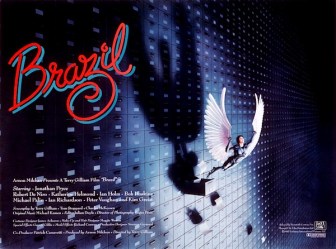 I normally aim for a “critical” (for want of a better word) rather than “bloggy” (for want of a better word) tone in my reviews, just because I do (that’s in no way a criticism of others, etc). Here is where I fail as a film writer in that sense, though, because I’m not even sure how I’m meant to review Terry Gilliam’s dystopian sci-fi satire Brazil, a film as famed for its storied release history as for the movie itself.
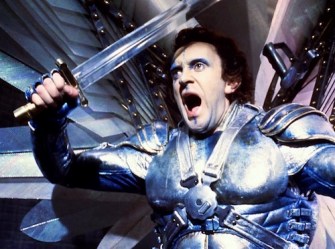 I’m sure there’s a thorough list of differences somewhere, but one good anecdote from Gilliam’s audio commentary tells how the ‘morning after’ scene was cut from the European release so last-minute that it was literally physically removed from the premiere print. (Gilliam regretted it immediately and it was restored for the video release.)
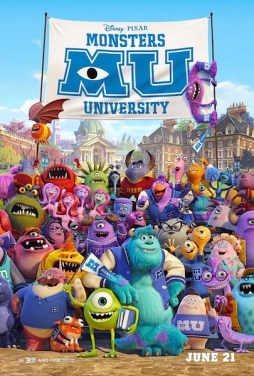 Pixar’s fourth sequel is more
  The first Monty Python theatrical release (four more would follow; five if you count last year’s
  For my money, it becomes a bit tiring watching sketches for so long, even with the attempts made to link them together — it doesn’t form a narrative, so much as a series of casual crossovers that would make re-arrangement in an edit impossible. In and of themselves, however, many of the skits hit their mark.
 Reportedly the Pythons didn’t consider the film a success, hampered by interfering higher-ups and a ludicrously low budget (
 100Films.co.uk