
François Simard, Anouk Whissell & Yoann-Karl Whissell | 93 mins | Blu-ray | 2.35:1 | Canada & New Zealand / English | 15
 I’ve observed before that the ’80s seem to be everywhere in film these days, and here’s another example: Turbo Kid is in every respect an homage to low-budget ’80s genre fare.
Set in the future year 1997, after an unspecified apocalypse has devastated the world and made water a rare commodity, orphaned teen The Kid (Munro Chambers) survives by scavenging junk and enjoying the comic book adventures of BMX-riding superhero Turbo Rider. The Kid encounters and accidentally befriends the quirkily obsessive Apple (Laurence Leboeuf), who is promptly kidnapped by agents of water-controlling maniac Zeus (Michael Ironside). While escaping the kidnappers, the Kid stumbles across the remains of the real Turbo Rider, including his energy gauntlet weapon — perfect for rescuing his new friend and living his dreams.
All of which is semi-incidental, because the point of Turbo Kid is not this storyline, but the genre and era elements that have been used to build it, and the stylistic elements that have been cribbed to execute it. I can’t cite many specific points of reference, because I’m not au fait enough with the kind of cheapo, grindhouse-y, watched-on-video-by-’80s-kids genre films that the film’s trio of writer-directors are riffing off (beyond the obvious “Mad Max on BMXs”, one reviewer’s observance of which is regularly featured on the film’s posters and DVD/Blu-ray covers), but the general feel of those kind of films is certainly evoked. It’s there in the bonkers plot; the bizarre characters, like a kick-ass arm-wrestling-champion cowboy (Aaron Jeffery); the post-apocalyptic world that’s just a quarry somewhere; and the very gory practical special effects. Very, very gory. Gleefully, perversely gory. It’s so over-the-top that it’s not genuinely disgusting, of course, but it’s certainly over the top. Way over the top. At times, inventively, hilariously over the top.
 Then there’s the score, which is of course all ’80s synths, in a similar style to the score of The Guest. Unfortunately, the score is often indiscriminately applied, like someone composed a generic ’80s score and then slapped it on with minimal regard to what was occurring on screen, meaning some moments fly past without the requisite emphasis. But perhaps this was deliberate — I can well believe that’s what cheapo efforts of the era did, and doing it here is a deliberate reference. This is a bit of a problem with the whole film: points where you can’t be sure if it’s being deliberately wonky or poorly-done as part of the homage, or if there’s some tweaking required. The pace could certainly do with some attention, especially early on. It’s only 93 minutes long, but it would be even better if it was only 85.
However, when it’s on form, there’s a lot of fun to be had with Turbo Kid. I imagine its greatest admirers will be those who lived through and enjoyed the era it’s acting as tribute to, but it’s also entertaining for those who have a broad-strokes familiarity with that period. Although some tightening and polishing would make it even more effective, viewers happy to indulge in its self-consciously retro mindset should find enough to like, and may also consider this score a little harsh:

Turbo Kid is available on Netflix UK from today.
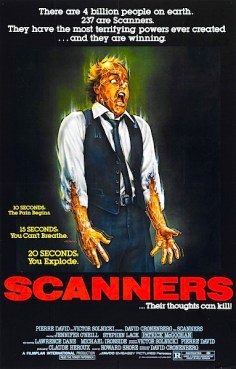 If you’re versed in sci-fi/fantasy cinema, you’ve heard of Scanners even if you haven’t seen it: it’s the one with the (in)famous exploding head. That moment is distinctly less shocking for those of us coming to the film as a new viewer at this point: gore perpetuates genre cinema nowadays, so it’s less striking,
 emotional journey or something is the core of the film. As if to make up for it, McGoohan is of course excellent, acting everyone else off the screen, while Ironside makes for an excellent villain, naturally. Some say that the final psychic battle, between Lack and Ironside, is underwhelming, but I thought it was excellently realised, a tense and effective struggle. Such brilliant effects and sequences are scattered throughout the film.
 Post
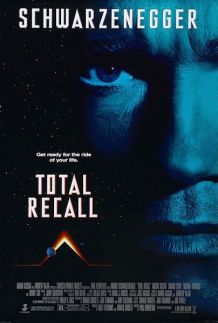
Post  depending on your point of view, either supports the “it was all a dream” reading or is just a case of artistic licence, hardly uncommon in SF cinema.
 Perhaps it’s ultimately destined for an afterlife as a film representative of its era; the kind of thing that comes up as a footnote or personal favourite in texts & documentaries specifically discussing things like The Sci-fi Cinema of the ’90s. Or perhaps I’m doing it a disservice. We shouldn’t really try to predict these things too much, it’ll only lead to embarrassment when the opposite happens.
 100Films.co.uk