
Hayao Miyazaki | 125 mins | Blu-ray | 1.85:1 | Japan / English | PG / PG
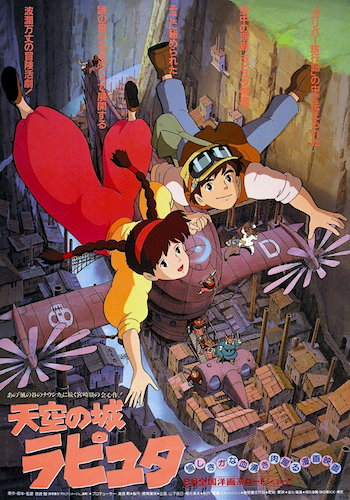
The names Hayao Miyazaki and Studio Ghibli go hand-in-hand (I wouldn’t be a bit surprised if quite a few people think they’re synonymous, i.e. that all Ghibli films are directed by Miyazaki), but his first two features (The Castle of Cagliostro and Nausicaä of the Valley of the Wind) were produced before Ghibli’s formation. So it’s Laputa, his third film, that is actually Ghibli’s first — which makes it appropriate to look at today, as it’s also one of the first titles being made available under Netflix’s new deal with Ghibli.* (Though if you search Netflix for “Laputa”, you won’t find it.)
Acclaimed as one of the first major works in the steampunk subgenre, Laputa takes place in a Mitteleuropean alternate past — the architecture is inspired by Welsh mining villages; the uniforms and hardware by historical German military; there are steam-powered automobiles and flying machines; but there’s also magic-like stuff, so it’s not just tech-based. In this world we meet Sheeta (voiced in Disney’s English dub by Anna Paquin, retaining her New Zealand accent), a young girl wanted by both the military and sky pirates for a necklace she wears. When she falls from an aircraft, the necklace glows and lowers her gently to the ground — and into the life of Pazu (James “Dawson’s Creek” Van Der Beek), a young orphan who immediately resolves to help her. And so off they go on an adventure to find out just what’s so desirable about Sheeta’s necklace, and what it has to do with the legendary flying city of Laputa.
If you watched Miyazaki’s first three movies ignorant of the knowledge they came from the same writer-director, I’m sure you’d work it out for yourself. It’s an action-packed adventure laced with humour and morally grey characters, like Cagliostro, with a well-imagined fantasy world populated by flying machines and brave young heroines, like Nausicaä. But it’s no act of self-plagiarism — Miyazaki is too inventive for that. His world-building is first rate, sketching in the details of this alternate reality in between character building scenes and thrilling action sequences. If this were live-action, it would make an exemplary action/adventure blockbuster, so well paced and structured is it.

That’s why it immediately clicked with me as an instant favourite among both Miyazaki’s and Ghibli’s oeuvre. It’s unquestionably an adventure movie, so it lacks the heartfelt depths of something like My Neighbour Totoro, but it’s at least the equal of Cagliostro in terms of how wildly exciting the set pieces are. And it’s not as if it’s totally empty headed, touching on longstanding universal themes like the corruption of power, and with a minor-key ecological message too (another Miyazaki staple).
I always feel like I should watch anime in Japanese, and I often do, but when the English voice cast includes Mark Hamill, well, that’s good enough for me. He’s the villain, channeling a certain amount of his Joker (but not too much) into a government secret agent in pursuit of Sheeta and in search of Laputa. He’s just one of a memorable cast of characters — I mean, did I mention there were sky pirates? They’re as awesome as they sound, bringing both broad humour and fuelling several action scenes (you’d expect nothing less of frickin’ sky pirates, right?) One of the most memorable characters transcends the language barrier: a giant speechless robot, questionably friend or foe, who leaves a mark almost as great as the Iron Giant’s but in considerably less screen time. (Considering how much Pixar are renowned fans of Miyazaki, and that Brad Bird made Iron Giant over a decade after Laputa’s debut, I wouldn’t be surprised if there was at least a little cross-pollination.)
Like any good blockbuster, Laputa has it all: thrills, humour, emotion, wonder… It’s the complete package. Plus, that level of broad familiarity (it wouldn’t take too many steps to imagine this remade as a Hollywood blockbuster, although they’d inevitably mess it up somehow) probably makes it the perfect starting point for any newbies to anime or Ghibli.

Laputa: Castle in the Sky is available on Netflix from today. It placed 11th on my list of The Best Films I Saw in 2020.
* If the news passed you by: Netflix have acquired the rights to 21 Studio Ghibli films (that is, their whole back catalogue of features except Grave of the Fireflies, which has separate rights issues, plus Nausicaä) for most of the world (the USA, Canada, and Japan are excluded). They’re being released in three batches of seven — the first lot today, the next on March 1st, and the final ones on April 1st. As well as Laputa, today’s selection includes My Neighbour Totoro, which I reviewed here, plus Kiki’s Delivery Service, Only Yesterday, Porco Rosso, Ocean Waves, and Tales from Earthsea. ^


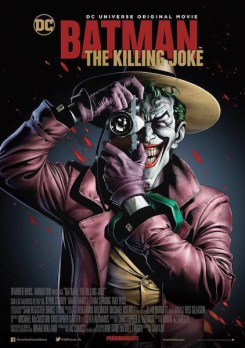 Alan Moore and Brian Bolland’s 1988 graphic novel The Killing Joke is one of the seminal works of superhero comic books’ move into seriousness in the ’80s, sitting just behind the likes of Watchmen, The Dark Knight Returns, and Batman: Year One in terms of significance. It’s also seen by many as the definitive story about Batman’s nemesis, the Joker, and has influenced the live-action interpretations of both Jack Nicholson & Tim Burton and Heath Ledger & Christopher Nolan. It is not without controversy, however, thanks in large part to its treatment of Barbara Gordon / Batgirl; and Moore has since semi-disowned it, saying it has no intrinsic value because it has nothing to say about real human beings, only commenting on the comic-book-y relationship between Batman and the Joker.
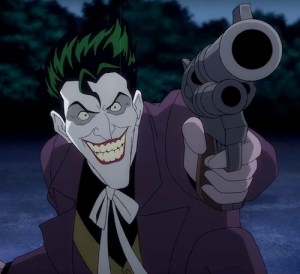 we get to the familiar meat of the story, where the Joker (Mark Hamill) decides to prove a point — in a violent and twisted fashion, naturally.
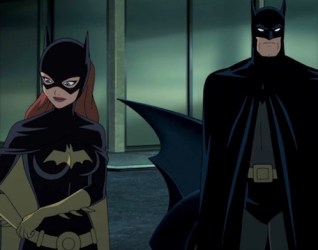 To say the least, this doesn’t seem like the best way to go about making her an independent, rounded human being — it comes off like fan service. No, worse: fan fiction. A scene earlier on where she explains her Bat-infatuation to her gay best friend is presumably meant to suggest a genuine motivation for the eventual sexy times, but it all comes across as a great big excuse.
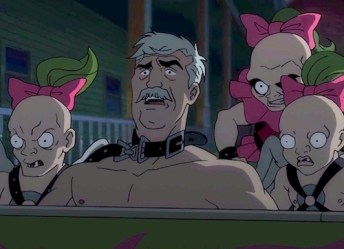 which brings its own problems to the story. But while he is a familiar figure in the Batman mythology, and so by extension to anyone who’s likely to watch this film, it’s also a standalone movie, not part of a series, and so it would be beneficial to establish his character somewhat before the Joker’s plan for him gets underway.
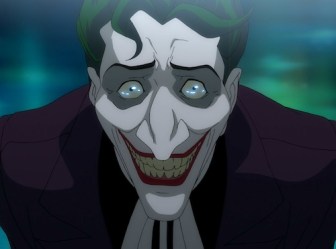 (It’s somewhat ironic, then, that (as ever) Alan Moore doesn’t receive an onscreen credit while Bolland does.) There are a handful of effective visuals here (the Joker’s gleeful face as he turns on the amusement park, its lights twinkling in his eyes), but they’re the exception to work which is adequate — good for what it is, even — but unremarkable.
 2016 Academy Awards
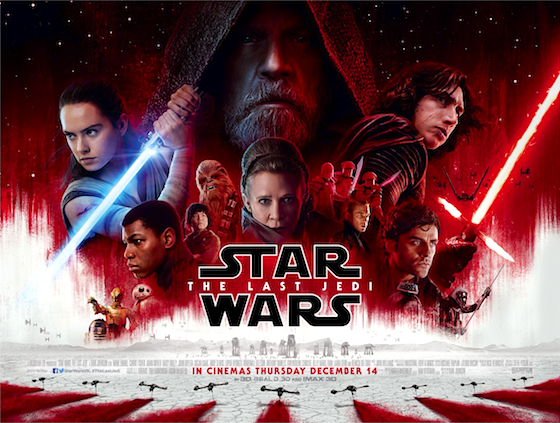
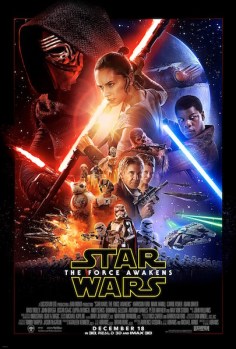 Star Wars: The Force Awakens is not the best film of 2015. Not according to the Academy of Motion Picture Arts and Sciences, anyway, who didn’t see fit to nominate it for Best Picture at tomorrow’s Oscars. Many fans disagree, some vociferously, but was it really a surprise? The Force Awakens is a blockbuster entertainment of the kind the Academy rarely recognise. Okay, sci-fi actioner
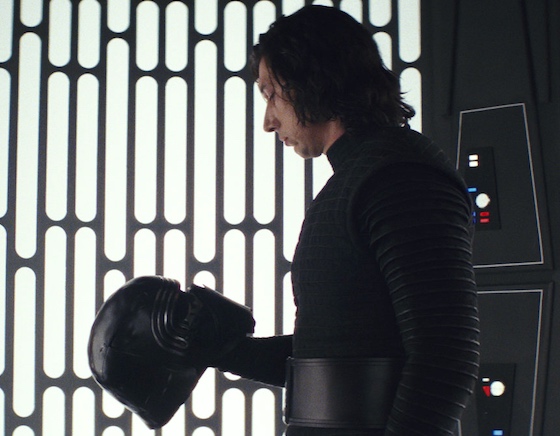
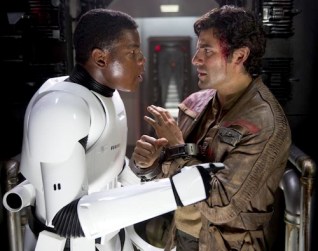
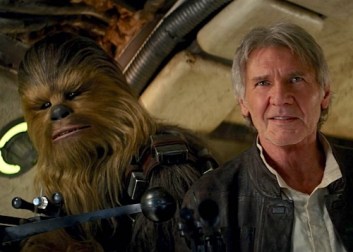
  I too could talk about the likeable new heroes; the triumphant return of old favourites; the underuse of other old favourites; Daisy Ridley’s performance; John Boyega’s performance; the relationship between Rey and Finn; the relationship between Finn and Poe; the success of Kylo Ren and General Hux as villains (well, I thought they were good); the terrible CGI of Supreme Leader Snoke; the ridiculous overreaction to the alleged underuse of Captain Phasma; that awesome fight between the stormtrooper with that lightning stick thing and Finn with the lightsaber; the mystery of Rey’s parentage; the mystery of who Max von Sydow was meant to be (and if we’ll ever find out); some elaborate theory about why Ben wasn’t called Jacen (there must be one — elaborate theories that will never be canon are what fandoms are good for); the way it accurately emulates the classic trilogy’s tone; the way it’s basically a remake of
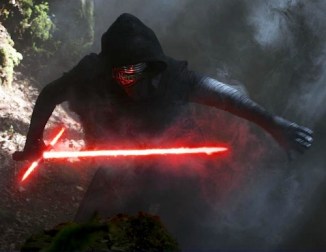 J.J. Abrams seems to have tricked some people into thinking he’s a great director with The Force Awakens (rather than just a helmer of workmanlike adequacy (when he’s not indulging his lens flare obsession, at which point he’s not workmanlike but is inadequate)), and I think that’s partly because it’s quite classically made. Yeah, it’s in 3D, but the style of shots used and — of most relevance right now — the pace of the editing help it feel in line with the previous Star Wars movies. Some of the more outrageous shots (often during action sequences) stand out precisely because they’re outside this norm. Perhaps we take for granted that Abrams delivered a movie in keeping with the rest of the series, because that’s The Right Thing To Do, but that doesn’t mean he had to do it. And the transitional wipes are there too, of course.
 No one knows what the difference is between these two categories. I’m not even sure that people who work in the industry know. As a layperson, it’s also the kind of thing you tend to only notice when it’s been done badly. The Force Awakens’ sound was not bad. It all sounded suitably Star Wars-y, as far as I could tell. That’s about all I could say for it. It feels like these are categories that get won either, a) on a sweep, or b) on a whim, so who knows who’ll take them on the night?
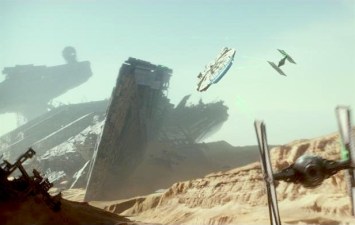 “restraint […] applying the basic filmmaking lessons of the first trilogy,” according to
  those elements aren’t gone about in an awards-grabbing fashion anyway. In the name of blockbuster entertainment, however, they’re all highly accomplished.
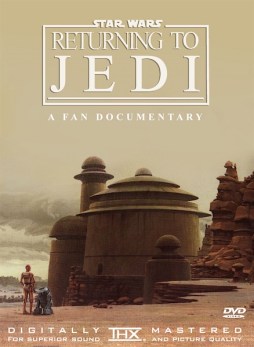 Returning to Jedi completes fan/editor Jamie Benning’s trilogy of documentaries about
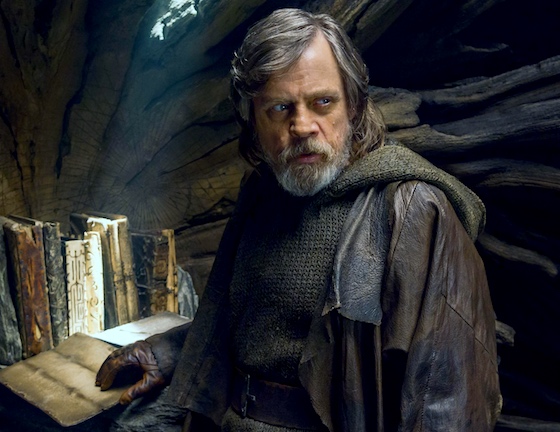
  and Mark Hamill expected more darkness for Luke — but I guess they weren’t to be heard by an increasingly autocratic Lucas (reports of him essentially directing Jedi for Richard Marquand, or of his clash with the Directors’ Guild that prevented Steven Spielberg from directing the film, go unmentioned here).
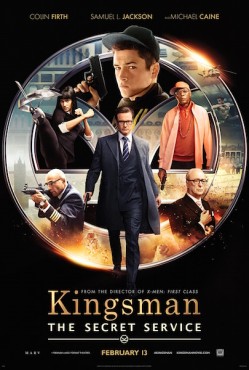 The team behind
 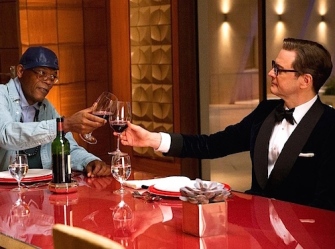 An even bigger part of the film’s triumph, and what likely led it to over $400 million worldwide in spite of its higher-than-PG-13 classifications (it’s Vaughn’s highest-grossing film to date, incidentally; even more so than
 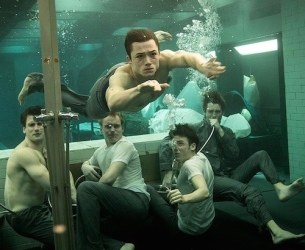 rather than the supposed real-world universe of spy movies. What the worldwide success of Kingsman proves is that audiences don’t need the set-dressing of superpowers to accept an action movie that’s less than deadly serious. It’s a place I don’t think the Bond movies could go anymore — not without accusations of returning to the disliked Moore or late-Brosnan films — but it’s one many people clearly like, and Kingsman fulfils it.
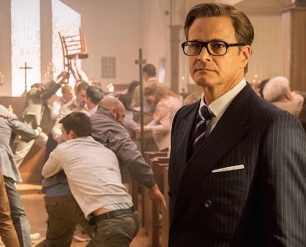 Criticisms of the film tend to pan out to nought, in my opinion. Is there too much violence? There’s a lot, certainly, but part of the point of that church sequence (for instance) is just how long it goes on. Other excellent action sequences (the pub fight you might’ve seen in clips; the car chase in reverse gear; the skydiving) aren’t predicated on killing. Similarly, Samuel L. Jackson’s baseball-capped lisping billionaire is a perfect modern riff on the traditional Bond villain, not some kind of attack on Americans or people with speech impediments. Some have even attempted a political reading of the film, arguing it’s fundamentally conservative and right-wing because the villain is an environmentalist. Again, I don’t think the film really supports such an interpretation. In fact, I think it’s completely apolitical — just like its titular organisation, in fact — and such perspectives are being entirely read into it by the kind of people who read too much of this kind of thing into everything.
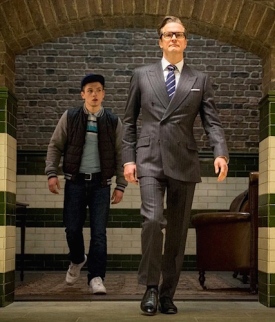 Not everything hinges on being wall-to-wall groundbreaking, though, and Kingsman has so much to recommend it. It ticks all the requisite boxes of being exciting and funny, and some of its sequences are executed breathtakingly. The plot may move along familiar tracks — deliberately so — but it pulls out a few mysteries and surprises along the way. There’s an array of likeable performances, particularly from Firth, Egerton (sure to get a lot of work off the back of this), Jackson and Strong, and Sofia Boutella’s blade-legged henchwoman is yet another why-has-no-one-done-that great idea.
 100Films.co.uk