
I ended my last (ever so popular and entirely uncontroversial) TV column by asking, “what can possibly follow Game of Thrones?” Well, here’s the answer…
To get specific, this month’s column includes the first two seasons of BBC America’s big success, Killing Eve; the newest work from TV auteur Stephen Poliakoff, Summer of Rockets; the opening episodes of ITV’s new Downton-wannabe, Beecham House; and the latest season of internal affairs thriller Line of Duty. Plus the usual array of bits & bobs, and stuff I meant to watch but haven’t. (No Twilight Zone this month. It’ll be back.)

Killing Eve Season 1
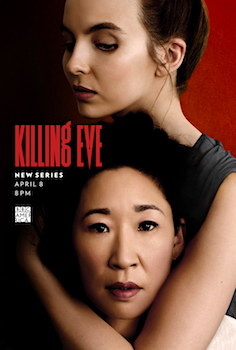 Adapted (loosely, I understand) from a series of novellas, BBC America’s Killing Eve is a spy thriller with a difference. Quite a few differences, really. That’s no doubt part of why it’s been such a success. Its US ratings aren’t huge, but it seemed to be talked about all over Twitter when it was airing there, and it went on to win some awards. When it finally made it to UK screens some five months after its US premiere, UK viewers went even bigger for it (it gets more than ten times as many viewers here as in the US, according to the figures I found), and it scooped up even more awards.
If you’re not familiar with it, it follows lowly MI5 agent Eve (Sandra Oh), the only person to spot a pattern in a string of unconnected murders. They have indeed been carried out by one person, assassin Villanelle (Doctor Foster’s Jodie Comer), a quirky, fun-loving young woman who brings that same attitude to her skilful kills. When Eve is appointed to lead an MI6 task force hunting Villanelle, the two women become fascinated with each other, and a strange bond grows between them.
The espionage thriller aspect is a mixed bag. There’s an early plot line about a mole that ended with the most obvious “could be a mole” character being ‘unmasked’ as a mole, but then there’s a lot more intrigue to be found in the secretive machinations of Eve’s MI6 supervisor (Fiona Shaw), Villanelle’s handler (The Bridge’s Kim Bodnia), and just who is employing Villanelle and why.
But, as written by Fleabag creator Phoebe Waller-Bridge (who served as showrunner for the first season), it all plays out with offbeat humour and a certain degree of comical groundedness — even as the life of an international assassin is as wildly improbable as, well, it is, Eve’s life is a recognisable world of church hall bridge clubs, wheelie suitcases, and microwaved shepherd’s pie. The comedy that arises from these culture clashes is a big part of the show’s charm.
Killing Eve Season 2
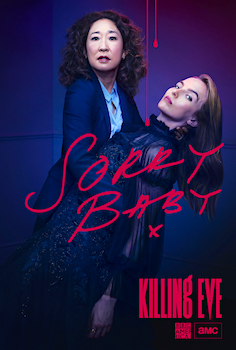 The second season is still airing in the UK (people who didn’t even notice that five-month wait for season one got ever so het up when the US got the second run two months before the UK), so no spoilers here. Season two brings with it a new showrunner, and it does seem to lack some of that special spark in the writing, although to emphasise that as a criticism would be unfair: it’s still a lot of fun, and the cast know how to get the most out of the material. With Villanelle on the back foot and Eve diverted onto another serial killer case (a subplot which peters out long before it’s been used for maximum drama, sadly), there’s a different dynamic to the early part of the season. Later on (in the episodes that’ll air next month over here) things come together in new and surprising ways, which is more rewarding. It lacks the striking freshness of the first season, but it still has its moments. And, of course, it leaves things in an intriguing place for the already-confirmed third season.
Summer of Rockets
 I’m not sure there are many people like Stephen Poliakoff working in TV nowadays — people who are seemingly given free rein to author standalone miniseries exactly how they want. I’m sure it’s more complicated behind-the-scenes than it looks from the outside, but it appears like Poliakoff’s reputation is solid enough that he’s allowed to write and direct with his own particular voice for entire six-episode stories. Honestly, I’ve skipped his last few, because I haven’t always found his work wholly engaging, but this espionage-tinged series sounded more up my street. Like Killing Eve, it’s an idiosyncratic take on the spy genre; though whereas that’s quirkily comical, Summer of Rockets is more rooted in period family drama.
It stars erstwhile Bond villain (and regular radio Bond) Toby Stephens as Samuel Petrukhin, a Russian-Jewish émigré who’s keen to be thought of as an Englishman but can’t quite escape his background in the highly structured society of the UK, especially as it’s 1958 and the Cold War is at its height. After accidentally befriending a society lady (Keeley Hawes) and her MP husband (Linus Roache), Samuel is approached by MI5 to feed them information about his new friends. But why? And are the men from MI5 actually on the level? Meantime, Petrukhin’s teenage daughter is being forced to attend society parties she has no interest in to help bolster the family’s status, and his son is being sent off to boarding school for the same kind of reasons. Apparently it’s semi-autobiographical — I guess that comes more from the latter subplots than the spying stuff. It all plays out with the pace and air of an auteur drama, making it feel a bit heavy-going and possibly impenetrable in its early episodes, but I warmed to it immensely as it went along. I love traditional, genre-based spy thrillers, but it’s also nice to see something that takes elements of that but plays it with a few different flavours.
Beecham House Series 1 Episodes 1-2
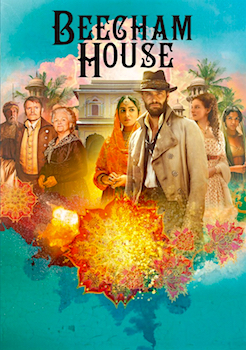 It’s been a few years since Downton Abbey ended now, so it makes sense ITV continue to search for a replica of its success. I think Victoria ticked that box for a while, until its ratings sloped off against Poldark… and so now we have Beecham House, which mixes a bit of Poldark into the familiar period soap opera mix. There’s also some pedigree behind the camera: the series is co-created, -written and -directed by Gurinder Chadha of Bend It Like Beckham fame. I think it’s meant to be vaguely educational, too, as it’s set in a period of Indian history a bit earlier than we’re familiar with from other British Raj dramas.
Well, I’m not sure how successfully any of that has translated onto the screen. Most of the main characters are white Englishmen and women, including the lead, John Beecham, a kind of Poldark-y, Indiana Jones-y figure — a former soldier who left the East India Company because he didn’t like their values. He believes India should be ruled by Indians, you see… although the current ruler is set up to be one of the series’ villains, as his suspicion of Beecham is standing in the way of our hero’s business plans. But it’s okay, because the house’s servants are all locals, and they’re a funny bunch so we like them. I guess your mileage will vary on whether the show is outright regressive or just not as progressive as it perhaps ought to be, given how they were talking it up.
But even leaving that aside, the exposition-heavy dialogue is frequently leaden and undramatic, leaving the cast floundering unsuccessfully to breathe some life into their characters. It all looks suitably lavish, thanks to copious location filming and a no-doubt-healthy costume budget, but the lack of polish where it matters will sink the programme unless it can somehow improve quickly. But then again, it is on ITV, so you never know, it might run for years and years at this level…
Line of Duty Series 5
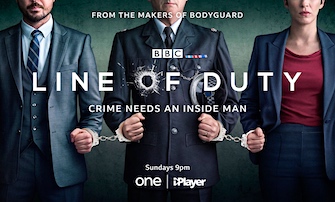 Every series Line of Duty introduces us to a new case of possible police corruption for the dedicated boys and girls of AC-12 to expose, and every series it turns out to tie into the overarching tale of deep-rooted links between organised crime and a never-ending parade of bent coppers. But could they finally be getting to nub of it all? They’ve got a solid lead… and so, it seems, does their newest case: an undercover officer who seems to have gone native, but might actually be onto the top man behind it all. The real problem is, he suspects it’s good ol’ Ted Hastings, the head of AC-12 himself. Well, who better to run police corruption than the guy in charge of investigating corruption? And it forces his underlings to ask: are his borderline-illegal actions just bold moves to get the job done, or is he trying to cover for something?
So never mind “who watches the watchmen,” who watches the watchmen who watch the watchmen? Well, turns out it’s Anna Maxwell Martin, popping in for the last couple of episodes as a very by-the-book copper to interrogate the suspected mole to end all moles. Except she’s so by-the-book, so keen to catch out our one-time (and possibly still) hero, that you may wonder: who watches the watchmen who watch the watchmen who watch the watchmen? If that makes your head spin… well, that’s Line of Duty for you.
Things to Catch Up On
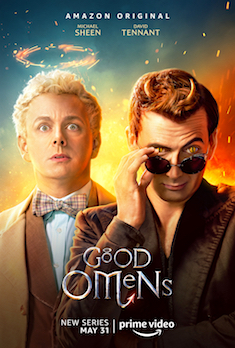 This month, I have mostly been missing stuff left, right and centre due to my house move. Sorry to bring that up again, but it’s really upended my viewing schedule. Headliners include the Amazon/BBC adaptation of Good Omens — it’s one of my favourite novels, it’s adapted by one of the original authors, and it stars some of my favourite actors, so I’ve been very much looking forward to it; but because of all that I want to be able to sit down and watch it properly, and I’ve just not found the time yet. Another is the final outing for the MCU on Netflix, Jessica Jones season 3, which is perhaps blighted by the fact it’s 13 episodes long — that wasn’t a lot once upon a time, but as things trend down to 10 or 8 or even the good old UK standard of 6, it feels like more of a commitment. Other things that have been similarly afflicted include the feature-length Game of Thrones making-of, The Last Watch; film-to-TV sitcom adaptation What We Do in the Shadows (and I loved the movie, so I must get round to it); the other new sitcom starring Matt Berry, Year of the Rabbit; and Chernobyl, which I was just going to skip (there’s so much “great TV”, no one can watch it all), but the extremity of the praise it’s garnered has changed my mind on that one.
Next month… Stranger Things 3 is out (in just a few days’ time, in fact), but I’m off on holiday, so it’ll have to wait ’til I get back.
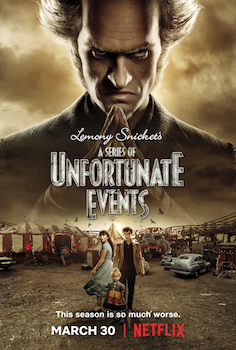 Abandon your vapid, facile distractions and set aside your very fine dramas, because it’s time to indulge in some vicarious fearsome disaster with the return of Netflix’s venerable family delight — a phrase which here means: A Series of Unfortunate Events is back.
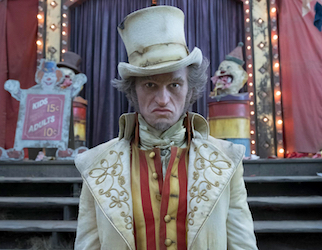 Neil Patrick Harris is having a whale of a time as Olaf and all his varied aliases, while the apparent earnestness of child actors Malina Weissman and Louis Hynes is clearly well measured for effect rather than poor work. There’s an array of memorable guest performances this season as well, from Kitana Turnbull, fantastically horrid as Carmelita, a little-goody-two-shoes teacher’s-pet bully the Baudelaires encounter in the opening two-parter; to Lucy Punch as an obsessive fashionista; to Sara Rue as a new inductee into the secret organisation trying to help the Baudelaires. Best of all is Nathan Fillion, born to play the fast-talking dashing hero who gets a ton of the best lines. If there’s a downside, it’s that we don’t see enough of some people. Unlike most kids’ fare (and, let’s be honest, some stuff made for adults), this isn’t a show where good is always rewarded and bad behaviour always punished, and that means some people may be shuffling out before we’ve had as much as we’d like. I guess the clue was in the title…
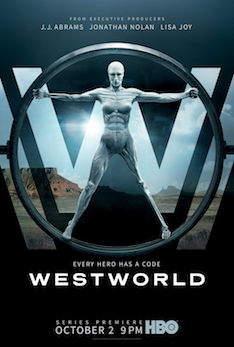 With season two imminent (it begins tomorrow, people!) I finally got my behind in gear (it’s only taken 18 months) and missioned my way through the first season of HBO’s reimagining of
  During its production Westworld hit the headlines because they shut down production for a while to retool the scripts and hone the story. Maybe this was why. If so, it paid off, because from the fifth episode things pick up considerably. Developments and twists really kick the mysteries into gear. Scenes between characters begin to carry more meaningful dialogue and affecting emotion. There’s even some action to give it a nice adrenaline kick at times. Rather than feeling like it’s ambling nowhere in particular, you feel like showrunners Jonathan Nolan and Lisa Joy have some very particular things in mind, but good luck guessing what they are because there are many surprises in store: however close you think you are to uncovering Westworld’s games, someone always has something else up their sleeve. It develops an almost
  The other most striking thing about the show are the performances. It’s like an acting masterclass: there are numerous fine performers here, and they’re all doing their best work. Ed Harris, Anthony Hopkins, Thandie Newton, Evan Rachel Wood, Jeffrey Wright… they’re all so magnificent that I don’t know who to single out without going on forever. And that’s not to undersell the rest of the cast either, many of whom would be said to excel in most other shows, but here there’s just so much raw talent on display.
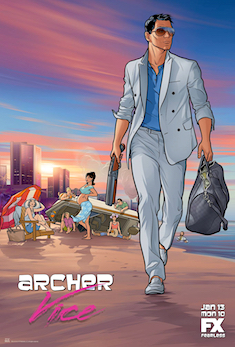 Here in the UK, animated spy-comedy Archer originally aired on Channel 5, until they started really titting about with the scheduling, which is what led me to drop off watching. It’s all on Netflix nowadays though, so I’m finally getting back into it.
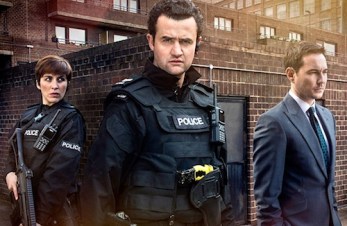
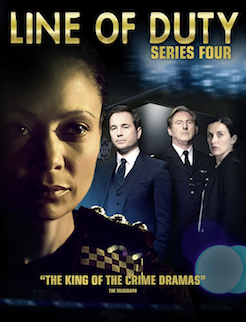 Another superb performance from Thandie Newton here, as the subject of AC-12’s latest internal affairs investigation. She’s convinced she’s arrested a notorious serial killer known as “Balaclava Man”; our faithful heroes reckon she’s cut corners, overlooking serious concerns about the evidence; the higher-ups who were exerting pressure on her to close the case would rather it all just went away. And as is the Line of Duty way, some shocking early developments send things spiralling in different directions. After the programme had become increasingly mired in its multi-season meta-arc
  While I very much enjoyed
  This month, I have mostly been missing the BBC’s miniseries adaptations of China Miéville’s The City and the City and Agatha Christie’s Ordeal by Innocence, both of which I’ve been saving up to watch in a more condensed fashion once they’re finished. The Christie ended on Sunday but the Miéville is only halfway through. Anyway, I imagine I’ll cover both next month. Also released this past month was Netflix’s big-budget reboot of Lost in Space, which I would’ve watched if I hadn’t been missioning my way through Westworld this past week. That might be here next month also. And finally, the last-ever season of The Best Show On TV™, The Americans, is underway in the US. Again, I’m saving it all up ’til it’s done, but I do intend to watch it promptly so as to avoid finale spoilers — my real hope is to time it just right so that I can watch the finale the day after it airs in the US, but we’ll see. Said finale isn’t until May 30th, so whatever happens I won’t be reviewing that until June.
 The first of this month’s quartet of trips to Westeros, Stormborn, demonstrated better than
 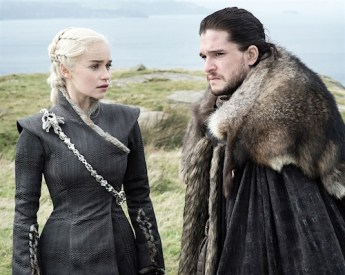 The most epic so far came in The Spoils of War. Apparently it’s been dubbed the Field of Fire — if there’s one thing Game of Thrones is consistently good at, it’s giving its big events cool monikers. (The “Field of Fire” is also an event from the series’ backstory, I believe, so maybe some of the reviews I read just got confused.) But it’s not just cool shots of fiery destruction that make this episode so satisfying: it’s the way that changes the game. Not to mention characters coming together after so long apart, both on the battlefield and not. That two girls talking in a crypt can be as thrilling as a dragon blowing shit up is… well, how character investment works, I guess. Some reckon this is the series’ best-ever episode. I wouldn’t go that far, but it is right near the top.
 Elisabeth Moss, star of both Mad Men, a series partly about the sexual politics of the ’60s workplace, and The Handmaid’s Tale, a series about the sexual politics of a world where women are baby-making slaves, returns as Det. Robin Griffin for a second run of Top of the Lake, which is now a series about the sexual politics of present-day Australia.
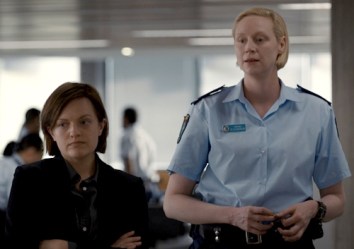 There are some great performances in there too, mainly from the female characters — no surprise, really, considering creator and co-writer/co-director Jane Campion is clearly interested in exploring women’s place in the world. Moss carries things, with Robin competent but combative at work (she needs to be, as the Australian police force seems stuck in the ’70s with its gender politics) even as her personal life is a tumultuous mess. Nicole Kidman gets to play it kooky as the adoptive mother of Robin’s child, who’s gone all spiritual and lesbian recently. The most entertaining is Gwendoline Christie as an enthusiastic constable who latches on to Robin, eager to be her protégé. She brings the bulk of the humour, with great lines and moments aplenty, but also brings emotional depth when needed.
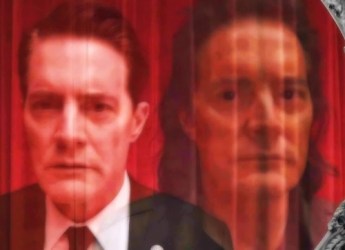 I must be honest with you, dear readers: the longer this Twin Peaks revival goes on, the less I feel I’m enjoying it. It works best when Lynch is trying to out-Lynch himself. Those episodes are crazy and borderline nonsensical and insanely challenging to what constitutes filmed entertainment, but at least they’re interesting; and if you don’t get it you can dismiss it as “it’s Lynch, innit”. It’s actually the ‘normal’ stuff — the investigations and machinations in South Dakota, Las Vegas, and Twin Peaks itself — that are beginning to get on my wick. Again, at times there are moments of clarity or inspired weirdness, but in between sits a morass of sludgy plotting and wilfully obscure characterisation. It’s starting to nudge the series from “revelatory experiment” into “noble failure” territory, for me.
 As I noted
 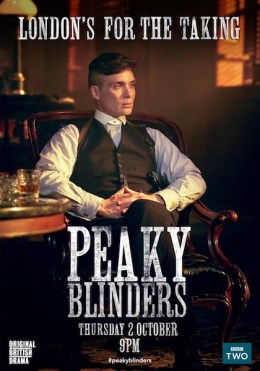 The second series of BBC Two’s period crime drama jumps forward two years to find everyone’s favourite Brummie criminals running such a successful business that they intend to expand their operations to London, by sticking their oar into a turf war between the Jews (led by Tom Hardy) and the Italians (led by Noah Taylor). Meanwhile, Sam Neill’s copper is back with a vengeance, teaming up with the Irish to blackmail Blinders kingpin Cillian Murphy into performing an off-the-books assassination for the crown.
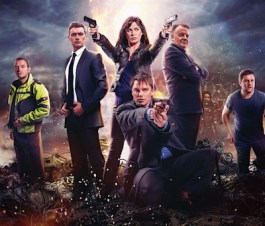 This month, I have mostly been missing Torchwood: Aliens Among Us. Although ‘just’ an audio drama from Big Finish, it’s being marketed as the series’ official fifth season, picking up after the events of 2011’s (disappointing) Miracle Day. A full 12-episode run, it’s coming out in three box sets — although part two isn’t out until October and part three until February, part one came out last week. Obviously, I’ve not listened to it yet. Hopefully next time…
 Season premieres of Thrones are typically concerned with re-establishing where all the major characters are, and maybe moving their stories on a few baby steps to indicate where they’ll be headed this season. Dragonstone is no exception. So where Arya had arrived in Westeros to kill the Starks’ enemies, now she’s slaughtering them by the hallful; where Bran and Meera were headed for the Wall, now they’re passing through it; where Jon and Sansa were taking charge in the North to be ready for war, now they’re preparing for war; where Sam had headed to the Citadel to research important stuff, now he’s in the Citadel researching important stuff; where Cersei had taken the Iron Throne and Jamie had his doubts, now Cersei’s preparing to defend her kingdoms and Jamie has his doubts; and where Dany was sailing for Westeros with her hodgepodge military, now she’s landed in Westeros. The wonder of Thrones is that it can take such scene-setting and turn it into riveting television.
 In fact, the only thing letting the side down was the well-publicised cameo by Ed Sheeran. If you have no idea who Mr Sheeran is then perhaps his appearance was fine — his acting was no worse than dozens of other bit players they’ve had on the series before now. But if you do know who the singer-songwriter is, his appearance was like being served a cheese board accompanied by cheese crackers with a glass of melted cheese and extra cheese on the side. After devoting what felt like a significant chunk of time (but was probably mere seconds) to him singing a song, Arya trots over to him and goes, “I don’t know that one,” and he says, “it’s a new one,” which he may as well have followed up with, “which you can hear in full on my new album, available now everywhere music is sold.” I have no idea if he has a new album out, or if that song would be on it if he did, but that’s how it felt.
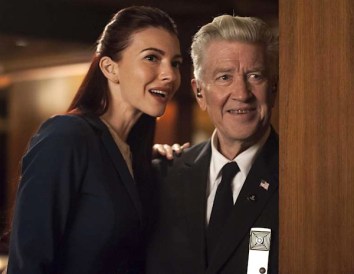 Slowly, very slowly, the disparate strands of Twin Peaks Mk.III seem to be coalescing into a coherent, connected story… which is almost more frustrating, in its own way. By that I mean: when it was wilfully obscure, you just kind of went with it — it was Lynch being Lynch, and you had to let it wash over you and allow your feelings to do the deduction about what it was supposed to signify. Now that the plot is beginning to crystallise into something your rational brain can make sense of, it feels a mite slow in getting there. I mean, while Dougie Jones is less annoying than he used to be (helped in no small part by the brilliance of Naomi Watts), I still miss real Coop, and we’re running out of episodes to spend time with him again. Was MacLachlan just feeding us a red herring when he said he’d “almost forgotten how to play him”? Because he hasn’t played him yet! Ach, we’ll see. It remains defiantly its own thing, and at least we can trust Lynch is going somewhere with it — even if we may never be able to work out precisely where that somewhere was…
 Based on a webcomic from the creators of Penny Arcade and funded through Kickstarter (so far it’s only available to backers), this miniseries-cum-pilot (the five short episodes total 58 minutes) takes place in an alternate Prohibition-era America, where “Prohibition” instead refers to the ban on production of automatons — sentient robots. Ex-copper Sam Regal (Basil Harris) and his partner Carl (voiced by Doug Jones), an automaton, now make ends meet as PIs, doing the usual PI thing: photographing cheating spouses. Only this time the run-of-the-mill case leads them into a murderous web that encompasses speakeasies, robo-gigolos*, underground automaton-hating gangs, and a twist ending (natch).
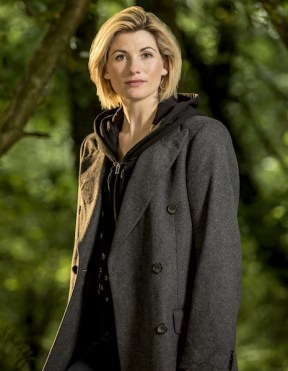 The biggest TV news this fortnight was undoubtedly the BBC’s announcement of the 13th actor to take the title role in Doctor Who. (Well, the 14th. Well, the… oh, let’s not get into that.) As you surely can’t have missed, it was Jodie Whittaker, who is a woman! Gasp! Naturally, there was some outrage. After all, it makes no sense whatsoever that an alien being who can travel in time and changes his whole body every time one gets worn out could possibly, during that change, switch from being a man to a woman, even if it’s been established multiple times within the series itself that such a change is possible. It’s just not plausible, is it?
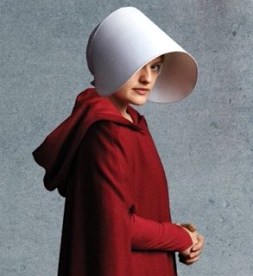 This month, I have mostly been missing The Handmaid’s Tale. It belatedly started airing on this side of the pond at the end of May, but it slipped my mind so much that I didn’t even mention it in
  The 36th run of Doctor Who kicked off with an episode titled The Pilot — no coincidence, that. This is the most newcomer-friendly episode of Who for 12 years, an episode finely calibrated to establish everything for a first-timer but also function for regular viewers too. A lot of that effectiveness can be attributed to Pearl Mackie as Bill, the new companion to Peter Capaldi’s Doctor. After a run of oh-so-special companions running back years, Bill is just an ordinary young woman; but of course she’s extraordinary in her own way: ready to learn, eager to help, full of both inquisitiveness and caring. This is surely the birth of both a fan-favourite companion in Bill and a star in Mackie.
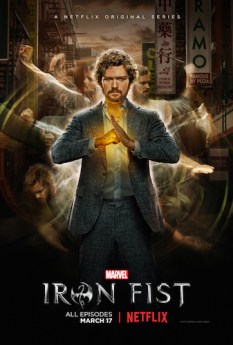 The last of the Marvel/Netflix series before the Defenders team-up, Iron Fist has certainly divided critics and viewers. It doesn’t begin well: the opening episode is possibly the worst thing yet released as part of the MCU, and I only say “possibly” because I never bothered with Agents of SHIELD after the poor reaction to season one. It’s needlessly slow, repetitive, the characters behave implausibly, and the fights are terrible, looking like a first rehearsal filmed with one take. Things do improve — there are more engaging characters, some interestingly developed arcs, and better realised fights — but it still doesn’t come together as well as it could. For one thing, it makes the running of Rand Enterprises a major element, but has a very vague-seeming understanding of how business actually works. It’s just too simplistic.
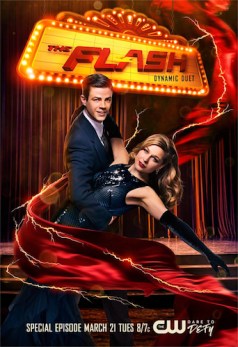 Amongst the eight Arrowverse episodes I watched this month was this: the much-anticipated musical crossover between The Flash and Supergirl, which star Glee alumni Grant Gustin and Melissa Benoist respectively — hence why (some) people called for a musical episode, which caused the producers to decide to do one. Somewhat ironic, then, that it seemed to go down well with critics (at least per
 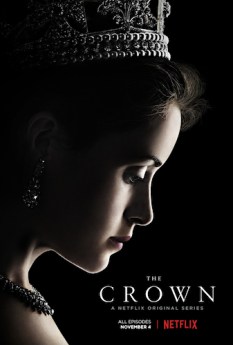 The most expensive TV programme ever made (or not, whatever) certainly has its budget plastered all over the screen, which hopefully didn’t distract most viewers in the way it did me. It shouldn’t, really, because this is a good drama about the humanity behind the public faces. Its adherence to fact is apparently variable, which I imagine is very irritating to historians of the period, but it works for the fiction. There are great performances all round, with John Lithgow in particular disappearing into Churchill to the point that I forgot I was watching an actor more than once. There’s an interesting plot thread early on about the position of Philip (Matt Smith) relative to Elizabeth — how his role as a husband is challenged by her position as Queen, etc — which goes a bit awry as the series goes on and has other plots to focus on. It’s left quite open-ended, so hopefully it’ll be completed in the second season.
 I devoted just 32 words to Line of Duty series one when I finally got round to watching it
 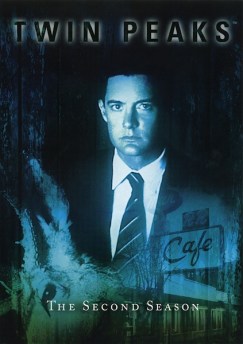 I first saw the debut season of Twin Peaks many years ago during a repeat run (it was a ‘classic series’ even then, though with hindsight it can’t’ve been a decade old at the time), then watched it again when the DVD came out, but this is my first time watching season two (legal complications delayed its DVD release for what felt like forever, and by the time it finally came out I just never got round to it). The second season is infamous for representing a steep decline in quality, though that isn’t yet evident from this batch of episodes, which covers up to the revelation of who killed Laura Palmer and their capture. I’d say it lacks the pure concentrated genius of the first season, having ramped up the quirkiness quotient and, at the behest of the network, rushing the resolution of the Laura Palmer mystery, but it ain’t bad by any means. There’s certainly much to like in the off-kilter characters, the folksy mysticism, and some fantastic performances — Kyle MacLachlan is a constant delight as Agent Cooper, but Ray Wise is frequently incredible as the grieving Leland Palmer. But I guess it’s mostly downhill from here…
 This month, I have mostly been missing series two of Peter Kay’s Car Share, which is a couple of episodes in on the telly or
 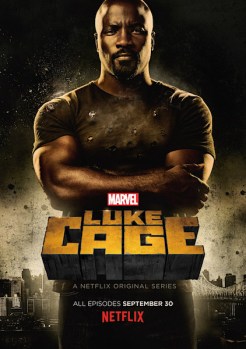 The third series in the Marvel/Netflix stable wins points for boldness, much as Jessica Jones did this time last year. Where Daredevil is a well-done but ‘standard’ superhero show, leading to it being somewhat demeaned by the Cool Kids of the critical world (but much higher-rated by us plebs on the likes of IMDb), Jessica pushed into dark psychological territory, and now Luke Cage brings black culture and life into the fold.
 It feels like only yesterday I was writing here about season four (it was, in fact,
  Well, it’s only taken me 3½ years to get round to this (seriously, where does time go?!) This bunch really represents the series’ highs and lows. On the one hand, Be Right Back — in which Hayley Atwell signs up for a company who create a virtual version of her deceased partner using his contributions to social media — is an exploration of broadly-plausible near-future-tech with a focus on its potential emotional effect. That’s what Black Mirror does best, I’d argue: look at stuff that may, perhaps, be in the pipeline, and how that would actually play out for us. On the other, there’s The Waldo Moment, which is also sickeningly plausible — as Charlie Brooker himself has said, it’s more or less come true, though with the likes of Boris Johnson and Donald Trump instead of a blue cartoon bear — but as an episode it doesn’t quite seem to know where to go with its concept or what it might ultimately signify. The episode just stops rather than ends, until a flash-forward coda that’s a bit silly in its extremity. Even Brooker, while doing press for the third season (released tomorrow), has said he’d go back and re-do that episode if he could. Still, full marks for effort.
 This latest series of Red Dwarf (which airs its fifth episode tonight, with the sixth available on demand from tomorrow) seems to have gone down rather well, with some reviews even hailing it as a “return to form” — that form being “the good old days” of Red Dwarf VI (or thereabouts), over 20 years ago. Personally, I didn’t dislike Red Dwarf VII or Back to Earth, and I even have a soft spot for Red Dwarf VIII, so what do I know? Nonetheless, I would concur that this Dwarf represents a fine vintage, hitting the series’ unique mix of accessible mainstream-ish comedy and proper science-fiction concepts. Red Dwarf XII is already in the can for 2017, and I wouldn’t be surprised to see Dave commission more episodes beyond that.
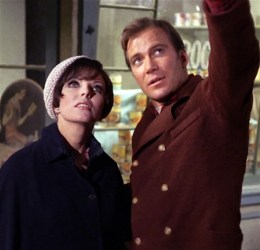 The entirety of TV Star Trek is available on Netflix, so I took the chance to watch the most acclaimed episodes of both The Original Series and The Animated Series — which happen to be connected, something I didn’t realise until afterwards. Er, I mean, which I totally planned. Both are pretty fine uses of science-fiction to explore relatable issues. Well, not many of us have to deal with disruptions to reality caused by time travel, or knowledge of the future creating dilemmas about what we do next, but they work the relatable stuff in around the surface plots. And they both still seem pretty bold for network TV episodes even today, almost half a century later, as (spoilers!) Kirk lets a good woman die to retain the correct timeline, and a kids’ cartoon deals with the subject of euthanasia.
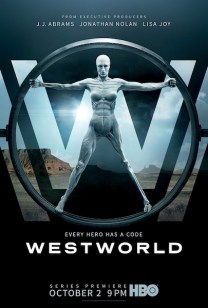 This month, I have mostly been missing loads of stuff. Probably the most talked about is HBO’s adaptation of Westworld, which has apparently pulled in even bigger ratings than Game of Thrones. Over here there’s the second series of The Missing, which if it’s half as good as the first will be a real must-see. Then there’s Woody Allen’s first (and last) TV series for Amazon, Crisis in Six Scenes. Reviews have been mixed to poor but I still intend to get round to it. And finally Hooten & the Lady, which may be the worst title for anything in the history of ever, but a globetrotting adventure series inspired by the likes of Indiana Jones and Romancing the Stone sounds right up my alley.
 100Films.co.uk