
F. Gary Gray | 115 mins | Blu-ray | 2.00:1 | USA & China / English | 12 / PG-13
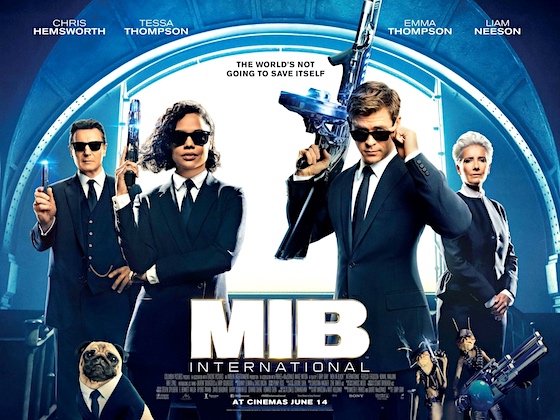
When Men in Black: International* hit cinemas last summer, many, many, many critics used a neuralyzer-related pun prominently in their review. (Someone did a Twitter thread compiling all the near-identical jokes. It reached 120 examples.**) For those unfamiliar with the MIB franchise, the neuralyzer is a small device that can wipe people’s memories, used by the MIB to keep their activities secret. The repetitive and inevitable joke was that International is so bad you’ll want to be neuralzyed afterwards. Now, I swear the film itself is trying to get in on the gag: the only photo printed on its disc is of a neuralyzer, as if the Blu-ray itself is going to wipe your memory when you take it out of your player. If only it did…
International is essentially a spin-off from the previous trilogy of MIB movies: whereas they followed Agents J and K (Will Smith and Tommy Lee Jones) on adventures in New York, this time we follow newbie Agent M (Tessa Thompson) as she’s relocated to London and paired with hot-shot-agent-gone-off-the-boil H (Chris Hemsworth) on a globetrotting adventure to unearth a mole in MIB.
Reinvigorating the franchise with new blood isn’t a bad idea. The third film was a marked improvement on the second, but neither recaptured the glories of the first, and K and J’s story was pretty well played out. Hemsworth and Thompson are good picks for the leads, too, given he displayed noteworthy comedic chops in the Ghostbusters reboot and the pair had clear chemistry in the well-liked Thor: Ragnarok.

But clear-eyed plans alone don’t make a good movie, as Men in Black: International proves. It’s not that the movie is bad per se, it’s just mediocre; bland; uninspired. It’s devoid of wit or charm — which, considering the cast, is kind of remarkable. I mean, it’s not just Hemsworth and Thompson — two appealing, capable leads. There’s also Liam Neeson and Emma Thompson, and Rebecca Ferguson pops up (I didn’t even know she was in it ’til she did), and there’s Rafe Spall (limited by having to be a blatant red herring), and the voice of Kumail Nanjiani. Whoever’s your favourite out of that talented cast, they’re wasted. Neeson is a particular bit of miscasting. Calling the head of London branch “High T” is a perfectly adequate joke, playing on Britishness and poshness… until you cast a guy with a pronounced Northern Irish accent, which just kills the gag dead. Nanjiani fares best as the voice of a little CGI creature, who’s probably meant to be cute but errs more towards annoying, though I didn’t hate him.
Of course I didn’t hate him — nothing in this movie is emotive enough to be hate-worthy. But by being so bland, it becomes objectionable. MIB2 wasn’t great, but at least it was kind of entertaining in its poorness. International is playing it so safe that you can’t even groan at it, or be delighted when something half-decent emerges from the mire, or be amused by it in spite of itself.
I guess this is what happens when you hire a primarily action director to helm a movie that should primarily be a comedy. F. Gary Gray did start off his career with a comedy, Friday, but that was 25 years ago. He’s better known for the likes of The Negotiator, the Italian Job remake, Law Abiding Citizen, and The Fate of the Furious. He hasn’t turned this into a straight-up action movie — it does still try to be amusing — but it’s clear the focus is in a different place to before. It’s partly because it’s far too long and lacking in pace. It’s always stuck in my mind that the director of the previous MIBs, Barry Sonnenfeld, once said he’s the only director whose Director’s Cut would be shorter than the original film because he’s always looking to strip things back. I suspect that may be part of why the previous movies worked, and it feels like International could really benefit from the same approach.

It certainly seemed to me like it was several more drafts away from completion. The twist is so obvious you can guess it just from looking at the cast list, underscored by a prologue that fades to white before it resolves and so may as well scream “what happened next is not what you’ll think”. More vitally, why is M a rookie agent? You’d think it would give an obvious and easy character arc, but that’s not really played. Instead, there are loads of times throughout the film where she Knows Stuff, so they have to explain it with “it says it in the handbook” or something similarly hand-wavy. The fact she managed to find the MIB, rather than them choosing to recruit her, is a cute origin but then has nothing to do with anything. It would’ve been better if she was a desk jockey forced out onto her first field assignment. Sure, that’s a tired characterisation too, but at least it’d be something a bit different for the franchise, and a bit more in keeping with how the movie wants to use her.
At one point it was mooted that this would be an MIB / Jump Street crossover movie, which was a barmy idea; but with MIB in need of a fresh start and Jump Street already being pretty immune to the fourth wall, it could’ve been great. At least it would’ve been different — even if it hadn’t’ve worked, they’d’ve tried something bold. Instead, they went for the much safer option of a straightforward soft reboot, and everything about International screams “safe”. Earlier I said it wasn’t bad, but by being so dull, well, it kinda is.

Men in Black: International is available on Sky Cinema from today.
* Don’t get me started on that colon in the title. I could practically write an essay just about that choice. ^
** Most of the critics took it well, apparently. ^



 Score:





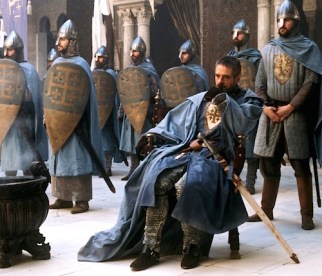
 Ridley Scott’s Crusades epic is probably best known as one of the foremost examples of the power of director’s cuts: after Scott was forced to make massive edits by a studio wanting a shorter runtime, the film’s summer theatrical release was so critically panned that an extended Director’s Cut appeared in LA cinemas before the end of the year, reaching the wider world with its DVD release the following May. The extended version adds 45 minutes to the film (and a further 4½ in music in the Roadshow Version), enough to completely rehabilitate its critical standing.
 A strong cast bolsters the human drama that sometimes gets lost in such grand stories. Bloom is a perfectly adequate if unexceptional lead, but around him we have the likes of Michael Sheen, David Thewlis, Alexander Siddig, Brendan Gleeson, and Edward Norton (well done if you can spot him…) There are even more names if you look to supporting roles. Most notable, however, are the co-leads: both Liam Neeson, as the knight who recruits Balian, and Jeremy Irons, as the wise advisor when he gets to Jerusalem, bring class to proceedings, while Eva Green provides mystery and heart as the love interest. Of everyone, she’s best served by the Director’s Cut, gaining a whole, vital subplot about her child that was entirely excised theatrically. It’s the kind of thing you can’t imagine not being there, and Scott agreed: it seems the chance to restore it was one of his main motivators for putting together a release of the longer version.
 (I’d wager
  The second feature from
  and two other men’s hats, briefly has a funny bit in the middle when he tries to acquire the second hat. The film also uses swearing as a comedic crutch too often. I’m not one of those people who’s only tolerant of swearing if they feel each and every use is absolutely justifiable, and I don’t object to it as just part of dialogue, but too often the film leans on someone saying “oh shit” (or whatever) as if that’s a serviceable punchline.
 The movie’s best running gag is its titular one. At first it just seems like the concept is going to be limited to Albert sitting in a saloon and listing ways to die, which isn’t funny; but then it keeps cropping back up, sometimes unexpectedly, which really works. The whole fair thing — a running gag within a running gag — is particularly effective. If the film had traded more on this, less on farting and other bodily functions, it would’ve been much improved.
 I dread to think what the
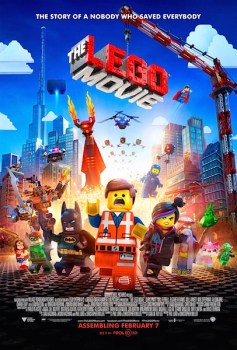 Despite looking like a 100-minute toy commercial with an irritating theme song, plus a moral message about nonconformity that seems like it’ll get bungled (but doesn’t), The Lego Movie is so much more — and better — than that.
 Liam Neeson shoots wolves for an arctic drilling company, but when his flight home crashes, he must attempt to lead the small band of survivors across an icy wilderness to the mere hope of safety — pursued all the way by murderous wolves…
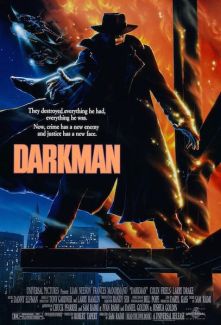 Before he made the insanely successful
 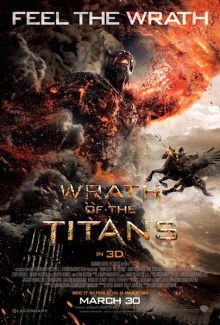 The
The  100Films.co.uk