
Daniel Craig’s final turn as Bond, James Bond, parachuted into cinemas just in time to make the cut for this monthly overview. But there was a whole month before that, so let’s look back at it.

#160 Boss Level (2021)
#161 The Birth of a Nation (1915)
#162 Daughters of Darkness (1971), aka Les lèvres rouges
#163 Futureworld (1976)
#164 Memory: The Origins of Alien (2019)
#165 La Dolce Vita (1960)
#166 Terje Vigen (1917), aka A Man There Was
#167 David Lynch: The Art Life (2016)
#168 The Current War (2017)
#168a Scenes with Beans (1976), aka Babfilm
#169 The Green Knight (2021)
#170 No Time to Die (2021)



- I watched 12 feature films I’d never seen before in September.
- Not a terrible showing (it’s not the worst month of 2021), but far from spectacular (it’s joint second worst).
- It fell just short of the September average (previously 12.54, now 12.50), and well below the average for 2021 to date (previously 19.75, now 18.89) and the rolling average of the last 12 months (previously 18.7, now 18.0).
- One notable success, however, came in my Blindspot viewing: after missing one in August, I caught up by watching two this month — and two of this year’s longest, at that. They were the 193 minutes of D.W. Griffith’s silent racist epic The Birth of a Nation, and the 175 minutes of Federico Fellini’s depiction of the high life in 1950s Rome, La Dolce Vita. I was no fan of the first Fellini I watched, 8½, but I quite liked this one. The Griffith, however, should be consigned to the bin of history.
- From last month’s “failures” I watched Boss Level and Memory: The Origins of Alien.

The 76th Monthly Arbitrary Awards
 Favourite Film of the Month
Lots of enjoyable flicks this month, some unexpectedly so, but perhaps the greatest was David Lowery’s divisive adaptation of The Green Knight. I can see why it turned some people off, but it hit just the right tone for me.
Least Favourite Film of the Month
This is an easy one, because I liked all of the film I watched this month, with one glaring exception: The Birth of a Nation. As I wrote above, D.W. Griffith’s once-acclaimed silent epic is so horrendously racist that it deserves to be forgotten. Actually, there’s a more nuanced discussion to be had there about remembering the misdeeds of the past — it merits viewing on such an academic level — but the old “yeah, it’s racist, but if you ignore that it’s really good” arguments can get in the bin. It does have some decent stuff, but the racism is so awful that it completely overshadows any other merits.
First Film I’ve Seen in the Cinema for 19 Months
After a very long wait, it was finally time to not die of COVID from watching No Time to Die.
Most Surprising Sequel of the Month
I wasn’t the biggest fan of the original Westworld (it’s fine), and the sequel has a rep for being much, much worse. So it was a delightful surprise to me that I really enjoyed Futureworld. Whereas the first film basically hangs out in the park until there’s a bit of robot-on-human violence, Futureworld takes the time to have more of a plot, latching itself to the ’70s vogue for conspiracy thrillers. I reckon it might be worth a reappraisal.
The Audience Award for Most-Viewed New Post of the Month
I’m not sure how much point there is keeping this particular award going until I get back on my reviewing horse. Highlighting the most viewed overall post of the month worked at first, but (based on history) it’s going to be my 15th TV column most of the time (as it was this month, and last month), with only the occasional other old TV column pipping it to the post.

My Rewatchathon continues to tick along, although another month just off pace means I’m falling ever-further behind where I should be to reach my goal of 50 this year. Who knows how things will pan out, but at this rate I’ll be pleased to make 40.
#27 Bill (2015)
#28 Pan’s Labyrinth (2006)
#29 Spectre (2015)
Bill was 2021’s #1 back in (obviously) January. I liked it first time, but I enjoyed it even more on a rewatch. Quite the other end of the rewatch timeline was Pan’s Labyrinth, long-overdue a revisit because I last watched it 14 years ago. My review (linked above) is a brief 2007-style one… though that’s better than what I post currently, eh? Anyway, some fresh thoughts on Letterboxd.
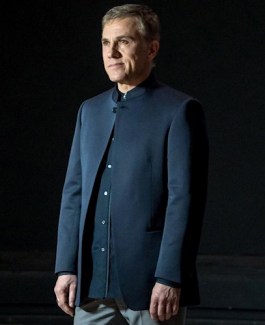
Spectre was also rather overdue a revisit: it was the only Daniel Craig Bond I’d only seen once, and that was six years ago at the cinema. I was fairly positive about it on Letterboxd, but, I must say, it gets worse the more I reflect on it. Blofeld is horrendously mishandled — underwritten and underused — meaning Waltz is wasted, and I think he knows it, just giving another slight variation of his usual Tarantino performance. It really undermines the entire third act of the film, which is kinda crucial. Still, the film as a whole definitely has some high points.

This month’s big release at the cinema… doesn’t get a mention in this section, because I saw it. Wonders will never cease. Although, as things edge towards normal, there were a couple of other noteworthy titles too, like Disney’s “theatrical only” ‘experiment’ release of Marvel’s latest, Shang-Chi and the Legend of the Ten Rings, and Sopranos prequel The Many Saints of Newark. I’ve never seen all of the The Sopranos, though I mean to, so it may be a while before I get round to that one…
Perhaps the most-discussed direct-to-streaming release of the month was not a Netflix title, for once, but Amazon’s new version of Cinderella. Unfortunately for them, that was because it looks terrible. And apparently it is terrible. It’s not on my watchlist. They also generated a few column inches with erotic thriller The Voyeurs, but I didn’t see many people talking about Everybody’s Talking About Jamie, though I did pick up that it’s quite good. Meanwhile, on Netflix, the only new title I’ve noted is actioner Kate. I don’t actually know what the reviews have been like — “Mary Elizabeth Winstead leads an action movie” was enough to get it on my list. And talking of female-driven action, Sky Cinema grabbed the UK release of Gunpowder Milkshake.
Among the never-ending parade of old(er) titles coming and going and jumping from one streamer to another, standouts to me included Minari on Sky Cinema, as well as the Russian remake of The Raid, cannily titled Russian Raid. Leaving Sky to popup on Netflix was the new Charlie’s Angels; and, having left Amazon a while back, The Farewell is now on Netflix too. As for Amazon, they now have Chaos Walking (in 4K, too), and also Selma, which I think has been available on every streamer at one time or another (even iPlayer) and I really should get round to. And talking of iPlayer, they had a seemingly-rare chance to watch The Graduate this month, so I should do that too. They also had Whiplash, which I ought to rewatch — I liked it a lot, but don’t really understand why it seems to have become an Instant Classic in the past few years.
Finally… I say “finally”: this is going to take more than half the section. Yes, my bank balance is sobbing once again — as is my shelf space — as new purchases flowed through my letterbox like water. Where to begin? Indicator’s Columbia Noir series reached its fourth iteration, adding six new films to my unwatched noir pile. Similarly, Master of Cinema’s Early Universal range is just getting underway (I hope), with Volume 1 bringing me three silent titles I’d never heard of before. Fun times. Other new releases included an MoC edition of Johnny Guitar; Eureka’s release of Duel to the Death, billed as “one of the greatest swordplay movies of all time”; an Aussie Imprint import for Terrence Malick’s Days of Heaven; and Anime Ltd’s release of the first CG Lupin III film, Lupin III: The First.
My 4K collection also got a considerable boost this month, between brand-new releases like Black Widow (the first Marvel film in yonks I’ve not been able to buy in 3D — boo!); archive releases in fancy box sets, like The Thing and The Servant; semi-random sale pick-ups, like Shadow and Full Metal Jacket; and the kind of titles you might once have never believed you’d see on Blu-ray, never mind 4K, but nowadays all bets are off as indie labels go for the new tech but studios remain wary — by which I specifically mean a bundle I imported from Vinegar Syndrome including The Beastmaster, Daughters of Darkness, and SexWorld — which, if you’ve not heard of it, is a porno riff on Westworld and Futureworld. It sounds surprisingly good. I also bought Eleven Days, Eleven Nights and Robotrix this month, which as a set make my glad Blu-rays don’t come through the post in transparent boxes…
But I’m still not done! I caved to a bunch of gialli and other international semi-oddities in a recent 88 Films sale on HMV, snaffling the likes of The Bloodstained Shadow, Eyeball, Harlequin, Ironmaster, Seven Blood-Stained Orchids, and Watch Me When I Kill. Throw in The Blood Spattered Bride with that VS order, and there’s clearly a lot of the red stuff waiting to spray from my Blu-ray player. Finally, helping round out my classic 3D collection was Dynasty (nothing to do with the TV series), and I completed Richard Lester’s Musketeers trilogy with The Return of the Musketeers.
And that’s not even mentioning the TV Blu-rays I bought.

We’re off to Arrakis. Hopefully it’ll be a return ticket.



























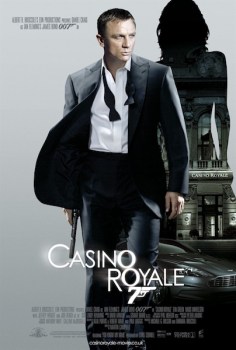

 Score:



 The 24th official James Bond movie had a funny old ride on its cinema release a few months ago. It started well, with near-universal praise from UK critics; audience reaction was more mixed but erred towards the positive; then US critics tore into it, and US audiences (as usual) followed suit. The latter seems to have become the more accepted view, with the consensus seemingly that it’s decent enough, but a definite step down from the high of
  Spectre, to put it bluntly, pulls a
  retaining the same general thrust. I still don’t think it works. There’s too much of M, Q and Moneypenny sat in an office trying to stop a man typing something into a computer (more on this in a minute), while Bond is busy running around a building and shooting at a helicopter. Personally, I’d’ve thrown it out and started again, but I guess they’d run out of time, and maybe it was better than the alternative.
 No, of course it isn’t, and it never was; but the point of Bond has never been realism. And besides, the reason you cast quality actors in minor roles is so they can pop in for a day or two and make their one scene exceptionally good. Bulk their part up if you’ve got a story to tell, by all means, but don’t shoehorn them in just because you’ve got them. For my money, Spectre is too much doing the latter.
 Or perhaps they’re just planning to go



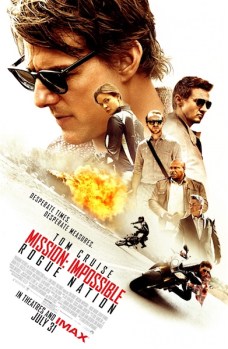 It’s an overcrowded year for spies on the big screen (as
  Obviously this uncertainty is also thanks to the story constructed by writer-director Christopher McQuarrie. Some automatically dismiss the plots of the Mission films, saying they’re just an excuse to link some death-defying stunts performed by Mr Cruise. Although there may be an element of truth to that, I don’t think this is a bad storyline by any means. As I said, it’s fairly straightforward (there’s no mole in IMF! Hurrah!), but the intricacies keep it engrossing and keep you guessing. And anyway, the action sequences it ties together are first-rate. You’ve pretty much seen the opening plane stunt in the trailer — heck, you’ve seen it on
 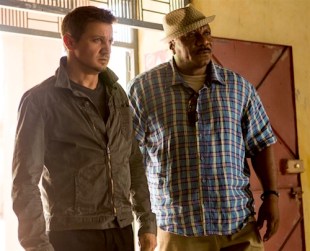 As alluded to above, this is probably the most globetrotting Mission film yet: it starts in Belarus, before taking in Washington D.C., Cuba, Paris, Vienna, Casablanca, and London. It’s things like this that lead me to describe it as a James Bond film. There’s also the balance of a serious plot line with plenty of humour, the use of outlandish just-ahead-of-reality gadgets, and the fact that the series can’t retain a female cast member for more than one film (though that last one isn’t a positive). For all the effort Spectre made to bring classical Bond elements back into the fold, Rogue Nation arguably feels more like a classically-styled Bond movie. It’s not a faultless like-for-like comparison — one of Rogue Nation’s best points as a Mission movie is that the whole team are necessary to complete the mission, a defining factor of the TV series that many felt went awry in the movies, with their focus on Cruise — but the almost-indefinable sensation of this experience is Bondian. It’s not stealing that style, though: considering Ghost Protocol had it too, and Craig-era Bond has abandoned it for a ‘classier’ action-thriller mode, it’s something the M:I series has come to own.
 So on the one hand the recent news that McQ (as current regular collaborator Cruise calls him) is returning to write and direct the sixth Mission is a shame, because it breaks a twenty-year rule; but on the other, I’m not sure it matters. Plus, by taking on the dual role of sole writer and director, you could argue McQ’s Missions are the most auteur-y of the lot, even in spite of the lack of a terribly unique visual style. Which is all a very long-winded way of saying that I was a little disappointed when it was announced there wouldn’t be a sixth director for the sixth film, because I always thought that was a neat idea; but as the idea hasn’t actually had much effect, who better to ask back than the man who wrote and directed arguably the best Mission: Impossible film of them all?
 The cast are liable to get lost among all the grandiose goings-on in a film like this, so its a testament to the skilled team that’s been assembled over the past few movies that they absolutely do not. Cruise is Cruise — surely by now you know whether you like him or not. I always feel like I should dislike him, especially given his crazy real-life religious views, but on screen I find him very entertaining. Rogue Nation is no different. Hunt is on the back foot for a lot of the film, and Cruise is at his best when he’s playing someone who’s almost the underdog. He’s also a more talented comic actor than he’s normally given credit for, and that glimpses through here too. Most of the time comedic duty is handled by Pegg, of course, who provides a good foil as Hunt’s sidekick for much of the film. More surprising, perhaps, is the amount of humour Jeremy Renner brings. It’s much less obvious, dryer and more sarcastic, so the contrasting tone is fun. He’s paired with Ving Rhames for a long stretch, who returns wholesale after sitting out Ghost Protocol but for a cameo. The pairing may come up just short of feeling inspired, but nonetheless makes for an entertaining change. Elsewhere, Baldwin offers a neat, not-too-clichéd turn as the CIA ‘villain’, while Tom Hollander pops in for a funny cameo-level turn as the British Prime Minister.
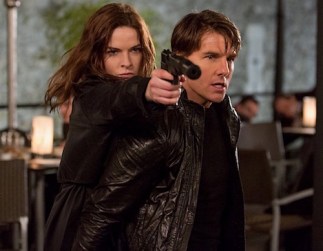 As the fifth film in a franchise that has always carried a slight “pretender to the throne” air, Rogue Nation should feel played out and tired. Instead it seems fresh and invigorated, with a spot-on tone, likeable and fun characters, a real sense of jeopardy and menace (missing in so many modern action films), and some of 2015’s very best action scenes — and in the year of Fury Road, that’s really saying something. McQuarrie has
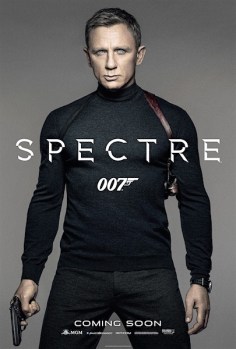 It’s been quite the year for spies on the big screen: mega-success for
 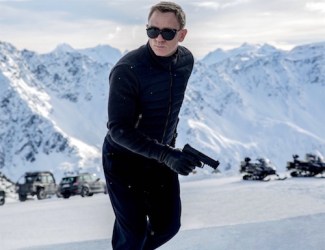 or, “they’ve merely brought back the classic Bond formula, albeit in the Craig-era style — what a regression”. You only have to look at the
  Craig’s films have stuck to the older formula of casting a respected/famous European: Dane Mads Mikkelsen, Frenchman Mathieu Amalric, Spaniard Javier Bardem, and now German “European actor du jour” Christoph Waltz. The double Oscar winner is on fine form at times, but there aren’t quite enough of those times. Again, without aiming to spoil anything, I’d say he’s not so much underused as misused.
 Well, I did too. Now I want a cake. And if you’d like to watch someone eat a Madeleine, check out


 #75 Changing Lanes (2002)
 #83 Rush (2013)























































 Diddly-dum diddly-dum diddly-dum ooo-weee-ooo… For generations of British children, that’s the sound of Saturday night adventure. I guess to some people it’s just a children’s TV theme, but they’re wrong: it was a genuinely pioneering, important example of burgeoning electronic music (
 Dooo-dooo dododo-dooodo dododo-dooodo dododo-doo… You could probably fill this list twice over with John Williams compositions — Indiana Jones, Jaws, Superman, Jurassic Park, more recently Hedwig’s Theme from Harry Potter, and so on — but undoubtedly the most iconic of them all is his
  Dang da-dang-dang da-da-da dang da-dangdang da-da-da daa-daa da-da-daa… A 53-year-old surf rock tune should by all rights be horribly dated, but I guess true cool endures. While the version used in the films has barely changed, there are an abundance of variations for trailers, etc. My personal favourite is
  Dooo-dooo dododooo, do-do-doo do-do-doo do-do-doo do do doo… The only one here that isn’t a title theme, but it’s indelibly part of the Lord of the Rings franchise — it has no reason to appear in The Hobbit trilogy, but I spent most of those eight hours missing it. It reoccurs throughout the trilogy (of course it does), but perhaps the purest version can be found in
  Doo-doo dodododo-doo do-do-do-doo… I’m certain this will be less familiar than any of the above to most people but, honestly, to me (and, I think, many other people who played the LucasArts games) it’s as iconic as anything else I’ve mentioned, including all of those other John Williams ones. The original was rendered in the style of its era — a digital MIDI thing — but it endured throughout the series and was transformed into some lusher orchestral versions. Try
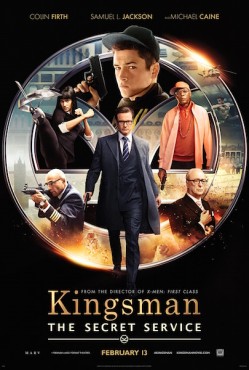 The team behind
 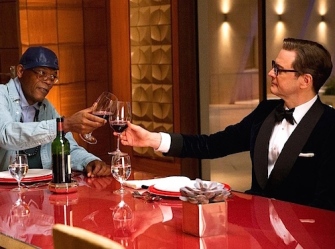 An even bigger part of the film’s triumph, and what likely led it to over $400 million worldwide in spite of its higher-than-PG-13 classifications (it’s Vaughn’s highest-grossing film to date, incidentally; even more so than
 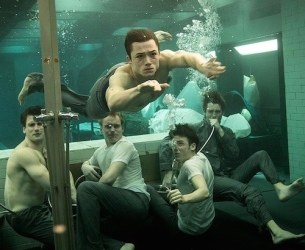 rather than the supposed real-world universe of spy movies. What the worldwide success of Kingsman proves is that audiences don’t need the set-dressing of superpowers to accept an action movie that’s less than deadly serious. It’s a place I don’t think the Bond movies could go anymore — not without accusations of returning to the disliked Moore or late-Brosnan films — but it’s one many people clearly like, and Kingsman fulfils it.
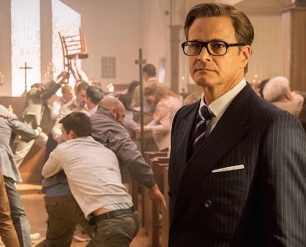 Criticisms of the film tend to pan out to nought, in my opinion. Is there too much violence? There’s a lot, certainly, but part of the point of that church sequence (for instance) is just how long it goes on. Other excellent action sequences (the pub fight you might’ve seen in clips; the car chase in reverse gear; the skydiving) aren’t predicated on killing. Similarly, Samuel L. Jackson’s baseball-capped lisping billionaire is a perfect modern riff on the traditional Bond villain, not some kind of attack on Americans or people with speech impediments. Some have even attempted a political reading of the film, arguing it’s fundamentally conservative and right-wing because the villain is an environmentalist. Again, I don’t think the film really supports such an interpretation. In fact, I think it’s completely apolitical — just like its titular organisation, in fact — and such perspectives are being entirely read into it by the kind of people who read too much of this kind of thing into everything.
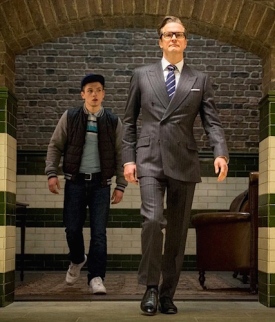 Not everything hinges on being wall-to-wall groundbreaking, though, and Kingsman has so much to recommend it. It ticks all the requisite boxes of being exciting and funny, and some of its sequences are executed breathtakingly. The plot may move along familiar tracks — deliberately so — but it pulls out a few mysteries and surprises along the way. There’s an array of likeable performances, particularly from Firth, Egerton (sure to get a lot of work off the back of this), Jackson and Strong, and Sofia Boutella’s blade-legged henchwoman is yet another why-has-no-one-done-that great idea.
 #36 The Hobbit: The Battle of the Five Armies (2014)


























 Except, goodness, I couldn’t get it down to just five! From Connery alone you’ve got ‘Bond’ being bested in From Russia with Love, the iconic jetpack in Thunderball, and the trend-setting mini-adventure from Goldfinger. As the series rolls on there’s The Spy Who Loved Me and its parachute, Moonraker’s free-fall fistfight (you couldn’t do that today — everyone would assume it was CGI and it’d have no magic), and the perfectly staged training-exercise-gone-wrong from The Living Daylights. The Brosnan era really kicks in the action, first with another peerless mini-adventure in GoldenEye (and the bungee jump…!), then increasingly expansive and suitably witty openers to both Tomorrow Never Dies and The World is Not Enough. Finally, the Craig era tipped the whole shebang on its head with Casino Royale’s moody black-and-white quickie, and Quantum of Solace’s attention-demanding car battle. Skyfall may have moved back towards the Brosnan mould, but it’s an exceptionally well done one.
 100Films.co.uk