2024 | Week 2

Hey, look, it’s an actual reviews post! Well I never! Wonders will never cease! Etc.

Yeah — I thought, “new year, new start”, and so here I am with short reviews of the first three films I watched in 2024. I was going to call this “Weeks 1–2”, even though they’re all from Week 2, because beginning the year with a post titled “Week 2” just felt wrong. But then I figured I’d begun the year already with my various other posts, so in some respects Week 2 feels natural and right. I could’ve waited for “Weeks 2–3” (there are only three films reviewed herein, after all), but I wanted to set out the stall of “look, reviews are back!” Whether they’ll stay back… I mean, they didn’t in 2023… But we live in hope.

Anyway, onwards to:

  • Lift (2024)
  • Only Yesterday (1991), aka Omohide poro poro
  • Jackass Forever (2022)


    Lift

    (2024)

    F. Gary Gray | 104 mins | digital (UHD) | 2.40:1 | USA / English | 12 / PG-13

    Lift

    Netflix’s latest original is a high-concept heist thriller, in which a gang of art thieves are recruited by Interpol to steal a terrorist’s gold bullion fortune from a passenger flight in mid-air.

    I love a good heist movie, and Lift is certainly a heist movie. The joy of the genre, at least for me, is in the almost magic trick-esque way in which our gang pull off the score — doubly so when it’s eventually revealed in a third-act twist that what we thought was going on wasn’t going on at all. Unfortunately, that means someone — the writer, director, whoever’s in charge — needs to have a big, clever idea, and those are hard to come by. Lift‘s heist isn’t bad, it’s just nothing special. On the bright side, it ticks the box of having that last-minute reveal. Again, it’s not a particularly innovative subversion (if you were tasked with guessing it, it would probably be your first idea), but at least it’s there.

    Another common aspect of the subgenre is snappy, funny dialogue. Not so here, I’m afraid. Indeed, the dialogue is unrelentingly mediocre, and never more so than when it tries to be funny. Characters’ emotional arcs are built via Screenwriting 101 backstory dumps. You know: “How did you learn that?” “Well, when I was a kid, this very specific thing happened that taught me exactly that.” Perhaps belying a lack of confidence in the screenplay (or perhaps just Netflix realising they don’t need to spend as much as they have in the past), the film doesn’t look particularly expensive either, with middle-of-the-road CGI. Like everything else, it’s not bad, but you’re never going to imagine they went down the Mission: Impossible / Christopher Nolan route of staging it for real.

    The cast is headed by Kevin Hart, doing his best to channel whatever he’s learnt from previous co-stars and be a charming leading man type. I’ve seen worse, but it’s not a natural fit. The Interpol agent / love interest at his side is Gugu Mbatha-Raw, who you can feel is doing her best to inject some verve into proceedings. Some of the supporting roles hint at where the budget may actually have gone. Why else would Jean Reno drop in as a villain who’s mostly just on the end of a phone? Or Sam Worthington pop by as a senior Interpol agent who’s not even interesting enough to turn out to be a secret baddie? Plus most of the henchmen are faces you might recognise from British TV, like Torchwood’s Burn Gorman and Peaky Blinders’ Paul Anderson, who you’d think would be getting better offers than Henchman #2 at this point.

    If this review sounds full of faint praise… yeah, that’s about right. Lift is nothing special, but if a gang of crooks pulling off a seemingly-impossible score is your bag, then it’s passably entertaining fare for an undemanding Friday or Saturday night.

    3 out of 5

    Lift is the 1st film in my 100 Films in a Year Challenge 2024.


    Only Yesterday

    (1991)

    aka Omohide poro poro

    Isao Takahata | 119 mins | digital (HD) | 1.85:1 | Japan / Japanese | PG / PG

    Only Yesterday

    The fifth feature animation from Studio Ghibli’s other director, Only Yesterday introduces us to 27-year-old Tokyoite Taeko as she prepares to take a short summer holiday working on a farm in the countryside, which brings up memories of her ten-year-old self. The latter were the subject of the original manga the film is based on, with Takahata adding the storyline of the older Taeko reflecting on her childhood as a way of tying the stories together into a cohesive narrative.

    I didn’t know that piece of trivia going in, but I sensed something along those lines, because I generally dislike movies that play as “nostalgic vignettes from the author’s childhood”, and this is no exception. The ‘present day’ stuff, on the other hand, is very good, with beautiful moments in and about nature, and superb character beats related to what Taeko really wants and what she’s really like. (“Ever since I was little, I just pretend to be nice,” she says at one point, a sentiment I certainly felt I could agree with. Mind you, it’s in moments like this that the film’s dual timelines pay off, contrasting how younger Taeko behaved and how she has and hasn’t changed.

    Only Yesterday is sort of a film of two simultaneous halves, then. Not that I would lose the childhood bits entirely, but I would prefer a version of the film that pared them back considerably, only retaining the material that really enlightens the older Taeko’s storyline. As it stands, the bits I didn’t care for were quite tedious, but the bits I liked were captivating.

    4 out of 5

    Only Yesterday is the 2nd film in my 100 Films in a Year Challenge 2024. It was viewed as part of Blindspot 2024.


    Jackass Forever

    (2022)

    Jeff Tremaine | 96 mins | digital (HD) | 16:9 | USA / English | 18 / R

    Jackass Forever

    A decade and change after their last outing, the Jackass crew are back (minus some members, for various reasons, and plus some new ones; the latter distinctly upping the diversity quotient), doing the same crazy and dangerous shit they always did. Why? I think most of them are asking themselves the same thing. There was a definite sense in the last film that they were getting too old for this and it was time to call it a day, so what inspired them to come back to it — even older, even more prone to injury, with even longer recovery times — I don’t know.

    It certainly wasn’t fresh ideas. Despite all that time away to think up new stunts, nothing here feels particularly innovative or freshly imagined. Maybe that’s a highfalutin’ thing to analyse about a franchise that has always been just about doing dumb stunts, but some of them have been memorable, even to the extent of transcending the series itself (surely you’ve heard about the paper cuts, even if you haven’t seen it?) Forever is just variations on a theme; sometimes literally, as they expressly revisit old stunts in slightly different ways, like testing an athletic cup against various fast-and-hard objects, or pitting ringleader Johnny Knoxville against a bull — a stunt that ends rather seriously. Maybe if the film had taken that as a cue to say something about mortality or ageing… but that wouldn’t be so much fun, would it?

    So, it is what it is, which is it what it always has been: a bunch of silliness, usually resulting in pain and injury for the cast, and sometimes in laughter for the audience. It’s not the best Jackass film, but it’s not so significantly inferior as to warrant a lower rating. If you were a fan back in the day, you might appreciate the value of hanging out with old favourites for one last rodeo. And if you’re watching the films afresh, presuming you enjoyed them enough to get through the first three, you may as well watch the fourth too.

    3 out of 5

    Jackass Forever is the 3rd film in my 100 Films in a Year Challenge 2024.


  • My Most-Read Posts of 2022

    I published 84 posts here in 2022 — that’s up from the 55 in 2021, which is good because that was a major part of the point of my relaunch; but it’s still down from the 120+ I posted in 2020 and 2019, and over 200 each in 2018 and 2017. That said, it’s partly because I’ve been lumping most reviews together into “weeks” rather than posting them individually.

    One thing it hasn’t done is reverse the slide in my traffic. I guess people are reading blogs less and less nowadays, maybe? Or perhaps it’s just that I’ve stopped posting my TV columns, which were my big hitters hits-wise. It was insulting IMDb voters’ response to the Game of Thrones finale that gave me my biggest year ever, after all. Whatever the reason, in 2022 my views were the lowest since I started sharing my reviews via IMDb’s External Reviews section in 2017 (IMDb devaluing links to reviews offsite is another possible explanation here). They’re still at more than double where they were in 2016, though, so… um, there’s still further to fall?

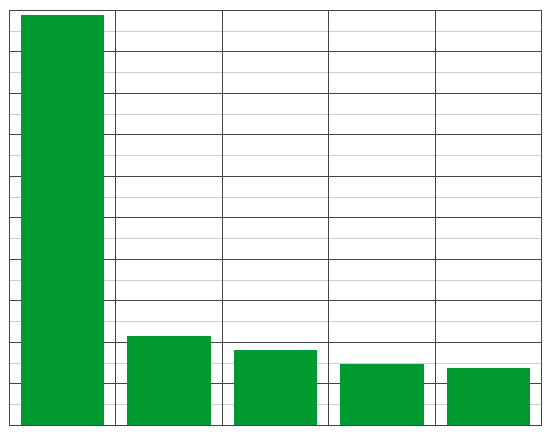
    Anyway, here are the five posts that attracted the most of those paltry views. #1 stood out in particular, as this graph of the posts’ relative success shows:

    Now, you might like to know exactly which those posts are…


    My Top 5 Most-Viewed New Posts in 2022

    5) Weeks 1–3

    Featuring reviews of Carry on Spying, Penny Serenade, The Navigator, In the Line of Fire, Barbie as The Princess and the Pauper, and Free Guy. This is most noteworthy for nearly being a three-way tie: Weeks 1–3 had just a single hit more than each of the posts tied for 6th place, Archive 5 Vol.1 and Vol.5.

    4) Ghostbusters: Afterlife

    Who ya gonna call? No idea why this one charted so high (my posting wasn’t especially timely to any of its release dates, I don’t think), other than the perennial popularity of its franchise. Plus, like the posts in 5th and 2nd, the fact it was posted in February means it had most of the year to rack up hits.

    3) Prey

    Another popular franchise with a much-anticipated new instalment. This one I posted on the weekend it came out, which likely helped it gain views.

    2) Weeks 4–6

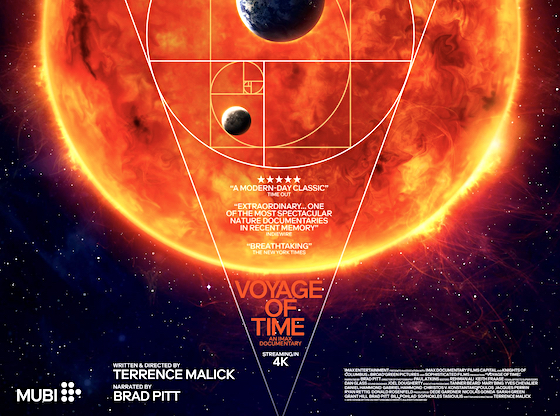
    Featuring reviews of Voyage of Time: An IMAX Documentary, L’avventura, She’s Gotta Have It, Don’t Look Up, Jackass: The Movie, and Jackass Number Two. Again, I can’t see anything particularly special about this that would elevate it to second place, except perhaps that reviews of streaming titles often seem to do better — Don’t Look Up is, of course, a Netflix film, while Voyage of Time has been on MUBI. Perhaps the release of Jackass Forever had people looking at writing on the previous films, too.

    1) Sight & Sound’s The 100 Greatest Films of All Time (2022 edition)

    Far and away my most-viewed post of the year, with 4.6 times as many hits as #2. As I speculated in my December review, the success of this post is likely due to it being both timely (even if it was posted 24 hours after the news broke, people were still discussing it on social media) and newsworthy (being a once-in-a-decade occasion deemed to be important to all cinephiles). There’s no reason my particular piece on it should receive more hits than anyone else’s, so I can only assume bigger sites saw even more traffic from it.


    The Failed Monthly Review of December 2022

    The end of the first year of new-style 100 Films is here, and what has it brought? Failure, that’s what. But I’ve already talked about that (although I’ll mention it again before this post is done), so let’s move on to what I did watch last month…


    This month’s viewing towards my yearly challenge

    #82 Doctor Who Am I (2022) — New Film #12
    #83 Quatermass 2 (1957) — Series Progression #8
    #84 Christmas Holiday (1944) — Genre #9
    #85 Les Enfants du Paradis (1945) — Blindspot #11
    #86 Avatar (2009) — Rewatch #12
    #87 I Wouldn’t Be in Your Shoes (1948) — Genre #10
    #88 Jackass 3D (2010) — Series Progression #9
    #89 Mr. Soft Touch (1949) — Genre #11


    • I watched eight feature films I’d never seen before in December.
    • That means I failed to reach my ten-film target for the seventh time this year.
    • That’s a very different story to last year, when December tallied 20+ films for the first time ever; the final month to do so. In 2022, no month reached 20 films — the first time that’s happened since 2014.
    • Back then, the best month was September with 17 films. This year, it’s February, with just 13. That makes it the lowest “best month” since 2012, when (coincidentally) it was also February on 13. They’re tied (along with February and March 2011) as the lowest “best month of a year”s ever.
    • Falling short for more than half the year is reflected in the monthly average for 2022, which ends up at 9.25.
    • Seven of the eight films counted towards my 100 Films in a Year Challenge, along with one rewatch.
    • It would’ve been more if I hadn’t decided to abandon the Challenge shortly before the end of the year. There’s an explanation about my reasons for doing so at that link, so I won’t rehash them here; but I will add that, with hindsight, I made the right decision. Rather than having a hectic last week or so where I rushed to cram in qualifying films, I’ve had a leisurely and relaxing Christmas. (And I’ve had a rotten cold, so I needed that rest.)
    • All of this month’s Genre (i.e. noir) films were Christmas-themed ones. They’re not a natural fit, the optimism of Christmas and the bleakness of noir, but some filmmakers tried nonetheless; not many, but a few. In fact, I did have a couple more lined up, but didn’t get round to them. Maybe this time next year.
    • I didn’t get to the cinema for Avatar: The Way of Water, but I did rewatch the original film, for the first time since I saw it in the cinema, 13 years ago. Despite owning four different versions of it on Blu-ray (three different cuts in 2D, plus the theatrical cut in 3D), I was at my parents’ so we watched it on Disney+. Typical. (Sadly, they haven’t yet put up the revised version that had a cinema release earlier this year (I believe it was re-rendered in 4K with some use of HFR). I guess that’ll arrive, possibly with some fanfare, at a later date.)
    • Despite its title, I watched Jackass 3D in 2D (which is still titled Jackass 3D — obviously, otherwise I’d’ve used a different title). I did try to find a true 3D copy, but failed (I don’t think it was ever released on 3D Blu-ray; I guess it never will be now).
    • This month’s Blindspot film was Les Enfants du Paradis, aka Children of Paradise. That means I failed to watch one film from this year’s list, Yi Yi.
    • There were no WDYMYHS films this month, unfortunately, meaning I failed to watch The Name of the Rose or The Transformers: The Movie. Even considering that I abandoned the Challenge, I should’ve really tried harder to get at least one of those in. Oh well.
    • From last month’s “failures” I only watched Doctor Who Am I.


    The 91st Monthly Arbitrary Awards

    Favourite Film of the Month
    A couple of enjoyable flicks this month, but the artistic standout is French epic Les Enfants du Paradis. Once voted the greatest French film of all time — and, by implication (because you know the French), the greatest film of all time — it’s the kind of standing it deserves to be re-elevated to.

    Least Favourite Film of the Month
    Nothing truly terrible this month, which always makes it a bit hard to judge this category. I mean, it feels kinda cruel picking, say, Doctor Who Am I, because it wasn’t bad — it’s been widely praised, even — but it didn’t deliver all I might’ve hoped for. Alternatively, there’s Jackass 3D, which, again, isn’t bad — assuming you don’t just fundamentally object to the premise, that is — but does feel a bit like it’s a franchise running on fumes. And it bugged the hell out of me that I couldn’t watch it in 3D.

    The Audience Award for Most-Viewed New Post of the Month
    Far and away my most popular post this month — not just of new posts, but all-time; and with ten times as many hits as the post in second place — was my summation of Sight & Sound’s The 100 Greatest Films of All Time (2022 edition). I guess it was timely and newsworthy (even if I posted my piece about 24 hours after the news broke), and people love a list.


    Every review posted this month, including new titles and the Archive 5


    Although the new-style 100 Films Challenge has reshaped things somewhat this year, this is the last post that will focus on it. Over the coming days there’ll be my usual array of look-backs at the year just gone, with a list of all the new films I watched this year, plus statistics and my Best and Worst lists drawn from that pool.

    And then it will be on into 2023, with a slightly rejigged Challenge that I’ll hopefully find more completable.

    The Comparatively Calm Monthly Review of February 2022

    For a moment, set aside your fears of World War III and/or anticipation for The Batman (whichever is taking up more of your mental capacity right now; possibly both) and journey with me back, back, back to a time when military invasion was just a threat and Batman reactions were still embargoed — i.e. last month.


    This month’s viewing towards my yearly challenge

    #13 She’s Gotta Have It (1986) — WDYMYHS #2
    #14 The Hobbit (1977) — Decades #8
    #15 Jackass Number Two (2006) — Series Progression #1
    #16 Shot in the Dark (1933) — Decades #9
    #17 A Room with a View (1985) — Rewatches #2
    #18 The Misfits (2021) — New Films #2
    #19 Tintin and the Temple of the Sun (1969) — DVDs #2
    #20 Los Olvidados (1950) — Blindspot #2


    • I watched 13 feature films I’d never seen before in February.
    • Seven of them counted towards my 100 Films in a Year Challenge, along with one rewatch.
    • As with last month’s ‘new film’, The Misfits is originally a 2021 release; but, best I can tell, its UK debut only came this month (as a direct-to-Prime Amazon Exclusive), so it counts as a 2022 release for the purposes of the Challenge.
    • Another oddity of my new rules kicked in this month. When I watched the first Jackass movie, it didn’t count for anything (the only place it could’ve qualified was Decades for the 2000s, but that had been taken); but then I watched the first sequel, and now that does count, as Series Progression. My scrupulous planning ahead for rare eventualities does pay off, see.
    • All the great films from the 1930s that I haven’t seen and could’ve watched to count towards my Decades tally, and instead I’ve filled the slot with a 52-minute “quota quickie” murder mystery. And, frankly, I don’t regret it in the slightest.
    • This month’s Blindspot film was Luis Buñuel’s ‘true story’ of children in poverty in mid-century Mexico, Los Olvidados, aka The Young and the Damned. That English-language title does kinda sum it up.
    • This month’s WDYMYHS film was Spike Lee’s pro debut, She’s Gotta Have It, which (as discussed last month) completes the films for which I was reliant on streaming. That’s one less thing to worry about.
    • Away from the Challenge, 13 beats January’s 11 to be 2022’s de facto best month in those stakes.
    • But it’s not a huge number, so falls short of most stats I keep an eye on: February’s all-time performance (the best is 27); the February average (previously 14.2, now 14.1); and the average of the last 12 months (previously 16.0, now 14.8).
    • My “failures” section may have been spun off onto its own dedicated post this year, but that hasn’t affected how many I actually watch: this month, I didn’t catch up with any of last month’s failures.


    The 81st Monthly Arbitrary Awards

    Favourite Film of the Month
    Its nostalgia-driven style may have enraged some critics and cineastes, but (anecdotally, at least) it seems to have worked gangbusters for regular folk — and, for once, I’m counting myself among the latter. There were certainly ‘worthier’ films among this month’s viewing, but nothing so all-around entertaining as Ghostbusters: Afterlife.

    Least Favourite Film of the Month
    A few to choose from this month — it’s felt like an underwhelming start to the year, I must say, with the poor and (mostly) mediocre films outweighing the good stuff. Anyway, the nadir has to be The Brits Are Coming, known in the US (and therefore most places online) as The Con Is On. It promises a stylish crime caper with an all-star cast. It delivers an amateurish-feeling wannabe-comedy that makes you wonder how come this cast were that desperate for work.

    Most Compromised Viewing Experience of the Month
    Nowadays, we’re used to ultra-faithful HD presentations that do their utmost to present films in their original cuts and original aspect ratio with original colour grading and original audio, to faithfully replicate the filmmakers’ intended vision. But not everything has been granted such treatment, like my DVD copy of Tintin and the Temple of the Sun — or, as the revised title card would have it, courtesy of some Windows MovieMaker-level text animation, The Seven Crystal Balls & Prisoners of the Sun. At least the rest of the opening titles are intact, which apparently wasn’t the case on VHS. The tape also cut two musical numbers, though the DVD only restores one. Despite most of the film being dubbed into English — with no original French audio option offered — the song wasn’t dubbed; but nor is it subtitled, so goodness knows what it was about. It’s bookended by some weird digital edits, suggesting more footage was cut, or possibly lost. And talking of audio, serves me right for choosing the remixed 5.1 track, which occasionally misses random sound effects and music cues. All of that without mentioning the strange digital artefacts that pop up now and then. Far from ideal… but also, as far as I’m aware, the only English-friendly version available (I doubt they fixed any of these problems for the iTunes release).

    Moment That’s a Great Visual But Impossible to Adequately Describe in Writing of the Month
    There’s a bungee jump stunt in Jackass Number Two that isn’t one of their most elaborate or dangerous, and certainly is a long way from being their grossest, but nonetheless ends in a moment of hilarity that, literally, has to be seen. I could try to describe exactly what occurs in the split-second, but it would take many words to convey accurately and still wouldn’t do justice to seeing it happen in a fraction of a second. It’s not even their funniest or most audacious thing, it’s just… gravity. Nature always wins.

    The Audience Award for Most-Viewed New Post of the Month
    Despite my return to (relatively) regular posting this year, February is my lowest month for traffic since… well, since as far back as the WordPress stats page shows (October 2019). Oh well. And despite many of my posts containing multiple different films to pique readers’ interest(s), it was actually a single-film review that came out on top for new posts: Ghostbusters: Afterlife.


    Every review posted this month, including new titles and the Archive 5


    Assuming we don’t all get nuked by a frustrated Russian, next month begins with The Batman, which got rave reviews when its embargo lifted yesterday, and ends with the Oscars, which can’t seem to do anything right this year. Hopefully, I’ll see them both.

    2022 | Weeks 4–6

    It’s been a busy start to the year… at my day job, which has had the knock-on effect of lower film viewing than has been the case in recent years. (I say that, but as February passes its midpoint, I’ve actually watched slightly more films than I had at the same point in 2020; but the last time I was lower than that was right back in 2014, so…)

    As well as work, there’s the psychology of my new reviewing practices. These regular up-to-date roundups have taken me right back to the days when I used to review everything in order, and how not being caught-up on my reviews made me not want to watch anything more. I’m getting those same kinds of twinges now. I need to try to use them to my advantage — take the time to read more books or something.

    Anyway, enough about me — let’s have some film reviews…

  • Voyage of Time: An IMAX Documentary (2016)
  • L’avventura (1960)
  • She’s Gotta Have It (1986)
  • Don’t Look Up (2021)
  • Jackass: The Movie (2002)
  • Jackass Number Two (2006)


    Voyage of Time

    (2016)

    aka Voyage of Time: An IMAX Documentary / Voyage of Time: The IMAX Experience

    Terrence Malick | 46 mins | digital (UHD) | 1.90:1 | USA / English | NR / G

    Voyage of Time: An IMAX Documentary

    Calling a film “a visual poem” sounds either clichéd or pretentious, or both, but how else to accurately describe this work by Terrence Malick? It’s labelled “a documentary”, because only because it’s not strictly fiction — if you come looking for the kind of education you’d get from something narrated by David Attenborough or Brian Cox, say, then I think you’d leave disappointed.

    No, film-as-poetry is the most appropriate way to attempt to engage with Voyage of Time; and, as with so much written poetry, your personal tolerance for and interest in it will vary. That’s how I found it, anyway: like most poetry, I felt I should appreciate it, but really was glad it was quite short. (The non-IMAX version of the film, subtitled Life’s Journey, runs about twice as long.) There’s some stunning photography, of everything from the birth of the universe to prehistoric vistas (presumably shot in remote modern-day locales rather than computer-generated), and Brad Pitt occasionally whispers some abstrusely meaningful ponderings over the top. As much as the pretty pictures are a draw, you can also find gorgeous nature photography in a BBC Attenborough documentary, and you’ll learn something at the same time.

    The IMAX version of the film has been streaming on MUBI since the end of last year, and they definitely sold it on the visual experience, boasting about offering it in 4K. I found the quality to be variable, with the stream unable to keep its end up for the whole running time, sometimes sinking to sub-1080p levels, becoming blocky and compressed. This is why physical media remains the best, when possible.

    3 out of 5

    Voyage of Time: An IMAX Documentary is the 11th film in my 100 Films in a Year Challenge 2022.


    L’avventura

    (1960)

    aka The Adventure

    Michelangelo Antonioni | 143 mins | digital (HD) | 1.85:1 | Italy & France / Italian, English & Greek | PG

    L'avventura

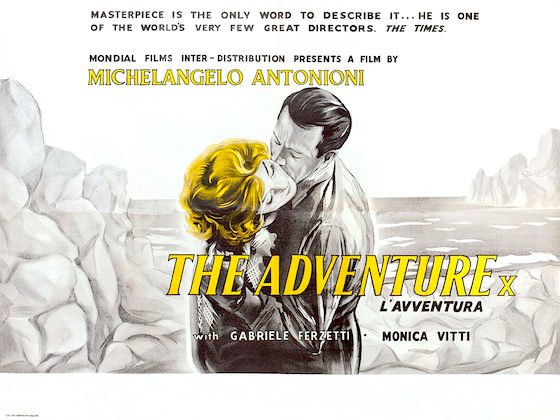
    I don’t have a great track record for enjoying acclaimed classic Italian cinema (neither Bicycle Thieves nor were to my taste, for example), so I’ve put off watching L’avventura for years, expecting I wouldn’t get on with it. But, inevitably, I had to face it someday… and, as it turned out, I really liked it… for a while…

    The film begins with Claudia (Monica Vitti) and her wealthy friend Anna (Lea Massari) meeting up with the latter’s wealthy boyfriend, Sandro (Gabriele Ferzetti), to go for a cruise on the yacht of some other wealthy friends. When they dock on a small island, Anna goes missing. The party scour the island, but there’s no sign of her. Police and divers arrive, but no luck. Reports suggest maybe she boarded another boat; possibly she was kidnapped. The wealthy friends quickly drift back to their lives, but Claudia and Sandro keep searching, following scant clues. Soon they too begin to get distracted — by each other.

    I don’t think it’s a spoiler to say that L’avventura starts out looking like a missing-person mystery only to get sidetracked into being a kind of romantic drama. I certainly knew that going in; and it’s probably beneficial to know it, spoiler or not, so as to manage your expectations of the film appropriately. Anyone expecting a Christie-style hunt through clues and suspects until the truth is unearthed will come away severely disappointed. No, this is the Mystery genre reimagined through an arthouse lens: it’s inconclusive, more interested in the characters than the hunt they’re on, and notoriously slow paced.

    With that in mind, I was surprised by how effective I found the mystery part of the movie. It’s not a whistle-stop action-adventure, but it’s not significantly slower than your average murder mystery, and accusations of it being uneventful seem misplaced — if I were expecting it to unfold like a regular mystery, there’d be plenty of places to look out for clues. It’s as the film shifts more towards Claudia and Sandro’s burgeoning romance that it begins to drag. The pair start just hanging around places as tourists, at which it does begin to seem like nothing’s happening and so what’s the point? The conceit of them falling for each other when they’re meant to be searching for someone they mutually care about is a good storyline, but I wasn’t convinced by how it played out. There doesn’t seem to be any time when they’re actually falling in love, they just suddenly are. Maybe I’m missing some point there. Or maybe it’s beside the point. Until I can work that one out, I’m going to have to chalk this up as half great, half A Shame.

    4 out of 5

    L’avventura is the 12th film in my 100 Films in a Year Challenge 2022. It was viewed as part of Blindspot 2022.


    She’s Gotta Have It

    (1986)

    Spike Lee | 84 mins | digital (UHD) | 1.66:1 | USA / English | 18 / R

    She's Gotta Have It

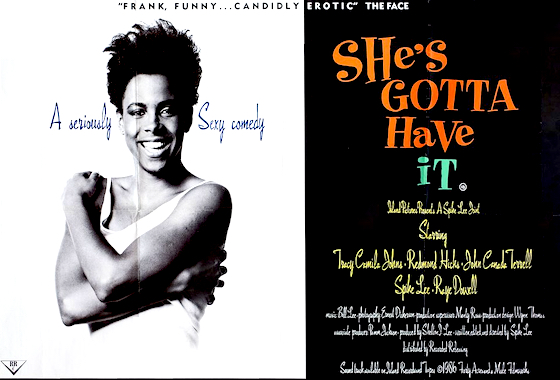
    Spike Lee’s post-student debut concerns twentysomething Brooklynite Nora Darling (Tracy Camilla Johns), who’s openly dating three men: upright ‘nice guy’ Jamie (Tommy Redmond Hicks), preening model Greer (John Canada Terrell), and streetwise Mars (Lee himself). And let’s not be coy (because the film certainly isn’t): she’s not just dating them, she’s sleeping with them all. The story of this love ‘square’ is partially narrated to camera by its four participants, as well as some of Nora’s other friends and acquaintances.

    It’s kinda crazy to think that the American indies were making sexually frank films like this and sex, lies and videotape in the late ’80s (a precursor, no doubt, to the wave of ‘real sex’ movies in the early ’00s), while nowadays we regularly get young people on Twitter arguing that no movie ever needs to have a sex scene, ever. So while I’m tempted to describe the film’s views on promiscuity as “then-modern”, perhaps just “modern” will still suffice — it’s certainly taken most (arguably all) of the intervening decades to get rid of the double standard for men and women as regards having multiple partners. That said, what has perhaps changed is our idea of what counts as “sexually explicit”. The film was obviously quite shocking back in its day, with the MPAA insisting on cuts before they’d give it an R (the unrated “director’s cut” had a Criterion LaserDisc release, but hasn’t surfaced anywhere else since), but you’ll see more nudity, more thrusting and moaning, on certain TV shows nowadays.

    Sexual stereotypes are not the only ones Lee sought to subvert here, as he also attempts to combat stereotypical depictions of African-Americans on screen — note the prominent message in the end credits that “this film contains are no jerri curls!!! and no drugs!!!” (punctuation as seen on screen). It extends beyond those basic signifiers; for example, how Nora’s three lovers are such different personalities. Partly that makes sense for the plot — that different sides of Nora’s personality like different types of guy — but also it shows different ideas of male Blackness; that The Black Guy is not just one thing. The jazzy score is another definite contrast to what you’d expect from a Hip Young Black Movie in the ’80s. Maybe that’s just Lee’s personal preference, but maybe it’s another conscious subversion of expectations.

    Lee’s politics are clear and forthright, but his filmmaking still needed some work. A lot of the film looks great, mostly shot in high-contrast black-and-white (plus one striking, ultra-saturated colour sequence), but some of the editing and performances could use refinement. Rough round the edges though it may be, She’s Gotta Have It is so clearly the calling card of a talented and individual voice with something brand-new to say that those rough edges are almost more of a feature than a bug.

    4 out of 5

    She’s Gotta Have It is the 13th film in my 100 Films in a Year Challenge 2022. It was viewed as part of “What Do You Mean You Haven’t Seen…?” 2022.


    Don’t Look Up

    (2021)

    Adam McKay | 138 mins | digital (UHD) | 2.39:1 | USA / English | 15 / R

    Don't Look Up

    Oscar statue2022 Academy Awards
    4 nominations

    Nominated: Best Picture, Best Original Screenplay, Best Editing, Best Original Score.

    Having targeted those responsible for the 2008 financial crash in The Big Short, and Dick Cheney and his responsibility for everything bad that’s happened in the last few decades in Vice, writer-director Adam McKay now turns his satirical attention to a fictional scenario, basically so he can have a go at anyone and everyone he feels like. The plot concerns a giant asteroid headed for Earth; an extinction-level event just 6½ months away. But, despite a handful of scientists trying to warn everyone, nobody seems in a great rush to do anything about it. It’s all an allegory for America’s carefree attitude to climate change, see.

    Really, this is a film I should be fully onboard with. It’s setting its sights on vacuous mainstream culture and Trumpian politics, after all. The problem is, these targets are low-hanging fruit, and — somewhat ironically, given its title — Don’t Look Up is satisfied with only plucking those lowest branches. Repeatedly. Unhurriedly. When they said the comet was 6½ months away, I didn’t expect the rest of the film to feel like it was covering that in real-time. It needed a better editor, or perhaps a studio who exerted a bit more quality control than Netflix’s famed “do what you want, we’ll just release it” approach. There are funny moments, certainly, but they’re literally few and far between when the pace is languid and the satire so broad, simplistic, and repetitious. Indeed, the most laugh-inducing stuff has nothing to do with the satire at all, just funny bits of business along the way (the best is a running gag about a general and snacks, which keeps cropping up unexpectedly).
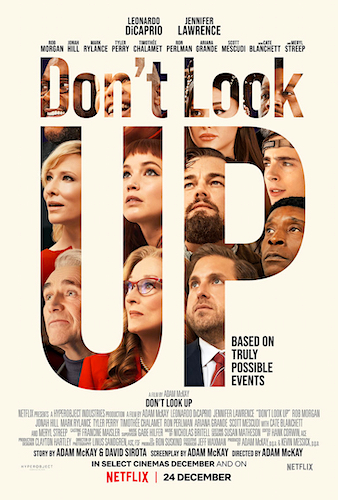
    And for a film that’s entire thesis is being critical of American attitudes, it’s (again) ironic that it depicts this global crisis as so America-centric. Sure, there are cutaways to people watching events in other parts of the world, and a couple of belated nods to the idea that other countries might have their own thoughts on this impending disaster, but that’s all they are — sops and nods. “If America’s not going to fix this, no one can,” says the film. Ah, fuck off.

    2 out of 5


    Jackass: The Movie

    (2002)

    Jeff Tremaine | 85 mins | digital (SD) | 16:9 | USA / English | 18 / R

    Jackass: The Movie

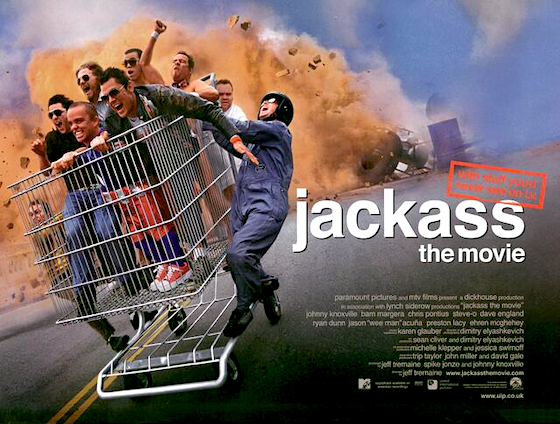
    Jackass never appealed to me. I was a 14-year-old boy when it started, surely the franchise’s target audience; but I was an intelligent 14-year-old boy, so I was above it. Sorry, not sorry. But with everyone going on about the new movie, and reevaluating the whole franchise as some kind of essential classic of Cinema, I thought it was finally time to see for myself.

    For those not au fait with the series, it’s about a bunch of men who clearly aren’t old enough to know better performing stunts and pranks that no one in their right mind should ever want to do anyway. They’re frequently designed to induce pain. They’re often trying to be as crude or gross as possible. Some may make you feel ill just by watching them. And yet others are almost on the level of wholesome fun… albeit “wholesome fun” where you know participants will come away with bruises, at the very least.

    Almost everything the guys get up to is “dumb” — that’s kinda the point — and yet… It borders on “educational” when, for example, lead troublemaker Johnny Knoxville submits to being shot by “less lethal” riot control ammunition. The plan was for him to be shot in the chest, but the guys who make the stuff say if it hits his heart it could kill him, so they revise it to him being shot in the abdomen. Whereas most of the other stunts are followed by cutaways to the rest of the crew in hysterics, here the shocked silence of their reaction is telling. Or how about the kinda-feminism of a segment called “Ass Kicked by a Girl”, in which one of the gang enters the ring against a world champion female kickboxer. There’s no “haha, I can take her easily ’cause she’s a girl” posturing: the guy knows he’s about to get his ass handed to him. There’s some kind of respect for women in that, anyway, which you might not expect given the rest of the laddish antics.

    Taken as ‘a movie’, it’s rather formless — I suspect the TV show was exactly the same, just shorter — but the rapid-fire, standalone-stunt style does mean that no sketch hangs around too long. Some are literally seconds. But there’s not even a sense of escalation, say — it’s not like they save the largest or most outlandish stunt for the end (although there’s a post-credit scene that seems like it was probably the film’s most expensive single sequence). In some respects it doesn’t matter (who cares about the structure of a Jackass movie?), but in others, it’s what keeps it at the level of “feature-length special” rather than true Movie.

    But, ultimately, the important thing is this: some of it is funny. Reader, I laughed.

    3 out of 5


    Jackass Number Two

    (2006)

    Jeff Tremaine | 88 mins | digital (HD) | 16:9 | USA / English | 18 / R

    Jackass Number Two

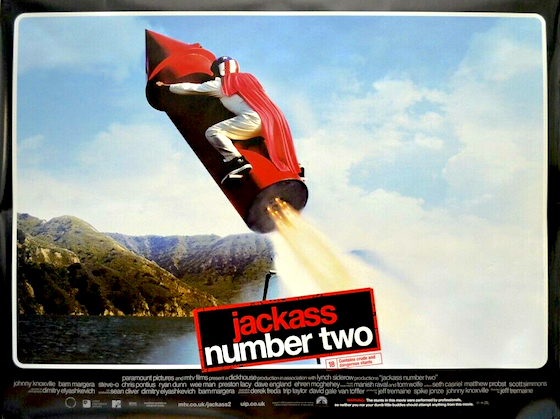
    Even Jackass isn’t immune from the law of diminishing returns: after three seasons on TV plus a movie, this second big-screen outing feels kinda uninspired, like they’ve used up all their truly great ideas and are mostly running on fumes. That said, there are some good sequences — a variety of rodeo-based stunts with real live bulls are among the highlights — but other pranks feel reheated, or are just underwhelming; things you suspect would have been rejected in favour of better material before.

    In that sense it almost feels like it was rushed out to capitalise on success, but there’s a gap of four years, the TV show had ended, and they hadn’t necessarily intended to do any more — surely the only reason to return, then, was fresh ideas? Or, perhaps, being given the budget to do things they couldn’t before. That might be the case, because some of the material does feel like it’s got too much money and/or time behind it. I say “too much” because I think Jackass works best when it has a rough, cheap, “made at home” vibe. The finale here — a big “old Hollywood”-style musical number, with stunts mixed in — feels particularly out of place. Obviously it’s all a big joke, but the glossy, clearly-expensive visuals don’t feel of the right style.

    Plus, at various points you can feel some of the cast are getting genuinely fed up with this shit. Maybe they’d been doing it for too long by this point (I say there was a years-long gap, but some had been involved in spinoff projects). Whatever the reason, it serves to undermine the fun somewhat. One of the reasons you can enjoy these fools doing life-threatening stunts is because they’re volunteering for it and they seem to be having fun, however much they’re getting hurt or disgusted. But if they’re not enjoying it, aren’t we just watching people be tortured for our entertainment? It almost tips it from being stupid-but-funny into exploitative bullying. And we shouldn’t be having to think about anything that deep during a Jackass movie.

    As I’ve given both films 3 stars, let’s be clear: I’d definitely rate the sequel lower than the first movie, just not a whole star lower — it doesn’t merit being pulled down to a 2, while the first doesn’t merit a retrospective bump up to 4. If this kind of tomfoolery tickles you, there’s still plenty of entertainment to be had in Number Two, it’s just (mostly) not their finest output — which I guess is kinda apt, given the title.

    3 out of 5

    Jackass Number Two is the 15th film in my 100 Films in a Year Challenge 2022.