
Joe Lawlor & Christine Molloy | 101 mins | digital (HD) | 2.39:1 | Ireland & UK / English
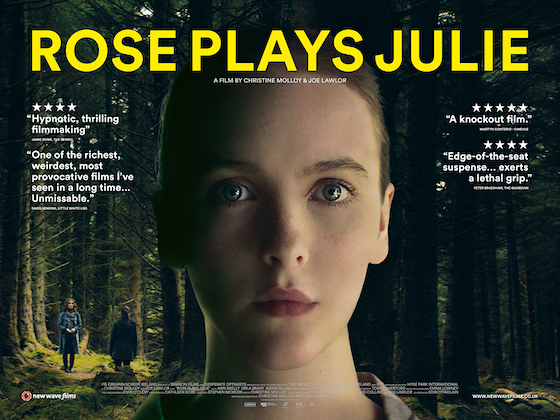
Long Lost Family meets rape revenge thriller in this Irish drama about a veterinary student, Rose (Ann Skelly), who was adopted as a baby and now decides to finally meet her birth mother, Ellen (Orla Brady), only to uncover a dark secret about their shared past. Well, I’ve kinda given away the ‘secret’ in my opening ten words, haven’t I? My apologies if you’re a total spoilerphobe, but here’s the thing: some blurbs and whatnot try to conceal that reveal (and when it comes in the film, it is played as a revelation; more on that in a bit), but, frankly, even if you haven’t already had it spelled out (and most reviews don’t try to hide it), it’s pretty easy to guess where things are going — perhaps even from reading one of those oh-so-oblique blurbs (that’s when I figured it out).
But this isn’t your standard rape revenge movie. The act itself is historical, with only its aftermath shown in a couple of fuzzy flashbacks — this isn’t one of those trashy flicks that has its cake and eats it by ickily revelling in the assault before also enjoying the violent vengeance. And instead of the avenger being a dismayed husband/partner, or the (attractive, young) wronged woman who’s suddenly an expert assassin, it’s the daughter who came of it. If you’re after the visceral thrills of the aforementioned kind of rape revenge movies, you won’t find them in this slow-burn, introspective drama; but if you’re open to that style, the mother-daughter angle of how it approaches its subject matter is a unique element.
This is where the Long Lost Family part remains relevant, because the tentative new relationship between Rose and the mother who gave her up two decades ago is almost a big a part of the film as her seeking out and confronting her biological father. This rides a lot on Skelly and Brady as actors, because writer-directors Joe Lawlor & Christine Molloy aren’t the sort of filmmakers who write big speeches where their characters explain their feelings — quite the opposite. Instead, we study their passive faces in extended closeups, trying to discern what’s going on as they think things over. One of the most outwardly expressive moments comes when Ellen reveals their shared past to Rose, in a blunt statement just hours after they’ve first met. It’s probably not the best way to go about telling someone that was how they were conceived, but it makes for a slap-in-the-face moment of drama, and Skelly’s reaction is powerful: she doesn’t ‘do’ anything, but her face changes entirely.
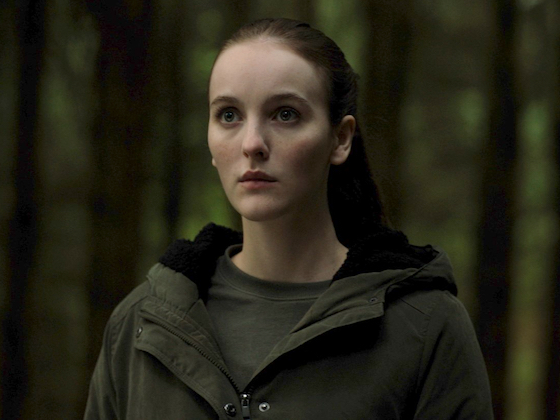
The film’s quiet, subtle mode must be challenging for an actor — no grand emotive speeches to show off with — but this cast are up to the challenge. Skelly is obviously the standout, letting through just glimmers of reaction that allow us to understand how much she’s struggling with all this troubling new information. Brady is very good also, even though I feel like some of her character arc has been left offscreen, between scenes. Rose’s father, Peter, is played by Aidan Gillen, who always excels at embodying smarmy bastards, and that extra-textual awareness helps him to, again, keep his performance mostly subdued and realistic. He’s not some overt monster stomping across everyone’s lives, but an outwardly nice guy with an evil core.
The film’s biggest detriment is that it perhaps takes its serious subject matter a bit too seriously. It’s a very portentous film, in which the restrained performances, gloomy photography, slow-burn pace, and ominous music combine to create an intensely fateful atmosphere. Something is, inevitably, going to happen… eventually… On the one hand, it means that, as Rose gets in deeper, the tension steadily begins to grow. On the other, I’m aware some viewers think it’s so self-serious that it tips over into being laughable. There’s something to be said for varying your tone.
Conversely, I can see why Lawlor & Molloy weren’t in the mood for levity: this is a film about two women, damaged in different ways, who need to come to terms with what has happened to them; both searching for something, even if they don’t know it. You could argue, even, that applies to three people, because Gillen’s character also comes to realise he’s broken — though, in his case, how much sympathy we can feel for him is a whole other discussion. And mixed into all that are major ethical dilemmas: reaching out to birth parents who requested no contact; euthanising healthy animals (if you’re squeamish about injured and dying animals, do not apply); and, by extension, the question of what is appropriate restitution for transgressive behaviour by humans.
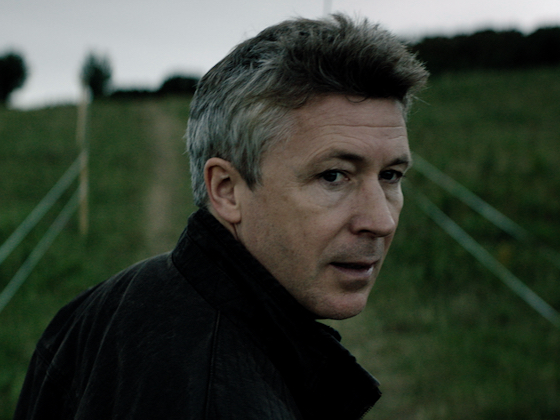
The latter leads to an ending that I’m not sure how I feel about (massive spoilers follow!) Peter is killed by Ellen, but only because he acquiesces — he accepts what’s happening and allows Ellen to finish it. It’s not exactly suicide (he wouldn’t have done it if Ellen hadn’t turned up and stabbed him with a syringe full of poison), but, by the end, he’s also not protesting. He accepts his guilt and punishment; almost seems to welcome the relief, in fact. If only all rapists were so helpful… and the fact they wouldn’t be is what makes this such a grey area. But then, maybe that’s the point: the film isn’t arguing that this is how things should be done, but asking the question: is this ok? If not, what would be? On another level, from a story structure perspective, it feels somewhat unsatisfying that Rose isn’t involved, after the rest of the film was primarily about her. That might be morally correct (it’s really Ellen’s trauma to deal with), but it feels wrong dramatically to end the film with resolution for Ellen more than for Rose.
Between its heavy issues and unwaveringly doom-laden tone, Rose Plays Julie is not a light viewing experience. If you like the idea of slow-burn dramatic thriller that spends a lot of time focused on people’s still faces as they process information silently and internally, and leaves you with a lot to chew over when it’s done, this is a film for you. If you think that sounds inscrutable or dull, steer clear.

Rose Plays Julie is streaming on AMPLIFY! until Thursday 12th November. It includes a half-hour Q&A with the directors, actor Orla Brady, and composer Stephen McKeon.
Disclosure: I’m working for AMPLIFY! as part of FilmBath. However, all opinions are my own, and I benefit in no way (financial or otherwise) from you following the links in this post or making purchases.
 2016 Academy Awards

 British Academy Film Awards 2016
 Adapted from Colm Tóibín’s award-winning 2009 novel by novelist-turned-screenwriter Nick Hornby and director John Crowley (
 Guiding us through this, the film’s heart in every respect, is Saoirse Ronan’s leading performance. I will watch Ronan in essentially anything at this point, both because she seems to choose good material and because, even when she doesn’t, she’s great in it. This is probably her first really mature performance, convincing as a somewhat shy young woman who makes her way out into the world, in the process realising all the confidence she should have in herself. It’s the kind of character and performance that works by accumulation; it’s about the journey, not heavy-handed emoting in a scene or two.
 John Crowley’s direction is largely unobtrusive, but that is a very different kettle of fish to lacking quality. The subtle changes in framing, lighting, and colour palette as the film moves through its locations and stages helps emphasise how Eilis is changing, and how the world changes in her perceptions, too. It makes the story’s times and places look beautiful without quite slipping into picture-postcard rose-tinted-memories territory.
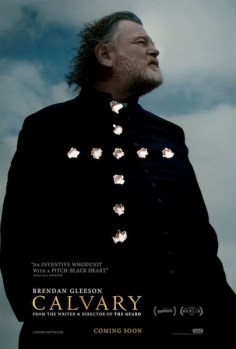 From the director of
  So could it, instead, merely be a snapshot of Irish society, in particular its current relationship with the church? Surely that’s part of what’s in play, with the cynical, dismissive, teasing, sometimes hateful attitudes of the parishioners surely no coincidence. Some viewers have certainly taken this as the film’s primary talking point, and some have been less than impressed that it doesn’t align with their view of modern Ireland. (I’m in no position to comment.) Neither of these feel like they’re getting at the totality of what it’s saying, though.
 and Owen Sharpe (as a Brooklyn-accented promiscuous gay) — though if you watch
 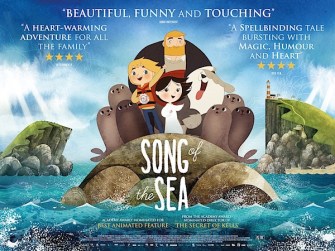 The second feature from director Tomm Moore and his pan-European team of animators (after the excellent, Oscar-nominated
 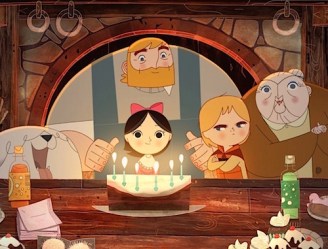 but the motivator for that is clearly resentment towards her for appearing the night his beloved mother left. Their father, too, is hamstrung by his grief, struggling to move on from his wife’s disappearance and fully engage with the world. His kids are his only connection, Saoirse in particular, but his mother makes him realise that clinging to them is damaging their lives too… or is it?
 all are factors that can, and do, elevate the film. Don’t get me wrong: this is a cut above your average animated adventure. I just didn’t enjoy it as much as The Secret of Kells.
 For more positives, Song of the Sea’s animation and design is at least as strong as it was in Moore’s previous film. There’s the ‘house style’ flattened, animated storybook look; a description which could sound like criticism but absolutely is not. Some very beautiful scenes are evoked, meaning that at the very least there’s always imagery to tide you over. I’d list some favourites, but we’d be talking about most of the film. That said, the depiction of a run-down, smoggy Dublin stands out as something different from the countryside idylls of Kells and the rest of the locales in Song of the Sea, but it’s not exactly “beautiful”. Rather, look to the island home of our heroes, a tall rock surrounded by the blue sea; the home of the glowing-eyed long-haired Seanachai (the moment when it suddenly turns around in the montage after Saoirse uses her coat for the first time is my favourite shot in the film, a little sliver of fantasy imagery that magnificently teases what’s to come); or the small sanctuary surrounded by a field of stinging nettles — again, a kind of gentle, on-the-edge-of-the-real-world fantasy that quite appeals to me. The fact the countryside is littered with half-hidden stone figures, which we know to be frozen magical begins, is another nice touch; especially as they’re often surrounded by human litter, the analogy (as I see it) being both that people exist around them but don’t even see them, and also that, presumably through our modern disbelief, we’ve thrown these legends out with our trash.
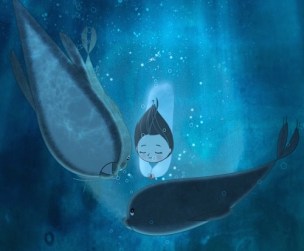 Even as I write, I’m talking myself round to liking Song of the Sea even more than I did on first viewing — and that was quite a lot, albeit coloured by my perception that I didn’t like it as much as The Secret of Kells. If you enjoyed Moore’s earlier film, this unquestionably merits seeking out (if you haven’t already, of course; I mean, I did). If you haven’t seen Kells, well, you’ve so far missed a treat; and now you’re missing two.
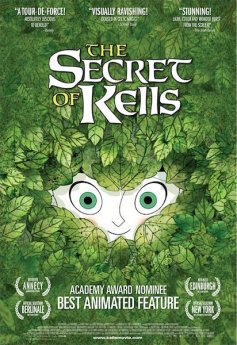 You can lament the quality of Oscar voters’ choices all you want, but if it wasn’t for their 2010 Best Animated Feature nominations I’m not sure many would have heard of this Celtic gem.
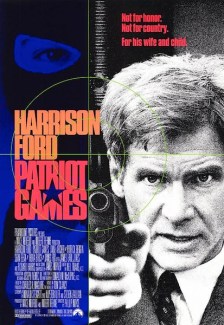 A sequel to
 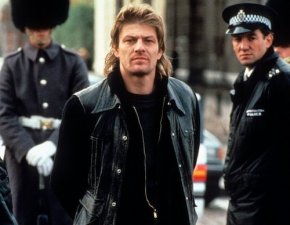 There’s a nasty synth score, just to make things drag more. There are some moments of brilliance though, not least the beautifully-shot boat chase climax. There’s also the dubious joy of seeing Sheffield’s most famous son, Sean Bean, doing an Irish accent. Co-terrorist Polly Walker is English though — twist! Not that her subplot really goes anywhere. Possibly she just couldn’t do the accent.
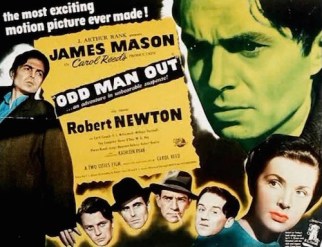 It may be a bit of a cop out to begin a review by pointing you to another, but I must recommend
  Robert Newton’s Lukey. (You’ll also note Newton’s performance is criticised in Colin’s piece so, in aid of not sounding like I’m too easily influenced, I’d like to point out I didn’t make the connection between his comments and my own notes on Newton until afterwards.) Shell and Lukey have a bit of a point in the end, but I didn’t enjoy getting through them in comparison to the rest of the film.
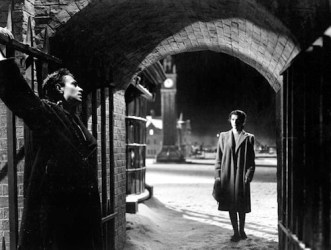
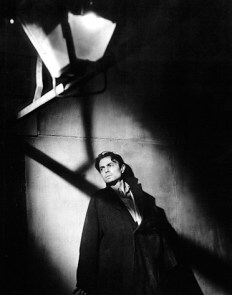 The score, by William Alwyn, is really nice, particularly in certain places — for example when it begins to snow and Johnny wanders the streets, or at its most effective during the haunting climax, as Kathleen hauls a near-dead Johnny through the falling snow towards the safety of the shipyard as the police finally close in.
 100Films.co.uk