
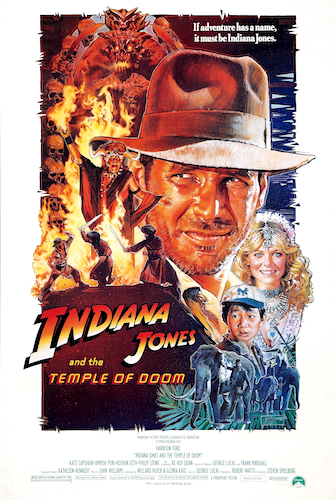
it must be Indiana Jones.
Country: USA
Language: English
Runtime: 118 minutes
BBFC: PG (cut, 1984) | 12 (uncut, 2012)
MPAA: PG

Original Release: 23rd May 1984 (USA)
UK Release: 15th June 1984
Budget: $28 million
Worldwide Gross: $333.1 million
Stars
Harrison Ford (The Conversation, Cowboys & Aliens)
Kate Capshaw (A Little Sex, Black Rain)
Ke Huy Quan (The Goonies, Finding ‘Ohana)
Director
Steven Spielberg (1941, Hook)
Screenwriters
Willard Huyck (American Graffiti, Radioland Murders)
Gloria Katz (Messiah of Evil, Howard the Duck)
Story by
George Lucas (American Graffiti, Willow)
The Story
Escaping the evil machinations of a Chinese gangster, Indiana Jones, his child sidekick Short Round, and nightclub singer Willie Scott crash-land in India, where the fate of a blighted village points them towards an ancient palace, wherein hides a secret cult practising ritual human sacrifice…
Our Hero
Boldly billed as the definitive article ‘Hero’ in some of the film’s advertising, the man in question is archaeologist and adventurer — and, indeed, archetypical movie hero — Indiana Jones.
Our Villains
The Thuggees, an ancient Indian cult still active at the remote Pankot Palace, where they’ve kidnapped and enslaved children to work in mines, and execute elaborate ceremonies of human sacrifice.
Best Supporting Character
Indy’s pint-sized Chinese sidekick, Short Round. A child sidekick sounds like a recipe for disaster, but Short Round is actually pretty fun. Spielberg liked actor Ke Huy Quan’s personality so much that he had the boy and Harrison Ford improves scenes, such as the one when Short Round accuse Indy of cheating at cards.
Memorable Quote
“We are going to die!” — Indiana Jones
(This isn’t a particularly memorable line in isolation, but it’s all in the delivery — and the sad face Ford pulls at the end.)
Memorable Scene
The film’s opening 20 minutes are an extended action sequence — more of a mini-adventure, really (there’s an entire musical number!) — that kick off the movie perfectly. Indeed, some fans even say it’s the greatest action scene in the entire series (I say it’s a contender, but the competition is stiff). I suspect Spielberg was using it to get a few things out of his system: as well as the song-and-dance, there’s a distinct James Bond vibe to the whole thing (Spielberg had put himself forward to direct a Bond film but was rebuffed).
Memorable Music
Oh, John Williams’ main theme… Okay, it’s not new — it’s from Raiders, obviously — but by God it’s good. Did you know: Williams was Oscar nominated for each of the first three Indiana Jones films, but lost every time. Raiders was beaten by Vangelis’ music for Chariots of Fire, Temple of Doom by Maurice Jarre’s score for A Passage to India, and Last Crusade by Alan Menken’s work on Disney’s The Little Mermaid. Mad, really.
Technical Wizardry
The mine cart chase is not just another fantastic action scene, but it’s also a real showcase of filmmaking tricks. It was created with a mix of footage of the star actors, stunt people, miniatures, and stop-motion animation, but it never shows off about it — it’s cut together so well and so fast that you almost don’t notice all the different techniques that have been employed to create a wholly thrilling sequence.
Letting the Side Down
Willie Scott, the nightclub singer who’s forced to tag along on Indy’s adventure, but would rather be anywhere else. She’s not a wholly terrible character, but the only time the movie really threatens to slow down is when it indulges in her screechy, squeamish side. That said, at her best, her hot-and-cold relationship with Indy generates some classic screwball-esque scenes that really help to underscore the 1935 setting.
Making of
The dinner scene, infamous for its array of disgusting food like chilled monkey brains, came about because Spielberg, Lucas, and screenwriters Gloria Katz and Willard Huyck were concerned about keeping the audience’s attention during the expository dialogue about the Thuggee cult. Ideas such as a tiger hunt were rejected before they settled on the dinner sequence. Said Katz, “Steve and George both still react like children, so their idea was to make it as gross as possible.”
Previously on…
Indy made his debut in Raiders of the Lost Ark, although Temple of Doom is actually a prequel, set a year earlier.
Next time…
The Indiana Jones trilogy was completed in 1989 with Indiana Jones and the Last Crusade, but that was far from the end for the character. On screen, The Young Indiana Jones Chronicles traced the character’s adventures in childhood across three seasons and 32 episodes, originally released between 1992 and 1996. Over a decade later, in 2008, an older Indy returned to the big screen in Indiana Jones and the Kingdom of the Crystal Skull, and production has just begun for an adventure starring an even older Indy, with the currently-untitled fifth film due for release next year. Away from TV and cinema screens, Indy has featured in dozens of novels, comic books, computer games, and so on, including a live stunt show at Disney World that’s now been running for over 30 years.
Awards
1 Oscar (Visual Effects)
1 Oscar nomination (Original Score)
1 BAFTA (Special Visual Effects)
3 BAFTA nominations (Cinematography, Editing, Sound)
7 Saturn Award nominations (Fantasy Film, Actor (Harrison Ford), Younger Actor (Ke Huy Quan), Director, Writing, Costumes, Make-Up)
Whereas Raiders was balanced to perfection, Temple of Doom pushes everything that worked up to maximum: it’s more playful and it’s sillier, but it’s also more gruesome and more overtly an action movie. When it’s firing on all cylinders, it’s as good as anything else in the franchise, including scenes that stylistically evoke many a genre from classic Hollywood (there’s a hefty dash of screwball comedy in some of the relationship between Indy and Willie). Even at its worst, it’s not bad — it moves like the clappers and is committed to being almost relentlessly entertaining. Perhaps it’s a little hardcore for younger fans (and even that aspect has lessened with age, with the chest-ripping special effects looking a little ropey nowadays), but otherwise, what’s there to complain about?



 Score:





 2016 Academy Awards
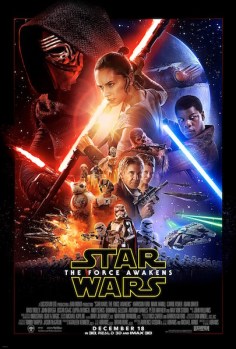 Star Wars: The Force Awakens is not the best film of 2015. Not according to the Academy of Motion Picture Arts and Sciences, anyway, who didn’t see fit to nominate it for Best Picture at tomorrow’s Oscars. Many fans disagree, some vociferously, but was it really a surprise? The Force Awakens is a blockbuster entertainment of the kind the Academy rarely recognise. Okay, sci-fi actioner
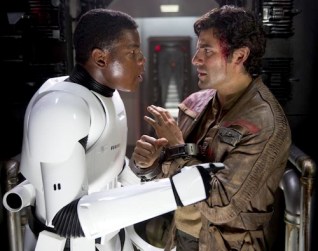
  I too could talk about the likeable new heroes; the triumphant return of old favourites; the underuse of other old favourites; Daisy Ridley’s performance; John Boyega’s performance; the relationship between Rey and Finn; the relationship between Finn and Poe; the success of Kylo Ren and General Hux as villains (well, I thought they were good); the terrible CGI of Supreme Leader Snoke; the ridiculous overreaction to the alleged underuse of Captain Phasma; that awesome fight between the stormtrooper with that lightning stick thing and Finn with the lightsaber; the mystery of Rey’s parentage; the mystery of who Max von Sydow was meant to be (and if we’ll ever find out); some elaborate theory about why Ben wasn’t called Jacen (there must be one — elaborate theories that will never be canon are what fandoms are good for); the way it accurately emulates the classic trilogy’s tone; the way it’s basically a remake of
 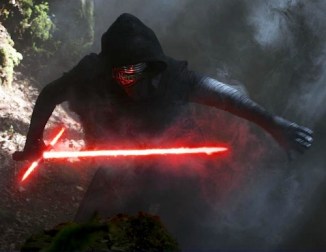 J.J. Abrams seems to have tricked some people into thinking he’s a great director with The Force Awakens (rather than just a helmer of workmanlike adequacy (when he’s not indulging his lens flare obsession, at which point he’s not workmanlike but is inadequate)), and I think that’s partly because it’s quite classically made. Yeah, it’s in 3D, but the style of shots used and — of most relevance right now — the pace of the editing help it feel in line with the previous Star Wars movies. Some of the more outrageous shots (often during action sequences) stand out precisely because they’re outside this norm. Perhaps we take for granted that Abrams delivered a movie in keeping with the rest of the series, because that’s The Right Thing To Do, but that doesn’t mean he had to do it. And the transitional wipes are there too, of course.
 No one knows what the difference is between these two categories. I’m not even sure that people who work in the industry know. As a layperson, it’s also the kind of thing you tend to only notice when it’s been done badly. The Force Awakens’ sound was not bad. It all sounded suitably Star Wars-y, as far as I could tell. That’s about all I could say for it. It feels like these are categories that get won either, a) on a sweep, or b) on a whim, so who knows who’ll take them on the night?
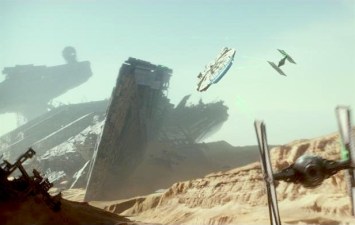 “restraint […] applying the basic filmmaking lessons of the first trilogy,” according to
 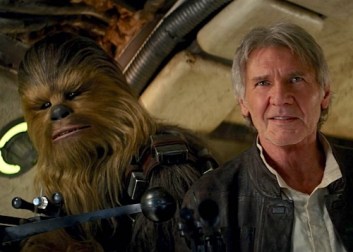 those elements aren’t gone about in an awards-grabbing fashion anyway. In the name of blockbuster entertainment, however, they’re all highly accomplished.

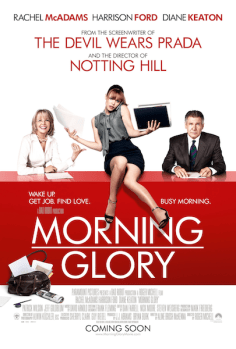 Rachel McAdams takes a break from
  100Films.co.uk