
As foretold in my most recent progress report, June is off to a slow start here at 100 Films. Or a non-start, really, as I’ve yet to watch any films this month and this is my first post since the 1st. Hopefully it won’t stay that way all month (I’ve got my Blindspot and WDYMYHS tasks to get on with, if nothing else).
For the time being, here a handful of reviews of things I watched over a year ago but have only just written up:
(2000)
Joel Coen | 103 mins | streaming (HD) | 2.39:1 | UK, France & USA / English | 12 / PG-13
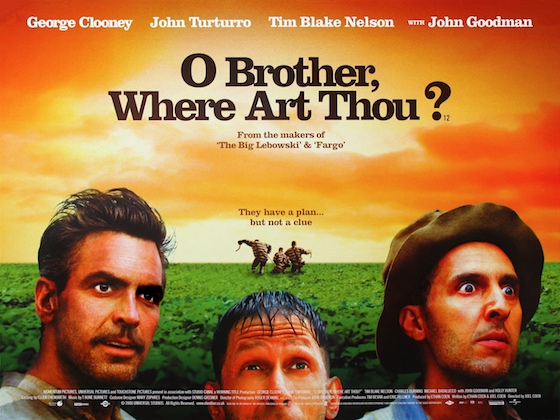
The eighth movie from the Coen brothers (eighth, and yet they still weren’t being allowed a shared directing credit! No wonder that stupid DGA rule pisses people off) is one of their movies that I found less objectionable. Oh, sure, most of their stuff that I’ve reviewed I’ve given four stars (as well as a couple of threes), but that’s more out of admiration than affection — for whatever reason, their style, so popular with many cineastes, just doesn’t quite work for me; even when I like one of their films there’s often still something about it I find faintly irritating.
Anyway, for this one they decided to adapt Homer’s Odyssey, but set in the American Deep South during the Great Depression. Apparently neither of the brothers had ever actually read The Odyssey, instead knowing it through cultural osmosis and film adaptations, which is perhaps why the film bears strikingly minimal resemblance to its supposed source text. Rather, this is a story about songs, hitchhiking, and casual animal cruelty, in which the KKK is defeated by the power of old-timey music. Hurrah!
It’s mostly fairly amusing. If it was all meant to signify something, I don’t know what — it just seemed a pretty fun romp. I thought some of the music was okay. (Other people liked the latter more. Considerably more: the “soundtrack became an unlikely blockbuster, even surpassing the success of the film. By early 2001, it had sold five million copies, spawned a documentary film, three follow-up albums (O Sister and O Sister 2), two concert tours, and won Country Music Awards for Album of the Year and Single of the Year. It also won five Grammys, including Album of the Year, and hit #1 on the Billboard album charts the week of March 15 2002, 63 weeks after its release and over a year after the release of the film.” Jesus…)
Anyway, that’s why it gets 4 stars. I liked it. Didn’t love it. Laughed a bit. Not a lot. Some of the music was alright. Not all of it. Naturally it’s well made (Roger Deakins!) without being exceptionally anything. Harsher critics might say that amounts to a 3, but I’m a nice guy.

(2016)
Robert Zemeckis | 119 mins | streaming (HD) | 2.39:1 | USA, UK & China / English & French | 15 / R

Brad Pitt and Marion Cotillard star as a pair of intelligence agents who fall in love in Mr. & Mrs. Smith: WW2 Edition. Settling down together in England, all is lovely for them… until one comes under suspicion of working for the enemy…
Overall Allied is a very decent spy thriller, let down somewhat by a middle section that’s lacking in the requisite tension and a twee monologue coda. But the first 40 minutes, set in Morocco and depicting the mission where the lovers first meet, are pretty great; there’s plenty of neat little tradecraft touches scattered throughout; and there are some pretty visuals too. There are also some moments that are marred by more CGI than should be necessary for a WW2 drama, but hey-ho, it’s a Robert Zemeckis film.
That said, Brad Pitt’s performance is a bit… off. He never really seems connected with the material. Perhaps he was trying to play old-fashioned stoic, but too often it comes across as bored. It also constantly looked like he’d been digitally de-aged, but maybe that’s because I was watching a 720p stream; or maybe he had been, though goodness knows why they’d bother.
Anyway, these are niggles, so how much they bother you will affect your personal enjoyment. I still liked the film a lot nonetheless.
(2017)
Doug Liman | 109 mins | streaming (HD) | 1.85:1 | USA & Japan / English & Spanish | 15 / R
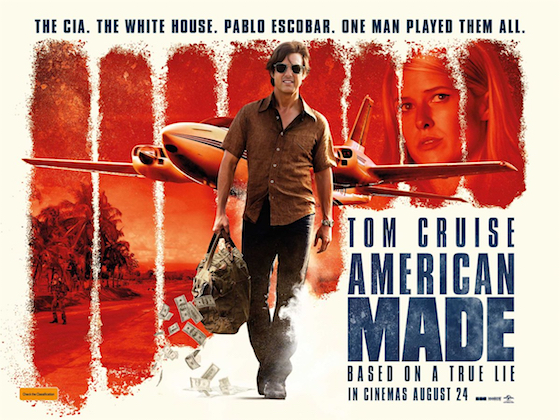
Described by director Doug Liman as “a fun lie based on a true story,” American Made is the obviously-not-that-truthful-then ‘true story’ of Barry Seal, a pilot who was recruited by the CIA to do some spying and ended up becoming a major cocaine smuggler in the ’80s.
Starring ever-charismatic Tom Cruise as Seal, the film turns a potentially serious bit of history (as I understand it, the events underpinning this tale fed into the infamous Iran-Contra affair) into an entertaining romp. Indeed, the seriousness of the ending is a bit of a tonal jerk after all the lightness that came before, which I guess is the downside of having to stick to the facts.
Still, it’s such a fun watch on the whole — a sliver long, perhaps, even though it’s comfortably under two hours, but it does have a lot of story to get through. Parts of that come via some spectacular montages, which convey chunks of story succinctly and are enjoyable in their own right. Liman doesn’t get a whole lot of attention nowadays, I think, but it seems he’s still got it where it counts.




 Score:



 Comedy-drama starring George Clooney as a Hawaiian with family issues: his wife’s in a coma and may’ve been cheating; his daughters are unruly; and his extended family is considering a massive land sale that’s the talk of the islands.
 After making his live-action directorial debut with the unlikely sidestep of
  and there’s a moral lesson that’s arguably a little heavy-handed, but as it’s a moral lesson some people aren’t bloody listening to, I can’t say I blame Bird for that. The characters and performances are likeable, with Raffey Cassidy standing out as a marvellous young find, though Laurie is a little undersold. There are some suitably entertaining action scenes, some moments of visual splendour thanks to the future city, and one long take that is exquisite. I know I’m a sucker for a long take, but this is a really exceptional one, that deserves to be mentioned alongside the year’s more-praised unbroken shot, the opening of
 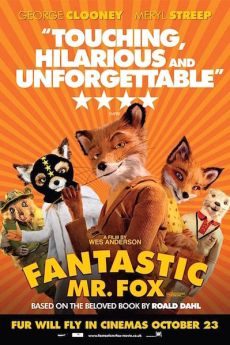 Quirky cult-y director Wes Anderson tries his hand at stop motion animation with this Roald Dahl adaptation, in which an all-star cast voice the tribulations of a gaggle of talking animals — led by the eponymous vulpine — who come into conflict with three vicious farmers.
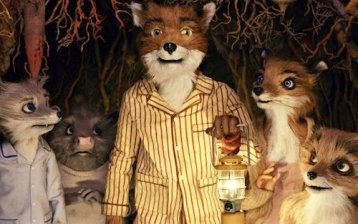 Compositionally, I thought I’d get sick of the squared-off 2D style, but Anderson’s cleverer than that. It might look flat and lacking in dimension at first, but that’s the starting point for variation, including some great bits of depth (farmer Bean trashing a caravan is a particular highlight of this), and when it breaks form (like a rabid dog chase) it’s all the more effective. There’s also a fantastic score by Alexandre Desplat. Not your usual plinky-plonky Quirky Kids’ Movie music (though there are instances of that), but something more raucous. Nice spaghetti Western riffs, too.
 Fantastic Mr. Fox is the kind of film I feel I may enjoy more on a re-watch. Indeed, some comments on film social networking sites (e.g.
  2014 Academy Awards
 On its theatrical release, a commonly-cited recommendation was to see Gravity in 3D on the biggest screen possible. Obviously, I didn’t bother. Some say it isn’t as effective on a small screen in 2D. Maybe it isn’t as effective, but it’s still a damn fine film.
 quick editing has always been a way of creating excitement in that arena), the never-ending shots serve to make you feel closer to events, right alongside Bullock, almost wishing it would stop. Plus there’s skill in being able to show us what we need to see from a single vantage point, without the easy option of being able to cut to a different angle to clarify a detail.
 The most high-profile jobs — the actors, the studio — may be American, but everything else is pretty darn British. Rather than cry “that’s ridiculous! Give it to a proper British film!”, we should be keen to point out that, actually, this surprise global mega-hit wasn’t made in America, but in Britain, by all the talented filmmakers we have here. Rule Britannia, etc etc!
 While I sympathise with the idea that it’s not A Science Fiction Movie, but instead A Thriller (That Happens To Be Set In Space), you can’t really deny its SF-ness. OK, if we’re classing this as SF then so too should be films like
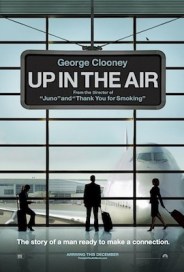 Sometimes, it’s best to just come clean: I don’t have much to say about Up in the Air.
 Cowriter-director Jason Reitman has created a surprisingly likeable film. It’s easy to see how Clooney’s character — very much the centre of the piece — could be irritating or vapid or any number of other negative adjectives, but instead he’s… well, he’s George Clooney, isn’t he? He’s all charm. If you were going to be fired, you’d probably want George Clooney to be doing it. For a character who is essentially an expansion of the
  Up in the Air got its Best Picture nom in the first year the Oscars went back to 10 nominations for the big prize. I’m not sure many would disagree that it’s one of The Other Ones — one of the ones that quite probably wouldn’t’ve been there if it hadn’t been for the category doubling in size. And if it was, it’d be The Other One — the token indie/comedy nomination that everyone knows isn’t going to win but was quite good all the same.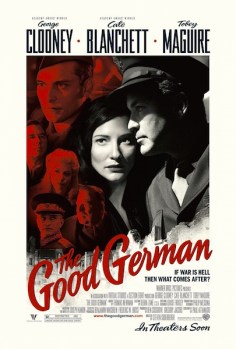
 the visual, audio, acting and plot styles of the era, why not ensure the dialogue and action follow suit? There’s no need for the violence, sex and swearing in this particular tale; at least, no need for it in a way that couldn’t be conveyed as effectively using Production Code-friendly methods. I’m uncertain if I like the film less for failing on this measure, but it does add to its inherent oddness.
 But how much do we get to know them, really? It’s easy to see why critics said “not very well”, because they’re too busy uncovering the conspiracies and revealing their part to actually show us much about themselves. But then why should that be a problem? It’s a noir thriller, not a character drama. Surely it’s about the mysteries and, if you like, the themes, rather than letting us understand the people caught up in them?
 production intentions rather than being invented to slot into them — provides meat on the stylistic bones.
 100Films.co.uk