
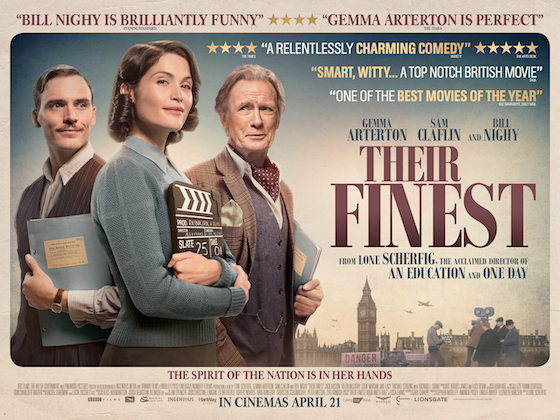
One of three Dunkirk-related movies released in 2017 (which is a bit random — it wasn’t a particular anniversary or anything), Their Finest is adapted from a novel by Lissa Evans called Their Finest Hour and a Half, which is a much better title. “Their Finest” is kinda bland and meaningless — slap it on any wartime film and it’d work just as well. The original title is a neat pun, though, mixing the famous saying (which comes from a 1940 Churchill speech, if you didn’t know) with the common running time of a movie, thereby indicating when the story is set (World War 2), what it’s about (the making of movies), and indicating a tone (it’s a pun, but not an outrageous one, suggesting lightness without going full-blown comedy). Maybe someone noticed this runs nearer two hours and didn’t want to give audiences the wrong idea…
Their Finest Hour and a Half stars Gemma Arterton as Catrin Cole, a young woman in wartime London who finds work writing female characters’ dialogue in movies — “the slop”, as it’s derisively called by her combative superior, Tom Buckley (Sam Claflin). When a news story about twin sisters who took part in the evacuation of Dunkirk is fast-tracked into production, with a cast that includes fading leading man Ambrose Hilliard (Bill Nighy), Catrin and Tom wind up on location with the film, hastily rewriting to include changes mandated by the War Office. Despite Tom’s standoffish attitude and Catrin’s marriage to a good-for-nothing war artist (Jack Huston), who’s jealous of her newfound status as the breadwinner, affection begins to blossom between the two writers…
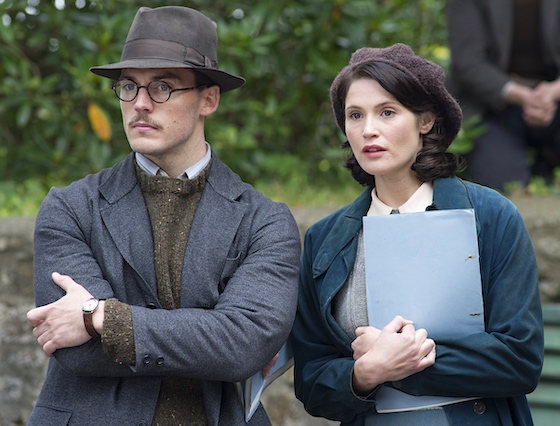
Yeah, much of Their Finest follows the expected shape of a story like this (the love triangle; the woman coming to be respected by her initially dubious colleagues; etc). Two things work to stop it feeling too staid: an engaging lead cast, and some weightier developments and subplots. The latter includes at least one wholly unexpected twist, which helps make this a more powerful film than the potentially-light “people go on a jolly to make a movie during the war” premise initially seems. There’s a somewhat classical balance of comedy and tragedy there, which is reminiscent of movies from the era the film’s set. Frame it in 4:3, shoot in black & white, and give everyone RP accents, and parts of it could almost be a ’40s melodrama.
Talking of accents, why oh why did they lumber Gemma Arterton with a Welsh one? It isn’t bad, exactly, but I did find it constantly distracting. Presumably it’s because the story is loosely based on the life of Diana Morgan, a Welsh screenwriter whose wartime work for Ealing Studios mostly went uncredited (though she does have one on the famous propaganda film Went the Day Well?, amongst a handful of others), but, considering it’s not actually a biopic, surely there’s no need for the accent? Well, other than to attract funding from the Welsh Government’s Media Investment Budget, I suspect… Anyway, it’s a minor complaint (as I said, her accent isn’t bad), and even with it Arterton is typically charming, generating good chemistry with Claflin, who plays a Mr Darcy-esque role as the initially-unlikeable inevitable love interest. As usual, Nighy threatens to steal the show, hamming it up just the right amount as Ambrose. He gets a significant subplot about his hard-fought transition from leading man to character actor, which also brings in Eddie Marsan and Helen McCrory — just two more high-quality actors helping round out a strong cast, which also includes Rachael Stirling, Richard E. Grant, and Jeremy Irons, among others.
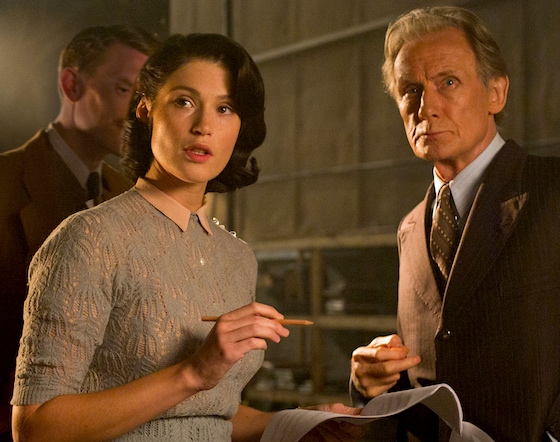
Ambrose is another man who initially misreads Catrin but eventually comes round to her. I suppose the “a woman proves her worth” element is another that’s been well-worn, but it seems fitting here, given that women in the film industry are still struggling to be treated equally. In this case, it’s using the “women suddenly in the workplace” reality of WW2 to make it both feel relevant to the present while remaining era-appropriate, unlike so many period movies that project present-day values onto eras where they don’t truly fit. It’s not as heavy-handed in its moralising as others can be, either.
Indeed, I’d say the entire film is very well pitched. It straddles the comedy-drama divide skilfully, entertaining as a jolly romance set in the world of moviemaking, but with enough grit from the reality of wartime to give it an edge. Everyone involved has, I’m sure, given it their finest hour-and-a-half(-and-a-half).

The UK TV premiere of Their Finest is on BBC Two tonight at 9pm.
* It’s rated R for “some language and a scene of sexuality” — there’s a couple of “fucking”s and a brief glimpse of one practically-silhouetted breast. God, the MPAA are daft. ^

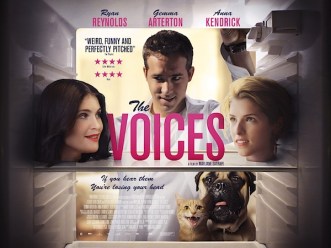 Jerry (Ryan Reynolds) is a nice guy living in the small town of Milton, working in shipping at Milton Fixtures and Fawcetts, where he fancies the English girl in accounts, Fiona (Gemma Arterton), and doesn’t notice how much another girl in accounts, Lisa (Anna Kendrick), likes him. He also talks to his dog, Bosco, and cat, Mr Whiskers, and they talk back. That’s why his psychiatrist (Jacki Weaver) encourages him to take his medication, but he doesn’t. When he accidentally murders Fiona (as you do), it’s Mr Whiskers that encourages him to cover up the crime.
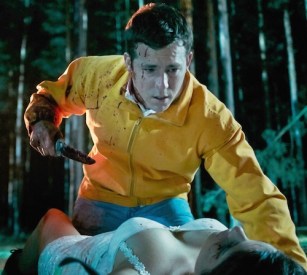 what happened in his past to make him this way (flashbacks and hints are scattered, leading to an eventual reveal), and how will it all end for him? We’re conflicted here, because he’s a nice guy who we like, but he’s also a murderer, in horrific fashion, and so surely justice is due. Screenwriter Michael R. Perry and director Marjane Satrapi (of
 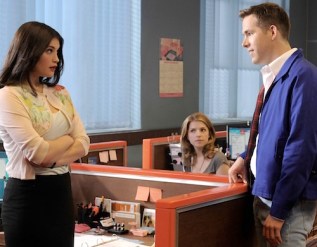 Able support comes in the form of three women in Jerry’s life. Gemma Arterton has a ball, first as a bit of a bitch, then as a ludicrously-chipper super-English talking head. Anna Kendrick, meanwhile, is sweet and likeable, and while we may be on Jerry’ side when he accidentally slides his knife into Fiona, we’re keen for him not to make the same mistake with Lisa. Whether he does or not is where the real battle for his sanity lies. The third is Jacki Weaver’s psychiatrist, who is central to the climax but also has the least to do of all three, really. Never mind.
 The Voices is the kind of film you say is “not for everyone”, which are often the best kind if they are for you. For me, it wasn’t quite funny enough — I’d’ve liked more of the dog and cat, who get the lion’s share of the best material. I also felt that Jerry’s backstory, the reasons for why he is how he is and does what he does, weren’t explored quite enough. The Blu-ray’s deleted scenes hint at more of this, particularly with an alternate climax, which was perhaps cut because there was too little material specifically building up to it. Rather than losing that ending, it would’ve been better to keep it and find more scenes that contributed to it.
 Sometimes, films are so maligned that you feel you just have to see for yourself. Or I do, anyway. Crime thriller Runner Runner, with its
 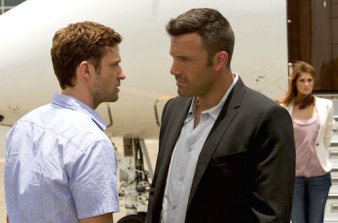 Brian Koppelman and David Levien’s screenplay is packed full of dreadful dialogue, which isn’t helped by phoned-in performances from all the principle cast, in particular Affleck. I guess he needed a payday between his Oscar-winning directorial efforts. I’ve seen some assert that the dialogue and delivery are meant to be mannered and stylised, but I just don’t buy it. Unless the style was meant to be “cable TV cheapie”, anyway. The Puerto Rican filming locations are quite prettily shot by DP Mauro Fiore, at least, but that’s scant consolation when everything else is so woeful.
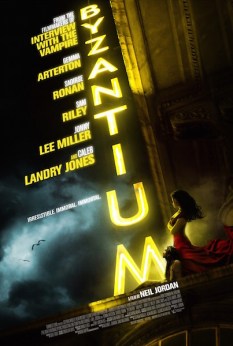 18 years after he adapted Anne Rice’s seminal vampire novel Interview with the Vampire into a seminal vampire
 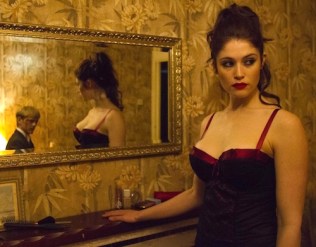 The most effective part of the movie isn’t so much its plot or its mythology, though, but its atmosphere. Vampire movies take place in castles or drawing rooms, or high schools in more modern iterations. They are grand and sensuous. Any glamour in Byzantium is discarded and decrepit, like the titular hotel that Clara reshapes as a whorehouse; faded and left to ruin. The seafront is characterised by graffitied concrete, the glaring lights of arcade machines, heroin-chic Eastern European prozzies. The pier appears to have burnt down at some unspecified previous time and just been left. The only people left behind are the ones without a means of escape, stuck with their miserable lot. Clara and Eleanor fit in almost seamlessly.
 Other alleged faults include the film not giving enough time or heft to facets individual viewers want it to cover. For one example, someone criticised it for not fully exploring the issue of voluntary euthanasia. I’d argue it doesn’t explore it at all, because it’s not trying to. That Eleanor chooses to only kill people she perceives as wanting to die is not her making a moral statement on a contentious issue, but finding a way to marry her conscience and upbringing with the necessities of her vampiric life; and it’s probably practical, too. That’s not to say a vampire movie can’t be used to explore a topic like voluntary euthanasia, but if you want that I’m afraid you might have to write your own.
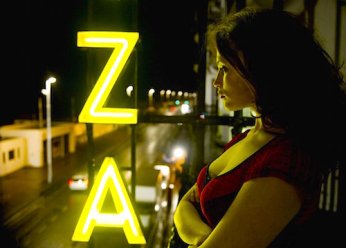 Technically, DoP Sean Bobbitt grants us some gorgeous cinematography. There’s a cruel, aptly soulless beauty to the faded town, while some countryside vistas, both past and present, offer more traditional scenic pleasure. A remote rocky, misty isle — central to the mythology and so repeatedly visited — is particularly notable. Captured entirely on digital cameras, it seems sometimes that Bobbitt tried to push his equipment too hard: some shots during the climax look flat-out weird, as if someone has applied a Photoshop “comic book” filter or something. Also of note is the score by Javier Navarrete, which makes particularly good repeated use of The Coventry Carol.
 For all its dual-period storytelling and its grubby settings, it’s a resolutely modern kind of take on vampire mythology.
 I found
  The rest of the cast are a mix of old and new — clearly, some managed to wriggle out of a second go-round. Talulah Riley, Tamsin Egerton and
 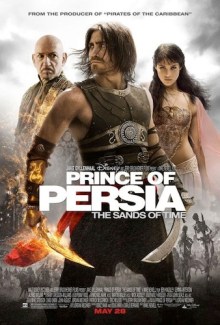 Disney’s attempt to launch a second franchise in the mould of
  There are some good action beats, but there’s also plenty of disorientatingly-edited, CGI-enhanced sequences, as per usual for the genre these days. For the former, see for instance Dastan’s climb up the wall into Alamut (or whatever it was called), or the knife-thrower-on-knife-thrower battle near the end. For explosions of CGI, see the massive logic-shattering ‘sand surfing’ sequence in the climax. Visually they’re clearly trying to evoke
 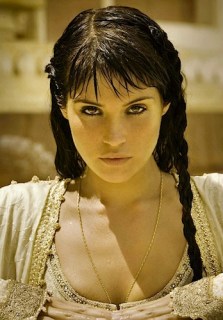 has the role Keira Knightley would’ve played five years ago. I think she’s meant to be a Strong Independent Princess but, much like Dastan, we’re told we should be inferring it rather than seeing any evidence of it.
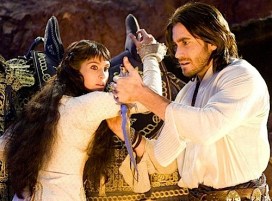 Plus, the sword-and-sandals milieu makes a bit of a change. I know we’ve had plenty of swords-and-sandals-flavoured movies in the wake of
  The thoroughly blockbusterised remake of
 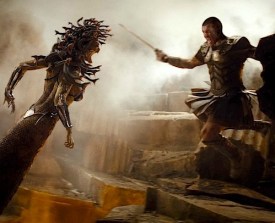 What the film is built to do is provide action sequences, though these are passable and rarely more. They’re fine while they’re happening, but pretty much forgotten after — none of it shows a great deal of inspiration. The history of film is littered with far worse examples, but that’s about the best I can say. I can see why it would be painful in 3D too: quite aside from the use of always-criticised post-conversion, and the apparent rush job on that, Letterier favours the modern action style of handheld jiggly shots and fast cuts, neither of which lend themselves to the 3D experience. Heck, even Michael Bay acquiesced to adapt his similar style when shooting
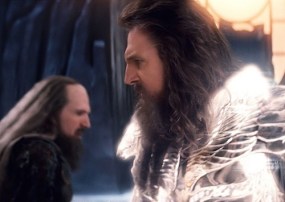
 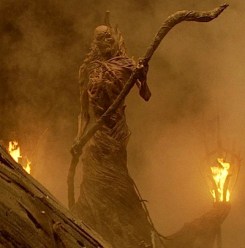 Design is probably the film’s strong point, particularly sequences that feature the three witches and the ferryman. Clearly these dark, borderline-horror-film settings are the design team’s strongpoint. Elsewhere, the gods have an appealingly retro lens-flared-silver-armour look about them — I don’t remember the ’80s original very well, but one could imagine this iteration of the gods being dropped in without anyone noticing.
 some plot elements could do with greater clarity, most of the characters could do with some depth.
 100Films.co.uk