
Francis Lawrence | 140 mins | download (UHD) | 2.40:1 | USA / English | 15 / R
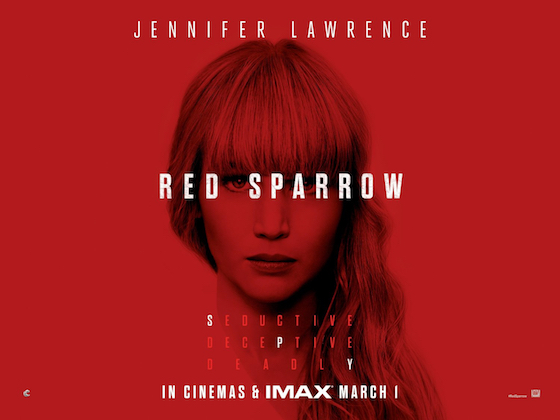
Jennifer Lawrence stars as Dominika, a Russian ballerina whose career-ending injury leads her down a path to becoming a “sparrow” — a highly-trained undercover operative for the Russian secret service. Used and abused throughout her training, when she’s sent after a CIA agent (Joel Edgerton) in order to find a mole within Russian intelligence, a series of double- and triple-crosses leave everyone in doubt about whose side she’s really on… including, er, us viewers.
Red Sparrow is set today. I think. It’s easy to forget. I had to check on a couple of occasions, including one final double-check before writing this review. The thing is, the politics of it all is very Cold War. Of course, given the current state of geopolitics, a neo-Cold War between Russian and the West is probably at its most believable since the ’80s, it’s just that this film’s handling of it doesn’t feel timely and modern, but like a Cold War story that someone decided should be set today. Partly that’s because a lot of the technology and tradecraft feels like it comes from a previous era too. I mean, one major sequence revolves around floppy disks. Floppy disks! I can’t even remember the last time I saw a floppy disk. Either that bit is based on something real-world (like, there’s a reason why someone stealing secrets would still be using floppies) — and, if it is, the film doesn’t bother to lay out why — or it’s the single most unrealistic thing in a movie that’s about a former ballerina being trained to be a Russian spy skilled in psychological influence and sexual manipulation in just three months — i.e. this is a pretty unrealistic movie all round.

Even if we ignore the inconsistencies of its temporal setting, it struggles with what else it has going for it. In its attempts to provide a twisty-turny plot, it’s not as clever as it thinks it is. As it flips and flops around about which side Dominika is supposed to be on really, clearly intending for us to feel wrong-footed every half-hour or so, the gears of how it’s setting up an inevitable final “reveal” begin to show through. Either that or I’m a genius for working it out ahead of time, whichever. One great well-disguised twist is better than endless back-and-forthing, but none of the filmmakers here seem to realise that, or don’t have the confidence to rely solely on that final reveal. Another side effect of this is it becomes hard to root for any particular character. Maybe this is the legacy of it being a US production: it can’t quite bring itself to ask us to fully invest in Dominika, a Russian spy, even as it tries to keep her the heroine. Plus the supposed twists wouldn’t work if we were actually let in on what she was plotting.
And away from the plot, the whole movie is sort of… seedy, but without owning it. It wants to be about sex and to somehow be honest about that, while also trying not to titillate in any way. It wants to be realistically violent, while merely being nasty in just one or two scenes. Conversely, it also wants to be a grown-up, labyrinthine Le Carré-esque thriller, but it’s so busy trying to repeatedly fool you that it forgets to properly engage you. It certainly doesn’t succeed in being plausible, with the elaborate plan Dominika supposedly concocted relying rather too much on crossed-fingers-type logic — or, I’m sure the filmmakers would say, her unparalleled ability to read people.
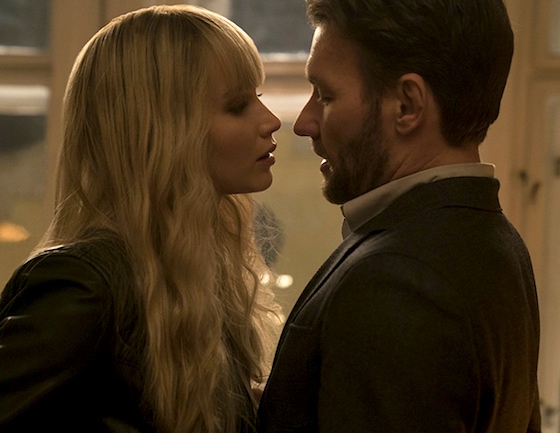
I’d rather it had picked a side: either go all out schlock — more violence, more tits — or go full intelligent thriller — rein in the seediness, rein in the superhuman foresight. As it is, Red Sparrow is not trashy enough to be titillating, certainly not clever enough to challenge Le Carré as the go-to example of intelligent spy thrills, and not stylish enough to get away with it either. It kind of sits in an awkward middle ground between all those things. I didn’t actually dislike it, but it didn’t thrill me either.

Red Sparrow is released on DVD, Blu-ray, and UHD Blu-ray in the UK today.
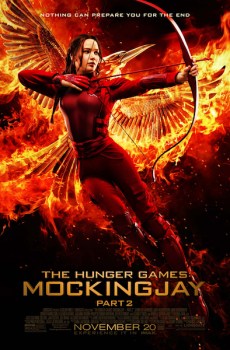 The artificially-extended Hunger Games trilogy-turned-tetralogy climaxes here. Presumably you’ve seen the first three and so know what you’re into by this point — either you’re invested or you’ve given up. Unless you want to know “does it end well?” before embarking on the whole thing, of course. While Mockingjay Part 2 is not the series’ finest instalment, it brings things to a decent head… eventually.
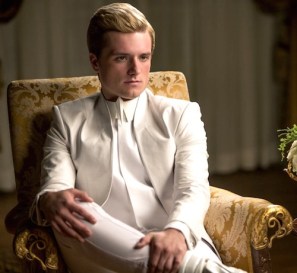
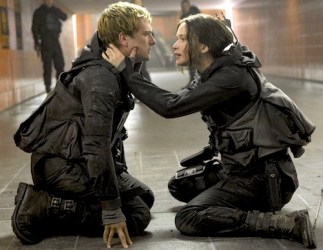 What follows isn’t perfect — in particular, the storyline could’ve done with tightening up — but it does have a lot going for it. There’s strong characterisation: Katniss is as confused, conflicted, and incapable of engaging with her emotions as ever, while Peeta’s PTSD is well-handled, with an effective device where he repeatedly makes a statement before asking, “real or not real?” There are other nicely developed thematic points too, like expanding further on the rebels not being perfect good guys (as initiated in Part 1), which plays a central role in the denouement. The action sequences are well staged and occasionally inventive, but best of all is that the climax doesn’t lean on being the biggest fight scene yet — it’s driven by the story, and the characters and their decisions, rather than being a ginormous shoot-out.
 Mockingjay Part 2 is not the best instalment of the Hunger Games, a series whose second half didn’t quite live up to the developed potential of the excellent
 If you’re not au fait with the
  as both sides attempt to rally ordinary people to their cause through the power of the media. It’s a tale that’s as timely as ever, surely.
 I must say that (as someone who hasn’t read the book) it didn’t feel overly like the first half of something longer to me. Of course there’s a cliffhanger and stuff, but there was at the end of the last film as well. This is no worse than that. If anything, I felt Mockingjay Part 1 built to its ending more successfully — I was quite surprised when
  it may be your favourite instalment so far (and you wouldn’t be alone in that view). For me, Catching Fire is the best of the three because it crystallises both of those constituent elements; and if the first film was purely the action side (with a bit of the politics), then here we find its mirror image: purely politics (with a bit of action). Either way, perhaps the ultimate fate of all these films rests on how well
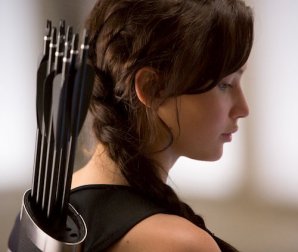
  Jennifer Lawrence (who, depending on your mileage, is either “the most charming young movie star in, like, forever” or “actually kind of a little bit irritating”) returns as the totally-plausibly-named Katniss Everdeen in this super-successful follow-up to the super-successful
  Tonally, however, it’s more similar to
  Of course, to an extent the tone of this ending comes from it being an adaptation: the filmmakers haven’t looked at the history of movie cliffhangers and chosen which to emulate, but instead brought someone else’s ending to the screen. Adapting doesn’t mean you have to take the original work faithfully, mind — you could go the
  which seems richer, more detailed, despite no genuine increase in resolution. I guess it’s true what they say: if you start with a higher quality source, it filters all the way down. The “bigger screen” effect probably wouldn’t work for a film entirely shot on IMAX — it’d just fill your TV from the start — but, after an hour-or-so of black bars, it really feels like the screen has grown.
 I only watched
 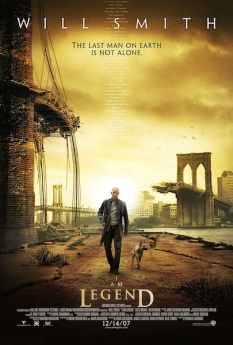 Will Smith stars in this adaptation of Richard Matheson’s classic sci-fi novel from the director of
  100Films.co.uk