The Best of 2023

My review of the year reaches its end in the way it always does: with the best films I watched for the first time in 2023, plus a few honourable mentions, and a list of notable new releases I missed.

For almost a decade now, my annual “top ten” has actually been my “top 10%”, the final total of entries taking its cue from how many first-time watches there were that year. Well, this year there were 103, and 10% of 103 is 10.3, which rounds down to 10 — so, for the first time since 2014, my top ten is actually a top ten. Huh.



The Ten Best Films I Watched for the First Time in 2023

As alluded to in the previous paragraph (but I’ll spell it out again), all the movies I watched for the first time in 2023 are eligible for this list, not just brand-new releases. In the past I’ve also provided a yearly rank for the films that were released during the previous year, but in 2023 I only saw 17 such films, and less than half of them were what you’d call “major” releases. More to the point, only one of them appears in my top ten, so there’s not much point providing a “2023 ranking”.

So, let’s crack on…

10

Confess, Fletch


Once played by Chevy Chase in a couple of ’80s films I’ve never seen, here Jon Hamm takes over the role of Fletch, a journalist who seems to have a habit of getting embroiled in mysteries. Hamm is one of those guys that Classic Hollywood loved but we don’t see enough of anymore: typically handsome fellas who can also be hilariously funny. That makes him perfect to lead this comedy thriller, which manages to be consistently bouncy fun while also unspooling a pretty decent mystery storyline. We deserve a whole pile of sequels, but I suspect we won’t get any. I guess I’ll have to see if those two earlier flicks measure up, or maybe even read the books.

9

Night and the City
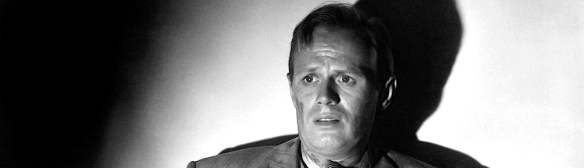

The basic plot — small-time hustler with big ambitions gets in over his head — feels familiar from many a noir, but the devil’s in the details, which here include an absolutely superb performance from Richard Widmark as wannabe-somebody Fabian and first-rate direction by Jules Dassin, plus a post-war London setting that brings a different flavour than the genre’s usual LA/NY locales. Fabian may have only been “so close” to greatness, but Dassin certainly achieved it.

8

Elevator to the Gallows
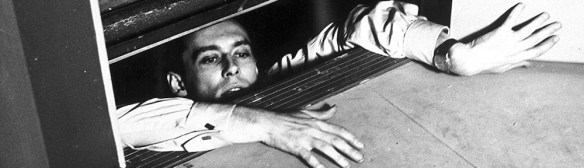

Louis Malle’s debut tells a film noir narrative with a dose of French Nouvelle Vague style, which results in an unpredictable thriller with a kind of tragic beauty and casual existentialism you don’t often get from the genre’s hard-boiled American counterparts.

7

The Killers
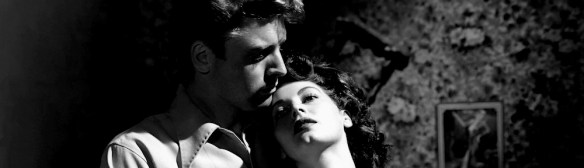

The first screen adaptation of Ernest Hemingway’s short story covers the original work in its opening sequence — and what a sequence it is — before spinning off into an entirely original narrative to explain the backstory to that opening. Following an insurance investigator as he pieces together one man’s life, it’s like noir’s answer to Citizen Kane; and, at its best, that’s a comparison it stands up to. Burt Lancaster’s swagger belies this being his screen debut; screenwriter Anthony Veiller juggles a nonlinear storyline to revealing effect; and director Robert Siodmak gets to show off with scenes like a single-take heist — and that opening, of course, which was so good, the two hitmen characters who briefly star in it earnt their own (radio) spin-off.

6

In a Lonely Place
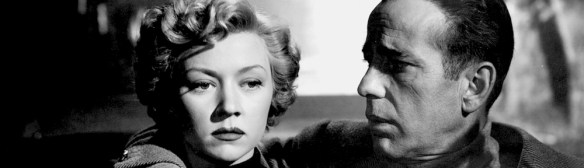

One of the great things about film noir being a trend that was observed retrospectively, as opposed to a genre that had been codified and its makers were aware of, is that you can come across well-established and widely-agreed noir films that don’t feel much like anything you’d expect of the ‘genre’. That’s true of these next three entries in my top ten (yes, from #9 to #4 is a straight run of noir). In a Lonely Place starts out like a Hollywood-insider screwball comedy, with wry observations of the industry and amusing rat-a-tat dialogue. But then there’s a murder — suddenly, oh so noir. But kinda not really, because what follows is more of a character study. To say too much would be spoilersome, other than to add that Humphrey Bogart’s performance starts out as fairly standard fare for the star, but develops into something incredible.

5

Mildred Pierce


Even more so than In a Lonely Place, here’s a noir that’s almost (almost) one in technicality only. James M. Cain’s novel about a housewife struggling to make her way, while contending with a self-absorbed and demanding daughter, has been described as a psychological thriller, but plays on screen as a familial melodrama — except screenwriter Ranald MacDougall’s adaptation adds a murder investigation framing device, sliding it sideways into noir. The end result runs all three simultaneously, to magnificent effect.

4

Sweet Smell of Success


At first blush, this might not look like your typical noir: it’s centred on a grifting New York talent agent (Tony Curtis, in what feels like the role he was born to play) and an influential newspaper columnist (Burt Lancaster, also excellent), the former desperate for the attention of the latter to promote his clients. Hardly the world of private dicks and gangsters and femme fatales that you’d expect of the genre. But, really, noir is about the dark side of the American dream, and that can play out as well in the cutthroat world of Broadway as anywhere. Like every great dystopia, it’s made to seem so appealing you want to be part of it, even as we’re shown that to actually live it would be horrid.

3

Oppenheimer


There’s been a sense from some quarters that Oppenheimer represents writer-director Christopher Nolan finally realising his potential as a Serious Filmmaker, making this clearly his best film. I don’t know about that (I love Bond-type films at least as much as Nolan himself, so my taste still errs toward The Dark Knight and Inception and maybe even Tenet, and we can’t disregard The Prestige or Interstellar either), but there’s no doubting this is his most “mature” work to date. It is, to be clear, a stunning achievement — a three-hour partially-black-and-white character-driven drama, mostly told through scenes of men (and occasionally women) sitting in rooms talking, that is gripping throughout. But even that description is reductive, because there’s so much more going on in the way Nolan tells this story — the juggling of time; the use of montage. He’s always done that kind of thing to an extent (Memento, Inception, and Dunkirk foreground it), but here it feels less formalised, more intuitive, and that pays dividends.

2

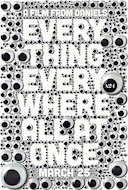
Everything Everywhere All at Once


It took me a long time to get round to this, meaning it had been through multiple praise/backlash cycles, so I approached it with an odd mix of hype and trepidation. As it turned out, it’s very much My Kinda Thing: science fiction with big ideas; character drama with big emotions; action with a sense of fun; all cut with enough comedy and bizarreness to take the edge off any earnestness, but without undermining the heart. And when I say “bizarreness”, I truly mean it — it’s not just “ooh, a little quirky”, but tossed through with crazy, random concepts. I’m sure some people find that kind of thing off-putting, but for me, it just makes it all that much more fun.


If Knives Out felt zeitgeisty in its pillorying of rich people, Glass Onion is full-on prophetic: the character the plot revolves around is a thinly-veiled spot-on parody of idiot-billionaire Elon Musk, but the film was only released as the depths of his stupidity were beginning to be publicly exposed. His disastrous reign at Twitter X has only further clarified the parallels. If Glass Onion has a problem, that may be it: its cast of influencers and wannabes are sometimes more caricatures than characters. Or maybe that’s just the fault of the vapidity of the modern world. Either way, it offers a murder mystery narrative full of clever reveals and reversals, rewarding both if you try to second-guess it (good luck) or just allow yourself to be swept along. [Full review.]


As usual, getting the 103 new films I watched in 2023 down to a top ten proved a challenge. Indeed, as the statistics ultimately revealed, this was a year of high quality, so it follows naturally that it would be hard to narrow it down to just a small number of favourites. Now, while I always include some “honourable mentions” at this point in my “best of” post, I don’t normally just list films that almost made it in to my top ten. I figure if I’m going to do that, I may as well just expand the list. But I’m making something of an exception this year, simply because the final list ended up so dominated by noir that I watched for WDYMYHS. Maybe that was inevitable when I put specific effort into watching a pile of highly-acclaimed movies from a genre I love, but it also feels kinda unfair.

So, other films that made it as far as my “top 20” list, but didn’t quite go all the way, included (in alphabetical order) The Bird with the Crystal Plumage, Cléo from 5 to 7, John Wick: Chapter 4, Mission: Impossible – Dead Reckoning Part One, The Pied Piper, Remember the Night, Roald Dahl’s Matilda the Musical, and Shiva Baby. There were also a couple more noirs that didn’t quite make it: Nightmare Alley and Scarlet Street. All great films, but there’s only so much room.

Indeed, if my top ten was based on films’ best individual sequences rather than, y’know, the entire movie, there are some “almost made it”s that would actually top the chart — films like Roald Dahl’s Matilda the Musical (for Revolting Children, a proper anthem of a song by Tim Minchin that Matthew Warchus directs the hell out of) and Mission: Impossible – Dead Reckoning Part One (for the whole train climax… or the Rome car chase… or even just the absolutely perfect cut into the opening titles) and John Wick: Chapter Four (for… oh God, I can’t even decide: it’s wall-to-wall extravagantly fantastic action set pieces). Some films from the actual top ten would feature in such a list too, like the opening diner sequence from The Killers, or the finale of Oppenheimer (so good, even the Linkin Park meme version is a banger).

Moving away from the top ten itself, let’s recap the 12 films that won the Arbie for my Favourite Film of the Month — some of which have already been mentioned in this post, but some of which haven’t. In chronological order (with links to the relevant awards), they were Glass Onion, Ace in the Hole (another great noir!), Everything Everywhere All at Once, Scarlet Street, The Shiver of the Vampires, In a Lonely Place, Night and the City, All the Old Knives, The Pied Piper, Alien Love Triangle, The Killers, and Mildred Pierce.

Finally, as always, a mention for the 17 films that earned a 5-star rating this year. All ten of my top ten made the grade this year, but the other seven were (again, in alphabetical order) Ace in the Hole, The Banshees of Inisherin, Cléo from 5 to 7, John Wick: Chapter 4, The Pied Piper, Roald Dahl’s Matilda the Musical, and Scarlet Street.


With the caveat that I’ve inevitably forgotten or misjudged something really noteworthy, here’s an alphabetical list of 50 films designated as being from 2023 that I haven’t yet seen. They’ve been chosen for a variety of reasons, from box office success to critical acclaim via simple notoriety, representing a spread of styles and genres, successes and failures.
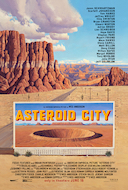
Asteroid City
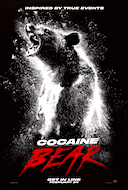
Cocaine Bear
Godzilla Minus One
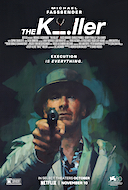
The Killer
Napoleon
Scream VI
Barbie
Dungeons & Dragons: Honour Among Thieves
The Hunger Games: The Ballad of Songbirds & Snakes
Knock at the Cabin
Poor Things
Spider-Man: Across the Spider-Verse
Anatomy of a Fall
Ant-Man and the Wasp: Quantumania
Aquaman and the Lost Kingdom
Are You There God? It’s Me, Margaret.
Asteroid City
Barbie
Bottoms
The Boy and the Heron
Chicken Run: Dawn of the Nugget
Cocaine Bear
The Creator
Creed III
Dungeons & Dragons: Honour Among Thieves
Elemental
Evil Dead Rise
The Exorcist: Believer
Expend4bles
Extraction 2
Fast X
Ferrari
Five Nights at Freddy’s
The Flash
Godzilla Minus One
Guardians of the Galaxy Vol. 3
Hunger Games: Ballad of Songbirds & Snakes
The Killer
Killers of the Flower Moon
Knock at the Cabin
The Last Voyage of the Demeter
The Little Mermaid
Maestro
The Marvels
May December
Meg 2: The Trench
Napoleon
No Hard Feelings
Past Lives
Plane
Poor Things
Rebel Moon – Part One: A Child of Fire
Saltburn
Saw X
Scream VI
Silent Night
Spider-Man: Across the Spider-Verse
The Super Mario Bros. Movie
Teenage Mutant Ninja Turtles: Mutant Mayhem
The Three Musketeers: D’Artagnan
Wish
Wonka


So, that’s it for 2023. All wrapped up within the first week, same as last year. I feel like I’ve got this down to some kind of science. (Oops — fate: tempted. Next year I’ll probably wind up having to post this stuff throughout the whole of January.)

And with a new week — the second of the year, already — beginning tomorrow, I feel like there’s no time to waste: onwards to 2024!

The Best of 2022

And so my review of the year reaches its end in the usual fashion: with the best films I watched for the first time in 2022, plus a few honourable mentions, and a list of notable new releases I missed.

Regular readers may have noticed there’s no “worst” list this year. As I wrote last year, the idea of singling out a list of bad movies has become highly unfashionable in recent years, especially when big-name publications do it. I don’t think such lists are wholly without worth (they acknowledge that, as a film viewer, it’s not all sunshine and roses), and there’s a big difference between a major publication slagging off some recent releases (which may affect those films’ continued financial success and their makers’ careers) and a one-man blog picking a couple of lesser films from what he happened to watch that year (which rarely includes recent releases, and wouldn’t have an impact on them even if it did). Nonetheless, in the spirit of celebrating what you love and staying quiet about the rest, I’ve decided to ditch my “worst” list. (If you want, there’s still the “Least Favourite” award in my monthly Arbies.)

With that said, it’s on with…


The Eleven Best Films I Watched for the First Time in 2022

Continuing with the methodology I’ve used since 2016, this list features the top 10% of my first-time watches from the year. In 2022, the total was 111, which means there are 11 films on this year’s “top 10”.

As ever, it’s not just 2022 releases that are eligible for my 2022 list. Consequently, in recent years I’ve included a ‘yearly rank’ for films that had their UK release during the previous 12 months. However, I watched so few of the year’s big hitters in 2022 that I felt to rank what I did see would be misleading. There are too many acclaimed films omitted only because I’m not able to consider them, not because I don’t think they’re worthy. Hopefully I’ll get back on top of seeing new releases, so a yearly ranking can return in the future.


Take a noir storyline then run it through gritty “kitchen sink” British sensibilities, and you get this: a film that works as both a neo-noir gangster thriller and a character study of a man revising his views of the world. [Full review.]

10

Prey


Studios keep trying to rehash their ’80s sci-fi/action IPs, and they keep producing mediocre results. Thankfully, someone has finally bucked the trend. Prey works in part because it abandons continuity and takes a back-to-basics approach to its alien menace. Setting it in a completely different time period adds more opportunities for fresh perspectives and developments. It’s such a seemingly simple idea that works so well, and one that’s eminently repeatable. Predators vs knights? Predators vs samurai? Predators vs cowboys? Yes, yes, and yes, please, and anything else you can think of. [Full review.]


Michael Bay has always been a divisive filmmaker. His brash, bombastic style isn’t for everyone. But I think there’s a method to his madness (even when it results in trash) and so, when he’s on form, he remains one of the most exciting action filmmakers. Ambulance shows he’s still got the goods. You could imagine the storyline — after a bank heist goes wrong, two crooks escape in an ambulance, along with the cop they shot and a paramedic trying to save him — being from a 1940s film noir; a grim character study of men under pressure. That side of it is still in there, just dressed up with all the wildness of only-semi-restrained Bayhem. [Full review.]


A thriller about… writing a book? Ah, but when the book in question is the autobiography of a disgraced, potentially criminal former Prime Minister, and the book’s new ghost writer has been brought in because his predecessor died under suspicious circumstances, well, you begin to see where there are questions to be answered. Pierce Brosnan is perfect for the role of a former politician who is 50% charming and 50% believable as a scheming villain, while Ewan McGregor leads us through the twisty plot as an everyman who needs the money but still has a conscience. Will the truth out? [Full review.]


Spielberg, man. If you’d told me a remake of West Side Story would end up in my top ten of the year, I’d have given you a funny look. I didn’t love the original film version, but I also didn’t think it could be bettered — it’s a classic for a reason. Surely any remake was doomed to be lesser? But ah, here comes Steven Spielberg, a director whose style clearly chimes with my taste (in fairness, his work helped define my taste, thanks to watching the likes of Indiana Jones, and Spielberg-produced/-emulating movies such as Back to the Future, at a formative age). His version screams Movie in a way so few films do nowadays, and the changes he and his team have made to the material elevate it even beyond the ’61 film, for my money. [Full review.]


Toshiro Mifune plays a man presented with a life-changing moral dilemma in this thriller from director Akira Kurosawa. It’s a film of two halves: the first, contained almost to one room in near-real-time, sees Mifune’s business executive grapple with a conundrum that could ruin his career; the second becomes intensely procedural as it follows the police investigation and fallout from Mifune’s actions. With its precision attention to detail and healthy dose of mundanity, Kurosawa conjures an intense realism — the film could almost be a documentary; only, a documentary could never be this finely controlled. [Full review.]


Disappointingly relegated to “Sky Original” status here in the UK (usually a dumping ground for low-quality genre movies), Mass is a film that deserves to be more widely seen (the story of too many films buried on random streaming services nowadays, I fear — how many people have actually seen Best Picture winner CODA when it’s locked away on Apple TV+?) The less you know going in the better to be hit with the film’s full emotional weight. And it is a heavy film, but only in a way the befits its subject matter. Made up almost entirely of four people sat round a table talking, it is nonetheless “a blisteringly emotional gut-punch … but, with that, it’s ultimately cathartic.” [Full review.]


I do enjoy a Disney animation, but one has never broken into my top ten before (Zootropolis was 15th in 2016 and Moana was 16th in 2017). That’s partly the luck of the draw (I watched over 50% more films in each of those years), but also something about how well Encanto works — which, frankly, I can’t quite put my finger on. I mean, all the obvious elements are there: catchy songs, likeable characters, impressively fluid animation, a strong message about what matters. But there’s something else, too; a sprinkling of magic that, for me at least, elevates the film to be something even more special. I say I like a Disney film, but I don’t revisit them too often. I’ve already watched Encanto twice. In one year? That’s not like me! So, hopefully you see my point. [Full review.]

3

Top Gun: Maverick


I feel the need — the need for actors doing their flying stunts for real! Striking usage of the IMAX aspect ratio! Memorable callbacks to the original movie! Cheesy music that fits the tone perfectly! Actual humour! Proper subplots! Top Gun: Maverick is old-fashioned blockbuster moviemaking done with modern sensibilities (can you imagine them actually putting actors in jets back in the ’80s? For one thing, where would they have put those great big film cameras?) Actor/producer Tom Cruise has spent decades now perfecting this brand of big-screen entertainment, and here he shows the next generation how it should be done — both in-film, as a pupil-turned-teacher trying to get a class of the best pilots to be even better, i.e. as good as he is; and in real life too, rocking up in an era when the box office is dominated by previz- and CGI-driven superhero theme-park-rides-as-cinema, and giving us a done-for-real spectacle that kicked all their asses at the box office. The movies, and movie stars, are only dead when Tom Cruise says they are.

2

Les Enfants du Paradis


According to IMDb, when Children of Paradise (to use its translated title) was initially distributed in the USA, it was promoted as “a sort of French-made Gone with the Wind”. It’s not a bad comparison. Not in a literal sense — this isn’t about a spoilt rich girl getting caught up in a civil war on the wrong side — but as an epic, years-spanning romantic melodrama? There are some similarities. It’s the story of a courtesan-turned-actress and the four men in her orbit — a mime artiste, an aspiring actor, a wannabe crook, and a moneyed gent — in and around the theatrical scene of 1830s Paris. It’s told with a style that feels adapted from a novel — it’s got that kind of scope, with its timespan and array of characters, and depth, which feel more like literature than something conceived directly for the screen. In fact, most of the characters are based on real people, which I suppose is neither here nor there, but does add another layer of interest. Whatever makes it work is enough to keep it thoroughly compelling even with a running time over three hours.

1

Manhunter


I first became aware of Manhunter many moons ago, as a piece of footnote trivia in the history of movies: “did you know there was a Hannibal Lector film before Silence of the Lambs?” What a crazy idea! How bad it must have been to be so thoroughly overshadowed by Anthony Hopkins’ Oscar-winning version. Well, the history of the movies is rarely so straightforward; and as the immediate acclaim for Lambs has died down, and its various sequels and prequels have petered away, Manhunter has been able to reemerge somewhat. And so it should, because this is a great movie. Maybe not a great Hannibal Lector movie (Brian Cox is very good in the role, with less of the ticks and tricks that made Hopkins so memorable, but he’s not the focus of the story), but a superb “hunt for a serial killer” thriller. It’s dripping with ’80s style thanks to a director who helped define what that even meant (via his involvement with Miami Vice), while the hero cop, played by William Petersen, feels ahead of his time, struggling with the mental toll of previous cases as he tries to do the right thing and stop another killer. Such a mix of style and substance makes for an all-round fulfilling film; one that I think deserves every bit to be celebrated alongside Jonathan Demme’s more widely-acknowledged movie.

To celebrate it topping my list, Manhunter is on BBC Two tonight at 11:05pm, and on iPlayer for 30 days afterwards.*

As usual, I’d like to highlight a few other films.

Firstly, I wrote this little paragraph not sure where to use it, but here seems a good place. That’s to say: I love a minor film noir. Just a solid, competently made, usually 60-to-80-minute programmer. The highly-regarded Classics are all well and good — I appreciate their quality; why they’re ‘better’ — but, in many respects, I get more actual enjoyment (certainly in a relaxed, easy-viewing sense) from a run-of-the-mill type film. Not bad ones, you understand, just average fare. And here seems a good place to say that because 2022’s Challenge compelled me to watch a few noirs of that ilk. All of them were on the long list for my top ten, but none quite made it. I’m talking about the likes of Christmas Holiday, He Walked by Night, Killer’s Kiss, My Name Is Julia Ross, and Repeat Performance. (I also liked The Killing, but that’s in no way a “minor” noir.) Mr. Soft Touch grew on me as it went on, too, but that’s probably one to only be watched in December.

Next, here’s a recap of the 12 films that won the Arbie for my Favourite Film of the Month. Some have already been mentioned in this post, but some haven’t… In chronological order (with links to the relevant awards), they were Mass, Ghostbusters: Afterlife, West Side Story, High and Low, Shang-Chi and the Legend of the Ten Rings, The Ghost Writer, Ambulance, Repeat Performance, Top Gun: Maverick, The Mission, Manhunter, and Les Enfants du Paradis.

Finally, something I’ve always done in this section is list every film that earned a 5-star rating during the year. In part that’s because there’s normally far too many to include in my list, even if it weren’t for the fact 4-star films usually sneak in too. But this year, there were only six films that received full marks, and all of them made the top 10%, too. Nonetheless, they were Les Enfants du Paradis, High and Low, Manhunter, Mass, Top Gun: Maverick, and West Side Story. Additionally, there were also full marks for my rewatch of the original Scream.

I’ve been creating these “50 Unseen” (as I call them for short) lists for 16 years now, and it doesn’t get any easier to choose what to include — or, rather, what to exclude.

It became a little easier in the past few years, because I was watching so many movies that the number of wide-release titles I’d missed fell, leaving room for more arthouse-y ‘hits’ — films the masses didn’t see but Film People were chatting about. But I watched very few new films this year — just 18 with a 2022 UK release date, down from 30+ in the last few years (with a high of nearly 60 in 2019). Those are small numbers compared to people who watch multiple brand-new films every week, but it had been enough to cover a significant percentage of ‘major’ releases. 18 is… well, not.

With an initial long-list of almost 150 films, I did consider increasing this list to 100 titles. It would be in keeping with the site’s theme, after all. But 100 is such a big number… I mean, history suggests I won’t manage to watch the 50 listed films within the next decade or two, so how long would 100 take? No, 50 simply feels about the ‘right size’ for a list of this type, whereas 100 feels excessive. Besides, something is always going to get left off, it’s just how far down the list that cutoff comes.

So, with the caveat that I’ve inevitably forgotten or misjudged something really noteworthy, here’s an alphabetical list of 50 films designated as being from 2022 that I haven’t yet seen. They were chosen for a variety of reasons, from box office success to critical acclaim via simple notoriety, and hopefully represent a spread of styles and genres, successes and failures.

Avatar: The Way of Water
Black Panther: Wakanda Forever
Everything Everywhere All at Once
Jurassic World Dominion
RRR
Weird: The Al Yankovic Story
The Batman
Decision to Leave
Guillermo del Toro’s Pinocchio
Nope
Turning Red
The Whale
Aftersun
All Quiet on the Western Front
Avatar: The Way of Water
Babylon
The Banshees of Inisherin
The Batman
Black Adam
Black Panther: Wakanda Forever
Blonde
Bullet Train
Crimes of the Future
Decision to Leave
Doctor Strange in the Multiverse of Madness
Don’t Worry Darling
Downton Abbey: A New Era
Elvis
Empire of Light
Everything Everywhere All at Once
The Fabelmans
Fantastic Beasts: The Secrets of Dumbledore
Glass Onion: A Knives Out Mystery
Guillermo del Toro’s Pinocchio
Halloween Ends
Jackass Forever
Jurassic World Dominion
Lightyear
Men
The Menu
Minions: The Rise of Gru
Moonfall
Morbius
Nope
The Northman
Pinocchio
Roald Dahl’s Matilda the Musical
RRR
She Said
Smile
Sonic the Hedgehog 2
Strange World
Thor: Love and Thunder
Three Thousand Years of Longing
Turning Red
Tár
The Unbearable Weight of Massive Talent
Uncharted
Weird: The Al Yankovic Story
Wendell & Wild
The Whale
X

And that’s another year over.

I gotta say, I’m quite pleased with how quickly I wrapped it all up — I haven’t got my “best” list out by January 6th since 2017. It shouldn’t feel like a rush to get this stuff online, but when many people are sharing their lists before the end of December (or even earlier, in the case of some publications), a week or more into January feels “late”.

Anyway, I’m going to leave a couple of days to let the end of 2022 finally sink in, and then I’ll start waffling on about my targets for 2023.


* Obviously it’s not actually because of my list, just a coincidence. ^

Film Noir Review Roundup

I’ve made a conscious effort to watch more film noirs this year, and today’s roundup contains a few results of that:

  • The Narrow Margin (1952)
  • Accomplice (1946)
  • Shockproof (1949)


    The Narrow Margin
    (1952)

    2018 #2
    Richard Fleischer | 68 mins | TV | 4:3 | USA / English | PG

    The Narrow Margin

    Recognised as a classic noir, The Narrow Margin follows a detective (Charles McGraw) who must protect a mob boss’ widow (Marie Windsor) as she travels by train from Chicago to LA to give vital evidence. As the ‘tec finds himself getting involved with an attractive fellow passenger (Jacqueline White), the assassins on his trail mistake her for their actual target…

    What unfurls is an exciting plot with some solid twists and some great dialogue (enough that it earnt a Best Writing Oscar nomination, in fact), all told in a snappy running time that ensures the film powers forward like, well, a locomotive. Director Richard Fleischer makes very effective use of handheld camerawork and the train setting to create a confined, claustrophobic atmosphere that emphasises the tension and peril of the characters. It all blends into a very fine thriller.

    4 out of 5

    Accomplice
    (1946)

    2018 #16
    Walter Colmes | 66 mins | streaming | 4:3 | USA / English

    Accomplice

    Described by Paul Duncan’s Pocket Essential Film Noir as “hardboiled fun”, and by the few other people online who’ve seen it with phrases like “one of the worst assembled detective movies I’ve had the occasion to watch in a long time”, Accomplice graces my eyeballs before many no doubt finer examples of film noir by virtue of the fact it was available to stream on Amazon Prime and I thought I’d catch it while it was there.

    Adapted by Frank Gruber from his novel Simon Lash, Private Detective, it sees private detective Simon Lash (Richard Arlen) being hired to track down a missing bank executive by his concerned wife (Veda Ann Borg), but the bank insists he’s merely on vacation. As Lash digs deeper, he begins to suspect the wife may have other motives — as does, well, everyone else.

    Running little more than an hour, Accomplice’s plot races past, giving you no time to stop and consider it. Maybe that’s for the best. Conversely, it makes it feel like it doesn’t hang together, even if it actually does. But it rushes along at a scene level, too: Lash seems to figure things out as quickly as it takes the actors to say their lines. It’d be Sherlockian, if you actually believed he had the necessary information and wherewithal to make the deductions.

    There is some fun to be had in a speedy car chase and the film’s occasionally kooky location choices, like the climax being set at a castle in the middle of the desert that’s pitching itself as some kind of hotel for mid-getaway crooks (I think that was the owner’s business plan, anyway). There are other surprising flashes of entertainment, though some of them were likely unintentional, but Accomplice is not really a good film.

    2 out of 5

    Shockproof
    (1949)

    2018 #68
    Douglas Sirk | 76 mins | TV | 4:3 | USA / English | PG

    Shockproof

    When you hear “film noir” you don’t immediately think of director Douglas Sirk (nor vice versa), better known for his colourful ’50s melodramas. Well, according to They Shoot Pictures, Don’t They’s list of most-cited noir films, he helmed three, of which this is the second. The plot has plenty of noir elements, but the film actually feels more like a romantic melodrama. It’s quite an effective mix.

    So, the noir: it’s about a female murder parolee (Patricia Knight) and her parole officer (Cornel Wilde), who begins to fall in love with her. But is she still attached to the crook she took the fall for (John Baragrey)? Is she just pulling the wool over the eyes of the parole officer? That’s kind of a love triangle, hence we’re back in melodrama territory. But the advantage of it being billed as a noir rather than a romantic drama is you’re not sure where it will go. Will she fall for the good honest parole officer with his sweet younger brother and blind mother? Or will she be tempted back to the criminal love of her life? Or will it have a more tragic ending altogether?

    Well, no spoilers, but it definitely takes a turn I wasn’t expecting — the third act spins off in a whole different direction. To be honest, I didn’t really like it, but at least it was unusual, a big departure from the earlier part of the film, and it kind of worked because of that. Again, no explicit spoilers, but it comes to a neatly ironic conclusion… before there’s one extra scene, which feels tacked-on and undermines where the film had got to tonally. And that’s exactly what happened: co-producer Helen Deutsch rewrote Samuel Fuller’s screenplay and added a cop-out ending that Sirk felt ruined the film.

    Fatal femme

    At least until that point there’s stuff to enjoy. Knight’s performance is the real star: although her true nature seems to have been revealed at the start (she’s a parolee, i.e. a no-good criminal), the film adds more nuances to her than that — primarily, you can’t be sure if what she’s doing is genuine, or if she’s playing the parole officer for her own ends. There’s also an interesting turn from Baragrey: I couldn’t be sure if his acting was a bit flat, or if he was deliberately being cool, cold, calculated, thinking he’s always in control, the smartest guy in the deal. Well, even if it’s the former, it functions well as the latter.

    So, Shockproof (a title that has no relevance whatsoever, incidentally) isn’t a total disaster, with some surprising turns that are to be commended even when they don’t work. It was clearly a compromised production, but an interesting one.

    3 out of 5

  • The Maltese Falcon (1941)

    2016 #142
    John Huston | 96 mins | DVD | 1.33:1 | USA / English | PG

    The Maltese Falcon

    Humphrey Bogart is private dick and consummate bullshitter Sam Spade in this (re-)adaptation of Dashiell Hammett’s novel, considered the first major film noir.

    The twisty plot of murder and thievery is enlivened by duplicitous performances from femme fatale Mary Astor, an effeminate Peter Lorre, the always welcome Elisha Cook Jr., and the humungous presence of Sydney Greenstreet, making his film debut at 60 and stealing every scene.

    It’s also the directorial debut of John Huston, whose work alongside cinematographer Arthur Edeson is the greatest star: the low-key lighting and dramatic angles are (like the rest of the film) archetypal noir.

    4 out of 5

    The Maltese Falcon was viewed as part of my What Do You Mean You Haven’t Seen…? 2016 project, which you can read more about here.

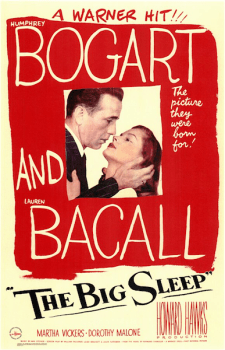
    The Big Sleep (1946)

    100 Films’ 100 Favourites #11

    The Violence-Screen’s
    All-Time Rocker-Shocker!

    (Yes, that is a real tagline.)

    Country: USA
    Language: English
    Runtime: 114 minutes
    BBFC: A (pre-release, 1945) | A (1946) | PG (1988)

    Original Release: 31st August 1946 (USA)
    UK Release: June 1946 (BBFC)
    First Seen: DVD (maybe), c.2004 (possibly)

    Stars
    Humphrey Bogart (Casablanca, The Treasure of the Sierra Madre)
    Lauren Bacall (To Have and Have Not, North West Frontier)
    Martha Vickers (The Falcon in Mexico, The Big Bluff)
    Dorothy Malone (The Fast and the Furious (not that one), Basic Instinct (yes, that one))

    Director
    Howard Hawks (His Girl Friday, Gentlemen Prefer Blondes)

    Screenwriters
    Leigh Brackett (Rio Bravo, The Empire Strikes Back)
    Jules Furthman (The Outlaw, Nightmare Alley)
    William Faulkner (To Have and Have Not, Land of the Pharaohs)

    Based on
    The Big Sleep, a novel by Raymond Chandler.

    The Story
    Private detective Philip Marlowe is hired by General Sternwood to settle the gambling debts his daughter, Carmen, owes to a man named Geiger. Sternwood’s other daughter, Vivian, suspects Marlowe has actually been hired to find Sean Reagan, the General’s friend who has disappeared. Arriving at Geiger’s home, Marlowe hears a shot, and inside finds Geiger dead, Carmen drugged, and a hidden camera with the film gone. So begins a complex web of blackmail and murder. Very complex. Very, very complex.

    Our Hero
    The archetypal downtrodden PI, Philip Marlowe makes up what he lacks in good fortune with a fast mouth and sharp mind. Has bad manners though, which he grieves over on long winter evenings.

    Our Villain
    It’s a mystery, let’s not give it away. The film certainly does its best not to.

    Best Supporting Character
    Lauren Bacall as headstrong Vivian Sternwood, a character who benefitted from the behind-the-scenes situation at the time: Bogie and Bacall’s chemistry in To Have and Have Not led the studio to want more of the same, and her agent was only too keen after the poor reviews of Confidential Agent threatened to sink her career before it had really begun. New sparky dialogue scenes took the place of exposition ones in the final cut, essentially creating the film’s reputation for confusion.

    Memorable Quote
    “She tried to sit in my lap while I was standing up.” — Philip Marlowe

    Memorable Scene
    Bogie and Bacall discuss horse racing.
    — “I like to see them work out a little first… You like to get out in front, open up a lead, take a little breather in the back stretch, and then come home free.”
    Just horse racing.
    — “I don’t know how far you can go.” “A lot depends on who’s in the saddle.”
    Just horse racing.

    Making of
    Another part in the Bacall situation described above was supposedly played by original author Raymond Chandler. He reportedly observed that Martha Vickers was so good as Carmen that she overshadowed Bacall, and consequently much of Vickers’ material was removed.

    Previously on…
    The Big Sleep is the fourth screen adaptation of a Philip Marlowe story, though only the second to star the detective: 1942’s Time to Kill adapted The High Window into the Michael Shayne series, and the same year Farewell My Lovely was filmed as The Falcon Takes Over. The same novel was adapted again in 1944 as Murder, My Sweet (though, famously, retained the novel’s title for its UK release), starring Dick Powell as Marlowe.

    Next time…
    Bogart never played Marlowe again, but multiple film, TV and radio adaptations of Chandler’s novels have followed, with the lead role being occupied by the likes of James Garner, Elliott Gould, Robert Mitchum, Powers Boothe, Danny Glover, James Caan, and Toby Stephens. A remake of The Big Sleep, relocated to ’70s London and directed by Michael “calm down dear” Winner, was Marlowe’s final big screen outing to date.

    Awards
    Not a sausage.

    What the Critics Said
    “one of those pictures in which so many cryptic things occur amid so much involved and devious plotting that the mind becomes utterly confused. And, to make it more aggravating, the brilliant detective in the case is continuously making shrewd deductions which he stubbornly keeps to himself. What with two interlocking mysteries and a great many characters involved, the complex of blackmail and murder soon becomes a web of utter bafflement. Unfortunately, the cunning script-writers have done little to clear it at the end.” — Bosley Crowther, The New York Times

    Score: 96%

    What the Public Say
    “you don’t watch The Big Sleep just to find out who did what to whom, when and for what reason. This is truly one of those movies where the journey is far more important than the destination. As we follow Marlowe around a moody and threatening Los Angeles, we go on a tour of the seedy underbelly of the city. Even though the time is spent in the company of high rollers and the glamorous set, it’s all merely a glittering veneer for a world of pornography, drugs, deviance, betrayal and violence.” — Colin, Riding the High Country

    Verdict

    Famed for having a plot so complicated even author Raymond Chandler doesn’t know who committed at least one of its murders, I’ve always found The Big Sleep very followable if you pay attention… just don’t expect me to be able to explain it after it’s finished. The film’s popularity in spite of its impenetrability confirmed director Howard Hawks’ theory that audiences didn’t care if a plot made sense as long as they had a good time, and he’s kinda right — the joys here are Bogie and Bacall’s verbal sparring, the exposure of LA’s seedy underbelly (albeit in a Production Code-friendly way), and the film’s whole noir-ish atmosphere.

    The Big Sleep is finally released on US Blu-ray on Tuesday 23rd February.

    #12 will be… a Marvellous vampire.

    The Big Knife (1955)

    2015 #8
    Robert Aldrich | 107 mins | TV | 4:3 | USA / English | PG

    The Big KnifeJack Palance is an actor wanting out of his studio contract in this stagey film noir.

    The entire film takes place in his house, with a parade of supporting characters coming and going to variously persuade him to stay, persuade him to quit, or persuade him to do other things (saucy!) It’s not just the limited location that makes it feel stagey, though, but also the style of dialogue and the performances. I’m never quite able to put my finger on it, but there’s a certain way playwrights seem to pen dialogue that just feels like it’s from theatre, and The Big Knife (which is adapted from a stage play) has it.

    Palance is very good, playing against expectations as an actor who sold out his artistry and is now struggling to be brave enough to stand up to the overbearing studio execs, who have an additional hold over him. Rod Steiger is a bit OTT as the studio’s head, Stanley Hoff, but then the character’s meant to be a bit like that. Somewhat heavy-handed pillorying of a real studio boss? Perhaps. Also worth watching is Rear Window’s Wendell Corey as Hoff’s assistant, Smiley Coy. His is a more subtle performance, conveying his opinions and enacting his schemes mostly with looks. I suppose you don’t get much less stagey than that.

    ShoutyPartially driven by a seeming twist that’s obvious from the outset (which, in fairness, the film reveals only 40 minutes in), the story never quite comes alive. Palance and Corey make parts worth watching, but at other times it’s a bit of a slog, not helped by an awful score that chimes in now and then, loudly. Expansive cinematography (so much headroom — was it shot to be cropped for widescreen? Perhaps it was) combats any feeling of claustrophobia the single location and oppressive moral situation might have leant it.
    The Big Knife is not the finest film noir (certainly, if anyone’s looking for familiar genre tropes, you’ll find few here), nor the finest behind-the-sets view of moviemaking, but some sporadically strong performances prevent it being meritless for the patient viewer.

    3 out of 5

    Parker (2013)

    2015 #2
    Taylor Hackford | 119 mins | download (HD) | 2.35:1 | USA / English | 15 / R

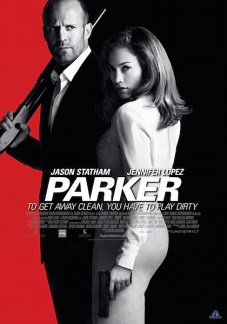
    ParkerParker trailed well — funny lines, promising action, solid setup — but doesn’t deliver.

    The funny lines remain funny, but the trailer has them all. The plot’s generic — not necessarily a problem, but here it’s hampered by pointless asides and subplots. The action only delivers once or twice, the best being a mano-a-mano brawl featuring a great climax on a hotel balcony.

    Reportedly Hackford wanted to make this a film noir. You can spot story elements he must have been thinking of, but it doesn’t feel like one, and certainly doesn’t look like one.

    Fitfully adequate, but not even among Statham’s best.

    2 out of 5

    Jason Statham stars in the superior Safe, on 5* tonight at 9pm and reviewed here.

    In the interests of completing my ever-growing backlog, I decided to post ‘drabble reviews’ of some films. For those unfamiliar with the concept, a drabble is a complete piece of writing exactly 100 words long. You’ve just read one.

    Sin City: A Dame to Kill For (2014)

    2014 #127
    Robert Rodriguez & Frank Miller | 102 mins | Blu-ray | 1.85:1 | USA & Cyprus / English | 18 / R

    Sin City: A Dame to Kill ForBelated sequels can be a Terminator 2, but more often they’re a Terminator 3 — that is to say, they can be brilliant, but often it seems they’re a poor idea, a too-late money-grabbing re-hash. Mooted since before the first Sin City was even released back in 2005, this long-anticipated sequel finally appeared at the tail end of the summer, a nine-year wait, and met with poor critical reception and even poorer box office. Considering the first film isn’t just a fanboy favourite but also fairly well regarded (it still sits on the IMDb Top 250, which I know some disregard out of hand but does mean something), that’s quite a painful fall from grace. Having watched the original the night before, I rather fail to see why.

    As with its predecessor, A Dame to Kill For is a collection of hyper-noir short stories, connected by location and overlapping characters, that flits between time periods with abandon — this is both a prequel and sequel to the first film, revealing both the story of how Dwight (Josh Brolin) came to change his face (to become Clive Owen in the original film), and what Nancy (Jessica Alba) did after the death of Hartigan (Bruce Willis, returning in a more spiritual form). There’s also the story of a cocky gambler, Johnny (Joseph Gordon-Levitt), taking on the city’s power-players, and a short pre-titles tale starring breakout character Marv (Mickey Rourke).

    If the first film was noir with a comic book mentality, then the second is a comic book with a noir mentality. The plots are still hard-boiled, the extensive voiceovers overwritten to the point they wash over you meaninglessly, the characters a mix of downtrodden toughs (for the men) and whores (for the women), and there’s still no hope for anyone in a city which drags everyone down. Naturally the visual style is the same: high-contrast monochrome with dramatic splashes of colour, and the occasional artistic lapse into literal black-and-white.

    Violent MarvBut the comic-book-ness of the first film — moments of almost metaphorical visual representation rather than literal reality, including physically-impossible action beats — has been ramped up. The value of the first film was never in its action, so the sequel’s lengthy punch-ups, crossbow-based guard-slaying, and all the rest, get boring fast. When it slips into this needless excess, A Dame to Kill For loses its way. When it sticks to what it does best — hard-boiled fatalistic crime tales with striking comic book-inspired cinematography — it does as well as the concept ever did.

    The best story is probably the titular one, which makes up the bulk of the middle of the film. It’s the most traditionally noir-ish, with a killer performance from a perfectly-cast Eva Green as the eponymous dame. She also spends most of her screentime starkers, which — coupled with the ludicrous dialogue and increased action — does lend credence to accusations that this is a film made by 13-year-old boys. Enjoy the results or not, it’s a hard point to argue against.

    As Nancy, Jessica Alba was somewhere on the spectrum from mediocre to awful in the first film, but she’s another of the best things in this sequel. It’s not just that she’s given a meatier role, but that she seems to know how to act better fullstop. For all the criticisms that the film is misogynistic, with its women all strippers or whores or manipulative bitches, it’s the actresses who get the best parts and deliver the best performances. Brolin is unremarkable, for instance, while Marv, undoubtedly the original film’s breakout character, is now shoehorned into every story. Sometimes it works, sometimes it feels forced.

    Johnny come latelyThe intervening decade has lessened the impact of the first film’s sick ultra-violence, but there’s nothing even that extreme here, aside perhaps from one eyeball-related moment. On the other hand, nearly a decade of tech development means it looks better than the last one, both in terms of the CGI’s quality and the camerawork more generally — it’s less flatly shot; more filmic than the first one’s sometimes-webseries-y composition.

    Rodriguez once said he hoped to film all of Miller’s Sin City stories, and across the two films they’ve got through six (plus two new ones), which leaves two more full-length tales and nine shorts. Based on the poor performance and reception of this instalment, a third go-round looks unlikely. But then, if there’s one filmmaker who seems to keep on producing even when no one expects more it’s… Uwe Boll. But if there’s another, it’s Robert Rodriguez. That said, the box office really was shockingly awful (just shy of $40 million worldwide; I read the budget was $60 million), so maybe even Rodriguez can’t save this project.

    Many critics, even those who rate the first Sin City highly, slaughtered this sequel. I don’t really see why — on balance, I think it’s of a piece with the first one. To love the first and hate the second seems predicated on the notion that the original was innovative and groundbreaking, whereas the follow-up is the same thing again. Well, what did you expect? It promises more stories in the visual and thematic style of Ghost of movies pastits predecessor, and that’s exactly what it delivers. I suspect the first benefits from nostalgia because, watching them virtually back to back, I found I liked Sin City less than I remembered, but enjoyed A Dame to Kill For just as much. It’s flawed in several aspects, but for honest-to-themselves fans of the first movie, I think it’s a “more of what you liked”-style success.
    4 out of 5

    This review is part of the 100 Films Advent Calendar 2014. Read more here.

    Sin City: Recut & Extended (2005)

    aka Sin City: Recut ∙ Extended ∙ Unrated

    2014 #126
    Robert Rodriguez & Frank Miller
    with Quentin Tarantino | 142 mins | Blu-ray | 1.85:1 | USA / English | 18

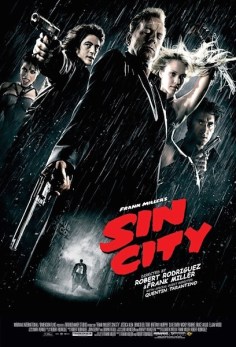
    Sin CityAdapted from a series of graphic novels by Frank Miller, Sin City is a noir homage, replete with high-contrast black-and-white cinematography, dialogue so hard boiled you couldn’t crack it with a sledgehammer, and all the requisite downtrodden heroes, corrupt authority figures, dangerous dames, etc. There’s also the very modern inclusion of shocking ultra-violence and nudity, but I guess a fair degree of that would’ve crept into classic noir if the mores of the time allowed — pretty much the point of the genre is the dark grubbiness of the world, after all.
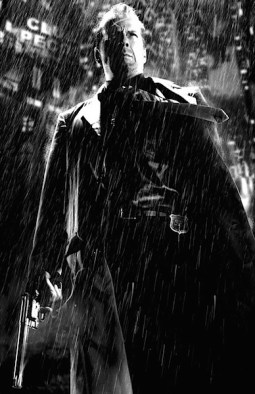
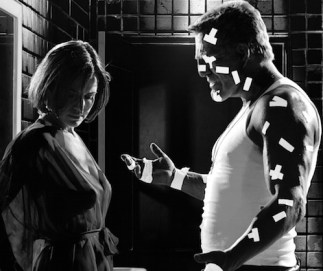
    Anyway, Sin City: The Film is probably best known for its slavish faithfulness to Miller’s original comics; or rather the way that manifested itself: the film was shot digitally (when that was still remarkable rather than the norm, as it has become since) and almost entirely on green screen, with cast members who share scenes sometimes not even meeting, and whole roles being recorded in a day or two rather than the usual couple of weeks. It helps that the movie is a collection of short stories, meaning no one person is in it for more than about 40 minutes. The point of this was to then emulate the comic’s visuals: black-and-white with minimal grey in between, but occasional splashes of colour and other striking effects — blood is sometimes stark white, sometimes red; one character has blue eyes, another golden hair; plasters or necklaces are sometimes rendered as flat white blocks; and so on.

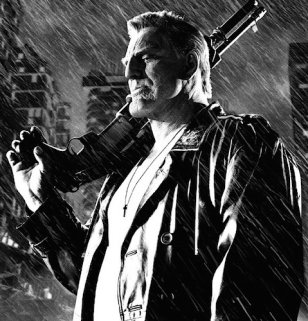
    Hartigan got a gunThe DVD-premiering extended version, dubbed Recut & Extended (or, in the US, “Recut, Extended, Unrated”) is even more faithful to the comics than the theatrical version. Some of the books’ scenes that were excised are now included, and the structure has been rejigged to present each of the four stories one by one in their entirety (whereas the original version had a small amount of intercutting). The total running time is 17 minutes and 40 seconds longer, an increase of some 14.2%… which is a thoroughly misleading figure. As a presentational choice, each of the four stories is offered for individual viewing, plus option to “play all”. However, rather than that showing them as a single film, they play as four shorts back to back, with a full set of section-specific end credits rolling each time. The actual amount of new material in the film itself is reported to be 6 minutes and 55 seconds, or only a 5.6% increase from the theatrical cut. I’m sure the extensions are great for die-hard fans, but for most the additions are all but unnoticeable — look at that Movie-Censorship.com list and you’ll see there are only three or four new bits that could reasonably be described as “scenes” (ranging from under 30 seconds to about two minutes), and then just a bunch of extended ‘moments’.

    The lack of notable new material isn’t the issue, though. The real problem is the re-structure. Let’s not beat around the bush: it scuttles the film. Individually, each of the three longer narratives is fine, but when watched back-to-back as if it were still one film, the structure is unbalanced. Then there’s the shorter story, The Customer is Always Right, starring Josh Hartnett as The Man. In the original cut, his character features in a standalone pre-titles style-establisher (both for the visuals and the kind of tough tales we’re about to be told), and then a neat coda bookend before the end credits. These two scenes have been placed together in this version, and it sucks.

    They've got a bigger gunFor one, the second scene belongs more truly to The Big Fat Kill (the final story, starring Clive Owen’s Dwight and the whores of Old Town led by Rosaria Dawson). For another, because this recut purports to be in chronological order, The Customer is Always Right plays second. So we get 47 minutes of Bruce Willis protecting Jessica Alba from a paedophile in That Yellow Bastard, then we get a one-scene story that rightly belongs at the beginning (complete with title card, now 50 minutes into the ‘film’), then we get a scene that, actually, belongs in a completely different place. The next full story is The Hard Goodbye (the one with Mickey Rourke under a slab of prosthetics as Marv), followed by The Big Fat Kill — and it’s after this that the second scene with The Man belongs. Divorced of that context, the scene is robbed of almost all its meaning.
    I guess Sin City: Recut & Extended isn’t really meant to be viewed as a single film — hence why there are four sets of end credits, and why the cool opening titles featuring Miller’s original art is nowhere to be seen. Even allowing for that, though, I think the second scene with The Man has been badly placed. A chronological cut of a non-chronological film is an interesting idea, but this doesn’t even get that right. And even if it weren’t for the regular interruption by lengthy credits sequences, the re-order makes for a very stop-start viewing experience, something the theatrical version avoided by divvying up one story and having characters make brief cameos in each other’s tales.

    Tits 'n' effectsIn the end, I enjoyed Sin City considerably less than I did nine years ago in the cinema. This is partly down to the restructure, but I’m not sure wholly so. I don’t think it’s aged particularly well, as things produced at the forefront of emerging technology are wont to do: some of the CGI looks dirt cheap, the shot compositions are often unimaginatively flat, and there’s an occasional internet-video style to the picture quality. It’s not just the visuals, sadly, with amateurish performances from reliable actors, possibly a result of the hurried filming schedule. Just because you can capture an entire part in a single day doesn’t mean you should. Then there’s Jessica Alba, who’s just awful here.

    For all that, there are shots that are striking, when the elements come together to make something that still looks fresh and creative even after nearly a decade of the film’s visual tricks being emulated by lesser movies or integrated into general cinematic language. One thing that struck me was that the most memorable moments were all from the trailer — Sin City did have one helluva trailer. The stories and characters aren’t bad, thanks to the hyper-noir style being a deliberate choice, though perhaps it sometimes goes too far with the voiceover narration. Maybe, again, this is the fault of watching the longer cut; maybe there’s just a little too much of it in any version.

    Quite often an extended cut will become the definitive version of a film — these days, it’s often a way to get the originally-intended cut past a studio who insist on a shorter running time or PG-13 certificate; or it’s a chance to revisit and improve a project that hadn’t quite worked. Not so with Sin City. This is a version for fans of the books who want to see every last drop included… but even then it falls short, because apparently a few moments are still nowhere to be found. That yellow so-and-soNone of the present additions are game-changing, and though some are good in their own way, there’s nothing noteworthy enough to compensate for the destruction of the original cut’s well-balanced structure. For the average punter — and certainly for the first-time viewer — the theatrical cut is unquestionably the way to go.
    4 out of 5

    This year’s sequel, Sin City: A Dame to Kill For, will be reviewed tomorrow.

    Both reviews are part of the 100 Films Advent Calendar 2014. Read more here.

    Sin City: Recut & Extended received a “dishonourable mention” on my list of The Five Worst Films I Saw in 2014, which can be read in full here.

    Union Station (1950)

    2014 #19
    Rudolph Maté | 77 mins | TV | 4:3 | USA / English

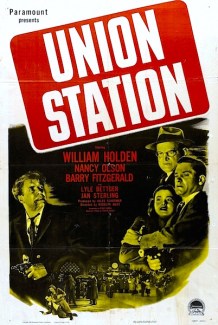
    Union StationOften noted merely for being filmed in Los Angeles’ busy train station, there are some spirited defences of Union Station to be found. For my money, that’s nearer the truth: this isn’t some noir-era single-location-thriller, but a kidnap procedural with a significant role for trains and their locales. The best sequence isn’t even in the station: cops tail a suspect, get noticed, and the ensuing chase reaches a memorably grisly end.

    Also in the mix are morally grey cops (“make it look like an accident”), one-step-ahead villains, and a blind girl in peril. The concoction produces an undervalued classic noir.

    4 out of 5

    In the interests of completing my ever-growing backlog, I decided to post ‘drabble reviews’ of some films. For those unfamiliar with the concept, a drabble is a complete piece of writing exactly 100 words long. You’ve just read one.