
Carl Boese & Paul Wegener | 85 mins | streaming | 4:3 | Germany / silent (English) | PG
 The word “prequel” was first coined in the ’50s, arguably entered the mainstream in the ’70s, and was firmly established as a term everyone knew and used in the ’90s by the Star Wars prequel trilogy. Works that can be defined as prequels predate their naming, however, and surely one of the earliest examples in the movies must be this silent German horror.
Now lost, 1915’s Der Golem was set in the present day, when “an antiques dealer (Henrik Galeen) finds a golem (Paul Wegener), a clay statue brought to life by a rabbi four centuries earlier. The dealer resurrects the golem as a servant, but the golem falls in love with the dealer’s wife. As she does not return his love, the golem commits a series of murders.” The film was written and directed by both Galeen and Wegener, but the latter was reportedly unhappy with the film due to compromises he’d made during production. So, after a sequel (also lost), Wegener tried to more directly convey the legend as he’d first heard it — hence Der Golem, wie er in die Welt kam, translated as The Golem: How He Came into the World, and commonly abbreviated to just The Golem, what with the original The Golem being lost. (Got it? Good.)
Set in 16th Century Prague (not that there’s any way to know that from the film itself), The Golem 3 tells the story of that rabbi who brought the clay statue to life in the first place. When the Roman Emperor decrees that Jews must vacate their ghetto, a rabbi builds a monster out of clay then summons a spirit to bring it to life. Meanwhile, one of the Emperor’s knights has fallen in love with the rabbi’s daughter, who is also the object of the rabbi’s assistant’s affections, and this love triangle — combined with access to control of the Golem — will eventually spell “climax”.
 Regarded as one of the first horror films, The Golem is more of a moderately-dark fantasy, or a fairytale-type myth. There are clear similarities to Frankenstein, though I don’t know if either influenced the other. However, it does feature what I presume is one of first instances of that most daft of horror tropes: running upstairs to escape the monster. It goes as well here as it ever does, i.e. not very. Said monster looks a bit comical by today’s standards. Built by the rabbi to defend the Jewish people, he immediately uses the hulking chap to chop wood and run errands — he doesn’t want a defender, he wants a servant! A terrifying beast nonetheless, it’s ultimately defeated because it picks up a little girl for a cuddle and she casually removes its magic life-giving amulet.
Golem aside, there are some good special effects, like the ring of fire that summons a smoke-breathing demon; composer Aljoscha Zimmerman’s score is largely atmospheric; and there are some nice shots, like when the rabbi walks up to camera, does something with his hands (in what is effectively now a close-up), then walks back to the Golem at the rear of the set. These are the exception, though: it’s mostly a mix of flat long and medium shots. Oddly, the credits on the version currently available note that it adds computer graphics and animation. Presumably this is the English text that’s been digitally pasted into the film on letters, decrees, books, and the like. It also means that the judder, grain, and print damage on the English intertitles is utterly fake. How silly.
Revered for its place in film history, The Golem has elements to commend it still, but doesn’t hold up as well as other films of the era.

 Did Daniel Radcliffe murder his girlfriend? Sprouting devilish horns doesn’t help his case…
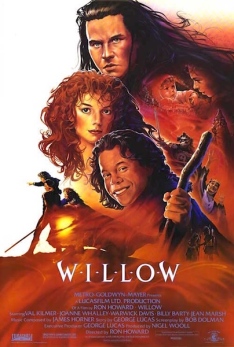 Warwick Davis is the farmer who must return an abandoned baby, unaware it’s heir to a throne evil queen Jean Marsh doesn’t wish to relinquish. Intermittently aided by Val Kilmer’s Han Solo-ish vagabond, they must elude the queen’s forces, led by her daughter, Joanne Whalley.
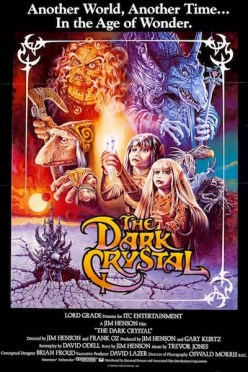 High-fantasy adventure about some elves trying to stop a crystal from destroying their planet.
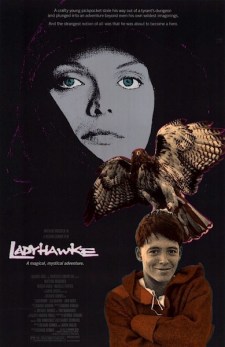 This is one of those films that crops up in the daytime TV schedules now and then and I’d always paid little heed to, because no one else seemed to. Then I read
  Here, there’s a good 45 minutes or so of mystery before said reveal. Obviously, therefore, it would work better as a fresh viewing experience if you didn’t know that going in; but it’s so fundamental to the setup (despite the focus on Philippe, it’s their story) that I wonder if anyone has ever seen it without knowing? On the bright side, it doesn’t really matter: this is not a film where the ‘big twist’ is the point.
 but Philippe occasionally addresses amusing asides to God, for example. It even wisely dodges special effects… most of the time. The few occasions on which it does make motions in that direction, it demonstrates why it was wise not to attempt them more thoroughly. These days they’d slather on the CGI, but shying away from such things is not just due to a lack of technology: it’s far more magical to not be too explicit.
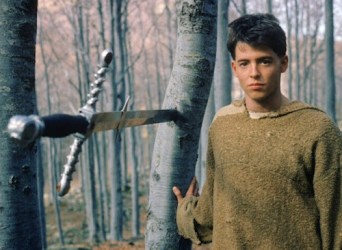 That’s the kind of age when one might be liable to fall in love with it; or, at least, people of (very roughly speaking) my generation would — I suppose Kids These Days fall in love with copious CGI, be that animated or ‘live action’. Anyway, I think it deserves to be less overlooked, and if you’ve never caught it (or not for a while) it certainly merits a chance.
 From the sword and sorcery ‘boom’ of the ’80s, Red Sonja concerns a warrioress going after the evil queen who slaughtered her family and has now seized a magical MacGuffin that will destroy the world or somesuch.
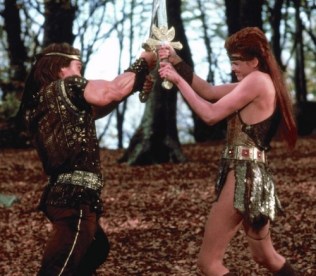 being a particular highlight. Veteran helmer Richard Fleischer’s direction seems to have come in for criticism from some quarters, but I found it adequately unremarkable. Damning with faint praise, I know, but it doesn’t merit slagging off either.
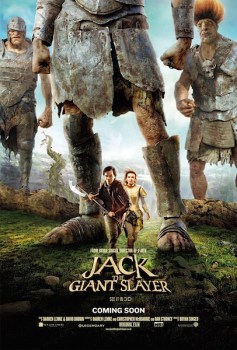 The influence of Peter Jackson’s
 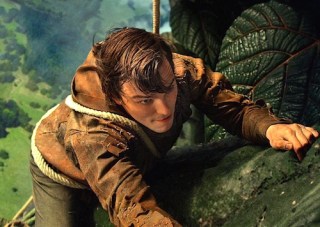 A computer-animated prologue wants to be the one from
 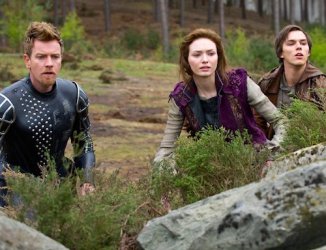 overacted characters, and bright-and-cheerful CGI are more or less acceptable, in a “it’s no classic but it’ll pass two hours just fine” kind of way. Produced on those kinds of terms, this might have passed muster for some. Might.
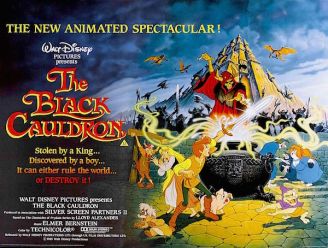 The Black Cauldron is best remembered as an intriguing footnote in the history of Disney animation. Their 25th ‘official’ film, it was the first with no songs, the first to earn a PG (after being cut — twice — to avoid a PG-13), and flopped so badly they disowned it for over a decade. Fully-animated sequences were cut after disastrous test screenings for parents, and famed exec Jeffrey Katzenberg, who came into Disney management during the film’s production, reportedly ordered 12 minutes cut, muddling the film’s story. What a mess.
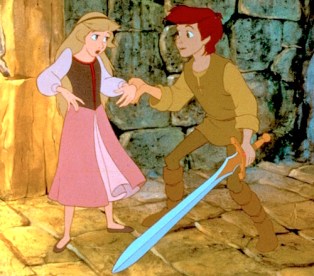 It’s always interesting when a company like Disney break outside of the norm, and it’s certainly brought them some degree of success in recent years with the likes of
  Released the same year as
  Even with the undercurrents of grief and the difficulties of moving on, this is fundamentally a light, amiable romance.
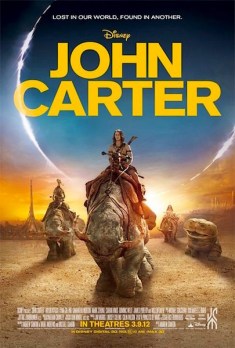 A box office flop (it made a once-astonishing $284 million worldwide, but that was off a $250 million production budget and a ginormous bungled marketing campaign), John Carter has gained something of a following among those who did enjoy it or caught it later — see
  not because it’s so famous (among Normal People, I don’t think it is), but because its influence means its imagery and concepts have already been plundered (
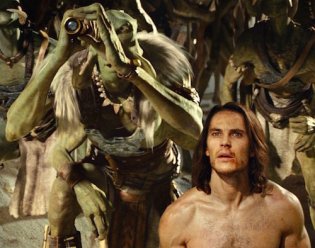 It doesn’t help that the film is structurally muddled at the offset. It begins on Mars, a voiceover detailing the conflict — an instant bombardment of names and concepts. I don’t mind things that challenge you to keep up, but it still feels a bit much. Then we jump to New York in the 1880s, where Carter is running away from someone in the streets. Then to his house, where his nephew has just turned up to be told he’s dead. You what? We just saw him in the telegraph office! And then we jump back to the 1860s, where he’s searching for gold and getting arrested (or something) by Bryan Cranston in a wig as some form of army officer. Then it gets a bit more straightforward. If being transported to Mars and meeting four-armed CG aliens who speak in subtitles is what you call “straightforward”, anyway.
 It feels a bit facile to criticise the quality of CGI these days, but that doesn’t stop John Carter from being over-ambitious in this regard. In fact, it’s not really the sometimes-half-assed green screen or occasional plastic-ness that’s the problem, but the design: those four-armed aliens are just a little too cartoony. Perhaps it’s a hangover from Stanton’s Pixar days, perhaps something just went a little awry during the process, but their design doesn’t look quite ‘real’ enough; a little like someone’s taken a real-life creature and then lightly caricatured it. I think it’s the eyes, which are perhaps a little too big and round and ‘cute’, but there’s something else indefinable there, or not there. These aliens aren’t just set dressing but proper motion-captured characters, played by the likes of Samantha Morton, Willem Dafoe, Thomas Haden Church and Polly Walker, so the lack of connection is regrettable.
 I was expecting, or perhaps hoping, to like it; to find a misunderstood old-style adventure full of entertainment value. It may be an old-style adventure, but that’s beside the point, because whatever it is, I just felt it wasn’t particularly well made: poorly constructed, weakly performed, lazily (and wrongly) assumptive of the audience’s familiarity with the material. Disappointing.
 100Films.co.uk