
Yorgos Lanthimos | 114 mins | streaming (HD) | 1.85:1 | Ireland, UK, Greece, France & Netherlands / English & French | 15 / R
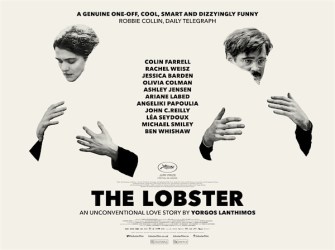 The first English language feature from Greek writer-director Yorgos Lanthimos (of Dogtooth) is set in a relationship-obsessed near-future dystopia. Any person not in a relationship is sent to The Hotel, where they have 45 days to find a partner among the other guests or they get turned into an animal of their choice. Guests can earn extensions to their time in The Hotel by shooting loners — singleton escapees who live in The Woods nearby — during regular hunting trips. The film begins with David (Colin Farrell) discovering his wife has left him, thereby automatically banishing him to The Hotel, where he arrives with his brother — who has been before and failed, so is now a dog. Not an anthropomorphic dog, just a dog. As David makes friends and tries to make a romantic connection, events push him closer to the loners…
The Lobster is the kind of odd movie that critics adore (90% on Rotten Tomatoes) and then, I always feel, spend some of their time looking down their noses at regular folk who don’t get it. In my experience, you have a 50/50 chance of such movies actually being any good. For me, The Lobster straddles that divide. At times it provides wryly amusing absurdist comedy, with the cast’s deliberately stilted performances and the strange situations the characters are subjected to. It also presents almost-thought-provoking observations on the objectively-bizarre rituals of social niceties, filtered through the prism of these unusual individuals and how they use, or don’t, methods of social interaction familiar from our world. If that all sounds a bit pretentious, well, that’s the level you have to engage with The Lobster on if you want to get anything out of it beyond a smattering of oddball laughs.
 Even if you accept these goals, Lanthimos’ film eventually goes off the rails. Without meaning to spoil too much, David eventually falls in with the loners, who have their own very specific social rules designed to inhibit partnering up. Revelation: the outsiders are fundamentally the same, just with different rules! That’s about the extent of what I got from this portion of the film; unfortunately, it goes on for a really, really long time. Among this group David meets ‘Short Sighted Woman’ (everyone aside from David is similarly named) and falls in love with her — I mean, of course he does, she’s played by Rachel Weisz. They develop a secret mode of communicating, but will be harshly punished if caught. This storyline is what the film uses to occupy its remaining time, but what it lacks in the offbeat humour of the time in The Hotel it makes up for with… nothing.
At its best, The Lobster is like a Wes Anderson movie run through the mind of a sci-fi-loving sociopath (the dog even gets similar treatment to that of an Anderson movie, again with the same extreme filter). Unfortunately, as you might expect of a sociopath, it doesn’t know when to stop, leaving behind social commentary and alternative humour to drudge through an uninteresting romance to a limp ending. What starts well — though certainly an acquired taste — ends up feeling like a waste of time. Shame.

The Lobster will be available on Netflix UK from Monday.
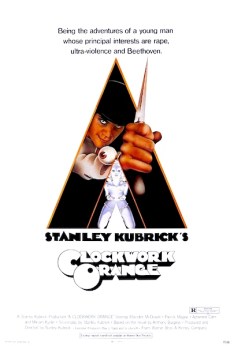 Yet more dystopian sci-fi! Who doesn’t love some dystopian sci-fi? Here we’re in the ’70s, though (makes a change from the ’80s), with writer-director Stanley Kubrick adapting Anthony Burgess’ novel into a film so controversially violent the director himself eventually banned it from release in the UK for decades. Almost 45 years on, it’s testament to the film’s power that it is still in parts shocking.
 unfortunate byproduct of the film’s age. Other parts just go on a bit too long for my taste — there’s barely a sequence after Alex’s arrest that I didn’t feel would benefit from getting a wriggle on. I don’t think this is me bringing a youth-of-today “everything must be fast cut” perspective to the film, I just found it needlessly languorous at times. Maybe I was missing a point.
 Kubrick ends on a much more ambiguous note… so ambiguous, I’m not really sure what it’s saying… or even what all the ambiguities actually are…
 Critically derided, this anarchic adaptation of the rebellious comic has become a cult fave. You can see why: a ramshackle plot allows for plenty of outré zaniness, including a big musical number to a punky Cole Porter cover, and surely no one predicted the bizarre truth about the Rippers!
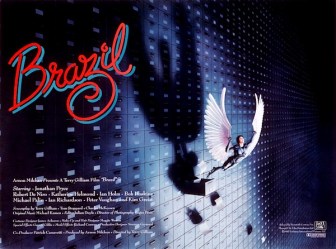 I normally aim for a “critical” (for want of a better word) rather than “bloggy” (for want of a better word) tone in my reviews, just because I do (that’s in no way a criticism of others, etc). Here is where I fail as a film writer in that sense, though, because I’m not even sure how I’m meant to review Terry Gilliam’s dystopian sci-fi satire Brazil, a film as famed for its storied release history as for the movie itself.
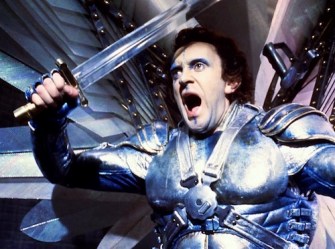 I’m sure there’s a thorough list of differences somewhere, but one good anecdote from Gilliam’s audio commentary tells how the ‘morning after’ scene was cut from the European release so last-minute that it was literally physically removed from the premiere print. (Gilliam regretted it immediately and it was restored for the video release.)
 100Films.co.uk