Say hello to the new-look, bigger-than-ever 100 Films monthly update! Well, partially new look — much is the same, but there are some exciting new regular categories, and image-header-things. I had some ideas; I’ve introduced them all at once. (They excited me, anyway.)
First new regular: a contents list!

- This month’s What Do You Mean You Haven’t Seen…? film(s)
- June’s viewing in full
- Viewing notes on and analysis of the above
- The Arbies: The 1st Monthly Arbitrary Awards
- Other writing from around the blogosphere…
- All the new reviews I published in June
- All the archive reviews I re-published in June
- The return of the List of 5!
- Finally, the briefest, most pointless look ahead to next month…

Just one WDYMYHS film watched this month (so I’m still two behind) — it’s Martin Scorsese’s beloved boxing biopic (that I should’ve watched in 2013 but failed to), Raging Bull. I would make a brief comment on what I thought of it, but we’ll come to that in the Arbies…

 #75 Changing Lanes (2002)
#76 Kingsman: The Secret Service (2015)
#77 The Expendables 3 (Extended Version) (2014)
#78 Ladyhawke (1985)
#79 Now You See Me (2013)
#80 The Interview (2014)
#81 Safety Not Guaranteed (2012)
#82 Superman vs. The Elite (2012)
 #83 Rush (2013)
#84 Whiplash (2014)
#85 Meet the Robinsons (2007)
#86 Before Dawn (2012)
#87 The Guest (2014)
#88 Raging Bull (1980)
#89 John Wick (2014)
#90 Fury (2014)

- Meet the Robinsons is the 47th official Walt Disney Animated Classic, and the 39th I’ve seen. 15 to go…
- I have a whole new format and I make this entire section look pointless with one “oh, by the way” bit of trivia, which is less than I normally have to say here, I feel. Ah well, what can you do?

2015 continues apace with 16 new films watched this month. That smashes the June average of 7.14 — indeed, reaching #90 singlehandedly drags it up over a whole film, to 8.25. It’s the highest June ever, which also means it’s the 8th month in a row to beat last year’s equivalent (June 2014 had 11). It’s the 13th month in a row in which I watched more than 10 new films, and is tied with January as both the highest month of 2015 and the third-highest month ever (also tied with May & August 2010). That means that, at 2015’s halfway point, its monthly average is exactly 15.
Most excitingly of all, however, is that I’m now all but guaranteed to reach #100 in July. I’d have to fail my ten-films-per-month goal not to, and I’ve been doing really well with that so have plenty of incentive not to let it slip. More on what reaching #100 in July ‘means’ next month (hopefully!)
Over in Prediction Corner: assuming I uphold my ten-per-month minimum, this year will reach at least #150, which would be my best year by some 14 films. In other words, we should know if 2015 is a new Best Year Ever by November at the latest. (Unless I mess up ten-per-month but then still pass 136 in December, of course.) Meanwhile, in the world of averages… well, we’re halfway through the year, so such a prediction would see my tally exactly double, clocking in at a quite extraordinary 180. (Extraordinary for me, anyhow — stow it, you “365 films in a year” people!)

I’ve been posting these regular monthly updates for over five years now, and in all that time they’ve been very much focused on numbers and stats — how many films have I watched, how does that compare to the past, what does it suggest for the future, etc. And that’s fair enough — as progress reports, it’s kinda their point to report my progress. But I’ve decided it’s about time to introduce some opinion into the mix, to liven things up a bit. So I proudly present…

The 1st Monthly Arbitrary Awards
 So named because what I watch in any given month is pretty arbitrary, so the pool of contenders is a total whim rather than a genuine competition. Plus, each month two of the five categories are going to be arbitrarily chosen, just to compound the point. You’ll get the idea as we go along.
That’s Arbie on the right, by-the-way. In case that wasn’t obvious. (Turns out Arbie is also the name of the mascot of the Royal Bank of Canada. I don’t think anyone’s going to get us confused though, so on I go.)
For June 2015, the awards go to…
Favourite Film of the Month
I watched a number of very good films this month, several of them strong contenders for my year-end top ten, but when it came to the crunch there was a clear winner here: as anyone who read my review yesterday likely suspects, it’s The Guest.
Least Favourite Film of the Month
Although there were a couple of weak and/or disappointing movies amongst my viewing this month, and some I certainly liked less than this winner (or, rather, loser), for the greatest discrepancy between “expectation” and “what I actually thought of it”, this goes to Raging Bull.
The Most ’80s Soundtrack You’ve Ever Heard
Most months The Guest would have this sewn up, but oh no, not when Ladyhawke’s around. Can you imagine anyone doing a fantasy movie without a Howard Shore-esque orchestral epic soundtrack nowadays? Me either. In the ’80s, on the other hand… well, they sure did love their synthesisers.
Most “Oh, I Didn’t Know They Were In It” Cameo Appearance
If all you’ve seen of John Wick is the Keanu Reeves-centric posters, it’s probably riddled with moments such as these. Me, I somehow knew most of them, so this award goes to Jason “should’ve played James Bond at some point” Isaacs popping up in Fury as some kind of commander for a little bit. The Blu-ray has nearly an hour of deleted scenes; to my surprise, “the rest of Jason Isaacs’ role” doesn’t seem to be among them.
The Audience Award for Most-Viewed New Post of the Month
Because if I didn’t limit it to new posts, this would be Harry Potter every month (across 2014 and 2013 (the year they were first published), my reviews of Philosopher’s Stone and Chamber of Secrets accounted for 33.5% of all my page views).
This month: thanks primarily to being retweeted by a Keanu Reeves fan twitter, the victor is Man of Tai Chi.

I am shockingly bad at getting round to reading other people’s blogs, and when I do it’s often in fits and starts (as anyone who’s ever received half-a-dozen ‘likes’ from me on things they posted a month ago can attest). In the interest of being a better human being, then, I thought I’d start collating particularly interesting pieces from elsewhere and share them here, for whatever that’s worth.
There’s no particular rhyme or reason to my choices, just a handful of pieces that struck a particular chord for me this month. For one thing, there’s a pair of coincidently-thematically-similar pairings from the same two blogs. One of those is up first:
1976, the year it all started… @ the ghost of 82
ghostof82 tackles the emotions of what makes us love movies in the first place, through his own experience with Jaws in ’76.
Jurassic Park (1993) @ Films on the Box
Mike touches on a similar topic from a different angle: how films that are cinema-defining for a generation can appear to those outside said generation.
Evangelion June 22, 2015 @ Heather Anne Campbell
Monday 22nd June 2015 was “Evangelion Day”, the day on which the first episode of anime series Neon Genesis Evangelion takes place. In this write-up, Heather Anne Campbell explains what the series means to her and, in the process, outlines some of the reasons it’s so good and has endured for so long.
Ten of the Best – Noir Directors @ Ride the High Country
Whenever I read Colin’s blog I come away with a raft of new films I want to see. You can only imagine how many got added to my list after this well-considered overview.
Miracle Mile (1988) Review @ Cinema Parrot Disco
Who doesn’t love stumbling across something they’ve never heard of that turns out to be right up their street? No idea if I’d like Miracle Mile, or even if/when I’ll have a chance to see it, but table9mutant’s review has me suitably intrigued. And is it just me or are the ’80s everywhere at the minute?
Movies Silently’s Top Ten Talkies @ Movies Silently
Talking of, a) recommendations, and b) the ’80s, silent cinema doyenne Fritzi took a detour from her regular stomping ground with this list (technically from last month, but rules were made to be bent). Any list of favourites that includes Mystery Men is a good’un in my book, but the aforementioned ’80s recommendation is her #2 choice, medieval fantasy Ladyhawke. As you may’ve noticed above, it even managed to find its way to the top of my “must watch” pile (a rare feat). Full review in due course, but for now suffice to say I very much enjoyed it. I even thought the score had its moments.
RIP Christopher Lee @ Films on the Box
Finally, the second pairing I mentioned, on a sadder note. First, Mike pays fitting tribute to one of the great screen icons.
Remembering the Music of James Horner @ the ghost of 82
Last but not least, a personal tribute to composer James Horner.













































Film music has changed a lot down the years, but it’s been a pretty constant important element. Plenty of it is forgettable background noise, but some stands out so much it becomes famed in its own right. I recently re-watched the original Star Wars trilogy, inspiring this month’s top five: three film themes — plus two from other mediums — that, to me, are some of the most iconic of all.
- Doctor Who by Ron Grainer
 Diddly-dum diddly-dum diddly-dum ooo-weee-ooo… For generations of British children, that’s the sound of Saturday night adventure. I guess to some people it’s just a children’s TV theme, but they’re wrong: it was a genuinely pioneering, important example of burgeoning electronic music (honestly). As a composition it’s surprisingly versatile: Delia Derbyshire’s original arrangement is still chillingly unsettling 52 years on; Murray Gold’s 2005 version (arguably perfected in the Series Four version) is an equally-perfect orchestral blockbuster.
 - Star Wars (Main Theme) by John Williams
 Dooo-dooo dododo-dooodo dododo-dooodo dododo-doo… You could probably fill this list twice over with John Williams compositions — Indiana Jones, Jaws, Superman, Jurassic Park, more recently Hedwig’s Theme from Harry Potter, and so on — but undoubtedly the most iconic of them all is his main theme to George Lucas’ space-fantasy saga. Running it a close second is the same series’ Imperial March, perhaps the greatest villain’s theme ever. All together now: dum dum dum dum-dudum dum-dudum…
 - James Bond Theme by Monty Norman
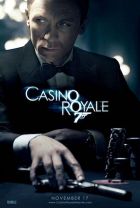 Dang da-dang-dang da-da-da dang da-dangdang da-da-da daa-daa da-da-daa… A 53-year-old surf rock tune should by all rights be horribly dated, but I guess true cool endures. While the version used in the films has barely changed, there are an abundance of variations for trailers, etc. My personal favourite is the one created by Pfeifer Broz. Music for the Casino Royale trailer in 2006. The climactic use of a choir is one of those “how did it take someone 43 years to think of this?!” moments.
 - The Fellowship Theme by Howard Shore
 Dooo-dooo dododooo, do-do-doo do-do-doo do-do-doo do do doo… The only one here that isn’t a title theme, but it’s indelibly part of the Lord of the Rings franchise — it has no reason to appear in The Hobbit trilogy, but I spent most of those eight hours missing it. It reoccurs throughout the trilogy (of course it does), but perhaps the purest version can be found in The Ring Goes South from the Fellowship soundtrack. “Only Peter Jackson and Howard Shore can make 9 people walking past a rock look epic.”
 - The Secret of Monkey Island by Michael Land
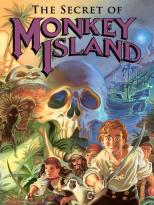 Doo-doo dodododo-doo do-do-do-doo… I’m certain this will be less familiar than any of the above to most people but, honestly, to me (and, I think, many other people who played the LucasArts games) it’s as iconic as anything else I’ve mentioned, including all of those other John Williams ones. The original was rendered in the style of its era — a digital MIDI thing — but it endured throughout the series and was transformed into some lusher orchestral versions. Try the version from the 2009 special edition, for instance.
I’m already full of incredulousness at myself for leaving out Indiana Jones. Or Back to the Future. Or Mission: Impossible. And it may’ve been composed by committee, but I love the main theme from Pirates of the Caribbean (find it cleanly in the first film’s He’s a Pirate). And if we’re allowing TV themes, what about Games of Thrones? I mean, this is pretty much what I hear every time I watch the show. And also… oh, we’ll be here forever. What are you favourites?

#100! Probably. Hopefully.
 The first manned mission to Mars is reaching the end of its six-month tour. As they count down the final hours, battling a dust storm and its attendant power outages and communications blackouts, one of the team secretly discovers bacterial life on the surface. Attempting to recover further samples, a sink hole opens beneath him. When the rest of the crew try to recover his body, it’s not there. Then he arrives back at base… only, he’s not quite himself anymore…
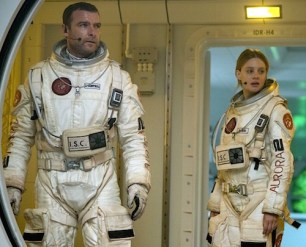 These faults persist despite the best efforts of a quality cast, particularly Romola Garai as (in functional terms) the capable sidekick, and Olivia Williams as the bitch whose heartless practicality becomes an asset when the going gets tough. First-time feature director Ruairí Robinson assembled his cast on the principle of “people who aren’t normally in sci-fi movies”, and that does feed in to the sense of realism. It also looks great, the production, costume and effects designs gelling to create a believable Mars mission, all in spite of a tiny budget (funded by the BFI and the Irish Film Board, it had about a tenth of Gravity’s budget, for example). Credit, too, to cinematographer Robbie Ryan for lensing the Martian surface convincingly (it’s actually the Jordanian desert). The editing may descend into fast-cut blurriness during action scenes — only emphasised by Max Richter’s predictably derivative horror movie score — but during calmer moments the film looks very good.
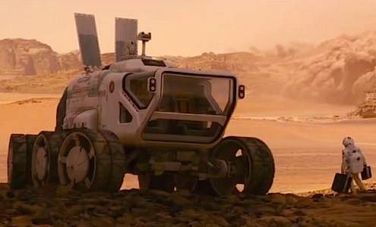 and was more sure of its tone. There may be elements to commend The Last Days of Mars in this comparison (the much bigger budget pays off in the scope of the visuals, of course), but as a story and viewing experience, The Waters of Mars wins hands down.
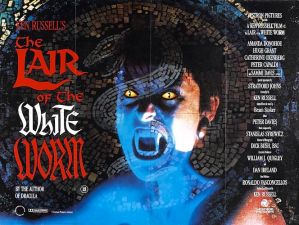 The Lair of the White Worm looks cheap, has a ridiculous story, overacted characters and overcooked dialogue, and by all rights should be a disaster. And maybe it is… but I don’t think so. In the right frame of mind, at any rate, it’s a whale of a time.

 July’s films in full
 #60
#60 



















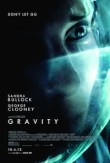 Set in the immediate future using technology that largely exists or is about to exist, some contend that Gravity isn’t a science fiction film at all — it’s a present-day thriller, just one that happens to be set in space. And they’re right, really — there are plenty of “real-world present-day” type thrillers that have more science fictional happenings than Gravity. But it’s on the ballot and it’s an incredible film, so pish, it wins.
 The decision between second and third was a tough one for me — I’d’ve tied them if I could. However, I haven’t posted a review yet for Catching Fire and am still debating my score — does it stretch to a 5? It still could — not only did I really enjoy it, but I think it has a lot more thematic/dramatic heft than your average blockbuster. Anyway, the next film’s locked at 4 stars, so Catching Fire wins the toss.
 Some people seem to really, really dislike
  Disney’s all-conquering version of The Snow Queen is the only fantasy film on this year’s ballot (seems to me the Hugos skew more SF than F. I suppose they are awarded by a Science Fiction society). I didn’t find it as incredible as the audiences who made it the fifth highest grossing film of all time, but it’s a fine film, whose initially-bland songs improve with re-listening (he says, listening to Let It Go as he writes).
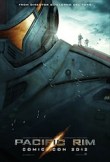 Guillermo del Toro’s Westernised riff on a very Japanese subgenre flopped Stateside — it just crossed $100m, which once would’ve been remarkable, but on a budget of $190m is poor. Internationally, however, it stormed past $300m and so will be sequelised. Del Toro apparently aimed it at 11-year-old boys, and it’s better than most other super-budgeted movies aimed at that demographic.
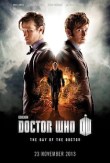 Well, of course they do — it’s a TV episode really, isn’t it? But it is feature-length (long enough to qualify for Long Form) and was released in cinemas, so I maintain you could count it as a film. Still, in Short Form it stands a strong chance of winning — I ranked it #1. My #2 and 3 was another tough decision, but I put Peter Davison’s hilarious spoof The Five(ish) Doctors Reboot in second and, in third, Mark Gatiss’ incredible An Adventure in Space and Time (another feature-length production that could hold it’s own against movies). Neither of those are strictly SF/F, but I guess as they’re Dramatic Presentations rather than books it was felt they belonged here rather than in the Related Works category. In fourth was Game of Thrones episode The Rains of Castamere. It is great as an entire episode, but let’s face it, it’s here because of the Red Wedding, which is the last, what, 10 minutes? Any other year it would probably win, but against four Doctor Who nominees (it’s a transferable vote, so more nominees means a better chance of one winning) at a convention held in Britain? We love Thrones here (more than the US, according to some stats I saw), but Hugo voters everywhere love Who. Finally, unranked by me, were Doctor Who finale The Name of the Doctor (it underwhelmed me — I won’t advocate “no award” above it, but I don’t feel it deserves to beat any of the above nominees), and Orphan Black mid-season ep Variations Under Domestication, which I’ve simply not seen.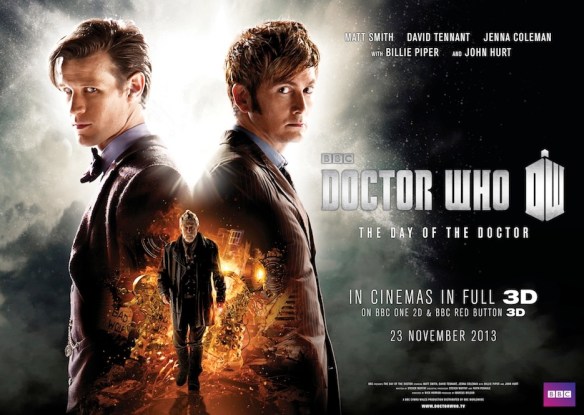
 (and it made more than double per screen what
  The Doctor’s role in the Time War has not only dominated many of his actions and personalities since it happened, but it also stands awkwardly with his persona as a whole. Here’s the man who always does the right thing, always avoids violence, always finds another way, even when there is no other way… and this man wiped out all of his people and all of the Daleks? The same man who, in his fourth incarnation, stared at two wires that could erase the Daleks from history and pondered, “do I have the right?”, before concluding that he didn’t? Doesn’t really make sense, does it?
 I think some fans would have preferred a big party history mash-up; they certainly would have liked to see their favourite faces from the past. But let’s be honest: from the classic era, only Paul McGann could pass muster as still being the Doctor he once was (and he got his own, fantastic, mini-episode to prove it); and how the hell do you construct a story with a dozen leading men? It’s clearly enough of a struggle with three. The Doctor is always the cleverest person in the room, so what do you do with multiples of him? Moffat finds ways to make all of the Doctors here (that’d be David Tennant’s 10th, Matt Smith’s 11th, and John Hurt’s newly-created ‘War Doctor’) have something to do, something to say, and something to contribute — because really, the oldest (i.e newest) Doctor should be the most experienced and have all the ideas, right? There are ways round that, but only so many.
 Along the way, Moffat nails so many other things. The dialogue and situations sparkle, and frequently gets to have its cake and eat it: familiar catchphrases and behavioural ticks of the 10th and 11th Doctors are trotted out to a fan-pleasing extent, and then Hurt’s aged, grumpier, old-fashioned Doctor gets to criticise their ludicrousness, speaking for a whole generation of fans who hate “timey-wimey” and “allons-y” and all the rest. I think it’s this self-awareness that helps so much with selling the episode to everyone, both calling back to well-known elements of the series that many love, and pillorying their expectedness for those that aren’t so keen. Well, it would be a pretty awful party if you had a cake but couldn’t eat it, right?
 Smith and Jenna Coleman are on form too, of course, but as the series’ regular cast members that feels less remarkable. That’s not intended to sell them short, however, as they hold their own against actors who are arguably more, shall we say, established. If there’s one weak link it may be Joanna Page’s eyebrows, possibly the side effect of duelling with an English accent. (Complete aside: I’m rewatching Gavin & Stacey as I write this, and feel horrible even going near criticism of such a lovely person.)
 Credit too to editor Liana Del Giudice, not only for crafting cinematic action sequences, but for stitching together a narrative that is often told with imagery and flashbacks, rather than people stood around chatting. Look at the sequence just after the Doctor sees the painting for the first time as just one clear example. That sequence may be dialogue-driven, but the faded-in and intercut flashbacks and glimpses of other events are what’s really conveying information. This is first-class visual storytelling, not just when compared to the rest of British TV, or international TV, or cinema, but the whole shebang.
 Still, you can’t please all of the people all of the time, and not everyone liked The Day of the Doctor: it may’ve topped DWM’s poll, but there were voters who scored it just one out of ten. But then, that’s true of 239 of the series’ 241 stories; and almost 60% of voters gave it a full ten out of ten — that’s a pretty clear consensus. I didn’t get round to voting myself, but I would’ve been amongst them. There are undoubtedly some weak spots that I haven’t flagged up, but conversely, there are myriad other successes — both minor (the opening! The dozens of sly callbacks!) and major (the use of the Zygons! Murray Gold’s music!) — that I haven’t mentioned either.
 There’s probably a worthwhile biopic to be made about Verity Lambert. In 1963, she became not only the youngest-ever producer of a BBC television programme, but the first female one too; the programme she was charged with launching was
  Before I set off really critiquing the film, let’s just remember this: it’s a student effort. In that context, I’ve seen far worse — heck, I’ve been involved in the production of worse. Cowell and Guy have set themselves an almost Herculean task by choosing a period tale, which obviously necessitates all sorts of extra effort in terms of costumes, locations, dialogue… And to make it worse, they’ve chosen the ’60s, evoked so faultlessly in almost 40 hours (and counting) of
  which he accepts with merely a muttered “damn” when she leaves. Sorry, what? There’s nothing believable in that scene, never mind accurate.
 Technically, the piece is just as much a mixed bag. Stephen Cheung’s direction picks out some decent angles, avoiding the flat point-and-shoot trap some student filmmakers are apt to fall into, while the sepia-ish wash helps the period tone and adds a small amount of welcome gloss. The editing is a little rough around the edges, particularly at scene changes and toward the end. YouTube claims it’s viewable in 1080p — whether something went wrong in shooting, editing or at YouTube’s end I don’t know, but it isn’t that high quality. (This last point doesn’t impact on my score at all, it’s just an observation.)
 100Films.co.uk