
Continuing the spirit of publishing things about ten days late, here’s my Christmas TV review, about ten days after the season ended. (And if you’re thinking, “um, Christmas was 18 days ago,” well, the TV ‘Christmas’ season goes on until at least January 1st here, so there.)
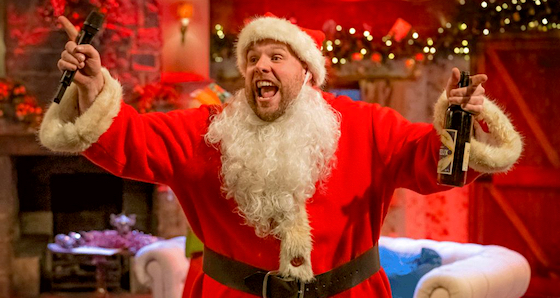
Here’s Santa to rekindle your festive spirit.
With alcohol.
This is now my fourth annual Christmas TV post, would you believe. I still feel like TV reviews are a fairly recent addition to this blog, but nope, it’s been four years. And this is, in a way, a vintage year, what with the Gavin & Stacey revival becoming the most-watched Christmas Day broadcast in something like 17 years; and, even more impressively, it was the only scripted programme to make the top ten TV broadcasts of the decade (the rest going to sporting events and one random episode of The X Factor).
As for whether it was any good, and what I thought of other stuff that was on… well, read on…

Doctor Who Spyfall
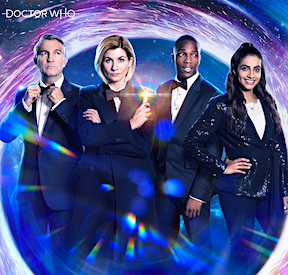 For the first time in 14 years, since the series returned, there was no Doctor Who Christmas/New Year special. Gasp! At least we got the first episodes of a new series, though — two slightly-longer-than-normal instalments (at 60 minutes each, which doesn’t feel that special when regular episodes are 50 minutes now). And a two-parter, too — the first of those since 2017. And a big two-parter at that, with big-name guest stars and big action sequences and big overseas locations.
Yep, this is Doctor Who with a bang — a marked contrast to last series, which mostly went for understated. Well, as understated as modern Doctor Who gets, anyway. But whereas series 11 had no two parters and no returning monsters and, as I say, a markedly calmer pace and tone, series 12 begins with the antithesis of all of that. In case you’ve not seen it I shan’t spoil the end-of-part-one reveal, which was a massive delight that I did not see coming (I guess someone learnt a lesson from last time that villain returned, when the production team basically spoiled it themselves before anyone else could). That was the highlight of an episode that moved at a mile a minute, not pausing to let you consider the logic of what was going on (which, yeah, was not faultless). But while it may not have been perfect, I’m glad to see a return for this fun, exciting version of the show. I didn’t find series 11 a total washout (I think my reviews as it was airing were mostly positive, even), but overall I felt like something wasn’t quite working.
Well, let’s be honest, what wasn’t working is showrunner Chris Chibnall. His episodes under previous showrunners Russell T Davies and Steven Moffat were never the very best (and I say that as someone who likes them more than most), but without their oversight to guide him, he seemed a bit lost. He’s a long-time fanboy of the show (somewhat famously, he appeared on a viewer feedback show in the ’80s to slag off the quality of the writing), and at times last series it felt like he was writing for the show as he’d loved it as a kid (that is to say, a bit slow-paced and old-fashioned). Now, possibly taking some of the criticism on board (or possibly just trying to mix it up), he’s attempting to emulate the whoosh-bang blockbuster-but-quirky style of RTD and Moffat. What he can’t grasp is their effortless-seeming slickness — when they rushed over something it was usually because “it makes sense if you think about it”, whereas Chibnall is trying to cover a logic gap; conversely, when there’s no gap to be hidden, he has characters mercilessly over-explain everything, I guess for the sake of anyone who’s just walked in.
So, not perfect, but I thought Part 1 was a blast nonetheless. Sadly, I was much less enamoured with Part 2 — a virtually nonsensical runaround through time, which didn’t seem to know what to do with everything that had been put in play, just throwing “more” at us until the Doctor basically said “time for the story to end now”, and so the baddies disappeared and that was that. Apart from an epilogue, which was quite intriguing — and dove head first into full-on mythology territory, something the series studiously avoided last year. Whether Chibnall’s got anywhere good to go with what he’s teasing, God only knows (I fear not, based on the evidence), but it’s a welcome bit of business that will hopefully jazz up the season to come.
Gavin & Stacey A Special Christmas
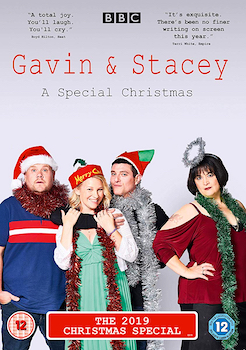 I won’t recap Gavin & Stacey’s ratings success (what with already having mentioned it at the start), nor will I touch on the controversy around its use of Fairytale of New York (I kind of get why people complained, but also, the song is the song). As for the episode itself, well, I thought it was masterful. It may be nine years since the last episode, but it was like they hadn’t been away. Not that they tried to ignore the passage of time — clearly, the best part of a decade had passed in the characters’ lives, and naturally changes had come with that — but the characters and performances felt true to their old selves, as if they’d never stopped playing them, with the rhythms and comedic style of the show fully intact. Some decade-later revivals feel like new shows — the writers have forgotten how to write it properly; the cast have forgotten how to play it right — but not this one. This was bang on what it should be. Tidy.
Dracula
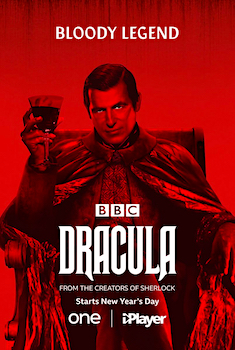 “From the makers of Sherlock”, declared the publicity for this new adaptation of the Victorian novel — so you’d be forgiven for thinking it was a present-day reimagining. But it wasn’t. Well, until it was.
This new Dracula is very much a tale of three parts, and not just because it was in three 90-minute episodes. While undoubtedly a serial, each episode was almost a standalone instalment, which was a structural trick I quite liked — it doesn’t feel like you’re watching one four-and-a-half-hour work broken into three by the necessities of the schedule, but rather three separate-but-connected works. And I really, really liked the first two.
The Rules of the Beast is what you most expect of Dracula: a spooky Transylvanian castle; “I don’t drink… wine”; mild little Englishman Jonathan Harker discovering terrible secrets… Of course, writers Steven Moffat and Mark Gatiss didn’t shy away from bringing a few affectations and twists to the piece, but I thought they all worked well. Claes Bang makes for a fantastic Dracula (a comment that holds true throughout the series), the rest of the cast were very good as well, and there were some proper horror bits — this adaptation was not, ahem, toothless.
The second instalment, Blood Vessel, dealt with Dracula’s voyage to England aboard the Demeter — a part usually more or less glossed over in other adaptations, as far as I know. But here Moffat and Gatiss spin it out into a full 90-minutes, kind of like a slasher movie set in a confined location, albeit we know whodunnit — so, naturally, there are other twists to be found. Again, I liked this a lot — the way it felt respectful to the source while also expanding and refreshing it; the interesting supporting cast; some very impressive production work (they built the entire ship on a soundstage!)
Then we get to episode three, The Dark Compass. There’s no way to talk about what happens here without spoiling it, so if you haven’t watched the series yet and are intending to, look away now. If you have watched it, you’ll know this episode jumps the action forward 123 years to 2020. And you also probably hated it, because it seems almost everyone did. My feelings were slightly more nuanced. In my opinion, its biggest mistake is that it’s a completely different show. Sure, we still have Claes Bang playing Dracula (and he’s still excellent), and we still have Moffat and Gatiss’s recognisable stylings in the dialogue and whatnot, but the entire setup has shifted. Judged in isolation, as a present-day-set reworking of the Dracula story as told in the novel, I don’t think it’s that bad. Maybe it’s a tad too cheesy (the scenes in nightclubs and whatnot do have a feel of “how do you do, fellow kids”), but it’s workable as a modern-day adaptation of the character and plot. The problem, as I say, comes from placing it as part of a whole alongside the reenvisioned-but-fundamentally-faithful adaptation we got in the first two episodes. In doing so, Moffat and Gatiss undermine the whole enterprise — it robs the first two-thirds of a fitting finale; and, by being so radically different to the style we’ve spent three hours getting used to, it doesn’t give itself a fair shake either.
And so many have judged the overall result to be a failure. Personally, I enjoyed enough of it that I was still entertained, but if they’d given us a ‘proper’ third episode to round it out then I think I may’ve loved it.
The Goes Wrong Show Series 1 Episodes 1-2
 Oh my, what a treat! Regular readers will remember how much I loved Peter Pan Goes Wrong at Christmas 2016 (“the best thing that was on TV during the festive season”) and its 2017 followup, A Christmas Carol Goes Wrong. When the gang missed Christmas 2018 I feared we wouldn’t be getting any more, possibly thanks to the negative-nelly reception in some quarters. But oh no, for 2019 they’re back with a vengeance: not a one-off hour, but a whole series of half-hour Plays Gone Wrong. Reader, I am cock-a-hoop with delight!
The first episode was another Christmas special; the second a historically-inaccurate WW2 thriller (set in 1961); the third aired on Friday but I’m currently saving it. It’s a half-hour parade of utter silliness — slapstick, wordplay, entirely predictable tomfoolery… but sometimes the total predictability of what’s about to go wrong is part of the fun (episode one begins with a blatant setup for a joke that isn’t paid off until the very end of the episode). And it’s exactly the kind of thing the whole family can watch and enjoy, whether you’re 6 or 66. I genuinely can’t remember the last time I was driven to tears of laughter. Actually, I can — it was Peter Pan Goes Wrong. Long live the Cornley Polytechnic Drama Society!
A mix of Christmas scheduling and non-Christmas stuff we just happened to catch up on.
Things to Catch Up On
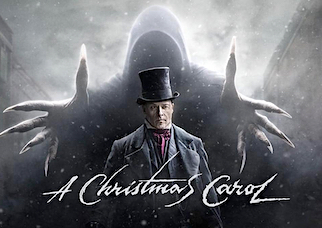 This month, I have mostly been missing the BBC’s new adaptation of A Christmas Carol, written by Peaky Blinders creator Steven Knight. I know it went down with some degree of controversy, but its revisionist, horror-tinged style looked right up my alley. Unfortunately, it was stripped over three nights, and because I knew I was going to be away for the third evening I didn’t start it. By the point I had enough time to make room for it, it was so long after Christmas that I wasn’t sure it was appropriate. Now, it’s January 12th and it’s definitely too late. Guess I’ll have to try to remember to watch it next year, then.
Next month… it’s a new year, so I’m sure there must be plenty of new TV. Although I kind of hope not, because I’ve still got tonnes and tonnes from last year to catch up on.
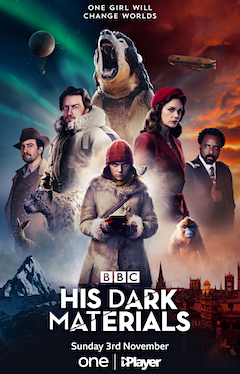 If I’d posted this column on time, this series would’ve just been getting underway. As it is, the final episode airs tonight. And, obviously, I’m quite far behind. I do intend to catch up, but I’m not entirely sure what I make of it.
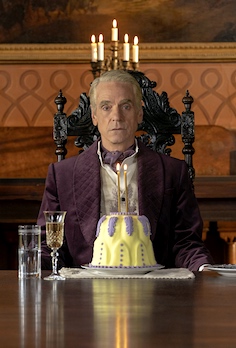 When I reviewed the premiere episode of this
 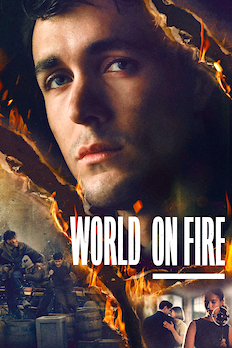 This is good enough that it probably would’ve been A Major Series if it had been made 15 to 20 years ago; heck, maybe even 10 years ago. Today… well, as my previous comment implies, it just doesn’t feel slick enough in the modern TV landscape. It has its plus points (the recreation of Dunkirk was suitably epic, at least compared to the low-key-ish earlier episodes, and Lesley Manville is always magnificent), and it’s done well enough to get recommissioned (thank goodness, because the finale left a tonne of stuff dangling as if it was a midseason episode), but I’ll be surprised if it ends up in the zeitgeist in the manner of, say, Downton Abbey. (Brief thoughts on episodes 1 and 2
  This ITV-produced BBC-aired crime drama is so popular that they recently recommissioned it for both a sixth and seventh series. Originally it took the form of two-parters adapted from novels, but for the past few series they’ve done original season-long six-episode storylines. For this run, the gang find themselves up against human traffickers, using Shetland as a waypoint to get slaves into the UK. Overall it’s not as engrossing or remarkable a story as the ones told in the
  This month, I have mostly been missing Jack Ryan season 2 — perhaps not the most high-profile show I could mention here (it’s on Amazon Prime, which never gets the same buzz as Netflix, however hard they try), but I enjoyed
  Now, that’s more like it! After the damp squib of alleged-finale
  Once upon a time it seemed implausible that anyone would ever try to play Poirot ever again, given how iconically (and thoroughly) David Suchet had embodied the Belgian detective during the 25-year series in which he starred. But I suppose it was inevitable that it would happen someday, and so following
  The BBC and Netflix teamed up for this £30 million CG animated adaption of Richard Adams’ children’s novel, perhaps most (in)famous for its 1978 film adaptation that is said to have traumatised all who saw it (I never have). I guess most of that money went on the all-star cast (seriously, the number of well-known names is mad — far too many to list here, so you can check out
  Normally I’d fold this into the comedy roundup (see below), but I enjoyed it so much I’m singling it out. As the title implies, this was a live edition of the long-running sitcom. What inspired that, I don’t know, but it paid off with the series’ best episode for years. The storyline didn’t necessitate the live-broadcast format in the same way as
 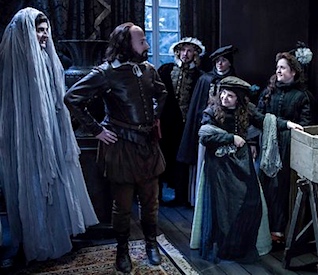 Also tickling my funny bone this season were a new Upstart Crow Christmas special, given a prime Christmas Day slot. It riffed off A Christmas Carol, which was unfortunate because I saw rather too many version of that this year (see below for another). I can’t say Crow’s take was particularly special, but I’m fond of the sitcom anyway so another episode is always welcome. The night before that (Christmas Eve, for those not keeping up), BBC One had one-off comedy-drama Click & Collect, with Stephen Merchant as a dad who must travel to the other end of the country to collect that year’s most-wanted toy for his daughter, accompanied by his irritatingly over-friendly neighbour. It’s the kind of fluff that would feel a bit too daft most of the time, but hits the right light-entertainment note at Christmas. A bit more cutting edge was Goodness Gracious Me: 20 Years Innit!, marking the 20th anniversary of the groundbreaking British-Asian sketch show with a special that used some of the series’ funniest sketches as examples to discuss what made the show so important. It was a subtly clever way to be both “greatest hits” clip show and retrospective documentary at once. Sadly, the repeat of an overlong old Christmas special that followed wasn’t quite as vintage. And, as I’m rounding things up, there were also seasonal editions of panel shows Mock the Week (the usual clips and outtakes), Have I Got News for You (more compiled clips), and Insert Name Here (actually a new edition! I’m fond of it and was happy to see back on our screens). Several others I’m yet to catch up on (Would I Lie to You, The Imitation Game), though I did see both new episodes of Mrs Brown’s Boys. I know I “should” hate it, but the Christmas Day one, at least, made me laugh.
 This Christmas, I have mostly been missing A Series of Unfortunate Events season three — the final one! Okay, it only came out yesterday, but I was with family and couldn’t watch it (ugh!) Not that I’d want to rush through it, anyway. By the time you’re reading this I’ll have made a start, and it’ll be reviewed next month. The same is true of Luther season four, which also started yesterday and which I’ll watch sometime later.
 The most recent season of Doctor Who went out, not with a bang, but with a whimper, in perhaps the most underwhelming “finale” the show has ever done. It wasn’t really a dramatic and exciting culmination of this year’s run of episodes, which is what a true “finale” is. Rather, it was just the last episode shown before the season… stopped. Fortunately, before that were two more episodes that proved this new era’s best stuff comes from its guest writers rather than its showrunner.
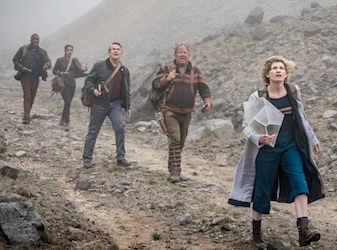 Typically for showrunner Chris Chibnall, it was a half-thought-through tale, with regular logic gaps and narrative dead ends, and none of the impact you expect from a season-ender. Kinder viewers may say that’s because there’s a New Year’s Day special imminent which is the real finale, but I think that’s just being optimistic. Certainly, the BBC haven’t seen fit to include the special in the season box set (even though it’s released a fortnight after the special airs), which I’m sure is partly a shameless cash grab, but also indicates its separate status.
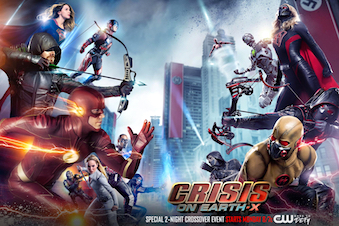 Whereas
  One day I’m going to watch all of Poirot from the start, but I happened to see these few episodes this month. They’re from the series’ early days (obviously), when episodes were an hour long and based on short stories (as opposed to the feature-length novel adaptations they did later). What’s remarkable is how different they are, structurally and tonally, from those later episodes, with which I’m more familiar. The feature-length ones each feel like a standalone movie, whereas these early episodes do feel like a TV series, with “case of the week” plots. For example, there’s a regular recurring cast (alongside the titular detective there’s his sidekick Captain Hastings, his housekeeper Miss Lemon, and trusty Inspector Japp), who all appear every week and each get some kind of subplot, even if it’s not tied to the main storyline — in one episode, while the other three are away solving a jewel theft, Miss Lemon has to hunt for her missing keys. And that’s another thing: there’s not always a murder. And there’s not always a pile of suspects, either — none of these episodes feature the famous “gather all the suspects in one room and explain what happened”-style finale, so synonymous with the series. So, in many ways it feels quite strange, but still entertaining.
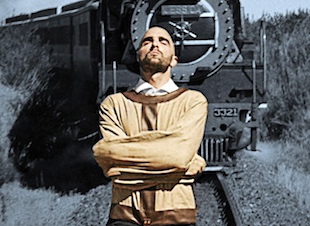 This month, I have mostly been missing Death by Magic — not a high-profile show, maybe, but a new Netflix thing that seems up my street. Other than that, I’ve been conspicuously failing to get around to a bunch of “box sets” (I hate calling digital collections “box sets” — there’s no “box” involved) that I’ve been meaning to get to for varying amounts of time: The Little Drummer Girl, Killing Eve, The Haunting of Hill House, Lost in Space, the Netflix years of Black Mirror, Ash vs Evil Dead, Chilling Adventures of Sabrina (which even added a new Christmas episode), Riverdale, Mindhunter, Inside No.9… Not to mention everything that’s on my long-term back-burner, like Breaking Bad, The Wire, The Sopranos, The Shield, The X Files, things that don’t begin with a definitive article… There’s no doubt many more that are currently slipping my mind, anyway. With an abundance of Christmas specials incoming, I guess whichever series I dive into next will have to wait until January.
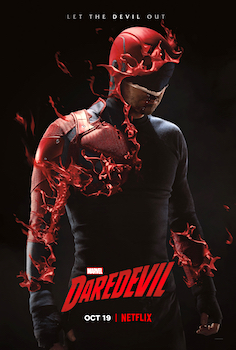 For the 11th season of Marvel Cinematic Universe TV shows on Netflix, we make a long-awaited return to the hero who started it all: the Man Without Fear… the Devil of Hell’s Kitchen… Matt Murdock, Attorney at Law… Daredevil.
 There’s a lot more to this season than that, though. New showrunner Erik Oleson has crafted a narrative for his 13 episodes that is better formed than most Marvel Netflix shows — heck, than most streaming series fullstop. It doesn’t seem to drag things out or go round in circles just to fill its episode count, but has a clear sense of pace and purpose. Okay, it’s still a streaming series — it still feels it can afford to devote entire episodes to things a network show might dash through in one sequence — but often that works to add depth. Spending a whole episode on Matt’s convalescence at the start of the season might seem indulgent, but it’s also important to his mindset for the rest of the season, which makes a big point of his morality, his religion, and his relationship with God — always a key aspect of the character, and foregrounded here without becoming objectionable to those of us with a less Catholicly inclined view of the world. The structural accomplishment really pays off in the final few episodes, too, with an array of surprising and game-changing twists and developments. My notes for later episodes were full of things like “shocking climax” and “oooh, twist!” and “ohhh shit!” At times Fisk feels genuinely unbeatable and you actually wonder how the heroes can win this one.
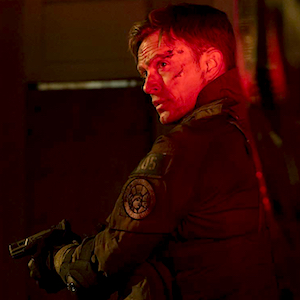 A good example of this is FBI Agent Benjamin Poindexter, who will turn out to be the villain Bullseye. Sorry if you think that’s a spoiler, but one of his first scenes shows off his mind-blowing marksmanship, so you ought to guess, really. In the comics, Bullseye has no backstory — he’s just a psychopathic killer — which is the kind of shit you can get away with if you’re being cartoonish. In the interests of psychological realism, however, Oleson wanted to give him one, to explore his origins, and they were basically free to do what they liked. They even spoke to psychiatrists and the like to make it genuinely realistic. I guess some may think this is unnecessary detail for what is still fundamentally a superhero-action show, but it has its rewards. It’s the same with giving the season a thematic weight to consider. According to Oleson, that was “fear” — how we’re all constrained by our fears and can’t be free until we face and overcome them. This applies to every character, hero and villain alike. Well, it’s a particularly pertinent choice for Daredevil, considering his sobriquet of “the man without fear”.
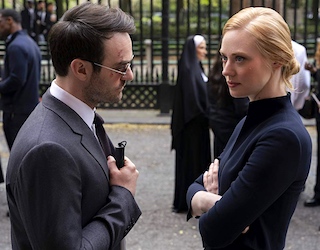 well-told story shouldn’t have to bear, and one that could have been easily remedied.” With Punisher season two on the way it’s possible this apparent plot hole could still be explained and/or retconned (whether they’ll bother is another matter, although Karen was a major character in Punisher season one so they ought to at least reference it), but it’s a shame it went unexplained in Daredevil itself.
 I let this post slip a week, so there are five episodes of Doctor Who to look back over. First up, the new team’s first historical adventure, Rosa (whew, it feels like more than a month since this aired!) I wrote
 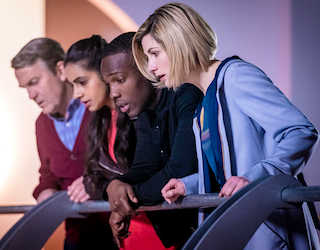 Episode six and seven say “no”. Well, a bit — the actual villain did survive the first. I still hope they’re going somewhere with this, because otherwise it’s very sloppy. Anyway, episode six itself, Demons of the Punjab, was one of the highlights of the season. Like Rosa, it sees the Doctor and co going into history and facing up to the real issues of the day, with the aliens popping in to add some spice rather than properly drive the story — like Rosa, you can imagine a not-that-different version of this episode without them. Preventing the Doctor from interfering and being ultra-heroic is certainly a change of pace from the “heroic god” version of the character we’ve had since the 2005 revival, but it’s not an unheard of vision — again, it harks back to the Hartnell era.
 I’ve never watched Inside No. 9 before, though I’ve always meant to get round to it. For those equally in the dark, it’s a comedy-horror anthology series from writers Steve Pemberton and Reece Shearsmith, aka half of the League of Gentlemen, with each half-hour episode a self-contained tale. The reason I’ve jumped in here was because this was a live Halloween special. For some reason I’m always intrigued by live TV drama (I even watched episodes of Eastenders and Coronation Street just because they were going out live), and Inside No. 9’s standalone nature made just dropping in feasible. Anyway, the episode itself was a typically playful endeavour — many fans switched off halfway through, genuinely duped by one of the episode’s tricks. The episode also managed to genuinely integrate the fact it was live, roping in a news broadcast from another channel and having one of the characters tweet. That means it played better live than it would, say, on iPlayer (where
  I always wondered if this day would come. As many (though I would guess not all) viewers must know, Shakespeare’s son Hamnet died in childhood. Not exactly traditional material for a multi-camera sitcom, so I wondered if the series would just never go there; equally, it’s by Ben Elton, co-writer of the famously tragic final episode of Blackadder Goes Forth, a work of unequivocal genius. And so in the final episode of this series, Go On and I Will Follow, Upstart Crow does go there… eventually, in the final moments of an episode that’s mostly fluff about theatre awards. It makes for a somewhat bizarre ending. Hamnet was never much of a character in the show, so while his passing’s effect on the characters is obvious, it has little meaning to us viewers. Then there’s the dedication to him at the end, which just reads like a spoof. The only bit that truly worked for me was the final lines: read in solemn voiceover, a passage by Shakespeare himself about grief. Perhaps that’s fitting. Perhaps if the whole episode had been about it in some way, then it would’ve worked — it’s part of why that Blackadder finale is so effective: the whole episode is about going “over the top”, or trying to avoid it, and so the unity of plot and theme and character and historical fact builds to an emotional gut punch of an ending. But rather than do that, Hamnet’s untimely end is just one scene tacked onto the end of some achingly obvious satire about something inherently vacuous. Well, maybe that was Elton’s point, but I don’t think the contrast was sharply enough drawn if so. Without that consistency across the whole episode, the ending just feels… odd. Ah well, at least we know there’s definitely a Christmas special to look forward to.
 This month, I have mostly been missing The Little Drummer Girl, the BBC’s new John le Carré adaptation from the makers of The Night Manager, their last (and very successful) John le Carré adaptation. As regular readers may know, I have a proclivity for saving series like this up and watching them back-to-back over about a week once they’re done — truly, I am of the Netflix generation. Dammit. Anyway, I’m looking forward to it, so expect me to get right on it and review it next month.
 The 37th season of Doctor Who begins with the show’s biggest soft-reboot since at least 2010; arguably, since 2005; arguably, ever. With a new showrunner comes a new broom, and so we have a new Doctor, a new TARDIS, a new set of companions — sorry, they’re “friends” now — new locations, new monsters, and a new style (thanks to a raft of behind-the-scenes changes, including a new effects company, swish new cameras and lenses, and a new aspect ratio). It’s the perfect jumping-on point… and it worked, with the premiere achieving the show’s highest ratings for a decade; or longer, depending how you count it.
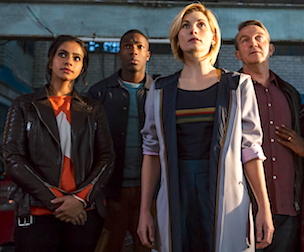 Indeed, even as it’s open-armed and newbie-friendly, Chibnall’s era already seems as Who-literate as you’d expect from such a long-time fan (somewhat (in)famously, as a teenager in the ’80s Chibnall appeared on TV criticising the then production team). His sense of what Who should be is at once indebted to the modern era (in particular the years of Russell T Davies, who I suspect may’ve been something of a mentor to Chibnall at one point) and also seeks to reintegrate elements long absent. For example, there’s the expanded TARDIS team, which calls to mind that of the series’ very first group of travellers; though whereas 1963 gave us a teenage girl and two middle-aged teachers, 2018 offers two teenagers and one middle-aged bloke. Such are the changing times. And for dedicated Whovians, the plot of episode two, The Ghost Monument, also had an air of early Hartnell serials, with its episodic trek across a danger-filled alien world. It was a brisk, entertaining 50 minutes, but stop and think about it too much and the cracks begin to show (read
 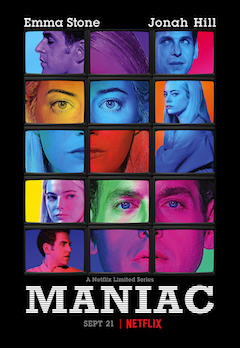 Netflix continue to blur the line between movies and TV with this limited series starring Oscar winner Emma Stone and Oscar nominee Jonah Hill, co-created and directed by Cary “director of the next Bond film” Fukunaga. Well, I mean, it’s a line that other TV producers have blurred plenty in the past — movie stars on TV is far from a new thing at this point, and there’s no doubting this is a TV series rather than a movie (it’s 6½ hours long, for one thing) — but, still. And they bend the rules of TV, too, with individual episodes running everywhere from 26 to 47 minutes. (Does that matter when Netflix’s release-it-all-at-once strategy means you choose how much to watch at any one time? Maybe not. But if you’re the kind to still watch one episode at a time, a word to the wise: I recommend double-billing the ultra-short should-be-one-episode pair of episodes 7 and 8.)
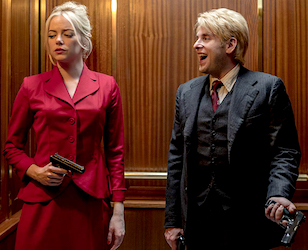 A significant amount of the series’ offbeat likability is down to idiosyncratic direction by Fukunaga, I suspect — the way he’s shepherded the visual creation of this world, the leftfield performance choices across the cast, and so on — but Emma Stone is definitely the MVP. While the aforementioned chemistry between her and Hill is important, and a lot of the rest of the cast get to excel at being quirky and funny, it’s Stone who really brings heart and emotion to the piece, making it more than just a zany fantasy.
 Having just
  This month, I have mostly been missing Informer, BBC One’s new thriller. Well, it only started on Tuesday, so that’s fair enough, right? I guess I’ll save it up and see how it goes down — I’ve managed to avoid wasting time on a few initially-promising-but-ultimately-poorly-received series with this method; though, equally, it led to
 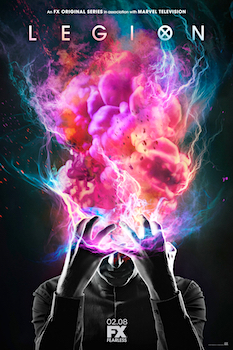 The first live-action X-Men TV series is only tangentially connected to either the movies (there are a couple of vague nods) or even the original comic books (apparently the title character is the only thing taken from them), but instead creator Noah Hawley (the man behind the Fargo TV series) has been allowed free rein to do as he pleases. Turns out that’s a massive mindfuck; a series that’s focused on atmosphere over narrative coherence, full of crazy visuals and abstruse plotting. If you’re thinking, “that sounds a bit Lynchian,” then yes, this is probably the nearest thing we’ll ever get to a David Lynch version of the X-Men.
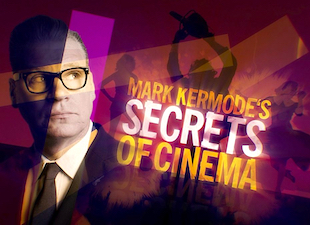 Mark Kermode is our guide for this BBC Four documentary series that seeks to expose the inner workings of movie genres and what makes them so effective. Co-written by Kermode and encyclopaedically knowledgeable movie guru Kim Newman, the series certainly has the chops to take on such a task. Focusing on one genre per episode, it makes an interesting choice to start with romcoms — a massively and enduringly popular type of movie, unquestionably, but one that’s often ignored by serious film analysis. That makes it the perfect choice for a series such as this, because, as the episode makes clear, the whole point of the genre is to do something very, very hard (produce a funny movie with loveable characters) and make it look easy (and when they succeed, that’s why it gets ignored!) As insightful as the first edition was, I preferred the second one, focusing on heist movies, though that’s purely because it’s a genre I’m more disposed toward.
 As I mentioned when I reviewed
  This month, I have mostly been missing Picnic at Hanging Rock, the new adaptation of Joan Lindsay’s novel (perhaps better known from Peter Weir’s 1975 film adaptation), which is currently halfway through airing here in the UK. It looks up my street, so I intend to binge it at some point. Also, Keeping Faith, the BBC Wales drama that was such a hit on iPlayer they’re finally giving it a run on BBC One proper. Oh, and the third series of Unforgotten is also partway through, and they’ve gone and revived The Bletchley Circle too. Who says summer is a quiet time for TV?
 Another year, another divisive Doctor Who Christmas special. It’s the third time that the Christmas Day spectacular has to serve double duty by writing out the programme’s lead actor, and it follows the format set out by David Tennant’s swan-song The End of Time and Matt Smith’s finale The Time of the Doctor by being a very inward-looking fan-focused edition. I’m not sure that’s the right tack to take on Christmas, quite frankly, when the show’s playing to a wider audience of more casual viewers than normal. Former showrunner Russell T Davies and immensely popular leading man Tennant had earnt that kind of indulgence by the time they exited, and the series was pretty much the biggest thing on British TV at the time, so most of those so-called “casual viewers” were actually regular watchers of the show anyway. I’m not convinced exiting showrunner Steven Moffat and departing Doctor Peter Capaldi are quite in the same position.
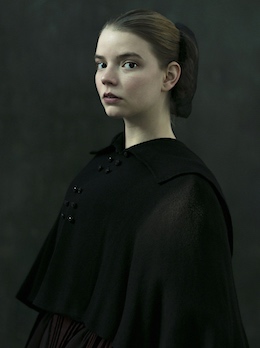 The BBC’s two-part adaptation of Jessie Burton’s 2014 bestseller promised to be a supernatural treat, though in that respect the trailers were somewhat misleading. Set in 17th century Amsterdam, it’s about a girl who marries a wealthy merchant, but finds his strict and secretive household is not all she’d hoped. He buys her a dolls house as a wedding gift and she commissions a miniaturist to produce items for it, but she soon starts to receive things she didn’t order — things which suggest the miniaturist somehow knows people’s secrets, and can possibly see the future… In actuality, The Miniaturist is more of a period drama, albeit one with lashings of Gothic that were right up my street. It was beautifully made, with a fantastic eye on the costumes and locations, and cinematography that evoked painting of the era. There were strong performances too, particularly from Anya Taylor-Joy (yes, her out of
 “Oh God, I’d forgotten,” says one character early in the first instalment for almost 15 years of BBC Two’s pitch-black comedy series. He’s been confronted with some other returning characters, but I have to say that the sentiment kind of sums up my reaction to a lot of this revival, in two ways: firstly because I had to keep rummaging in my memory to make connections back to a series I haven’t watched for a decade and a half, and secondly because the hilarious grotesquery of the League came crashing back. Revivals of once-great comedies can be a mistake — they’re often little more than an exercise in nostalgia; and this one is certainly aimed at fans, as the vast majority of it continues or riffs off stuff from before — but, in spite of that, it still felt fresh and edgy, not like a gang of middle-aged men reliving past glories (the other thing that goes wrong with revivals). So it was all really rather good, and it’s gone down very well too. Officially it’s a 20th anniversary special rather than a fourth series, but might we see more? I think it would be welcomed.
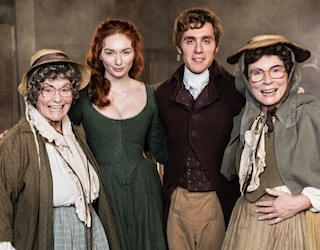 So much comedy, so much of it a passable time-killer that I have little else to say about. The highlight was probably 300 Years of French and Saunders, an excellent celebration of the comedy double act, reminding us of many of their greatest hits alongside a few nice additions. It made me want a whole highlights series repeating all their many hilarious film spoofs. Shakespearean satire Upstart Crow offered a neat riff on one of the better-remembered storylines from modern Christmas classic Love Actually, which it executed with surprising subtly (or, at least, I had to point out the references to my fellow viewers, which was followed by half-an-hour of scouring through Richard Curtis’ film for the relevant scenes). I enjoyed the pilot for Tim Vine Travels Through Time back in
  Black Mirror series four was released last Friday, but I haven’t even watched series three yet. Well, I did only watch
 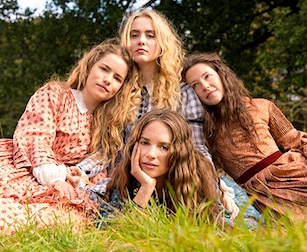 I may’ve watched 26 different programmes, but there’s still an awful lot I’ve missed. Like the BBC’s new three-part adaptation of Little Women — I’ve never read it or watched another version, so here’s my chance to get cultured. Less worthy but no less lovely, there’ve been a couple of Great British Bake Off specials featuring contestants from the BBC years even though it’s now on Channel 4. Gasp, indeed. And despite that long list up above, there’s still a handful of comedy specials I’ve got to catch up on, like Not Going Out, Would I Lie to You?, and even some not featuring Lee Mack. There’s bound to be something else I’ve forgotten — I’ll have to go through the Radio Times, again…
 After its move to Channel 4, which was as controversial as it was high-profile, I wasn’t sure if I was going to continue bothering with GBBO. What would it be without Mel and Sue’s effortless chemistry and terrible puns, or Mary Berry’s kind twinkle? But cake always wins, and after a few weeks I caved and am now gradually catching up (I mean, too much cake in one go is bad for you, right?) Unsurprisingly, it’s still fundamentally the same show. Sandi Toksvig and Noel Fielding seemed like random picks for the new hosts, but they have the right mix of daftness, quick wit, and empathy to fill Mel and Sue’s shoes, and function surprisingly well as a double act too. New judge Prue Leith is no Mary Berry, but she can do the job. The judging’s hardly the most important bit anyway, is it? That’s the bakes, and they’re as incredible as ever. It’s funny that something that was a tough technical challenge back in series two or three is now just an unmentioned part of something much grander and more complicated. GBBO may have been slightly tarnished by the whole kerfuffle of changing networks and losing popular presenters, but the revised show has turned out to be less a soggy bottom and more a batch of ten almost-but-not-quite-identical sweet treats.
 One thing that’s actually been improved by the Bake Off franchise’s move to C4 is this companion show. It always felt a bit cramped before, squeezed into a half-hour when it wanted to be longer, and not allowed to really cut loose with its content because, although it was on the more irreverent BBC Two, it was still on The BBC. In its new home, it’s only been extended by about seven or eight minutes (presumably a result of C4’s commitment not to cut the series’ running time — the old 30 minutes of material plus ads wouldn’t quite fill a 45-minute slot) but that seems to have made the world of difference, allowing it room to breathe and throw in a few more gags. It’s got distinctly cheekier too, which befits host Jo Brand and the kind of guests they have on (mostly comedians). And somehow it never stops being funny how people at home have messed up baking.
 I get the impression ITV’s cold-case thriller was a bit of a surprise success when
 This month, I have mostly been missing the return of Star Trek to TV, in the form of Discovery. It’s “a Netflix original series” everywhere outside the US and Canada, so I imagine I’ll catch up during one of my irregular Netflix subscriptions (after the whole first season is available to binge, of course). Also missed: Rellik, the new thriller with a Memento-esque structure from the writers of
  Season premieres of Thrones are typically concerned with re-establishing where all the major characters are, and maybe moving their stories on a few baby steps to indicate where they’ll be headed this season. Dragonstone is no exception. So where Arya had arrived in Westeros to kill the Starks’ enemies, now she’s slaughtering them by the hallful; where Bran and Meera were headed for the Wall, now they’re passing through it; where Jon and Sansa were taking charge in the North to be ready for war, now they’re preparing for war; where Sam had headed to the Citadel to research important stuff, now he’s in the Citadel researching important stuff; where Cersei had taken the Iron Throne and Jamie had his doubts, now Cersei’s preparing to defend her kingdoms and Jamie has his doubts; and where Dany was sailing for Westeros with her hodgepodge military, now she’s landed in Westeros. The wonder of Thrones is that it can take such scene-setting and turn it into riveting television.
 In fact, the only thing letting the side down was the well-publicised cameo by Ed Sheeran. If you have no idea who Mr Sheeran is then perhaps his appearance was fine — his acting was no worse than dozens of other bit players they’ve had on the series before now. But if you do know who the singer-songwriter is, his appearance was like being served a cheese board accompanied by cheese crackers with a glass of melted cheese and extra cheese on the side. After devoting what felt like a significant chunk of time (but was probably mere seconds) to him singing a song, Arya trots over to him and goes, “I don’t know that one,” and he says, “it’s a new one,” which he may as well have followed up with, “which you can hear in full on my new album, available now everywhere music is sold.” I have no idea if he has a new album out, or if that song would be on it if he did, but that’s how it felt.
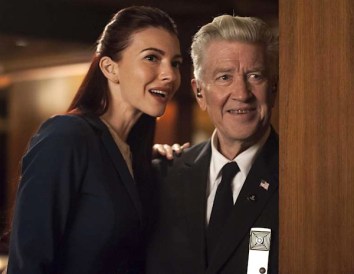 Slowly, very slowly, the disparate strands of Twin Peaks Mk.III seem to be coalescing into a coherent, connected story… which is almost more frustrating, in its own way. By that I mean: when it was wilfully obscure, you just kind of went with it — it was Lynch being Lynch, and you had to let it wash over you and allow your feelings to do the deduction about what it was supposed to signify. Now that the plot is beginning to crystallise into something your rational brain can make sense of, it feels a mite slow in getting there. I mean, while Dougie Jones is less annoying than he used to be (helped in no small part by the brilliance of Naomi Watts), I still miss real Coop, and we’re running out of episodes to spend time with him again. Was MacLachlan just feeding us a red herring when he said he’d “almost forgotten how to play him”? Because he hasn’t played him yet! Ach, we’ll see. It remains defiantly its own thing, and at least we can trust Lynch is going somewhere with it — even if we may never be able to work out precisely where that somewhere was…
 Based on a webcomic from the creators of Penny Arcade and funded through Kickstarter (so far it’s only available to backers), this miniseries-cum-pilot (the five short episodes total 58 minutes) takes place in an alternate Prohibition-era America, where “Prohibition” instead refers to the ban on production of automatons — sentient robots. Ex-copper Sam Regal (Basil Harris) and his partner Carl (voiced by Doug Jones), an automaton, now make ends meet as PIs, doing the usual PI thing: photographing cheating spouses. Only this time the run-of-the-mill case leads them into a murderous web that encompasses speakeasies, robo-gigolos*, underground automaton-hating gangs, and a twist ending (natch).
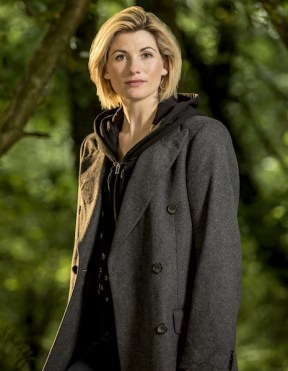 The biggest TV news this fortnight was undoubtedly the BBC’s announcement of the 13th actor to take the title role in Doctor Who. (Well, the 14th. Well, the… oh, let’s not get into that.) As you surely can’t have missed, it was Jodie Whittaker, who is a woman! Gasp! Naturally, there was some outrage. After all, it makes no sense whatsoever that an alien being who can travel in time and changes his whole body every time one gets worn out could possibly, during that change, switch from being a man to a woman, even if it’s been established multiple times within the series itself that such a change is possible. It’s just not plausible, is it?
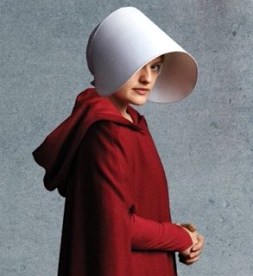 This month, I have mostly been missing The Handmaid’s Tale. It belatedly started airing on this side of the pond at the end of May, but it slipped my mind so much that I didn’t even mention it in
  100Films.co.uk