
Charlie Kaufman & Duke Johnson | 90 mins | streaming (HD) | 2.35:1 | USA / English | 15 / R

Written and co-directed by Charlie Kaufman (of Being John Malkovich, Eternal Sunshine of the Spotless Mind, and so on), Anomalisa tells the story of Michael (David Thewlis), a depressed customer service expert who perceives everyone else as looking and sounding the same — until he meets Lisa (Jennifer Jason Leigh), whose uniqueness to him immediately attracts Michael.
If you hadn’t noticed, Anomalisa (a portmanteau of “anomaly” and “Lisa”, not “anonymous” and “Lisa” as I’d assumed) is an animated movie. Although an everyday kind of drama that would be largely achievable in live-action, it uses the form to its advantage when depicting the central conceit, giving every character who isn’t Michael and Lisa the same face and having them all voiced by the same actor (Tom Noonan). For me, this was the most effective part of the movie. It’s a really neat way of executing the concept of not being able to tell people apart. Noonan is the film’s real star, too, voicing “everyone else” in a way that makes them sound plausibly unique but also all the same, a tricky balancing act that he nails.
The one thing that did disappoint me about it was this: the inability to distinguish people is a genuine medical condition, but the film tackles it only as a signifier of Michael’s depression rather than as an issue some people live with. Conversely, I presume that’s a pretty rare condition, whereas depression and isolated feelings are increasingly widespread, so the film perhaps has more to say in that regard. Ultimately, I shouldn’t be criticising a film for not being about something it’s not trying to be about (even when I thought that was what it was going to be about).

As for the rest of the movie… hm. It takes an age to get going, but once it does there are a few funny scenes (the “toy” shop; the hotel shower; Michael struggling with his room key), and who’d’ve thought a puppet movie would have one of the more realistic sex scenes in the movies? Especially as it pulls that off without becoming laughable thanks to Team America. More pertinently, it gradually unfurls a sometimes touching story about isolation and love. However, by the time it reaches the happy-sad ending (one person’s life seems to have been transformed; the other continues to be miserable), I wasn’t sure what it all signified. Maybe the line that “sometimes the lesson is there is no lesson” is very relevant.
So, some good stuff, but that long slow open takes getting over, and I’m not sure what it all meant.

 It’s The Julian Assange Movie, in which Benedict Cumberbatch dons a lanky white wig and an Australian accent to portray one of the most significant figures of our times, whether you like it or not.
 so I can’t really judge her. The same goes for the rest of the cast, where a wide array of starry and/or acclaimed names (Peter Capaldi, Laura Linney, Anthony Mackie, Alexander Siddig, Dan Stevens, David Thewlis, Stanley Tucci, Carice van Houten (who’s big in Belgium,
  They don’t seem to have any particular significance in themselves — they’re not famous, nor more wronged than anyone else — so maybe they’re just meant to be emblematic? As in, Laura Linney’s character is there to be representative of Assange’s effect, not the only person it happened to. Or was she the only person fired, and that’s the point? The film doesn’t make it clear.
 he’s the honourable one; the one who’s actually invested in the site’s supposed values. But then the film is partly based on his book, so he would be the good guy.
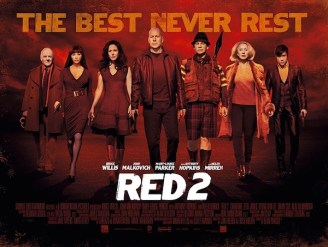 The “retired, extremely dangerous” agents return for more of the same.
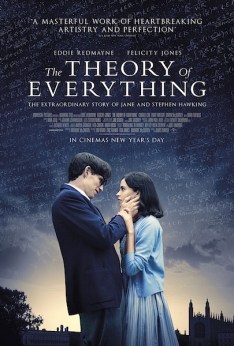 Biopic of genius cosmologist Stephen Hawking and his wife/caregiver Jane, on whose memoir the film is based.
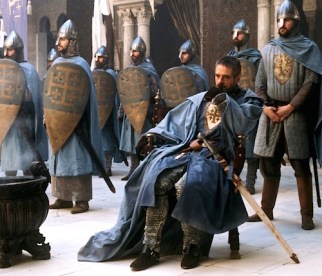
 Ridley Scott’s Crusades epic is probably best known as one of the foremost examples of the power of director’s cuts: after Scott was forced to make massive edits by a studio wanting a shorter runtime, the film’s summer theatrical release was so critically panned that an extended Director’s Cut appeared in LA cinemas before the end of the year, reaching the wider world with its DVD release the following May. The extended version adds 45 minutes to the film (and a further 4½ in music in the Roadshow Version), enough to completely rehabilitate its critical standing.
 A strong cast bolsters the human drama that sometimes gets lost in such grand stories. Bloom is a perfectly adequate if unexceptional lead, but around him we have the likes of Michael Sheen, David Thewlis, Alexander Siddig, Brendan Gleeson, and Edward Norton (well done if you can spot him…) There are even more names if you look to supporting roles. Most notable, however, are the co-leads: both Liam Neeson, as the knight who recruits Balian, and Jeremy Irons, as the wise advisor when he gets to Jerusalem, bring class to proceedings, while Eva Green provides mystery and heart as the love interest. Of everyone, she’s best served by the Director’s Cut, gaining a whole, vital subplot about her child that was entirely excised theatrically. It’s the kind of thing you can’t imagine not being there, and Scott agreed: it seems the chance to restore it was one of his main motivators for putting together a release of the longer version.
 (I’d wager
  100Films.co.uk