
Christmastime: it’s all about family, food, presents, sweets, more food, alcohol, a bit more food, some kid who was born a while ago, and also food. But most of all, it’s about TV. Oh dear Lord, so much TV.
Is it just me and my insanely broad and forgiving interests, or has there been more TV to watch this Christmas than normal? Every day in our copy of the Radio Times’ “legendary” Christmas issue seems alight with highlighter markings, an endless parade of visual entertainment to… well, to add to the list of stuff to watch later on catch-up, mainly. But I did actually watch some of it, and here is what I thought.

Doctor Who The Return of Doctor Mysterio
 The controversial Steven Moffat era of nuWho is headed towards its end, but before his final full series next year there’s this penultimate Christmas special. There have been 12 of them now and they’re always divisive: some people think they’re too Christmassy, some that they’re not Christmassy enough; some like that they’re standalone adventures suited to a broader audience, but other times they’re not standalone enough… Each year presents a different mix of these elements, pleasing some and alienating others.
This year, Doctor Who taps into the zeitgeist by finally tackling superheroes, with a riff off classic-styled Superman. Personally, I thought it was the best Christmas episode for years — a fun, exciting, witty, entertaining romp, that captured the tone of the superhero genre but gave it Doctor Who’s typical gently-irreverent spin. The tone was perfectly suited to Christmas day.
But was there too much or too little Christmas in it? Well, I’ve seen critics put it in their top five Who Christmasses purely because there wasn’t much Christmas, and Letterboxd fans write it off purely because there wasn’t enough Christmas. When you’re the showrunner of Doctor Who, you literally can’t win.
The Great Christmas Bake Off
 “Proper Bake Off” came to an end with what felt a little like a joyous celebration of the series’ unique charms, as well as its highs and lows. Considering the two festive episodes were shot before the controversial move to Channel 4 took place, that’s almost impressive. It’s hard to imagine GBBO without the alchemical mix of Mel, Sue, Paul and Mary, and these episodes showed the format on fine form. And then the BBC went and snuck in that perfectly-edited 60-second tribute to the whole thing. Who knew a programme about baking cake could be so good? Or make some people so emotional…
Bob Monkhouse: The Last Stand
A few months before his death in 2003, Bob Monkhouse gave a one-off gig to an invited audience of fellow comedians which has apparently gone down in comedy legend. I’d never heard of it before, but there you go (I had the same thing with the joke in The Aristocrats and its alleged notoriety, so I won’t say I’m surprised). This was the first time that gig has been televised in a full form, and I confess I’d paid it no heed until it was trending on Twitter. Thanks for that recommendation, Twittersphere, because it’s a very good show: Bob tells jokes, tells stories, and interviews Mike Yarwood in front of an admiring audience who aren’t aware it’s probably his last gig — but, with that hindsight, the themes of sharing a lifetime of wisdom and finding contentment are obvious.
Grantchester
 The problem with Christmas specials of on-going shows is you’re sometimes left with on-going plots that must be acknowledged, and Grantchester has a particularly major one with its hero’s life-long love leaving her husband while pregnant. If you don’t watch, it’s set in the ’50s, so this kind of behaviour is the greatest scandal known to man. The special leaps into this without even the by-your-leave of a “previously on”, so I pity any non-regular viewers made to sit down in front of it on Christmas Eve. But it’s an immensely popular show with big ratings, apparently, so who can blame ITV for wanting it in their always-underpowered Christmas schedule? I imagine it fared better than Maigret did the next night…
Revolting Rhymes
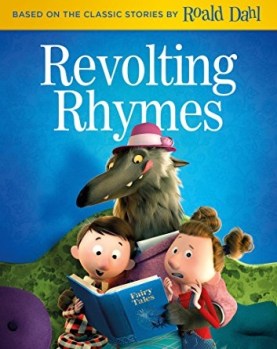 The team behind previous Christmas specials The Gruffalo, Room on the Broom, and Stick Man returned this year with a two-part adaptation of Roald Dahl’s retold fairy tales. Dahl’s individual tales have been intelligently remixed into a pair of stories (one per part, of course), with a framing narrative that actually contains a neat cliffhanger twist at the end of part one. Maybe it just caught me unawares because I wasn’t expecting it, but I thought it was very effective. Anyway, Dahl’s witty rhyming couplets are retained, delivered by a well-chosen cast, not least Dominic West as a smooth, charming, suspicious Wolf. The claymation-ish visual style of the CG animation is familiar from the makers’ previous films, but as polished and well-applied as ever, with some beautiful details. It makes for a visual treat to equal the excellent words they have to work with.
The Witness for the Prosecution
 I thought And Then There Were None was one of the highlights of last year’s Christmas schedule, turning Agatha Christie’s most popular novel into a dark, slasher-movie-esque thriller, the first English-language adaptation to remain faithful to the original’s glum ending. I don’t know if this year’s Christie is faithful to her original short story, but it isn’t to the play adaptation (at least as I know it from the excellent film version). It seems to have deliberately followed in And Then There Were None’s tonal footsteps, shooting for a bleak tale about the fundamental darkness of human nature. Instead it’s diluted the satisfying mystery and removed the tension, with a two-hour running time feeling ponderous and its cinematography trying for atmospheric but instead hitting murky. Some people don’t approve of Christie-esque narratives that make a guessing game out of murder, but if you want you can always write your own gloomily realistic meditation on the nature of evil rather than co-opting her work into a grim treatise.
Comedy round-up
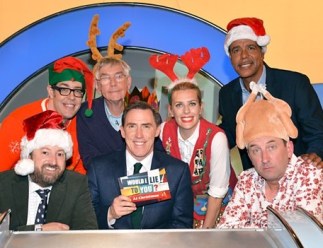 There’s always a lot of special episodes of comedy shows on over Christmas, with varying degrees of success. I thought this year’s Live at the Apollo was woeful, with Romesh Ranganathan the only truly bright spot in 45 minutes of flat observations and unfunny daftness. Conversely, Would I Lie To You? proved to be as good value as it always is, thanks to the quick wit of the regulars plus Tom Courtenay’s affected (I presume) dodderiness. Mock the Week’s clip show format was perhaps improved by the fact I didn’t watch the most recent series, while the imperfect Insert Name Here makes a nonetheless welcome return. In the comedy gameshow sub-genre, Alan Carr’s 12 Stars of Christmas was the kind of trash I’d never watch at any other time of year yet stuck with for all five hours and kind of enjoyed (helped by watching on catch-up and fast-forwarding the really repetitious bits), while the David Walliams-fronted Blankety Blank revival provided as much charm as the format ever has. And normally it wouldn’t count as comedy, but this year’s run of Celebrity Mastermind began with CBBC puppet Hacker T. Dog as a contestant. At least he didn’t win.
Things to Catch Up On
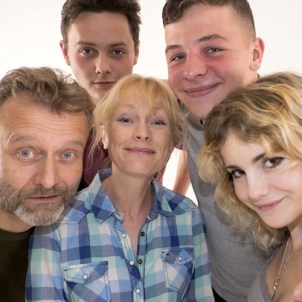 My list of Christmas TV to get round to remains pretty extensive. There are all those regular series that insert a seasonal episode — The Grand Tour (that’d be the episode with Richard Hammond’s ice cream comments that you might’ve heard about), Paul O’Grady: For the Love of Dogs, Yonderland (not that I’ve watched any of the latest series), QI, Inside No.9 (which I’ve never watched before, but the special sounds good)… And there are series coming back for one-offs too, like Outnumbered and Jonathan Creek (which I loved during its original run but have been surprisingly lax about watching in the last few years). I’ve also not yet caught a couple of this year’s animated adaptations, Michael Rosen’s We’re Going on a Bear Hunt and Raymond Briggs’ Ethel & Ernest (which I figure will count as a film). Documentaries like Lego’s Big Christmas and West Side Stories also sit on my list, likely to get forgotten. There’s Sky1’s big Christmas Day drama, The Last Dragonslayer (which I wager I’ll also count as a film); Eric Idle’s comedy musical science thing, The Entire Universe; and Charlie Brooker’s 2016 Wipe, which apparently manages to make 2016 funny (I’ll believe it when I see it). Finally, I always save Channel 4’s The Big Fat Quiz of the Year for either New Year’s Eve or New Year’s Day, because that just seems more appropriate.
Whew!
(And to think: this doesn’t even mention all the big specials for things I don’t watch.)
Still To Come
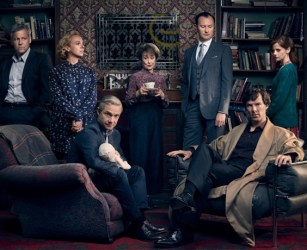 Things are beginning to wind down now… but as far as TV schedulers are concerned “Christmas” lasts until at least January 1st, so there are a couple of big hitters left. The biggest of all is a new, potentially final, run of Sherlock. No idea what the quality will be like, but expect lots of handwringing on social media and huge ratings either way. On New Year’s Eve there’s stage adaptation Peter Pan Goes Wrong, which I’ve heard such good stuff about it’s probably going to be a disappointment, and a Winnie-the-Pooh documentary that I’m going to watch even though it’s presented by Alan Titchmarsh. Next week (which you could argue is still part of Christmas if you have very forgiving holiday leave) sees lots of police shows kicking off, if that’s your thing: Death in Paradise, Endeavour, Midsomer Murders, No Offence, Silent Witness, Unforgotten… even Brooklyn Nine-Nine. And in the sphere of movies on TV, tonight you can choose between the network premiere of Captain America: The Winter Soldier on BBC One at 8:30pm and the subscription premiere of Captain America: Civil War on Sky Cinema at 8pm, an almost-double-bill (I mean, you can’t watch them both live) that I only note because of the “huh, well there you go” factor.
Next month… Sherlock returns.
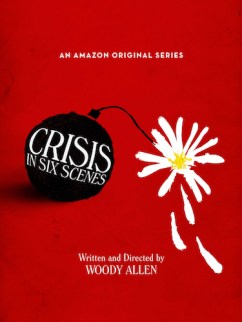 When Amazon started making a serious effort to challenge Netflix in the field of streaming original series, one of their early moves was the headline-grabbing signing of Woody Allen to create his first TV series. As has since become clear, Allen didn’t know what he was letting himself in for. To summarise his comments from various interviews (and read between the lines a little), it seems he had a view of TV that’s about 20 years out of date, and thought he’d be able to dash off something suitable between two of his annual movies. At some point he obviously realised how much more sophisticated TV has become, and coopted a movie idea he’d had on the back-burner to expand into a short TV season. Allen’s been vocal about how miserable he found this process, but I’m not sure if he’s aware that he made a rod for his own back: he essentially made three movies in two years instead of his usual two. It probably would’ve been wise to swap out one of the films for the TV series, but you get the sense that, despite having been shown TV’s burgeoned respectability, Allen’s still something of a film snob. Rather than the potential of TV coming as a revelation to him, he’s declared he won’t be making any more.
 But enough of the form — what of the content? This is not prime Allen, that’s for sure. At times it makes for uncomfortable viewing, when it’s hard to tell if it’s half improvised or if half the cast are just a bit doddery (and I suspect it’s the latter). Other bits do work, though, and while it isn’t massively rewarding it is amusing at times. Even less assured are some broadly political points that it seems like Allen is trying to tap into, or maybe it’s just incidental. He appears to be using the series’ 1960s setting as a mirror of the present: the plot concerns a twenty-something anti-government protestor, and there’s lots of talk about unnecessary wars, campus demonstrations, young people staging protests, rights for women and black people, etc, etc. At first blush these parallels are all well and good, but I’m not sure they develop into much more than wry observations. The best I can take from it is a result of the particularly farcical last episode, where it may be that he’s trying to say people in general should be more aware and active, like the young are — to walk the walk of political change rather than just talking the talk.
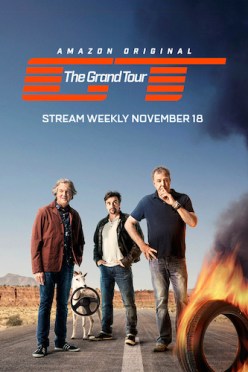 Another big gun in Amazon’s streaming mission, their £160 million “Not Top Gear, Honest” original series kicked off last month to widespread positive reviews and, apparently, big ratings (relatively speaking). I’m not really a ‘car person’, but like millions of others I wound up watching Top Gear during the height of the Clarkson / Hammond / May era for all the other hijinks. I thought it was going off the boil a bit even before their semi-enforced departure — I didn’t even get round to watching their last series. They come to Amazon after a short break (a long break for us, but it takes time to film these things, so, short break), and I think reinvigorated — possibly by the rest, possibly by the change of management, possibly by the huge budget.
 The Doctor Who spin-off that
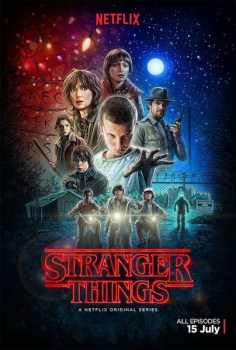 Hype — it’s a funny old business. It’s hard to have avoided hearing something about Stranger Things, Netflix’s summer hit that went down like gangbusters, its ’80s nostalgia perfectly calibrated to target the kind of people who run entertainment news websites these days — just to be cynical about it. Or truthful. Then there came the backlash, which attested there was nothing more to the show than those callbacks and tributes; a hollow experience of copying and “hey, remember this? That was good, wasn’t it?”
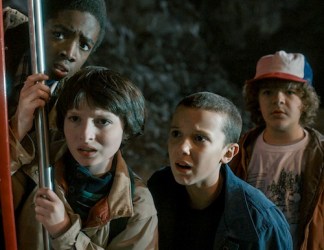 Without wanting to get into spoiler territory (despite what the media would have you believe, not everyone has Netflix all the time and not everyone watches every new zeitgeisty series immediately. Apologies if you write for an entertainment site and I’ve just given you palpitations), everything comes together nicely for a barnstorming pair of climactic episodes. For my money, the penultimate chapter is the best one: with a bunch of revelations out of the way (some of them easily guessed but finally confirmed), the series kicks off a run of long-awaited fan-pleasing events (as in many a drama, it takes this long for everyone to finally start talking to each other; also, the bit with the van!) The finale is less accomplished, with some characters wandering around for a bit in a way that feels designed to pad the running time. Still, it’s a satisfying conclusion… to season one, anyway.
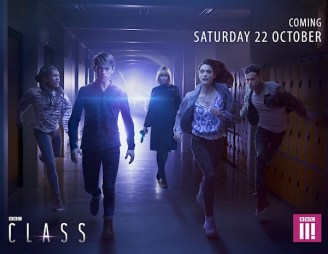 Ten years to the very day since the launch of the original dark, sexy BBC Three Doctor Who spin-off,
  The CW’s raft of superhero shows restarted on UK TV this month. I’ve given up on Legends of Tomorrow and am still not joining Supergirl (though I got hold of the opening episodes, co-starring Superman, to maybe make time for at some point); but, five seasons in, Arrow has me suckered for the long-haul, and The Flash tempted me back with the intrigue of adapting Flashpoint. I’ve never got on the bandwagon with Flash, which attracted a lot of praise during its first season that I simply didn’t agree with, leading it to outshine Arrow in ratings and people’s affections. Arrow has long been off the boil, and season five certainly hasn’t got it back up to temperature so far, but The Flash had plenty of issues of its own. It’s not problem free now, but I actually really liked the first couple of episodes of the new season. It’s still a long way from the top tier of TV superheroes (Netflix have that sewn up), but it’s likeable.
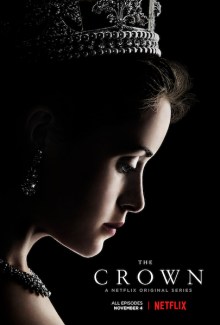 This month, I have mostly been missing the most expensive TV show ever made*, Netflix’s much-discussed The Crown. I don’t know if they’ve been pushing it as much in the rest of the world as they did in the UK, but it certainly felt like it was everywhere… for about a week, as is usually the way with Netflix series. Also missed: the equally-discussed Netflix-exclusive new run of Black Mirror. Both of these are because I don’t keep up a permanent Netflix subscription, but between them, the forthcoming Gilmore Girls revival, and the Series of Unfortunate Events remake in January, I will be signing up again late in December (using the free month voucher they had in the Radio Times, hurrah!)
 100Films.co.uk