2024 | Week 3

I’ve already covered Barbie, so here are the other films I watched during Week 3…

  • Chicken Run: Dawn of the Nugget (2023)
  • The Best of the Martial Arts Films (1990)


    Chicken Run:
    Dawn of the Nugget

    (2023)

    Sam Fell | 98 mins | digital (HD) | 2.00:1 | UK, USA & France / English | PG / PG
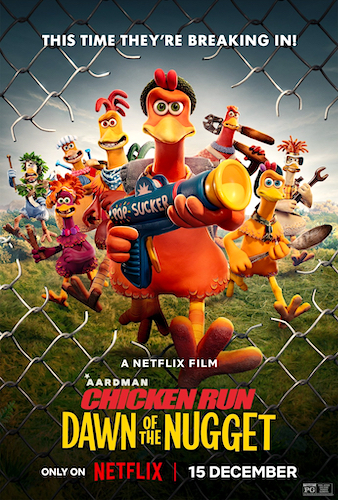
    Chicken Run: Dawn of the Nugget

    I wasn’t a massive fan of the original Chicken Run (it’s not bad, but it pales in comparison to some of Aardman’s other works, not least any of the main Wallace & Gromit films), so I approached this belated sequel more with trepidation than excitement. You could interpret a near-quarter-century wait as indicative of holding off until someone had a genuinely good idea; or you could see it as a shameless effort to generate a hit by tickling childhood nostalgia through a return to a cult-ish favourite. Behind-the-scenes stories of unnecessary cast changes (the primary offender: apparently 55-year-old Julia Sawalha is now too aged (for a voice role as a hen?) so they recast her with 51-year-old Thandiwe Newton) did nothing to bring confidence.

    Anyway, setting all that aside, the end result is… adequate. I’d probably have said the same of the first one, so maybe that’s no surprise. But even that felt like it had some moments that stood out, whereas this is just unrelentingly fine. The plot concerns the chickens having to break in to a farm — yes, it’s taken 25 years to have the genius idea of “what if we just reversed the story?” The immediate point of reference for break-in-type movies nowadays is the Mission: Impossible franchise, which features a noteworthy heist a least once per film. And so Dawn of the Nugget references M:I, and the gag goes thus: “It’s an impossible mission.” “Uh, shouldn’t it be the other way around?” That level of underscored bluntness is about the level all the humour operates at: unsubtle, unsophisticated, unvaried, and uninspired.

    The arguable exception in terms of quality is the animation itself. That it’s done well almost goes without saying — Aardman remain one of the masters of stop-motion (Laika having challenged them in recent years) — but, on the other hand, there’s nothing to wow you. It’s more than competent, slick and expressive and so on, but there’s no imagery you’ll take away; no shot or sequence that would make you reach for adjectives like “beautiful” or “stunning”.

    Aardman’s next major effort (it’s a bit unclear if it’s a feature or a short, as it’s going direct to the BBC in the UK) is a return to Wallace & Gromit, planned for later this year (no doubt a Christmastime treat, as usual). As I said, I prefer that duo, so I’m always excited to see them back on the screen. I just hope that belated sequel (almost 20 years since their feature film and 16 since their last short) doesn’t feel this… unnecessary.

    3 out of 5

    Chicken Run: Dawn of the Nugget is the 5th film in my 100 Films in a Year Challenge 2024.


    The Best of the Martial Arts Films

    (1990)

    aka The Deadliest Art

    Sandra Weintraub | 91 mins | Blu-ray | 16:9 | USA & Hong Kong / English | 18
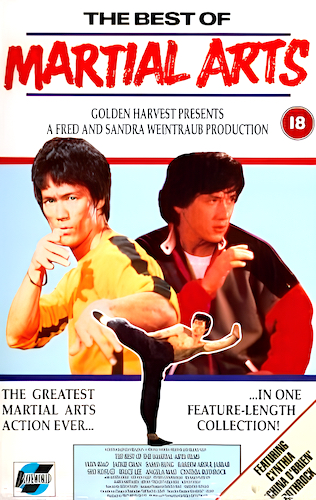
    The Best of Martial Arts UK VHS cover

    Originally released on VHS (back when martial arts films weren’t necessarily easy to come by for consumers, so I’m told), this hour-and-a-half selection of fight scenes is now available remastered / reconstructed in HD, with all the film clips also in their original aspect ratios, included on Eureka’s When Taekwondo Strikes Blu-ray. Hurrah!

    It is, primarily, a showcase for fight scenes. Whole uninterrupted sequences are shared, which is at least the right way to do it if that’s what you’re doing; unlike modern TV clip-show compilations, which seem to feel the need to cut the scenes to shreds and intersperse them with inane talking heads. There are a few interviews included here too, but rather than early-career comedians who’ll discuss anything for a paycheque, the interviewees include stars Sammo Hung, Jackie Chan, Cynthia Rothrock, and, er, Keith Cooke; plus Robert Clouse, director of Enter the Dragon.

    “Best Of” is more a titling convention than a fact, considering the film was co-funded by Golden Harvest and so only has access to their back catalogue, thus skipping entirely the output of the legendary Shaw Brothers studio. But then, what else would you expect them to call it — Some Pretty Good Bits of the Martial Arts Films We Had the Rights to Include? Of course, however you look it, 90 minutes of fight scenes is a pretty hollow experience — there’s no narrative; even the interviews offer mostly behind-the-scenes anecdotes rather than, say, a “history of the genre” approach. But if that’s all you expect, you get your money’s worth, because there are some stunners in here.

    Mind you, as well as being mostly limited to one studio, it’s also limited by time: having been made in 1990, there’s no Jet Li, no Donnie Yen; Van Damme is mentioned as a “rising star”… You could do the whole film over again — several times — if you were able to encompass a wider spread of studios and stars. But nowadays there’s no need: we can just head to YouTube for our out-of-context fight scene fulfilment… so long as you know what you’re looking for, anyway. That will always be the value of a curated experience.

    3 out of 5

    The Best of the Martial Arts Films is the 6th film in my 100 Films in a Year Challenge 2024.

  • December’s Failures

    I habitually begin this column with the theatrical releases I’ve missed in the past month, but this time the true biggest failures are of a more personal nature: all the films I should have watched to complete my 100 Films in a Year Challenge. Those were, in alphabetical order, A Brighter Summer Day, Pierrot le Fou, Shoah, and, er, any five gialli. The monthly “failures” category of my 100 Films Challenge will continue in 2024, so now those failures from last year have the possibility of helping me complete next year by being the “failure” I watch in January. It’s almost beautiful… though, to be honest, I suspect I’m more likely to watch one of the following…

    Well, probably not any of this first batch either, seeing as many of them are still in cinemas and the others won’t hit disc or streaming for a while. The one that nearly tempted me out of the house this month was Godzilla Minus One — I was interested anyway, but then the glowing reviews sealed the deal. Unfortunately, its limited release coincided with a busy weekend of pre-Christmas family stuff and then a busy week of pre-Christmas work stuff, so I just didn’t have the opportunity. If it weren’t such a limited release, maybe it would still be showing and I could go in January; but it was limited, it isn’t still showing, and now I’ll have to wait for a disc release.

    Also on the big screen… Charlie and the Chocolate Factory prequel Wonka — the first review I saw called it charmless, the second thought it was a magical delight, and now I don’t know what to think (I could look up the consensus, of course, but where’s the fun in that). Yet another end for one version or another of the DC cinematic universe in Aquaman and the Lost Kingdom — I rather enjoyed the first one, so remain cautiously optimistic for the sequel. Talking of final (again) films, there was also Hayao Miyazaki’s latest last movie, The Boy and the Heron. Then there’s the latest from Michael Mann, Ferrari, and from Taika Waititi, Next Goal Wins. Closing things out, part two of French swashbuckling adaptation The Three Musketeers: Milady, which I’m hoping they’ll do a two-film 4K release when it reaches disc, as they skipped 4K for part one outside of France. Oh, and rom-com Anyone But You, which I might watch one day if it garners a good rep.

    The concept of major end-of-year releases extended to the streamers, too. Netflix led with Zack Snyder’s latest, a rejected Star Wars pitch turned into an attempt to launch a standalone universe, Rebel Moon — or, rather, Rebel Moon: Part One, as apparently it was just too big to be contained to a single film. Or perhaps that should be Rebel Moon: Part One – The Neutered First Cut, as apparently this is a PG-13-friendly version ahead of an R-rated director’s cut due… in the future. This cynical viewership-grabbing idea (because why not just go straight to the uncut version?) seems to have backfired, with the film receiving poor reviews from all but the die-hard Snyder fans. It still sits on my watchlist, but then what doesn’t?

    Trying to cover all bases, Netflix also released Bradley Cooper’s latest shot at an Oscar, Maestro; starry apocalyptic drama Leave the World Behind; and some family-friendly fare in the shape of belated sequel Chicken Run: Dawn of the Nugget. Amazon’s offering was comparatively paltry. Well, there was an Eddie Murphy Christmas comedy that I didn’t even bother to note down the title of, so little am I likely to watch it. Elsewise, there was odd-looking animation Merry Little Batman. Its visual style put me off, but then I thought I’d watch it anyway as it’s just a short, but it turned out to be a full-length feature, and now… well, now it’s January. Who wants to watch a Christmas film in January?

    Talking of Christmas films, the other streamers were at it too: Disney+ served up kid-friendly heist comedy The Naughty Nine alongside aviation-themed “Christmas miracle”-style short The Shepherd; and Sky boasted as Originals the latest Richard Curtis effort, Genie, alongside John Woo’s much-anticipated Silent Night. They also had the UK debut of May December, but I don’t think that’s very Christmassy. Nor was MUBI’s How to Have Sex, or Apple TV+’s action-comedy The Family Plan. The latter is a Mark Wahlberg vehicle, so I’m prepared for it to be weak, but the trailer amused me nonetheless. As for more reliable action stars, Disney+ also debuted Timeless Heroes: Indiana Jones and Harrison Ford, a feature-length documentary directed by DVD special features producer extraordinaire Laurent Bouzereau (but sadly not included on the latest Indiana Jones disc release), which is billed as follows: “From his humble beginnings as TV bit-player to his era-defining turn as a blockbuster action movie star and onto his more introspective roles that followed, this new documentary tracks the storied career of Harrison Ford.” Ford’s great and Bouzereau’s work is typically fab, so that’s gotta be worth a look, right?

    In terms of films making their streaming debut, Sky are back to dominance, with a December that also featured everything from hit blockbusters Spider-Man: Across the Spider-Verse and The Super Mario Bros Movie to flop blockbuster Shazam! Fury of the Gods; British flicks from grey-pound plays Allelujah and The Unlikely Pilgrimage of Harold Fry to action-comedy Polite Society; plus foreign-language action in Sisu and The Three Musketeers: D’Artagnan. The best the others could offer were warmed-over releases like the Extended Version of Spider-Man: No Way Home on Netflix (the never-released-on-disc cut with 12 minutes of extra stuff). As always, there was plenty of back catalogue stuff to fill out my watchlists, but as they all tend to come and go, and jump about from one service to the other now and then, I won’t be listing them all.

    Instead, let’s jump on to the never-ending drain on my finances: disc purchases! (Ah, I love ’em really, otherwise I wouldn’t do it.) It’s a shorter list than normal this month, for whatever reason, but that doesn’t mean it’s devoid of exciting titles. For example, there’s The Warriors on 4K from Arrow — a release I’ve been hoping for for years, although was slightly less keen on after Australia’s Imprint put the film out a while back in a very good 1080p set. Fortunately (or unfortunately, depending on your point of view), Arrow’s and Imprint’s releases have completely different special features, so I’ll be keeping both sets. Another one I’d been waiting for was The Exorcist — not in desperation for any kind of decent release, but because they’ve been putting out multiple different configurations of its 4K discs over the past couple of months, and in December they finally released the one I wanted. Finally on 4K, I updated and/or completed my Indiana Jones, Guillermo del Toro, and Christopher Nolan collections with, respectively, Indiana Jones and the Dial of Destiny, Guillermo del Toro’s Pinocchio, and Oppenheimer.

    Regular Blu-ray was a tale of two labels, with the latest releases from Eureka, HK gambling thriller Casino Raiders and samurai epic The Fall of Ako Castle; and the almost-latest-but-not-quite releases from Radiance (their actual December releases are currently somewhere in the postal system, having only dispatched to me this week), including French “noirish drama” Le combat dans l’ile, Umberto Lenzi’s poliziottesco Gang War in Milan, and a box set of Polish sci-fi / horror / “satirical, surrealistic apocalypse” fantasies directed by Piotr Szulkin, The End of Civilization. It sounds like the kind of stuff I have no idea if I’ll actually like or not, but it’s definitely worth a go (just don’t ask how much I spend on stuff that seems “worth a go”…)

    Archive 5, Vol.2

    I have a backlog of 442 unreviewed feature films from my 2018 to 2021 viewing. This is where I give those films their day, five at a time, selected by a random number generator.

    Today: musical comedies from ’41 and ’51; murder mysteries from ’33 and ’73; and an animated film that changed the Oscars.

    This week’s Archive 5 are…

  • Royal Wedding (1951)
  • A Study in Scarlet (1933)
  • Chicken Run (2000)
  • The Last of Sheila (1973)
  • Road to Zanzibar (1941)


    Royal Wedding

    (1951)

    aka Wedding Bells

    Stanley Donen | 93 mins | digital (SD) | 4:3 | USA / English | U

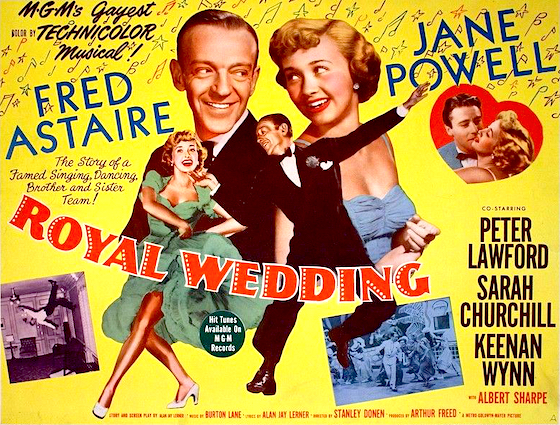
    Royal Wedding

    Cynically, I assumed this US production was designed as a cash-in to a news event, most likely the wedding of Princess Elizabeth (i.e. the Queen) and Philip. Although those are indeed the eponymous nuptials, they actually took place several years earlier, in 1947; and in the UK, for its initial release the film was retitled Wedding Bells so audiences wouldn’t think it was a documentary about the real event. So much for my modern cynicism.

    The actual plot is semi-biographical, inspired by the real-life dance partnership of the film’s star, Fred Astaire, and his sister Adele, and who she went on to marry. Here the sister is played by Jane Powell (almost 30 years Astaire’s younger) as the duo take their successful Broadway show across the ocean to London in time for the royal wedding. Such window dressing aside, the plot that unfurls is run-of-the-mill, with both siblings finding themselves in romantic entanglements, and the songs are unmemorable too. The object of Astaire’s affection is played by Sarah Churchill, daughter of Winston Churchill, which adds a bit of fun trivia, at least.

    There is one noteworthy highlight: a set piece in which Astaire dances up the walls and across the ceiling of his hotel room, an effect that’s achieved seamlessly — there’s no wobble or what have you to give away the trickery, and Astaire’s choreography helps hide the behind-the-scenes technique too. There are one or two other neat bits if you’re a fan of dance-y musicals, but, on the whole, this is a thoroughly middle-of-the-road Astaire musical — not bad, just no more than adequate.

    3 out of 5

    Royal Wedding was #180 in my 100 Films in a Year Challenge 2021.


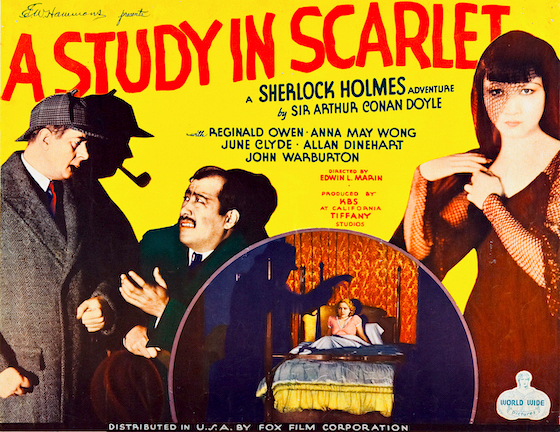
    A Study in Scarlet

    (1933)

    Edwin L. Marin | 72 mins | Blu-ray | 1.33:1 | USA / English | U

    A Study in Scarlet

    For some reason, cinema has a long history of taking the titles of original Sherlock Holmes stories but then producing an entirely new plot underneath. A Study in Scarlet — the very first of Sir Arthur Conan Doyle’s Holmes works — seems to be a particularly afflicted tale. It features the first meeting of Holmes and his roommate / sidekick / chronicler, Dr Watson, but I think there are two adaptations that actually show this — and, ironically, neither of them are actually called A Study in Scarlet (one is the debut episode of Sherlock, A Study in Pink, and the other is the first episode of the Russian series The Adventures of Sherlock Holmes and Dr. Watson, which is called Acquaintance). According to IMDb, “the Conan Doyle estate quoted the producers a price for the rights to the title and a considerably higher price to use the original story” — perhaps they did that all the time, hence my observed phenomena.

    Obviously, this ‘poverty row’ effort is one such example of title/story mismatch: this so-called adaptation stars Sherlock Holmes and Dr Watson… and that’s where similarities to the novel end. The pair don’t even live at 221b Baker Street — for no apparent reason, it’s been changed to 221a. Did the filmmakers just misremember one of the most famous addresses in literature? Having only paid for the rights to the title, the producers hired director Robert Florey (the Marx Brothers’ The Cocoanuts; Murders in the Rue Morgue) to write a new story, and actor Reginald Owen — who stars as Holmes — wrote the dialogue. Owen hoped this would be the first in a series of Holmes films starring himself. It wasn’t.

    Physically, Owen isn’t anyone’s ideal image of Holmes, but his actual performance is adequate. Much the same can be said of the whole film: it’s an entertaining-enough 70-minute crime romp, with enough incident to create a brisk pace, and a use of the rhyme Ten Little Indians that makes you wonder if Agatha Christie saw this movie before she published And Then There Were None six years later (or is it just a coincidence? The audio commentators spend a good deal of time chewing it over). Given second billing behind Owen is bona fide Chinese-American movie star Anna May Wong, even though she has relatively little screen time. She makes her mark, though, with a role that doesn’t simply conform to racial stereotypes (possibly an unintended side effect of her late casting rather than genuine progressivism by the filmmakers, but sometimes you gotta take what you can get).

    This particular Study in Scarlet is a long way from being a definitive Sherlock Holmes movie, but for fans of ’30s detective flicks, it’s nonetheless a likeable little adventure.

    3 out of 5

    A Study in Scarlet was #206 in my 100 Films in a Year Challenge 2021.


    Chicken Run

    (2000)

    Peter Lord & Nick Park | 84 mins | digital (HD) | 16:9 | UK, USA & France / English | U / G

    Chicken Run

    I’ve always enjoyed Aardman’s work. I grew up watching the Wallace & Gromit shorts on TV, and have seen all of their feature output — except their first. I’m not sure why it’s taken me 20 years to get round to Chicken Run. I guess when it was originally released I had grown out of “kid’s movies” but not yet grown back into them; but since then, to be honest, something about it never particularly appealed to me. It certainly has its fans: it’s still the highest grossing stop motion film ever; there was a push to get it an Oscar Best Picture nomination, the failure of which led to the creation of a category it could’ve won, Best Animated Feature (trust the Academy to shut the door after the horse had bolted); and when Netflix recently announced a sequel, there was much pleasure on social media.

    So, finally getting round to it, would I discover what I’d been missing all along? Unfortunately, no. I thought it was fine. In no way did I dislike it, but nor did it charm me in the way of my favourite Aardman productions. It’s rather dark for U-rated film — it doesn’t mince its words or imagery about the fact the chickens are being killed — and that contributes to some particularly effective sequences, like when our heroes end up inside the pie machine, or a suitably exciting climactic action sequence. There are some reliably decent gags along the way, too.

    I’m sure I’ll watch the sequel. Maybe I’ll like it more. But, I confess, the fact they’ve now announced a new Wallace & Gromit movie for the year after does have me even more excited.

    3 out of 5

    Chicken Run was #148 in my 100 Films in a Year Challenge 2020.


    The Last of Sheila

    (1973)

    Herbert Ross | 120 mins | digital (SD) | 1.85:1 | USA / English | 15* / PG

    The Last of Sheila

    I’d never even heard of this before Rian Johnson mentioned it as an inspiration for Knives Out 2. Co-written by Anthony Perkins (yes, Norman Bates from Psycho) and Stephen Sondheim (yes, the famous musical composer), The Last of Sheila is a murder mystery firmly in the Agatha Christie mould — despite the writers’ pedigree, there are no significant horror elements (even the deaths are, at worst, on the PG/12 borderline) and certainly no song-and-dance numbers (excepting a magnificently inappropriate song over the end credits, sung by Bette Midler). Apparently Perkins and Sondheim used to host elaborate scavenger hunts for their friends in the late ’60s and early ’70s, and they adapted them into a screenplay at the suggestion of a guest, Herbert Ross, who produced and directed the film (seems only fair).

    Further inspiration came from their professional lives and acquaintances, because the potential victims and suspects are all actresses, agents, and the like, gathered for a Mediterranean cruise aboard a producer’s yacht. He proposes they play a game about secrets and gossip — but clearly one of the secrets in play is too big, because someone winds up murdered. A well-constructed mystery is unfurled throughout the film, although its execution is a little variable: a fun, very Christie-esque first half gives way to long talky scenes in the second, as characters stand around and explain the plot to each other. But when that plot is as good as this — with some nice surprises, plus motives dark enough to give it a little edge — it feels churlish to object too strongly.

    4 out of 5

    The Last of Sheila was #186 in my 100 Films in a Year Challenge 2021.

    * IMDb says it was given a 15 on video, but the BBFC say it hasn’t been rated since 1973, when it got an AA. The BBFC site is crap nowadays; IMDb will accept any old junk users submit. You decide. ^


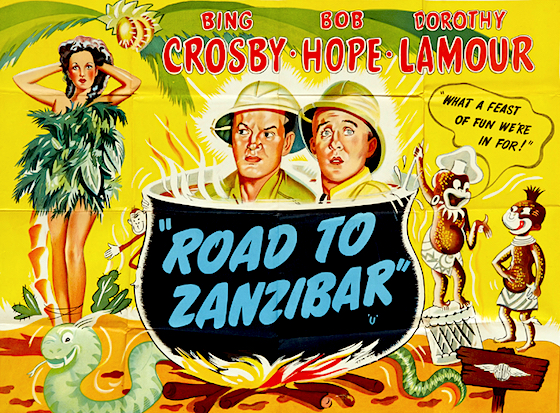
    Road to Zanzibar

    (1941)

    Victor Schertzinger | 87 mins | DVD | 1.33:1 | USA / English | PG

    Road to Zanzibar

    The second in what became the Road To… series — though it was never intended as such. What ended up becoming Road to Zanzibar was initially an original feature, first offered to Fred MacMurray (this before his roles in the likes of Double Indemnity and The Apartment) and George Burns (an actor I’m not particularly familiar with). After they rejected it, apparently someone at Paramount remembered Road to Singapore had done relatively well, and that Bob Hope and Bing Crosby seemed like a good pairing, and so they were offered it.

    As I wrote in my last review of a Road To film (which was over 11 years ago?! Jesus…), if you’ve seen one Road To film then you’ve a fair idea what to expect from any other — essentially, a suitably daft bit of fluff and fun. This one’s a bit thin — on plot, on gags, on everything — but it skates by on the charm of Bob and Bing, joined, as ever, by Dorothy Lamour. The only serious problem is the same as Singapore: dated depictions of African stereotypes. It kind of gets away with it by being a spoof of “African adventure”-type movies, but maybe that’s me being kind with hindsight. Either way, the bit where the tribe’s African dialogue is subtitled with contemporary American vernacular is one of the film’s more amusing gags.

    3 out of 5

    Road to Zanzibar was #110 in my 100 Films in a Year Challenge 2019.