
With the series finale of The Americans on UK TV tonight (at 12:05am on ITV4), I thought I’d bring my monthly TV review forward a bit and share my thoughts on the final season of a series that, for those of us who found it, will be sorely missed.
Plus! The latest episodes of Westworld — much more widely discussed than The Americans, but does it deserve the attention? And quick thoughts on the end of Archer Vice and another series finale, that of Peter Kay’s Car Share.

The Americans Season 6
“It’s the end of the world as we know it, and I feel fine.”
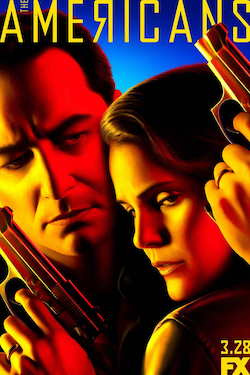 That song was released in 1987, the same year as the final season of The Americans is set. The show has typically avoided featuring well-known music in favour of cult favourites and obscurities, but R.E.M.’s classic would’ve been an appropriate number to hear during one of the series’ trademark music montages in the finale. (That said, it did contain both Dire Straits and U2, so they weren’t above using big hits.) Maybe it would’ve been a bit on the nose, but it certainly was applicable: it was the end of the world as the characters knew it, and so too for fans, as six incredible seasons came to a final end. But do we feel fine? That depends how you define “fine”. The show will be missed terribly, but goddamn if it didn’t stick the landing to cement itself as one of the greatest TV series ever made.
It all began with a good setup for a concluding season: finally, after years of disagreements about their jobs and their personal lives and how both should be handled, the world conspired to pit the Jennings directly — and secretly — against each other. The Americans isn’t usually so overt in its plotting, so it’s no surprise that the scenario doesn’t play out as a straightforward spy-vs-spy battle. But it certainly tests the lead characters both professionally and personally, and to an extent they haven’t been before, forcing them to question every one of their loyalties: to their employers, to their country, to their friends, to their family, and to each other. To say too much about how it unfolds would be a spoiler, obviously, but it has some clever ways of challenging even the characters’ most deeply-held beliefs.
Most spy-based TV shows ratchet up the scale or stakes season after season — I’m thinking of Spooks, where in season two they spent a whole episode debating the ethics of performing an assassination, but a couple of years later that was just routine first-act stuff; or 24, where season one was just about someone trying to assassinate a presidential candidate, but by season four it was about multiple coordinated attacks including bombing trains, kidnappings, melting nuclear power stations, shooting down Air Force One, a nuclear missile strike… The Americans has, if anything, gone in the opposite direction: there’s still spy stuff there, of course, and it’s as grounded as ever, but it’s increasingly taken a backseat to the characters’ relationships. Maybe this is just a matter of perspective, but I felt that in earlier seasons the spy stuff was the focus, 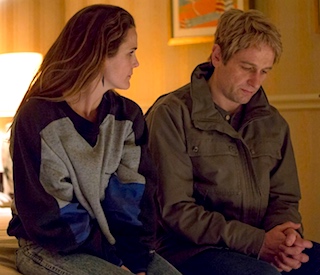 given texture or sometimes affected by the relationships, whereas by this point the relative importance and impact seems reversed. I guess you could still enjoy it as “just a spy show”, but I don’t think you’d want to — the stuff you’re invested in has shifted. That was always the programme’s genius, of course: it’s not about spies who happen to be married, it’s about marriage through the prism of people who are spies.
For a while it almost doesn’t feel like the end (the season opener even begins with a montage set to Don’t Dream It’s Over), but then comes episode five, The Great Patriotic War, and suddenly years of stuff is brought to a head: the status quo and people’s values are flipped, then re-flipped; there are massive changes and developments — but all managed with The Americans’ usual understated believability. As the fallout begins in episode six, Rififi, you can’t tell where it’s going to go. It keeps the focus squarely on Elizabeth and Philip’s relationship, as if we could ever forget the show is, at heart, all about that, not the big spy stuff. The season isn’t just engrossing on a thriller-ish “will they get caught?” level, but also on an emotional “will they stay together?” one. A big part of this is the performances by Keri Russell and Matthew Rhys, both of whom are so, so good — the subtleties and nuances of their performances, and the way the series trusts them to convey what’s needed with just silence at times, is phenomenal. That they haven’t received more recognition for their work here is a crime against television.
The penultimate episode, Jennings, Elizabeth, is where things really begin to come to a head, and Jesus, the tension! It’s hair-raising. It’s intense. It leaves your nerves shattered, not just during the programme but after it too. I’m glad I saved the season up to watch on consecutive days, because I don’t know how I’d’ve spent a week with that hanging over me. And as for the finale, somewhat ironically titled START… I’ve been worried about how they’d end the show basically since it started. I spent that last hour covered in goosebumps and with my heart in my throat, and it was kinda perfect. It didn’t give me everything I wanted, but perhaps it gave me all that I needed. 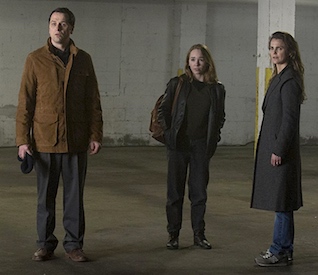 As a commenter on the A.V. Club’s review put it, “I have to say it is of greatest compliment that the show both wrapped up the story and left me wanting more. It felt equal measure satisfying and gut wrenching.” That’s exactly how I felt. Also, it contained what I have no qualms about calling one of the greatest scenes in TV history: just a handful of characters talking in a garage, and it was absolutely stunning, the true culmination of the entirety of the show.
If you haven’t been watching The Americans (and viewing figures suggest you probably weren’t) then do yourself a favour and rectify that at some point — a 75-episode masterpiece awaits. Without doubt, one of the greatest TV series ever made.
Westworld Season 2 Episodes 5-7
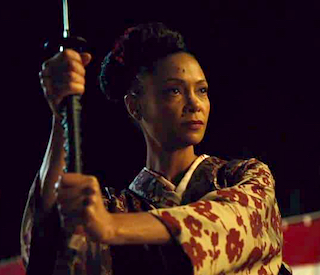 I wrote last time about how Westworld season one took a few episodes to warm up but eventually got me completely hooked. Season two is so far failing to pull the same trick — over half the season has felt like it’s still just getting underway to me. And then, in the blink of an eye, episode seven, Les Écorchés, catapults us from “just getting started” to “endgame” over the course of an hour. I’m not sure how I feel about all that. There’s some exciting and interesting ideas in the mix here, but what also feels like a bit of flailing around. Maybe it’s all in aid of a Big Surprise? Season one certainly had a few of those in its final episodes — they were the most talked-about part of the show in the end, I’d wager — so I assume they’re going to end up shooting for the same.
One thing they’ve definitely copied from that freshman run is the multiple timelines. Back then it was a secret, and it ultimately paid off, but now it’s out in the open, and I’m not sure what it’s for. I mean, there are some very basic uses in play — “how does Character X get from that situation in the past to this situation in the present?”, “where have half the cast gone between the past and now?” — but that seems a bit… facile. As I say, I hope they’ve got some surprise to pull out of their sleeve — something to do with how the hosts struggle to differentiate between memories and current events, perhaps — but it’s a long time coming…
Things to Catch Up On
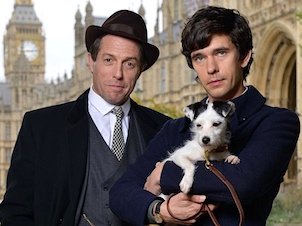 This month, I have mostly been missing A Very English Scandal, the Russell T Davies-penned drama about the real-life case of a ’60s politician and his secret homosexual lover. It seems to have gone down exceptionally well, and anything by RTD is always worth watching. Other than that, it feels like there’s a bunch of stuff on streaming I’ve been meaning to get round to and still haven’t. That list would keep us here all day, though.
Next month… the MCU’s other black superhero returns to Netflix.
 The first screen adaptation of a novel by acclaimed British sci-fi/fantasy author China Miéville, The City & the City is a police procedural set in the unique location of twin cities Besźel and Ul Qoma, which occupy the same geographical space but inhabitants (and visitors) are forbidden from seeing the city they’re not in. When I first heard the pitch I assumed it was a Doctor Who-y sci-fi thing — that the cities were slightly out of step in time or something, and literally existed in the exact same space. Instead, they’re side by side, sometimes overlapping — there are places where the left-hand side of a road is in Besźel, the right-hand side in Ul Qoma. Residents are trained from birth not to see the other city. Apparently it’s partly an analogy for how we mentally block out unsavoury things in our own cities, but that doesn’t really come across in the screen adaptation, which is more focused on the murder mystery and its implications — it’s connected to a mythical third city, Orciny. In this respect it reminded me of Thomas Pynchon’s The Crying of Lot 49: our hero ends up investigating a very-secret, potentially dangerous organisation that may or may not exist, and whether or not they find it… well…
 The BBC’s latest Agatha Christie adaptation finally reached our screens after a delay for extensive reshoots (to remove a cast member accused of sexual misconduct, not on this production). It’s a grim tale of abuse and, of course, murder, but classy work by director Sandra Goldbacher kept it more in the tone of the Beeb’s excellent
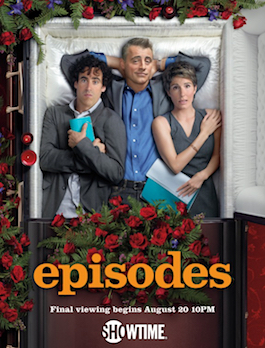 A whole seven months after its US airing (and nearly three years since we saw the last series), the final run of this UK-made UK/US-coproduced sitcom finally reached British screens (a far cry from the days when that took less than 24 hours). Originally about a pair of UK sitcom writers struggling to remake their successful British series for the US market, Episodes is fairly removed from that format at this point — it’s just about the characters now, and mainly their trials and tribulations with each other rather than the whims of the US network TV system.
 There was drama to spare at this year’s Eurovision. Firstly, China were banned from showing it due to messing around with the semi-final broadcast (they censored tattoos, homosexual dancing, and Pride flags); then, on the big night itself, the jury voting was neck-and-neck right to the final country… before being completely upended when the public votes were added.
 Cancellation season has been and, I think, gone in the US, and this year was a particularly bloody one. The big news as far as Twitter was concerned was Brooklyn Nine-Nine, which caused such a ruckus that multiple other networks were interested and it found a new home within 24 hours. Lucifer also caused a bit of a stir, though there’s no sign of hope for that yet. Similarly afflicted were Designated Survivor (which was decently addictive enough that I binged through
  This is shaping up to be a top-quality run of Who. You have to go back a good few years to find a similar-length run of consecutive episodes with the consistency this season is boasting. Obviously there are some divided opinions out there (as I’ve noted before, there is literally no pleasing all of Doctor Who fandom), but the consensus seems to be pretty positive.
 The fourth episode, Knock Knock, by
  In the wake of the network-enforced resolution of the Laura Palmer storyline, Twin Peaks flounders. The writers clearly took a while to find a new footing, not helped by behind-the-scenes kerfuffles that led them to have to scrap entire prominent storylines (primarily, Kyle MacLachlan vetoed a Cooper-Audrey romance, reportedly because his then-girlfriend Lara Flynn Boyle was jealous of co-star Sherilyn Fenn). Utter phrases like “Super Nadine”, “Ben Horne wins the Civil War”, or (especially) “James Hurley on the road” to a Twin Peaks fan and you’re liable to give them a chill up the spine — and not the good kind.
 A dancing gorilla! A man singing a duet with himself! A rap/yodelling mash-up! A Moldovan trio who could apparently only dance with their right legs! A guy up a stepladder wearing a horse’s head in a slate-walled room covered with chalk-scrawled words that looked like it was straight out of a horror movie asylum! Måns Zelmerlöw again! All accompanied by Graham Norton on fine form with his biting, sassy commentary (“All her family play the fiddle. In fact, her brother will be fiddling with her on stage later.”) Oh Eurovision, never change.
 100Films.co.uk