
John Michael McDonagh | 101 mins | Blu-ray | 2.35:1 | Ireland & UK / English | 15 / R
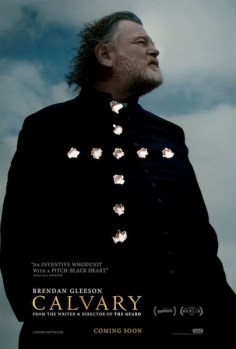 From the director of In Bruges’ older brother (who, in fairness, made a name for himself with 2011 comedy The Guard, which I’ve still not got round to) comes this dark (very dark) comedy drama — with emphasis on the latter, I suppose, but it is very funny along the way.
Brendan Gleeson (In Bruges, The Guard) stars as Father James, a priest in a small Irish town. One day at confession he’s told he is going to be murdered. Not for anything he did wrong, but precisely the opposite — because he is a good priest. The mysterious threatener gives him a week to get his affairs in order. Over the next seven days, we follow James as he interacts with his characterful parishioners, and are led to ponder which of them might be the would-be assassin, especially as so many seem cynical and nasty. All the while, James struggles internally with what is the right thing to do.
That’s the story of Calvary, at any rate, but it’s fairly clear that it’s about something more. What exactly that is, however, is a matter of debate. Could it be an apologia for the church and the wrongs it has inflicted in living memory? It certainly leans into those issues: without spoiling anything, the inciting incident is related to historic abuse, but the film is showing that priests aren’t all like that — that some people in the church are actually good, or at least as good as any of the rest of us — which I should imagine is true. That doesn’t make the film an apology, nor an excuse, but does raise a point: should the innocent be blamed for the wrongdoings of the guilty just because they share a belief? I think most rational people would agree they should not. Nonetheless, I’ve read at least one commenter, who I’m presuming was a hardened atheist, castigate the film for daring to feature a good priest, as if the very concept of one existing was a heinous and offensive suggestion. Conversely, in the special features Chris O’Dowd speaks of his initial wariness that this was going to be another “bad priest” movie, and how that doesn’t align with his personal experience of the clergy.
 So could it, instead, merely be a snapshot of Irish society, in particular its current relationship with the church? Surely that’s part of what’s in play, with the cynical, dismissive, teasing, sometimes hateful attitudes of the parishioners surely no coincidence. Some viewers have certainly taken this as the film’s primary talking point, and some have been less than impressed that it doesn’t align with their view of modern Ireland. (I’m in no position to comment.) Neither of these feel like they’re getting at the totality of what it’s saying, though.
Nonetheless, the way the film presents itself is not at fault. The acting is strong across the board, none more so than Gleeson. He brings all kinds of facets to a man who could’ve been a blank page on which to project the other colourful characters, and he truthfully conveys major character moments and changes of direction without the need for dialogue. O’Dowd surprises in a rare non-comedic role, while further able support comes from recognisable faces like Kelly Reilly (as James’ troubled daughter), Dylan Moran (as a nouveau riche dick) , Marie-Josée Croze (as a bereaved holidaymaker), M. Emmet Walsh (as an ageing author), and — for just one scene, but a good one — Domhnall Gleeson (you can discover what he is when you watch it). And no offence to Aidan Gillen, but his smarmy atheist doctor feels like the kind of part he always plays.
That’s not to exclude the less familiar names, some of whom deliver many of the biggest laughs, like Killian Scott (as a slightly worrying simpleton), David Wilmot (as James’ naïve fellow clergyman),  and Owen Sharpe (as a Brooklyn-accented promiscuous gay) — though if you watch Ripper Street, you may have seen a couple of them in quite different guises. And though it may be a cliché, McDonagh has successfully made the location a character, too: the towering mountain, an accidental discovery once on location, adds the looming presence the director hoped it would.
Calvary may in fact be a great film, if only I could put my finger on what I think it’s really trying to get at, which remains frustratingly out of my reach, at least for now. However, I will say it’s a very good one, and anyone who likes a character-driven drama scattered with dark but hilarious humour would do well to seek it out.

Calvary is available on Amazon Prime Instant Video UK as of yesterday.
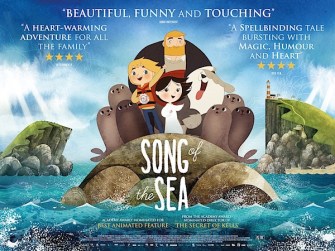 The second feature from director Tomm Moore and his pan-European team of animators (after the excellent, Oscar-nominated
 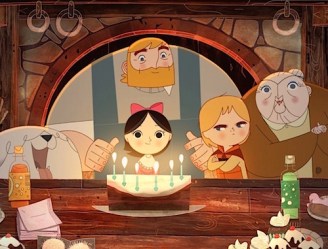 but the motivator for that is clearly resentment towards her for appearing the night his beloved mother left. Their father, too, is hamstrung by his grief, struggling to move on from his wife’s disappearance and fully engage with the world. His kids are his only connection, Saoirse in particular, but his mother makes him realise that clinging to them is damaging their lives too… or is it?
 all are factors that can, and do, elevate the film. Don’t get me wrong: this is a cut above your average animated adventure. I just didn’t enjoy it as much as The Secret of Kells.
 For more positives, Song of the Sea’s animation and design is at least as strong as it was in Moore’s previous film. There’s the ‘house style’ flattened, animated storybook look; a description which could sound like criticism but absolutely is not. Some very beautiful scenes are evoked, meaning that at the very least there’s always imagery to tide you over. I’d list some favourites, but we’d be talking about most of the film. That said, the depiction of a run-down, smoggy Dublin stands out as something different from the countryside idylls of Kells and the rest of the locales in Song of the Sea, but it’s not exactly “beautiful”. Rather, look to the island home of our heroes, a tall rock surrounded by the blue sea; the home of the glowing-eyed long-haired Seanachai (the moment when it suddenly turns around in the montage after Saoirse uses her coat for the first time is my favourite shot in the film, a little sliver of fantasy imagery that magnificently teases what’s to come); or the small sanctuary surrounded by a field of stinging nettles — again, a kind of gentle, on-the-edge-of-the-real-world fantasy that quite appeals to me. The fact the countryside is littered with half-hidden stone figures, which we know to be frozen magical begins, is another nice touch; especially as they’re often surrounded by human litter, the analogy (as I see it) being both that people exist around them but don’t even see them, and also that, presumably through our modern disbelief, we’ve thrown these legends out with our trash.
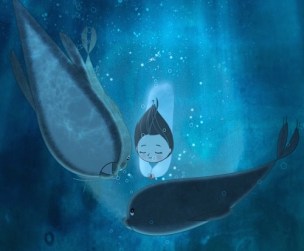 Even as I write, I’m talking myself round to liking Song of the Sea even more than I did on first viewing — and that was quite a lot, albeit coloured by my perception that I didn’t like it as much as The Secret of Kells. If you enjoyed Moore’s earlier film, this unquestionably merits seeking out (if you haven’t already, of course; I mean, I did). If you haven’t seen Kells, well, you’ve so far missed a treat; and now you’re missing two.
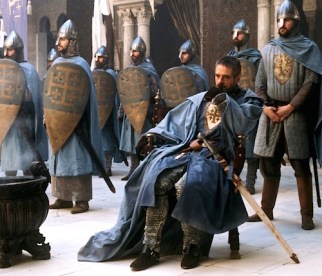
 Ridley Scott’s Crusades epic is probably best known as one of the foremost examples of the power of director’s cuts: after Scott was forced to make massive edits by a studio wanting a shorter runtime, the film’s summer theatrical release was so critically panned that an extended Director’s Cut appeared in LA cinemas before the end of the year, reaching the wider world with its DVD release the following May. The extended version adds 45 minutes to the film (and a further 4½ in music in the Roadshow Version), enough to completely rehabilitate its critical standing.
 A strong cast bolsters the human drama that sometimes gets lost in such grand stories. Bloom is a perfectly adequate if unexceptional lead, but around him we have the likes of Michael Sheen, David Thewlis, Alexander Siddig, Brendan Gleeson, and Edward Norton (well done if you can spot him…) There are even more names if you look to supporting roles. Most notable, however, are the co-leads: both Liam Neeson, as the knight who recruits Balian, and Jeremy Irons, as the wise advisor when he gets to Jerusalem, bring class to proceedings, while Eva Green provides mystery and heart as the love interest. Of everyone, she’s best served by the Director’s Cut, gaining a whole, vital subplot about her child that was entirely excised theatrically. It’s the kind of thing you can’t imagine not being there, and Scott agreed: it seems the chance to restore it was one of his main motivators for putting together a release of the longer version.
 (I’d wager
  Of late there seems to have been a glut of sci-fi films with highly generic, near-meaningless titles —
 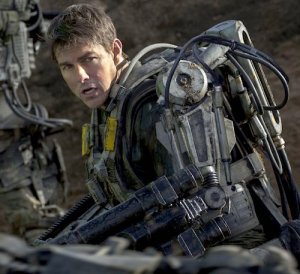 suitably exciting, surprisingly funny, and actually quite clever. It’s also boldly standalone. OK, so it’s an adaptation, but the book is hardly a
  Reflect too heavily and some bits may begin to crumble more but, for me, not too severely.
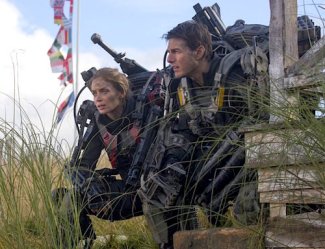 Edge of Tomorrow isn’t an unqualified success, but more than enough of it works to make for a well-above-average modern blockbuster. Excellent action sequences, plenty of amusing asides, and a couple of solid sci-fi concepts to chew on combine to render it quality entertainment. Bonus points for being a true original in a sea of remakes, sequels and spin-offs.
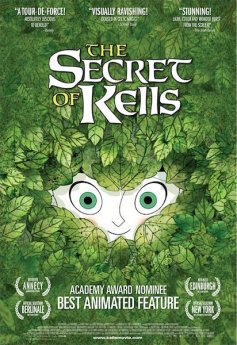 You can lament the quality of Oscar voters’ choices all you want, but if it wasn’t for their 2010 Best Animated Feature nominations I’m not sure many would have heard of this Celtic gem.
 100Films.co.uk