Blindspot 2025

This is my 13th year doing a version of Blindspot, so I’m not sure my customary introduction to the concept is still necessary. But in case there are still people who haven’t heard of it: this is a challenge in which you pick twelve films you’ve never seen but feel you should have (your blindspots) and watch one per month throughout the year.

Regular readers will know that my Blindspot selection process is often tortuously complicated. I don’t just pick twelve films I feel like watching, but compile various “great films” lists and use them to concoct some kind of ranking. Not so this year. I’m still using other people’s opinions, I’ve just made it very simple: every film on the list is the most popular one I’ve not seen (according to Letterboxd) from each decade since the origin of feature films.

In chronological order, they are…


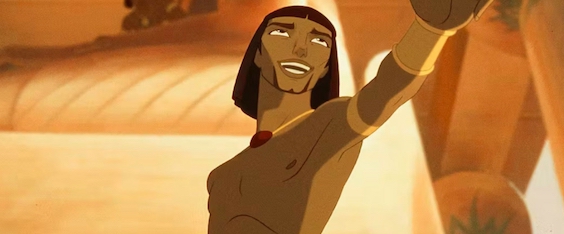
Intolerance

1910s
Intolerance

1920s
Häxan

Häxan
Freaks

1930s
Freaks

1940s
Cat People

Cat People
Rebel Without a Cause

1950s
Rebel Without a Cause

1960s
The Graduate

The Graduate
Eraserhead

1970s
Eraserhead

1980s
Kiki’s Delivery Service

Kiki's Delivery Service
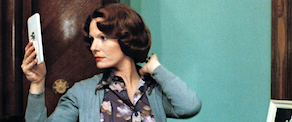
Girl, Interrupted

1990s
Girl, Interrupted

2000s
The Notebook

The Notebook
Midsommar

2010s
Midsommar

2020s
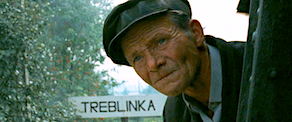
Saltburn

Saltburn

Normally I close out this post with a lengthy explanation of my process, but, um, I’ve already covered that this year. I suppose I should preemptively add that, yes, I’m aware the very first feature-length film was released in 1906; but few followed until the 1910s, so I still feel fine with this basic concept.

To finish, a bit of… trivia? I don’t know. Anyway: I did consider making this year’s selection simply the all-time most popular films I’ve not seen (that’s sort of what Blindspot is, after all), but Letterboxd skews incredibly recent in that regard. I mean, if I’d taken those twelve, two-thirds would have been from 2023–2024, and the oldest would have been from 2012. That’s the kind of thing I have the 50 Unseen category for.


Blindspot 2024

This is my 12th year doing a version of Blindspot, so I’m not sure my customary introduction to the concept is still necessary. But just in case: this is a challenge in which you pick 12 films you’ve never seen but should have (your blindspots) and watch them one per month over the next year. It’s a great way of ensuring you watch films that you might otherwise not get round to. Or intending to get round to them, anyway, as I’ve failed to complete the list on various occasions. Always a shame, but not the end of the world.

Anyway, below are my 12 picks for 2024, followed by an unnecessarily long-winded explanation of why I chose them. But to jump ahead of myself slightly: the picks all come from a ranked list, and so are presented here in their order from that list, highest to lowest.


Rosemary's Baby

Rosemary’s Baby

Yi Yi

Yi Yi
Army of Shadows

Army of Shadows

Only Yesterday

Only Yesterday
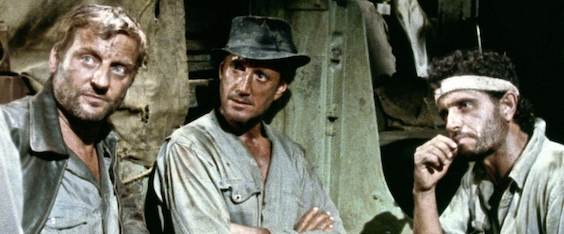
Le Trou

Le Trou

My Darling Clementine

My Darling Clementine
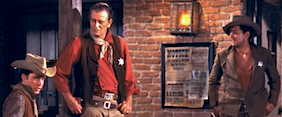
Rio Bravo

Rio Bravo

The Innocents

The Innocents
Where Is the Friend's House?

Where Is the
Friend’s House?

Scenes from a Marriage

Scenes from a Marriage
The Cranes Are Flying

The Cranes Are Flying

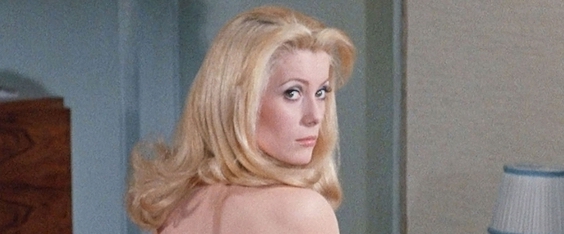
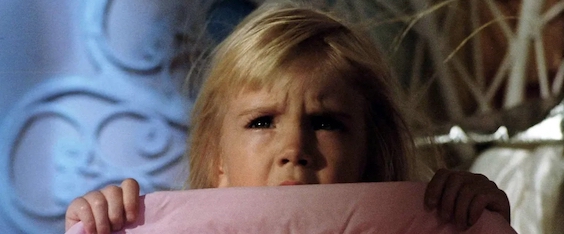
Possession

Possession

Traditionally, my methodology for choosing my 12 films has been some degree of complicated and thus merited explanation. (“Merited” in the sense that my procedures interest me, even if they don’t interest anyone else.) Last year, I simplified things greatly by basing it around Sight and Sound’s then-new list of greatest films. With this year’s WDYMYHS also being drawn from a list of highly-acclaimed all-timers, I was certain I’d need to return to making Blindspot’s selection process a complicated one.

Well, why make work for yourself when others have already done it? You see, the first step in my Blindspot process is to decide on and/or find lists that are going to contribute to the rankings that will decide this year’s 12. (I could just use the same list(s) year on year, but that would mean I just select the next 12 each time, which seems dull.) Normally one of the first to go in the mix is the IMDb Top 250, but that was ruled out thanks to WDYMYHS, so where else to start? I do have a couple of other go-tos, but then I remembered a list from Letterboxd: The 1001 Greatest Films, ranked as objectively as possible. I won’t regurgitate the whole rationale behind that list here (you can read the introduction at the link for that), but, suffice to say, it’s a list that has already combined multiple other lists with a view to creating a ‘definitive’ greatest films list. (The popular 1,000-film list curated by They Shoot Pictures, Don’t They? has long had a similar aim, but that has certain baked-in biases that this one aims to correct.) Job done!

Well, not quite. I didn’t just take the list as final gospel — as well as ruling out films I’d already seen (obviously), I applied a few of my own rules to reach my final selection. Firstly, I limited it to things I already own or have near-permanent access to on streamers (I don’t normally trust them to keep content, but the Netflix Ghibli deal seems pretty solid). This was a common decider back when I first started WDYMYHS/Blindspot, but after a few years it seemed prudent to ignore it. I’ve brought it back again now because I’ve got a ludicrous number of films on disc I’ve never watched, so why not start with them rather than downloading even more? It’s not as if I was having to go to the dregs of the list just to include stuff in my collection, either.

Next, my most commonly enforced rule: one film per director. Normally that would have meant including A Brighter Summer Day at the expense of Yi Yi, but I decided to apply another rule I’ve used fairly regularly: no films that I’d failed to watch the year before. So out went A Brighter Summer Day, which I should’ve watched in 2023, and in goes Yi Yi (which I should’ve watched in 2022, but hey, can’t go excluding stuff forever). It also meant ditching Le Samouraï in favour of Army of Shadows. If I were ranking this in terms of my personal anticipation, Le Samouraï would’ve been higher; but the list is the list — if I wanted to make this “any 12 films I want to see”, I could’ve done that as my selection process.

Then, a few bits of housekeeping. Firstly, ruling out films that were also on the WDYMYHS list, as I’d settled on that one first. That took out three: The Wages of Fear, The Best Years of Our Lives, and A Separation. I suppose I could’ve left them on to help further complete the IMDb Top 250 (a ‘guaranteed’ 15 instead of only the 12 that WDYMYHS ‘guarantees’), but, eh. I also ruled out Apur Sansar because it’s the third film in a trilogy and I’ve only seen the first one. I’m not going to watch them out of order, and I didn’t want to commit myself to watching 13 films for a 12-film challenge. I also could have included Werckmeister Harmonies, because I do have a copy (one I went to the effort of bodging together myself from multiple DVD-era sources, to get in-sync subtitles), but there’s reportedly a 4K restoration on the way, so it seems prudent to wait for that to enjoy the film properly. I could’ve included it on the list anyway, as I did with The Hitcher, but look how that worked out. (For those who don’t remember, The Hitcher was on a 2022 list, assuming a promised release from Second Sight would definitely be out that year, but we’re now in 2024 and it’s still not been announced beyond “we’re working on it”.)

Finally, the list includes a couple of movie-adjacent TV series that fell within my catchment zone; specifically, Dekalog and Berlin Alexanderplatz. I’ve often discussed on this blog the blurred line between TV and film, so I didn’t remove them out of snobbery, more out of practicality. I mean, last year I failed to watch nine-hour Shoah, so having either one of ten-hour Dekalog or fifteen-hour Berlin Alexanderplatz on the list would likely be a failure in waiting, but having both? Maybe I could’ve attempted one, but it would’ve been inconsistent to only include one when they both qualified. The final decider was this: if I watched either of them under normal circumstances, I wouldn’t count them on the blog (because, y’know, they’re TV series, not films), so I shouldn’t really count them just because they happen to be on a list.

In the end, to get my final 12, I had to go through 36 films — ruling out twice as many as I included. Most of those (15) were simply because I didn’t own them. The remaining nine, I’ve already mentioned. As some kind of insight into those 36 films’ overall standings, the first one I rejected, A Brighter Summer Day, is in the list’s top ten (7th, to be precise), but only four of my final selection are in the top 100, and I had to go as deep as 193rd to finish my 12. Still, it’s always the way: the more acclaimed films you’ve seen, the further you have to go for your next ‘blindspot’.



Blindspot 2023

This is my 11th year doing a version of Blindspot (not to mention that various other bloggers do it too… or used to. Do other people still do this? Is there a whole world of it going on that I’m somehow cut off from? Or am I a lone proponent, still plugging ahead with a near-decade-old fad, because I really like it? I don’t know…)

Anyway, if you somehow still don’t know what it is or how it works, the premise is simple: choose 12 films you should have seen but haven’t, then watch one a month throughout the year. (My 12 also contribute to my 100 Films in a Year Challenge.)

Some people just choose their 12 films. I normally do it via an elaborate system of compiling “great movies” lists in various configurations to spit out some general consensus of which 12 well-regarded films I should watch next, rejigging which lists are included and how they’re factored in to provide new results each year. But 2023 is a bit different, thanks to a significant event last month: the publication of a new edition of Sight & Sound’s decennial 100 Greatest Movies poll, one of — nay, the most widely respected list of its kind among cinephiles. There were 27 films I hadn’t seen on the latest edition of the list — more than enough to fuel my Blindspot selections for this year.

I’ll explain how I whittled those 27 down (it wasn’t a long process, but it’s more than just “the top 12”) after listing the films themselves. In the order they ranked in Sight & Sound’s poll, this year I must watch…


Jeanne Dielman…

Jeanne Dielman, 23, quai du Commerce, 1080 Bruxelles

Beau Travail

Beau Travail

Cléo from 5 to 7

Cléo from 5 to 7

Close-Up

Close-Up

Au hasard Balthazar

Au hasard Balthazar

Shoah

Shoah

Killer of Sheep

Killer of Sheep

Fear Eats the Soul

Fear Eats the Soul

A Brighter Summer Day

A Brighter Summer Day

Pierrot le Fou

Pierrot le Fou

Tropical Malady

Tropical Malady

Black Girl

Black Girl


With just 12 slots but 27 films I hadn’t seen, obviously I had to pare the list down somehow. One method would’ve been to just take the 12 highest ranked — they’re meant to be the best of the best, after all. But that didn’t allow for the fact that, to be blunt, there were films further down the list that I was more interested in seeing. Another method would’ve been to run the 27 films through one of my usual list-of-lists calculations and see which 12 emerged victorious. But in a year where I’d simplified the selection process, it seemed silly to overcomplicated it again.

So, here’s what happened: I already owned some of the films on disc; when the list came out, after I had a look at it, there were a couple of highly-ranked films that I’d already been considering purchasing, so I ordered them; and there were a few more that, for whatever reason, I felt compelled to, um, download. When I stopped to take stock of this flurry of activity, the number of films in my possession added up to 13. They weren’t necessarily the films I had envisioned being in my final 12 (for starters, two from the top 50 were missing), but there we were.

The only remaining question: which to ditch? It was nearly Au hasard Balthazar. I wasn’t sure I’m ready for the “a donkey’s miserable life” movie. I’m still not. But this seemed as good a time as any to bite the bullet and get it seen. What about approaching it from the other angle — which had to be included? Well, I don’t think I’m going to like Jeanne Dielman, but I’ve felt I should watch it for some time now… and, more importantly, it’s #1 — of course #1 had to go in! Then there’s the ones I already owned on disc: Shoah, A Brighter Summer Day, and Black Girl (also Yi Yi, but that was on last year’s list, so I ruled it out on the presumption I’d watch it in December. Oops). Then, the ones I’d freshly ordered: Beau Travail and Close-Up. Even if I hadn’t bought them, both are among the top four I hadn’t seen.

That just left narrowing the remaining seven downloads to six. I could talk you through my process, such as it was, on a film by film basis, but in the end it came down to a gut feeling. You can already see which films made it in — the loser, for what it’s worth, was Douglas Sirk’s Imitation of Life. I couldn’t really tell you why; it’s just what I decided.

One other thing: I can’t usually have wildcards from Blindspot — it’s a list of 12 films taking up 12 slots; there aren’t any to be wildcards. But this year is an exception in that respect, too: I figure that, as the entire list is chosen from Sight & Sound’s list, then the 15 unchosen films were the only other eligible options, and therefore they could be eligible for wildcard slots. Disagree? Tough, it’s my game. Will I actually watch any of them, when getting through the 12 actual picks can be challenge enough some years? Maybe not. But the possibility is there.


Before we leave Blindspot behind and head to “What Do You Mean You Haven’t Seen…?” (or, if you’ve come to this post second, before you head back to your life), here’s a dash of additional info. You see, just because these 12 films were all taken from the Sight & Sound list, that doesn’t mean they don’t contribute towards my completion of other lists — unsurprisingly, there’s some degree of overlap between different “great films” lists. So, in case you were curious (because I was), other key lists that some of these films appear on (at time of writing) include…

TSPDT’s The 1,000 Greatest Films (16th edition) — all 12, ranging from 34th (Au hasard Balthazar) to 869th (Black Girl).

BBC’s The 100 Greatest Foreign-Language FilmsJeanne Dielman; Beau Travail; Cléo from 5 to 7; Close-Up; Au hasard Balthazar; Shoah; Fear Eats the Soul; A Brighter Summer Day; Pierrot le Fou.

BBC’s The 100 Greatest Films Directed by WomenJeanne Dielman; Beau Travail; Cléo from 5 to 7.

iCheckMovies’s Most FavoritedJeanne Dielman; Close-Up; A Brighter Summer Day.

Letterboxd’s Top 250 Narrative Feature FilmsJeanne Dielman; A Brighter Summer Day.

IMDb’s Top 250 — nothing (can’t say I’m surprised).


What Do You Mean You Haven’t Seen These Films from 1986?

After a couple of years ‘off’ (or, if you prefer, combined with Blindspot, because they’re essentially the same thing), “What Do You Mean You Haven’t Seen…?” is back!

Now, it’s part of my All-New 100 Films in a Year Challenge (you may have heard about that — I feel like I bring it up enough) and has a slightly refined focus. Whereas before it featured great or significant movies I should’ve seen from across film history, now I’m giving it a specific theme each year. For the inaugural year of its new version, I’ve picked my birth year: the 12 films from 1986 that I’m most surprised I haven’t seen.

First, the films I’ve chosen. After, I’ll natter a little about how and why.


A Better Tomorrow

A Better Tomorrow

Cobra

Cobra

Flight of the Navigator

Flight of the Navigator

Hannah and Her Sisters

Hannah and Her Sisters

The Hitcher

The Hitcher

Howard the Duck

Howard the Duck

Manhunter

Manhunter

Mona Lisa

Mona Lisa

The Name of the Rose

The Name of the Rose

Pretty in Pink

Pretty in Pink

She’s Gotta Have It

She's Gotta Have It

The Transformers:
The Movie

The Transformers: The Movie


First, for the sake of context, here are all the feature films from 1986 that I have seen (taken from what I’ve logged on Letterboxd, which should be thorough at this point), in alphabetical order…

Iron Eagle
The Karate Kid Part II
Labyrinth
Laputa: Castle in the Sky
Little Shop of Horrors
The Money Pit
Never Too Young to Die
Platoon
Stand By Me
Top Gun
When the Wind Blows
.

Yes, Biggles. I loved the books as a kid, so I guess I had to see the film, even though it’s some weird-ass post-Back to the Future time-travel-based reimagining.

To select the list of films I needed to watch, I had a root around 1986’s highest-rated and most popular films (two different things) on both IMDb and Letterboxd, compiling a long-list of possibilities. That came to around about 30 titles, from which I selected the final 12 based purely on my own level of awareness — for example, Manhunter went straight into the final selection because, given the kinds of films I particularly like, it seems ludicrous I haven’t seen it yet. (It’s partly because I only own it on DVD. I never got round to importing the Shout BD, and now it looks to be out of print, with copies on sale for hundreds of dollars. Mad! And annoying.) I expect, if other people were presented with the same long-list, they might make slightly different selections. Such is life.

One in particular that I nearly included was Star Trek IV. It must be good, right, because it’s an even-numbered one. Also, everyone seems to know about “the one with the whales”, and it’s that one. But as I’m currently working my way through the Trek films anyway (albeit slowly: TMP was last February and Wrath of Khan last July), it seemed unnecessary, even futile, to include one here.

In conclusion, it wasn’t a particularly involved or technical selection process this time. At least that means this explanation is a lot shorter than my normal verbosity. In the unlikely event you’re missing that, there’s always my Blindspot post.

Blindspot 2022

There may be numerous changes around here for 2022 & onwards, but one thing that remains the same is the Blindspot challenge, which I’m undertaking for the tenth year running (though I called it “What Do You Mean You Haven’t Seen…?” back at the start. Now, WDYMYHS is a whole additional thing — details of the 2022 version are here).

For those still unfamiliar with it, Blindspot’s premise is simple: choose 12 films you should have seen but haven’t, then watch one a month throughout the year. (Those 12 also contribute to my All-New 100 Films in a Year Challenge.) Below, I’ve listed my selection for this year, and afterwards I’ll talk a bit about how I chose them.

The films are listed alphabetically, using the titles they’ve most recently been released under in the UK. Some of those are different to those used by, say, the Criterion Collection (we don’t automatically translate titles into English over here, what with us being more sophisticated ‘n’ all), but if you have to Google them, hey, at least you’ll have learnt something new.


L’avventura

L'avventura

Come and See

Come and See

Les enfants du paradis

Les enfants du paradis

La grande illusion

La grande illusion

High and Low

High and Low

A Man Escaped

A Man Escaped

Mirror

Mirror

Los olvidados

Los olvidados

Paris, Texas

Paris, Texas

To Be or Not to Be

To Be or Not to Be

A Woman Under
the Influence

A Woman Under the Influence

Yi Yi

Yi Yi


Some people just pull their 12 films out of who-knows-where. Personally, I’ve largely taken a more ‘scientific’ approach, using lists of great and/or popular films to try to shape some or all of my choices each year. This year is no different. But although I’ve made the process fairly complex some years — with lots of different contributing lists, sometimes weighted in different ways, or with additional rules — this year, I’ve kept it pared back.

Just three lists were used: the IMDb Top 250 Movies (they’ve finally put “250” back in its official name, hurrah!); the Letterboxd equivalent, the Official Top 250 Narrative Feature Films; and the mother of all great movie lists, TSPDT’s The 1,000 Greatest Films. I limited the last one to its top 250, for equality. All lists were weighted equally, with a film gaining points inverse to its position on a list — i.e. #1 would get 250 points, #250 would get 1 point, etc. I also factored in how many different lists the films appeared on at iCheckMovies (10 points per list), and gave a little nudge (of 11 points) to anything I already owned. That last one didn’t actually have much impact, merely serving to change the final film that made the cut. Still, it means I already have copies of seven of the films, rather than only half of them.

In fact, ensuring I could reasonably get hold of the films was something I checked before finalising the list, especially as Los olvidados doesn’t have an English-language Blu-ray release (in fact, according to Blu-ray.com, it’s only been released on BD in Japan). The only other factor I implemented was my longstanding “no repeat directors” rule. That took out Edward Yang’s A Brighter Summer Day (in favour of Yi Yi), as you can see in the list below. One previous rule I didn’t enforce this year was that, if I fail to watch a film one year, it’s locked out the next. I failed with Come and See in 2021, but it also topped the chart this year, so I’ve let it back in immediately. I won’t make the mistake of leaving it ’til December this time, though.

So, as promised a moment ago, here are the final 13 films with their points tallies…

  • Come and See — 777 points
  • High and Low — 573 points
  • Yi Yi — 571 points
  • A Brighter Summer Day — 566 points
  • To Be or Not to Be — 533 points
  • Mirror — 524 points
  • Les enfants du paradis — 509 points
  • La grande illusion — 509 points
  • A Man Escaped — 491 points
  • A Woman Under the Influence — 488 points
  • Los olvidados — 450 points
  • L’avventura — 444 points
  • Paris, Texas — 423 points

    Finally, a couple more stats about the films. Last year, many of the films were exceptionally long — the average running time came out at 2 hours 36 minutes, with only three of the films running under 2 hours; but with the shortest being just 1 hour 10 minutes and the longest 7 hours 19 minutes, there was quite a range. Compared to that, 2022’s extremes don’t seem so, well, extreme: the shortest film is Los olvidados at 1 hour 21 minutes, while the longest is Les enfants du paradis at 3 hours 9 minutes, and five films (almost half) are under 2 hours… although there is a half-hour jump between the longest film under 2 hours (La grande illusion, 1 hour 53 minutes) and the shortest over 2 hours (a three-way tie between L’avventura, Come and See, and High and Low, each running 2 hours 23 minutes). Nonetheless, the average is down from last year, to a slightly more reasonable 2 hours 13 minutes.

    Although it wasn’t a conscious decision, the films are quite well spread around this year, both temporally and geographically. For the former, there’s one from the 1930s, two each from the 1940s, 1950s, 1960s, 1970s, and 1980s, and then one from the 2000s. For the latter, France comes out on top with three titles, followed by two each for Russia and the USA, and one apiece from Germany, Italy, Japan, Mexico, and Taiwan. In the latter case, I’m taking (what I believe to be) the primary country of production — several of the films can lay claim to multiples.

    Finally, half of the films are by directors whose work I’ve never seen before. They are Michelangelo Antonioni, Luis Buñuel, Marcel Carné, Elem Klimov, Wim Wenders, and Edward Yang. And with the other films’ directors including the likes of Robert Bresson, John Cassavetes, Akira Kurosawa, Ernst Lubitsch, Jean Renoir, and Andrei Tarkovsky — a real mix of artists whose work that I’ve seen has either struck me as fantastic or… well… — it should be an interesting year.

  • Blindspot 2021: What do you mean you haven’t seen…?

    Now that all my “looking back at 2020” posts are done, it’s time to start the first full week of 2021 wi— sorry, what? Second week? Where did the first one go?! Alright, well, it’ll have to do. So, dragging myself belatedly into the same year as everyone else, it’s time to present my Blindspot picks for 2021.

    The Blindspot challenge (for the benefit of those still unfamiliar with it) involves choosing 12 films you should have seen but haven’t, then watching one a month throughout the year. I started doing this eight years ago, calling it “What Do You Mean You Haven’t Seen…?” (WDYMYHS for short), but then someone else came up with the same idea independently and gave it a much snappier moniker, and that caught on.

    My 12 films for this year are below in alphabetical order. After that there’s a few stats, and then I’ll explain how and why I chose them.


    Aguirre,
    Wrath of God
    Aguirre, Wrath of God


    The Birth of a Nation
    The Birth of a Nation


    Cinema Paradiso
    Cinema Paradiso


    Come and See
    Come and See


    La Dolce Vita
    La Dolce Vita


    Frankenstein
    Frankenstein


    La Haine
    La Haine


    The Life and Death
    of Colonel Blimp
    The Life and Death of Colonel Blimp


    Pather Panchali
    Pather Panchali


    Rain Man
    Rain Man


    Sansho Dayu
    Sansho Dayu


    Sátántangó
    Sátántangó

    Here’s a few stats about this year’s list…

  • The average running time of the films is 2 hours 36 minutes. Yes, that’s the average. While the shortest film, Frankenstein, runs a measly 1 hour 10 minutes, there are only two others below the two-hour mark, and four that run over 2½ hours. And the longest, Sátántangó, is a whopping 7 hours 19 minutes — that’s longer than six Frankensteins.
  • There’s a spread of exactly 80 years between the oldest film (1915’s The Birth of a Nation) and the newest (1995’s La Haine). Of course, that means the most recent film here is over a quarter of a century old…
  • Exactly eight decades are represented, too. The most prolific is, amusingly enough, the ’80s, with three films. The ’50s and ’90s have two each, and there’s one apiece from the 1910s, ’30s, ’40s, ’60s, and ’70s.
  • The films come from nine countries: three from the USA, two from Italy, with the rest being from France, Germany, Hungary, India, Japan, the Soviet Union, and the UK.
  • There are eight different main languages spoken, plus one silent film. English is the most common with three films, two are in Italian, and the rest encompass Bengali, French, German, Hungarian, Japanese, and Russian.
  • Six of the films are from directors who I’ve never seen a feature from before. They are D.W. Griffith, Werner Herzog, Elem Klimov, Satyajit Ray, Béla Tarr, and Giuseppe Tornatore. (I have seen a short by Griffith before, but this is his first feature for me.)

    I tend to mix up my method for choosing films each year, but for 2021 I’ve retained one thing from last year — itself a legacy of the couple of years where I did two 12-film lists — and that’s to have six films ‘chosen for me’ via a consensus ranking of various “greatest movie” lists, and then to choose the other six myself from my massive unwatched disc pile. Inevitably, the latter seems to get influenced by films that piqued my interest in the former, but, eh, why not? (If you fancy a challenge, feel free to guess which six films belong to which selection process. Answers coming up.)

    The lists that contribute to the “poll of polls” selection can only be varied so much. I mean, there are probably thousands of such lists out there, but there are only a handful that are well known and respected (to one degree or another), and so I tend to use a lot of the same ones every year. You might think that makes which films appear a foregone conclusion — surely they’re the ones that narrowly missed out last year? — but things do change on some of these lists. For example, when I chose last year’s selection, Come and See was ranked 7th on Letterboxd; this year, it’s 2nd. That’s not an insignificant change: when I’m combining multiple lists, a jump like that at the top of a list could be the difference between inclusion and not quite making it. Besides, I do vary my lists and how I count them every year, precisely so as to keep things slightly unknowable.

    This year’s contributing lists were:

  • Letterboxd’s Official Top 250 Narrative Feature Films
  • IMDb’s Top Rated Movies (aka the IMDb Top 250)
  • the Reddit Top 250
  • Empire’s The 500 Greatest Movies of All Time (aka the Empire 500)
  • Empire’s The 100 Best Films of World Cinema
  • Sight & Sound’s 2012 poll, using the 250-film version listed on Letterboxd (the official list only goes to 100)

    A notable absentee this year is They Shoot Pictures, Don’t They?’s The 1,000 Greatest Films, itself a “poll of polls” that is therefore one of, if not the, definitive lists of greatest movies. That’s why I normally include it, and that normality is why I didn’t this year: it’s gone just for the sake of a change. In its place (sort of) is the Empire World Cinema list. It’s shorter than the others, so under my scoring system (which I’ll explain in a moment) it contributed somewhat less than the other lists. That means it served to tweak which foreign films got in, rather than acting to wipe out US/UK films — although, as it turns out, no US films made it through that way.

    So, each poll was scored out of 250 (250 points for 1st place, 249 for 2nd, etc), except the Empire World Cinema one, which was out of 100. Any film beyond 251st place on the Empire 500 earnt one point; and there were 10 additional points for each list a film appeared on (i.e. every film got 10 bonus points, because every film had to be on one list; but if it was on two it got 20, etc.) The full chart ended up including 230 films — that’s everything I hadn’t seen from the Letterboxd, IMDb, Reddit, and Empire World Cinema lists, plus those from the top 150 on Sight & Sound and the Empire 500 (by the time I got to those, I figured any films further down that weren’t on another list didn’t stand a chance; of course, I did include their rankings for all films that were on another list). Further to the plain scores, I also applied other rules — “no repeat directors” is the main one. I used to limit myself to films I already own, but not anymore; and I try to ensure variety in the kinds of films included, to get a spread of ages, countries, genres, etc.

    With all that considered, I think this is the first year I’ve simply accepted the films at the top of the chart without having to eliminate any. The only film to appear on all six lists was Come and See, so perhaps it’s no surprise that it came first with 810 points. Mind you, only one film appeared on five lists (Paris, Texas) and that came 17th, so being on fewer lists with higher ranks could beat merely appearing on many lists. In second place was La Dolce Vita with 647 points; third was Cinema Paradiso with 510; fourth was Pather Panchali with 502; fifth was Sátántangó with 461; and in sixth, just behind it with 460, was The Life and Death of Colonel Blimp. Regular readers (or those who’ve clicked and read some of the links in this article) may remember that Come and See and Sátántangó both qualified for the 2020 list, but were removed because new restorations were on the way. Those have now materialised: Come and See on a Criterion disc that I imported, and Sátántangó on very different UK and US discs (it’s also available to rent digitally, which is how I intend to view it).

    As for my ‘free choice’ films, three have a spot on that consensus ranking. They were La Haine (13th, 413 points), Sansho Dayu (16th, 398 points), and Aguirre, Wrath of God (38th, 262 points). You’ll note that none of those films are American, and so my only three picks that are not on the consensus ranking (The Birth of a Nation, Frankenstein, and Rain Man) are also my only three US films. Make of that what you will.

    I’ve spent most of 2021 so far working towards one self-imposed deadline after another, to get all of these end of year/new year posts done, so now I’m looking forward to catching up on other blogs — and actually watching some films!

  • Blindspot 2020: What do you mean you haven’t seen…?

    The Blindspot challenge (for the benefit of those still unfamiliar with it) is where you pick 12 films you feel you should’ve seen but haven’t, then watch one a month throughout the year. I started doing this in 2013, calling it “What Do You Mean You Haven’t Seen…?” (WDYMYHS for short), but then someone else came up with the same notion independently and gave it a much snappier moniker, and that caught on.

    My fortunes with the Blindspot / WDYMYHS challenge have been up and down over the years. I’ll spare you a full potted history, but last year I set myself two lists of 12 films each and didn’t complete either — although between them I did watch 17 movies. I braved 24 films because for two years before that I’d done 22 and completed it with relative ease. So maybe I should aim for 24 again this year…

    …but I’m not going to. In the same way that the second half of 2019 was a bit unpredictable (leading to my failures), I’m not wholly sure what the future holds, so I’m going to rein it back to the original 12 and see how it goes. And besides, if I find 12 unchallenging then I’ve got the seven remaining films from last year I could move on to; plus one from 2015 that I never got round to. That’s a pretty big ‘buffer’ to work on.

    Now, I’ll jump ahead to the main event: the 12 films I must watch, in alphabetical order. Afterwards, I’ll explain how they were chosen.


    8½


    All Quiet on
    the Western Front
    All Quiet on the Western Front


    An American Werewolf
    in London
    An American Werewolf in London


    Andrei Rublev
    Andrei Rublev


    The Battle of Algiers
    The Battle of Algiers


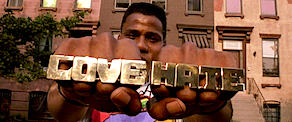
    Do the Right Thing
    Do the Right Thing


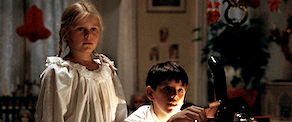
    Fanny and Alexander
    Fanny and Alexander


    The French Connection
    The French Connection


    In the Mood for Love
    In the Mood for Love


    Ordet
    Ordet


    Ugetsu Monogatari
    Ugetsu Monogatari


    Under the Skin
    Under the Skin

    So, some people just pick their 12 films. When I did two lists, that’s what I did for one of them. But the rest of the time I’ve let consensus decide, by compiling “great film” lists in various different combinations to suggest the films other people feel I should’ve seen. I quite like both methods, so for 2020 I’ve picked six with one and half-a-dozen with the other. That said, my ‘free choice’ six were influenced by some of the films that didn’t quite make it into the ‘preselected’ six. (Feel free to guess which films belong in which six. Fun and games! Answers in a mo.)

    This year, the selection process involved the following lists:

  • Letterboxd’s Official Top 250 Narrative Feature Films
  • IMDb’s Top Rated Movies (aka the IMDb Top 250)
  • The 1,000 Greatest Films by They Shoot Pictures, Don’t They? (aka TSPDT)
  • the Reddit Top 250
  • Empire’s The 500 Greatest Movies of All Time (aka the Empire 500)
  • Sight & Sound’s The 100 Greatest Films of All Time (2012 edition)

    Because TSPDT takes Sight & Sound’s voter ballots as its foundation, I counted the Letterboxd scores twice as a way of evening it out a bit and not letting S&S be too dominant. It only worked up to a point. For example, Harakiri is ranked 4th on the Letterboxd list and 33rd on IMDb, but it’s a lowly 647th on TSPDT and nowhere on the other lists. So as I started adding the lists together (in the order I’ve credited them above), Harakiri was right at the top, then gradually fell right back. But that’s kinda the point of counting multiple lists: it’s getting a consensus of consensuses. Letterboxd users clearly think Harakiri is one of the very greatest films of all time; IMDb voters aren’t quite as enthusiastic, but it’s up there; everyone else… not so much.

    But it’s not just about the raw numbers of which films top the list: I have some rules. Chief among them, I’ve previously only selected films I already own on DVD/Blu-ray or have access to on Netflix/Prime/etc. This year, I let the door open to anything, though I did first make sure I could reasonably source a copy. So, top of the list was Andrei Rublev, followed by Federico Fellini’s . Next, in a somewhat ironic turn of events, my new “open door” policy actually led to some high-scoring films being eliminated. While sourcing copies of Come and See and Sátántangó, I discovered that both have recently been restored and are expected to get Blu-ray releases in 2020. You might think that’s perfect timing, but what if one or both slipped to 2021, or were insanely overpriced? So I decided to adopt a “wait and see” approach. Maybe they’ll be on 2021’s list.

    Next in the running was In the Mood for Love, followed by Ordet. Then my only still-standing regular rule came into play: one film per director. That meant the next film — La Dolce Vita, which shares Fellini with — was cut. After that is actually where Sátántangó was ranked (keeping up? I don’t blame you if you’re not), followed by Mirror — but Mirror is directed by Andrei Tarkovsky, the same as Andrei Rublev, so out it went too. But now we do finally reach the end: the next two high-scorers were Fanny and Alexander and The Battle of Algiers, which (as you’ll know from their inclusion in the list above) were fine.

    And with those six settled upon, I turned to picking six more from my DVD/Blu-ray collection. There’s less to say about these: I made a long-list of 127 ‘maybe’s; narrowed it down to 38 ‘very possibly’s; and then picked six, based on a mix of intuition about what I ‘should’ have seen and things I’ve personally been wanting to see for a while. I did also try to keep some variety in terms of the films’ ages, genres, countries, and languages… but almost all the ones that made my short-list were in English, so, er, oops. It meant Ugetsu Monogatari was an easy choice, anyway; and I was sure to include some British films (or British co-productions, at least); and Do the Right Thing may be American, but it’s also the only one of the 12 from a black filmmaker. (No female directors, though, which is an unfortunate oversight.) Still, on balance there are more films not in English (seven vs five), and the B&W/colour split is exactly 50/50.

    Four of my six ‘free choices’ do appear further down the rankings I’d compiled. That’s coincidence rather than design, although I suppose seeing them on the list might’ve helped push them to the forefront of my mind. Those four were Do the Right Thing (18th), Ugetsu Monogatari (23rd), An American Werewolf in London (127th), and The French Connection (162nd). I don’t know about you, but I was a little surprised All Quiet on the Western Front didn’t make it. Well, of the lists I’ve used this year the only one it’s on is TSPDT, at a lowly 742nd. (I’m not surprised Under the Skin wasn’t on any, what with it being so recent. For one thing, it hadn’t even been released when the Empire and Sight & Sound polls were conducted.)

    And that’s all that thoroughly over-explained.

    (Did anyone read all this?) (Hello future-me, who surely will re-read all this at some point, sad egocentric that I am.)

    Finally, if I manage those 12 and want more, the eight left outstanding from 2015 and 2019 are…

  • All About Eve
  • All the President’s Men
  • The Breakfast Club
  • Ikiru
  • The Ipcress File
  • The Royal Tenenbaums
  • The Thin Red Line
  • To Kill a Mockingbird

    This is hardly a chore — there are some great-looking movies there — so hopefully I’ll find time for all 20. It would only be fitting, given the year…

  • Blindspot 2019

    I already waffled on a lot at the start of my 2019 WDYMYHS list, so if you’ve not read that then do check it out for a full introduction to what this is all about.

    The relevant part, though, is that this is a list of 12 films I should’ve seen but haven’t that I must watch this year — and, because I’m doing both WDYMYHS and Blindspot, that’s 24 films I must watch. Whereas the WDYMYHS selection contains 12 films chosen by consulting lists of great movies to find what the consensus feels I should’ve seen, these Blindspot choices are simply personally selected from my DVD/Blu-ray collection. Nonetheless, I do try to add a bit of variety to the mix, with different countries, genres, and eras represented.

    Anyway, here’s what I picked out this year, in alphabetical order…


    All the President’s Men
    All the President's Men


    The Breakfast Club
    The Breakfast Club


    Les diaboliques
    Les diaboliques


    Dr. Mabuse, der Spieler
    Dr. Mabuse, der Spieler


    Dracula
    Dracula


    The Ipcress File
    The Ipcress File


    The Killer
    The Killer


    The Player
    The Player


    Rififi
    Rififi


    Rope
    Rope


    Scott Pilgrim
    vs. the World
    Scott Pilgrim vs. the World


    Starship Troopers
    Starship Troopers

    Dr. Mabuse, der Spieler is actually a two-part film (why so many online sources insist on listing it only as one movie when it seems to have been originally released as two, I don’t know), so you could argue I’ve given myself 25 films to watch for these challenges this year. Have I bitten off more than I can chew? Only time will tell…

    What Do You Mean You Haven’t Seen…? 2019

    A new year, a new challenge… or, rather, an old challenge with new components.

    Yes, for a seventh year I’m setting myself the goal of watching 12 specific films I really should have seen but haven’t.

    And, because I’m a crazy madman, I’m doing it twice — i.e. 24 films.

    I’ve been doing two of these lists since 2017 (separated as “Blindspot”, which you may’ve seen on other blogs, and my own version, “What Do You Mean You Haven’t Seen…?” (aka WDYMYHS), which is the same thing by a different name), but previously only put ten films on the second list. Well, I got into such a rhythm of watching these films during 2018 that it felt weird in November and December after the WDYMYHS list had run out. So, I thought for 2019 I’d go all-in and do two full lists of 12.

    “Why do you have two lists of 12 rather than one list of 24?”, you may ask. Fortunately for you (or unfortunately, if you don’t care), I’m happy to answer. I started doing WDYMYHS as a 12-film challenge before Blindspot came along, but for my 10th anniversary in 2017 I decided to do ‘both’ — the regular 12-film challenge, plus a ten-film one, marking my blog’s 10th anniversary by selecting one film I really should’ve seen from each of the previous ten years. That went well, so I repeated it in 2018; and that went well too, so I’m making it that little bit trickier this year (9.09% trickier, to be precise).

    The exact difference between the lists is that Blindspot is a ‘free choice’ of 12 films I personally feel I should’ve seen, whereas WDYMYHS is selected by analysing lists of great and/or popular movies to try to determine a consensus view of what I’m a fool to have missed. I vary which lists I consult, and how much value I put in them, year by year (to some extent, anyway). This year, the formula to calculate these picks was based on the three Top 250 lists that are tracked on iCheckMovies — the ones from IMDb, Reddit, and FOK! — plus They Shoot Pictures, Don’t They?’s 1,000 Greatest Films. These lists were factored with various weightings to give the films a score. Then I applied a couple of rules: films had to appear on at least two of those lists, including at least one out of IMDb and TSPDT; I had to already have access to them (either on DVD, Blu-ray, or if they’re currently streaming on Netflix/Amazon/etc); and, as usual, no repeat directors. That led to a load of high-scoring films being passed over (I had to go as far down as #32 for my 12th pick).

    After all that, this is what I ended up with, in the order they finally scored (from highest to lowest)…


    Ikiru
    Ikiru


    Untouchable
    Untouchable


    The Gold Rush
    The Gold Rush


    Life is Beautiful
    Life is Beautiful


    All About Eve
    All About Eve


    Sherlock, Jr.
    Sherlock, Jr.


    The Thin Red Line
    The Thin Red Line


    Eyes Wide Shut
    Eyes Wide Shut


    The Red Shoes
    The Red Shoes


    Cool Hand Luke
    Cool Hand Luke


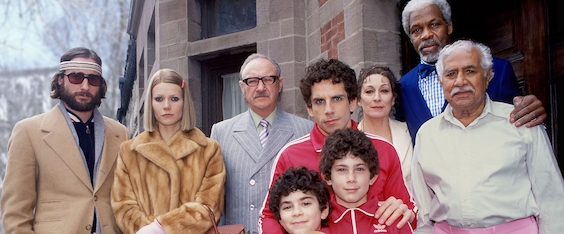
    The Royal Tenenbaums
    The Royal Tenenbaums


    Memories of Murder
    Memories of Murder

    Some noteworthy exclusions…

    • To Kill a Mockingbird actually made the list (in 6th), but it was on my list in 2015. I once had the rule that a film only had to sit out one year before being available for reinclusion, but, I dunno, I like mixing it up. But if I don’t watch it anyway during 2019, I might let it back in for 2020.
    • If I hadn’t ruled out films I don’t own, the “true top 12” (i.e. based on score alone) would’ve included In the Mood for Love, , Cinema Paradiso, Andrei Rublev, Come and See, and A Separation.
    • If I didn’t rule out repeat directors, Charlie Chaplin’s The Kid would’ve been in 8th place.
    • If I’d kept the “must own/have access to it” rule but allowed films that were only on one list, it would’ve included Dangal, Taare Zameen Par, Ordet, Ugetsu Monogatari, and Fanny & Alexander.
    • Finally, if I’d had to own it and have it on multiple lists, but it didn’t have to be on IMDb’s or TSPDT’s, then Scott Pilgrim vs. the World would’ve been the 12th film.

    Of course, just because something got cut out of my WDYMYHS, doesn’t mean I couldn’t choose to include it in my Blindspot picks…

    What Do You Mean You Haven’t Seen…? 2018

    In an emulation of last year, in 2018 I’m setting myself the goal of watching not only a dozen Blindspot films, but also a decad WDYMYHS movies. Last year there was a reason for this (marking my tenth blogiversary); this year, I’m doing it just because it worked before.

    In another similarity to last year, my Blindspot list is a ‘free choice’ selected from films I either already own or have ready access to (i.e. they’re available on Netflix / Amazon Prime / etc), while my WDYMYHS list is chosen by mixing together lists of must-see movies to find those that consensus says I should’ve seen.

    To select this year’s ten, I noted films from IMDb’s Top 250 (or whatever they want to call it nowadays) that I already owned or had ready access to, then saw which were also on They Shoot Pictures, Don’t They?’s 1,000 Greatest Films. Then I narrowed that long-list to films that also helped complete a list on iCheckMovies. After ruling out Princess Mononoke under my old “no duplicate directors” rule (because I really wanted to include Nausicaä on my Blindspot list; and also because I’d already had a shot at Mononoke during 2015’s list), these were my final ten — listed here in whatever order they ended up ranked.


    Das Boot


    The Lives of Others


    Full Metal Jacket


    Stalker


    Amadeus


    Scarface


    Ran


    Casino


    The Elephant Man


    Rocky

    Exciting observation: six of them are from the ’80s. No idea how or why that came about.