
Denis Villeneuve | 121 mins | Blu-ray | 2.40:1 | USA / English & Spanish | 15 / R
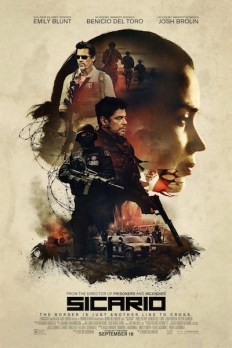 Fighting a losing war against Mexican drug cartels in Arizona, FBI agent Kate Macer (Emily Blunt) is keen to be enlisted to an interagency task force run by Department of Defense consultant Matt Graver (Josh Brolin). Taken along for the ride but kept in the dark, Macer becomes increasingly concerned that all is not as it seems — especially when it comes to Alejandro (Benicio Del Toro), a mysterious task force member whose motives seem to be a big secret…
Much like his previous film, Prisoners, director Denis Villeneuve here takes a storyline that could fuel a run-of-the-mill genre picture (a war-on-drugs action-thriller) and instead turns it into something altogether classier. In this regard, I’m tempted to invoke the work of directors like Hitchcock and Fincher. Sicario isn’t necessarily a film I could picture either of them making (maybe Fincher), but the way it takes a “genre movie” and elevates it artistically has a certain similarity. That said, like those directors at their best, Villeneuve here works primarily with tension and suspense — words I’m about to thoroughly overuse in this review, but they encapsulate the feeling of watching Sicario so well.
Any viewers seeking simple action thrills will not be satisfied with the sequences offered here, but the way the scenes rely on suspense rather than bullet choreography makes for a supremely tense movie; one that can grip you like a vice and only occasionally let up, letting you catch your breath before it doubles down. As viewers, we’re positioned alongside Macer, kept out of the loop and so unsure who to trust and what exactly is going on for much of the movie. In that respect the plot demands a certain level of attention, because it isn’t always spelled out in nice bitesize chunks of exposition.
 Arguably, the film loses its way a little when it does reach that point. Answers are forthcoming eventually, and the third act occasionally abandons the conflicted and complex world that came before it for more straightforward and satisfying turns of events. Fortunately, the film survives such wobbles thanks to the strengths it’s already established, and with an even deeper dive into moral greyness even while it seems to be offering a simplistically fulfilling climax.
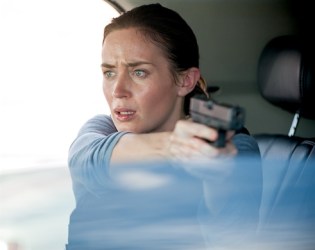
Blunt is excellent as Macer, an outwardly tough-as-nails tactical specialist who is hiding a less assured core. If that sounds almost trite then it doesn’t play that way, afforded greater subtlety by Blunt and screenwriter Taylor Sheridan. Macer is a capable agent, but is she capable of operating in Graver’s world? The only other character and performance that really stands beside Blunt is Del Toro’s Alejandro. Around 90% of Alejandro’s dialogue was cut by Del Toro and Villeneuve before shooting began, and it works to everyone’s favour. He’s an unreadable presence in his silence, seeming both brooding and almost bored, like he’s fed up waiting for the task force’s duties to get him where he wants to be. His silence is threatening, even after his demonstrated skill-set is (to Macer, anyway) a kind of comfort. It’s only fitting that the final scene — the real climax of the movie, hitting hard on its emotional arcs even after the plot is done — is a two-hander between Blunt and Del Toro, loaded with as much tension and suspense as any other part of the movie.
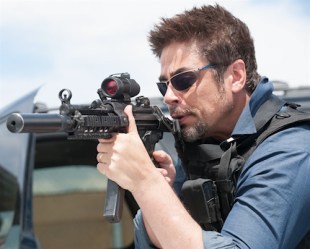 Brolin may be a headline lead alongside those two, but his character is given little to work with beyond being a son-of-a-bitch who keeps Macer onside with (deceitful) charm. He’s fine but unremarkable in that role. Perhaps the sequel will give him more to work with. More memorable is Daniel Kaluuya as Macer’s FBI partner, Reggie Wayne. More time spent with Macer and Wayne working together wouldn’t go amiss. Jon ‘the Punisher’ Bernthal also pops up in a small part, imbuing what could’ve been a sketchy plot-driver with more believability.
The film’s other real stars are behind-the-scenes. First, the Oscar-nominated cinematography by Roger Deakins. I must admit I was a little underwhelmed at first, as the film starts in the flatly-lit daytime world of the Southern US / Mexico region. Not that it’s poorly shot, just that very little of it struck me as particularly remarkable. As the film transitions to more nighttime settings, however, Deakins’ work comes vibrantly to life, starting with some majestic golden-hour shots of ominous cloud-darkened skies, which seem to visually overwhelm Macer as she begins to realise she’s out of her depth. Later, the task force descend into tunnels, and the film presents a mixture of ‘regular’ photography — so dark that only certain things can be glimpsed in the patches of light — and both thermal- and night-vision shots. I guess it’s a cliche to say the use of headcam-type footage puts the viewer there with the characters, but here it really does. Most extraordinary are the thermal shots: captured for real with a thermal vision camera, rather than a post-production special effect, they look like some heightened-reality video game, their eeriness only adding to the tension.
 Tension is definitely the name of the game when it comes Jóhann Jóhannsson’s score, which was also Oscar nominated. Dominated by elongated, heavy strings and pacey, heartbeat-emulating percussion, it makes the threats lurking in every corner feel tangible; makes the sense that everything is doomed and liable to go south at any moment palpable. It’s a major contributor to the film’s mood.
It may have familiar genre building-blocks at heart, but between Sheridan’s focus on character, Blunt and Del Toro’s nuanced performances, Deakins’ fantastic imagery, Jóhannsson’s intense music, and Villeneuve’s skilful orchestration of every aspect, Sicario emerges as a film that exceeds the artistic and emotional effect you’d typically expect from a “genre movie” without sacrificing the thrills that should be inherent.

Sicario is available on Netflix UK as of yesterday.
It placed 1st on my list of The 20 Best Films I Saw For the First Time in 2016, which can be read in full here.
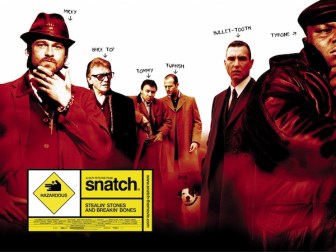 Guy Ritchie’s second feature met with relative indifference 16 years ago, consensus deeming it
 Paul Thomas Anderson — the fêted writer-director of
 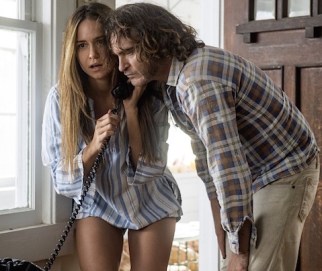 Anderson chooses to realise the movie mostly in long, unbroken takes, which not only lets the photography shine, but also allows his cast free rein to construct their own performances. I’m not sure how much that pays off, but it’s certainly not a hindrance. Turns from the likes of Josh Brolin and Martin Short border on the memorable, though your mileage will vary on if anyone truly achieves it, with the possible exception of Katherine Waterston, who surely deserves more — and more prominent — roles. Other recognisable faces (Jena Malone, Eric Roberts, Reese Witherspoon) are wasted in one- or two-scene appearances, which I suppose we could kindly call cameos.
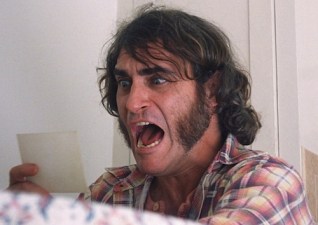 I am in neither of those groups, however. The aforementioned fleeting aspects of quality weren’t enough to swing it for me either. Sadly, I’ll be chalking this up alongside
 Marvel Studios takes its boldest step yet, moving away from the present-day superhero milieu of its previous movies to a galaxy far, far away for a space opera epic. Its success, both critically and commercially, has cemented the Marvel Cinematic Universe as an infallible force in the current movie world. But, really, how good is it?
 The worst offender is the pod chase through Knowhere, a several-minutes-long sequence that registers as little more than a blur. There’s a shocking lack of clarity to its images, even by today’s standards. Maybe it’s better in 3D, when I guess the backgrounds would sink into the distance and important elements would be foregrounded; but in 2D, you can’t see what’s meant to be going on for all the fast-moving colour and split-second cuts. Almost as bad, though for different reasons, is the climax. It takes up an overlong chunk of the movie and at times feels repetitive of too many other Marvel climaxes — oh look, a giant spaceship crashing into a city! If anything, the film gets ‘worse’ as it goes on. Perhaps not in a very literal sense, but as the blustering action climax takes over, it moves further away from the stuff that makes it unique and interesting.
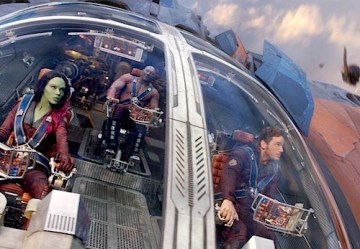 It isn’t even called Nova City, but I don’t have the foggiest what it is called because the film didn’t make me feel I should be learning it. Some more effort making sure we knew why that place mattered, even if it was just a clearer depiction of all the planning for its defence, might have sold the entire climax better.
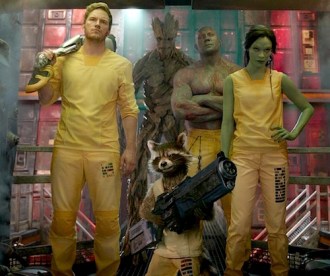 especially the overlong climax. Joss Whedon commented of his own Avengers film (as I quoted in
 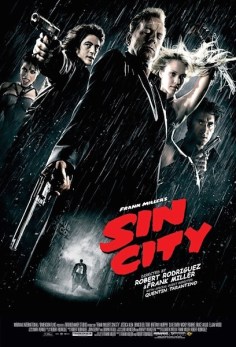 Adapted from a series of graphic novels by Frank Miller, Sin City is a noir homage, replete with high-contrast black-and-white cinematography, dialogue so hard boiled you couldn’t crack it with a sledgehammer, and all the requisite downtrodden heroes, corrupt authority figures, dangerous dames, etc. There’s also the very modern inclusion of shocking ultra-violence and nudity, but I guess a fair degree of that would’ve crept into classic noir if the mores of the time allowed — pretty much the point of the genre is the dark grubbiness of the world, after all.
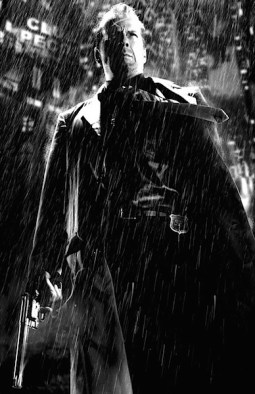 The DVD-premiering extended version, dubbed Recut & Extended (or, in the US, “Recut, Extended, Unrated”) is even more faithful to the comics than the theatrical version. Some of the books’ scenes that were excised are now included, and the structure has been rejigged to present each of the four stories one by one in their entirety (whereas the original version had a small amount of intercutting). The total running time is 17 minutes and 40 seconds longer, an increase of some 14.2%… which is a thoroughly misleading figure. As a presentational choice, each of the four stories is offered for individual viewing, plus option to “play all”. However, rather than that showing them as a single film, they play as four shorts back to back, with a full set of section-specific end credits rolling each time. The actual amount of new material in the film itself is
  For one, the second scene belongs more truly to The Big Fat Kill (the final story, starring Clive Owen’s Dwight and the whores of Old Town led by Rosaria Dawson). For another, because this recut purports to be in chronological order, The Customer is Always Right plays second. So we get 47 minutes of Bruce Willis protecting Jessica Alba from a paedophile in That Yellow Bastard, then we get a one-scene story that rightly belongs at the beginning (complete with title card, now 50 minutes into the ‘film’), then we get a scene that, actually, belongs in a completely different place. The next full story is The Hard Goodbye (the one with Mickey Rourke under a slab of prosthetics as Marv), followed by The Big Fat Kill — and it’s after this that the second scene with The Man belongs. Divorced of that context, the scene is robbed of almost all its meaning.
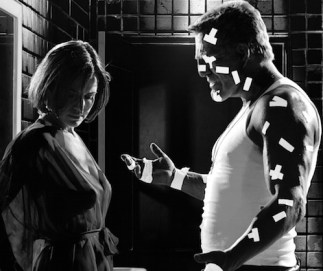 In the end, I enjoyed Sin City considerably less than I did nine years ago in the cinema. This is partly down to the restructure, but I’m not sure wholly so. I don’t think it’s aged particularly well, as things produced at the forefront of emerging technology are wont to do: some of the CGI looks dirt cheap, the shot compositions are often unimaginatively flat, and there’s an occasional internet-video style to the picture quality. It’s not just the visuals, sadly, with amateurish performances from reliable actors, possibly a result of the hurried filming schedule. Just because you can capture an entire part in a single day doesn’t mean you should. Then there’s Jessica Alba, who’s just awful here.
 None of the present additions are game-changing, and though some are good in their own way, there’s nothing noteworthy enough to compensate for the destruction of the original cut’s well-balanced structure. For the average punter — and certainly for the first-time viewer — the theatrical cut is unquestionably the way to go.
 100Films.co.uk