
Edward Buzzell | 83 mins | DVD | 1.33:1 | USA / English | U
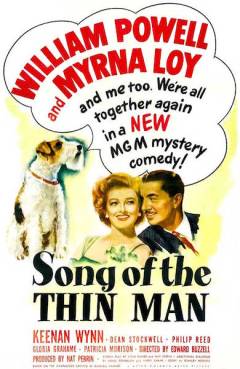 The final film in the Thin Man series sees married detective duo Nick and Nora Charles (the ever-excellent William Powell and Myrna Loy) getting embroiled in the world of jazz musicians, after a friend’s fiancé is accused of murdering a band leader.
After the small-town detour of the previous film, Song sees the Charleses back in the more glamorous environs we associate with the series, all swanky apartments and floating casinos. That’s a big plus point for me, at least. The mystery is a particularly solid one, with a nice denouement that plays out slightly differently to the series’ regular formula. I was less keen on all the jazz hipster dialogue from the supporting cast. It’s played for laughs, leaving Nick and Nora as lost as the viewer, but gets tiresome. Perhaps it’s an acquired taste, but I had no time for it.
An early-career Gloria Grahame is mostly wasted in a slight role, while trivia-spotters will enjoy a 10-year-old Dean “Quantum Leap” Stockwell as Nick Jr. Thankfully the kid isn’t allowed to dominate proceedings too much, though does lead to a bizarre sequence where Nick has flashbacks while about to smack his bottom. I’d say it sounds weirder written down than it plays in the film, but I’m not sure that’s true. More sadly, there’s too little of Asta for my taste.
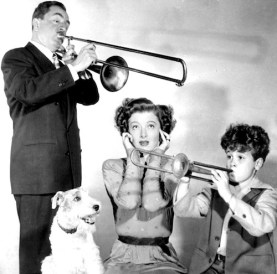 Apparently Loy made it clear before filming began that this was to be the last Thin Man film. Somewhat odd, then, that it’s one of the few to end with an allusion to Nick continuing his detective work in the future, whereas normally he’s being dragged out of retirement each time and happy to return to it by the end (which we don’t believe, of course). Either way, it was probably a wise decision on the part of Mrs Charles, as the law of diminishing returns had kicked in by this point.
That said, after six instalments, it’s pleasurable to be able to say there’s no such thing as a bad Thin Man film. The earlier entries may be the very best, but every one has something fun to offer. This may be where the Thin Man’s song ended, but his melody lingers on even now.

Read my reviews of all the Thin Man films on Thin Man Thursdays.
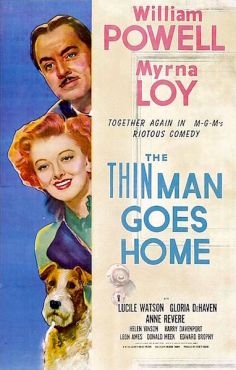 After four glamorous adventures, high-living sleuths Nick and Nora Charles (William Powell and Myrna Loy) head to small-town America to visit his parents (Harry Davenport and Lucile Watson), and naturally find themselves embroiled in a murder plot.
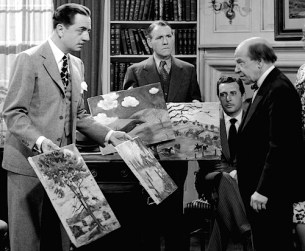 then no one would’ve been murdered. (Probably.)
 This time it’s not personal for Nick and Nora Charles (the joyous William Powell and Myrna Loy), as they stumble upon the murder of a race-fixing jockey and the subsequent killing of a corrupt journalist… and then one of their friends (Barry Nelson, aka
 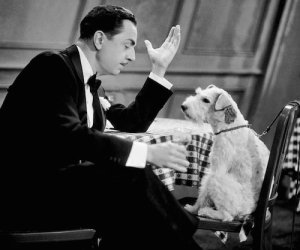 As murder mysteries go, the Thin Man series tends to offer plots that are somewhere between perfunctory and over-complicated to the point of being unsolvable, and Shadow is a typical example. But that doesn’t matter a jot, because the story’s abundance of incident keeps things moving, and the real entertainment value lies in the comedy chops of the three leads: Powell, Loy, and, of course, Asta the dog.
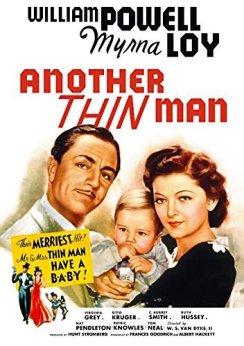 Husband-and-wife detective duo Nick and Nora Charles (William Powell and Myrna Loy) — now with a baby in tow — are once again coerced into investigating a crime when the manager of Nora’s estate fears a dismissed employee is plotting murder.
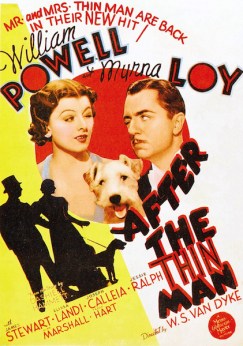 Immediately after their New York Christmastime adventure in
  There’s also an increased role for the couple’s dog, Asta, granted his own subplot as he has to fend off a philandering Scottie with intentions toward Mrs Asta. I make no apologies for preferring this over the previous film in part because there’s more amusing doggy action.
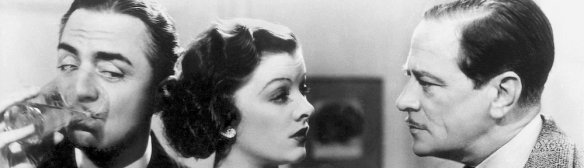
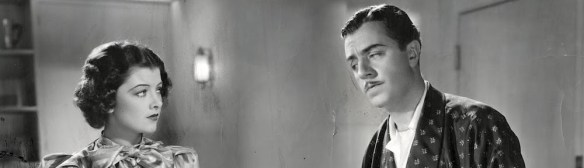
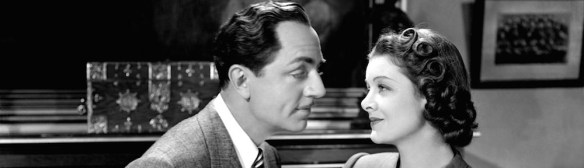

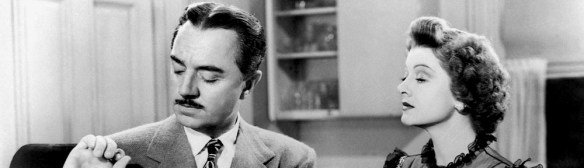
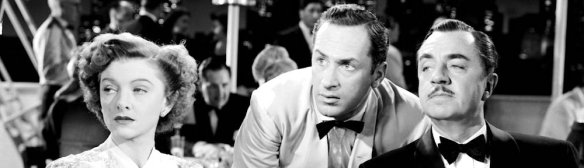
 Produced as a B-movie, but eventually nominated for four of the biggest Oscars (Picture, Actor, Director, Screenplay
 like a Christmas party which is regularly interrupted by victims and suspects. Even the final scene, a rambling and none-more-Christie-like “gather all the suspects and reveal the answers” dinner party, seems natural because of the characterisation throughout the rest of the film. Loy’s part may not be quite as showy — as demonstrated by its failure to gain an Oscar nomination — but she’s an invaluable half of the double act.
 100Films.co.uk