And so I reach the pinnacle of my list — my most favourite films I’ve seen for the first time in the past ten years. (Well, if we’re being precise, in the past ten years and three months, but not counting anything from the last three months. But that’s less snappy.)
Over three previous posts I’ve counted down #100 to #11, but here’s the perfectly rounded number everyone loves for a list: the top ten.


Before The Matrix there was Dark City, which tackles some of the same philosophical issues as the Wachowskis’ trilogy, only in a less opaque and verbose fashion — and, as I said, did so first. Of course, it lacks the groundbreaking action sequences that made The Matrix such a hit, but as a thoughtful piece of stylish sci-fi noir it probably bests its better-known thematic cousins. I also reckon it’s still a bit underrated… including by me, really, because it’s nine years since I first watched it and I still haven’t got round to seeing the Director’s Cut. (Note to self: fix that.)
The Adventures of Tintin: The Secret of the Unicorn

1st from 2014
(previously 2nd | original review)
Calling on the same skill set that produced the Indiana Jones movies, Steven Spielberg created an adventure movie that perfectly balances plot, action, and humour. Despite the freedom afforded by crafting the entire thing in CGI (rendered with stunning realism by Weta), Spielberg knows when to hold back and maintain a level of realism, only to cut loose when warranted. The top end of this list definitely skews blockbustery-y — well, it is “favourite” rather than some kind of “objective best” (not that that’d be strictly possible anyway) — but, nonetheless, I think Tintin is a very fine and underrated example of the form.
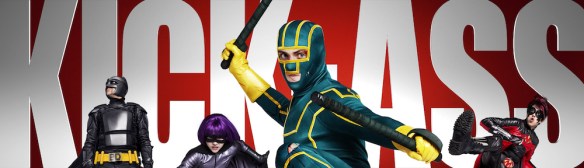
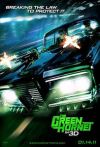
As Watchmen was to superhero comics, so Kick-Ass is to superhero films: taking familiar building blocks from other films and TV series, it deconstructs the genre through a “what if someone tried to be a superhero for real” storyline, asking questions about the glorification of violence and the sexualisation of its characters — all while being a funny and exciting action-comedy. Perhaps it’s having its cake and eating it, and that leads some people to miss the point (some by enjoying it a bit too much, some by thinking it has nothing to say), but I don’t think that stops it being one of the best and most thoughtful superhero movies yet made.

It’s felt like you can’t escape vampires in film and TV for the last couple of decades, but trust a European movie to give them a unique spin, right? So it’s both a coming-of-age-y arthouse-y movie about two 12-year-olds and first love, and a scary horror movie about violent supernatural creatures. It works by not shortchanging either aspect, instead combining them to transcend genre boundaries. So it’s a genuinely touching, emotional and relatable drama, as well as a creepy and horrific fantasy thriller.

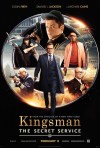
There’s always been a bit of a ‘wannabe’ air to the Mission: Impossible films, like maybe someone thought it could fill the void left by Bond disappearing post-Dalton, only it took so long to make it to the screen that Bond himself got there first in the shape of Pierce Brosnan. Nonetheless, the series has trundled along… though I don’t want to sound like I’m doing it down too much because I’ve always enjoyed it — the second one made my first 100 Favourites list, even. But Rogue Nation is where M:I finally out-Bonds Bond. Mixing action thrills and a genuine sense of jeopardy with just-ahead-of-reality gadgets, a knowing sense of humour, and a cast full of likeable characters, it’s superb blockbuster entertainment.
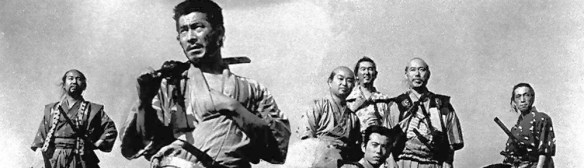
A phrase like “three-and-a-half-hour subtitled black-and-white movie” is going to conjure up a certain experience in the minds of most viewers. That experience is most probably nothing like Seven Samurai — although it is, of course, a three-and-a-half-hour subtitled black-and-white movie. On the surface it’s about a bunch of warriors protecting a small impoverished village that can’t defend itself, and it has a lengthy action-packed climax to deliver on such promise, but it rises above that thanks to its reflective attitude towards its characters and their very existence. No, wait, I said it’s not your typical three-and-a-half-hour subtitled black-and-white movie!

I’d wager most would rank Seven Samurai higher in the Akira Kurosawa canon, but I give Rashomon the edge because the form of its storytelling appeals to me. It retells the events surrounding a murder from the subjective viewpoint of each of the characters who were there, and of course their accounts differ. Its title has become a byword for such narratives, but there’s more here than just trendsetting plot construction — it’s a fantastically made film, exquisitely shot and magnificently performed.

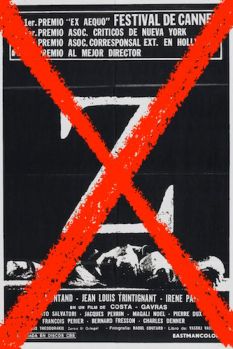
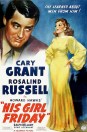
David Fincher’s meticulous true crime thriller may be his best movie — and when we’re talking about the man who made Se7en and Fight Club, that’s certainly saying a lot. It may look like it’s a murder thriller — it is about the hunt for a serial killer, after all — but in many respects it’s more about obsession and addiction, and how such things can come to take over your life. But if you don’t want to ponder that kind of thing, there’s always chills like the basement scene to keep you viscerally engaged. (The slightly-different Director’s Cut is the better version of the film and, if we’re being specific, would be my pick here; but I watched that a couple of years later, so it was the theatrical cut that figured in 2008’s top ten.)

The James Bond films have always been action blockbusters, and more often than not immensely popular and successful ones. Skyfall changed the game though: by hiring Oscar-winning director Sam Mendes it was instantly booted into Prestige Picture territory — and still managed to deliver the most financially successful film in the series’ long history, the first billion-dollar Bond. But box office success is not why Skyfall is #2 on my list. It’s the beautiful cinematography; the way it adds thematic weight to the character without breaking the formula; the sense of Bond’s history without over-explicit reverence — and the way those aspects makes it both familiar and fresh at the same time. Plus it delivers on the action, larger-than-life villain, and one-liners just like a Bond film should. Its artistic success may be a case of the stars aligning and lightning striking (the lacking-by-comparison follow-up Spectre proved that), but Bond has rarely been better.
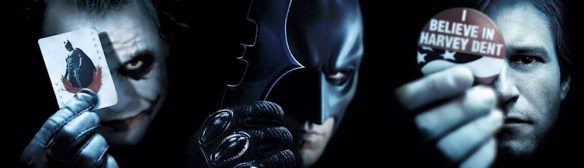
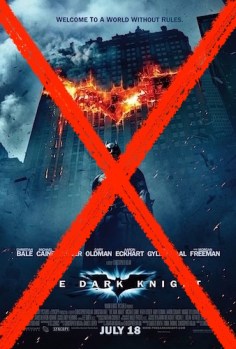
Eight years and three months ago, when I named The Dark Knight my #1 film of 2008, I wrote that “I’m unashamedly one of those who believe The Dark Knight isn’t just one of the best films of 2008, it’s one of the best films ever.” It’s nice to be able to stand by such a brazen assertion. And, having thought long and hard about what I would declare as my most favouritest movie from the 1,283 new ones that I’ve seen in the last decade, I clearly do stand by it. I love superhero movies, I love crime thrillers, and I love epics, so it’s no surprise that a movie which combines all three — and does them all well — would top a list of my favourite movies.
Now: what’s a good list without some statistics?

































 Taking one film at a time, the series will run all year, hopefully biweekly (as in twice a week, not fortnightly), meaning I can just squeeze all 100 in by December 31st. The plan is to post every Wednesday and Sunday, regular as clockwork (fingers crossed…) All the posts will be collated on
  I say “The Rules”, but there’s only one major caveat to the whole shebang: the only films eligible for inclusion were ones I’d watched before I started 100 Films. Is it cheating to flat-out exclude anything I’ve watched in the past nine years? Well, here’s the thing: all of those films have already been reviewed here, and while some would benefit from a deeper going-over, others have been thoroughly covered as it is — if I were to review
  Throughout the selection process, value judgements have to be made — some films lose out on the day that might’ve made it on another. The biggest losers (as it were) were a handful of films I remember loving but have never got round to re-watching. As I’d only seen them once, and over a decade ago at that, I didn’t feel qualified to include them instead of films I was more certain of my opinion on. So pity Battle Royale, Butch Cassidy and the Sundance Kid, A History of Violence, JFK, The Mark of Zorro, Munich, Philadelphia, Where the Truth Lies, and several more — if I’d made the time for their re-viewing (and I did do some, just not enough), things might have been different.
 A certain kind of film makes up the majority of the list. “Juvenile” would be too strong a word; “mainstream” would not be far from the truth. Remember, this is a list compiled from films I first saw up to the age of about 20 (albeit selected from the perspective of being nearly 30). It was only at the very tail end of this time that my experience of cinema really began to broaden beyond what one might semi-pretentiously call the Anglospheric mainstream. That period of widening horizons overlapped with this blog’s birth, as you might observe from some of the films featured in
  The work-in-progress factor is even true of this list: it may be locked to films I first saw 10+ years ago, but re-watches and the shifting opinions of age can always bring change. By the end of this project (or the middle, or even the start), I might think I should’ve made some different choices. Even still, over the next year you’ll see an at-least-passable version of my 100 favourite films.


 10)
10)  9)
9)  8)
8)  7)
7)  6)
6)  5)
5)  4)
4)  3)
3)  2)
2)  1)
1)  #1
#1  #8
#8  #14
#14  #22
#22  #30
#30  #38
#38  #43
#43  #51
#51  #59
#59  #67
#67  #75
#75  #83
#83  #91
#91  #99
#99  #107
#107  #115
#115 
 #20a
#20a  100Films.co.uk