

Country: USA, Germany & Czech Republic
Language: English, French, German, Dutch & Italian
Runtime: 119 minutes
BBFC: 12A
MPAA: PG-13

Original Release: 14th June 2002
UK Release: 6th September 2002
First Seen: DVD, 2003
Stars
Matt Damon (Good Will Hunting, The Martian)
Franka Potente (Run Lola Run, Creep)
Chris Cooper (Lone Star, Adaptation.)
Clive Owen (Croupier, Children of Men)
Julia Stiles (10 Things I Hate About You, The Omen)
Director
Doug Liman (Swingers, Mr. & Mrs. Smith)
Screenwriters
Tony Gilroy (The Devil’s Advocate, Michael Clayton)
William Blake Herron (A Texas Funeral, Ripley Under Ground)
Based on
The Bourne Identity, a novel by Robert Ludlum.
The Story
Pulled wounded from the sea, Jason Bourne can’t remember anything about his life, but is a highly-trained combatant. That comes in handy when assassins begin to hunt him down, as he races across Europe with the aid of Marie, a German woman he bumped into, trying to establish the facts about his identity.
Our Hero
A man found floating in the ocean with two gunshot wounds in his back, who can’t remember his own name but can speak several languages and has knowledge of advanced combat skills. A laser projector implanted under his skin leads him to a safety deposit box in Zurich that contains thousands of dollars in cash, a gun, and an array of passports, from which he chooses a name: Jason Bourne.
Our Villains
The CIA’s Operation Treadstone, led by Alexander Conklin, who have an interest in Bourne — an interest that may primarily involve killing him.
Best Supporting Character
Marie, a German woman in the right place at the right time when a chap offers her $20,000 to drive him from Zurich to Paris… and in the wrong place at the wrong time when it turns out a bunch of people want to kill him, and she’s acceptable collateral damage.
Memorable Quote
Bourne: “Who has a safety deposit box full of money and six passports and a gun? Who has a bank account number in their hip? I come in here, and the first thing I’m doing is I’m catching the sightlines and looking for an exit.”
Marie: “I see the exit sign, too. I’m not worried. I mean, you were shot. People do all kinds of weird and amazing stuff when they are scared.”
Bourne: “I can tell you the license plate numbers of all six cars outside. I can tell you that our waitress is left-handed and the guy sitting up at the counter weighs 215lbs and knows how to handle himself. I know the best place to look for a gun is the cab of the grey truck outside, and at this altitude, I can run flat out for a half mile before my hands start shaking. Now why would I know that? How can I know that and not know who I am?”
Memorable Scene
Bourne arrives at the US consulate in Zurich, unaware his presence has been flagged after visiting that safety deposit box. As security guards surround him, Bourne demonstrates just what he’s capable of…
Making of
One of the most fraught productions of recent times, the behind-the-scenes woes of The Bourne Identity are too numerous to recount here, but too interesting (if you’re interested in that kind of thing) to overlook. Check out #4 here for more, like this: “It’s very rare that a movie comes out a year late, has four rounds of reshoots, and it’s good.”
Previously on…
Adapted as a TV miniseries in 1988 starring Richard Chamberlain, which is reportedly much more faithful to the novel.
Next time…
Three sequels to date, with a fourth out this summer. 2008 video game The Bourne Conspiracy takes place in and around the first film, though doesn’t use Matt Damon’s likeness. The film series also revived interest in Ludlum’s books, and consequently nine continuation novels have been penned by Eric Van Lustbader since 2004, with a tenth planned.
Awards
1 Saturn nomination (Action/Adventure/Thriller Film)
1 World Stunt Award (Best Work with a Vehicle)
What the Critics Said
“With a two-year shooting schedule, a script that was redrafted more times than the cast care to remember, and Matt Damon making at least two movies (Ocean’s 11 and Spirit) in the middle of all that mess, this thriller comes to the cinemas as much a marked man as its central character. Some of the joins do show, especially towards the end of the film, when a couple of minor characters disappear completely, but by then it has been too much fun to start picking holes.” — Emma Cochrane, Empire
 Score:
 83%
83%What the Public Say
“a point of departure from the action/spy genre, further making The Bourne Identity an anti-genre-genre film, is the cat like reflexes of Jason Bourne. Our first vision of him in action (remember, we’ve never seen Matt Damon like this before) is when he is laying on a park bench in Switzerland, approached by two policemen who are about to accuse him of loitering. Within the conversation, Bourne discovers he can effectively speak Swiss-German, and then as soon as one of the officers reaches to touch him, he responds with breathtaking speed and accuracy and before we know it, there is a little pile of police at his feet. […] nice guy Jason can’t really help it. Posit this against the casual cold blooded and calculated moves of the relaxed and suave Bond” — Lisa Thatcher

The name’s Bourne, Jason Bourne… Maybe it was just me, but this Matt Damon action-thriller seemed to arrive under the radar back in the early ’00s (I don’t think I even heard of it until it was on DVD), but quickly established itself as the influential new kid on the block. Perhaps the Paul Greengrass-helmed sequels have been even more influential (they can be credited with bringing the much-derided ShakyCam style of filming action into the mainstream), but for me this first film is still the best of the bunch: an engaging mystery-thriller adrenalised by excellent action sequences.

#16 will be… Bourne again.
 2016 Academy Awards
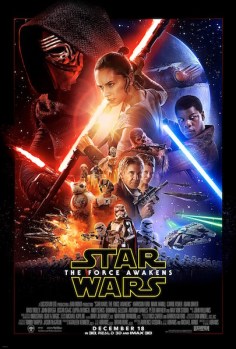 Star Wars: The Force Awakens is not the best film of 2015. Not according to the Academy of Motion Picture Arts and Sciences, anyway, who didn’t see fit to nominate it for Best Picture at tomorrow’s Oscars. Many fans disagree, some vociferously, but was it really a surprise? The Force Awakens is a blockbuster entertainment of the kind the Academy rarely recognise. Okay, sci-fi actioner
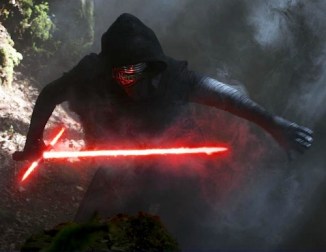
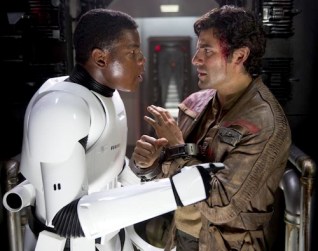
  I too could talk about the likeable new heroes; the triumphant return of old favourites; the underuse of other old favourites; Daisy Ridley’s performance; John Boyega’s performance; the relationship between Rey and Finn; the relationship between Finn and Poe; the success of Kylo Ren and General Hux as villains (well, I thought they were good); the terrible CGI of Supreme Leader Snoke; the ridiculous overreaction to the alleged underuse of Captain Phasma; that awesome fight between the stormtrooper with that lightning stick thing and Finn with the lightsaber; the mystery of Rey’s parentage; the mystery of who Max von Sydow was meant to be (and if we’ll ever find out); some elaborate theory about why Ben wasn’t called Jacen (there must be one — elaborate theories that will never be canon are what fandoms are good for); the way it accurately emulates the classic trilogy’s tone; the way it’s basically a remake of
  J.J. Abrams seems to have tricked some people into thinking he’s a great director with The Force Awakens (rather than just a helmer of workmanlike adequacy (when he’s not indulging his lens flare obsession, at which point he’s not workmanlike but is inadequate)), and I think that’s partly because it’s quite classically made. Yeah, it’s in 3D, but the style of shots used and — of most relevance right now — the pace of the editing help it feel in line with the previous Star Wars movies. Some of the more outrageous shots (often during action sequences) stand out precisely because they’re outside this norm. Perhaps we take for granted that Abrams delivered a movie in keeping with the rest of the series, because that’s The Right Thing To Do, but that doesn’t mean he had to do it. And the transitional wipes are there too, of course.
 No one knows what the difference is between these two categories. I’m not even sure that people who work in the industry know. As a layperson, it’s also the kind of thing you tend to only notice when it’s been done badly. The Force Awakens’ sound was not bad. It all sounded suitably Star Wars-y, as far as I could tell. That’s about all I could say for it. It feels like these are categories that get won either, a) on a sweep, or b) on a whim, so who knows who’ll take them on the night?
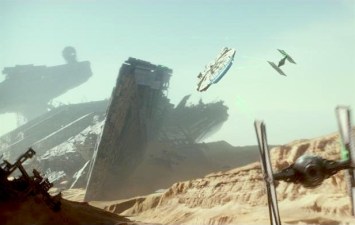 “restraint […] applying the basic filmmaking lessons of the first trilogy,” according to
 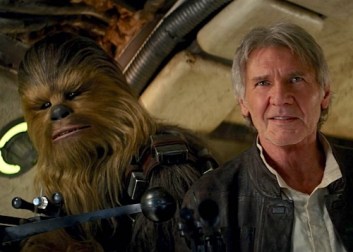 those elements aren’t gone about in an awards-grabbing fashion anyway. In the name of blockbuster entertainment, however, they’re all highly accomplished.
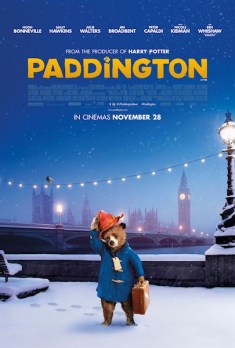 The signs weren’t good for Paddington as it geared up for release: its star voice actor, Colin Firth, pulled out late in production; on posters, the CGI lead character looked like the personification of the uncanny valley; and the BBFC rating that cited “sex references” made it sound like it had entirely the wrong tone for an adaptation of a beloved classic children’s book. But these portents were quickly consigned to history when the film received an adulatory response from critics and audiences alike.
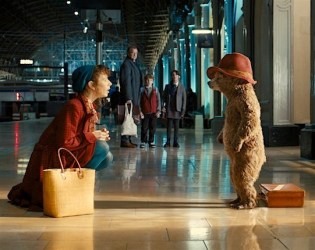 The rest of the cast are all very safe pairs of hands, meaning viewers can rest easy that, if there is a weak link, it won’t come from the performances. This is further cemented by supporting turns from the likes of (in order of appearance) Geoffrey Palmer, Imelda Staunton, Michael Gambon, Matt Lucas, Peter Capaldi, and Jim Broadbent, plus a host of faces viewers may recognise from British TV comedy.
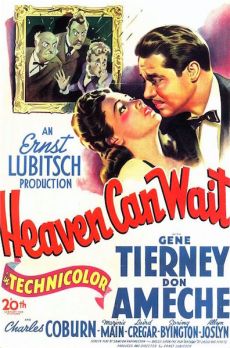 My first experience of Lubitsch’s US output concerns a man who arrives on Hell’s doorstep and reflects on his life to explain why he’s there.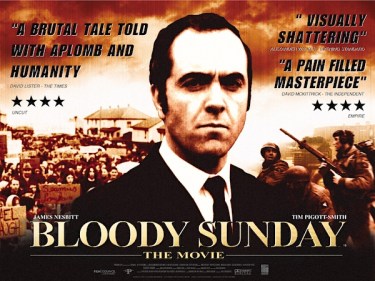

 A woman wakes up on a beach in the middle of the night. Stumbling away, she comes across a beach house with three strangers inside. They establish that the last thing they remember was being in a nightclub when there was some kind of accident, and then they woke up here. Fortunately, they’re not stupid and quickly twig this place is some kind of afterlife, then begin to work out how to get out — not that they’re helped by the lighthouse beam which causes immense pain, or that if they run away from the house they end up back at the house, or the vicious smoke-monster that’s flying around…
 AfterDeath is billed in part as a horror, emphasised by the skull imagery used on the poster. It’s not particularly scary though, so if you’re after that kind of thrill then it’s one to miss. As single-location mysteries go, it’s not remarkably original or exceptionally engaging, but the story and its revelations are solidly executed and the whole is decently performed, providing you don’t strain your eyes trying to see what’s happening.
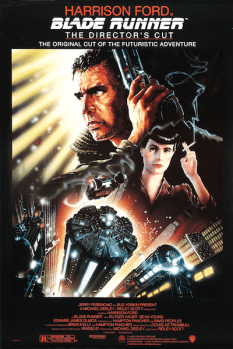

 The 24th official James Bond movie had a funny old ride on its cinema release a few months ago. It started well, with near-universal praise from UK critics; audience reaction was more mixed but erred towards the positive; then US critics tore into it, and US audiences (as usual) followed suit. The latter seems to have become the more accepted view, with the consensus seemingly that it’s decent enough, but a definite step down from the high of
 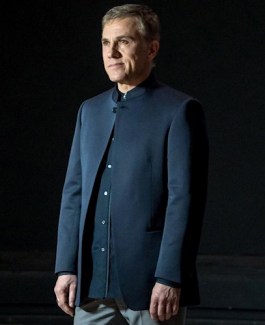 Spectre, to put it bluntly, pulls a
 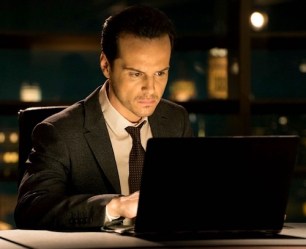 retaining the same general thrust. I still don’t think it works. There’s too much of M, Q and Moneypenny sat in an office trying to stop a man typing something into a computer (more on this in a minute), while Bond is busy running around a building and shooting at a helicopter. Personally, I’d’ve thrown it out and started again, but I guess they’d run out of time, and maybe it was better than the alternative.
 No, of course it isn’t, and it never was; but the point of Bond has never been realism. And besides, the reason you cast quality actors in minor roles is so they can pop in for a day or two and make their one scene exceptionally good. Bulk their part up if you’ve got a story to tell, by all means, but don’t shoehorn them in just because you’ve got them. For my money, Spectre is too much doing the latter.
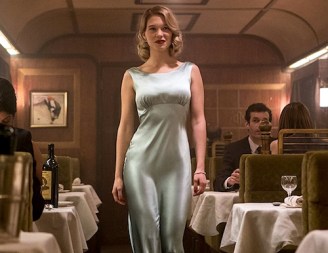 Or perhaps they’re just planning to go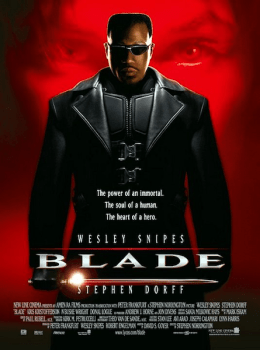



 So says Peter Jackson in the special features accompanying this extended cut of his trilogy-closing saga-ending sixth Middle-earth movie, as
  Most obvious, and most discussed, is the dwarves’ war chariot action scene, whose bloody decapitations saw the film earn an R in the US and 15 over here. A seven-minute action sequence in the middle of the battle, it’s by far the largest single addition, and is mainly notable for all that blood and its use of the word “jambags”. Somewhat ironically, the sequence was a last-minute addition (the physical chariot was the last thing built for the films), which even as they’re shooting it Jackson acknowledges is an indulgence, and then of course it got bumped to the extended edition for being just that.
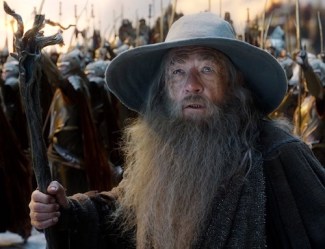 Not a sausage, unless I missed something. It didn’t bother me too much because, quite frankly, I can’t quite remember what it was all about; but when I inevitably watch the extended trilogy back to back one day, it may do then. That said, I can’t imagine it’s a major fault, but again highlights the built-on-the-fly, ill-thought-through state of expanding The Hobbit 2 into The Hobbit 2 and 3.
 100Films.co.uk