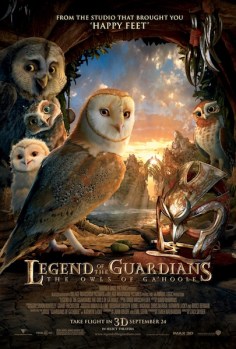
Legend of the Guardians: The Owls of Ga’Hoole (2010)

2016 #104
Zack Snyder | 93 mins | streaming (HD) | 16:9 | USA & Australia / English | PG / PG

Legend of the GuardiansLegend of the Guardians is pretty odd.

It’s an action-fantasy movie… starring owls. It’s animated, but in a dark, realistic way (think Rango with less cartoonishness and less light). It’s based on a kids’ book series… but directed by Zack Snyder, clearly reining in his R-rated impulses (violence occurs just off screen, leading to “did that happen?” confusion). The story has been relocated to Australia, the cast filled with well-known antipodean actors and their accents.

The cumulative effect is kind of surreal, retaining too much Snyderness to function properly as the kind of movie it wants to — perhaps should — be.

3 out of 5

Raiders of the Lost Ark (1981)

100 Films’ 100 Favourites #72
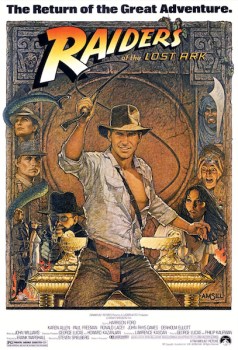
The Return of the Great Adventure.

Also Known As: Indiana Jones and the Raiders of the Lost Ark

Country: USA
Language: English (and German, Hebrew, Spanish, Arabic & Nepali)
Runtime: 115 minutes
BBFC: A (1981) | PG (1987)
MPAA: PG

Original Release: 12th June 1981
UK Release: 30th July 1981
First Seen: VHS, c.1991

Stars
Harrison Ford (Star Wars, Witness)
Karen Allen (Animal House, Starman)
Paul Freeman (The Long Good Friday, Mighty Morphin Power Rangers: The Movie)
Ronald Lacey (Take a Girl Like You, Red Sonja)
John Rhys-Davies (The Naked Civil Servant, The Lord of the Rings)

Director
Steven Spielberg (E.T. the Extra-Terrestrial, The Adventures of Tintin: The Secret of the Unicorn)

Screenwriter
Lawrence Kasdan (The Empire Strikes Back, The Bodyguard)

Story by
George Lucas (THX 1138, Return of the Jedi)
Philip Kaufman (The Outlaw Josey Wales, The Right Stuff)

The Story
1936: adventurer Indiana Jones is hired by the US Army to retrieve the mythical Ark of the Covenant, which they believe is on the verge of being uncovered in Egypt, before the Nazis can get their grubby mitts on it.

Our Hero
Professor of archeology, expert on the occult, and obtainer of rare antiquities, Indiana Jones. Good with a whip; not good with snakes.

Our Villains
Dr. René Belloq, essentially the evil Indy: a fellow archeologist with fewer scruples, who often takes credit for Indy’s hard work and is now in bed with the Nazis. They’re most memorably represented by creepy Gestapo agent Toht, played by Ronald Lacey, who was cast because he reminded Spielberg of Peter Lorre.

Best Supporting Character
The daughter of Indy’s mentor, and his one-time love, Marion Ravenwood, who’s roped in because she happens to possess an artefact with a clue to the Ark’s location. Feisty and capable of holding her own (some of the time, anyway), it’s a shame she didn’t appear in the initial sequels — at Lucas’ insistence, apparently (he also kept her out of the spin-off novels). She eventually returns in Kingdom of the Crystal Skull, the only character from the first three films to be brought back for that adventure (besides Indy, obv.)

Memorable Quote
Sallah: “Indy, why does the floor move?”
Indiana: “Give me your torch… Snakes. Why’d it have to be snakes?”

Memorable Scene
Goodness, where do we start? Well, how about the start! Having made his way safely through a boobytrapped cave, Indy switches a bag of sand for the idol he’s come to retrieve. Unfortunately the trap is not fooled, and Indy has to run out as the place collapses around him and all the traps are triggered — including, most famously, a giant rolling boulder.

Write the Theme Tune…
It’s only one of the greatest movie main themes of all time. Composed by John Williams (of course) it’s technically called The Raiders March, and is a combination of two ideas Williams wrote for Jones’ theme that Spielberg suggested be put together to make one piece.

Technical Wizardry
The film is naturally packed with stunts, one of the most memorable being when Indy is dragged under and out behind a moving truck. To achieve it safely, more clearance was created under the truck by constructing one that was higher than normal and digging out the centre of the road. The shot was filmed at 20fps, lower than the standard 24, so that when played back the truck appeared to be moving faster. The feat was performed by stuntman Terry Leonard, but Harrison Ford was actually dragged behind the truck for some shots. When asked if he was worried, Ford replied, “No. If it really was dangerous, they would have filmed more of the movie first.”

Truly Special Effect
The climax, when the Ark is opened, was a field day for ILM. Techniques used include “animation, a woman to portray a beautiful spirit’s face, rod puppet spirits moved through water to convey a sense of floating, a matte painting of the island, and cloud tank effects to portray clouds.” Plus the villains’ heads melt (a gelatine and plaster model exposed to a heat lamp), collapse (a hollow model with the air sucked out), and explode (which nearly landed the film with an R rating).

Making of
Have you heard the one about the scheduled sword fight and everyone being ill? You have? Oh, okay then.

Next time…
The film was a massive success, so has spawned tonnes of media. Primarily, three direct sequel films, with a fifth set for 2019. Then there’s the three-season TV series The Young Indiana Jones Chronicles, 13 adult novels, 33 Young Indiana Jones novels, 11 “choose your own adventure”-style books, eight German novels (which have never been translated into English), numerous comic books, and 19 computer games, including nine with original storylines and two Lego Indiana Jones games. Also, a stunt show at Walt Disney World in Florida based on Raiders that has been running for 27 years. Whew!

Awards
5 Oscars (Editing, Art Direction-Set Decoration, Sound, Visual Effects, Special Achievement in Sound Effects Editing)
4 Oscar nominations (Picture, Director, Cinematography, Score)
1 BAFTA (Production Design/Art Direction)
6 BAFTA nominations (Film, Supporting Artist (Denholm Elliott), Cinematography, Editing, Music, Sound)
7 Saturn Awards (Fantasy Film, Actor (Harrison Ford), Actress (Karen Allen), Director, Writing, Music, Special Effects)
2 Saturn nominations (Supporting Actor (Paul Freeman), Costumes)
Won the Hugo for Best Dramatic Presentation

What the Critics Said
“Yes, it’s as entertaining as you have heard. Maybe more so. Raiders of the Lost Ark is, in fact, about as entertaining as a commercial movie can be. What is it? An adventure film that plays like an old-time 12-part serial that you see all at once, instead of Saturday-to-Saturday. It’s a modern Thief of Baghdad. It’s the kind of movie that first got you excited about movies when you were a kid. (Translation for today’s children: It’s better than anything on TV.)” — Gene Siskel, Chicago Tribune

Score: 94%

What the Public Say
“Spielberg and George Lucas had, in the same year, rewritten the rules of the science fiction genre; Lucas with Star Wars and Spielberg with Close Encounters of the Third Kind, but what could they do together? Greatness, it turns out. Their contribution: Raiders of the Lost Ark, one of the best, most exciting, most brilliantly written action movies of all time. It’s fun, it has a great sense of wonder and adventure. It’s scary, it’s bloody, it’s violent but you never come away feeling unclean. It has a hero, Indiana Jones, who is fallible but not a wimp. […] I can talk all day about Raiders of the Lost Ark, but I must simply conclude that the movie is just plain fun” — Jerry, armchaircinema

Verdict

George Lucas and Steven Spielberg teamed up for the first time here, recycled elements from movies beloved in their youth, and produced something new and exciting that is still a reference point for blockbusters 35 years later. (We’re getting homages to homages now, aren’t we? Weird.) It’s pretty much a perfect adventure movie: relentlessly paced, packed with action, lightened with humour, full of likeable heroes, who are brave and competent but also a little bit flawed, and hissable villains, with scene after scene of imaginative situations and fabulously staged derring-do. It’s perfectly distilled pulp adventure, and pure cinematic entertainment.

Many Bothans… died to bring us #73.

Fast & Furious 7 (2015)

aka Furious Seven

2016 #52
James Wan | 132 mins | streaming (HD) | 2.35:1 | USA, Japan & China / English | 12 / PG-13

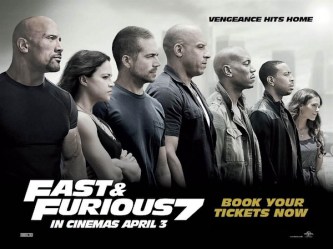
Fast & Furious 7The franchise that can never make up its mind about what each instalment’s called continues with its most outrageously ludicrous entry yet.
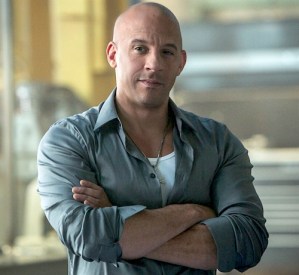
Picking up from the events of the last one, this time our ‘family’ of car-racing heisters are targeted by their previous enemy’s brother, Deckard Shaw (Jason Statham). After Shaw’s first attempt to kill our heroes fails, they’re recruited by covert ops agent Mr Nobody (Kurt Russell) to obtain a computer surveillance program, on the promise that, if they’re successful, Nobody will help them deal with Shaw. Because when you’re in charge of a covert ops team, you don’t have your own guys for that kind of thing. Anyway, this leads us on a globe-trotting mission that involves things like parachuting cars into Azerbaijan and using cars to leap between skyscrapers in Abu Dhabi.

So yes, the action is ridiculous and implausible. Even the stuff that doesn’t seem physically impossible is overblown. But it’s so ludicrous that the film can’t possibly be trying to claim it’s real anymore, and therefore it kind of works — they’ve committed to it. Though anyone who started out enjoying this series for its broadly-realistic car-racing thrills must be pretty disappointed in it by this point.

Despite that, the series is beginning to feel increasingly “fans only”. That’s the way of all things these days, I suppose. Long gone are the days when movie series aimed at accessibility, each entry fundamentally a standalone adventure for a popular hero. Serialisation is the new discreteness, and it pays dividends for Marvel and, indeed, for Fast & Furious: in the same year as the return of Star Wars, the return of Jurassic Park, the return of the Avengers, the return of James Bond, and the return to form of Pixar, Furious 7 was still the third highest-grossing film worldwide, and sixth of all time.

But I still find it remarkable how well it did at the box office, because while most of those other films are actually very accessible to newcomers, this is resolutely a film for those well-versed in the franchise. Its story joins the dots between several previous films — as far back as Tokyo Drift, four films and nine years ago — but seems to assume you’ll know what those dots contain, because it only shows the joins. Even as someone who knows what events are being linked (that Tokyo Drift connection has been long-awaited!), it feels a bit disconnected and piecemeal. And it doesn’t help anyone that Tokyo Drift’s Lucas Black looks like he’s aged every single day of the nine years since his last appearance…

Of course, you can’t ignore that part of the reason for the film’s financial success is the death of Paul Walker, particularly as it occurred halfway through production and the filmmakers understandably felt the need to give one of the series’ primary stars a fitting send-off. With seemingly little of his part shot, his performance is mostly faked. It was created with a mixture of techniques, many of them pioneering — while we’ve seen computers being used to generate a performance for a deceased actor for over 15 years now (I believe Gladiator was the first), those tend to be for very short scenes and/or filtered through some other medium (like Laurence Olivier appearing on a videoscreen in Sky Captain), whereas here they’ve attempted to create a co-lead-sized role. Truthfully, the effect is variable. If you’re looking, it’s always obvious (well, I say that — if it was so good that you couldn’t see it, you wouldn’t know you were seeing it). However, if you’re not looking too hard then a lot of it is very well done… though some remains pretty glaring. At the end of the day, you know why they did it, but it still rather draws attention to itself. However, a post-climax finale is a nice send-off for Walker (again, you can’t deny that it’s more about paying tribute to the actor than writing out the character), and represents a moment of catharsis that clearly worked for the cast, crew, and the series’ die-hard fans.

The quality of other elements is rockier. Kurt Russell’s spy is a cool new character, but can’t escape the feeling he’s been introduced to play a bigger role in the inevitable sequels. Jason Statham has clearly been cast for his ability to fight, which he does well enough, but a bit more dialogue-based antagonism might’ve added some flavour. He gets a very cool opening scene, though. And while a coherent story is not likely to be at the forefront of many people’s minds when it comes to these movies, the plot is nonetheless scattered with holes. Like, the gang’s entire motivation to undertake the mission is so they can borrow the software to track down Deckard… but he keeps showing up anyway.

But hey, what does it matter? The point is the big dumb fun of the action sequences, be they well-choreographed and -shot fisticuffs, excellent stunt driving, or computer-generated ridiculousness. Is it okay to just give a movie’s plot a free pass like that? Sometimes, I think it is. Furious 7 is an action movie, in a fairly pure sense of the term, and action it delivers.
4 out of 5

Pride and Prejudice (1940)

2016 #122
Robert Z. Leonard | 113 mins | TV | 4:3 | USA / English | U

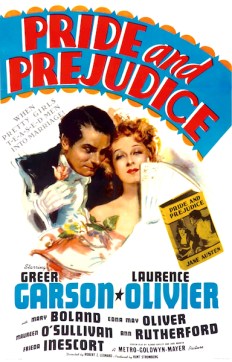
Pride and PrejudiceThe first adaptation of Jane Austen’s ever-popular novel, MGM’s film is a compromised endeavour: by executives softening dialogue and rewriting characters; by changing its setting to permit grander costumes; by Gone with the Wind using all the Technicolor stock, forcing the lavish production to shoot in black-and-white.
Nonetheless, it emerges a solid take on Austen (until the ending goes thoroughly astray). Laurence Olivier is a suitably moody Darcy and, though far too old for the part, Greer Garson makes a witty Lizzy.

Massively overshadowed by later adaptations, this remains an entertaining version for anyone not too concerned about textual faithfulness.

4 out of 5

Pulp Fiction (1994)

100 Films’ 100 Favourites #71

You won’t know the facts
until you see the fiction.

Country: USA
Language: English
Runtime: 154 minutes
BBFC: 18 (uncut, 1994) | 18 (cut on video, 1995) | 18 (uncut on video, 2011)
MPAA: R

Original Release: 10th September 1994 (South Korea)
US Release: 14th October 1994
UK Release: 21st October 1994
First Seen: TV, 18th December 1999 (probably)
(I would’ve guessed several years later than that, but I definitely watched it on BBC Two and I definitely wasn’t 18, so (with reference to the BBC Genome Project) this is the only plausible option. That’s thrown all of my “first seen” guesses into doubt now…)

Stars
John Travolta (Grease, Face/Off)
Samuel L. Jackson (Loaded Weapon 1, Unbreakable)
Uma Thurman (Dangerous Liaisons, Gattaca)
Ving Rhames (Dave, Mission: Impossible)
Bruce Willis (Die Hard, The Fifth Element)

Director
Quentin Tarantino (Reservoir Dogs, Kill Bill)

Screenwriter
Quentin Tarantino (From Dusk Till Dawn, Jackie Brown)

Story by
Quentin Tarantino (Natural Born Killers, The Hateful Eight)
Roger Avary (Killing Zoe, The Rules of Attraction)

The Story
A chronologically-shuffled collection of interconnected short crime stories, including a hitman who has to take his boss’ wife for a nice night out, a boxer who refuses to throw a fight, the clean-up after a misfire, and a diner hold-up gone sideways.

Our Heroes & Villains
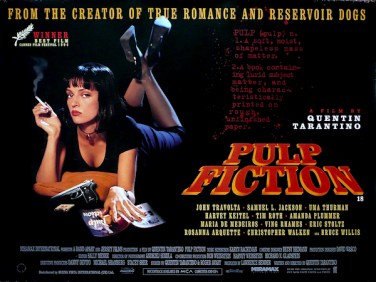
Most films can be divvied up into heroes and villains one way or another — I’ve certainly managed it for the previous 70 films in this list. Pulp Fiction muddies its waters considerably, with criminals for heroes at the best of times, and the “short story collection” style meaning there’s an abundance of characters anyway, some of whom arguably change sides from one tale to the next. Nonetheless, you’d have to point to hitmen Vincent Vega and Jules Winnfield, and their ever-so-Tarantino rambling conversations about nothing and everything, as the film’s primary duo.

Best Supporting Character
Christopher Walken’s cameo turn as an army vet passing down a watch with an… unusual history. (You might argue for Harvey Keitel’s character, but his Direct Line adverts have rather soured that.)

Memorable Quote
Vincent: “You know what they call a Quarter Pounder with Cheese in Paris?”
Jules: “They don’t call it a Quarter Pounder with Cheese?”
Vincent: “No man, they got the metric system. They wouldn’t know what the fuck a Quarter Pounder is.”
Jules: “Then what do they call it?”
Vincent: “They call it a Royale with Cheese.”
Jules: “Royale with Cheese. What do they call a Big Mac?”
Vincent: “Big Mac’s a Big Mac, but they call it Le Big Mac.”
Jules: “Le Big Mac. What do they call a Whopper?”
Vincent: “I don’t know, I didn’t go into Burger King.”

Quote Most Likely To Be Used in Everyday Conversation
“You mind if I have some of your tasty beverage to wash this down?” — Jules

Memorable Scene
Uma Thurman and John Travolta dancing — about as memorable a movie moment as there is.

Memorable Music
Famously, Tarantino never used to use original music (that’s now changed with his Ennio Morricone collaborations, of course), instead selecting tracks from his record collection — but his choices were so eclectic, obscure, and personal that many of them are now most associated with the films he put them in. Stand outs in Pulp Fiction include the title credits track, Dick Dale’s version of Misirlou; the song Mia and Vincent dance to, You Never Can Tell by Chuck Berry; and Urge Overkill’s cover of Girl, You’ll Be a Woman Soon.

Making of
The famous Bible passage memorised by Jules is mostly fictional. While one line is similar to text from the book, apparently the speech is almost word-for-word identical to the opening scene of the Sonny Chiba movie Karate Kiba.

Next time…
Travolta’s character, Vincent Vega, is supposedly the brother of Michael Madsen’s character from Reservoir Dogs, and at one time Tarantino was planning a movie starring the pair. It never materialised, obviously. There’s also the theory that all of Tarantino’s films take place in the same universe, which the director himself has confirmed.

Awards
Won the Palme d’Or
1 Oscar (Original Screenplay)
6 Oscar nominations (Picture, Actor (John Travolta), Supporting Actor (Samuel L. Jackson), Supporting Actress (Uma Thurman), Director, Editing)
2 BAFTAs (Supporting Actor (Samuel L. Jackson), Original Screenplay)
7 BAFTA nominations (Film, Actor (John Travolta), Actress (Uma Thurman), Director, Cinematography, Editing, Sound)
1 Saturn Award (Action/Adventure/Thriller Film)
2 MTV Movie Awards (Movie, Dance Sequence)
4 MTV Movie Awards nominations (including On-Screen Duo (Samuel L. Jackson & John Travolta) and Movie Song (Girl, You’ll Be a Woman Soon))
1 American Comedy Awards nomination (Funniest Supporting Actress (Amanda Plummer))

What the Critics Said
“this dizzily convoluted noir epic — one of the year’s best and most wildly inventive American movies — plunges us into a kind of retro-nightmare fantasy land. In Pulp Fiction, time keeps looping back on itself and we’re trapped in a cul-de-sac of double-crosses, absurdity, arousal and danger, never completely sure of where anyone’s going or why. [It] is shockingly violent, provocatively obscene and profane. It won’t just offend some audiences; it will offend the living hell out of them. Tarantino intends to rile people up. But it doesn’t feel like the usual high-tech, nasty blood-and-guts movie thriller […] This movie gets its charge not from action pyrotechnics but from its electric barrage of language, wisecracks and dialogue, from the mordant ’70s classicism of its long-take camera style and its smart, offbeat, strangely sexy cast.” — Michael Wilmington, Chicago Tribune

Score: 94%

What the Public Say
Pulp Fiction begins at its end. It is cyclical but we don’t realise this until we come to its final moments. Like many of Tarantino’s films, it is episodic and split into sections that overlap in both time and plot. It is far from linear; several threads occurring simultaneously, woven together by chance meetings, coincidence and common acquaintances. Travolta’s Vincent Vega is both alive and dead at the end of the film, such is the genius of the script. [It] is a film that demands a viewer’s attention, engagement and use of their brain to put the pieces of the puzzle together.” — Behind the Seens

Verdict

A defining movie for the American indie/auteur boom of the late ’80s and early ’90s, and consequently one of the most influential films of the ’90s… but it is itself heavily influenced by and recreated from styles and genres of the past… and yet, despite those two reflective sides, it’s not quite like anything else — Pulp Fiction is a rule unto itself. In only his second feature, Tarantino’s direction is remarkably self-assured; rarely flashy or showy, but not simplistic or uninteresting either. It’s a film where the famed dialogue is as vital as the characters’ actions, but it’s not one that’s solely driven by people talking to each other. Events interrupt them shooting the breeze, but it’s also them shooting the breeze that drives the action. It’s a film of many opposing facets, then, which is quite possibly what keeps it fascinating — almost as an incidental addition to the humour and style that keep it entertaining.

#72 will have snakes… why did it have to have snakes?

Ten Little Indians (1974)

aka And Then There Were None

2016 #120
Peter Collinson | 94 mins | TV | 1.66:1 | Italy, West Germany, France, Spain & UK / English | PG / PG

Ten Little IndiansThe third English-language screen adaptation of Agatha Christie’s famed mystery, one of the best-selling novels of all time, relocates the action to the middle of a desert but is otherwise a word-for-word remake of the 1965 version — though it does lose the gloriously ’60s “Whodunnit Break”. (Both versions were made by the same producer, who would later remake it again in the ’80s.)
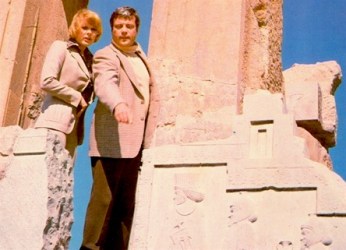
It’s interesting, therefore, that this lacks the atmosphere or tension of that version. I don’t think it’s just because I’m now more familiar with the story (having seen not only the ’65 version a couple of years ago, but also the new BBC adaptation that was on last Christmas) — it feels rushed at times, like a summary of the novel rather than a full retelling. Considering the screenplay is nearly identical to the ’65 version (merely tweaked to reflect the relocation), I can only assume that’s down to the way director Peter Collinson chooses to handle certain sequences. For example, in this version I never bought the relationship between youngsters Hugh and Vera, and sequences like the group searching the cellars contain no real sense of menace.

The cast is made up of recognisable faces from ’60s/’70s European cinema, led by Oliver Reed and Richard Attenborough, but also including the likes of Herbert Lom, Gert “Goldfinger” Fröbe, and Adolfo “Emilio Largo” Celi. Not that anyone’s bad, but there’s the sense they were probably there to earn a bit of cash while having a nice exotic holiday, and making a film on the side.

As a précis of the storyline, with some nicely photographed locations (the Iranian hotel they filmed in looks fairly stunning), this isn’t half bad. However, there are at least two better screen adaptations of the novel, and if what I’ve heard of the 1945 film and ’80s Russian adaptation are to be believed, I guess this comes pretty far down the chain.

3 out of 5

Steve Jobs (2015)

2016 #109
Danny Boyle | 122 mins | streaming (HD) | 2.35:1 | UK & USA / English | 15 / R

Steve JobsWritten by Aaron Sorkin and directed by Danny Boyle, with a name cast and plenty of awards buzz, this biopic of the eponymous tech genius was an inexplicable box office flop on its release last year — proof if proof were needed that box office does not equal quality, because I thought it was thoroughly excellent.
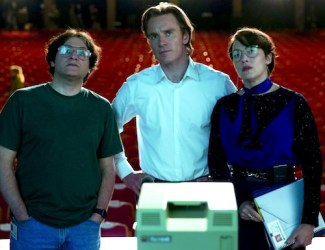
Rather than taking the usual route of telling a whole life story, Sorkin’s screenplay drops in on Jobs (Michael Fassbender) at three key product launches: the original Apple Macintosh in 1984, the NeXT Computer in 1988, and the iMac in 1998. At each one he battles personal and professional issues while surrounded by the same group of people, including marketing exec and Jobs’ right-hand-woman Joanna Hoffman (Kate Winslet); sidelined Apple co-founder Steve Wozniak (Seth Rogen); Jobs’ mentor turned friend turned nemesis, Apple CEO John Sculley (Jeff Daniels); and the mother of Jobs’ alleged child, Chrisann Brennan (Katherine Waterston).

First off, I don’t know how historically accurate it is. Some say it demonises Jobs; some say it lets Sculley off for his crimes. Whatever the truth, this presentation makes for a damn good story. It’s both inherently cinematic and easy to imagine as a stageplay — quite some feat! In the latter camp, it takes place in a handful of locations with a limited, recurring cast. A few costume and make-up changes and you feel most of it could be reconfigured for the stage relatively easily. However, in favour of the former camp, the way Boyle has mounted the production is filmic to the hilt. This is especially discernible in the montages that help guide us from one time period to the next, or the cleverly-edited flashback-strewn confrontation between Jobs and Sculley at the end of act two. Sequences like that help define Steve Jobs’ greatness — it is a hair-raisingly good scene, with the writing, acting, directing, editing, score, everything, coming to a magnificent crescendo of sheer cinema.

Boyle’s decision to use different film formats for each section — 16mm, then 35mm, then digital HD — helps delineate the eras and, in a way, reflect the products being launched (though I’ll instantly concede that last point may be a bit of a stretch). I imagine it’s too technical a concern to be noticed by your average filmgoer, but I’m sure it must have a subtle effect; and for those of us who are so minded to spot the change, it’s kinda fun and effective. Shot by Alwin H. Küchler, each section has its own charm, from the warm fuzziness of 16mm, to the gloss of 35mm, to the precision of digital. This is a mighty fine looking film, and while modern tech meant the 1080p Amazon Video stream I was watching looked darn near Blu-ray quality, I’m still miffed I didn’t just go straight for the disc, because now I’m going to have to pay for it again at some point.
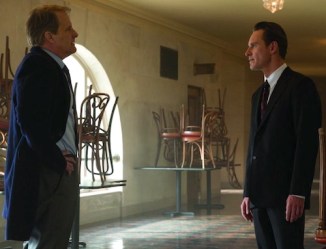
Throughout, Sorkin’s writing is awe-inducing, especially to anyone who’s ever dabbled in or dreamed of being a writer. The construction of it all, at every level — from line to line, from scene to scene, from act to act, across the whole piece… And this is a particularly magnificent construction, so precisely structured, rife with mirroring and repetition, and yet done so well that it doesn’t feel locked in to or constrained by an unwavering structure. I’d wager some viewers might not even notice how precise it is — I’m thinking, for example, of the order Steve has his primary meeting with each major supporting character in each of the three acts. There is an order, but it doesn’t feel like the film is bending over backwards to slavishly adhere to it — as I said, I’d wager many wouldn’t even notice.

The dialogue they’re delivering is so Sorkin. Rearrange character names and you could drop this into The West Wing or The Newsroom without batting an eyelid. That’s not to say Sorkin’s writing is samey, but he has a very specific style. I guess if you don’t like it then it must make his works a chore, but if you do, it can help elevate things that are in other ways wobbly (by which I mean swathes of The Newsroom, not Steve Jobs). It requires a cast that are up to the task, too, and he certainly has that here. Fassbender is the obvious stand-out, and Winslet is too often overshadowed by her variable accent, but even Rogen holds his own against the heavyweights around him. Daniels and Waterston may seem to have comparatively small roles, but they help carry much of the true dramatic weight opposite Fassbender.
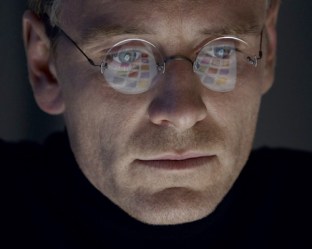
It did cross my mind that perhaps I liked the film more than average because I’m a little bit of an Apple fan. I mean, I’m not a proper hardcore Apple fanboy, although my household does have in regular usage an iMac, a Macbook Air, an iPhone, two iPads, and two iPods… but the iPads are hand-me-downs, and I discarded a similarly-acquired Apple TV in favour of an Amazon Fire stick, and I certainly don’t upgrade that iPhone every year (in the device’s entire lifespan I’ve owned two). My point is: yes, I like Apple stuff, but I concluded that had no bearing on my opinion of the film. It’s not good because it’s about The God Of Apple or something; it’s good because the people who made it made a good film. It could be about Jeeve Sobs, co-founder of Banana and inventor of the Banana Wellington and the iWelly, and it would be… well, it would be silly if it used those names, but hopefully you get my point.

In a similar vein, I suspect it would make a great companion piece to The Social Network. I guess that’s an obvious point — they’re both biographical dramas written by Aaron Sorkin about tech geniuses with social problems who end up in legal disputes with former friends about their companies — but sometimes obvious companion pieces are obvious for a reason. What deeper things do they say about each other, or the wider world, especially our modern tech-obsessed age, when paired up? I don’t know; watch them back to back and find out.

Steve Jobs may fit the Sorkin template of “people stood in rooms and walking down corridors talking to each other very quickly and cleverly”, but when he’s firing on all cylinders it doesn’t matter that you can pigeonhole it if you must. Besides, with Danny Boyle’s hand on the directorial tiller and a quality cast to bring out the dramatic arcs between the posturing, the whole may not have added up to box office gold, but it is worth even more than the considerable sum of its parts.

5 out of 5

Steve Jobs premieres on Sky Cinema tonight and is available on demand now.

It placed 3rd on my list of The 20 Best Films I Saw For the First Time in 2016, which can be read in full here.

Return of the One-Armed Swordsman (1969)

aka Du bei dao wang

2016 #101
Chang Cheh | 101 mins | TV (HD) | 2.35:1 | Hong Kong / Mandarin

Return of the One-Armed SwordsmanIn this lesser sequel to the exceptional original, the titular warrior’s life of peace is disrupted when a gang called the Eight Kings capture all the sword masters and order their students to chop off their sword arms.

With ten varied adversaries to defeat — the Eight Kings plus their enforcers, the Black and White Knights — Return puts greater emphasis on action than did its more dramatic forebear. The fighting is solid, with the enemies’ different skills adding some occasional freshness, but the plot underneath is thin. It makes for a decent but largely unremarkable, kind of run-of-the-mill, martial arts adventure.

3 out of 5

Pirates of the Caribbean: The Curse of the Black Pearl (2003)

100 Films’ 100 Favourites #70

Prepare to be blown out of the water.

Country: USA
Language: English
Runtime: 143 minutes
BBFC: 12A
MPAA: PG-13

Original Release: 9th July 2003 (USA)
UK Release: 8th August 2003
First Seen: cinema, August 2003

Stars
Johnny Depp (Edward Scissorhands, Finding Neverland)
Orlando Bloom (The Lord of the Rings, Troy)
Keira Knightley (Bend It Like Beckham, Pride & Prejudice)
Geoffrey Rush (Quills, The King’s Speech)

Director
Gore Verbinski (The Ring, The Lone Ranger)

Screenwriters
Ted Elliott (Aladdin, Pirates of the Caribbean: On Stranger Tides)
Terry Rossio (Small Soldiers, Pirates of the Caribbean: Dead Man’s Chest)

Story by
Ted Elliott (Treasure Planet, National Treasure: Book of Secrets)
Terry Rossio (The Mask of Zorro, The Lone Ranger)
Stuart Beattie (Collateral, 30 Days of Night)
Jay Wolpert (The Count of Monte Cristo)

Based on
Pirates of the Caribbean, a theme park ride at Disneyland.

The Story
When feared pirate ship the Black Pearl lays siege to the British outpost Port Royal and kidnaps the governor’s daughter, Elizabeth Swann, her childhood friend (and secret admirer) Will Turner teams up with notorious pirate Captain Jack Sparrow to rescue her. Jack has his own axe to grind with the crew of the Pearl, who are afflicted by a supernatural curse that they believe Elizabeth may be the key to breaking.

Our Heroes
Will Turner, a humble blacksmith and self-taught expert swordsman. Doesn’t like pirates, but is forced to team up with one. That would be self-proclaimed captain Jack Sparrow, who is apparently a bumbling buffoon prone to wild exaggeration about his exploits, but is actually strangely competent and honourable. Not to forget Elizabeth Swann, the governor’s daughter who is more strong-minded and capable than women of her time are supposed to be. Hates corsets, too.

Our Villains
Captain Barbossa (a villain of Rickman-esque likeability) and his undead pirate crew just want to lift their terrible curse, but, being pirates, tend to go about that mission with excessive violence.

Best Supporting Character
Two of Barbossa’s crew, Ragetti (Mackenzie Crook) and Pintel (Lee Arenberg), who make a comedy double act. Or maybe triple act, with Ragetti’s wooden eye.

Memorable Quote
“You best start believing in ghost stories, Miss Turner… you’re in one!” — Barbossa

Memorable Scene
Barbossa orders his crew to attack a British Navy ship from underwater. As the moon emerges from behind a cloud to reveal the true skeletal form of the undead crew, they march along the seabed to their target…

Memorable Music
Originally set to be scored by Alan Silvestri, who’d worked with director Gore Verbinski on a couple of previous movies, the composer fell out with producer Jerry Bruckheimer and it was decided to go with Hans Zimmer instead. Unfortunately Zimmer was busy, but he pointed them in the direction of newer composer Klaus Badelt, one of Zimmer’s mentees at his company Media Ventures. Presumably Badelt struggled, because Zimmer ended up drafting several of the score’s main themes in one night, and a team of additional composers (anywhere from seven to fifteen, depending which source you listen to) was brought in to help finish it off. (One of them, incidentally, was Ramin Djawadi, who has since gone on to be noticed for Game of Thrones.) The final score is credited to Badelt, but the soundtrack’s most famous cue — He’s a Pirate — is actually a development of a piece Zimmer wrote for forgotten Wesley Snipes action-thriller Drop Zone. You can’t really argue a score created like that has any artistic integrity, but it’s fun and exciting, and He’s a Pirate is a really, really good piratical action theme.

Truly Special Effect
All of the CGI was strikingly photo-real at the time, the main showcase being the skeletal pirates, especially as they switched from being normal humans to skeletons (and back again) as they moved in and out of the moonlight. I guess it’s aged a little now, but, to be fair, it is 13 years old. Couple this with the even-better work featured in the sequels and it shows ILM are still at the forefront of the industry.

Making of
There’s always been something of a tonal similarity between the Pirates films and the Monkey Island series of computer games, which turned out to be more than coincidence when it eventually emerged that, just a couple of years before Pirates, screenwriter Ted Elliott had been working on a Monkey Island film for Steven Spielberg which never came to fruition. As if to compound the point, Monkey Island creator Ron Gilbert revealed in 2004 that the original game was inspired by the novel On Stranger Tides, and in 2007 Disney bought the rights to the novel and used its title and bits of its plot for the fourth Pirates film.

Next time…
Initially followed by a pair of shot-back-to-back trilogy-forming sequels, their cumulative success turned it into a franchise: a fourth movie followed in 2011, with a fifth shot last year for release next summer. Also inspired a host of piratical TV series, and Disney to attempt various other ride adaptations and genre mash-ups (see: The Lone Ranger).

Awards
5 Oscar nominations (Actor (Johnny Depp), Makeup, Sound Mixing, Sound Editing, Visual Effects)
1 BAFTA (Make Up/Hair)
4 BAFTA nominations (Actor (Johnny Depp), Costume Design, Sound, Visual Effects)
1 Saturn Award (Costumes)
10 Saturn nominations (Fantasy Film, Actor (Johnny Depp), Supporting Actor (Geoffrey Rush), Supporting Actress (Keira Knightley), Director, Music, Make Up, Special Effects, DVD Special Edition, Genre Face of the Future (Keira Knightley))
2 MTV Movie Awards Mexico (Sexiest Hero (Orlando Bloom), Best Look (Johnny Depp))
1 World Stunt Award (Best Fight for the blacksmith shop sword fight)
Nominated for the Hugo for Best Dramatic Presentation Long Form

What the Critics Said
“it’s Johnny Depp’s inspired turn as Captain Jack Sparrow that really marks the spot. Depp, arguing that pirates were the rock stars of their day, models his entire performance on Keith Richards of the Rolling Stones: it’s there in every slurred vowel and every drug-fried wiggle of the head. There’s an endearing dignity to Sparrow’s hunger for fame. “You are, without doubt, the worst pirate I’ve heard of,” says one British officer. “Yes,” replies Jack, “but you have heard of me.” Gloriously over-the-top, this performance is pitched only as high as the film’s fun factor itself. In terms of physical precision and verbal delivery, it’s a masterclass in comedy acting.” — Alan Morrison, Empire

Score: 79%

What the Public Say
“manages the weird assignment of capturing the sensibility of a theme park boat ride inside a Spielbergian adventure romp. This is all the things popcorn movies should be: fun, energetic, simple enough to quickly grasp but full enough to not seem stupid, anchored by strong personalities among all the side characters (Geoffrey Rush’s florid villain is a great bit of acting in its own right, unfairly overshadowed by Depp), and a cohesive world with a sense of history and depth.” — Tim Brayton, Antagony & Ecstasy

Verdict

It seemed like such a terrible idea when it was first announced: films based on Disney theme park rides? What the hell were they thinking?! The other movies produced by this initiative turned out to be as terrible as everyone expected, but somehow Pirates of the Caribbean — which also had to contend with the fact that cinematic pirates were deeply unpopular after the studio-killing disaster of CutThroat Island eight years before — wasn’t. Not just “not bad”, either, but an exciting, humorous, creepy, fun movie. That the sequels haven’t lived up to it is disappointing, but the first still stands as a near-perfect example of big-budget swashbuckling entertainment — it’s basically the dictionary definition of a summer blockbuster.

#71 goes to show… you never can tell.

Barely Lethal (2015)

2016 #49
Kyle Newman | 95 mins | streaming (HD) | 1.85:1 | USA / English | 12 / PG-13

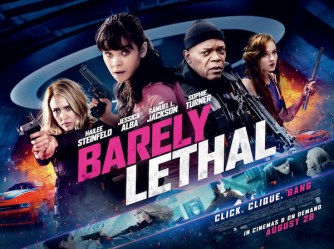
Barely LethalHailee Steinfeld stars as a teenage girl raised from childhood by a top-secret government organisation to be an expert agent, but who has always longed for a more normal experience. When the organisation thinks she’s died on a mission, she uses it as a chance to have that normal life. Researching the high school experience from teen movies, she heads off to a typical US high school… and finds life isn’t quite like the movies. Though it is a bit, but it’s allowed to be so long as you keep referencing the movies you’re riffing off… right? Oh, and of course her old life keeps intruding, in the form of people wanting to kill her ‘n’ all that.
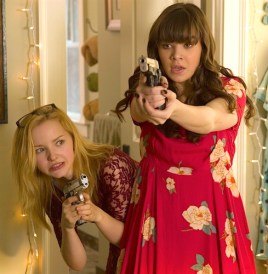
Barely Lethal (that’s a pun on “barely legal” rather than a synonym for “mostly harmless, incidentally) was very poorly reviewed by critics, and I don’t know that audiences gave it that much better a reception, but at this point that works in its favour. You see, its production values are a little cheap and cheerful (despite a recognisable cast that also includes Samuel L. Jackson, Jessica Alba, and Sophie Turner), and sometimes it really falters with an overuse of clichés (is it OK to reference that they’re clichés, or if you point out you’re using a cliché is it still bad because you are still using that cliché?). But if its establishing concept sounds like something you might enjoy, and you go in with suitably lowered expectations, then I think there’s a fair chance you’d find it to be a frequently amusing, occasionally very funny, and sometimes quite sweet high school comedy — with added doses of action comedy for good measure. There’s even one great scene (which is more than many a “very good” film can claim); the kind of scene that, when it happens, is so right it feels like kind of an obvious idea, but I’ve never seen it done before (it kinda requires a premise like this to even work) and is pretty faultlessly executed.

In terms of pure, simple, for-what-it-is enjoyability, there’s part of me that wants to go out on a limb and say Barely Lethal just edges a 4… but the critical part of my brain points to those parts that are clunky, overfamiliar, or underdeveloped. I did think it was mostly undemanding fun, though.

3 out of 5