100 Films’ 100 Favourites #76
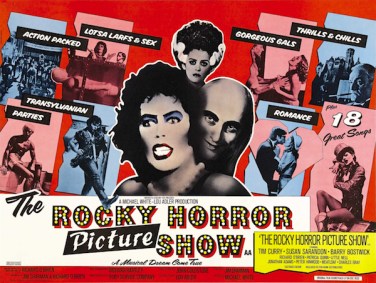
Give yourself over to absolute pleasure.

Country: UK & USA
Language: English
Runtime: 100 minutes
BBFC: AA (1975) | 15 (1987) | 12 (1991)
MPAA: R
Original Release: 15th August 1975 (UK)
First Seen: TV, 31st December 1998
Stars
Tim Curry (Annie, Clue)
Susan Sarandon (The Front Page, Thelma & Louise)
Barry Bostwick (Weekend at Bernie’s II, Spy Hard)
Richard O’Brien (Flash Gordon, Dark City)
Meat Loaf (Roadie, Fight Club)
Charles Gray (The Devil Rides Out, Diamonds Are Forever)
Director
Jim Sharman (The Night, the Prowler, Shock Treatment)
Screenwriters
Richard O’Brien (Shock Treatment, Digital Dreams)
Jim Sharman (Shirley Thompson Versus the Aliens, Shock Treatment)
Based on
The Rocky Horror Show, a stage musical by Richard O’Brien.
Music & Lyrics
Richard O’Brien (Shock Treatment)
The Story
When straight-laced young couple Brad and Janet approach a spooky castle in need of shelter, they stumble into the strange world of Dr. Frank-N-Furter, who’s throwing a party to celebrate the ‘birth’ of his new creation: a tank-grown muscleman named Rocky. But it’s not only Rocky who’ll be getting an awakening…
Our Heroes
Good clean all-American kids Brad and Janet, newly engaged but forced to stop off at a creepy castle after their car breaks down in a storm. By the end of the night, they’ll certainly have learnt a new thing or two…
Our Villains
Dr. Frank-N-Furter — not much of a man by the light of day but by night he’s one hell of a lover. Just a sweet transvestite from Transexual, Transylvania, which would be fine if he didn’t get a bit murderous. Surrounded by a gaggle of home help and hangers-on, like hunchbacked handyman Riff Raff, mental maid Magenta, and vaudevillian groupie Columbia.
Best Supporting Character
Charles Gray is perfect as The Narrator, holed up in his wood-panelled study and telling the audience this fantastical story with admirable matter-of-factness.
Memorable Quote
“Let’s do the time warp again!” — everyone
Quote Most Likely To Be Used in Everyday Conversation
“I see you shiver with antici…
…pation.” — Dr. Frank-N-Furter
Memorable Scene
The title sequence: the opening number sung by a pair of very big, very red lips. Simple, but iconic.
Best Song
Rocky Horror is one of those musicals where almost every song is genius: the cleverly reference-filled, surprisingly melancholic, bookending refrain of Science Fiction/Double Feature; the wittily rhymed Dammit Janet; the mission statement that is Sweet Transvestite; the sweetly kinky Touch-A, Touch-A, Touch Me; the epic multi-part floor show climax… and more. That said, I always disliked the post-climax Super Heroes, and wasn’t alone: it was actually cut out of the original US release. But then I heard Richard O’Brien sing it with acoustic guitar on the DVD special features, and in that variation it’s a darkly beautiful song. But for all that, when talking about the best song in Rocky Horror you really can’t beat the utterly iconic Time Warp.
Making of
Many films have “Easter eggs” — little half-hidden treats for fans to discover — but not many have them literally. The exception, of course, is Rocky Horror. Apparently the crew had an Easter egg hunt (which, considering the movie was shot from October to December, doesn’t make much sense) but they weren’t all found, hence why some turned up in the final film. I won’t tell you where they are (I mean, five seconds on Google and you can find out), but there are supposedly three.
Next time…
Initially a flop, it was when someone got the idea to screen the movie for the midnight crowd that Rocky Horror caught on. The interactive, ritual-filled experience of these screenings is legendary, and they’ve continued ever since — to the point where some cinemas have it as part of their regular schedule, and the DVD & Blu-ray releases include alternate tracks featuring the audience participation. It also means that, officially speaking, Rocky Horror has the longest theatrical run in movie history. In 1981, Sharman and O’Brien produced a sort-of-sequel, Shock Treatment. A new adventure for Brad and Janet (both recast), it featured several Rocky Horror actors (O’Brien, Patricia Quinn, Little Nell, Charles Gray) in new roles. It didn’t go down very well, though apparently it has its fans — a cult following within a cult following, I guess. In 2010, once-popular high school musical TV series Glee aired a tribute episode, The Rocky Horror Glee Show. It is truly horrendous; a plasticky, sanitised, neutered version of something that should never be those things. So I don’t hold out much hope for the next thing the same network (Fox, of all places!) have planned for the property: after years (decades?) of rumours, they’re finally making good on the threat by remaking the film. Officially dubbed The Rocky Horror Picture Show: Let’s Do the Time Warp Again, the clips released so far look almost as bad as the Glee version. We’ll see. Finally, the original stage show has continued across numerous productions, and last year a 40th anniversary gala performance was simulcast to cinemas across Europe and later aired on TV. It’s now available on YouTube. I’ve not watched it, but I suspect it’s a better bet than that Fox version.
Awards
1 Academy of Science Fiction, Fantasy & Horror Films Golden Scroll nomination (Best Horror Film (it lost to Young Frankenstein))
What the Critics Said
“Rocky Horror is actually a very good film in its own right; made on a small budget, it’s a triumph of clever filmmaking by Sharman, who should have gone on to bigger things (and might have, had he not arrived at the end of an era). Yes, there are little technical glitches, but rarely has there been a more cleverly and creatively shot and edited film. Nearly every angle, every cut, every zoom shot, every optical transition is used to effectively maximize its respective scene. […] Remember the cult status, yes, but sometime try watching Rocky Horror just as a movie. It pays real dividends.” — Ken Hanke, Mountain Xpress
You What?
“Viewed on video simply as a movie, without the midnight sideshow, it’s cheerful and silly, and kind of sweet, and forgettable.” — Roger Ebert, Chicago Sun-Times (Rocky Horror is many things, but “forgettable”? Hm.)
What the Public Say
“Rocky Horror is so distinctive, so unique, that it could’ve come off as bizarre, alien, and off-putting, but it didn’t. It has such self-aware charm, a catchy soundtrack that sticks in the head for days, and hilarious performers, that it overcomes its rather dull protagonists. Of course, Brad and Janet have their own charm as parodies of the square-jawed hero and his girl, but they will always be the least interesting characters on screen.” — That Other Critic
Verdict
Some people dismiss Rocky Horror as a film, thinking its only worth (if they acknowledge it has any) is as a live experience. I’ve never seen it ‘live’ (and don’t have an especially great desire to) but will happily fight its corner as a solo viewing experience. It’s camp and transgressive, but ‘safely’ so — that’s not a criticism, just an observation that it can work well as an eye-opener for the young or more conservative. But beyond that social impact, the outré style belies an underlying cleverness, with witty writing that features abundant references to sci-fi B-movie classics, precisely pitched performances, and, of course, the unforgettable toe-tapping tunes. Whether alone or in a packed auditorium throwing stuff and shouting back at the screen, it’s just fun. To watch it is to, indeed, give yourself over to absolute pleasure.
#77 will be… the greatest love story the world has ever known.

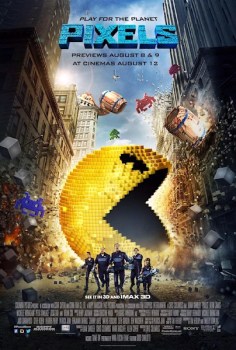 Adam Sandler, eh? He has his fans, though apparently not among people who can write because you rarely see a good word penned about him. The one exception is Punch Drunk Love, and that’s because it’s a Paul Thomas Anderson film, and that’s why it’s the only Adam Sandler film I can remember seeing. I didn’t like it.
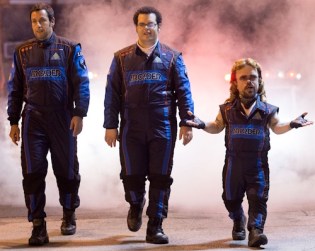 Pixels is the virtual definition of brain-off entertainment. The story has the plausibility of a kids’ daydream, the humour is frequently unimaginative, and the action sequences mostly coast on their basic concept rather than trying to elevate them. And Peter Dinklage is going to get a reputation for having terrible taste. I mean, I liked Knights of Badassdom, but hardly anyone else did, and now this… “Stick to TV, Peter Dinklage,” people are going to say. Assuming they’re not already.
 There are two stars in Mike Leigh’s biopic of famed British artist J.M.W. Turner: Timothy Spall, grunting his way through the title role with a deceptively layered realisation of an apparently simple but deeply complex man; and Dick Pope’s cinematography, which makes almost every frame look like a rich landscape painting, so that you feel you can almost see the brushstrokes.
 sometimes lack clear relevance (recognisable-off-the-telly actors turn up silently for what we’d call cameos if they were more famous). It creates a measured pace that is surely not to every taste, especially over the long running time, though personally I only found it sluggish towards the very end.
 Score:



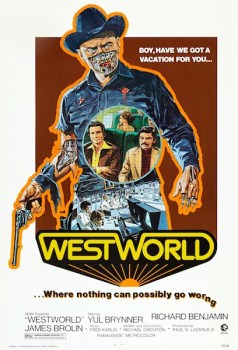 When writer-director Michael Crichton hit upon the notion of a theme park where the future-science star attractions broke free of their shackles and endangered the lives of the guests, it was so good it served him twice: he replaced the initial murderous AI-powered robot cowboys with rampaging genetically-engineered dinosaurs and sparked
 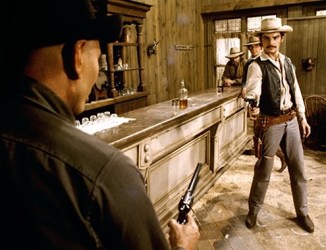 under $76,000, or about £58,200. The potential threat of the robots malfunctioning is built up gradually here and there, in asides from what our ostensible heroes are up to, and isn’t explained. There are nods to the fact the human staff don’t actually know how the robots work, but why should that be? Some of them were apparently designed by other robots, but how did the designing robots come about? Rather than explore any of its science fiction themes, the film just uses the basic idea to have the robots go on a killing spree right at the climax. This is something Crichton definitely turned around for
 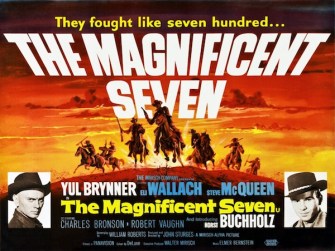 Described in the booklet accompanying the Ultimate Edition DVD release as “the last great American western before Sergio Leone reinvented the genre,” The Magnificent Seven doesn’t feel as dated as that might make it sound. Famously, it’s a remake of Akira Kurosawa’s
 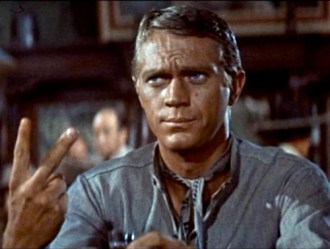 With even less screen time to go round than in Kurosawa’s original, the cast only get to provide thumbnail sketches of their characters. However, bearing that in mind, only Vaughn really feels shortchanged on time, while McQueen manages to steal every scene he’s in, even when he was supposed to just be in the background — much to Brynner’s annoyance. One reason this works is because the seven represent more or less the same things thematically, in some respects functioning as one hero character with seven parts. They are all unsettled drifters, good at killing but not at settling down; they have nothing to do but win and so be damned to go find another cause, or die trying. This is taken from Kurosawa’s film too, of course, but it fits just as well in its new setting, and the main scene where the seven discuss it is a definite highpoint of the movie.
 That’s not something that bothered me, but where I did find it suffering was in comparison to Kurosawa. While it has obviously been rejigged for its new setting, it’s not just borrowed the basic concept of seven violence-skilled loners defending a needy village, but rather retained all the bones of the samurai original. As with most remakes, it falters by not doing the same thing quite as well, for one reason or another. Still, if it is a faded copy then at least it’s of one of the greatest films ever made, which leaves it a mighty fine Western in its own right.


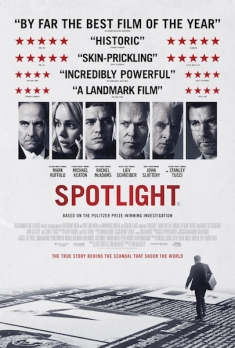 The most recent Best Picture Oscar winner tells of how the Boston Globe’s investigative journalism unit, the eponymous Spotlight team, exposed the widespread sexual abuse of children by the local Catholic Church — and, just as shockingly, the way the institution itself swept this under a rug for decades. As a film, this story is effectively a conspiracy thriller: a team of journalists expose a wide-reaching criminal cover-up within a respected and powerful institution. If it were fiction, you’d struggle to believe it, the scale of the conspiracy so vast that the very notion of it would be implausible. So it’s all the more astonishing — and horrifying — that it was real. And, as the closing title cards reveal, far larger than the Spotlight team realised even when they went to print.
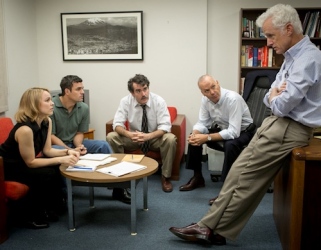 Instead, it lets the story and the events speak for themselves, with the screenplay being the real powerhouse here. On that scale the directing isn’t even in second place. That’d be the performances, as the actors carry the delivery of information while still feeling like human beings pursuing an investigation, rather than mere narrators of what they discovered. McCarthy’s work is therefore the kind of helmsmanship that wouldn’t attract awards attention, except maybe by association with the film’s overall acclaim (he did get nominations, but the cynical side of me doubts awards bodies genuinely appreciated the qualities of what they were watching). Nonetheless, awards are not the be-all-and-end-all, and the low-impact style was surely the right way to go. This is a tale bigger than auteurist showboating, and McCarthy handles it with appropriate respect.
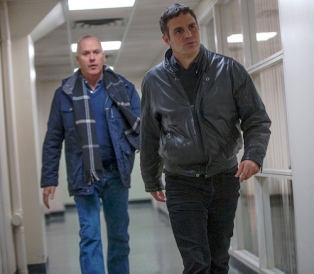 this is also perhaps where the film’s only egregious bum note comes in: Ruffalo’s shouty speech about how they need to go to press now, which was naturally used across all the trailers and clips. It feels like that is precisely what that speech was designed for — that it was written, directed, and acted with the “here’s our big dramatic trailer moment” in mind. It’s not entirely out of character in context, but it is a bit much.
 So was it the best film of last year? Perhaps that depends what you look for in movies. As much as I think the understatement fits, I also think it’s what stops it from being as cinematically exciting as, say, the visually-driven hyper-kinetic storytelling of
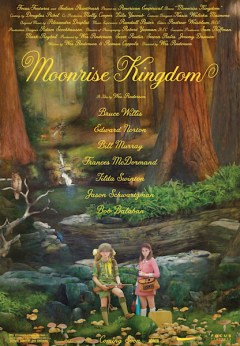 On the New England island of New Penzance in the summer of 1965, a troop of scouts at camp discover that unpopular member Sam Shakusky (Jared Gilman) has fled in the night. Meanwhile, on the other side of the island, troubled kid Suzy Bishop (Kara Hayward) runs away from home. Unbeknownst to Sam’s scoutmaster (Edward Norton) or Suzy’s parents (Bill Murray and Frances McDormand), the pair of unhappy 12-year-olds have secretly plotted to disappear together. As a violent storm threatens to hit the island, the scouts and police Captain Sharp (Bruce Willis) hunt for the runaways.
 If the film has a fault it’s in this part, where the entire cast engage in a runaround as the hurricane arrives and floods the island; but (to give it the benefit of the doubt) perhaps that plays more smoothly with familiarity. And I don’t know what it is that Anderson has against dogs (nor, it seems, does anyone else, bar

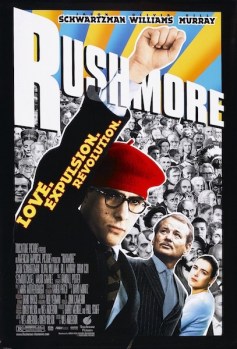 The breakthrough film of cult writer-director Wes Anderson, Rushmore is the story of high school student Max Fischer (Jason Schwartzman, making his debut, aged 18 but still looking like one of those twentysomethings-playing-highschoolers you so often see in US productions). He’s a prolific participator in extracurricular activities at the prestigious Rushmore Academy, but is put on notice for his failing academic standard. At the same time, he becomes infatuated with first grade teacher Miss Cross (Olivia Williams) and attempts to woo her by building an aquarium on school grounds. He enlists the support of local business magnate Herman Blume (Bill Murray), but soon Blume is falling for Miss Cross too, setting the men on a path of mutual enmity.
 Part of that is probably tied to Anderson’s own development. It’s not only his very personal touches that have flourished with further films, but I feel like his storytelling and depiction of character has become more sophisticated, too. That’s not to say Rushmore comes up short, but coming to it for the first time with that degree of hindsight, it feels very much like a formative work.
 100Films.co.uk