Deadpool: No Good Deed (2017)

2017 #32a
David Leitch | 4 mins | streaming (HD) | 2.35:1 | USA / English

Logan

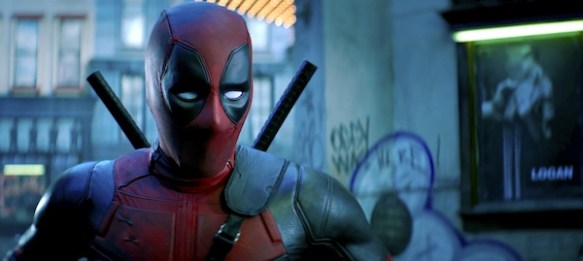
Screened before Logan in the US but only available to us poor disadvantaged foreigners thanks to the magic of the interweb, No Good Deed could be regarded as nothing more than a teaser trailer were it not: (a) about four times longer than your average teaser, (b) almost certainly not actually part of the film it’s teasing, (c) listed on IMDb and so forth as a short film, and (d) a self-contained story that is, all things considered, pretty amusing.

If you were also unfortunate enough to have not had your screening of Logan graced by Deadpool’s irreverent goodness, enjoy:

4 out of 5

All being well, Deadpool 2 will be released on 2nd March 2018.

Logan (2017)

2017 #30
James Mangold | 137 mins | cinema | 2.35:1 | USA / English & Spanish | 15 / R

This review contains major spoilers.

Logan

Little Miss Sunshine meets Hell or High Water via Midnight Special, with more superpowers and (probably) fewer Oscar nominations, in the film some people are calling the best superhero movie since The Dark Knight.

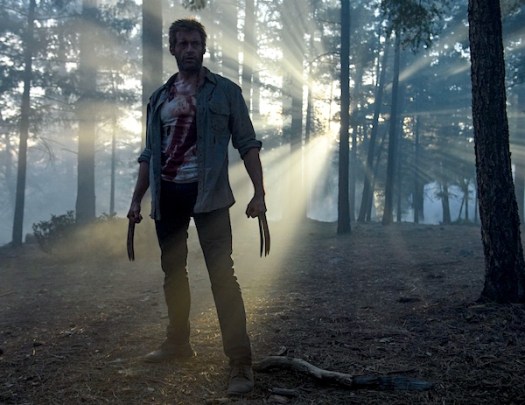
In the not-so-distant future, the man once known as Wolverine, Logan (Hugh Jackman), is living / hiding on the US-Mexico border, his once formidable powers diminished by age. He works as a limo driver to afford meds for an ailing Professor Charles Xavier (Patrick Stewart), whose psychic powers have become dangerous as his brain falters with age. When a woman recognises Logan and asks for his help, the disillusioned former X-Man fobs her off. But soon dark forces and a mysterious girl (Dafne Keen), not to mention his innate moral code, will force his claw-wielding hand…

While Marvel Studios harp on about how they mix other genres into their superhero movies, with such-and-such a film being superheroes-cum-political-thriller, or this-and-that film being superheroes-cum-heist-movie, and so on, everything they produce is really merely colouring within the lines of the superhero picture, they’re just using different crayons to do it. Logan not only uses different crayons, but it’s colouring a whole new picture, too. It’s not the first superhero movie to operate at a remove from the standard big-budget tropes of the genre, but it is perhaps the first from a major franchise to dare to step so far outside the norm. As I intimated at the start, the feel of the piece is more indie neo-Western road movie than CGI-driven superhero spectacular, though to imply it stints on expensive action thrills would be disingenuous. It still cost $97 million, after all, and so works at ways to retain the favour of a blockbuster-seeking crowd. Nonetheless, the overall impression is of a refreshing change for the subgenre, with a more distinctive feel than any of those aforementioned Marvel movies.

Wolverine vs Robotic Hand Man

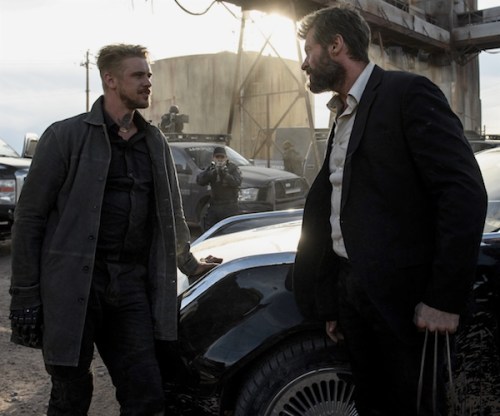
That doesn’t mean it’s perfect, sadly. Functionally speaking, Logan barely has a villain. There are some ill-intentioned and dangerous people after X-23, so our heroes have to run away from them — that’s all the role they have to play. Heading up the hunt is Pierce (Boyd Holbrook), a henchman figure who’s de facto lead villain purely because he gets the most screen time. Unfortunately, he has more personality in his defining attribute, a CGI robotic arm, than in the rest of his characterisation combined. The theoretical Big Bad is Dr Zander Rice (Richard E. Grant), an evil scientist who we’re told developed some kind of virus that all but wiped out mutantkind, but now seems incapable of tracking down a group of preteens. He’s not on screen enough to make any kind of meaningful impression. On the bright side, on my “how badly miscast is Richard E. Grant” scale (which ranges from “very badly” to “not that bad, I suppose”) this errs towards the positive end, precisely because of that lack of screen time. Lastly there’s younger, fitter Wolverine clone X-24 (also Jackman), who’s at least intentionally devoid of personality — he’s been bred without it so he’ll be the perfect biddable killing machine. Obviously he’s ripe for some sort of thematic commentary — on ageing; on morality; on heroism; on, frankly, anything — but it never comes.

With the villainous side of the equation so unbalanced, we’re left primarily with our heroes. Fortunately, they do take up the slack, mainly through a pair of fantastic performances from Jackman and Stewart. Wolverine is undoubtedly the defining role of Jackman’s career, a part he’s played on and off for 17 years across seven movies (as a lead, plus a couple more cameos). Here he’s the most human he’s ever been. In many ways Logan was always one of the most relatable X-Men, one of our points of entry into their world and taking the piss out of them and the situation when it was called for. He was still primarily a likeable character in a fantastical world though, whereas here he feels more like a real person, struggling with the physical detriments of ageing and (less explicitly) the metaphysical quandaries of what it was all for. As he puts his time with the character to bed, Jackman gets to deliver his most nuanced and affecting turn in the role. Neatly, it mirrors where it all began for this version of the character: protecting a young mutant girl struggling to come to terms with her dangerous powers in a world that’s out to get her.

Professor X-piring

Stewart is every bit as good as a man defined by his mental prowess whose mind is failing. Originally cast to play a statesman-like role in the series, here Stewart gets to have a bit more fun, to be a bit more cheeky, but also to tap into a bit more depth of emotion, as Charles struggles with whatever it was he did to land him in hiding in Mexico (I think there was some dialogue that explained it but, frankly, I missed it in the mumbly sound mix. I’ll catch that on Blu-ray, then).

Of course, they both die. Normally that’d be shocking in a major studio blockbuster, but it’s quite clear Logan is playing by different rules, and in those rules the old good guys die. Heck, nearly everyone dies, but the only deaths that matter are Charles’ and Logan’s. What’s at least a bit interesting is how they die. For Professor X, it’s almost ignominious, — in a bed, not even his own, stabbed by X-24 for virtually no reason, then later fading away in the back of a truck. It’s not a grand heroic self-sacrifice while trying to save the world, the kind of death you’d expect for a character of his stature (and more or less the kind he got in The Last Stand, the first time they killed him off). It’s a great life come to a meaningless end. Well, Logan’s that kind of movie — it has no reverence for such things, just as life itself does not. Conversely, the death of Wolverine / Logan / James Howlett (who is he, in the end?) is a sacrifice, the selfish man of the movie’s opening giving himself up to save some kids; or, in grander terms, to save the future. Ah, but he was never really selfish, was he? It was an act. An affection brought by the hard years. He was always a good guy at heart. Always an X-Man, as the neat final shot emphasises.

Wolverine: The Last Stand

So there is some thematic meat to tuck into here, even with the apparent dead-end (pun not intended) of the X-24 subplot. Couple that with the many uncommon-to-the-genre plot and tonal points and you have a movie that does merit consideration as one of the finer superhero films. However, the perception some espouse of this being brave or bold moviemaking is not inherent to the film. If this were an original story starring new characters, especially if they didn’t have superpowers, it wouldn’t make it a bad film, but nor would it be perceived as being so original or revolutionary. What is uncommon or remarkable is making that kind of movie with a well-known character, and in particular one who’s familiar from leading CGI-fuelled PG-13 summer spectacles.

Is that alone enough to confer greatness? Logan’s consistency of style and tone render it easily the best Wolvie solo movie (as much as I liked The Wolverine on the whole, its climax was horrible), but for this X-fan it’s not enough to usurp the top-draw traditional superheroics to be found in the three or four genre classics produced by the main series. Perhaps time and re-viewing will increase Logan in my estimation, however, because it is a very strong film indeed.

4 out of 5

100 Films @ 10: Films I Shouldn’t Have Wasted My Precious Time On This Earth By Watching

A pause from celebrating great things today to look at the flipside of movie watching: the crap.

However hard we may try, we’re always going to watch stuff we don’t like (and some of us don’t try that hard, let’s be honest — I swear the world is full of people who flock to all the new blockbusters even though they probably couldn’t remember the last time they actually enjoyed one). Whether it’s something that was recommended that we don’t like, or a poor entry in a franchise we used to enjoy, or by a director we once admired, or just morbid curiosity, the chances of going a significant period of time without seeing something bad are slim.

So in the “significant period of time” that was the last ten years, here are the worst films I saw.

10
Hannah Montana/Miley Cyrus: Best of Both Worlds Concert

I only watched this because it was part of Channel 4’s 3D Week (back when people thought home 3D was going to be a big thing), during which they only showed three films and this was one of them. Frankly, I don’t really remember it, other than that the 3D worked well because it was a modern production. I’m pretty sure I’ve blanked it from my memory for a reason. (Review.)

9
The Baskerville Curse

It feels almost cruel to pick on a made-for-TV kids’ animation from the ’80s when there are so many big-budget movies I could name here. The reason I’ve included it nonetheless is because of its thorough misunderstanding of the tone of Sherlock Holmes’ most famous adventure. I know you can’t properly do Gothic horror in a kids’ cartoon, but the bright and sunny colours, plus stretches devoted to telegram writing and train journeys, really take things to the opposite extreme. (Review.)

8
Chicken Little

As computer animated kids’ movies took off in the wake of Pixar’s arrival, Disney’s traditional 2D animations began to falter at the box office. They clearly put this down to the visual style, resulting in this being their first 3D computer animated movie… and it’s bloody terrible, proving their failure was nothing to do with the animation method and everything to do with their godawful content. This is the real nadir of Disney’s so-called Animated Classics. (Review.)

7
Sharknado

Cynical in the extreme, Sharknado is not a movie that’s so bad it’s good, it’s a movie that’s been made deliberately badly so people will think it’s so bad it’s good. But it’s not — it’s so bad it’s bad. But it worked, as they’re now up to four sequels, I believe. Ugh. (Review.)

6
The Final Destination

The best thing about the fourth movie in the Final Destination series is its title: it was to be the last movie, so they added a definitive article. Then they went and made a fifth one and ruined even that. It’s a shallow gore-fest with very little entertainment value. (Review.)

5
AVPR – Aliens vs Predator: Requiem

Alien vs. Predator wasn’t a very good movie; a weak PG-13 blockbuster that… didn’t really ruin either franchise, let’s be honest, because Alien had already done it to itself and Predator was never classy in the first place. Nonetheless, this sequel tried to put more nails in the coffin. It’s so bad, it actually makes the first AVP look good. Conversely, AVPR doesn’t look like much at all — it’s so dark you can’t see most of it. (Review.)

4
The Last Airbender

As M. Night Shyamalan’s popularity continued to sink, he turned his hand to director-for-hire style work, adapting the popular animated series Avatar (with a name change forced by a certain big-budget 3D movie). Unfortunately this wasn’t any better, with bizarrely forced storytelling (the result of a studio after a quick 3D conversion, to the extent they couldn’t afford to have the whole film done) and poor performances by controversially miscast actors. It’s definitely Shyamalan’s worst work. I mean, at least The Happening had some comedy value. (Review.)

3
Alone in the Dark

Remember Uwe Boll? I don’t know what he’s up to these days. I don’t care. Neither does the industry, fortunately, having seemed to finally realise that the best way to make his terrible movies go away was to stop talking about them. This is the only one I’ve ever seen and I don’t imagine I’ll waste time on another. Though I am a little curious about seeing Jason Statham in a fantasy movie… (Review.)

2
Parabellum

I summarised this as well as I can think in my review, so I’ll just quote myself: “Alfred Hitchcock once said that ‘movies are real life with the boring parts cut out.’ Valenta Rinner’s movie is the opposite of this in every respect: it isn’t real life, which is fine, but he only left the boring parts in, which isn’t.” (Review.)

1
Flight 93

It’s been ten years since I watched this so it’s entirely possible I’ve hyped up its terribleness in my memory, but I have no desire to revisit it to find out. So, I remember it as being an offensively bad treatment of events from 9/11, its awfulness thrown into sharp relief by how well Paul Greengrass’ United 93 handled the same story. (Review.)

Tomorrow: it’s the Oscars!

In a Valley of Violence (2016)

2017 #20
Ti West | 104 mins | download (HD) | 2.35:1 | USA / English | 15 / R

In a Valley of Violence

The spirit of the Spaghetti Western is alive and well in writer-director Ti West’s shoot ’em up; though where they once took inspiration from samurai movies, now Mr West has his sights set on modern-day gun-fu movies — specifically, here he retrofits John Wick into a familiar Old West narrative.

On his way to Mexico with just his horse and dog Abby for company, drifter Paul (Ethan Hawke) passes through an almost-deserted town, where he ends up in a fight with wannabe-tough-guy Gilly (James Ransone). It turns out Gilly is the son of the local Marshal (John Travolta), but he considers the matter settled and lets Paul move on, ordering his son to leave it be. A shamed Gilly has a different opinion, however, leading his gang of friends to assault Paul in the dead of night. But as is the way with halfwit villains, they leave our hero alive, ready for him to ride back into town and exact his vengeance.

If you come to movies looking for an original storyline, you’ll be disappointed here — as I say, it’s basically John Wick in the West (if you’ve seen that Keanu Reeves actioner, you’ll already know the outcome of Gilly’s revenge on Paul). The devil is in the details, however, and in that respect In a Valley of Violence is rather enjoyable. Perhaps the biggest mark in its favour is its sense of humour. It’s not a comedy by any means, but Gilly’s gang are borderline incompetent in a way that’s increasingly laughable.

Do you know what they call a Quarter Pounder with cheese in the West?

Travolta gets in on the act as a man who seems very much in control of his own little kingdom, but when things truly kick off he’s somewhat caught in the middle. Thankfully he’s not just the bullying villainous type, instead getting a nicely balanced reaction to events: he knows Gilly’s done wrong, but stands by him because he’s his son; but when Paul’s pushing comes to shoving… well, familial loyalty only gets you so far.

As Paul, Hawke finds some degree of complexity in the (anti-)hero, but this isn’t exactly a movie built for psychological complexity. Taissa Farmiga is positioned as the love interest, but thankfully isn’t entirely reduced to such a thankless role. As her sister, Karen Gillan reminds us that, while she may be best known for brightly-coloured sci-fi on screens both big and small, her roots are in comedy. But the biggest star is, of course, the dog. You can’t help getting attached, even when you know you’re watching John Wick of the West.

The dog's the star

The film offers many stylistic nods to remind us of its Spaghetti inspiration, like the starkly animated title sequence, or Jeff Grace’s Morricone-riffing score, which some criticise for its obviousness but I thought was fun. It even comes through in the film’s structure, with a slow-burn first half that reminded me of Leone’s attitude to action. Some complain of the pace there, or lack of it, but I rather liked that. It partly functions as a deliberate delaying of gratification: the main reason we’re here is for the bloody vengeance we know will eventually be coming, but West carefully sets the scene and gradually puts characters in place early on so that the second half can more fully concentrate on the violence. The wit is kept alive even then, with more than one of the deaths provoking at least some laughter.

The more I write about it, the more I wonder if this film is something of an acquired taste. It’s not out-and-out comical enough to be classed as a comedy, but action die-hards may feel the lighter elements undermine the violent thrills they seek. I thought it worked, but experience has taught me that I’m more accepting than most of such tonal mash-ups.

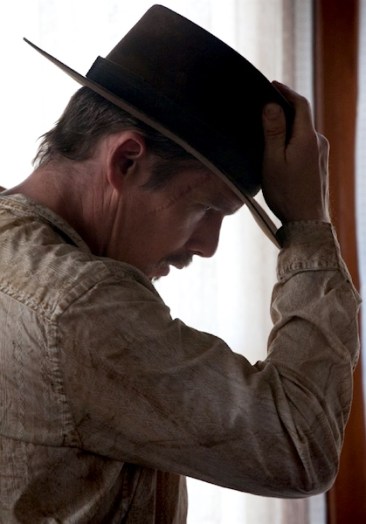
Cool cowboy

Despite the plot similarities, In a Valley of Violence isn’t going to challenge John Wick for ultra-choreographed action satisfaction, but it has many aspects to recommend it for those who like a chuckle alongside their bloodshed.

4 out of 5

In a Valley of Violence is released direct to DVD & Blu-ray in the UK on 6th March.
John Wick: Chapter 2 is in UK cinemas from today.

Love & Friendship (2016)

2016 #173
Whit Stillman | 94 mins | streaming (HD) | 1.78:1 | Ireland, France & Netherlands / English | U / PG

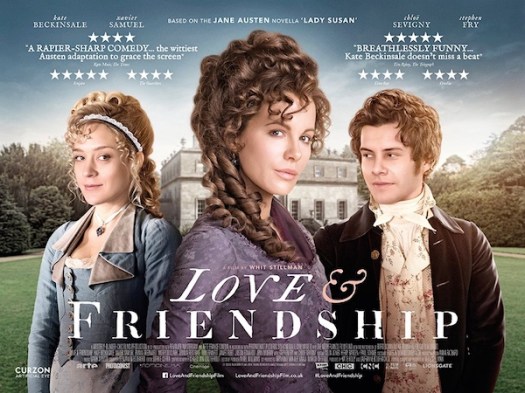
Love & Friendship

Adapted from Jane Austen’s early novella Lady Susan, writer-director Whit Stillman’s arch comedy concerns one Lady Susan Vernon (Kate Beckinsale), a widow with a certain reputation in polite society, which she endeavours to hide from while engaging in matchmaking machinations for both herself and her daughter.

That’s the vague version, anyway. The details of the plot are occasionally a mite too intricate to follow, especially as explanations tend to come after the fact, if they do at all. However, for those prepared to go along with it, the reward is a film that is at times hilariously funny.

Stillman’s writing and direction are both a little mannered, which will surely turn off some viewers, but the real stars are, indeed, the stars. Kate Beckinsale is phenomenal — funny, dry, biting, witty, but also conveying that Susan is making it all up as she goes, despite pretending to be in control. The other standout is Tom Bennett as the dimwitted Sir James Martin. His knowledge of the commandments and opinion of peas are particularly delightful.

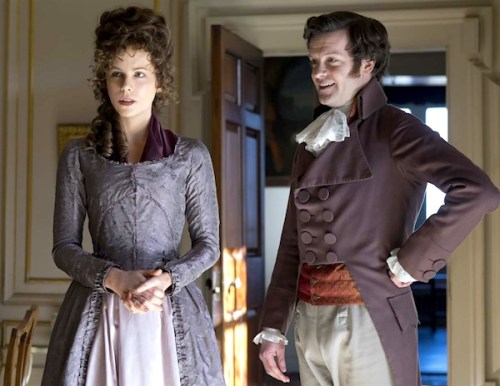
Kate Beckinsale & Tom Bennett

Love & Friendship may be something of an acquired taste thanks to its stylistic affectations, but couple that with its wry sense of humour and it makes a likeable change from the heritage ambitions of most Austen adaptations. Perhaps, too, that makes it the Jane Austen film for people who don’t normally like Jane Austen films.

4 out of 5

Mad Max: Fury Road – Black & Chrome Edition (2015/2016)

2017 #19a
George Miller | 120 mins | Blu-ray | 2.40:1 | Australia & USA / English | 15 / R

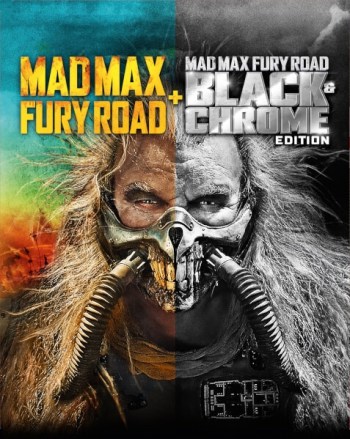
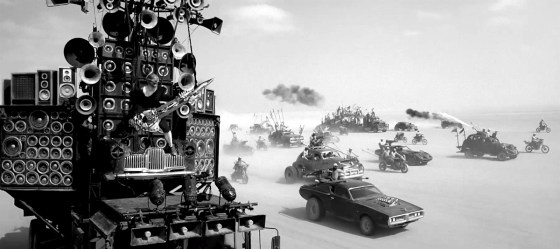
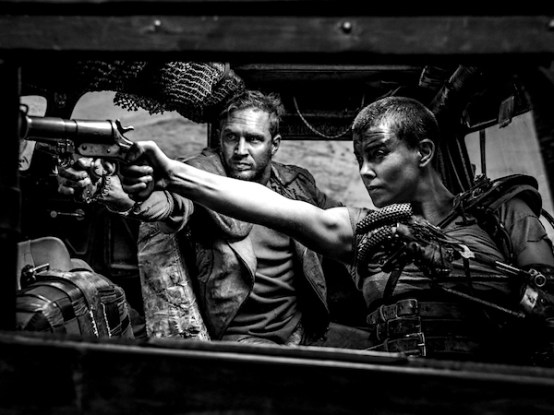
Mad Max: Fury Road - Black & Chrome Edition

During post-production on Mad Max 2, aka The Road Warrior, director George Miller had a chance to watch composer Brian May (not that one) at work. As was standard practice, May was working with a ‘slash dupe’ copy of the film — a cheaply-produced duplicate print, which has the defining characteristic of being in black and white. Miller was instantly smitten, believing this was the best-looking version of his film. 30-something years later, during post-production on the fourth Max movie, Fury Road, Miller had the film’s colourist convert some scenes into black and white, and he once again discovered his preferred version. Only this time he mentioned it publicly and promised it would be released, which is more or less how, about 18 months after the film’s theatrical release, we ended up getting the so-called Black & Chrome Edition on Blu-ray. It finally makes its way to UK shores today… though only in a Zavvi-exclusive Steelbook edition, which has both already sold out and was dispatched to purchasers (like me!) last week. So, uh, so much for that.

Let’s start by getting some people’s obvious complaint out of the way: “Why do you need to buy it again? Why not just turn down the colour on your TV?” Well, you could, and you’d get an approximation of the effect; but if you have an appreciation for the fine details of film photography and colouring, that doesn’t cut it. The Black & Chrome version isn’t just the existing colour turned off — other things have been tweaked to heighten the experience, most obviously the contrast. Here’s a video that handily compares a selection of shots from the colour version, the Black & Chrome version, and the colour version simply desaturated:

If you’re thinking “but the two black & white ones look the same!” then maybe this isn’t for you. And that’s OK — it’s an alternate version, after all.

In his introduction (the only new special feature on the Blu-ray), Miller admits that at times you lose some information by not having the colour; however, at other times it looks even better, and he reiterates that he thinks this is the best version of the movie overall. Somewhat famously, the theatrical version of Fury Road has hyper-saturated colours as a reaction against the usual post-apocalypse movie look of heavy desaturation. It’s somewhat ironic, then, that Miller’s preferred version is the opposite extreme — but can you imagine any studio exec agreeing to release a $150 million black & white movie?

Also in that introduction, Miller expands on the appeal of the desaturated version: “Something about black and white, the way it distills it, makes it a little bit more abstract, something about losing some of the information of colour, makes it somehow more iconic.” He’s got a point. The starkness of the imagery really heightens the effectiveness of some shots and sequences. Indeed, taking a look at some parts of the colour version afterwards, it all felt so ‘busy’ thanks to the additional visual information. You may remember that, a few years ago, Steven Soderbergh shared a black and white version of Raiders of the Lost Ark, the point being to highlight the shot composition and editing, easier to focus on with the distraction of colour removed. And he’s right. Not in the sense that this feels like watching an assignment for film school, but in the sense that the point of the framing and focus is emphasised further without colour.

Black and Doof

And it does look beautiful. Cinematographer John Seale is clearly a master of lighting, something that’s only more apparent without colour. Indeed, Soderbergh said the same thing of Douglas Slocombe’s work on Raiders: “his stark, high-contrast lighting style was eye-popping regardless of medium.” Most of the movie looks like it’s been etched from silver — or, of course, chrome. The greys and whites are metallic, the blacks deep points of contrast. It looks gorgeous. It’s let down slightly by the nighttime scenes, however. They weren’t so hot in the colour version either, having been clearly shot in daytime and aggressively graded blue. Presumably that finished version was used for this, because rather than the stark imagery of the rest of the film, the nighttime stuff is kind of murky, the blacks kind of blue-ish, and it’s far less pleasing. (If you want to see for yourself, compare this screenshot to the others here.) Fortunately, that doesn’t make up much of the film.

Separate to the colour issue, Miller has expressed the influence of silent movies over Fury Road, including cutting the film without its soundtrack to make sure that it worked on a purely visual level. When he first promised the black and white edition would be released, he also said there’d be an isolated score option, to give the viewer the option of seeing the most stripped-back version possible. Sadly, that hasn’t happened. (He also promised a commentary and additional special features, which aren’t there either.) At times I tried to imagine how it would work in relative silence, and aside from a couple of places where you might want an intertitle or two, and the pre-climax scene where Max explains the new plan to Furiosa, it’d get by fine. So thoroughly committed is Fury Road to visual storytelling that even many of the dialogue scenes don’t actually need their dialogue — think about the early bit where Hux and Slit argue about who’s going to drive, for example. Sure, the dialogue makes explicit that Hux is normally the driver and Slit is taking his steering wheel because Hux is semi-incapacitated, but their body language conveys the gist of their disagreement clearly. It’s a shame Warners didn’t go the whole hog and let us have the option to experience the film with just the score, or score and effects, because I think it would’ve been equally interesting.

Furiouser and Furiosa

Obviously Fury Road: Black & Chrome is always going to be a curiosity for the dedicated fan rather than the primary way of viewing the film. Next time I watch it I imagine I’ll go back to the full colour version… but that’s mainly because I’ve only seen that version once anyway, so I want to re-experience the full impact of its wild colourfulness. However, for appreciating the quality of the photography, and for emphasising the legendary iconicity of Max and Furiosa’s story, I think Black & Chrome may well be the way to go.

5 out of 5

Mad Max: Fury Road – Black & Chrome Edition is theoretically released on UK Blu-ray today. It’s also available to own digitally from Amazon, iTunes (as an extra on the regular edition), and presumably other retailers (if they still exist) too.

Steven Soderbergh’s variation of Raiders of the Lost Ark will probably be reviewed at a later date, because I really want to watch that now.

The Maltese Falcon (1941)

2016 #142
John Huston | 96 mins | DVD | 1.33:1 | USA / English | PG

The Maltese Falcon

Humphrey Bogart is private dick and consummate bullshitter Sam Spade in this (re-)adaptation of Dashiell Hammett’s novel, considered the first major film noir.

The twisty plot of murder and thievery is enlivened by duplicitous performances from femme fatale Mary Astor, an effeminate Peter Lorre, the always welcome Elisha Cook Jr., and the humungous presence of Sydney Greenstreet, making his film debut at 60 and stealing every scene.

It’s also the directorial debut of John Huston, whose work alongside cinematographer Arthur Edeson is the greatest star: the low-key lighting and dramatic angles are (like the rest of the film) archetypal noir.

4 out of 5

The Maltese Falcon was viewed as part of my What Do You Mean You Haven’t Seen…? 2016 project, which you can read more about here.

Tale of Tales (2015)

aka Il racconto dei racconti

2016 #148
Matteo Garrone | 134 mins | streaming (HD) | 2.35:1 | Italy, France & UK / English | 15 / R

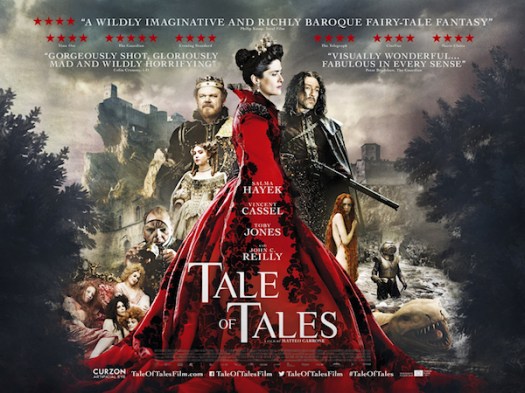
Tale of Tales

Based on 17th Century Italian fairytales by Giambattista Basile, Tale of Tales relates three interlocking stories of dark fantasy. If there’s one thing that really connects them, it’s thematic: essentially, “be careful what you wish for”; or maybe “be grateful for what you’ve got”. There are primary characters in each tale who go to disgustingly extraordinary lengths to achieve what they desire — eating a sea-monster’s heart raw, breeding a giant flea, self-flaying — and it rarely turns out for the best.

If you can stomach the contents, there’s a quality cast, and the locations, production design, and cinematography are simply gorgeous.

4 out of 5

Me and Earl and the Dying Girl (2015)

2016 #137
Alfonso Gomez-Rejon | 101 mins | streaming (HD) | 2.35:1 | USA / English | 12 / PG-13

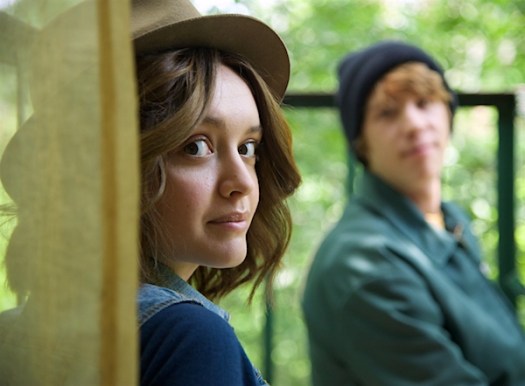
Me and Earl and the Dying Girl

This is a film about a high school student who makes movie parodies for fun, who befriends a dying girl. It won the Audience Award at Sundance. I’m not sure there’s any other knowledge you need to judge if you’ll like this movie or not. Except normally that’d have me thinking “oh God, here we go,” but I liked it enough to put it in my Top 20 of last year.

So, I admit, I went into the film feeling pretty cynical about it. I was expecting to find a movie tailor-made to be an indie cinephile’s dream comedy-drama. There are elements of that about it, but I must also admit I ended up being won round and affected by the film, to the point of feeling quite emotional and often a little teary for, ooh, most of the second half. Was I just manipulated into feeling that way? Well, that question is a fallacy. All film is emotionally manipulative, because it has been constructed to achieve a purpose, and the people who complain about feeling manipulated by sappy dialogue or heavy-handed music or whatever have just seen behind the curtain, as it were. For these reasons it kind of annoys me when critics or ‘film fans’ get annoyed about a film being “manipulative”, but maybe that’s a rant for another time.

Me and Earl and the Criterion Collection

Anyway, as I was saying, I kind of didn’t want to like Me and Earl and the Dying Girl because I didn’t want to fall into the obvious trap of “this movie totally gets me because I love Criterion editions too!” But I thought it worked in spite of those pandering affectations. Or maybe I just couldn’t resist them on a subconscious level? In some respects it doesn’t matter how it achieved it: the film wanted to make me feel a certain way, and I did feel that way — success.

Perhaps another reason it worked for me was the positioning of Greg (the titular “Me”) as a high school “Everyman”, not affiliated with any of the school’s multitudinous social groups. I don’t think I’ve seen that in a film before. What movies (and TV) have taught us about American high schools is that they are chocka with rigid cliques, and everyone belongs in one group or another. Is that true? I have no idea — but as far as movies (and TV) are concerned, yes it is. I don’t think it’s the case out in the rest of the world (well, at least not in the UK); not so rigidly and antagonistically as it’s depicted as being in US high schools, anyway. Nonetheless, I could identify with Greg’s status as someone able to drift around groups being generally well-liked but also almost entirely unnoticed, which perhaps helped me buy into him and his emotional journey a little more, thereby explaining the film’s ultra-effective emotional manipulation effect.

The Dying Girl

A lot of what works lies in the performances. As “the dying girl”, Rachel, Olivia Cooke is fantastic. She’s got the showy role, but manages to play it with subtlety. Instead of the usual indie movie Manic Pixie Dream Girl, the lead character / narrator is the Quirky one and she’s a cynical girl who undercuts him, which is kinda fun. Nonetheless, as the film’s “Me”, Greg, Thomas Mann has a less obviously showcasing part, but the way he handles it — especially as the film moves away from the “he’s a Quirky film fan who’s uncomfortable in high school just like you” aspect — is essential to how the film’s relationships and emotions function.

Nowhere is this better exemplified than in a two-hander between the pair: achieved in a single static shot that lasts five minutes, they don’t look at each other while they argue and their friendship struggles. It’s a frankly stunning scene from all involved: kudos to Jesse Andrews (who wrote both the original novel and the screenplay) for the plausible and complex dialogue; kudos to Alfonso Gomez-Rejon for the confident blocking of both actors and camera; kudos to both of the actors for their layered, emotive, but not grandiose, performances.

Several supporting cast members are also worthy of note: Jon Bernthal as a cool teacher; Molly Shannon as Rachel’s mom; and Nick Offerman for once again perfectly judging the level of funny his character needed to hit to be comic relief but also stay tonally consistent with the rest of the film.

Fake Criterions

A final stray thought before I wrap up this rather bitty review: I’ve read a few comments that make a point of mentioning this is not like all those other “teen death” movies, or that if you’re sick of all those then this one’s still good, and so on. I’m kind of aware these “teen death” movies exist and that there’ve been a few, but I’ve never bothered to watch one (because, frankly, they’ve all sounded rubbish), so I am immune to any overkill other viewers may experience. But if there’s a lesson here (and I’m not saying there is) it would be that you don’t have to watch every high-profile film that comes out (unless you’re a critic and being paid to do it).

4 out of 5

Me and Earl and the Dying Girl placed 14th on my list of The 20 Best Films I Saw For the First Time in 2016, which can be read in full here.