Danny Boyle | 103 mins | DVD | 15 / R
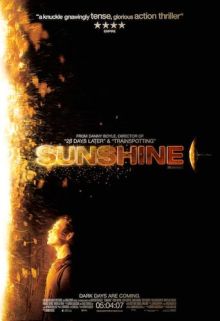 After branching out into the genres of horror (with 28 Days Later…) and ‘family’ (with Millions), Danny Boyle turns his hand to sci-fi with this effort, which tells the story of a spaceship in the apparently not-too-distant (but, clearly, distant enough) future transporting an improbably large nuclear bomb to restart our dying sun.
Sunshine is what some would call “grown-up science fiction”, often more concerned with the crew’s moral dilemmas than thrilling action set pieces or dazzling CGI. Luckily, though, the former aren’t too pretentious and both of the latter are still present. Similarly, the fact that it’s a British rather than American film is apparent early on: there’s an international crew (the Captain is even Foreign! Shocking!), there’s no time wasted on the melodrama of what life is like back on Earth, and the plot slow burns, carefully depicting the crew’s day-to-day relationships and tasks before, inevitably, It All Goes Wrong. The crew notice their failed predecessor floating nearby and have to decide whether to continue on their present course or divert to meet the other craft. I’m sure anyone can guess which option they choose. The ensuing slow slide from relatively minor problems to increasingly major ones fills most of the running time and, like every aspect of the film, is very well executed.
One stumbling block is that, in many ways, it’s territory that’s been trod before. Boyle and screenwriter Alex Garland mix in elements of Alien, 2001: A Space Odyssey, Armageddon, and no doubt several other spaceship-based movies. To their credit, it doesn’t feel like a total rip-off, but the influences are apparent. I was also reminded of the BBC miniseries Space Odyssey: Voyage to the Planets, though I doubt that was a huge influence! (It is quite good though, so you never know…)
Most reviews of Sunshine primarily criticise a shift in quality for the third act. It’s hard to disagree on this, as the film moves from a realistic(ish) Apollo 13-esque space mission movie into slasher horror territory. It almost works, though does feel a little like they were desperate for either a multiplex-pleasing round-off or anything that would carry the film through the last 30 minutes. The real let down is the final sequence, a logic-vacant confusingly-shot finale that consequently feels a tad disappointing.
Yet it’s not bad enough to make too large a dent in the film’s overall quality. The first hour may be better than the final half hour, but it’s all still good enough to pass. Ultimately, the weak ending’s only impact may be in knocking one star off the final score — though, without an alternate final act to compare it to (obviously), it’s hard to be certain it’s even that bad.

Sunshine placed 10th on my list of The Ten Best Films I Saw For the First Time in 2008, which can be read in full here.
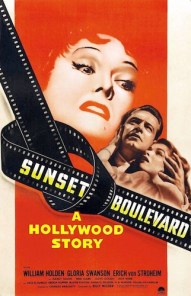 Sunset Blvd. may not be the first movie about the movies, but for the amount of controversy it caused and the impact it’s had it may as well have been. It’s certainly a well respected film — I’m sure I could cite any number of
 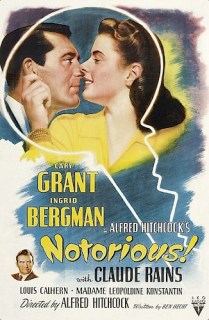 Cary Grant, Ingrid Bergman and Claude Rains star in Alfred Hitchcock’s 7th best film (according to the ever-changing
 Double Indemnity is perhaps the archetypal film noir — unsurprising, really, when you have Raymond Chandler co-adapting a novel by James M. Cain. Present and correct are the femme fatale, dry-witted lead man, voice-over narration, shadowy photography, murder, cover-ups, investigations, twists… The difference to films such as
  Back to catching up on last year’s films that I missed, this time with Beowulf in its Director’s Cut form — which, much to my amusement at the time, prominently featured a BBFC 18 icon on its initial cover art but only received a 12 when classified. Clearly the BBFC didn’t feel the “bolder, never-before-seen images” were any more unsuitable for kiddies than the originals. Personally, I’m not so sure. This version of the film is bloody violent (literally); more so than
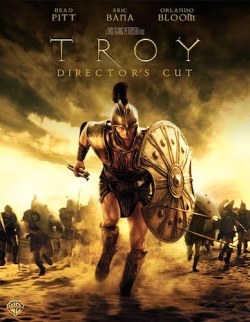 A lot of people didn’t like Wolfgang Petersen’s big budget version of The Iliad. I can’t remember the specific criticisms any more, other than that some friends who’d read the poem found this to be simply laughable. Personally, I quite enjoyed it — it may not be classic art like its source, but the theatrical cut of Troy was a more than passable example of swords-and-sandals entertainment. If not an epic, despite its running time, it was quite fun.
 Another fan documentary (following yesterday’s review of
  One of the more recent entries in the “fan documentary” sub-genre (which also includes the likes of
  Mockumentary from some of the team behind the perennially popular
  I can’t help but wonder if, back in 1985, there was any audience confusion between A Room with a View and
