
Jafar Panahi & Mojtaba Mirtahmasb | 79 mins | DVD | 1.78:1 | Iran / Persian | U
 You know the kind of people who wait ages and ages for something and really want it and pre-order it or whatever and then when it finally arrives they… add it to a pile and don’t get round to watching/reading/listening to it for even longer than the ‘forever’ they were waiting in the first place? If you don’t, you do now — that’s me.
I first read about This is Not a Film when it premiered at the 2011 Cannes film festival (coming up to four years ago now). “Films where people sit around in rooms and talk to themselves in a foreign language” isn’t among my favourite of movie genres (it is for some people though, so each to their own), but nonetheless this one sounded like an intriguing must-see. My personal hype for it built further through multiple praise-filled reviews, the slow crawl through distribution deals being signed, and the long wait for a UK cinema or DVD release… Finally, a British DVD debuted in March 2013. My copy arrived and I put it on a pile. Just over 18 months later, I finally watched it. (Because it was going to be on TV. That’s often a catalyst for me.)
Jafar Panahi is, I suspect, not the kind of man who waits ages for something and then when it arrives does nothing with it. Quite the opposite, in fact: he’s the kind of man who’s told by law he has to wait ages to do something, and instead does it straight away. After being banned from filmmaking for 20 years, and while waiting for a decision on his appeal against the sentence, Panahi invites his friend and fellow filmmaker Mojtab Mirtahmasb to his house, where the latter films the former as he reads and enacts portions of the screenplay for his intended next project, as well as chatting about the nature of filmmaking.  To be precise, Panahi’s ban is from filmmaking, writing screenplays, leaving the country, or giving interviews, so they conclude that reading aloud an existing screenplay while someone else films him doesn’t contravene any of those rules. Nonetheless, the edited (not-a-)film was smuggled out of Iran on a USB stick hidden in a cake in time for its Cannes premiere.
That result is certainly an atypical film viewing experience. The form has a natural looseness, a wavering focus, a lack of structure — all of which is deliberate, and yet not deliberate. It’s not the raw footage — it has been edited and shaped; but only to an extent. After some preamble where he checks in with his family and his lawyers, Panahi starts to describe the film he wanted to make, but is frequently distracted by the futility of the exercise — cue the film’s famous quote, “if we could tell a film, then why make a film?” — before returning to it regardless, because that was the goal of the exercise. In the end, he never really finishes it; certainly not the whole film, anyway. This is Not a Film is not a film told by a man in his own front room, but that is part of it.
So what is it, then? It’s a statement, I suppose, but not so bluntly as an actual statement would be. It’s main message, perhaps, is that art and artists will find a way — you can try to suppress them, but if they want to speak out they will continue to try, and they will find the gaps in your rules that allow them to do so. But it’s also about the nature of movies. What is a film? Is this a film? And if it isn’t a film, what is it? The screenplay Panahi is describing isn’t a film, it’s a series of ideas and concepts that he’s explaining. Does him explaining it make it a film? No, because it lacks the input of important filmmakers like the actors (in one sequence, Panahi demonstrates how the improvisational style he uses generates unpredictable results) or the cameraman (Panahi attests he knows nothing about technology).  In fact, despite the singular input and focus put into this ‘project’, it could be used quite successfully as part of an argument against auteur theory. But that isn’t what it sets out to do either.
What does it set out to do? Nothing… and yet, obviously, not nothing.
By this point you have probably got the gist that this is not a mass-appeal movie. It’s one for students and fans of film, or for those interested in artists working under oppressive regimes. It’s a behind-the-scenes documentary for a film that doesn’t exist; a polemic that never polemicises; a portrait of the artist that has to eschew most of his art… yet, in the spaces around what can be shown and what is shown, it is all of those things. (Just to get a bit pretentious about it.)
For those on the fence about whether This is Not a Film is deserving of an hour-and-a-half of their time, I think the whole exercise is worth seeing for the climax alone. As Mirtahmasb leaves to go home, the stand-in maintenance man for Panahi’s apartment complex arrives to collect the trash. They get talking and, with nothing better to do, Panahi comes out with him on his rounds. A bizarrely captivating elevator ride follows, Panahi holding the camera as he just chats with the guy about his life, his work, his goals; not an interview, but an informal polite natter. It lasts, unbroken, for many minutes, and ends with them emerging outside, to a stunning, unexpected, though equally logical, and no doubt highly allegorical, final shot. The whole sequence makes you begin to question: was this staged? Or a genuine serendipitous event? Questions you may ask about the whole film;  questions that are always worth asking about purported documentaries.
Whether This is Not a Film is a film or isn’t doesn’t really matter. It makes you think — and actually, all that oppressive regimes ever really want is to stop you thinking. Unfortunately for them, that’s one thing they can’t control so easily.

 By 1947, Hergé’s boy reporter/adventurer Tintin had already been around and increasingly popular for nearly two decades; had survived World War 2 and the controversy of being published in a Nazi-controlled newspaper; and the release of his adventures had recently been transferred to a dedicated magazine, Le Journal de Tintin. What better time to bring the character to the big screen?
 In
In 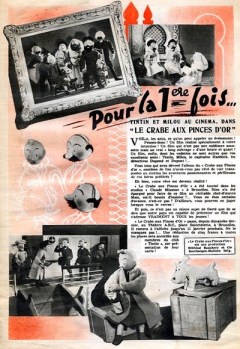 makes it look as if he’s permanently shocked by everything.
 Produced as a B-movie, but eventually nominated for four of the biggest Oscars (Picture, Actor, Director, Screenplay
 like a Christmas party which is regularly interrupted by victims and suspects. Even the final scene, a rambling and none-more-Christie-like “gather all the suspects and reveal the answers” dinner party, seems natural because of the characterisation throughout the rest of the film. Loy’s part may not be quite as showy — as demonstrated by its failure to gain an Oscar nomination — but she’s an invaluable half of the double act.
 Liam Neeson shoots wolves for an arctic drilling company, but when his flight home crashes, he must attempt to lead the small band of survivors across an icy wilderness to the mere hope of safety — pursued all the way by murderous wolves…
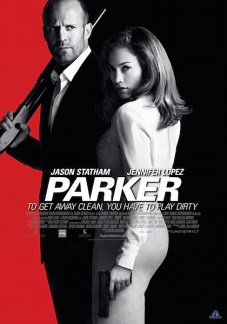 Parker trailed well — funny lines, promising action, solid setup — but doesn’t deliver.
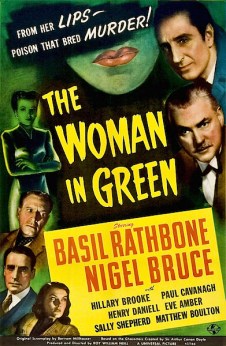 Basil Rathbone’s Sherlock Holmes starred in films which, although they typically involve murder, are best described as “adventures”. The series’ 11th film, The Woman in Green, is one of the few — perhaps the only one — that could genuinely be described as dark and grim.
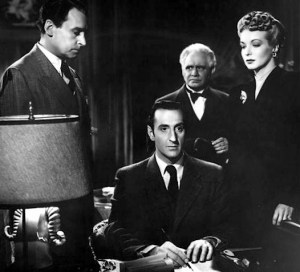 The evil is carried off with aplomb by Daniell. Reportedly a cold actor to work with, he chills on the screen too. This is a man you can believe would carry out such a scheme without a single twang to his conscience. His comeuppance, even with its surprising finality, is welcomed. The titular woman, played by Hillary Brooke, is one of Moriarty’s cohorts, posing as the ‘girlfriend’ of the aforementioned widower in order to set him up. The film is of course in black & white, so we can’t see what colour she’s wearing, and no one ever refers to it — even when they’re hunting for her based on looks alone. I guess someone thought it was an evocative title nonetheless.
 Released the same year as
  Even with the undercurrents of grief and the difficulties of moving on, this is fundamentally a light, amiable romance.
 Jackie Chan’s breakout hit sees him as Chien Fu, the floor-scrubber-cum-punch-bag at a martial arts school where he bumps into Pai Cheng Tien (Yuen Siu Tien), one of the last two proponents of the Snake Fist style after its other students were murdered by their old enemies, the Eagle Claw clan. The old man trains Chan so he can overcome his bullying schoolmasters, while the Eagle Claw grand master (Hwang Jang Lee) hunts for his last remaining rival…
 Also striking is the music score, a strange mix of weird, cheap, dated, electronic stuff… and yet, it’s so odd I kind of warmed to it. It’s all poached from elsewhere, which was apparently the way things were done in Hong Kong at the time. Stand-out tracks are Magic Fly by Space and Oxygene Part II by Jean Michel Jarre, though bits of famous scores are in there too, most recognisably (for me)
  A behind-the-scenes making-of with a difference, American Movie: The Making of Northwestern (to give its full title) is a documentary about wannabe-filmmaker Mark Borchardt attempting to produce a horror feature film with little more than some mates and good intentions, battling against a lack of money, interest, and dedication. It descends, quickly, into the kind of farcicality that leads some to assume it’s a
  Whatever you take away from it, American Movie feels like a must-see for certain sections of film fandom, particularly anyone who wants to make a movie themselves. Its appeal is broader than that though, an everyday story of adversity that isn’t so much overcome as temporarily averted. It’s not bleak or sad, but it is melancholic. And, whatever the morals of it, often laugh-out-loud funny.
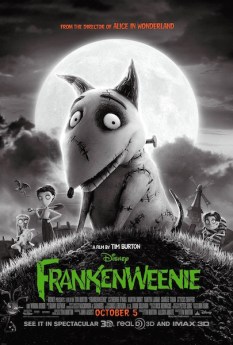 Inspired by two of Burton’s early-’80s shorts (which are most commonly found on
  Some say it doesn’t have enough of an edge. Well, maybe; but I thought it was surprisingly dark in places. Not so considering it’s a Tim Burton film based on resurrecting the dead, but for a Disney-branded animation, yes. Those edgier bits are here and there rather than consistent, but still, I’m not sure what those critics were expecting from a PG-rated Disney animation. I guess there’s an argument that Burton should have pushed it further and aimed for an adult audience, but can you imagine an American studio agreeing to finance an animation primarily targeted at anyone who’s entered their teens? Because I can’t.
 100Films.co.uk