Blade Runner: The Final Cut (1982/2007)

2009 #58
Ridley Scott | 118 mins | Blu-ray | 15 / R
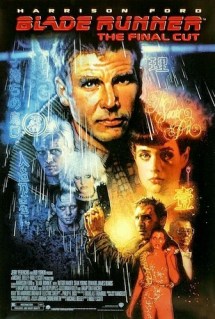
Blade Runner: The Final CutYou don’t need me to tell you about Blade Runner. It’s one of the most popular movies ever, if not with a mass audience then with a significantly-sized cult following and even wider-spread respect. Still, I’m going to go on about it for a bit anyway.

First off let me say that I have seen it before, in the guise of its 1992 Director’s Cut, the only cut available on Home Entertainment/TV since I’ve been old enough to know the film exists, and which is surely to blame for almost every blockbuster getting a Director’s/Extended/Unrated/Ultimate/Complete/etc Cut on DVD these days. Ironic, really, considering it’s a slight misnomer as Ridley Scott wasn’t properly involved with its creation. The Final Cut isn’t fundamentally different to that Director’s Cut, however. Yes, there are an array of editing tweaks and myriad effects fixes, but the meat-and-bones of the story and the content of the scenes — including the removal of the voiceover and the foreshortened ending — remain the same as the Director’s Cut. (If you’re interested in a blow-by-blow account of all the differences between the five cuts now available, try here.)

Normally such minor surface changes wouldn’t warrant a new number on this blog. But this is Blade Runner — or should that be Blade Runner, undeniably one of the most significant films of the last quarter-century thanks to its enduring influence. Yes, it is heavily influenced itself — by the likes of Metropolis and the whole of film noir, primarily — but its dystopian future — all constant night-and-rain, busy streets, neon advertising, canyon-like decrepit skyscrapers towering over dirty streets, high technology rubbing with the everyday detritus of humanity — has been copied everywhere. Without this there’d probably be no Ghost in the Shell, no Dark City, no Matrix, no re-imagined Battlestar Galactica, no thousand other things that have nothing close to the brains but do have the look, the style, the feel. Not to mention Red Dwarf: Back to Earth, of course (he says, as if that has greater significance than the rest!), which sits somewhere between homage and rip-off, surprisingly large chunks of it making almost no sense without at least a passing familiarity with Blade Runner. And the whole thing’s cyclical, because look how The Matrix has gone on to influence countless other lesser efforts. But that discussion is for another time.

In fact, the film can also be seen all over the real world, in what is doubtless the skill of those who predicted its future rather than a genuine influence on Real Life (though you can never be sure). It’s not all true, obviously, but for all the outdated technology (look at the computer displays!) or never-likely technology (flying cars!) there’s an example of the way the world’s headed or already gone. Video phones? Look at Skype, or video inboxes on the iPhone. LA’s skyscrapers, gaudy neon signs, huge video-screen advertisements, rundown areas of the city that are so unrestored they seem to be from decades ago (because they are), the increasingly widespread integration of Eastern culture, photo manipulation available in the home to anyone… it, and more, is all already here, or just around the corner.

But being Surprisingly Accurate does not a popular film make (well, not necessarily), and so of course Blade Runner has a lot more to offer than “ooh, I can do that too!” Putting the future setting aside for a moment, it’s plain to see that the film is as shaped by film noir as by other sci-fi, if not more so. The dark cinematography is perhaps the most obvious area of influence: shafts of light breaking up shadows; imposing cityscapes; constant rain, constant night (with any daytime scenes stuck indoors, often with blinds drawn and/or the light made hazy by smoke). There’s the plot too: it’s packed to bursting with sci-fi concepts underpinned by metaphysical discussions (who is God? what does it mean to be human?), but these are driven by a pure noir narrative, complete with beaten-down reluctant detective (who even loses the final fight), a femme fatale, a questionable moral perspective and a storyline that is predicated on an investigation/manhunt.

That this tale unfurls at a relatively slow pace is surely not to everyone’s taste, but it suits the film’s somewhat intellectual bent. The pacing renders it majestic, stately, both thoughtful and thought-provoking. Even the action sequences tend toward this. This overall languidness frequently allows moments of beauty to leap out, from the visuals, the ideas, the dialogue — Batty’s dying words, for example, are beguiling, elegant and meaningful, mixing the fantastical with an identifiable reality to memorable effect.

The image that most stands out is, appropriately, eyes: the V.K. test, the occasional orange glint in Replicants’ pupils, Batty squeezing out Tyrell’s eyes, the latter’s huge glasses, Pris’ spray-painted eyeliner, Gaff’s odd-looking eyes, and so on. It succinctly reflects the themes of what things seem to be and what they actually are — “seeing is believing”, if you will, although in Blade Runner’s world that clearly isn’t true. The famous photo manipulation scene also feeds into this. One of the great things about the eye motif is that you can’t exactly miss it — the very first thing seen is an extreme close-up of an eye — but it’s obvious not in a batter-you-round-the-head-so-even-the-most-simple-simpleton-will-notice way, but the if-you’re-an-intelligent-viewer-you-shouldn’t-fail-to-spot-it-on-a-repeat-viewing kind of way.

Elsewhere in the filmmaking pantheon, the specials effects are astounding. They look brilliant today, easily besting most of the still-obvious CGI we’re bombarded with. Yes, they’re now aided by some digital clean-up, wire removal and that kind of thing, but the basic models and composites remain untouched and are beautiful. Similarly, Vangelis’ score should by all rights sound dated and discordant, filled as it is with early-80s synths. Fortunately, it has a kind of unusual beauty that matches the visuals it drifts over, complementing as it should rather than providing an uncomfortable reminder of exactly which decade produced the film.

Blade Runner is by any count an incredible piece of work (something the extensive making-of documentary on The Final Cut DVD/BD only emphasises, incidentally). Not everyone will (or does) like it, but I should imagine even they find it hard not to admire (an altogether different thing to “like”). Either way, I think it’s safe to say it can lay claim to a place on the relatively select list of films everyone really must see.

5 out of 5

BBC Two are showing Blade Runner: The Final Cut tonight at 9pm.
Blade Runner: The Final Cut is on BBC Four tonight, 26th September 2013, at 10pm.

I covered the 1992 Director’s Cut as part of my 100 Favourites series, here.
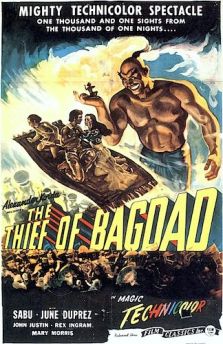
The Thief of Bagdad (1940)

2009 #66
Ludwig Berger, Michael Powell & Tim Whelan* | 102 mins | TV (HD**) | U

The Thief of BagdadThe Thief of Bagdad is, in many respects, one of the forefathers of the modern spectacle-driven blockbuster, packed with innovative effects designed to dazzle the viewer. One can only imagine how incredible the special effects looked to a 1940 audience. Today the flaws are obvious, but, surprisingly, not by much.
There are too many enchanting sequences to mention — the ginormous genie, the flying mechanical horse, the giant spider, the toys, the flying carpet… Models, huge life-scaled props, matte paintings, early blue screen — all this and more are put to use beautifully. The ingenuity of the effects work contains more artistry and charm — and, frequently, more excitement — than the bland, wannabe-perfect CGI we’re force fed today; and, because of this, and in spite of being almost 70 years old, the sense of wonder remains. It doesn’t matter that it’s not 100% believable — in fact, that’s almost the point: the child-like ability to suspend one’s disbelief and accept the fantastical seems to be the message of the film (or, at least, one of them).

All of this is emphasised by the cinematography. This is one of the earliest films to use Technicolor and use it it does. Everything is vibrant and lush, vivid and otherworldly; especially to the audience of the time, I should imagine, not accustomed to foreign holidays and endless TV travel shows as we are today. But the film’s world is a heightened version of reality and, as with the effects, the fantastical style means it doesn’t really date. Wish You Were Here has nothing on this.

The story itself has a bit of everything: romance, fantasy, action, adventure, humour and, no doubt, more. The cast are up to the task, with John Justin swashing his buckle Errol Flynn-style as dethroned prince Ahmed; Conrad Veidt perfect as slimily evil vizier Jaffar “the usurper”; Sabu suitably valiant, amusing and clever as a peasant hero; and Rex Ingram making a memorably self-centred genie. If Disney fans think some of this sounds familiar, it must seem obvious to anyone who’s seen Aladdin that The Thief of Bagdad was a major influence on the 1992 animated classic.

These days, The Thief of Bagdad may be something of an acquired taste — some viewers will struggle to engage their sense of make-believe enough to accept the rough-round-the-edges effects and fantastical storyline — but that’s their loss, quite frankly. For those of us with some imagination to spare, it remains a magical experience.

5 out of 5

* Although only these three are credited on screen, six directors were reportedly involved. The others were producers Alexander Korda, Zoltan Korda, and William Cameron Menzies. ^

** Though listed by the Radio Times as being in HD, the D didn’t look particularly H to me. ^

Watchmen: Director’s Cut (2009)

2009 #79
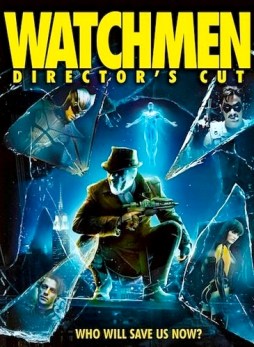
Zack Snyder | 186 mins | Blu-ray | 18 / R

This review contains spoilers.

Hitting US Blu-ray so long ago that it’s shameful I haven’t watched it ’til now, and finally arriving in the UK next Monday, the Director’s Cut is Zack Snyder’s final vision of Watchmen: The Movie. The Ultimate Cut (currently available in the US but with no confirmed UK release), which integrates the animated Tales of the Black Freighter into the main feature, is, in Snyder’s words, “an experiment”. Maybe one day he’ll change his mind and say that’s actually his definitive version; I suppose these days — when it seems every major film has a proliferation of different cuts across theatrical release, home entertainment release, and home entertainment re-release — such a thing as a “definitive version” doesn’t necessarily exist. But that’s a debate for another day: for now, this — not The Ultimate Cut, and certainly not the theatrical cut — is Snyder’s Watchmen.

That said, I wouldn’t be inclined to say it’s vastly different to the previously seen version. There are some obvious new scenes and extensions, especially if you’re familiar with the original novel, but ultimately I didn’t find the additional 24 minutes created a vastly different experience. Most of the flaws still remain, from the unfixable — Malin Akerman is somewhat miscast; sometimes episodic storytelling (a largely unavoidable side effect of faithfully adapting a novel that is very much a story in 12 parts, as opposed to a story divided into 12 chunks) — to those that Snyder could potentially have rectified — the alley fight/Manhattan interview crosscutting still doesn’t quite work; Bubastis is inadequately explained; too little time is devoted to the large cast of secondary characters in New York to give Adrian’s plan the same emotional kick it has in the novel; and so on.

By the same token, none of the great bits are ruined, while some are enhanced. Although mostly faithful to the novel, the changes Snyder and co have made are almost all for the better: Rorschach’s “what do you see?” beats the fan-favourite landlady scene (goodness knows why it’s a fan favourite), and Matthew Goode’s slightly built, faintly Germanic Veidt seems a more natural fit for the character now than Gibbons’ more butch version (possibly only in my opinion, that one). Best of all is the modified climax, which retains all the significance of the original but, by changing the way in which it’s brought about, streamlines and tidies up the storytelling. The giant squid is a great comic book image, but this is superior plotting, especially in the abridged form a film adaptation must take.

As for the new bits themselves, some are slightly misguided — Rorschach’s escape from Blake’s apartment, for example, is wholly unnecessary; it shows him injuring a policeman, an incident now referred to over the next few scenes, but we don’t need to see it to follow the references, and showing it gets in the way of the previously perfect match-cut from the Minutemen photo in Blake’s apartment to the same one in Hollis Mason’s. By and large, however, the extensions add depth via little lines and moments. The most noticeable are a better building of Laurie’s backstory, and Hollis Mason’s death. The latter is a little ancillary to the main plot, its excision from the theatrical version easily justified to keep the running time down, but in itself is a well-played and tragic scene that adds further resonance to the end of Dan’s story.

Whatever you thought of Watchmen after the theatrical cut, this extended version is likely to change your opinion no more than any other re-viewing would. That said, with a little extra room to breathe and a few worthwhile extensions, and in spite of the odd tweak that doesn’t work, this is the superior cut of the film.

5 out of 5

Most of the comments in my lengthy review of the theatrical cut still stand, so I invite you to read it here.

Watchmen: Director’s Cut placed 3rd on my list of The Ten Best Films I Saw For the First Time in 2009, which can be read in full here.

The Apartment (1960)

2009 #36
Billy Wilder | 125 mins | download | PG

The ApartmentAn article I once read (but have long since misplaced, unfortunately) asserted that Billy Wilder once said (and I paraphrase heavily here, I’m sure) that, contrary to expectations, when he was feeling happy he’d make a serious picture, and when feeling down he’d make a comedy. Goodness only knows what kind of mood he was in when he chose to make The Apartment, then, because it flits between the two with gay abandon.
It begins almost as a farce, with Jack Lemmon playing up the near-misses inherent in lending your apartment to adulterous men; and though this comedic vein never goes away, the film also develops a dark side. Alongside the affairs and underhand dealings — in which our hero is closely involved — there’s an attempted overdose, discussion of other suicide methods, and respectable men getting divorced. It all seems quite shocking for a film made under the Hays Code, though that was on its last legs (Wilder’s own Some Like It Hot had been released without code approval the year before and still been a huge hit), and Mad Men and its ilk suggest such goings-on by businessmen may not have been so surprising to contemporary viewers either.

On the technical side, Wilder employs long scenes and long takes, but Lemmon never stops bustling through them, always doing something, keeping the film active and moving even when Wilder declines to follow. It’s the latter that makes the former so effective, rendering Lemmon’s character the odd one in an otherwise static world, the one still turning to humour in the face of all life’s bleakness.

Real life always serves up humour alongside tragedy, yet despite that it takes skilled filmmakers to do the same without one lessening the other. Wilder and Lemmon are, of course, among them, and one can imagine few finer examples of such a blend than The Apartment.

5 out of 5

For All Mankind (1989)

2009 #42
Al Reinert | 77 mins | TV (HD)

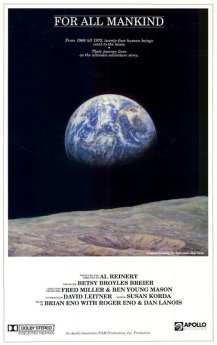
For All MankindFor All Mankind tells the story of NASA’s Apollo missions to the Moon using only NASA’s own footage of the real missions.

It’s not a documentary in the sense that most people perceive the form — i.e. a highly realistic presentation of the facts — but instead something a little more interpretive, aiming to recreate the feeling and experience of travelling to the moon, not the hard facts of who went when and how it was done. As such it is both beautiful and artistic, featuring stunning photography that has been sensitively edited and scored.

In this regard, it makes In the Shadow of the Moon look like a Hollywood remake. While they follow the same tack — telling the tale of the Moon missions with just the testimony of the astronauts, treating it as one big mission rather than taking them all in strict chronological order — For All Mankind does it with a greater sense of artistry. Where Shadow feels like a typical documentary, with talking heads and onscreen identification of who’s speaking, Mankind just uses original footage and astronaut’s narration, never bothering to identify the speaker. Both styles have their place, and Shadow adds a great deal to the story with its retrospective comments by the astronauts, but the glorious footage and skilled editing of Mankind — and the added wonder of seeing it in HD, it must be said — leaves one with a sense of awe that isn’t as present in the more informative Shadow.

These two films make an excellent pair then, but For All Mankind’s beauty provides the superior experience.

5 out of 5

For All Mankind placed 5th on my list of The Ten Best Films I Saw For the First Time in 2009, which can be read in full here.

Aliens (1986)

2009 #14
James Cameron | 132 mins | DVD | 18 / R

Once upon a time, sequels were universally regarded as Bad — the inferior product of a great original; most frequently a remake in continuation’s clothing. These days we regularly see sequels that continue and expand on their predecessor, frequently leading to higher praise and a better reputation. It’s almost become expected, in fact — look at the number of reviews of Star Trek that express more anticipation for the inevitable sequel than the one just released (my own included). The archetypical “sequel that betters the original” was always James Cameron’s Terminator 2: Judgment Day — though currently critics often seem to pick X2 — but long before either of these Cameron was ahead of even himself with this sequel to Ridley Scott’s acclaimed sci-fi/horror.

The difference here, perhaps, is that Scott’s movie was so well-regarded and well-known in the first place. But Cameron cannily marks his sequel out by making it totally different, much more so than X2 to X-Men or even T2 to The Terminator. Where Alien is a Horror Movie — but in space — Aliens is a War Movie — but in space. The story structure is somewhat reminiscent of Apocalypse Now, for example; the central characters are a team of marines, as opposed to the original’s ordinary guys; where the first film’s design was dark, shadowy and oppressive, here it’s all gleaming tech, tanks and guns and spaceships and the like; and, just to underline the point, the score is full of military drums. If Scott’s could have been translated to any modern-day industrial setting, Cameron’s could be in any modern-day war zone. It works because Cameron builds on the original without ignoring it, and it succeeds because he then makes a fine war movie in its own right.

The elements Cameron chooses to retain from the first film aren’t necessarily obvious, but all are very wise. He continues its believable, realist aesthetic: businessmen wear suits, for example, and while some of the military outfits and weaponry are clearly grounded in sci-fi, it’s all only one step removed from what we see in reality. He’s also not afraid of a slow build-up — thirty minutes passes before they even arrive at the planet, and, just like Scott, he keeps the Aliens off screen for almost an hour. Nor is he afraid of acknowledging the first film, something a less assured filmmakers might shy away from in the hope it would be forgotten and no comparisons would be made. There are many references back to it, but especially the first ten minutes, which are effectively a coda to Scott’s movie before Cameron’s can properly begin.

When it does, the title is apt: Scott’s film had one monster stalking his crew, Cameron has an army of them. Their first appearance is in a brilliantly directed epic skirmish, a solid burst of action that decimates the cast within minutes and helps pay off the slow build. Again learning from Scott, Cameron keeps the creatures in shadow, showing just enough to convey their horror but not enough to make them look silly or ineffectively realised. However, he ensures that when we do see more of them — such as the attack on the base, or the climax with the Queen — what we manage to glimpse still hides any technical shortcomings, resulting in a truly alien enemy that is flawlessly executed. In fact, despite the greater volume of Aliens surely creating a bigger effects challenge, they look even better than in Alien, shorn of such weakness as glove-like hands and keeping the awkward legs (nearly always a shortcoming of creature design) out of shot.

Are the Aliens even creepier and more menacing here? Maybe — there are more of them, which naturally increases the stakes, but we’re also shown even more of they’re capabilities. Despite the all-out battles, Cameron still relies on building tension. As Doctor Who fans will certainly be aware, the film becomes a classic Base Under Siege story once the remaining marines are holed up in the abandoned base, and most of the siege is done without any direct attacks — it’s all preparation, build up, waiting for the big moments. When it comes, it’s one huge attack that then leads straight into the climax — appropriately, the best bit of all. The Alien Queen is a clever invention, creating a Ripley vs Alien finale that mirrors the first film, but ups the ante in line with the new genre by making said Alien bigger and badder. The resulting Power Loader vs Queen battle is justly famous, a flawless marriage of writing (plot, dialogue, seeded elements), effects (without a pixel of CGI, of course), direction and choreography to create a perfect finale.

It’s easy to see why opinions are divided over which of the first two Alien films is better. Both are near-flawless sci-fi masterpieces, but for different reasons. It interests me that Scott’s original comes out top on lists like IMDb’s (though only by 15 places), because on the surface the action movie antics of Aliens would seem more crowd-pleasing. Personally, I’m going to cop out of a decision and merely reiterate that both are excellent and, by being so different but doing what they each do so well, make for a great pair.

5 out of 5

Tomorrow, Alien³.

Glory (1989)

2009 #28
Edward Zwick | 117 mins | DVD | 15 / R

GloryEd Zwick seems to like war. More accurately, Zwick likes making films about war, but clearly isn’t a fan of the act itself. Since gaining attention with multi Oscar-winner Glory, about the first black regiment during the American Civil War, he’s directed a number of films concerned with wars and those that fight them: Courage Under Fire (“Army officer investigates female chopper commander’s worthiness for the Medal of Honor”), The Siege (“a wave of terrorist attacks in New York lead to the declaration of martial law”), The Last Samurai (“American military advisor embraces the Samurai culture he was hired to destroy”), Blood Diamond (a group of people battle for a diamond during the war in Sierra Leone), and most recently Defiance (“Jewish brothers in Nazi-occupied Eastern Europe escape into the forests”). Whatever the reasons for Zwick’s preoccupation, he certainly has a talent for it.
In Glory, Zwick is helped by a story that’s definitely worth telling, one which I imagine seemed even more pertinent on its original release, when Nelson Mandela was still in prison and the state of race relations in the US would contribute to riots in Los Angeles inside of 18 months. Still, it would be easy to slide into Issue of the Week melodrama in handling such a tale, but Zwick manages it without undue sentiment — there’s an appropriate realisation of the importance of events, perhaps even occasional reverence, but time is taken to show doubts and prejudices. It may get too sentimental for some tastes toward the end, but considering the importance of the story I don’t think it’s unwarranted or overplayed.

Similarly, most of the hero characters are less than perfect, with Matthew Broderick’s Colonel of particular note as a conflicted and initially cowardly commanding officer, more concerned with propriety than what is right — until he’s led to a change of heart, of course. His is just one of several excellent performances: Morgan Freeman does what Morgan Freeman does best as the Authoritative Elder, while Denzel Washington’s angry young man justifiably earnt him his first Oscar. The wider supporting cast hold their own against these leads, particularly Andre Braugher as the idealistic but ultimately unsuited volunteer Thomas Searles.

The handful of battle sequences are effectively staged, suitably tense and brutal, though these are really ancillary — the regiment only engaged in conflict a couple of times and so, appropriately, actual fighting makes up a relatively slender portion of the film. The unfamiliarity of the story helps keep things tense both in and out of battle — for obvious reasons, the majority of battles depicted on film are famous ones, often because of their outcome, so it makes for an agreeable change to not know where events will lead.

These elements all blend to create a film that is, at the very least, the sum of its parts: a significant historical story with strong performances and a convincing depiction of war, which negotiates the thin lines that surround sentiment and reverence. Zwick may not be a fan of war, but he certainly knows how to put its stories on film.

5 out of 5

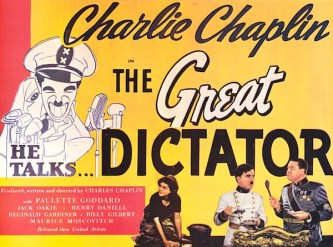
The Great Dictator (1940)

2009 #31
Charles Chaplin | 120 mins | DVD | PG* / G

One of the great things about doing 100 Films in a Year has been the number of firsts it’s either led me to or just been there to document: my first time watching films on Blu-ray and via legal download; my first time seeing films from directors as diverse as Woody Allen, Akira Kurosawa, F.W. Murnau and Krzysztof Kieslowski; my first time viewing such notable works as Breathless, Brief Encounter, Chinatown, Taxi Driver, This is Spinal Tap, The Wizard of Oz, and many more — including my first time seeing Citizen Kane. And here’s another for the list: my first ever Charlie Chaplin film.

The Great Dictator is one of Chaplin’s most widely-known films thanks to setting its sights on the Nazi regime and Adolf Hitler in particular. The general perception of silent comedians like Chaplin immediately suggests slapstick, but the real-world targets here make his work (on this film at least) satirical as well. I’m sure this made for great propaganda when it was released just a year into the war, but Chaplin’s skill and accuracy mean it works beyond that: like all good impersonations or spoofs it doesn’t make its objects silly for no reason, but instead takes what’s inherently laughable about them and exploits it. This would age some satirical humour, reliant as it can be on topicality, but the wide awareness even a modern audience has of Hitler means there are no comprehension problems today.

The style of humour can date nonetheless, but The Great Dictator remains funny — arguably the real test of a good comedy. It might not be to everyone’s taste, but that’s a problem comedy faces whenever it’s made. Chaplin loads the film with inventive and timeless routines, like the upside-down-plane, the coin-in-the-pudding, or the classic dance with an inflatable globe. Sometimes with comedy from decades previous, there’s the feeling you’re watching something that was funny at the time but no longer actually makes you laugh, thanks to changed conventions and expectations. For me, at least, there was no such problem here.

Surprisingly, there are some serious scenes too. While it doesn’t outweigh the comedy, there’s a degree of semi-factual drama in the plot that’s been well judged to help the humour cut deeper. The closing speech could come across as overly propagandistic but, again, it’s well pitched and therefore more galvanizing than inappropriately laughable. There are some bits, like this, that are sadly just as applicable to the modern world.

Chaplin allegedly said he wouldn’t have made The Great Dictator if he knew how bad things really were under Hitler, though some dispute this, arguing he knew and made it regardless. Some bits are slightly uncomfortable when one knows the reality, but whether Chaplin knew the truth or not these moments are fleeting. And, either way, Hitler and the Nazis were a worthwhile target: laughing at those who attempt to terrorise and dominate us is one of the most powerful weapons we have against them. That, certainly, is still true today.

5 out of 5

* For reasons known only unto the BBFC, The Great Dictator was classified U until 2003, when film and video reclassifications both made it a PG. ^

The Lunch Date (1990)

2009 #9a
Adam Davidson | 10 mins | DVD

Short films are paid minimal attention by most people, but a good one can launch a career. Take this, for example, which won the Short Film Palme d’Or at Cannes in 1990 and the Oscar for Best Live Action Short in 1991. Writer/director Davidson may not have had a significant film career since, but he has directed episodes of Dexter, Deadwood, Grey’s Anatomy, Law & Order, Lie to Me, Lost, Rome, Shark, Six Feet Under, True Blood, and more. Not all great TV, true, but there are some outstanding series in there and it makes for an impressive CV.

If any short were to kick-start a career it would be The Lunch Date. As with many shorts, to attempt to describe the plot would be to give too much away, which would be a mistake because this is a beautifully shot (in grainy black & white) and performed tale with a distinct, yet subtle, character arc and an important, but not over-egged, moral message. There’s virtually no dialogue, everything conveyed by what Davidson does (and, importantly, doesn’t) show and the performances, particularly that of Scotty Bloch as the central Lady.

Some of the film’s power rests in a neat twist, cunningly obscured by intelligent blocking and timing of other plot elements. Personally I saw it coming, but that didn’t diminish its point. It’s also worth nothing that none of the twenty-or-so others I was watching with spotted the twist ahead of time and they all seemed to find it even more effective.

Why short films are ignored is a discussion for another time, but The Lunch Date is an outstanding example of why they shouldn’t be.

5 out of 5

The Lunch Date is available on the Cinema16: American Short Films DVD.

In 2013 it was selected for preservation in the United States National Film Registry by the Library of Congress as being “culturally, historically, or aesthetically significant”.

In Bruges (2008)

2009 #22
Martin McDonagh | 102 mins | TV | 18 / R

This review contains minor spoilers.

In BrugesIn Bruges has gathered quite a bit of indie-level praise and acclaim, culminating in wider recognition at the Oscars and other awards ceremonies at the start of this year. For those like me, finally getting round to seeing it in the wake of all this, it comes with quite a burden of expectation on its shoulders. Can it possibly be the modern classic many make it out to be? I mean, it is set in, y’know, Bruges…

First and (perhaps) foremost, In Bruges is hilariously funny, much more so than most by-the-numbers ‘comedy’ films can manage. The easily-offended might disagree, and some jokes are a tad too obvious (Americans are fat! Fat people can’t climb tight stairs!), but it’s nice to genuinely laugh at a film rather than force the odd smirk so as to at least get something from an otherwise wasted 90 minutes. It’s also dark and occasionally tragic though, and in this respect it’s unsurprising that writer/director McDonagh started out as an acclaimed and award-winning playwright, as stage plays mix humour and darkness more frequently (and with wider extremes) than films ever dare to. His theatrical roots also go some way to explaining the amount and ferocity of the swearing (again, something plays are more prepared to indulge in), but so too the brilliance of the dialogue. That it takes a playwright to craft such a good film is perhaps an irony, but not a troubling one.

Good dialogue is wasted without a good cast however, and thankfully everyone here gives a fantastic performance. The standout is Colin Farrell as hitman Ray. He initially seems a confident, cocky, experienced young hitman, and therefore verges dangerously close to stereotype, but we soon realise he’s actually twitchy, nervous, insecure, and genuinely sorry for the sole act of violence he committed. It might look like a Black Comedy With Nasty Violence to some — certainly, there are reviews that suggest some viewers are incapable of seeing anything beyond that — but there’s a lot more depth in the characters than the surface would suggest. Brendan Gleeson and Ralph Fiennes give consummate supporting performances, like Farrell chipping away at the stereotyped facades to find the hidden facets that the script is kind enough to reveal.

The quality of McDonagh’s writing (and direction) doesn’t stop with character and dialogue. The story is thematically considered, with a variety of paintings and associated imagery to occupy those who might be interested. Events are beautifully tied together and, best of all, none of the early scenes feel oddly inserted or have that nagging sense that they’re merely an excuse for something to be there later — everything works first time, and then has a seamless payoff too. Some viewers have criticised the ending, but I suspect they’re largely more used to mainstream fare and viewers who have ever enjoyed an indie film won’t bat an eyelid. All in, it’s easy to see why the screenplay has become the film’s prime awards nominee and winner.

Nominations, wins and buzz weigh heavy, but In Bruges has shoulders broad enough to carry such expectation with ease. “There’s never been a classic movie made in Bruges,” one character truthfully espouses, “until now.” It seems she couldn’t’ve been more right.

5 out of 5

In Bruges placed 2nd on my list of The Ten Best Films I Saw For the First Time in 2009, which can be read in full here.