
Matt Reeves | 130 mins | Blu-ray | 1.85:1 | USA / English & American Sign Language | 12 / PG-13
 Rise of the Planet of the Apes surprised a lot of people by being an intelligent, understated blockbuster — that’s not something Hollywood makes any more, and certainly not when they’re rebooting a recognisable IP. It was born of some writers having a good idea, which just so happened to work when told within the Apes universe. The danger with a sequel, of course, is that it’s designed from the off to be a big tentpole franchise movie. Fear not, dear reader, because Dawn has taken its predecessor’s values to heart, offering another slice of character-driven science-fiction drama with lashings of big-budget action as a side dish.
The film begins ten years on from the end of Rise, with the apes having established a life in the forests near San Francisco — they hunt deer in packs with spears; they have a kind of ‘ape city’; there’s a sort of school of youngsters; leader Caesar (Andy Serkis) has a wife and a couple of kids; etc. Humanity, meanwhile, has fared less well: the virus from the end of the last film has all but wiped them out, and the apes haven’t seen or heard from Man in years. That is until a party of survivors arrive, searching for a hydroelectric dam they intend to fire up. When one of them shoots an ape in fear, the stage is set for all kinds of conflict…
From here, Dawn continues on in various interesting directions. This isn’t the kind of blockbuster that sets out a simple premise then follows it up with half a dozen action sequences, possibly with a twist at the end. No, this is the story of Ape and Man learning to interact and coexist — or, rather, failing to. Political machinations abound — and that’s just in the Ape camp. Indeed, we spend most of our time with the apes, CGI having now evolved to such a point where it can truly create Characters, not just, y’know, Jar Jar Binks.
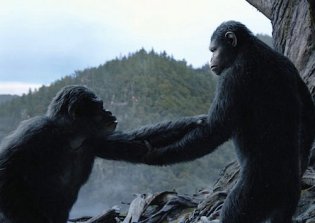 A heady mix of solid writing from Mark Bomback, Rick Jaffa and Amanda Silver, peerless motion-captured performances from the likes of Serkis and Toby Kebbell, and first-rate CG magic from Weta, brings us a set of characters who are compelling and believable. Here is a society trying to define what it wants to be, battling old prejudices in the hope of a peaceful, secure, happy future. If you want to draw analogies to almost any real-world political situation, I’m sure you could.
What’s perhaps most fascinating is that it’s the apes’ future we’re most invested in. It’s not that they’re the Good Guys and humans are the Bad Guys — there are heroes and villains on both sides, just another aspect of the film’s relative maturity — but that we care more about what happens to ape society than human.
In fairness, that’s in part because the human side of the equation is a bit of a damp squib. Jason Clarke is an adequate but blank lead; as his new love and son-from-before, Keri Russell and Kodi Smit-McPhee have an aimless subplot; Gary Oldman is an excellent ‘villain’, in restrained “trying to do the best for his people” mode rather than the all-out-loon he’s best known for, but is sadly underused. Some people have found this to be a major problem with the film; honestly, I don’t. The apes are the focus and that’s fine. It would work better with even less of humanity, in fact — as I said, the wife-and-son subplot adds nothing, and the screentime could be better spent elsewhere.
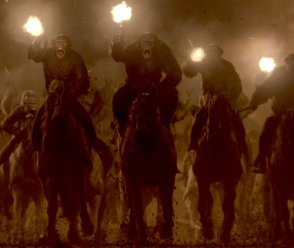 Lest you get the wrong impression, the film isn’t all talk. For various spoiler-y reasons, the fragile relationship between Man and Ape breaks down, and the apes stage an attack on humanity. Here we get perhaps one of the best siege action sequences I can think of, with mankind holed up in a half-constructed skyscraper that sits conveniently at the end of a long street for the apes to charge down. Reeves’ direction is virtuosic here, crafting an epic and exciting sequence even when most of the film’s major players are busy elsewhere. And it’s not even the climax.
In some respects that’s a bold move — the action is story-led rather than scale-led, meaning the big memorable action sequence is at the end of act two instead of the climax. The downside is that someone seems to have realised this, forcing the film to climax with a punch-out atop a crumbling skyscraper — so far, so superhero blockbuster. I can understand the impulse to make the finale a big action-based number, and at least they didn’t go for some kind of rehash-with-bells-on from what worked earlier in the film, but — unlike that earlier sequence — it doesn’t offer anything terribly fresh. Still, in a film that’s more about its story than the originality of its action beats, perhaps we can let that slide.
Said story has been labelled predictable by some, which is a tad harsh. Of course the apes and humans are going to come into conflict — that’s kind of the point. We all know where this ends up, after all. It’s the journey that’s interesting, and Reeves and co make it so. This is a major turning point in ape-human relations, and therefore in the Apes saga. That makes it a story worth telling, even if the import is undersold occasionally  thanks to some surprisingly small-scale narrative choices (the whole thing with the dam doesn’t feel nearly as vital as it should) and Reeves’ direction sometimes being a little straightforward and almost TV-ish. I know I’ve said I hate when people use that as a derogatory comment nowadays, but some repeated locations and shot choices make the film feel cheaper than it was.
It’s difficult to say whether Dawn is a better movie than Rise (and I’ve seen people argue both sides unequivocally) because they’re actually quite different styles of film. That, surely, is a good thing — as I said before, this is now a franchise driven by the story it wants to tell, rather than a need to repeat old glories or offer a certain quota of adrenaline. Sit me down in front of Rise again and I might change my mind, but, with its intelligent depiction of an ape society, constant tension, and one absolutely first-class battle sequence, I’m tempted to declare Dawn the victor.

Dawn of the Planet of the Apes placed 4th on my list of The Ten Best Films I Saw For the First Time in 2014, which can be read in full here.
This review is part of the 100 Films Advent Calendar 2014. Read more here.
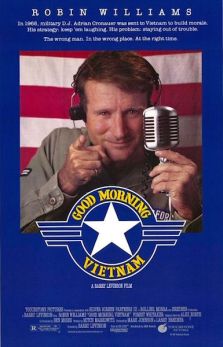 Inspired by the true story of a US Army DJ in Vietnam during the war, the resulting film is a showcase for star Robin Williams — reportedly, his antics aren’t even close to what really happened.
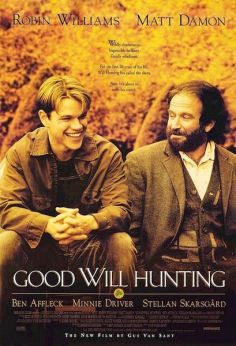 I’d say Good Will Hunting is famous for two things: one, being written by Matt Damon and Ben Affleck when they were young actors after some good roles; and two, Robin Williams’ Oscar-winning supporting actor performance. Such is the power of these two facts that I didn’t even know what it was about until I actually watched it.
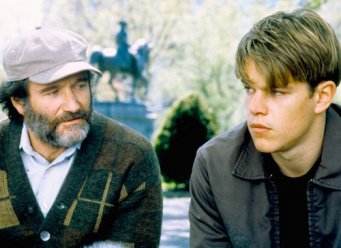 The film is perhaps most enjoyable as an acting showcase. Damon and Williams have numerous incredible scenes together; encounters that feel like genuine slowly-evolving therapy, rather than the simplistic and implausible series of repeated revelations and breakthroughs that such treatment is often reduced to on screen. They run the emotional gamut, too, being not just instances of soul-searching but also moments of wider insight, or intense humour — that’s what you get when you have Robin Williams at your disposal, of course. His Oscar is well earnt.
 Their promising relationship suffers through inexperience and, to be frank, unwarranted daftness, lending it a melancholic air (or is that just me again?)
 Then, slowly, almost imperceptibly, a slight wry grin curls his mouth. Yes, Will has actually done it; and yes, it is what he wanted. It’s all good. Only then does he turn around, and simply announce to his waiting friends that Will isn’t there. It’s a pretty subtle moment, massively over-explained here, but it’s so much more realistic a reaction than the almost-clichéd one we’re expecting to see. In a film full of incredible, powerful performances, speeches and moments, it’s one that stood out to me.
 Besides, it’s the characters and the performances that shine. It’s no surprise that a pair of actors wrote an “actors’ movie”, but it is an achievement that they wrote one that displays genuine people and genuine emotions, rather than just showy performances. Credit to an exceptional cast — and, this once, an exceptional director — for bringing that so beautifully to life.
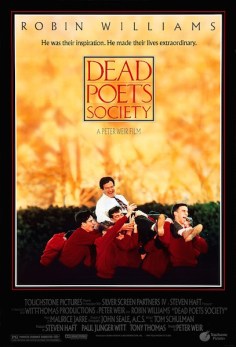 At an oppressive private school (is there another kind?), a gaggle of disenchanted students are invigorated by teacher Robin Williams; until his methods, and the independent thought they inspire, attract the ire of parents and faculty.
 Westerns don’t come more renowned than this Ford-Wayne collaboration about the years-long hunt for a girl kidnapped by Native Americans.
 Tom Hanks is Walt Disney and Emma Thompson is author P.L. Travers in “The Making of Mary Poppins: The Movie”. Disney has been desperate to turn Travers’ fictional nanny into a movie for years after he made a promise to his daughter; Travers has resisted, but now needs the money. She’s brought to LA to consult on the script, and proceeds to make life miserable for screenwriter Don DaGradi (Bradley Whitford) and songsmiths Robert and Richard Sherman (B.J. Novak and Jason Schwartzman). At the same time, we see the story of a family in Australia from the eyes of a little girl Ginty (Annie Rose Buckley), as they struggle with the whims of her father (Colin Farrell), a bank manager who’s a little too fond of the bottle. Guess what the connection is!
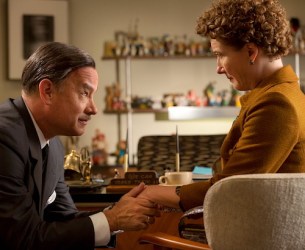 Similarly, Hanks’ part seems to be little more than a cameo at first, but he steadily appears often enough to make it a supporting role. Reportedly he has perfectly captured many of Disney’s real traits and idiosyncrasies, and who are we to doubt the word of people who knew the man? His performance is not just a shallow, simple impersonation, but there’s not that much meat to Disney’s character arc either.
 Some will find the story lacking in dirt, particularly when it comes to the portrayal of Disney. But it’s not whitewashed either, and do you really think the Disney Corporation would have allowed a movie to go ahead that depicts their founding father in a negative light? For that, I don’t think it’s as twee as it could have been — there’s definite conflict over what’s being done with Poppins, and, even with the film having turned out to be a solid-gold classic, we often find ourselves sympathising with Travers.
 Box office gross is one of the methods most often used to summarise a film’s success and standing, and yet it’s one of the most useless markers of quality — and quotes like the above, from Terrence Rafferty in his article “Holy Terror” for Criterion’s Blu-ray release of Night of the Hunter (and available online
  In another piece in Criterion’s booklet, “Downriver and Heavenward with James Agee” (online
  And yet, as Rafferty explains, “the most radical aspect of The Night of the Hunter… is its sense of humor. More conventional horror movies overdo the solemnity of evil. The monster in The Night of the Hunter is so bad he’s funny. Laughton and Mitchum treat evil with the indignity it deserves.” I wouldn’t say that humour is one of the film’s defining characteristics, to be honest, but it does undercut its villain. He’s not some unstoppable supernatural creature, but a man who can trip over while chasing you up the stairs, and so on. In some respects it’s this very ordinariness that makes him so scary: however much they creep you out during the film itself, you know there’s no such thing as vampires or werewolves or ghosts. There are Powells in the world, though; an everyday evil that you might not see coming, but can still get you. Brr.
 In
In 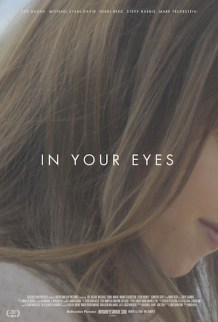 Perhaps most discussed for the way it was released — at the same time as the film’s festival premiere, writer-producer Joss Whedon made it available to rent online — In Your Eyes is worthy of note on its own merits as a movie, too.
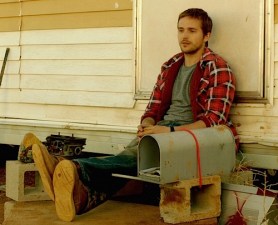 Secondly, their emotional connection means they begin to spend a lot of time in each other’s heads, distancing themselves from the world and, when they begin to be overheard talking to each other — or, as everyone else sees it, talking to themselves — people begin to get suspicious. And when you’ve got a controlling doctor for a husband, who knows about your history of mental health issues… well…
 A character-driven romance that will likely bore some, In Your Eyes weaved a spell on me. It’s beautifully, simply directed by Brin Hill, the focus lying heavily on the characters and performances of Stahl-David and Kazan. If you warm to them — and I think many will — then they’re a pleasure to spend time with, and you become invested in where events will take them. More magical realist than hard fantasy, this isn’t one for serious genre fans. Romantics, however, may fall in love.
 Fed up with their home lives, three school friends set out into the woods to build their own home. And kinda succeed.
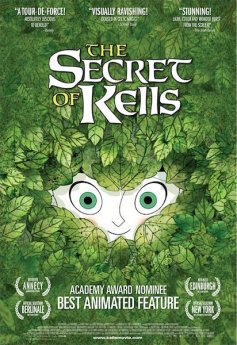 You can lament the quality of Oscar voters’ choices all you want, but if it wasn’t for their 2010 Best Animated Feature nominations I’m not sure many would have heard of this Celtic gem.
 100Films.co.uk