
Francis Lawrence | 146 mins | Blu-ray | 2.40:1 + 1.78:1 | USA / English | 12 / PG-13
 Jennifer Lawrence (who, depending on your mileage, is either “the most charming young movie star in, like, forever” or “actually kind of a little bit irritating”) returns as the totally-plausibly-named Katniss Everdeen in this super-successful follow-up to the super-successful
 kids’ young adult novel adaptation that’s kinda like the new Twilight only actually quite good.*
Having struck a PR blow to the ruling elite by forcing their hand at the end of the previous Hunger Games, joint winners Katniss and Peeta (pronounced “Peter” (Josh Hutcherson)) are back home. But not for long, because in an attempt to reassert control it’s decided the forthcoming 75th Hunger Games will feature previous combatants — and Katniss and Peeta are their District’s only choice. Cue an almost-rehash of the first film, but with different burgeoning political undertones, and the added twist of the competitors all being previous winners. There are much bigger twists than that coming, though…
Indeed, perhaps the most striking part of Catching Fire is its ending. That’s not to say the rest of the film isn’t entertaining — it really is, but it’s a variation on a theme; that theme being “the first one again”, even if this is arguably a superior version. The ending, however, suggests things are about to be launched off in a radically new direction, as well as casting a new light on the film we’ve just watched. These closing moments most literally remind me of The Matrix Reloaded: following a surprise world-changing development, our hero lies recuperating on a spaceship with new-found allies among the resistance, while outside in the rest of the world a final showdown brews…
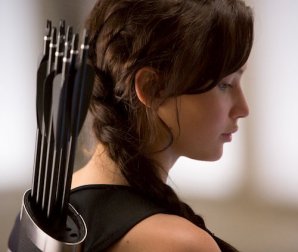 Tonally, however, it’s more similar to The Empire Strikes Back** — indeed, the Star Wars comparison applies to both Hunger Games films and their relationship to each other: the first is the story of an unwitting small-town kid becoming a hero and landing a decisive blow against the evil ruling body in a standalone adventure; but our heroes have only won the battle, not the war, and the evil empire rolls on… Cue Film #2, in which we get a wider view of the world, the bad guys seek our heroes more directly, and everything comes to a head in a blatant “to be continued” cliffhanger that unavoidably draws us on to the next instalment.
On The Dissolve, Tasha Robinson goes so far as to assert that, not only are they alike, but “Catching Fire’s ending is the most daring “to be continued” since Empire Strikes Back”. She argues that they are executed in a style which none of the multitudinous other cliffhanger-ending-ed films made since (including everything from Back to the Future to The Lord of the Rings) can claim to have achieved in quite the same way. To take her final sentences: “Most serial films end by spelling out exactly how the characters are headed into disaster, and in some cases, exactly what they plan to do about it. Empire and Catching Fire closes [sic] with a sense not just of something continuing, but potentially, even more thrillingly, of something new beginning.” Her whole piece is worth a read.
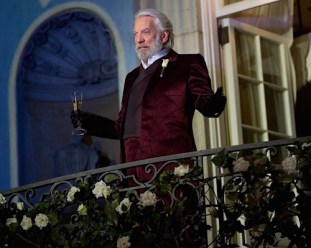 Of course, to an extent the tone of this ending comes from it being an adaptation: the filmmakers haven’t looked at the history of movie cliffhangers and chosen which to emulate, but instead brought someone else’s ending to the screen. Adapting doesn’t mean you have to take the original work faithfully, mind — you could go the Game of Thrones route and rearrange exactly where one book ends and the next begins; or the James Bond / Jason Bourne route of doing just whatever the hell you want. I haven’t read Suzanne Collins’ original novels, but I get the impression the films are pretty faithful.
Indeed, perhaps the real strength of Catching Fire being an adaptation of a novel is that it’s bedded in one author’s voice. My point being: it wasn’t written and constructed by committee, meaning we’re not subjected to the over-familiar beats of an action-adventure movie. There aren’t regularly-spaced action sequences of ever-increasing scale throughout, for instance — it’s not until halfway through that we end up in the arena, and up to that point it’s all story, the only action being ‘events’ rather than your traditional Action Sequence. This is no bad thing. If it’s adaptations of young adult novels that we need to save us from predictability, to deliver us a story rather than a thin excuse for the delivery of evenly-spaced action sequences, then so be it.
When the Games do arrive, director Francis Lawrence makes the most of it: as Katniss finally rises into the arena, the aspect ratio subtly shifts from filmic 2.40:1 to IMAX-derived 1.78:1. It’s remarkable how much impact this has even on a TV screen; nothing like what it must have in a proper IMAX theatre, but striking nonetheless — it really feels like things have just gotten bigger, both in terms of events depicted and the cinematography, 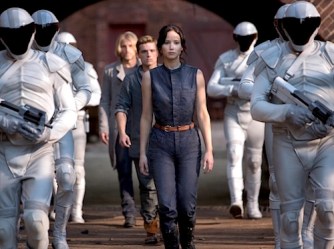 which seems richer, more detailed, despite no genuine increase in resolution. I guess it’s true what they say: if you start with a higher quality source, it filters all the way down. The “bigger screen” effect probably wouldn’t work for a film entirely shot on IMAX — it’d just fill your TV from the start — but, after an hour-or-so of black bars, it really feels like the screen has grown.
Last year was one of mixed fortunes for the blockbuster, when films that one might deem well-received actually had an equal number of detractors; but Catching Fire stands apart as an engrossing, entertaining, intelligent and invigorating success. I guess it too must have its detractors, but I suspect not as many, and not as deservedly.

The first Hunger Games is on Film4 tonight at 9pm. The next (and penultimate) instalment, Mockingjay: Part 1, is in UK cinemas from this Thursday, 20th November.
* I’ve still not seen any of the Twilight films, but I remain confident that, when I do, I’m not going to like them. ^
** I’m certainly not the first person to notice this: Googling “Catching Fire Empire Strikes Back comparison” brings up about 66,000 results — it used to be more, and obviously it misses anyone who’s making the comparison without using the world “comparison”. ^
 The birth of the “found footage” sub-genre and the resurgence of the superhero movie began around the same time, the former with
 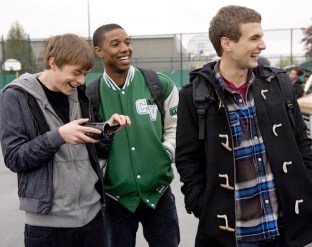 The story sees high school senior Andrew (Dane DeHaan) decide to start filming everything in his life, thanks to his borderline-abusive alcoholic father (Michael Kelly) and terminally ill mother (Bo Petersen). The same day (what a coincidence!), his cousin and only friend, Matt (Alex Russell), takes him to a party where, along with most-popular-kid-in-school Steve (Michael B. Jordan), they discover a hole in the woods with mysteries inside… Days later, all three begin to develop telekinetic powers, which they learn they can levy in various incredible ways — those ways being super, but largely without the heroic…
 This is even more pronounced in the extended version (“extended director’s cut” in the US), which includes over five minutes of extra bits that, in my opinion, make it a superior edit. Some are minor in impact, true, but there are a couple of short sequences with Andrew and Steve that deepen their relationship further, which enriches events at the end of act two. There’s also a moment that subtly prefigures the climax, and an extra bit in said finale that seems nigh-on essential to me. Considering the film still runs (just under) 90 minutes even with these additions, it’s difficult to see why they were cut in the first place. “Pace” is usually the rational for that, but if this is indeed a Director’s Cut then clearly Trank didn’t think they were an issue; equally, I can’t see why Fox would have objected. Still, they’re here to enjoy on Blu-ray…. though not on DVD… and I guess they’re not in TV screenings… Tsk.
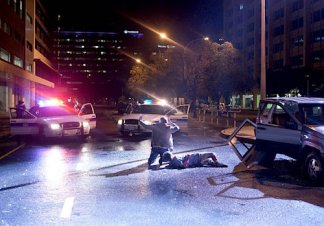 That said, spectacle it has. You wouldn’t expect that from a $12 million found-footage movie, but an epic duel through the streets of Seattle is one of the strongest climaxes to any superhero movie I can remember. It’s kind of like
  In the hands of many a desperate-to-get-noticed filmmaker, a found-footage superhero movie would likely have been a straight-to-DVD affair that could at best be described as “mediocre”. In Chronicle, however, Trank and co have crafted one of the best movies produced in either sub-genre. Most of the people involved — as well as the film they’ve all come from — can be classed as “one to watch”.
 So states Geoffrey O’Brien in his essay “Dark Magic” (included in the booklet for
 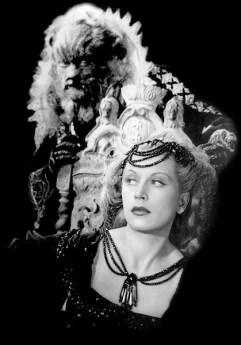 here the characters’ relationships are more complex and ambiguous, particularly at the climax. It isn’t a simple “see the true beauty behind the ugly exterior” moral fable; indeed, if anything, Marais’ Beast is more beautiful than the man he becomes.
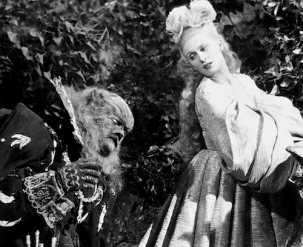 That final idea, of the erotic or sexual in the film, seems a favourite theme for critics: O’Brien reckons “the magic is sexual throughout — a fantastic… sex magic”, and I think we’ll skip Warner’s lengthy discussion of the feelings the film elicits in her. How prevalent such undercurrents are is surely in the eye of the beholder — O’Brien notes that “it is so chaste that no censor could have ever assailed it”, and I suspect many a viewer would feel the same. That said, the soft-lensed scene in which the Beast gently laps water from Belle’s delicately cupped hands may make viewers with a particularly-disposed mind think of certain other acts.
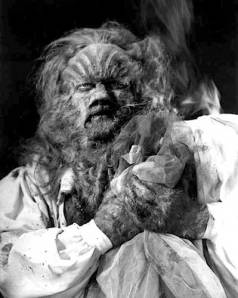 Cocteau was trying to move away from a wishy-washy kind of fantasy — indeed, he says as much in the press book for the film’s US premiere (a piece entitled “Once Upon a Time” and also included in Criterion’s booklet): “To fairyland, as people usually see it, I would bring a kind of realism to banish the vague and misty nonsense now so completely outworn.” In these respects you could probably draw a line from Cocteau to something like
 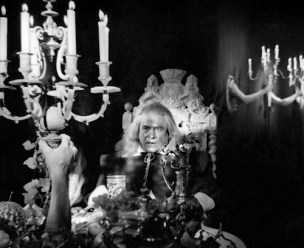 It’s in the Beast’s castle that the most enduring images of the film are played out, most famous among them being Belle’s father’s arrival, with the candles igniting themselves and the hands pointing the way, and Belle’s own arrival, a slow-motion run with billowing dress and curtains — if you haven’t seen the original, you’ve surely seen an advert inspired by it. For all the groundedness Cocteau and co may be bringing to the fantastical, it’s still a strange realm; one rendered with loving beauty in its design and photography, but with an unsettling effect. Right on the money, then.
 Good moral message, but isn’t the “superior” Beast the same fella as Prince Charming? The way a felled Avenant is transformed into the Beast at the same time as Charming is unveiled as a more-perfect duplicate of Avenant (it’s Marais in all three roles, of course) suggests some kind of parallel should be drawn. Warner wonders, “Has the Beast taken on [Avenant’s] appearance because [Belle] admitted to him that she was fond of Avenant?” Could be, but isn’t that a bit simple? She has another theory: “does Cocteau want to suggest that a ne’er-do-well like Avenant can also be transformed by love?” Could it be Avenant is about to get a lesson in how to be a better person, as Charming has already endured?
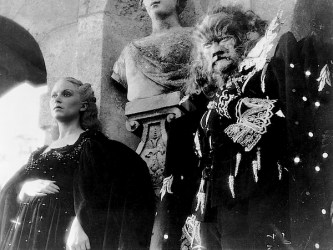 There’s a cheery message to end on. But then, this is “a fairytale for grownups” — a quote from Warner, but, to an extent, it would seem Cocteau agreed (by implication, with his statement at the start of the film urging the audience to embrace child-like acceptance of the story they are about to see) — and the resolutions of grownup stories are rarely “happy ever after”.
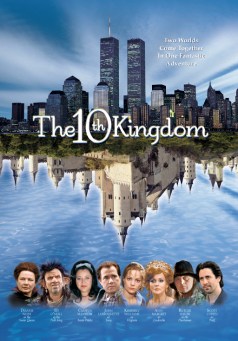 Created by British screenwriter Simon Moore (writer of
 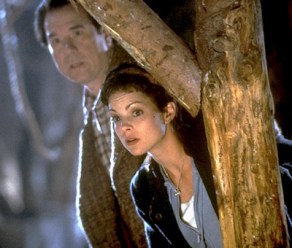 Anyway, the Nine Kingdoms is the place all our fairytales come from — the part of the narrative set there takes place “almost 200 years” after the “Golden Age”, when the events we know from stories actually happened. We’re led into this world by Virginia (Kimberly Williams) and her dad, Tony (John Larroquette), after indolent monarch-to-be Prince Wendell (Daniel Lapaine) flees to our world while escaping the Evil Queen (Dianne Wiest) and winds up taking the two New Yorkers back to his world. Along with Wolf (Scott Cohen), a chap with animalistic tendencies, the quartet try to stop the Evil Queen’s evil machinations.
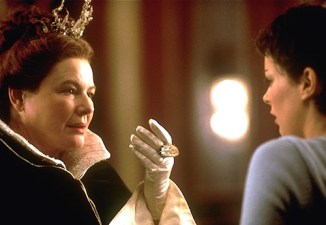 It also means the way it’s been edited into one long movie on DVD feels quite natural: it’s one long story with arbitrary breaks, not a series of finite episodes. (If you’re thinking, “of course it’s one story, it’s a miniseries”, plenty of single-narrative series and miniseries still function as discrete episodes that build to a whole.)
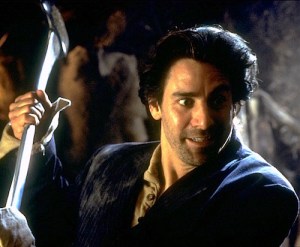 This gives the whole thing a heightened comedy tone, emphasised by many of the performances. A gaggle of troll siblings are irritatingly over-played, but Cohen’s meat-obsessed Wolf is a hammy delight (pun very much intended). The entertainment value means we quickly warm to the characters, so that when more perilous aspects of their quest do come into play later on, we care what happens. Plus, like most of the original fairytales (as opposed to Disney-style sanitised re-tellings), there’s the odd darker undercurrent. For instance, you may think the story of Snow White ends with a kiss and “happily ever after”, but here we’re told how the stepmother who poisoned Snow White was made to wear fire-heated iron shoes and ‘dance’ at the wedding until her feet were burnt raw, before being thrown out into the snow. Very dark and grim (and possibly from the original tale, for all I know).
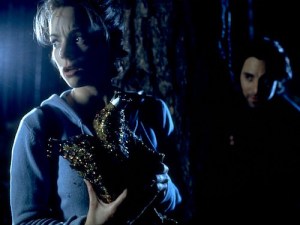 Little details in this vein abound: an apple tree has grown by Snow White’s cottage (don’t eat those apples!); the site of her glass coffin is now a tourist attraction; if you break a mirror, you genuinely get seven years’ bad luck… There’s also a pair of golden shoes that can turn you invisible, but the more you wear them the more you desire to use them all the time — what a precious idea (wink wink nudge nudge). These subversions also manifest in a strain of pleasant practicality; for instance, the abundant magic mirrors aren’t “just there”, but instead have been manufactured by dwarves. It lends the feel of a fully-conceived and rule-bound world, rather than an “anything can happen”, “just because” environment.
 a world away from being locked in a castle until you change your mind. If this sounds like criticism, it isn’t. I’m not arguing the love story element of the series is unsuccessful — I’m sure it engages plenty of fans as the series’ primary attraction, even — but, on reflection, I’m not sure reading it as a Beauty and the Beast variation is actually that illuminating.
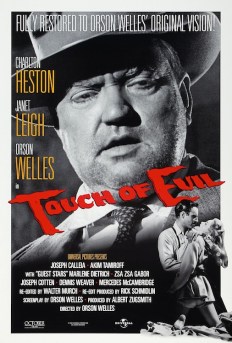 A bomb is stuck to the underside of a car. As the vehicle pulls away, the camera drifts up into the sky, and proceeds to follow the automobile through the streets of a small Mexican border town, until it crosses the border into the US… and explodes. It’s probably the most famous long take in film history, and probably the thing Touch of Evil is most widely known for; that, and it being one of the most commonly-cited points at which the classic film noir era comes to an end.
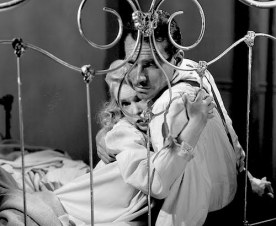 It’s like a terrible fever dream, with events and characters that sometimes seem disconnected, but nonetheless interweave through a dense plot. In this sense Welles puts us quite effectively in the shoes of Vargas and his wife — out of our depth, out of our comfort zone, out of control, struggling to keep up and keep afloat. It might be unpleasant if it wasn’t so engrossing.
 Quinlan at all… there is not the least spark of genius in him; if there does seem to be one, I’ve made a mistake.” You can get pretentious about it all you want, and bring to bear political views that the film doesn’t support (after all, within the film Quinlan is punished for his crimes and the “mediocre” (Truffaut’s word) moral hero triumphs), but sometimes a spade is a spade; sometimes a villain is a villain; sometimes your disgusting moral perspective isn’t being covertly supported by a film that seems to condemn it.
 Notably and obviously absent from that list is Touch of Evil. It was taken away from Welles during the editing process, and though he submitted an infamous 58-page memo of suggestions after seeing a later rough cut, only some were followed in the version ultimately released. Time has brought change, however, and there are now multiple versions of Touch of Evil for the viewer to choose from; but whereas history often resolves one version of a film to be the definitive article, it’s hard to know which that is in this case. Indeed, it’s so contentious that Masters of Cinema went so far as to include five versions on their 2011 Blu-ray (it would’ve been six, but Universal couldn’t/wouldn’t supply the final one in HD.) The version I chose to watch, dubbed the “Reconstructed Version”, tries to recreate Welles’ vision, using footage from the theatrical cut and a preview version discovered in the ’70s to follow his notes. Despite the best intentions of its creators, this can only ever be an attempt at restoring what Welles wanted. Equally, although it was the version originally released, the theatrical cut ignores many of the director’s wishes — so as neither version was finished by Welles, surely the one created by people trying to enact his wishes is preferable to the one assembled by people who only took his ideas on advisement?
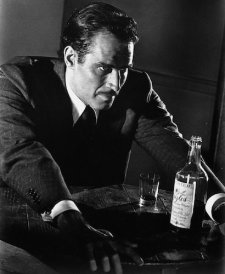 To quote from Master of Cinema’s booklet, “the familiar Wellesian framing appears in 1.37:1: indeed, the “world” of the film setting emerges with little or no empty space at the top and bottom of the frame, almost certainly beyond mere coincidence.” There are things to recommend the widescreen experience (“a more tightly-wound, claustrophobic atmosphere”), and undoubtedly the debate will continue… and such is the wonders of the modern film fan that, rather than having to make do with someone else’s decision on what to put out, all the alternatives are at our fingertips.
 “He’s not a person Tina, he’s a Daily Mail reader.”
 2014 Academy Awards
 On its theatrical release, a commonly-cited recommendation was to see Gravity in 3D on the biggest screen possible. Obviously, I didn’t bother. Some say it isn’t as effective on a small screen in 2D. Maybe it isn’t as effective, but it’s still a damn fine film.
 quick editing has always been a way of creating excitement in that arena), the never-ending shots serve to make you feel closer to events, right alongside Bullock, almost wishing it would stop. Plus there’s skill in being able to show us what we need to see from a single vantage point, without the easy option of being able to cut to a different angle to clarify a detail.
 The most high-profile jobs — the actors, the studio — may be American, but everything else is pretty darn British. Rather than cry “that’s ridiculous! Give it to a proper British film!”, we should be keen to point out that, actually, this surprise global mega-hit wasn’t made in America, but in Britain, by all the talented filmmakers we have here. Rule Britannia, etc etc!
 While I sympathise with the idea that it’s not A Science Fiction Movie, but instead A Thriller (That Happens To Be Set In Space), you can’t really deny its SF-ness. OK, if we’re classing this as SF then so too should be films like
  Originally produced for the 2010 FrightFest film festival, horror director Jake West’s feature-length documentary with the unwieldy title explores the ‘video nasty’ scare that gripped early-VHS-era Britain. Starting with a primer on the birth of home video, and what it was like to watch movies in those days (because, ladies and gents, we’ve now reached a point where even fans of that (second-)most adults-only of genres, the gory horror flick, are young enough to not recall a time before DVD), West uses archive news clips and a wide array of new talking head interviews to take the story from the UK’s first video recorders in 1978, through a newspaper-led panic, up to the infamous Video Recordings Act of 1984, which irrevocably (thus far, anyway) changed the face of home entertainment releasing in the UK.
 Focusing on the scare rather than the films embroiled in it makes this less a “horror documentary” and more a social history/pop culture one, though the liberal use of extreme clips from the movies in question shuts out anyone without a hardened stomach. (If you did want more on the films themselves, the DVD set that contains the documentary — Video Nasties: The Definitive Guide — includes 7½ hours of special features discussing all 72 ‘official’ video nasties alongside their trailers.) There’s room for little asides amongst the main narrative, though. One of the highlights is the story of an interviewee who was invited on to Sky News in the wake of the James Bulger murder and asked if the film many were holding responsible,
  There was some counterargument, however, which leads us to the film’s best interviewee, and surely a new hero to many: Martin Baker. Baker was one of a few (certainly the first, and for a time the only) critical/intellectual-type voices to speak out in defence of the films that were outraging so many. He’s to be commended not only for his valiant defence of, essentially, free speech at a time when his views were immensely unpopular; but also because he remains one of the most lucid and fascinating commenters in the documentary. He makes the clearest points about the need to not forget both what happened and how it was allowed to happen, lest it occur again.
 that force ISPs to attempt to censor what we can and can’t see on the internet, and just yesterday rushed through anti-privacy legislation without proper debate. Sad to say, many of the valuable lessons of the ‘video nasties’ brouhaha — lessons made explicit with superb clarity in Jake West’s excellent documentary — have not been heeded.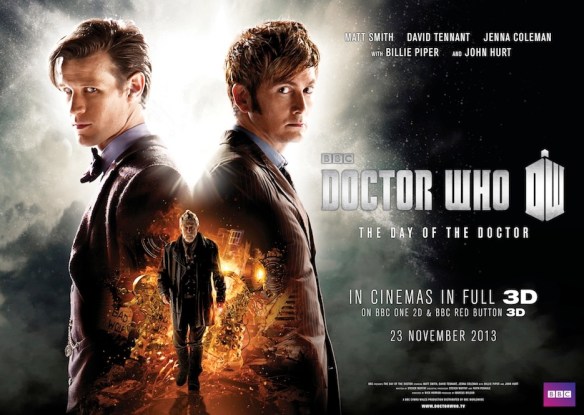
 (and it made more than double per screen what
  The Doctor’s role in the Time War has not only dominated many of his actions and personalities since it happened, but it also stands awkwardly with his persona as a whole. Here’s the man who always does the right thing, always avoids violence, always finds another way, even when there is no other way… and this man wiped out all of his people and all of the Daleks? The same man who, in his fourth incarnation, stared at two wires that could erase the Daleks from history and pondered, “do I have the right?”, before concluding that he didn’t? Doesn’t really make sense, does it?
 I think some fans would have preferred a big party history mash-up; they certainly would have liked to see their favourite faces from the past. But let’s be honest: from the classic era, only Paul McGann could pass muster as still being the Doctor he once was (and he got his own, fantastic, mini-episode to prove it); and how the hell do you construct a story with a dozen leading men? It’s clearly enough of a struggle with three. The Doctor is always the cleverest person in the room, so what do you do with multiples of him? Moffat finds ways to make all of the Doctors here (that’d be David Tennant’s 10th, Matt Smith’s 11th, and John Hurt’s newly-created ‘War Doctor’) have something to do, something to say, and something to contribute — because really, the oldest (i.e newest) Doctor should be the most experienced and have all the ideas, right? There are ways round that, but only so many.
 Along the way, Moffat nails so many other things. The dialogue and situations sparkle, and frequently gets to have its cake and eat it: familiar catchphrases and behavioural ticks of the 10th and 11th Doctors are trotted out to a fan-pleasing extent, and then Hurt’s aged, grumpier, old-fashioned Doctor gets to criticise their ludicrousness, speaking for a whole generation of fans who hate “timey-wimey” and “allons-y” and all the rest. I think it’s this self-awareness that helps so much with selling the episode to everyone, both calling back to well-known elements of the series that many love, and pillorying their expectedness for those that aren’t so keen. Well, it would be a pretty awful party if you had a cake but couldn’t eat it, right?
 Smith and Jenna Coleman are on form too, of course, but as the series’ regular cast members that feels less remarkable. That’s not intended to sell them short, however, as they hold their own against actors who are arguably more, shall we say, established. If there’s one weak link it may be Joanna Page’s eyebrows, possibly the side effect of duelling with an English accent. (Complete aside: I’m rewatching Gavin & Stacey as I write this, and feel horrible even going near criticism of such a lovely person.)
 Credit too to editor Liana Del Giudice, not only for crafting cinematic action sequences, but for stitching together a narrative that is often told with imagery and flashbacks, rather than people stood around chatting. Look at the sequence just after the Doctor sees the painting for the first time as just one clear example. That sequence may be dialogue-driven, but the faded-in and intercut flashbacks and glimpses of other events are what’s really conveying information. This is first-class visual storytelling, not just when compared to the rest of British TV, or international TV, or cinema, but the whole shebang.
 Still, you can’t please all of the people all of the time, and not everyone liked The Day of the Doctor: it may’ve topped DWM’s poll, but there were voters who scored it just one out of ten. But then, that’s true of 239 of the series’ 241 stories; and almost 60% of voters gave it a full ten out of ten — that’s a pretty clear consensus. I didn’t get round to voting myself, but I would’ve been amongst them. There are undoubtedly some weak spots that I haven’t flagged up, but conversely, there are myriad other successes — both minor (the opening! The dozens of sly callbacks!) and major (the use of the Zygons! Murray Gold’s music!) — that I haven’t mentioned either.
 Few would deny that Peter Jackson’s extended versions of
  There’s not as much extra time with the dwarves as I expected, though, with most of the character time still going to Bilbo.
 having to work alone on a green screen for many of his scenes with the smaller characters), but newcomers Martin Freeman, Richard Armitage and James Nesbitt shine too. This is Freeman’s film to be the centre of attention, but Armitage and Nesbitt will have much more to do in the follow-ups, and the groundwork is nicely laid here.
