It was 100 Films’ greatest ever year in terms of sheer size, but it was also one of the highest-scoring too, with the most five-star ratings I’ve ever awarded and the second-highest average score to date. Now it’s time to look back over the list and ask: Which were the cream of the crop? Which were the dregs? And which significant new films did I not even see?
To top it off, you can make your voice heard by voting for your favourites (plural) in this year’s top ten poll. Exciting stuff.
So without further ado:
The Five Worst Films I Saw For the First Time in 2014
In alphabetical order…
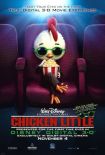 Chicken Little
Disney are back at the height of their powers of late, at least as far as the box office is concerned, with the phenomenon that is Frozen. Things weren’t so rosy in the early ’00s, though, leading them to abandon traditional 2D animation for the burgeoning world of 3D CGI. Their first effort was this dross, instantly proving it wasn’t the style of animation that was the problem.
 G.I. Joe: Retaliation
I only gave this two stars (as opposed to one) for two reasons: 1) the rather cool cliff-swinging fight sequence, which deserves to be in a better movie, and 2) because for some unknown reason I’d given the Team America-esque first one two stars, and this is marginally better. Really, though, it’s awful: messily told, tonally uneven, ridiculous in any number of ways. Even as a daft actioner, it’s no fun.
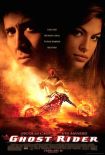 Ghost Rider
Ghost Rider’s maligned sequel, Spirit of Vengeance, wasn’t particularly good, but at least it embraced the trashier, grimier aspects of the character (even if it was only in a PG-13 way). This first attempt to bring the Marvel anti-hero to the big screen tried to force the concept into the shape of a trad blockbuster, ending up with a Constantine rip-off. As hardly anyone liked Constantine, that wasn’t a very good idea.
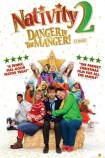 Nativity 2: Danger in the Manger!
I liked the first Nativity — it’s not high art, but it’s a perfectly lovely Christmas movie. This follow-up has to switch out Martin Freeman for David Tennant, which isn’t a problem, but the new story is. Not that it’s much of a story, more a series of loosely-connected misadventures. Throw in a climactic concert made up of truly dreadful new songs and you have a disappointingly charmless sequel.
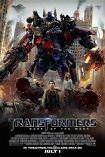 Transformers: Dark of the Moon
Michael Bay can make good movies, but he seems to have forgotten how. There are many things wrong with this third Transformers flick, but what’s most shocking is how ineptly it’s put together. For experienced filmmakers, there’s no excuse. Apparently this year’s fourth instalment is even worse, but it’s tough to imagine how. To quote a character in the movie: “does it suck or what? I mean it’s like a bad sci-fi film.”
Dishonourable Mention
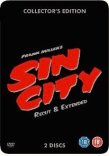 Sin City: Recut & Extended
Not bad enough to actually make the bottom five, this recut took a film I remembered loving and messed about with it so much it made me doubt if I’d ever liked it in the first place. It could be my tastes have changed in the intervening nine years, but I suspect it’s at least as much due to the frustrating and near-pointless rearrangement of the running order. I recommend you stick to the theatrical cut.
The Ten Best Films I Saw For the First Time in 2014
The fascinating story of the outrage provoked in Britain by gory horror movies in the early days of VHS. Excellently constructed from talking-head interviews and archive clips, it not only tells the tale clearly but also presents spot-on juxtapositions. Informative both for those who lived through it and those for who it’s now part of history, the important message is how easily such censorship was allowed — even encouraged — and that we must be on the look out for it again. Unfortunately it is happening again, to the internet this time, and once again is being championed via misinformation from those with a vested interest. I guess more people need to see this film…
The gang’s all here for an all-eras X-Men team-up, the original cast teaming up with the First Class lot, and led by original franchise director Bryan Singer, for a time-travelling adventure inspired by the classic comic book storyline. Some surprisingly deep characterisation, buoyed by strong performances from a first-rate cast (how many of them are Oscar nominees/winners?), rubs shoulders comfortably with witty and inventive action sequences. The series that kicked off the current Hollywood superhero obsession proves it can still hold its own among the big boys that have come since.
Darren Aronofsky’s multi-pronged narrative about the evils of addiction is sometimes cited as one of the bleakest films ever made. Even if you’re prepared for that, the verve of the filmmaking transcends expectations. Finely-tuned editing and attentive sound design gradually position the viewer for the climax, a fast-cut perfectly-scored assault on the senses that almost batters you into submission. It may ultimately be grim and without hope, but it’s so amazingly crafted that you’re left longing to experience it again regardless.
Snatched off the street, locked in a bedsit for 15 years, then inexplicably released and given just days to figure out why it happened — that’s the concept behind this dark South Korean thriller (remade in America to no fanfare and even less acclaim in 2013). Oldboy mixes what could almost be a straightforward revenge thriller with weird, almost surrealistic touches, for a whole that is ready-made to be cultish without the self-conscious Cult-ish-ness that such things are normally saddled with. It ends with twists and revelations so hard-hitting they equal even the famous single-take hammer-featuring corridor scene.
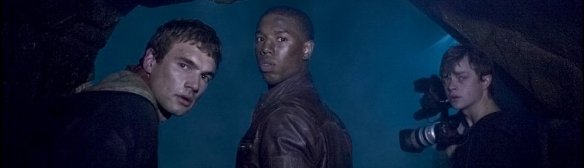
Found-footage and superheroes — two current cinematic obsessions, reviled by some and beloved by others. They had to come together eventually. Director Josh Trank keeps a handle on affairs, so that the film always sticks to concept without becoming samey, while screenwriter Max Landis reveals the true nature of his characters as he leads them from low-key beginnings to a barnstorming citywide climax that’s a bit like the ending of Man of Steel, only really good.
Why aren’t there many thrillers set inside the jury room? I’d wager because 12 Angry Men got there a long time ago and nailed it. A man is on trial for murder; we join the case as the twelve-man jury enter their deliberation room. Eleven of them are absolutely certain; one thinks they ought to discuss it. For the next 90 minutes, twelve men sit in one room and talk to each other… and it’s absolutely gripping, tense and thrilling, with moments that make you virtually punch the air with excitement. It’s a masterclass in constrained filmmaking, from director Sidney Lumet, and acting, from a cast of twelve peerless performers.
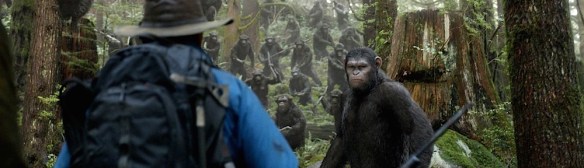
The sequel to the prequel of the Planet of the Apes takes the fad for all-CGI characters and brings it to maturity with a fully-realised ape society, played by mo-capped actors led by Andy Serkis, that is far more interesting than the human portion of the story. This is a story of interspecies relations where everything could be fine if it weren’t for past distrust and people constantly bringing guns along — like the best sci-fi, it reflects our world back at us. They claimed Avatar proved motion-captured performances should be considered alongside ‘the real thing’. Rubbish. Dawn, however, makes that case completely.
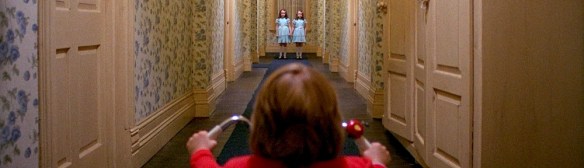
Hated by Stephen King, author of the original novel, and his most die-hard fans, Stanley Kubrick’s adaptation sees Jack Nicholson and family as the caretakers and sole residents of a remote hotel over a snowbound winter, when very creepy things begin to happen… Goodness knows what any of it ultimately means (I know there are plenty of wild theories — I’ve got Room 237 recorded to catch at some point), but as an exercise in eliciting emotions of dread and almost-primal fear, it’s second to none.
The sixth feature film to star Hergé’s boy reporter (yes, really) sees the master of action-adventure cinema, Steven Spielberg, bring us the best Indiana Jones movie in over 20 years — only it’s computer animated and stars a blonde Belgian chap with a posh British accent. Rendered with incredible realism by Weta, with a screenplay that perfectly balances investigation, action and humour, and direction that knows when to maintain verisimilitude and when to cut loose with all the freedom CGI can offer, Tintin is a quality entertainment. Very nearly my film of the year, but for…
Regular readers will know I love a single-location thriller, and this is one — it just happens that the single-location in question is the entire orbit of planet Earth. There may not be much of a plot (“woman gets stranded in space; tries to get to safety”), but it doesn’t matter: director Alfonso Cuarón reminds us of his mastery of the single-take, using it to better connect us to the characters’ experiences. I’m sure people were right that it’s best in 3D on a huge screen, but even in 2D on a telly it’s spectacular. It’s also the third film in my top five that’s only been made possible thanks to advances in computer graphics — that surely says something about how an intelligent use of CGI still allows filmmakers to innovate.
As ever, I welcome your opinion on my top ten — not just in the comments section, but also in the form of a lovely poll. This year you can pick multiple options, so feel free to vote for all your favourites.
And if you feel I’ve made an unforgivable omission, do feel free to berate me below.
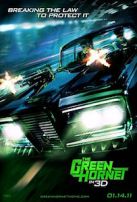 Yet another record: for the first time ever, all of my top ten films are ones I awarded a full five stars to. That’s once again testament to the quality of this year’s viewing, because I felt sure at least one four-stars-er would make the list. To be precise, that was The Green Hornet, which I know isn’t widely liked but I rather loved — I called it “one of the best superhero movies of the current generation”, in fact. On the day, though, I couldn’t in good conscience say it was better than any of the films I have included. I guess that confers 11th place on it.
In total, 27 main-list films earned themselves a five-star ratings this year. As well as those in the top ten (for which, see above, obv.), the others were After the Thin Man, All is Lost, La Belle et la Bete, Dead Poets Society, Good Morning Vietnam, Good Will Hunting, The Hunger Games: Catching Fire, In Your Eyes, The Kings of Summer, Rear Window, Saving Mr. Banks, The Searchers, The Secret of Kells, Sightseers, The Thin Man, The World’s End, and Zero Dark Thirty. Additionally, both of the ‘other’ titles I watched and reviewed — The Hobbit: An Unexpected Journey (Extended Edition) and miniseries The 10th Kingdom — also scored full marks.
There are any number of other films I could highlight here — my long-list for the top ten had over 50 movies on it, and at least 25 of those were genuine contenders — but two categories stand out. Firstly, after finishing the Falcon series earlier in the year, towards the end I made a start on The Thin Man, watching the first three out of six films. They’re excellent fun, the tonal inspiration for the likes of the Saint and the Falcon (which I’ve previously covered in full), but on the whole even better. Expect reviews before too long.
Finally, we all know superhero and comic book movies are everywhere right now, and will continue to be so if the announced plans of Marvel Studios, Warner Bros, Fox, Sony, and the rest, come to fruition. It’s felt particularly true for me this year, with not only a few well-received recent releases (Captain America: The Winter Soldier, Guardians of the Galaxy, X-Men: Days of Future Past), but also getting caught up on an array of recent entries (all but two were from the past decade, and one of those is only 11 years old). All told, there were 22 superhero, comic book, or related movies on this year’s list — that’s 16%. For a single subgenre — and not one where I’ve (say) dedicated myself to watching the entirety of one series — that does seem rather a lot…
As is my tradition, here’s an alphabetical list of 50 films that were released in 2014 but I’ve not yet seen. They’ve been chosen for a variety of reasons, from box office success to critical acclaim via simple notoriety. It’s biased slightly towards ones I might actually see at some point, though there were a couple of highly-successful or much-discussed ones I felt couldn’t/shouldn’t be left out. Feel free to assume which ones those are.


22 Jump Street
300: Rise of an Empire
’71
American Sniper
Big Eyes
Big Hero 6
Birdman
Boyhood
Calvary
Divergent

The Equalizer
Exodus: Gods and Kings
The Expendables 3
Godzilla
Gone Girl
The Grand Budapest Hotel
The Fault in Our Stars
Foxcatcher
Fury
Hercules
The Hobbit: The Battle of the Five Armies
How to Train Your Dragon 2
The Hunger Games: Mockingjay – Part 1
The Imitation Game
The Inbetweeners 2
Inherent Vice
Interstellar
The Interview
Into the Woods
Locke

Lucy
Maleficent
The Maze Runner
A Million Ways to Die in the West
The Monuments Men
Mr. Turner
Mrs. Brown’s Boys D’Movie
Muppets Most Wanted
Nightcrawler
Noah
Paddington
Pride
The Raid 2
RoboCop
Teenage Mutant Ninja Turtles
The Theory of Everything
Transcendence
Transformers: Age of Extinction
Unbroken
Under the Skin
Party like it’s Nineteen Ninety Nine…
It’s 100 Films’ ninth year — crikey, when’d that happen?
Expect more archive reposts (can I finish them before my 10th anniversary?), a third round of “What Do You Mean You Haven’t Seen” (it’s got a killer new acronym…), and — fingers crossed — both my 1,000th review and the official 100 Films’ #1000!
All that and hoverboards. We were promised hoverboards.

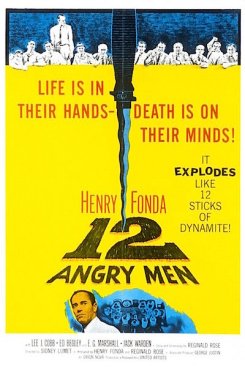 Twelve people sit around in two rooms and talk for an hour and a half in more or less real time — sounds like a recipe for dull pretension, and yet 12 Angry Men is anything but. In fact, it’s probably one of the most gripping thrillers ever made.
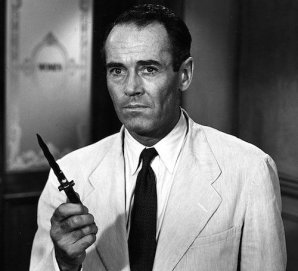 Slowly, steadily, surely, Fonda’s juror leads a recap of the evidence, analysing it, picking it apart, challenging presumptions and suppositions. Gradually, other jury members begin to be won over. This could be trite — of course our hero has to start convincing the others — but this is where the writing and cast shine again, because even men who seemed unswayable have their minds changed in a plausible fashion. Even then, the outcome rarely seems certain, each victory hard won, so that the film holds you rapt, desperate for sense and reason to prevail. There are moments of tension which may literally push you to the edge of your seat; moments of exultant success which may elicit an exclamation of approval similar to a point scored in a sports match.
 For all that 12 Angry Men seems to show justice being served in the face of adversity, what it actually shows is justice being served thanks to blind luck: if Juror Eight had been a weaker-willed man, or another who was just as prejudiced as his eleven compatriots, then the debate would never have occurred, the teenager condemned to death in the blink of an eye. What are the odds on every jury room containing a Henry Fonda? I don’t fancy them myself.
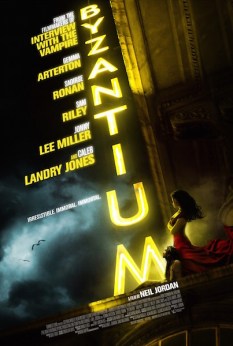 18 years after he adapted Anne Rice’s seminal vampire novel Interview with the Vampire into a seminal vampire
 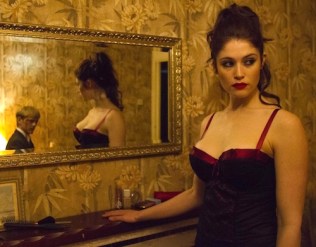 The most effective part of the movie isn’t so much its plot or its mythology, though, but its atmosphere. Vampire movies take place in castles or drawing rooms, or high schools in more modern iterations. They are grand and sensuous. Any glamour in Byzantium is discarded and decrepit, like the titular hotel that Clara reshapes as a whorehouse; faded and left to ruin. The seafront is characterised by graffitied concrete, the glaring lights of arcade machines, heroin-chic Eastern European prozzies. The pier appears to have burnt down at some unspecified previous time and just been left. The only people left behind are the ones without a means of escape, stuck with their miserable lot. Clara and Eleanor fit in almost seamlessly.
 Other alleged faults include the film not giving enough time or heft to facets individual viewers want it to cover. For one example, someone criticised it for not fully exploring the issue of voluntary euthanasia. I’d argue it doesn’t explore it at all, because it’s not trying to. That Eleanor chooses to only kill people she perceives as wanting to die is not her making a moral statement on a contentious issue, but finding a way to marry her conscience and upbringing with the necessities of her vampiric life; and it’s probably practical, too. That’s not to say a vampire movie can’t be used to explore a topic like voluntary euthanasia, but if you want that I’m afraid you might have to write your own.
 Technically, DoP Sean Bobbitt grants us some gorgeous cinematography. There’s a cruel, aptly soulless beauty to the faded town, while some countryside vistas, both past and present, offer more traditional scenic pleasure. A remote rocky, misty isle — central to the mythology and so repeatedly visited — is particularly notable. Captured entirely on digital cameras, it seems sometimes that Bobbitt tried to push his equipment too hard: some shots during the climax look flat-out weird, as if someone has applied a Photoshop “comic book” filter or something. Also of note is the score by Javier Navarrete, which makes particularly good repeated use of The Coventry Carol.
 For all its dual-period storytelling and its grubby settings, it’s a resolutely modern kind of take on vampire mythology.
 Robert Redford on a boat with no dialogue for over an hour and a half. That’s not a spurious way of describing All is Lost — that is what it is. Well, OK, he does say a couple of words — more or less literally “a couple”, though.
 Through chance, coincidence, bad luck, but never forced tension-mounting on the part of the filmmakers (at least, not obviously so), our man’s fortunes go from bad to worse to even worse to even worse than that. Despite his best efforts, he’s on a downward spiral, a seemingly irreversible series of unfortunate events. If you ever had an interest in solo sailing, this is liable to put you off.
 Sometimes self-imposed filmmaking limitations lead to an exercise in competency over good moviemaking — “can we pull this off?” rather than “can we make a good film?” Chandor and co do pull their limitations off, I suspect not because someone set out purely to make a film with one character and no dialogue, but because it’s a gripping, exciting, tense movie, carried by a powerful near-silent performance and first-rate direction.
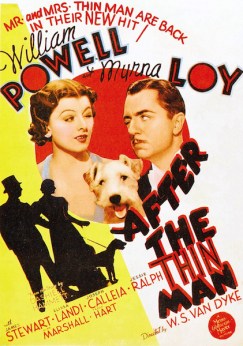 Immediately after their New York Christmastime adventure in
  There’s also an increased role for the couple’s dog, Asta, granted his own subplot as he has to fend off a philandering Scottie with intentions toward Mrs Asta. I make no apologies for preferring this over the previous film in part because there’s more amusing doggy action.
 Produced as a B-movie, but eventually nominated for four of the biggest Oscars (Picture, Actor, Director, Screenplay
 like a Christmas party which is regularly interrupted by victims and suspects. Even the final scene, a rambling and none-more-Christie-like “gather all the suspects and reveal the answers” dinner party, seems natural because of the characterisation throughout the rest of the film. Loy’s part may not be quite as showy — as demonstrated by its failure to gain an Oscar nomination — but she’s an invaluable half of the double act.




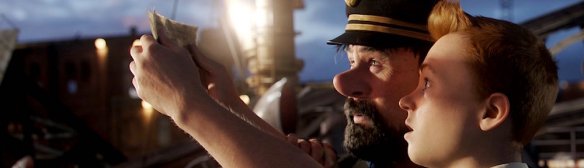

 1981: Steven Spielberg reads a French review of his movie
  Apparently some Tintin purists weren’t so keen on the actual adaptation — elements of The Crab with the Golden Claws have been mixed in to a plot primarily taken from The Secret of the Unicorn, the sequel/second half of which, Red Rackham’s Treasure, is reportedly used sparingly. Plus, in the original tale Sakharine is a minor character who wasn’t responsible for much, apparently. As someone who’s only read one of those three volumes, and even then not since I was young, such things didn’t trouble me. What superstar screenwriters Steven “
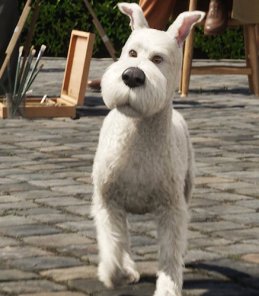 The slapstick is mainly hoisted by Simon Pegg and Nick Frost as the physically-identical Thomson and Thompson — a true advantage of animation, that. I imagine some find their parts tiresome because of their inherently comic role, but they’re likeable versions of the characters. Even more joyous is Snowy, though. Well, I would like him, wouldn’t I? His internal monologue, such a memorable part of Hergé’s books, is omitted (as it is from every film version to date, I believe), but he’s full of character nonetheless. Some of the best sequences involve Snowy running in to save the day. I don’t think they quite got the animation model right (the one glimpsed in test footage included in behind-the-scenes featurettes looks better, for my money), but his characterisation overcomes that.
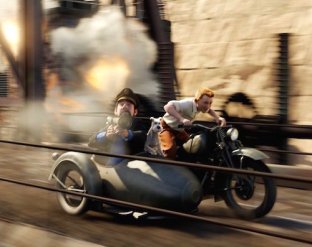 Of course, one very important person is neither British nor Belgian: Spielberg. The screenplay’s balance between peril and comedy is spotlessly enhanced by his peerless direction. In a world stuffed to the gills with lesser blockbusters that palely imitate the groundwork Spielberg and co laid in the ’70s and ’80s, work like this should remind people why he’s still the master of the form. The film is shot with an eye for realism (so much so that some viewers have been convinced it was filmed on real locations with real actors, with some CG augmentation for the cartoonish faces, of course), which helps lend a sense of plausibility and also genuine jeopardy. It’s easy to get carried away when working in CG animation, but often the most impressive works are ones that behave as if they’ve been shot largely within the limitations of real-world filmmaking technology.
 The tone on the whole is resolutely PG — actually, like many an action-adventure blockbuster used to be before everything went slightly darker and PG-13. So, for example, Tintin wields a gun on occasion, but never at another human being. The focus is on the story, which happens to lead to some adrenaline-pumping sequences, rather than a lightweight excuse to link together a bunch of punch-ups and chases. Ironically (though, for anyone who knows what they’re talking about, entirely expectedly) this makes the action all the more exciting. It also mean there’s a lighter touch than many current blockbusters offer; a greater presence for humour, including among the action. I guess that’s not fashionable these days, when everyone’s become so po-faced about their big-budget entertainment. However, with the likes of
  but some viewers would have seen it (even subconsciously) as more of a “real movie”.
 Seven Samurai used to be a striking anomaly amongst the top ten of
  It’s also unhurried. As Kenneth Turan explains in his essay “The Hours and Times: Kurosawa and the Art of Epic Storytelling” (in the booklet for Criterion’s DVD and Blu-ray releases of the film, and available online
 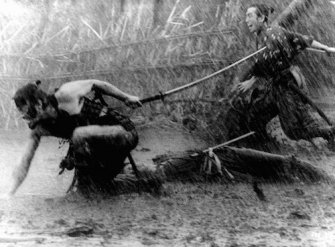 The length ensures our investment in the village, too, just as it does for the samurai. They’re not being paid a fortune — in fact, they’re just being paid food and lodging — so why do they care? Well, food and lodging are better than no food and lodging, for starters; and then, having been in the village so long in preparation, they care for it too. It is, at least for the time being, their home. You can tell an audience this, of course, but one of the few ways to make them feel it is to put them there too — and that’s what the length does. To quote from Turan again,
 the final scene, the way it’s edited and framed, ties the remaining samurai to their deceased comrades, the living and thriving farmers a distant and separate group. Fighting is the way of the past, perhaps, and peaceful farming the future. Or is the samurai’s only purpose to be found in death, because other than that they are redundant?
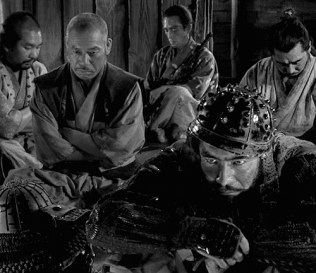 And it wasn’t as if it was overseas viewers who hit on the magic: as Turan reveals, “Toho Studios cut fifty minutes before so much as showing the film to American distributors, fearful that no Westerner would have the stamina for its original length.” The more things change the more they stay the same, I suppose — how many Great Films from Hollywood are ignored by awards bodies and audiences, only to endure in other ways?
 I think I’ve previously discussed my life-long love of the X-Men franchise, so I shan’t go into detail again, but suffice to say Days of Future Past has been one of my most-anticipated movies ever since the title (which is that of a classic and influential story from the comics) was announced. Thank goodness, then, that the final result doesn’t disappoint.
 Beyond that, there’s the characters: the younger versions are having to deal with the fall-out from
  Not everyone gets to shine in a cast this big, although pretty much everyone gets a moment. The future-set cast have the least to do, people like Halle Berry turning up to do little more than show their face, though Stewart and McKellen get a moment or two worthy of their talents. After he was the focus of the last film, Fassbender is slightly shortchanged here; but after McAvoy gave him essential support in First Class, Fassbender plays the same service here, informing Charles’ journey. Of the new additions, Evan Peters as Quicksilver (that’s the one who’ll also be played by Aaron Taylor-Johnson in
  Later, there’s the aforementioned ‘slow-mo’ sequence, and the grand climax, which offers more “fly something big around” antics a la First Class’ submarine, only considerably grander. Yet for all the spectacle, the final moments once again come down to character: what is Magneto prepared to do? What is Mystique prepared to do? Will anyone listen to Charles? And so on. Even the much-vaunted Marvel Studios movies tend to base their climaxes in slabs of ‘epic’ CGI crashing into each other; Days of Future Past does that for a bit, then brings the characters back into focus for the real final beats.
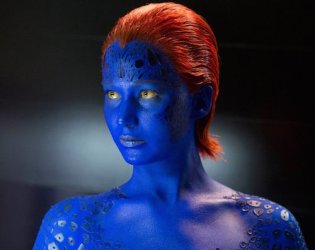 (Jennifer Lawrence being the third pillar of the past triumvirate, as they’ve already focused on Xavier and Magneto). While Days of Future Past does wrap up the majority of its threads (the open-ended ones are answered by previous films, if you want them to be), there’s plenty there to play with in the next film (and, perhaps, ones beyond that) if they want to… which they do.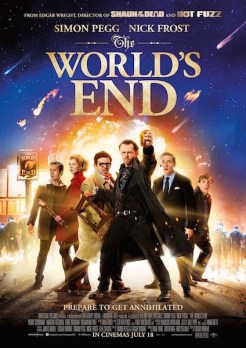
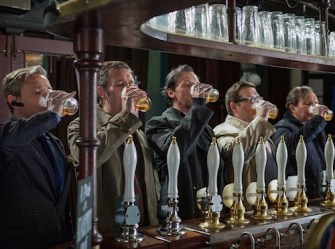 “zombie movie” or “Hollywood action movie”, and occasionally co-writers Pegg and Wright have substituted character development and thematic points for send-up. It may not play to the genre-loving fan-audience that the trio’s previous work has accumulated (demonstrably so, based on many a viewer review), but it does make for a more grown-up film.
 It will definitely reward multiple viewings: it’s littered with signs, omens and portents (in fairness, a good few can be grasped on an attentive first go). There’s a featurette on the BD (but not the DVD) which helps point out any major ones you may’ve missed; though I have to say, even at seven minutes long, and even with it pointing out some that felt too obvious to be worth mentioning, I swear it left some stuff out. That could be a deliberate decision of course, to leave some things for people to just spot.
 100Films.co.uk