2023 | Weeks 3–4

“Wait, did I miss Weeks 1 and 2?”, you may have asked yourself upon seeing this post pop up wherever you see my posts. And the answer is: no, I missed them, because I failed to watch a single film in either Week 1 or Week 2 of 2023. Most extraordinary.

Anyway, I wrote about that in January’s monthly review, so let’s get on with reviewing. I will note that I’ve skipped a couple of films from these weeks. Normally I only do that when I’ve already written their review and it’s long enough I feel it should be posted solo. I haven’t formally started writing about either The Girl Who Knew Too Much or Black Girl yet, but I have an inkling they’re both going to be quite long (the latter, definitely), so I’ve set them aside for the time being. Which leaves us with…

  • The Magician (1926)
  • Glass Onion (2022)
  • My Year of Dicks (2022)
  • Shotgun Wedding (2022)
  • The Banshees of Inisherin (2022)


    The Magician

    (1926)

    Rex Ingram | 80 mins | Blu-ray | 1.33:1 | USA / silent

    The Magician

    Based on W. Somerset Maugham’s novel, itself inspired by the antics of real-life occultist Aleister Crowley, The Magician concerns a mad scientist, Oliver Haddo (Paul Wegener), trying to complete an alchemical spell to create life by kidnapping a pretty virginal sculptor, Margaret (Alice Terry), so he can cut out her heart and use her blood. But why just kidnap a young woman when you can hypnotise her into marrying you? And why just kill her when you can use your hypnotic control to, er, take her gambling in Monte Carlo and make lots of money?

    Wait, what?

    Yeah, The Magician is kind of an odd film. Whether that’s due to Maugham’s original work and his desire to write a takedown of Crawley, or if it was the impetus of director Rex Ingram fancying a jolly around Europe with his wife, who he’d cast in the lead female role, I don’t know. Either way, the varied asides (before the eponymous Haddo even turns up, Margaret is paralysed in a sculpting accident and goes for experimental surgery to get it fixed) slow the pace, possibly to pad out what is really quite a slight story. On the other hand, there are some atmospheric sequences scatted throughout, like a demonstration of Haddo’s powers at a snake charming show, or a devilish orgy (yes, you read that right; no, it’s not at all shocking by modern standards). Plus, as if to balance out all the stuff with dark magic, Ingram finds room for dashes of humour, giving a bit of texture and stopping the film from becoming too self-serious.

    However, The Magician remains most noteworthy today as a stylistic precursor to Universal’s initial run of horror movies in the early ’30s — James Whale’s Frankenstein, in particular, seems to have taken some cues from this film’s climax. It’s a fairly entertaining melodramatic fantasy-horror in its own right, but is primarily worth a look for those interested in the early development of the horror genre in Hollywood, or for silent movie fans who’d like something with a supernatural edge. General audiences are probably fine sticking to the established classics it influenced.

    3 out of 5

    The Magician is the 1st film in my 100 Films in a Year Challenge 2023.


    Glass Onion

    (2022)

    aka Glass Onion: A Knives Out Mystery

    Rian Johnson | 139 mins | digital (UHD) | 1.85:1 | USA / English | 12 / PG-13

    Glass Onion

    In some respects, Glass Onion delivered a movie closer to what I’d been expecting from the first Benoit Blanc mystery, Knives Out; that is to say, a proper murder mystery that is also unabashedly a comedy. Don’t get me wrong, I found Knives Out amusing — even more so with subsequent rewatches — but it has a kind of dry humour, with a wit more likely to raise a wry smile of acknowledgement than a guffaw. Glass Onion surely has such moments too, but it also has big, broad laughs that stand out more on a first viewing.

    The mystery at its core remains a true Christie-style puzzler, with enough about-turn twists to keep you off balance — you can try and guess what’s going on if you want, but it’s just as much fun to be swept along for the ride — but the surrounding material is satirical almost to the point of parody. Kate Hudson’s airhead influencer is more caricature than character, for example, while there’s no doubt that Edward Norton’s billionaire is a merciless pisstake of Elon Musk. That’s annoyed certain right-wing commentators. The rest of us can just enjoy the accurate pillorying.

    This overall shift in tone will, I think, dictate which of the two movies viewers prefer — i.e. whichever one hews closer to your personal taste. On the other hand, maybe you’ll be like me, and enjoy them both for their own particular quirks. I’ve already watched Knives Out three times, so I’ll have to watch Glass Onion a couple more to make any kind of fair comparison. Fortunately, I intend to.

    5 out of 5

    Glass Onion placed 1st on my list of The Best Films I Saw in 2023.


    My Year of Dicks

    (2022)

    Sara Gunnarsdóttir | 26 mins | digital (HD) | 1.78:1 | USA & Iceland / English

    My Year of Dicks

    One of the standout moments of this year’s Oscars nominations announcement was when Riz Ahmed read out the Best Short Animation nominees, thus having to proclaim “My Year of Dicks” to the world — especially as it was immediately followed by “An Ostrich Told Me the World Is Fake and I Think I Believe It”. Only one of those is currently available to watch online, so I did.

    The autobiographical story of screenwriter Pamela Ribon trying to lose her virginity in early-’90s Texas, My Year of Dicks unfolds across five vignettes, each telling a different (but connected) story of sexual misadventure. The chaptered structure gives away that this is kinda five short films strung together; but they’re also a series, with a definite through-narrative (if you’ve ever watched any narrative film before, you’ll easily spot the early supporting character who’s destined to have greater significance). So, while it doesn’t fully work as a single ‘film’ (it feels like binge-watching a series of short episodes), there is at least a reason to lump them all together as a unit.

    The parts are further differentiated by employing a variety of animation styles to depict Pam’s fantasies and inner feelings. It’s an effective use of the medium to help overcome the fact that the actual stories are relatively rote “coming of age” tales. The most successful of all is the excruciating “sex talk” with Pam’s dad, in which a bombardment of animated self destruction reflects the desire for escape we’re all feeling at that point.

    As a story based around female sexuality, My Year of Dicks has an air of timeliness about it. Equally, it feels like such barriers have been continually been being broken down for the past 20 or 30 years now; in which case, one does wonder if its success has as much to do with the amusement value in seeing that title on the Oscar short list as it does the film itself.

    3 out of 5

    You can watch My Year of Dicks for free on Vimeo.


    Shotgun Wedding

    (2022)

    Jason Moore | 101 mins | digital (UHD) | 2.39:1 | USA / English | 15 / R

    Shotgun Wedding

    Jennifer Lopez and Josh Duhamel are about to get married in front of their family and friends at a remote tropical resort when pirates turn up demanding a ransom. Action and hilarity ensue. How exciting the action and how hilarious the hilarity is where opinions may differ.

    For my money, the end result is a perfectly serviceable star-driven action-comedy. It’s the kind of middle-of-the-road, made-for-date-night fare that people keep bemoaning we’re losing thanks to Marvel’s box office dominance, even though Hollywood actually seems to keep making them (for another example from just last year, see The Lost City), and they get fairly widely slated every time one actually comes out.

    Okay, the vast majority of the film’s funniest ideas and moments were in the trailer (heck, the way the first promo was edited to make the film look like a rom-com, only to about-turn into an action movie, is probably the best gag associated with the entire project), but the film itself has held back a couple of laugh-worthy moments, and even a few plot twists. No wheels are reinvented, but it’s fine as bit of non-demanding, Friday-night, never-going-to-watch-it-again, easy viewing.

    3 out of 5

    Shotgun Wedding is the 5th film in my 100 Films in a Year Challenge 2023.


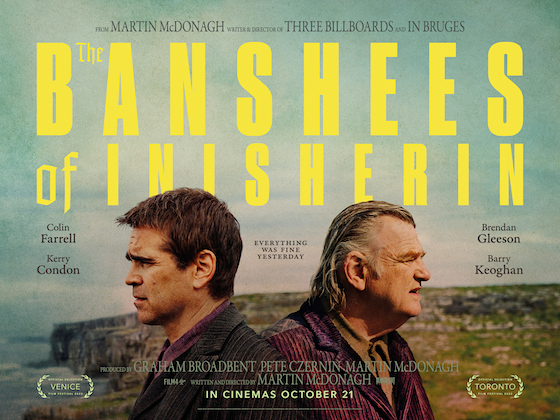
    The Banshees of Inisherin

    (2022)

    Martin McDonagh | 114 mins | digital (UHD) | 2.39:1 | Ireland, UK & USA / English | 15 / R
    The Banshees of Inisherin

    The new film from the writer-director of Three Billboards reunites the star pairing from his first movie, In Bruges, for an altogether different — but equally as hilarious — tale of two Irishmen. Here, Colin Farrell and Brendan Gleeson play lifelong friends on a small island off the coast of Ireland in the 1920s; that is until one day Gleeson decides he just doesn’t like Farrell anymore. Cue a serious of escalating encounters as Gleeson tries to get his former mate to just leave him be.

    After the quite heavy, discourse-provoking narrative of Three Billboards, Banshees feels somewhat like McDonagh heading for smaller-scale, less contentious waters. Not that I think he’s running in fear — he doesn’t seem like one to avoid confrontation or provocation around his art — but I think that Banshees feels more of a piece with Bruges, in that it’s focused on just a handful of characters and their fairly everyday lives. That said, things do get a bit… outrageous; and the Irish civil war is ticking away on the mainland, suggesting at least one thematic interpretation of the friends’ fallout. That’s not to mention the subplots involving Farrell’s sister outgrowing her place on the island, or the woes of the local village idiot (played superbly by Barry Keoghan) and his abusive father, who happens to be the island’s policeman.

    All of which might begin to sound a bit serious. But then, juggling life-and-death issues and hilarity is almost McDonagh’s trademark. Indeed, the film’s biggest laugh is related to the story of a woman’s death; meanwhile, its saddest moment involves not the abuse or self-mutilation of any of the human characters, but rather the fate of a beloved animal (that might read as a spoiler, but I consider it fair warning for animal lovers). In viewing, it’s consistently very funny, but creeps up on you with Stuff To Think About, too. I enjoyed it a lot; maybe not as much has In Bruges or Glass Onion (no relatable comparison there other than I watched them both this month), but enough that my score rounds up.

    5 out of 5

    The Banshees of Inisherin is the 6th film in my 100 Films in a Year Challenge 2023.


  • Archive 5, Vol.6

    Hey, wouldja look what it is! After getting off to a fairly strong start back at the beginning of 2022, I allowed my Archive 5 strand to fall by the wayside while I made a concerted attempt to stay up-to-date reviewing my new viewing (with mixed success). But now it’s back, hopefully on a more permanent basis. And I guess going forward it should include what’s left of 2022, because otherwise I’m stuck trying to catch up on those reviews before I can even begin 2023. But not just yet, because I selected today’s five films back when Vol.6 should originally have been posted (last February, gasp!)

    For those who’ve forgotten, I have a backlog of 421 unreviewed feature films from my 2018 to 2021 viewing (448 if we add in 2022 too). This column is where I give those films their day, five at a time, selected by a random number generator.

    Today, some films sizzle with heat or tension, while others fizzle into disappointment. This week’s Archive 5 are…

  • Paris When It Sizzles (1964)
  • 7500 (2019)
  • The Rhythm Section (2020)
  • Carefree (1938)
  • The Lie (2018)


    Paris When It Sizzles

    (1964)

    Richard Quine | 110 mins | digital (HD) | 16:9 | USA / English | U

    Paris When It Sizzles

    William Holden and Audrey Hepburn are clearly having a whale of a time in this marvellously cine-literate romp about a struggling screenwriter (Holden) and the secretary (Hepburn) hired to type up the script he hasn’t actually started. With the deadline just two days away, the pair rush to put a script together, which plays out as a film-within-a-film, also starring Holden and Hepburn, and allowing them even more fun as they get to overact extraordinarily. The “inside baseball” feel of the thing is furthered by a handful of surprise cameos.

    Perhaps it’s me just misjudging the era, but the whole thing feels somewhat ahead of its time. In the way its such an insider’s riff on the movie industry, it feels like something you wouldn’t expect to have emerged until maybe the ’90s (The Player being an obvious point of reference). How well that worked for audiences at the time, I don’t know — maybe it did come across as too esoteric — but, viewed today by anyone with an idea of the history and inner workings of the Hollywood machine — it’s a lot of madcap fun.

    5 out of 5

    Paris When It Sizzles was #129 in my 100 Films in a Year Challenge 2020. It placed 20th on my list of The Best Films I Saw in 2020.


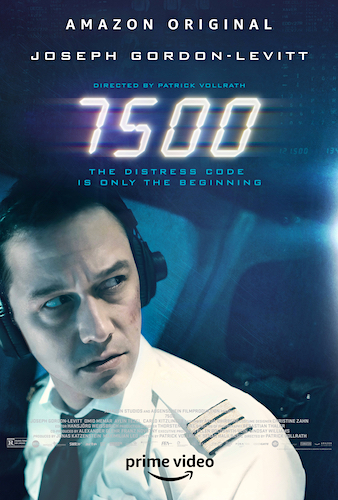
    7500

    (2019)

    Patrick Vollrath | 93 mins | digital (UHD) | 2.39:1 | Germany, Austria & USA / English, German & Turkish | 15 / R

    7500

    After a title sequence that uses security camera footage to follow some shifty-looking blokes around Berlin airport, the film fades up in a passenger airplane cockpit as the crew arrive and begin their regular pre-flight routines. It’s a location we won’t leave for the next 80 minutes, as the unremarkable flight to Paris takes a turn when the aforementioned shifty-looking blokes attempt to invade the cockpit mid-flight, leaving it up to copilot Joseph Gordon-Levitt to try to rescue the situation.

    A tense thriller set entirely in one confined location and told in (near-as-dammit-)real-time? This film could have been made just for me. Suffice to say, I was suitably pleased. This kind of style and pace clearly won’t be to everyone’s taste (I mean, the first 15 or so minutes are almost entirely about watching the pilots just doing their everyday job), but there’s something about the format that does it for me. I think it’s something to do with the inescapability of real-time — that what’s happening and what will happen is going to last as long as it lasts, no shortcuts — that serves to underscore the tension of a thriller storyline. That said, in this case the final act does lose some of the momentum and tension, as much as it tries to maintain it, meaning it feels like it limps to the end, with the really suspenseful stuff having expired a little after the hour mark. It’s not that this final act is bad, just that it feels like a comedown from what’s gone before.

    Still, Gordon-Levitt is great throughout, carrying a large chunk of the film singlehanded, and there’s ultimately a more nuanced treatment of the terrorists than you might expect. I saw someone criticise it for trying to humanise one of them, as if that was problematic. Sure, terrorists are bad guys, but they’re still human beings underneath, and they’ve been plenty demonised enough in plenty of less thoughtful media — I’m not sure it should be considered controversial or a step too far to suggest that one of them (out of four) might be a misguided teenager rather than Evil Personified. On the flip side, I read another review that trashed the film for “featuring brown terrorists again”. I imagine those two reviewers would have a lot to disagree about…

    4 out of 5

    7500 was #144 in my 100 Films in a Year Challenge 2020.


    The Rhythm Section

    (2020)

    Reed Morano | 110 mins | digital (HD) | 2.39:1 | UK & USA / English & French | 15 / R

    The Rhythm Section

    I don’t know about you, but sometimes I watch movies with a bad rep in case I see something in them that everyone else* missed — because that does happen. In that vein, The Rhythm Section isn’t some overlooked masterpiece, but I don’t really get why everyone hated it so much.

    Blake Lively uglies up and forces an English accent to star as Stephanie Patrick, a drug-addicted prozzie who used to be a pretty Oxford student until her family died in a plane crash three years earlier, which a journalist now tells her was a terrorist attack that MI6 have covered up. Events lead her to a disgraced agent (Jude Law) who agrees to train her to hunt down the people responsible.

    Hardly the most plausible storyline ever, but it’s no more ludicrous than many a thriller. So, as a genre piece, well, it’s certainly not the greatest action-thriller ever made, but it’s decent overall with a couple of neat twists on the usual formula. The primary one is that our heroine isn’t actually very good at being an action hero and keeps fucking up. Normally these films are about highly competent super agents (Jason Bourne, John Wick, etc), or newbies who take to it like a duck to water. Stephanie’s borderline incompetence is not only a mite more realistic, it makes a refreshing change, and at times is even successfully used to heighten the tension.

    Unfortunately, other aspects were stale on arrival. For no reason, it begins halfway through and then does the “8 Months Earlier” thing. This is a personal bugbear of mine, because it’s a trick that’s been used to death at this point, routinely trotted out to no real purpose. Usually it’s used as a cheap way to deliver some action upfront because otherwise there won’t be any until somewhere in Act Two, which is just an insult to the audience’s attention span. In other cases, the film just got unlucky. I imagine when they conceived of a single-shot car chase it seemed like an original idea — as it probably did to all the other filmmakers who attempted the same thing around the same time; not least Netflix’s Extraction, which did it bigger and therefore better. Oh well.

    Ultimately, I suppose The Rhythm Section is fundamentally derivative, with only fleeting moments of originality. But I still thing everyone else was overly negative — it’s not bad, just not strikingly fresh. I think if you enjoy Bourne-esque action-thrillers, you should enjoy this.

    3 out of 5

    * It’s never everyone else, but you know what I mean. ^

    The Rhythm Section was #138 in my 100 Films in a Year Challenge 2020.


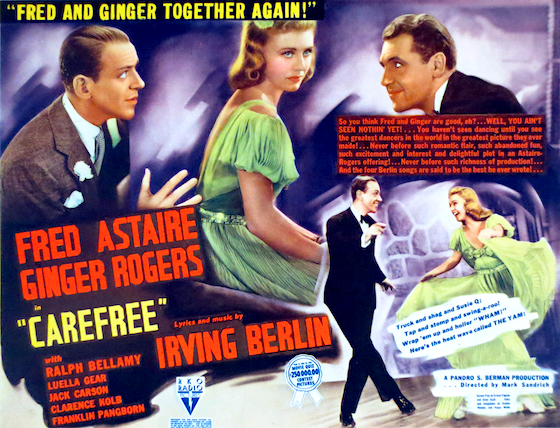
    Carefree

    (1938)

    Mark Sandrich | 83 mins | digital (SD) | 4:3 | USA / English | U

    Carefree

    Fred Astaire is a psychiatrist prone to misogynistic views and unethical practices who mimes playing the harmonica and performs dance routines with golf balls, and Ginger Rogers does a song & dance about yams (because Astaire thought it was so silly, he refused to sing it. He was right). Yeah, I think it’s fair to say this isn’t the couple’s finest hour. The public agreed: this was the first Astaire-Rogers film to lose money on its initial release.

    That said, it’s not without the occasional charm. Rogers still shines — the sequence where she goes around playing naughty pranks with a cheeky grin while under the influence of anaesthetic is a delight — and there’s a slow-motion dream-sequence dance that is rather lovely. But these are fleeting pleasures amongst the distasteful storyline (see: my description of Astaire’s character) and less refined moments (there’s a song about yams).

    2 out of 5

    Carefree was #97 in my 100 Films in a Year Challenge 2021.


    The Lie

    (2018)

    Veena Sud | 95 mins | digital (UHD) | 2.39:1 | USA / English | 15 / R

    The Lie

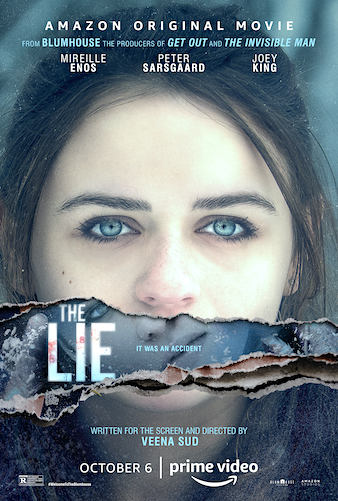
    Although it debuted to most of the world as one in a series of eight Blumhouse original movies that premiered together on Amazon Prime in 2020, The Lie is listed as a 2018 film because that’s when it premiered at TIFF under a different title (Between Earth and Sky). The fact it went from being a standalone production to one of a series released en masse provides a clue as to how well it went down.

    The film has a solid premise that starts out well enough: a father (Peter Sarsgaard) and daughter (Joey King) are driving to a ballet retreat when they spot her best friend waiting by the side of the road, so they offer her a lift. Later, they stop in the middle of nowhere so the friend can go to the bathroom, but she falls off a bridge into an icy river. Or possibly the daughter pushed her. Either way, presumably she couldn’t survive the fall, and her body has washed away. Fearing how all that would look, they set about covering it up… which is where things go awry, both for the characters and us viewers. The longer the story goes on, the further it departs from actions and consequences that feel plausible. It’s not ludicrously far-fetched, it just doesn’t feel right; like people wouldn’t make those decisions, or those decisions wouldn’t have those consequences. The lead cast give it their best shot, but they’re battling against material that’s below their skills.

    Then there’s an inevitable last-minute twist that just hurls the whole thing off a bridge. Kate Erbland for IndieWire wrote that it “should rank among the all-time great fake-outs,” and she’s sort of right: it could have been a reveal for the ages, but rather than eliciting a pleasant “OMG I don’t believe it!”, it plays as “ugh, I don’t believe it.”

    2 out of 5

    The Lie was #245 in my 100 Films in a Year Challenge 2020.


  • The Best of 2022

    And so my review of the year reaches its end in the usual fashion: with the best films I watched for the first time in 2022, plus a few honourable mentions, and a list of notable new releases I missed.

    Regular readers may have noticed there’s no “worst” list this year. As I wrote last year, the idea of singling out a list of bad movies has become highly unfashionable in recent years, especially when big-name publications do it. I don’t think such lists are wholly without worth (they acknowledge that, as a film viewer, it’s not all sunshine and roses), and there’s a big difference between a major publication slagging off some recent releases (which may affect those films’ continued financial success and their makers’ careers) and a one-man blog picking a couple of lesser films from what he happened to watch that year (which rarely includes recent releases, and wouldn’t have an impact on them even if it did). Nonetheless, in the spirit of celebrating what you love and staying quiet about the rest, I’ve decided to ditch my “worst” list. (If you want, there’s still the “Least Favourite” award in my monthly Arbies.)

    With that said, it’s on with…


    The Eleven Best Films I Watched for the First Time in 2022

    Continuing with the methodology I’ve used since 2016, this list features the top 10% of my first-time watches from the year. In 2022, the total was 111, which means there are 11 films on this year’s “top 10”.

    As ever, it’s not just 2022 releases that are eligible for my 2022 list. Consequently, in recent years I’ve included a ‘yearly rank’ for films that had their UK release during the previous 12 months. However, I watched so few of the year’s big hitters in 2022 that I felt to rank what I did see would be misleading. There are too many acclaimed films omitted only because I’m not able to consider them, not because I don’t think they’re worthy. Hopefully I’ll get back on top of seeing new releases, so a yearly ranking can return in the future.


    Take a noir storyline then run it through gritty “kitchen sink” British sensibilities, and you get this: a film that works as both a neo-noir gangster thriller and a character study of a man revising his views of the world. [Full review.]

    10

    Prey


    Studios keep trying to rehash their ’80s sci-fi/action IPs, and they keep producing mediocre results. Thankfully, someone has finally bucked the trend. Prey works in part because it abandons continuity and takes a back-to-basics approach to its alien menace. Setting it in a completely different time period adds more opportunities for fresh perspectives and developments. It’s such a seemingly simple idea that works so well, and one that’s eminently repeatable. Predators vs knights? Predators vs samurai? Predators vs cowboys? Yes, yes, and yes, please, and anything else you can think of. [Full review.]


    Michael Bay has always been a divisive filmmaker. His brash, bombastic style isn’t for everyone. But I think there’s a method to his madness (even when it results in trash) and so, when he’s on form, he remains one of the most exciting action filmmakers. Ambulance shows he’s still got the goods. You could imagine the storyline — after a bank heist goes wrong, two crooks escape in an ambulance, along with the cop they shot and a paramedic trying to save him — being from a 1940s film noir; a grim character study of men under pressure. That side of it is still in there, just dressed up with all the wildness of only-semi-restrained Bayhem. [Full review.]


    A thriller about… writing a book? Ah, but when the book in question is the autobiography of a disgraced, potentially criminal former Prime Minister, and the book’s new ghost writer has been brought in because his predecessor died under suspicious circumstances, well, you begin to see where there are questions to be answered. Pierce Brosnan is perfect for the role of a former politician who is 50% charming and 50% believable as a scheming villain, while Ewan McGregor leads us through the twisty plot as an everyman who needs the money but still has a conscience. Will the truth out? [Full review.]


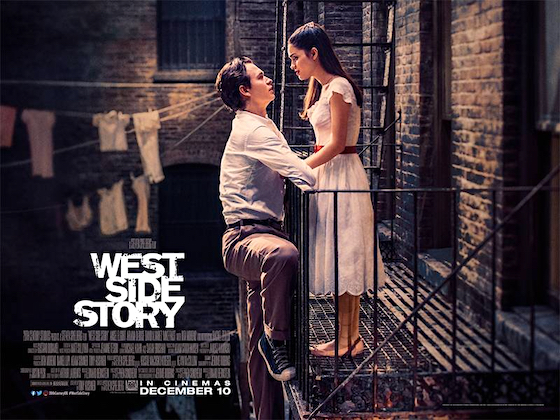
    Spielberg, man. If you’d told me a remake of West Side Story would end up in my top ten of the year, I’d have given you a funny look. I didn’t love the original film version, but I also didn’t think it could be bettered — it’s a classic for a reason. Surely any remake was doomed to be lesser? But ah, here comes Steven Spielberg, a director whose style clearly chimes with my taste (in fairness, his work helped define my taste, thanks to watching the likes of Indiana Jones, and Spielberg-produced/-emulating movies such as Back to the Future, at a formative age). His version screams Movie in a way so few films do nowadays, and the changes he and his team have made to the material elevate it even beyond the ’61 film, for my money. [Full review.]


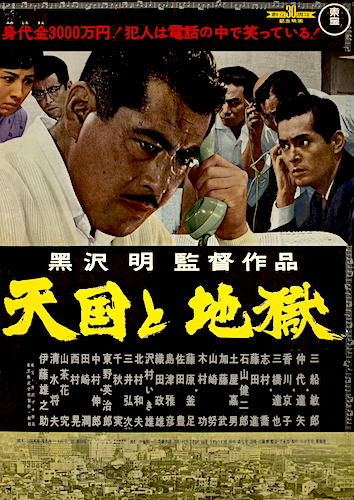
    Toshiro Mifune plays a man presented with a life-changing moral dilemma in this thriller from director Akira Kurosawa. It’s a film of two halves: the first, contained almost to one room in near-real-time, sees Mifune’s business executive grapple with a conundrum that could ruin his career; the second becomes intensely procedural as it follows the police investigation and fallout from Mifune’s actions. With its precision attention to detail and healthy dose of mundanity, Kurosawa conjures an intense realism — the film could almost be a documentary; only, a documentary could never be this finely controlled. [Full review.]


    Disappointingly relegated to “Sky Original” status here in the UK (usually a dumping ground for low-quality genre movies), Mass is a film that deserves to be more widely seen (the story of too many films buried on random streaming services nowadays, I fear — how many people have actually seen Best Picture winner CODA when it’s locked away on Apple TV+?) The less you know going in the better to be hit with the film’s full emotional weight. And it is a heavy film, but only in a way the befits its subject matter. Made up almost entirely of four people sat round a table talking, it is nonetheless “a blisteringly emotional gut-punch … but, with that, it’s ultimately cathartic.” [Full review.]


    I do enjoy a Disney animation, but one has never broken into my top ten before (Zootropolis was 15th in 2016 and Moana was 16th in 2017). That’s partly the luck of the draw (I watched over 50% more films in each of those years), but also something about how well Encanto works — which, frankly, I can’t quite put my finger on. I mean, all the obvious elements are there: catchy songs, likeable characters, impressively fluid animation, a strong message about what matters. But there’s something else, too; a sprinkling of magic that, for me at least, elevates the film to be something even more special. I say I like a Disney film, but I don’t revisit them too often. I’ve already watched Encanto twice. In one year? That’s not like me! So, hopefully you see my point. [Full review.]

    3

    Top Gun: Maverick


    I feel the need — the need for actors doing their flying stunts for real! Striking usage of the IMAX aspect ratio! Memorable callbacks to the original movie! Cheesy music that fits the tone perfectly! Actual humour! Proper subplots! Top Gun: Maverick is old-fashioned blockbuster moviemaking done with modern sensibilities (can you imagine them actually putting actors in jets back in the ’80s? For one thing, where would they have put those great big film cameras?) Actor/producer Tom Cruise has spent decades now perfecting this brand of big-screen entertainment, and here he shows the next generation how it should be done — both in-film, as a pupil-turned-teacher trying to get a class of the best pilots to be even better, i.e. as good as he is; and in real life too, rocking up in an era when the box office is dominated by previz- and CGI-driven superhero theme-park-rides-as-cinema, and giving us a done-for-real spectacle that kicked all their asses at the box office. The movies, and movie stars, are only dead when Tom Cruise says they are.

    2

    Les Enfants du Paradis


    According to IMDb, when Children of Paradise (to use its translated title) was initially distributed in the USA, it was promoted as “a sort of French-made Gone with the Wind”. It’s not a bad comparison. Not in a literal sense — this isn’t about a spoilt rich girl getting caught up in a civil war on the wrong side — but as an epic, years-spanning romantic melodrama? There are some similarities. It’s the story of a courtesan-turned-actress and the four men in her orbit — a mime artiste, an aspiring actor, a wannabe crook, and a moneyed gent — in and around the theatrical scene of 1830s Paris. It’s told with a style that feels adapted from a novel — it’s got that kind of scope, with its timespan and array of characters, and depth, which feel more like literature than something conceived directly for the screen. In fact, most of the characters are based on real people, which I suppose is neither here nor there, but does add another layer of interest. Whatever makes it work is enough to keep it thoroughly compelling even with a running time over three hours.

    1

    Manhunter


    I first became aware of Manhunter many moons ago, as a piece of footnote trivia in the history of movies: “did you know there was a Hannibal Lector film before Silence of the Lambs?” What a crazy idea! How bad it must have been to be so thoroughly overshadowed by Anthony Hopkins’ Oscar-winning version. Well, the history of the movies is rarely so straightforward; and as the immediate acclaim for Lambs has died down, and its various sequels and prequels have petered away, Manhunter has been able to reemerge somewhat. And so it should, because this is a great movie. Maybe not a great Hannibal Lector movie (Brian Cox is very good in the role, with less of the ticks and tricks that made Hopkins so memorable, but he’s not the focus of the story), but a superb “hunt for a serial killer” thriller. It’s dripping with ’80s style thanks to a director who helped define what that even meant (via his involvement with Miami Vice), while the hero cop, played by William Petersen, feels ahead of his time, struggling with the mental toll of previous cases as he tries to do the right thing and stop another killer. Such a mix of style and substance makes for an all-round fulfilling film; one that I think deserves every bit to be celebrated alongside Jonathan Demme’s more widely-acknowledged movie.

    To celebrate it topping my list, Manhunter is on BBC Two tonight at 11:05pm, and on iPlayer for 30 days afterwards.*

    As usual, I’d like to highlight a few other films.

    Firstly, I wrote this little paragraph not sure where to use it, but here seems a good place. That’s to say: I love a minor film noir. Just a solid, competently made, usually 60-to-80-minute programmer. The highly-regarded Classics are all well and good — I appreciate their quality; why they’re ‘better’ — but, in many respects, I get more actual enjoyment (certainly in a relaxed, easy-viewing sense) from a run-of-the-mill type film. Not bad ones, you understand, just average fare. And here seems a good place to say that because 2022’s Challenge compelled me to watch a few noirs of that ilk. All of them were on the long list for my top ten, but none quite made it. I’m talking about the likes of Christmas Holiday, He Walked by Night, Killer’s Kiss, My Name Is Julia Ross, and Repeat Performance. (I also liked The Killing, but that’s in no way a “minor” noir.) Mr. Soft Touch grew on me as it went on, too, but that’s probably one to only be watched in December.

    Next, here’s a recap of the 12 films that won the Arbie for my Favourite Film of the Month. Some have already been mentioned in this post, but some haven’t… In chronological order (with links to the relevant awards), they were Mass, Ghostbusters: Afterlife, West Side Story, High and Low, Shang-Chi and the Legend of the Ten Rings, The Ghost Writer, Ambulance, Repeat Performance, Top Gun: Maverick, The Mission, Manhunter, and Les Enfants du Paradis.

    Finally, something I’ve always done in this section is list every film that earned a 5-star rating during the year. In part that’s because there’s normally far too many to include in my list, even if it weren’t for the fact 4-star films usually sneak in too. But this year, there were only six films that received full marks, and all of them made the top 10%, too. Nonetheless, they were Les Enfants du Paradis, High and Low, Manhunter, Mass, Top Gun: Maverick, and West Side Story. Additionally, there were also full marks for my rewatch of the original Scream.

    I’ve been creating these “50 Unseen” (as I call them for short) lists for 16 years now, and it doesn’t get any easier to choose what to include — or, rather, what to exclude.

    It became a little easier in the past few years, because I was watching so many movies that the number of wide-release titles I’d missed fell, leaving room for more arthouse-y ‘hits’ — films the masses didn’t see but Film People were chatting about. But I watched very few new films this year — just 18 with a 2022 UK release date, down from 30+ in the last few years (with a high of nearly 60 in 2019). Those are small numbers compared to people who watch multiple brand-new films every week, but it had been enough to cover a significant percentage of ‘major’ releases. 18 is… well, not.

    With an initial long-list of almost 150 films, I did consider increasing this list to 100 titles. It would be in keeping with the site’s theme, after all. But 100 is such a big number… I mean, history suggests I won’t manage to watch the 50 listed films within the next decade or two, so how long would 100 take? No, 50 simply feels about the ‘right size’ for a list of this type, whereas 100 feels excessive. Besides, something is always going to get left off, it’s just how far down the list that cutoff comes.

    So, with the caveat that I’ve inevitably forgotten or misjudged something really noteworthy, here’s an alphabetical list of 50 films designated as being from 2022 that I haven’t yet seen. They were chosen for a variety of reasons, from box office success to critical acclaim via simple notoriety, and hopefully represent a spread of styles and genres, successes and failures.

    Avatar: The Way of Water
    Black Panther: Wakanda Forever
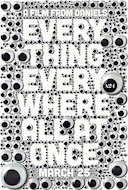
    Everything Everywhere All at Once
    Jurassic World Dominion
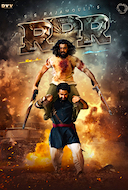
    RRR
    Weird: The Al Yankovic Story
    The Batman
    Decision to Leave
    Guillermo del Toro’s Pinocchio
    Nope
    Turning Red
    The Whale
    Aftersun
    All Quiet on the Western Front
    Avatar: The Way of Water
    Babylon
    The Banshees of Inisherin
    The Batman
    Black Adam
    Black Panther: Wakanda Forever
    Blonde
    Bullet Train
    Crimes of the Future
    Decision to Leave
    Doctor Strange in the Multiverse of Madness
    Don’t Worry Darling
    Downton Abbey: A New Era
    Elvis
    Empire of Light
    Everything Everywhere All at Once
    The Fabelmans
    Fantastic Beasts: The Secrets of Dumbledore
    Glass Onion: A Knives Out Mystery
    Guillermo del Toro’s Pinocchio
    Halloween Ends
    Jackass Forever
    Jurassic World Dominion
    Lightyear
    Men
    The Menu
    Minions: The Rise of Gru
    Moonfall
    Morbius
    Nope
    The Northman
    Pinocchio
    Roald Dahl’s Matilda the Musical
    RRR
    She Said
    Smile
    Sonic the Hedgehog 2
    Strange World
    Thor: Love and Thunder
    Three Thousand Years of Longing
    Turning Red
    Tár
    The Unbearable Weight of Massive Talent
    Uncharted
    Weird: The Al Yankovic Story
    Wendell & Wild
    The Whale
    X

    And that’s another year over.

    I gotta say, I’m quite pleased with how quickly I wrapped it all up — I haven’t got my “best” list out by January 6th since 2017. It shouldn’t feel like a rush to get this stuff online, but when many people are sharing their lists before the end of December (or even earlier, in the case of some publications), a week or more into January feels “late”.

    Anyway, I’m going to leave a couple of days to let the end of 2022 finally sink in, and then I’ll start waffling on about my targets for 2023.


    * Obviously it’s not actually because of my list, just a coincidence. ^

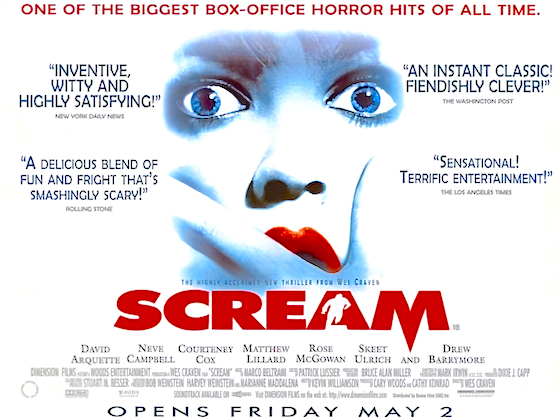
    Scream (1996)

    The 100 Films Guide to…

    Scream

    Someone has taken their love of
    scary movies one step too far.

    Country: USA
    Language: English
    Runtime: 111 minutes
    BBFC: 18
    MPAA: R

    Original Release: 20th December 1996 (USA)
    UK Release: 2nd May 1997
    Budget: $14 million
    Worldwide Gross: $173 million

    Stars
    Neve Campbell (The Craft, Wild Things)
    David Arquette (Buffy the Vampire Slayer, Never Been Kissed)
    Courtney Cox (Ace Ventura: Pet Detective, 3000 Miles to Graceland)
    Drew Barrymore (Firestarter, 50 First Dates)

    Director
    Wes Craven (A Nightmare on Elm Street, Red Eye)

    Screenwriter
    Kevin Williamson (I Know What You Did Last Summer, The Faculty)

    The Story
    In the quiet town of Woodsboro, a mysterious man in a mask starts murdering teenagers, first taunting them with horror movie trivia questions.

    Our Hero
    Sidney Prescott is an ordinary high school girl… apart from the fact her mother was murdered a year ago, and it was her eyewitness testimony that saw a man sentenced to death. Now, a serial killer seems to be targeting her — could the events be connected?

    Our Villain
    A slasher movie has to have a distinctive-looking, nicknamed serial killer at its centre, and here it’s Ghostface — although he’s actually only called that once in the film itself. His costume is a generic Halloween outfit bought from any old store, and is technically called Father Death. Why didn’t that name stick instead? Probably because it’s a bit shit.

    Best Supporting Character
    The film has severable memorable supporting turns, but perhaps the key one is nerd and video store employee Randy (Jamie Kennedy). He knows all the rules of horror films, and when it turns out his friends don’t, he helpfully gives them an explainer — which also works for any audience members who maybe aren’t so au fait with the genre either.

    Memorable Quote
    “No, please don’t kill me, Mr. Ghostface, I wanna be in the sequel!” — Tatum

    Memorable Scene
    The opening scene: everyday teenage girl Casey (played by Movie Star™ Drew Barrymore) is preparing to watch a movie when she gets a phone call. It seems like a wrong number, but the man keeps calling back. At first their chat is a bit flirty, but then it begins to get a bit weird, and soon… well, if you haven’t seen it, I wouldn’t want to spoil it for you.

    Making of
    The movie’s climax takes place at a house party the kids are having to take their mind off the killings, or something. But you wouldn’t guess it was the climax to start with, because it begins a little over halfway through the film — the ‘scene’ altogether lasts 42 minutes. It was shot across a gruelling 21 days of night shoots. After it was finally done, the crew had T-shirts made saying “I Survived Scene 118”.

    Next time…
    Two direct sequels followed in 1997 and 2000. More recently, the franchise has been subjected to the usual rounds of revivals: it took on parodying the ‘legacy sequel’ with a continuation in 2011, then did the same again with another one in 2022. A sequel to that is on the way next year. In between, there was a spin-off TV series that lasted three seasons. Season 1 and 2 were a reboot, unconnected to the movies; then it rebooted itself for season 3, still with no connection to the movies.

    Awards
    1 MTV Movie Award (Movie)
    1 MTV Movie Award nomination (Female Performance (Neve Campbell))
    4 Fangoria Chainsaw Awards (Wide-Release Film, Actress (Neve Campbell), Supporting Actress (Drew Barrymore), Screenplay)
    1 Fangoria Chainsaw Award nomination (Supporting Actor (Skeet Ulrich))
    3 Saturn Awards (Horror Film, Actress (Neve Campbell), Writer)
    3 Saturn nominations (Director, Supporting Actor (Skeet Ulrich), Supporting Actress (Drew Barrymore))

    Verdict

    By the mid-’90s the once-popular horror genre was languishing in a mire of endless sequels to the same old titles — but then Scream came along and gave it a much-needed kick up the rear end. Originally titled Scary Movie (in some ways, a more apt title), Scream is a horror movie that knows it’s a horror movie — a kind of self-awareness, often (arguably mistakenly) referred to as post-modernism, that was ever so popular in the ’90s. But it worked for a reason: it treated the audience with respect. It said, “you know the rules, so let’s not pretend.” And that facilitates two things: by acknowledging the rules, it can play with them to make you laugh; and it can break them to surprise you. Thus Scream is simultaneously a spoof of the slasher genre and a genuine entry in it. It’s potentially a tricky tightrope to walk (several major directors were rejected because they thought the film was just a comedy), but Wes Craven nails the tone so perfectly that he makes it look easy. So what might have been a last-hurrah commentary on what had already been instead turned out to be the beginning of a new wave; one which has helped fuel the genre for over 25 years since.

    High and Low (1963)

    aka Tengoku to jigoku

    Akira Kurosawa | 144 mins | Blu-ray | 2.35:1 | Japan / Japanese | 12

    High and Low

    Akira Kurosawa has a good many classic films to his name, but, according to users of both IMDb and Letterboxd, this is the second best of them all — and, on the latter’s list, the 12th greatest film ever made, to boot. No pressure.

    Adapted from the American crime novel King’s Ransom by Ed McBain, the film stars Toshiro Mifune as a business executive who we first meet being wooed to join a potential coup of the company. (The film rattles through a few twists early on to set up its initial dilemma, which I’m now going to spoil, so if you want to go in completely cold, jump to the next paragraph.) In fact, Mifune is plotting his own takeover, paid for by leveraging everything he has. But then, his young son is abducted, with the kidnappers demanding a huge ransom — if he pays, his carefully-laid plans will be impossible to execute; but it’s his son! But then, it turns out it isn’t his son — the crooks took the wrong boy, instead kidnapping the son of Mifune’s lowly chauffeur. But they don’t know that, and there’s no way in hell the poor chauffeur could pay a ransom. What’s a man to do?

    Some might power a whole film on that storyline and dilemma, but it’s only the beginning of High and Low. Its original Japanese title (天国と地獄) literally translates as Heaven and Hell, and, as both monikers indicate, this is a film of two halves; of opposing forces; of extreme choices. Without wishing to spoil any more of what goes down, I’ll say that almost the first hour of the film takes place almost entirely in a single room. It feels like the whole thing might unfurl there, a la Hitchcock’s Rope — almost a formal exercise in telling a story from a single setting. But then it moves to an immediately more dynamic locale — a train — for a properly thrilling sequence, around which the story and structure pivots. The rest of the film goes ultra-procedural. A lengthy scene early in this half depicts a police debriefing in a manner that feels almost documentarian, as if we’re witnessing a genuine meeting filmed and presented in real-time, as various detective duos update senior officers and their colleagues on the specific aspect of the case they’ve been working.

    Hanging on the telephone

    This eye for detail, presented with a degree of mundanity, makes the film feel extra realistic. That extends to the final details. No spoilers, but, although you may call this a Thriller due to the type of story being told, it doesn’t climax with a big twist or revelation; no reveal of some super-clever grand plan that, with implausible foresight, anticipated and accounted for everything that’s happened. Rather, the film seems to proceed methodically and logically through every thread of investigation and consequence for its primary characters, until it simply has no more left to tell.

    It’s certainly a fine piece of work — although, on first watch, I’d say I’ve seen several better examples of the genre and several better films by Kurosawa. But that isn’t truly a criticism of the film, rather of its high placing on the lists mentioned at the start. Awareness of such accolades has a tendency to overshadow any first viewing of a film that warrants them (just witness how many people are underwhelmed by Citizen Kane), so I look forward to returning to High and Low sometime under less pressure.

    5 out of 5

    High and Low is the 30th film in my 100 Films in a Year Challenge 2022. It was viewed as part of Blindspot 2022. It placed 6th on my list of The Best Films I Saw in 2022.

    West Side Story (2021)

    Steven Spielberg | 146 mins | Blu-ray (UHD) | 2.39:1 | USA / English & Spanish | 12 / PG-13

    West Side Story

    I remember when I first heard about this remake, I couldn’t quite understand what they were going to add by redoing it. The original is a widely-acclaimed classic — why remake it? I should’ve remembered one of the golden rules of cinema: always trust Spielberg.

    If you’re somehow unfamiliar with West Side Story, it’s a reimagining of Romeo and Juliet set in 1950s New York City, with the two warring families replaced by two warring street gangs. Although the teenage love story is still present, obv., the strength here is more in its depiction of cultural clashes between different groups of immigrants — essentially, the heart of the American experience. Like most musicals, it started out on the stage before being filmed in 1961. I’m not going to dispute the classic status of that film, but it has dated — most problematically in the use of brown face to depict Puerto Rican characters, but also in its overall style, which, though shot in part on the real streets of New York, is quite stagey. Plus it made various changes to the original work, primarily in the order and therefore context of multiple musical numbers; something that Spielberg, as a fan of the stage production, sort to restore.

    In short, it worked. Well, I’ve never seen the stage production, so I don’t know if this film is more faithful to it, but it feels like a superior execution of the constituent elements. Primarily, it deepens some of the characters and their motives, most especially Tony (the Romeo figure) and Chino (his ostensible love rival, though you’d be forgiven for missing that entirely in the ’61 film). In the original film, I almost felt like Tony and Maria were a subplot, only being regarded as the leads because they’re Romeo and Juliet in what we know is an adaptation of Romeo and Juliet. Here, they get more screen time, both together and apart, and more shades to their characters, so it actually feels like they’re the leads. That doesn’t suddenly make them the most interesting characters, but you can’t have everything.

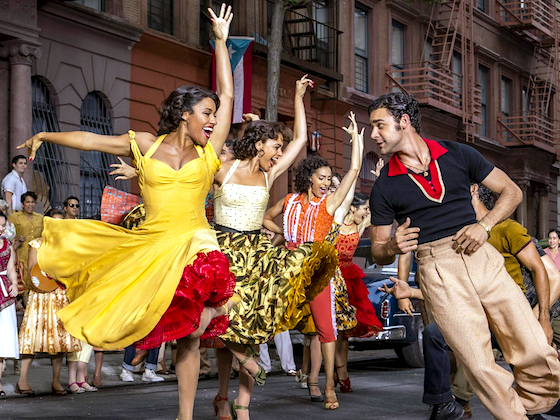
    Dance in the streets in America

    This added depth comes from the screenplay as much as the performances, which were great in the original but are fantastic here too. The Oscar-winning turn by Ariana DeBose as Anita is indeed the standout, but Rachel Zegler is perfectly sweet as Maria, and Rita Moreno thankfully has more to offer than just a tribute cameo in the Doc role. There was a lot of talk that Mike Faist was snubbed by awards for his Riff. He’s good, but doesn’t quite equal Russ Tambyln for me. The weak link is clearly Ansel Elgort as Tony. I had wondered if people were just saying that because of the allegations against him, but he’s not ideal for the role. That said, I do think he’s adequate, and the only reason to find his presence actively distasteful is if you can’t set aside the real-life stories.

    All these comparisons are inevitable, and it’s mostly in the eye of the beholder which individual aspect is better in which version; but I think it’s undeniable that Spielberg’s film looks more cinematic. It’s not just superior to the ’61 film, but a masterclass in itself: the lighting, the shot composition, the camera moves, the blocking; several songs are more excitingly staged than in the original, not least arguably the most famous, America. DoP Janusz Kaminski has been doing sterling work with Spielberg for decades now, so perhaps it’s easy to overlook just how talented they both are. In an era when mega-budgeted films increasingly look like TV shows that lean on green screen to scrape by, this is Cinema at its purest.

    Perhaps that’s why, overall, I prefer this version. Sure, the original is a classic, but Spielberg’s film is ultimately more cinematic (less stage-minded), less campy (though it doesn’t entirely ditch that aspect), and more modern, but appropriately so (with race-appropriate casting instead of awkward brownface). It’s perhaps proof that any remake can be worthwhile if done for the right reasons by the right people.

    5 out of 5

    West Side Story placed 7th on my list of The Best Films I Saw in 2022.

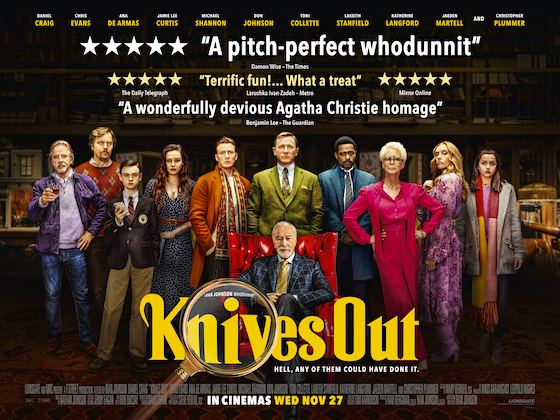
    Knives Out (2019)

    2020 #55
    Rian Johnson | 130 mins | Blu-ray (UHD) | 1.85:1 | USA / English | 12 / PG-13

    Knives Out

    After creating the widely beloved and totally uncontroversial Star Wars instalment The Last Jedi, writer-director used his newfound filmmaking cachet to quickly launch a passion project that he’d been working on since after his debut feature, Brick: a whodunnit murder mystery in the Agatha Christie mould, a genre of which Johnson is a lifelong fan.

    The story revolves around crime novelist Harlan Thrombey (Christopher Plummer) and his family of hangers-on, played by an all-star cast (including the likes of Jamie Lee Curtis, Michael Shannon, Chris Evans, Toni Collette, and Don Johnson). When Harlan dies, seemingly by suicide, freelance detective Benoit Blanc (Daniel Craig) has reason to suspect foul play, and teams up with Harlan’s nurse, Marta (Ana de Armas), to find out which of the family members dunnit.

    Knives Out is clearly built like a Christie story, though perhaps with a touch more satire and humour. That’s not to say it’s an outright comedy (though I’ve tagged it as one, because it’s often amusing), but this is a heightened world we’re in; it’s the real world, but filtered through the lens of a genre. And rather than follow the familiar formula of a Poirot- or Marple-type case, the film is like one of Christie’s other novels; one of the ones where the broad shape is the same, but there’s some twist or variant in how it’s told. Here, it’s that the detective isn’t actually our POV character, and at times we know a lot more than him (or, at least, different stuff to him). That leads to some effective twists that I won’t spoil, but which certainly keep you thinking and on your toes. I made a prediction as to the true solution before the halfway mark, and it turned out to be wrong, so that was fun (I don’t mean to boast, but plenty of murder mysteries are thoroughly guessable).

    The name's Blanc, Benoit Blanc

    That said, I wasn’t a million miles off with my guess, but that also doesn’t matter. As I noted in my summation of the film for my 2020 top ten, it’s not so important who actually dunnit when it’s so much fun spending time with the outrageous suspects and Craig’s implausibly-accented detective. That means it achieves something many mystery-based films miss: it’s highly rewatchable, because knowing the outcome isn’t the be-all and end-all. And yet, to achieve that, it doesn’t sell out the mystery entirely — I say “it barely matters who dunnit”, but it’s still an engaging riddle on first viewing.

    Knives Out was a notable success, eventually leading Netflix to pay a frankly ludicrous sum for two sequels. I’m glad there’ll be followups, because more mysteries in this vein promises more fun, but it’s a shame that what could’ve been a non-superhero non-action-based big-screen franchise has been nipped in the bud by the streamer. I expect that was literally their goal (and why they paid so very, very much money), but that’s a whole other debate.

    5 out of 5

    The UK network TV premiere of Knives Out is on Channel 4 tonight at 9pm. It placed 13th on my list of The Best Films I Saw in 2020.

    Netflix’s currently-untitled sequel is due for release later this year.

    Archive 5, Vol.5

    I have a backlog of 427 unreviewed feature films from my 2018 to 2021 viewing. This is where I give those films their day, five at a time, selected by a random number generator.

    Today, melancholic Frenchmen, screwball Americans, and royal Africans are followed by a superhero team-up and a lesson on the evils of social media.

    This week’s Archive 5 are…

  • La Belle Époque (2019)
  • The Awful Truth (1937)
  • Coming to America (1988)
  • Scooby-Doo! & Batman: The Brave and the Bold (2018)
  • The Social Dilemma (2020)


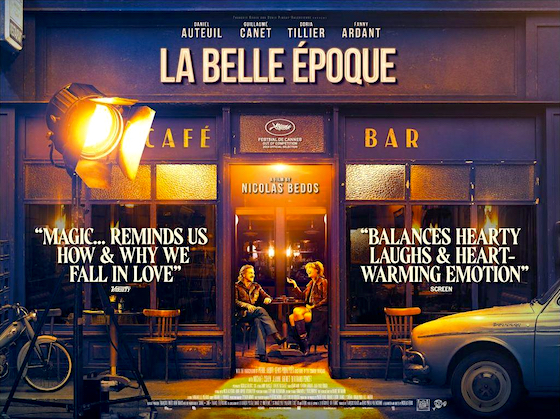
    La Belle Époque

    (2019)

    Nicolas Bedos | 115 mins | cinema | 2.35:1 | France / French | 15 / R

    La Belle Époque

    Sixtysomething Victor (Daniel Auteuil) is officially a grumpy old man, and his marriage is on the rocks because of it. To cheer him up, his son buys him an experience with his friend’s company, who stage bespoke historical reenactments as a form of time travel. When Victor’s wife finally has enough and throws him out, he uses his experience to revisit 1974, when they first met and fell in love.

    To oversimplify things, it’s kind of like Groundhog Day by way of Charlie Kaufman: the immersive theatrical experience recalls Synechdoche, New York (in a superficial way, I guess), and Victor’s desire to live it over and over again is, well, obvious. Except he’s not stuck there, but choosing it. It’s a mix of nostalgia and melancholy, because, of course, he’s not actually reliving that day, however much he comes to believe in it.

    Advance reviews led me to believe La Belle Époque would be little more than a pleasant diversion, but there’s a lot more to it than that. It clearly has something to say as regards the power of nostalgia and the need to live in the present. But, deep thoughts aside, it’s also a charmingly romantic film — sharply witty, unexpectedly beautiful in places, and genuinely emotional by the end. It’s a shame that it seems to have had half-hearted distribution outside of France (perhaps the fault of it being acquired by Disney, I suspect with an English-language remake in mind, rather than a ‘proper’ distributor of foreign fare who would’ve shown it more love) because I think it deserves, and would reward, a wide audience.

    5 out of 5

    La Belle Époque was #140 in my 100 Films in a Year Challenge 2019. It placed 7th on my list of The 15 Best Films of 2019.


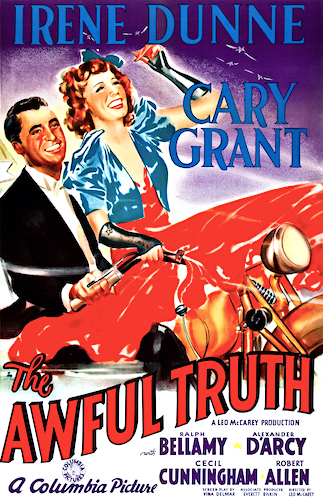
    The Awful Truth

    (1937)

    Leo McCarey | 91 mins | Blu-ray | 1.37:1 | USA / English | U

    The Awful Truth

    When Leo McCarey received his Best Director Oscar for this film, he said that he got it for the wrong film — a clear reference to his fondness for Make Way for Tomorrow, which he made the same year. I’m not wholly sure I agree with him, although Tomorrow’s is clearly the ‘worthier’ picture — but that doesn’t always mean better.

    The Awful Truth was the first of three screen pairings of Irene Dunne and Cary Grant, and the film that refined the latter’s famous screen persona. Here, the duo play a married couple who begin to divorce, only to then interfere with each other’s further romances. When it’s on form, the film is up there with the best of its subgenre: a sparkling screwball comedy with glorious dialogue, a pair of splendid lead performances, and a magnificent dog. Unfortunately, it goes on a mite too long and begins to lose steam in the final act. While that might hold the film back from perfection (and so open the door to the idea that Make Way for Tomorrow is somehow superior), the magnificence of what comes before means it’s still a must-see for fans of this style of comedy.

    4 out of 5

    The Awful Truth was #95 in my 100 Films in a Year Challenge 2021.


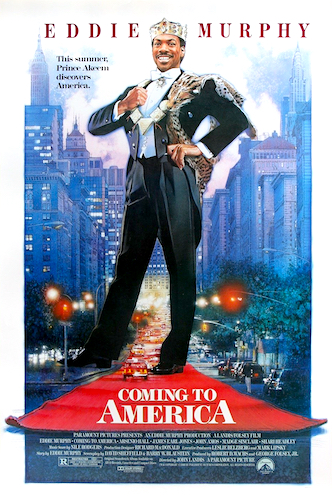
    Coming to America

    (1988)

    John Landis | 117 mins | digital (HD) | 16:9 | USA / English | 15 / R

    Coming to America

    Eddie Murphy plays a pampered but bored African prince, who dodges an arranged marriage to travel to America and find a bride. With that plot and the fact it was made a few decades ago, I was half expecting Coming to America to have aged badly. If nothing else, it seemed primed to base its humour around cringe-inducing culture-clash awkwardness — not necessarily an invalid kind of comedy, but not one I personally enjoy.

    As it turns out, it’s nothing of the sort. In fact, it’s actually rather sweet and kind-hearted, with just enough lewdness to give it a kick rather than make it eye-rollingly vulgar (I’m sure it would only take a couple of minor trims to get that 15/R rating down to a 12/PG-13). Some have criticised it for being too slow — including director John Landis, who asked Paramount if he could re-edit it for the Blu-ray release (they refused) — but I thought it was quite well paced. It doesn’t move at whipcrack speed, but it doesn’t need to. All in all, it holds up well enough that I can see why they decided to produce a belated sequel (which is still on my watchlist).

    4 out of 5

    Coming to America was #28 in my 100 Films in a Year Challenge 2021.


    Scooby-Doo! & Batman:
    The Brave and the Bold

    (2018)

    Jake Castorena | 75 mins | digital (HD) | 1.78:1 | USA / English | PG

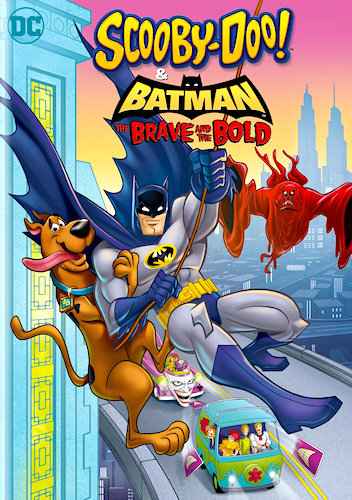
    Scooby-Doo! & Batman: The Brave and the Bold

    There are an awful lot of Batman movies nowadays (58 and counting, according to my Letterboxd list), but I thought I was at least aware of them all. Turns out not, because I hadn’t even heard of this one until I happened to see someone log it on Letterboxd several years after its release. (It’s a direct-to-video production that they didn’t bother to release on Blu-ray, so that’ll be a big part of why it slipped under my radar.)

    A plot description is pretty unnecessary here: the title tells you all you need to know. The reason it’s a particularly unwieldy one is because Scooby-Doo and friends team-up with, specifically, the Batman from animated series Batman: The Brave and the Bold. I watched a selection of episodes from that show a few years ago and, frankly, didn’t enjoy most of them (although a couple are excellent: Mayhem of the Music Meister is so good I watched it twice in as many days, which regular readers will know is very unlike me), so I didn’t have high hopes for this movie either.

    At least it’s an appropriate iteration of Batman to crossover with Scooby-Doo, because (a) the whole point of the show was team-ups, with every episode seeing Batman join forces with a different DC hero (the subtitle is derived from a classic DC team-up comic), and (b) the overall tone of the show was camp and comical, which chimes well with Scooby-Doo. In fact, despite Scooby-Doo getting top billing, the film is really a feature-length episode of Batman: The Brave and the Bold guest starring Mystery Inc, rather than the other way round. I mean, it’s set in Gotham City, stuffed with appearances and cameos by other DC characters, and (most of all) it uses The Brave and the Bold’s animation style, even featuring a version of the series’ title sequence and theme music — with a Scooby makeover, of course. Nonetheless, it also adopts plenty of the tropes of a Scooby-Doo story, like the unmasking at the end.

    Thanks to all that, it’s everything you’d expect from “Scooby-Doo meets Batman” — they leave nothing on the table, right down to having Scooby actually say, “Holy Scooby-Dooby-Doo, Batman!” And would you have it any other way? It’s a daft concept, mashing these two cheesy franchises together — there’s no point trying to be above it. By embracing what it is, it delivers what you’d expect as well as could be imagined. For that, I quite enjoyed it on the whole. And so I would say that, if the basic idea of it doesn’t interest you, give it a miss; but if you think it sounds potentially appealing, you should definitely watch it.

    3 out of 5

    Scooby-Doo! & Batman: The Brave and the Bold was #105 in my 100 Films in a Year Challenge 2020.


    The Social Dilemma

    (2020)

    Jeff Orlowski | 94 mins | digital (UHD) | 16:9 | USA / English | 12 / PG-13

    The Social Dilemma

    One of those Netflix documentaries that everyone seems to be talking about for a while but then forgets just as quickly, The Social Dilemma is essentially about how dangerous social media is, as told to us by the people who created it. Not the Mark Zuckerberg of the world, obviously — they’re still raking in far too much cash to want to dissuade us from using their products — but various other developers and whatnot who’ve been involved over the years.

    Naturally, the main reaction to all this information is: “OMG, I totally need to change all my social media habits!” And do people? Not as far as I’ve seen. As one contributor in the doc comments, “knowing what was going on behind the curtain, I still wasn’t able to control my usage. So that’s a little scary.” Eesh. We’re doomed.

    4 out of 5

    The Social Dilemma was #20 in my 100 Films in a Year Challenge 2021.


  • Mass (2021)

    Fran Kranz | 107 mins | digital (HD) | 2.00:1 + 2.66:1 | USA / English | 12 / PG-13

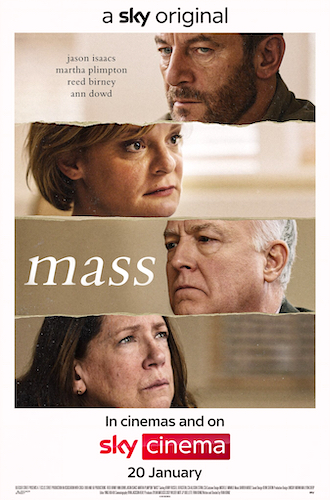
    Mass

    The fact Mass been relegated to the status of a “Sky Original” in the UK might mislead you (not all their “original” acquisitions are bad, but the first few were dregs that distributors clearly didn’t want to send to cinemas and neither Netflix nor Amazon had any interest in, and they’ve not done much to turn that reputation around). This, however, is a blisteringly emotional gut-punch that definitely merits your time.

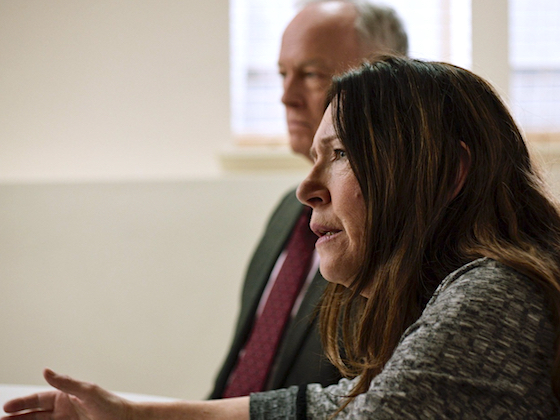
    The more one says of the plot, the more it spoils the film’s revelations — it’s a compelling watch however much you know, but the less the better, to allow some of the shocking moments to land at their most impactful. Suffice to say, it’s about two couples (Jason Isaacs and Martha Plimpton on one side, Ann Dowd and Reed Birney on the other) sitting down to talk. Yes, it’s mostly a four-hander, taking place in one room in real time, in which people talk to one another. That setup has led to accusations of staginess, because some people think that “a few characters sat in one room talking” automatically equals “like a play”. It’s more complicated than that, and Mass is a good example as to why. On screen, we have access to greater intimacy and subtly — the cast don’t need to project so the back row of the gods can hear; there are closeups to really see what the characters are feeling when they’re not speaking; and so on. In a literal sense, you could stage this script, but it wouldn’t have the same effect.

    Powerful performances

    It’s written and directed by actor Fran Kranz in his directorial debut, and it’s a real achievement. For a film that is literally about sitting down and expressing emotions, it’s remarkably subtle, especially coming from a first-timer. He also doesn’t seek to explain every little detail. So much of what has gone on prior to this meeting is only hinted at, which is partly realistic (no character explains things they all know just for our sake), but it also keeps the film focused on the true human emotions. And in that respect, it would’ve been so easy to give in to histrionics, especially when the subject matter is so explosive, but Kranz and his cast keep it reined in. All four of the leads are phenomenal, each in different ways, and it’s a shame that the film didn’t have the support of a bigger, savvier distributor to give it an awards season push — they should all four be in the conversation for every gong going, but there’s not an Oscar nomination between them, and only Dowd was recognised by BAFTA. A pity.

    Kranz’s one real flourish is a pronounced change in aspect ratio about halfway through. It comes at a key moment in the narrative, so clearly it’s meant to be significant, but I can’t quite work out how. Regular readers will know I normally love a film that plays with aspect ratios, but here it just seems like a distraction. It’s a minor misstep in a film full of bold moves that pay off. For example, it’s brave to risk undercutting the drama with the almost-comedic ordinariness of bookend scenes in which, at the start, the meeting room is prepared and, at the end, everyone leaves. It would’ve been easy to fade to black after the last big emotional moment in the room, but the return to everyday mundanity is, I think, part of the point.

    BAFTA nominee Ann Dowd

    Mass has flown under the radar somewhat, especially without the bonus of a clear presence in awards season. That’s a shame, because it’s a fine work that merits exposure. It’s not an easy watch — it’s liable to wring out your emotions — but, with that, it’s ultimately cathartic. A potent experience.

    5 out of 5

    Mass is the 9th film in my 100 Films in a Year Challenge 2022. It placed 5th on my list of The Best Films I Saw in 2022.

    Archive 5, Vol.3

    I have a backlog of 437 unreviewed feature films from my 2018 to 2021 viewing. This is where I give those films their day, five at a time, selected by a random number generator.

    Today, everything from silent comedies to afterlife comedies to toy-licence-based adventure comedies (a burgeoning genre we’re sure to see more of in years to come). Plus a revisionist Arthurian legend for good measure.

    This week’s Archive 5 are…

  • Guinevere (1994)
  • The Kid (1921/1972)
  • Defending Your Life (1991)
  • The LEGO Movie 2: The Second Part (2019)
  • Sherlock Jr. (1924)


    Guinevere

    (1994)

    Jud Taylor | 91 mins | digital (SD) | 4:3 | USA & Lithuania / English

    Guinevere

    This Lifetime TV movie is like an American Renaissance faire cosplay version of Arthurian legend. Its attempt at a feminist take on the famed stories is interesting, but deserves better writing, filmmaking, and accents.

    Most of Guinevere’s flaws come from its low-rent made-for-US-TV-in-the-’90s roots (the mediocre direction; the tacky music score), but that’s also its biggest asset, because when and for whom it was made means it was shot on film, which gives it a certain gloss (even when downgraded to SD) that taped or digital productions simply lack.

    Story-wise, the love triangle stuff from legend is there, but given a YA spin — it’s practically Arthurian Twilight. Are you Team Arthur or Team Jacob? The feminist bent is not subtle either, which, given changes in attitudes over the past few decades, makes you wonder if it’s ripe for a re-adaptation (it’s based on a trilogy of novels with magnificently florid titles like Child of the Northern Spring and Queen of the Summer Stars).

    You see, despite everything, I didn’t hate it. Maybe I should — it’s not good, by any means — but I liked what it was trying to do, even while it didn’t do it well (at all). It’s a concept someone should definitely take another run at.

    2 out of 5

    Guinevere was #209 in my 100 Films in a Year Challenge 2020.


    The Kid

    (1921/1972)

    Charlie Chaplin | 50 mins | DVD | 4:3 | USA / silent | U

    The Kid

    Charlie Chaplin’s first feature-length work as star and director sees his Tramp character caring for an abandoned child (Jackie Coogan). I say “feature length”, but when you combine a re-edit Chaplin performed in 1972 with PAL speedup, it runs just 50 minutes. I’ve gotta say, I appreciated that. I’ve felt some of Chaplin’s other films have gone on a bit, whereas this didn’t outstay its welcome. That said, I did feel the Dreamland sequence near the end was filler. That aside, it’s quite a nice film. Coogan is particularly effective — he has just the right look for the role, and was obviously very good at imitation and/or taking direction.

    Regarding the length, the original 1921 release was 68 minutes, but for a 1972 reissue Chaplin cut some footage, appears to have sped up the frame rate of the rest, and added a score and some sound effects too. It’s only this cut that gets released on disc nowadays (often with the excised footage included as deleted scenes). The original cut clearly still exists, and yet everyone just seems to overlook it — it’s only if you bother to read up on the film that you discover what most people are watching and reviewing as “a 1921 film” is actually a 50-years-later director’s cut. Imagine if we all just ignored, say, Blade Runner’s original version and just treated The Final Cut as— oh, wait. Never mind.

    4 out of 5

    The Kid was #60 in my 100 Films in a Year Challenge 2020.


    Defending Your Life

    (1991)

    Albert Brooks | 111 mins | Blu-ray | 1.85:1 | USA / English | PG / PG

    Defending Your Life

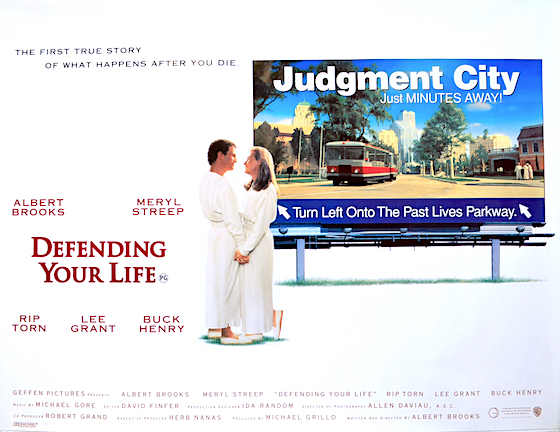
    Writer-director Albert Brooks stars as a loner advertising exec who dies and finds himself in a bureaucratic afterlife where he has to prove that he overcame his fears. While he awaits his trial, he finally meets the love of his (after)life, Julia (Meryl Streep).

    For a film that’s literally about life and death, Defending Your Life is rather gentle. Like, it’s rarely laugh-out-loud funny, but it’s often slightly amusing. And it’s unhurried, too: its 111 minutes aren’t tedious by any means, but it doesn’t rush anywhere. A fun side effect of this is how casual its world-building is. This is a very specific vision of the afterlife, an entire world with its own rules, and while that’s all explained, it’s not laid out in minute detail like a how-to guide. I feel like this is something movies used to happily do but has been eroded by the need for everything to be over-explained and -analysed.

    I liked Defending Your Life a good deal (I’ve picked up a couple more of Brooks’s films on Blu-ray off the back of it), and part of that is certainly its laidback style. Nonetheless, perhaps if it were snappier — quicker witted and paced — it might be a better-remembered film, comparable to something roughly contemporaneous like Groundhog Day.

    4 out of 5

    Defending Your Life was #113 in my 100 Films in a Year Challenge 2021.


    The LEGO Movie 2:
    The Second Part

    (2019)

    Mike Mitchell | 107 mins | Blu-ray (3D) | 2.40:1 | USA, Denmark, Norway & Australia / English | U / PG

    The LEGO Movie 2

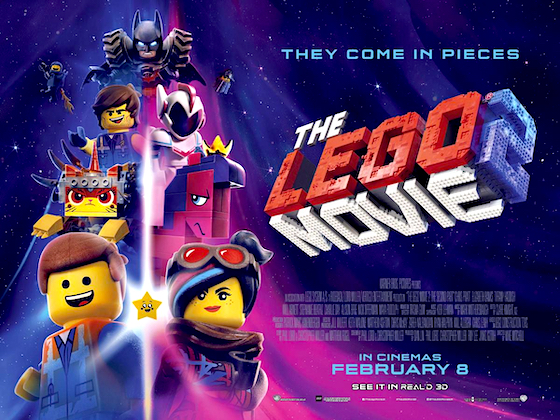
    After the surprise success of The LEGO Movie, naturally a sequel had to follow. Unfortunately, it’s altogether less surprising, because it’s that old fashioned sequel thing: a less-good do-over of the first movie.

    The Second Part feels less focused than its predecessor. It still has a positive message (about not needing to grow up, and about playing together, or something), but it takes a while to get to it, rather than baking it into the entire experience. Maybe that’s intellectualising things a bit — this is a family-friendly adventure-comedy starring toys, after all. But still, the overall journey doesn’t feel as exciting or fun. There are fun little bits on the way, but, moment to moment, it lacks the spark of the first one.

    For a specific example, take the breakout hit of the first film, the irritating song Everything Is Awesome. That angle has been doubled down on, with multiple attempts at emulating the “irritating but kinda loveable” song formula; but while these numbers are annoying while they last, they don’t have the irrepressible catchiness of the first film’s signature achievement — a mixed blessing, to be sure (at least they won’t be stuck in your head afterwards). The end credits are accompanied by a song that jokes about the credits being the best part… but, in this case, the credits kinda are the best part.

    3 out of 5

    The LEGO Movie 2: The Second Part was #33 in my 100 Films in a Year Challenge 2020.


    Sherlock Jr.

    (1924)

    Buster Keaton | 45 mins | Blu-ray | 1.33:1 | USA / silent | U

    Sherlock Jr

    Apparently there are ever-raging arguments within the silent film fan community about who was the best comedian of the era. Charlie Chaplin’s got the most widespread recognition, but Buster Keaton and Harold Lloyd have their advocates, of course, and I guess there are probably people shouting in favour of smaller names too. I didn’t think I’d ever pick a ‘side’ in these debates — I’m certainly not about to go seeking them out and wading in — and, fundamentally, I do hold with the notion that the greats are all great and so why not appreciate them all? — but, from what I’ve seen thus far, I’m finding Keaton’s work more consistently enjoyable than Chaplin’s. Sherlock Jr. is my favourite of his that I’ve seen so far.

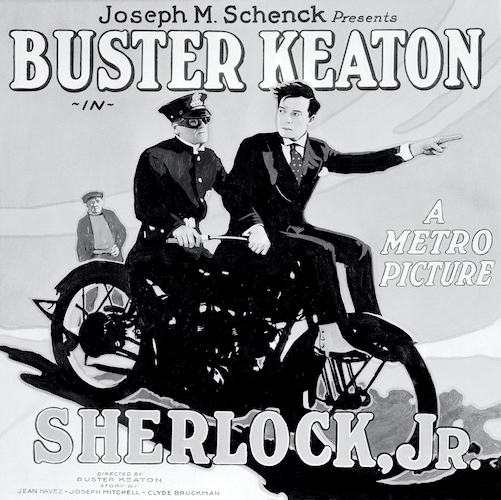
    Keaton plays a film projectionist who’s studying to be a detective on the side. When he’s framed for the theft of a watch, his apparent guilt doesn’t give him much chance to put his skills to the test. But when he falls asleep during a movie, he steps inside it and becomes the world’s greatest detective. And when I say “steps inside”, I mean it in the most literal sense possible: the projectionist walks through the screen and into the movie, and is suddenly subject to its whims — for example, he’s confounded whenever it cuts to a new location. The sequence is both thoroughly entertaining and technically faultless — and I say that viewing it nearly 100 years after it was made, after all the advances in technique and effects we’ve had in that time. Reportedly, the film’s cameraman, Byron Houck, went as far as using surveying equipment to ensure the camera was positioned correctly so the transitions were seamless. The effort paid off.

    The same is true in several other incredible sequences, like a billiards game filled with trick shots, which Keaton rehearsed for four months with a pool expert and then took five days to film. Or a motorbike chase with more I-can’t-believe-he-just-did-that death-defying stunts than one of Tom Cruise’s impossible missions. The technical skill is faultless and, even if you’re not wowed by how they pulled it off, the sequences are immensely entertaining in their own right. Maybe it’s just personal taste, but this is why I have a preference for Keaton: his skits are more ingenious, better paced, and backed up with impressive stunt work. When you mix those daredevil antics with genuine movie magic, as he does here, you get a majestic, unforgettable farce.

    5 out of 5

    Sherlock Jr. was #102 in my 100 Films in a Year Challenge 2019. It was viewed as part of What Do You Mean You Haven’t Seen…? 2019. It placed 3rd on my list of The Best Films I Saw in 2019.