Blindspot Review Roundup

Spoilers for my next monthly update: I’ve completed watching all 22 films on my 2017 Blindspot and “What Do You Mean You Haven’t Seen…?” lists. Hurrah!

What I haven’t done is reviewed them all. Indeed, 17 still languish in my review backlog — that’s 77%. (In fact, I’ve only actually reviewed one Blindspot film — The Exorcist — with the other four being from WDYMYHS.)

So, with the end of the year fast approaching — and, with the new year, a new batch of films to watch — I thought it high time I cracked on with those reviews. Here’s a quick roundup of a few, linked by all being adapted from novels, which may be the first of several such omnibus editions.

In today’s roundup:

  • Dances with Wolves: Special Edition (1990/1991)
  • Jackie Brown (1997)
  • Silver Linings Playbook (2012)
  • The 39 Steps (1935)


    Dances with Wolves
    Special Edition

    (1990/1991)

    2017 #26
    Kevin Costner | 227 mins | DVD | 2.35:1 | USA & UK / English, Lakota & Pawnee | 15 / PG-13
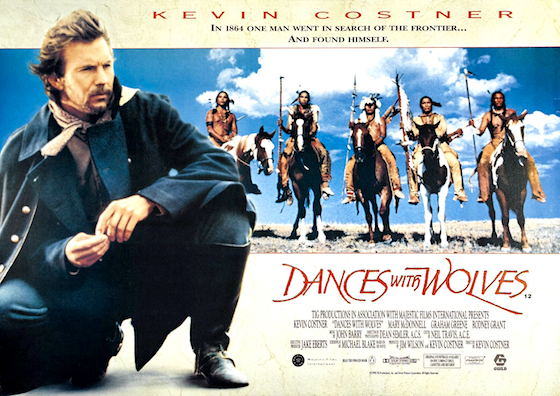
    Dances with Wolves

    Oscar statue1991 Academy Awards
    12 nominations — 7 wins

    Winner: Best Picture, Best Director, Best Adapted Screenplay, Best Cinematography, Best Sound, Best Film Editing, Best Original Score.
    Nominated: Best Actor (Kevin Costner), Best Supporting Actor (Graham Greene), Best Supporting Actress (Mary McDonnell), Best Art Direction-Set Decoration, Best Costume Design.


    The behind-the-scenes story of Dances with Wolves is almost as grand as the movie itself. An actor turned director whose inexperience led to production delays and budget overruns, leading to rumours the film was a pending disaster like Heaven’s Gate a decade before it (some nicknamed it “Kevin’s Gate”), and the studio who wanted a 140-minute cut having to settle for the 180-minute one that director delivered. The resulting film never even reached #1 at the box office… but still went on to be the highest grossing Western of all time, and became the first Western to win the Best Picture Oscar in almost 60 years. It was so popular that a 53-minute-longer extended cut was released a year later, which Costner later denied being involved with.

    Having not seen the theatrical cut I can’t offer an opinion on which is better, but the near-four-hour extended one certainly feels its length. That’s not necessarily a bad thing — this is an epic in the truest sense of the word, with a large story to tell on a grand canvass; although it’s concurrently a drama about just a couple of people from different cultures coming to interact. It’s almost too big to digest in a single go — I’m even not quite sure what I made of it. You can see why I’ve spent 10 months not writing about it.

    Anyway, I admired its scope and ambition. I wouldn’t say I loved it, but it merits revisiting someday.

    4 out of 5

    Jackie Brown
    (1997)

    2017 #49
    Quentin Tarantino | 154 mins | Blu-ray | 1.85:1 | USA / English | 15 / R
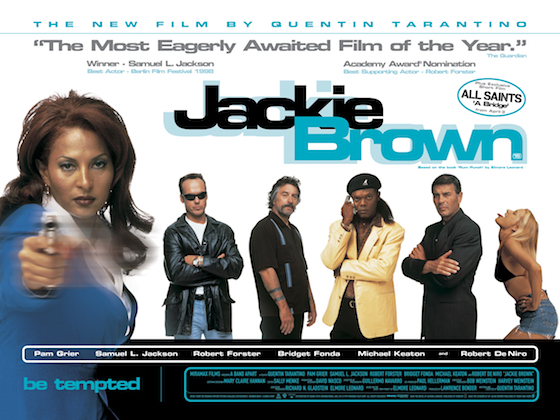
    Jackie Brown

    Oscar statue1998 Academy Awards
    1 nomination

    Nominated: Best Supporting Actor (Robert Forster).


    Jackie Brown has long been my Tarantino blindspot. I caught up with Reservoir Dogs and Pulp Fiction after he was already established and they were regarded as modern classics, then was old enough to see the Kill Bills at the cinema and have followed his career from there. But, for some reason, his third feature has always eluded my attention. My tenth anniversary “heinous oversights” list seemed a good time to rectify that.

    Some people argue that Jackie Brown is secretly Tarantino’s best movie. I add “secretly” there because it gets a lot less attention than the aforementioned movies that came either side of it. That’s not a bandwagon I’m prepared to jump on. To me, it feels a little like QT was trying to emulate what worked about Pulp Fiction without just making a rip-off of his own movie, and therefore it’s a bit of an inferior copy. That’s not to say it’s a bad movie by any means. The eponymous character is particularly interesting, as you’re never quite sure what Jackie’s up to; what her plan is. She seems to be telling everybody everything, but she has to be screwing some — or all — of them, right?

    Possibly I was just approaching the film in the wrong way. Tarantino has called it “a hangout movie”, which he explained thus: “Jackie Brown is better the second time. And I think it’s even better the third. And the fourth time… Maybe even the first time we see it we go, ‘Why are we doing all this hanging out? Why can’t we get to more of the plot?’ But, now the second time you see it, and the third time you see it, you’re not thinking about the plot anymore. You’re waiting for the hangout scenes… It’s about hanging out with the characters.” Personally, I’m not in any desperate rush to hang out with these characters again. But who knows, maybe I’ll get it the second time. Or the third. Or the fourth…

    4 out of 5

    Silver Linings Playbook
    (2012)

    2017 #61
    David O. Russell | 115 mins | TV | 2.35:1 | USA / English | 15 / R

    Silver Linings Playbook

    Oscar statue2013 Academy Awards
    8 nominations — 1 win

    Winner: Best Actress (Jennifer Lawrence).
    Nominated: Best Picture, Best Director, Best Actor (Bradley Cooper), Best Supporting Actor (Robert De Niro), Best Supporting Actress (Jacki Weaver), Best Adapted Screenplay, Best Film Editing.


    Bradley Cooper’s performance — 3.5/5
    JLaw’s performance — 4/5
    JLaw’s dancing — 6/5
    Direction — 2/5
    Screenplay (first two acts) — 3/5
    Screenplay (bit where it suddenly gets plot-heavy and all exposition-y to set up the third act) — 1/5
    Screenplay (third act that seems to be from a completely different, much more conventional movie) — 2/5

    Average =

    3 out of 5

    The 39 Steps
    (1935)

    2017 #60
    Alfred Hitchcock | 83 mins | download (HD) | 4:3 | UK / English | U

    The 39 Steps

    This adaptation of John Buchan’s adventure novel is one of the best-known among director Alfred Hitchcock’s early works, and for good reason.

    Galloping briskly along with a running time under 90 minutes, it’s a film where mood, tone, and the wonderful execution of individual sequences are all allowed to trump plot, which is somewhere on the spectrum from unexplained to nonsensical. We follow the likeable wrong-man hero Richard Hannay (Robert Donat) as he runs away from a gang of villains who barely feature. That they have a nefarious plan is outlined early on to kickstart the action; what they were up to is explained in the final scene to give the story some resolution; and in between they’re pretty much just a force chasing our hero. It’s almost like the villains are the film’s MacGuffin: it doesn’t matter what or who they are, just that they want to catch Hannay and so he must escape them. It’s how he escapes and what happens during his escapades that matters to us; that provides our entertainment.

    It almost plays like a spoof in that regard — the plot is such stock spy-thriller fare that it doesn’t need to make sense in and of itself, we just get what it’s driving at. Of course, considering the age of the film, it’s more proto-spy-thriller than neo-spy-thriller. Whatever you class it as, over 80 years since its release it remains rollicking entertainment.

    5 out of 5

    Dances with Wolves, Jackie Brown, and The 39 Steps were viewed as part of my Blindspot 2017 project, which you can read more about here.

    Silver Linings Playbook was viewed as part of my What Do You Mean You Haven’t Seen…? 2017 project, which you can read more about here. Other WDYMYHS reviews already published include Hail, Caesar!, Into the Wild, Nightcrawler, and Room.


  • The Terminator (1984)

    The 100 Films Guide to…

    The Terminator

    Your future is in its hands.

    Country: USA & UK
    Language: English
    Runtime: 107 minutes
    BBFC: 18 (1984) | 15 (2000)
    MPAA: R

    Original Release: 26th October 1984 (USA)
    UK Release: 11th January 1985
    Budget: $6.4 million
    Worldwide Gross: $78.4 million

    Stars
    Arnold Schwarzenegger (Conan the Barbarian, Predator)
    Michael Biehn (Aliens, Tombstone)
    Linda Hamilton (Children of the Corn, Dante’s Peak)

    Director
    James Cameron (Piranha Part Two: The Spawning , Avatar)

    Screenwriters
    James Cameron (Rambo: First Blood Part II, Strange Days)
    Gale Anne Hurd

    Based on
    not Harlan Ellison’s The Outer Limits episode Soldier. (Ellison sued production company Orion, who settled out of court for an undisclosed sum and an acknowledgement in the film’s credits. James Cameron disagreed with this decision, and still does.)


    The Story
    Two time travellers from a future world beset by a war between ruling robots and a human resistance arrive in Los Angeles 1984 to find the mother of the future human leader, Sarah Connor — one to kill her, one to protect her.

    Our Heroes
    Sarah Connor is just an ordinary young waitress in ’80s L.A. who suddenly finds herself marked for death by an unstoppable robot from the future. Her only hope is Kyle Reese, a soldier also from the future, sent back in time by Sarah’s unborn son to protect her.

    Our Villain
    In the Year of Darkness, 2029, the rulers of this planet devised the ultimate plan. They would reshape the Future by changing the Past. The plan required something that felt no pity. No pain. No fear. Something unstoppable. They created… the Terminator.

    Best Supporting Character
    Paul Winfield is the kind, dryly humorous police lieutenant who lands the tough job of protecting Sarah Connor. He thinks Reese’s story makes him mad (who wouldn’t?), but then he comes face-to-face with the Terminator itself…

    Memorable Quote
    “Come with me if you want to live.” — Kyle Reese

    Memorable Scene
    Having learnt Sarah Connor is being held at a police station, the Terminator walks in and asks the desk sergeant if he can see her. He’s refused, but told he can wait. Sizing up the room, the Terminator informs the sergeant: “I’ll be back.” And he is — in a car.

    Memorable Music
    Composer Brad Fiedel’s main theme is surprisingly catchy, I find, as well as now being rather iconic. Some of the rest of his score has dated terribly, though.

    Truly Special Effect
    Despite being a relatively low budget production, The Terminator is stuffed with memorable effects work. The stop motion and models used to depict the future war look fantastic even when placed alongside live-action elements, but best of all must be the full-size Terminator endoskeleton from the climax. The prop weighed a ton and was hard to manoeuvre on set, but it looks fantastic.

    Letting the Side Down
    For all the brilliant effects, the model of Arnie’s head used for when his robot eye is exposed is… less than convincing. Apparently it took six months to create. Maybe during all that time they forgot what Arnie looked like…

    Next time…
    Seven years later, Cameron revisited the Terminator universe for one of the most acclaimed action movies and sequels of all time, Terminator 2: Judgment Day. Then Cameron was done, but where there’s a popular film there’s money to be made, and so twelve years later Terminator 3: Rise of the Machines turned up. It was less remarkable. Since then, there have been multiple attempts to exploit the IP: TV series Terminator: The Sarah Connor Chronicles rewrote continuity and was well regarded, but was nonetheless cancelled after two seasons; Terminator Salvation attempted to kickstart a new trilogy but didn’t go down that well (and is probably best remembered for star Christian Bale’s on-set rant); and Terminator Genisys attempted to start another trilogy by bringing back Arnie and revisiting events from the first film. It didn’t do well either. Now, Cameron is about to get the rights back… and intends to start another new trilogy. We’ll see.

    Awards
    3 Saturn Awards (Science Fiction Film, Writing, Make-Up)
    4 Saturn Award nominations (Actor (Arnold Schwarzenegger), Actress (Linda Hamilton), Director, Music)

    Verdict

    When I published the list for my 100 Favourites back in 2016, I tried to remove anything I felt was being included on autopilot — films that are such accepted greats that I wasn’t considering how much I actually liked them. Eliminated as part of that were the first two Terminator movies. I liked them a lot, but I hadn’t bothered to watch them for years — they seemed a definite case of films I thought should be there rather than ones I was really passionate about. Rewatching the original for the first time in well over a decade, I realised pretty quickly that I’d made a mistake. The more mediocre movies you see, or even just “quite good” ones, the more you realise how perfect the great ones are — and The Terminator is a great movie. It’s full of superb sci-fi ideas, well-directed action sequences, quotable dialogue, and memorable characters — not least the instantly iconic title role.

    Comedy Review Roundup

    Let’s have a laugh (or, perhaps, not) with…

  • Police Academy (1984)
  • Black Dynamite (2009)
  • Four Lions (2010)
  • Ferris Bueller’s Day Off (1986)


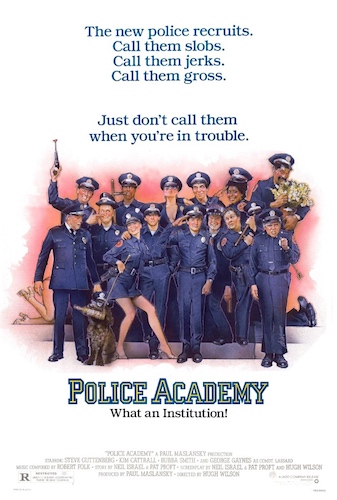
    Police Academy
    (1984)

    2017 #27
    Hugh Wilson | 92 mins | streaming (HD) | 16:9 | USA / English | 15 / R

    Police Academy

    I watched some of the Police Academy movies when I was younger — yes, plural — but I never saw the first one. It never seemed to be on TV (though the second always was), and the fact it’s rated 15 (weren’t all the later ones, like, PG?) would surely mean my parents would never have let me rent it (I’m pretty sure I never saw any of the series after I hit double-digits age-wise). So there was an element of box ticking in finally seeing the original — a film that Roger Ebert gave zero stars.

    It doesn’t start well: the opening credits incompetently cover up the onscreen action. That’s not for the sake of a joke, like in, say, Austin Powers 2 — it’s not overt or thorough like a joke — it’s just poorly done. From there… it might be generous to say that things pick up, but they’re not so bad. In fact, I passingly enjoyed it. It’s not aged particularly well, but there are some funny bits. Remember the sound effects guy? I used to love him when I was a kid. There’s surprisingly little of him here, though. I guess he got amped up for the sequels.

    Police Academy isn’t some masterpiece that’s been buried under the weight of its increasingly shite sequels, but it isn’t that bad as an hour-and-a-half of mindless comedy.

    3 out of 5

    Black Dynamite
    (2009)

    2017 #47
    Scott Sanders | 81 mins | streaming (HD) | 16:9 | USA / English | 15 / R

    Black Dynamite

    A spoof of cheap blaxploitation movies, Black Dynamite hits every nail on the head. I’ve not actually seen many films from the genre (the original Shaft may be the extent of it, unless Live and Let Die counts), but you only need a passing awareness of the ludicrousies of low-budget ’70s genre cinema (the third act sidesteps into a spoof of kung fu movies) to get the overall joke. Plus there are plenty of generally funny riffs and sequences for the layperson to laugh at, the highlight being a deduction scene that makes no sense whatsoever. At a brisk 80 minutes, it’s hard to go wrong.

    4 out of 5

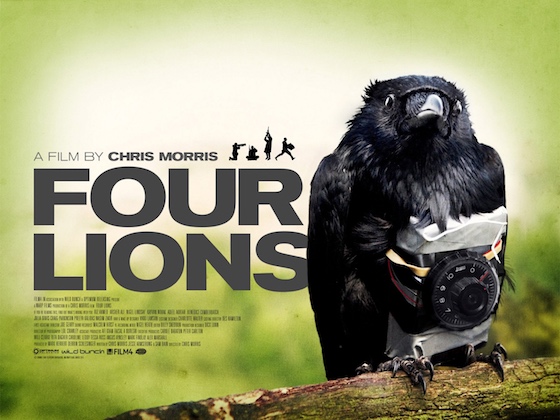
    Four Lions
    (2010)

    2017 #65
    Chris Morris | 97 mins | streaming (HD) | 1.85:1 | UK & France / English, Urdu & Arabic | 15 / R

    Four Lions

    A comedy about Muslim suicide bombers? You don’t need me to tell you all the different minefields that idea is tiptoeing into. But it’s by the guy behind Brass Eye, so it less tiptoes more bounds, and barely puts a foot wrong either.

    The most important point, of course, is that it is very, very funny. There’s a stream of good one-liners and exchanges. But it also winds up making you feel for some of these guys, which, considering their goal, is a feat unto itself. At the same time, the attempted emotional pull in the third act doesn’t quite come off — asking us to care for “the stupid one”, who’s merely been the butt of jokes until that point, comes a little out of left-field. I mean, if we’re suddenly meant to be concerned about his (mis)treatment, why have you been making us laugh at him all along?

    Anyway, if you just ignore that unwarranted about-turn, Four Lions is absolutely hilarious.

    4 out of 5

    Ferris Bueller’s Day Off
    (1986)

    2017 #50
    John Hughes | 103 mins | streaming (HD) | 2.35:1 | USA / English | 15* / PG-13

    Ferris Bueller's Day Off

    Is this or The Breakfast Club the archetypal John Hughes movie? Argue amongst yourselves — I’ve never seen The Breakfast Club. I hadn’t seen Ferris Bueller until this year either (I mean, obviously — it wouldn’t be here otherwise), though I’m not sure why. Despite it being quite well-known and referenced, it just didn’t seem to come up that often. (Incidentally, are references to it on the increase? Both Deadpool and Spider-Man: Homecoming had significant riffs on it within the past couple of years.)

    Anyway, for those as in the dark as I was, it’s the story of cool kid Ferris Bueller (Matthew Broderick) who has an elaborate plan to bunk off school for the day, which involves persuading his best mate Cameron (Alan Ruck) to ‘borrow’ his dad’s Ferrari and head off into Chicago with Ferris’ girlfriend (Mia Sara). Meanwhile, the school’s suspicious principal (Jeffrey Jones) tries to catch Ferris out.

    Going back to what I was saying a moment ago, part of why I didn’t watch it before was that I felt like I’d find it annoying. Turns out, not so much. Ferris is indeed a bit of a dick, but I’m not sure the film doesn’t know he is. Because he talks to camera and makes the viewer his confidante, the assumption might be we’re meant to admire him, but there’s an almost “unreliable narrator” aspect to him. Or maybe I’m projecting that because I didn’t like him but did enjoy his antics, who knows.

    5 out of 5

    * The film was reclassified as 12A for a 2013 theatrical re-release, but I watched it at home, where it’s still technically a 15. Ah, the oddities of the BBFC. ^

  • Rurouni Kenshin: Kyoto Inferno (2014)

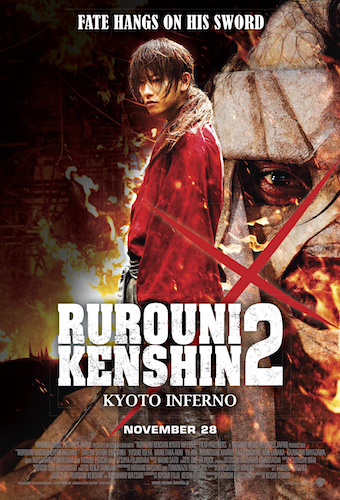
    aka Rurōni Kenshin: Kyôto taika-hen / Rurouni Kenshin Part II: Kyoto Inferno

    2017 #149
    Keishi Ōtomo | 139 mins | streaming (HD) | 2.35:1 | Japan / Japanese | 15

    Rurouni Kenshin: Kyoto Inferno

    The first live-action Rurouni Kenshin film was such a success that they followed it with a two-part sequel, filmed back-to-back and originally released six weeks apart over the same summer. This is the first half.

    After the events of the first film, former assassin Kenshin (Takeru Satoh) is living a peaceful life with his newfound friends, until he’s summoned by the government to take on a mission. Turns out one of Kenshin’s former assassin colleagues, the vicious Shishio (Battle Royale and Death Note’s Tatsuya Fujiwara), is amassing an army to take down the government that left him for dead. Well, less left him for dead, more killed him after they won the war because he was too nasty to let stick around. Previous efforts to stop Shishio have failed, so now they want Kenshin to sort him out. Our peace-loving hero initially turns the job down, but events conspire to convince him he must act, and so he sets off alone to once again face the demons of his past.

    Kyoto Inferno is one of those sequels that benefits from the its predecessor establishing the world of the story and the characters that inhabit it, meaning it can launch off on its own grander scale. Partly we see this in a material sense: it looks even more expensive than the first one, right from a fabulous fire-strewn opening location, and keeps up the visual impressiveness throughout. But it’s also in the scope of the story and the way it stretches the characters, both old and new. It really puts Kenshin through the ringer, testing and questioning his beliefs and principles, and his fighting skills too. As a film it finds power in that — whereas the first movie established his persona and gave it a bit of a work out, here he’s stretched to breaking point.

    Sword fights a-go-go

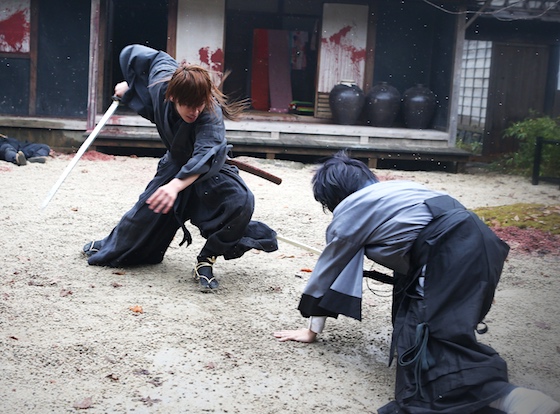
    Despite being only the first half of a four-and-a-half-hour epic, when compared to the original film the story here feels more streamlined, focussed, and pointed. It’s not perfect in this respect — at one point Kenshin’s mate Sanosuke sets off to help him, only to disappear from the movie until he suddenly appears during the final battle — but such lapses are few and do little to impact the overall flow. As a villain, Shishio is more of a force and a challenge for our hero, not least because he has an army of henchmen, as well as a literal army, on his side. The fights are even more accomplished, spectacular, and epically staged than in the first movie, not least the huge climax that sees a pair of armies duke it out in the streets of the titular city.

    Kyoto Inferno is unquestionably a first half — it ends on a handful of cliffhangers. That kind of thing sometimes irritates me, but it can work when done well, and I think this will turn out to be one of those good two-parters. It feels like a well-shaped movie in its own right, starting and paying off some of its own subplots rather than just leaving everything hanging. Some of these conclude in a way that is both an ending and indicates where the story will go next, which is a most deft bit of structure. The whole affair builds to a significant climax (the aforementioned battle) and a major turning point in the narrative, rather than just pausing events at the halfway point as lesser two-part movies do.

    Shishio and his hench-friends

    I enjoyed the first Rurouni Kenshin a lot, but this follow-up is even better. It expands the world of the story and deepens the characters, making for a more rounded and exciting movie. As mid-parts of trilogies (and/or first halves of two-parters) go, it’s more of a Dark Knight than a Matrix Reloaded; more of an Empire Strikes Back than a Dead Man’s Chest; more of a Two Towers than a Desolation of Smaug. Hopefully the next film can stick the landing…

    5 out of 5

    Tomorrow: the legend ends in The Legend Ends.

    Napoleon (1927)

    aka Napoléon vu par Abel Gance

    2016 #184
    Abel Gance | 333 mins | Blu-ray | 1.33:1 + 4:1 | France / silent (English) | PG / G

    Napoleon

    At one point in time, arguments over rights made it seem unlikely you’d ever be able to see Abel Gance’s epic biopic of French leader Napoléon Bonaparte if you were a regular person not prone to attending all-day cinema screenings with a live orchestra and multiple intermissions. But a year ago this week things panned out so that the BFI were finally able to release it on Blu-ray. While a theatrical marathon is probably still the best way to see the film (if only for the full effect of the famed triptych finale), this release is certainly more convenient and accessible. Apparently it sold better than expected, too — I guess that’s what happens when you combine years of anticipation with being a worldwide-exclusive release of a film of this stature. It’s also a daunting film to review — for the aforementioned reasons, plus its length and its artistic importance. Nonetheless, here are what thoughts I had.

    At 5½ hours, Napoleon is rather like a miniseries from the silent era — a comparison that feels more apt than ever in this age of binge-watching. It’s divided into four acts, each running anywhere from 49 to 114 minutes, but it could even be subdivided into further episodes: Napoleon’s schooldays; his observation of the French Revolution; his opposition to Corsica being sold to England; the siege of Toulon (which takes up all of Act 2 and is the best bit, in my opinion); the reign of terror (a half-hour section that barely features Napoleon); a chunk where he falls for and woos Josephine that plays like a rom-com; the invasion of Italy… Yet despite that length, the film doesn’t even reach the Napoleonic Wars. No wonder Gance wanted to do six movies — or six seasons, as we might interpret it today. (In the end, he went over-schedule and over-budget on this first film, covering just two-thirds of the story he’d intended and spending the budget for the entire series. I imagine I’d outrage some silent film fans/scholars if I called him the Peter Jackson of his day…)

    Albert Dieudonne as Napoleon

    Part of the fourth act is that triptych climax, a 21-minute sequence shot with three cameras side-by-side, and therefore designed to projected on three 1.33:1 screens side-by-side, to create a 4:1 widescreen image. It’s undeniably less powerful when rendered as a thin strip across a 16:9 television, suddenly shrinking the height of the image rather than suddenly tripling its width, but what other choice is there? (Well, if you’ve got three sets of equipment, the three-disc Blu-ray contains each screen full size, one per disc, so you could set it up yourself.) Even shrunk like that, the imagery in the sequence remains stunning. I bet the effect is marvellous when seen as intended. (There’s an alternate single-screen ending, which is quite different. It contains fundamentally the same ‘plot’, but there’s one whole new sequence, and the others are truncated or slightly rearranged. Worst of all, it loses the tricolour-inspired finale.)

    Widescreen properly arrived when CinemaScope was invented in 1953, so Gance was about 25 years ahead of his time with that technique. It’s Napoleon’s most striking innovation, but the whole film shows off a surfeit of cinematic techniques: a wide variety of shot lengths (close-ups, medium, long, wide, etc, etc); tracks and pans, many of them fast; handheld photography, including what we’d now call ShakyCam; swaying back and forth, in and out of focus, or swinging over a large crowd; mounted on fast-moving vehicles, including dipping under the waves on a boat; in the thick of the action rather than observing it from a distance; multiple exposures and superimposition; animated maps to indicate Napoleon’s strategising; split screen; split-second impressionistically-fast cutting… and most of that’s found in just the first hour! Some of this is stuff that would still feel revolutionary when filmmakers were doing it 20, 30, even 40 years later. The fast-cut pulse-racing action scenes, like a horseback chase on Corsica, are not what you commonly expect from a silent movie, especially an ‘artistic’ one rather than a swashbuckler, say.

    Epic

    Lest you think a film of this vintage must be in black and white, Napoleon features a lot of tinting and toning, which works very well at times to create striking and meaningful imagery: golden sunlight illuminating the debut of La Marseillaise; the burning red of revolution forged in a furnace; a tumultuous purple ocean… Similarly, Carl Davis’ original score is great, helping to emphasise the emotion and lend the images a storytelling shape. Again, the sequence with La Marseillaise is a good example; a particularly effective tour de force. Davis makes good use of other familiar tunes for shorthand — there are variations on Rule, Britannia whenever the British are involved, for instance.

    Making Abel Gance’s Napoleon was an epic undertaking, as was its decades-long reconstruction, as is the viewing experience (it is 5½ hours, after all). It may not be perfect for all of that immense running time (which does not merit adjectives like “indulgent” or “excessive” but is, nonetheless, long), but it is a monumental achievement in cinema that undoubtedly deserves full marks.

    5 out of 5

    That completes my reviews from 2016, finally.

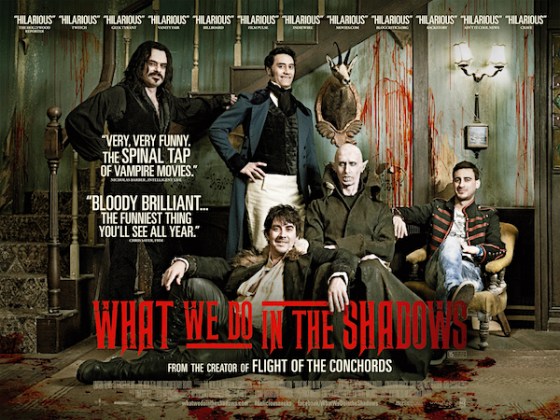
    What We Do in the Shadows (2014)

    2017 #138
    Jemaine Clement & Taika Waititi | 86 mins | Blu-ray | 1.78:1 | New Zealand & USA / English & German | 15 / R

    What We Do in the Shadows

    There’s no two ways about it: I’m late to the party with What We Do in the Shadows. After rave reviews at film festivals and when it was released in some countries (including the UK) in 2014, its acclaim as a cult comedy seemed to reach a focal point in early 2015 when a Kickstarter campaign to give it a wider US release attracted over 7,000 backers and the best part of half-a-million dollars. I recall preordering the Blu-ray in the wake of the slow-burning fuss I kept hearing about it. That came out in April 2015, and swiftly ended up on one of my many unwatched piles… until now!

    For the sake of those who are even later to it than me, it’s a mockumentary about a group of housemates in Wellington, New Zealand, who are vampires. With each of them being hundreds of years old, they’re thoroughly out of touch with the modern world — until they make some new, younger friends…

    This juxtaposition allows the film two rich strands of humour. Firstly, it riffs off vampire movie clichés and references — there are bits about sleeping in coffins, turning into a bat, and so on. In a similar vein, each of the housemates is a version of a classic movie vampire: there’s a silent Nosferatu-ish one; a violent womanising Dracula-ish one; an effeminate dandyish one; and so on. There are also various scenes that play on vampires’ familiar abilities by featuring a neat and often surprising use of special effects — the film’s so low-budget and so naturalistically staged, you’re not expecting any outright fantastical stuff. That element of unexpectedness makes such moments all the more effective.

    Night life

    In the second strand, it embraces mundanity — putting these supernatural creatures in the same dull suburban lifestyles that we all know, like struggling to get into the good nightclubs, or a supposedly grand ball taking place in a rundown community centre. Perhaps best of all are bits which straddle the two stools — the practicalities of being a vampire; like how do you get dressed up to go out if you can’t see your reflection, or having to clean up the mess after drinking someone’s blood. The film plays these various comic facets with a great deal of wit and cleverness, but it’s also suitably silly, which allows the humour to function at various levels. What’s even more surprising is that, as it goes on and we build up a connection to these characters, it becomes actually quite touching at times.

    Apparently writer-directors Jemaine Clement and Taika Waititi wrote more than 150 pages of screenplay for the film, then didn’t actually show it to any of the cast so they would improvise scenes and be surprised by plot developments. That resulted in over 125 hours of footage, which took almost a year to edit down to just an hour and a half. (No wonder the Blu-ray includes piles of deleted, extended, and additional footage.) On the one hand, perhaps that helps explain why the film is so funny — they were able to really cherrypick the best bits. On the other other, it makes the final result all the more impressive — that they were able to hone storylines and character arcs from that immense supply of material. And it still clocks in at just 86 minutes! Hollywood moviemakers who let their part-improvised comedies sprawl to baggy two-hours-plus running times might learn a thing or two here.

    Drinking blood

    Perhaps the more familiar you are with vampire fiction the more you’ll get out of What We Do in the Shadows’ humour, but I don’t think that’s a prerequisite to enjoying it — I should think knowing the basics of vampire mythology is enough to get laughs from the majority of the movie without feeling like you’re missing anything. And in the end, the most important thing is that it’s incredibly funny. Or, as the poster accurately puts it, “hilarious, hilarious, hilarious, hilarious, hilarious, hilarious, hilarious, hilarious, hilarious, hilarious, hilarious, hilarious.”

    5 out of 5

    What We Do in the Shadows is available on iPlayer until 28th November.

    It placed 12th on my list of The 17 Best Films I Saw For the First Time in 2017, which can be read in full here.

    The UK TV premiere of Taika Waititi’s previous film, Boy, is on Film4 tonight at 10:50pm.
    His new film,
    Thor: Ragnarok, is out everywhere now and is reviewed here.

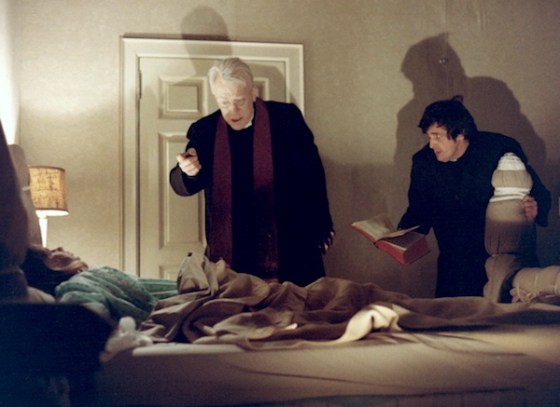
    The Exorcist (1973)

    2017 #150
    William Friedkin | 122 mins | Blu-ray | 16:9 | USA / English & Arabic* | 18 / R

    The Exorcist

    Did you know The Exorcist was based on a true story? I didn’t, until I watched some of the special features on the Blu-ray release. “Based on” is a bit of a stretch, to be honest. “Inspired by” would be more accurate. But you get the sense from author and screenwriter William Peter Blatty that he believes all this stuff so much that he thinks “based on” would be fine.

    The Exorcist does start out very plausibly. It’s about Regan MacNeil (Linda Blair), a sweet 12-year-old kid living with her mother Chris (Ellen Burstyn) in Washington, D.C. But one day Regan begins to act oddly: delivering insults and soiling herself at a party; yelling obscenities; slapping her beloved mother; somehow causing her bed to shake uncontrollably… Doctors run tests, but they reveal nothing. The only suggestion they’ve left to give is that Regan may believe she’s possessed by an evil spirit, and that she might be tricked into believing she’s cured if the church will perform a little-known procedure called an exorcism.

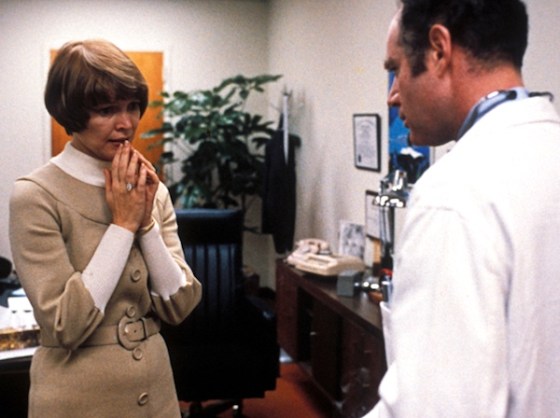
    Worried mother

    Everyone’s so busy talking about The Scary Stuff when it comes to The Exorcist, no one ever tells you how low-key and grounded a lot of it is. Okay, the talking in voices and spinning heads and vomiting green gunk and bloody crucifix masturbation are pretty memorable, so fair enough. Before that, though, it’s more of a character drama, about a single mother struggling to handle what appears to be her daughter’s out-of-control mental health problems. Meanwhile, a priest, Father Karras (Jason Miller), struggles with a crisis of faith brought on in part by his ailing mother. Naturally these two threads align when Chris calls on Karras to investigate Regan’s condition.

    Another thing I’ve never heard about The Exorcist is how good Miller is. This is his film debut, before which he was a stage actor, but he delivers a very naturalistic performance as a man of the cloth who also has his head screwed on — his training in psychology keeps him suitably skeptical of what’s going on with Regan. Events conspire to challenge his point of view, of course. Karras has the clearest arc of anyone in the film, giving Miller the most scope to develop his role. I’d venture he’s the film’s most interesting character.

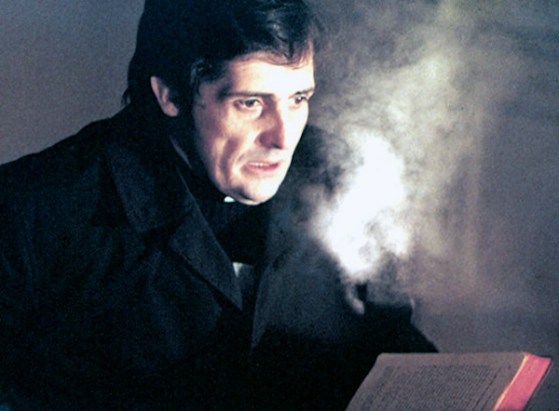
    Father Karras

    That’s not to dismiss Burstyn, who’s also excellent as the very together mom who begins to crack under the increasing strain of her daughter’s worsening, inexplicable condition. As said daughter, Blair’s performance is certainly memorable, though the potency of Regan is aided by special effects and voice work from another actress. Although second billed, Max von Sydow only pops in at the beginning and end in the titular role of Father Merrin. It’s no wonder someone later thought Merrin’s past was ripe for a prequel, because there’s a backstory there that’s only hinted at.

    And no one ever says how little Tubular Bells is in it, either.

    The thing people do say about The Exorcist is how scary it is. Tales of audiences fainting and running out during its initial theatrical run are the stuff of movie legend. Today its releases are branded as “the scariest film ever made”, with the justification of several polls that have named it thus. I can well believe that, in the early ’70s, it was indeed the most shocking film most people had ever seen, certainly from a major studio. The extreme bad language, the gruesome special effects, the morally depraved acts, and all of it happening to a child…

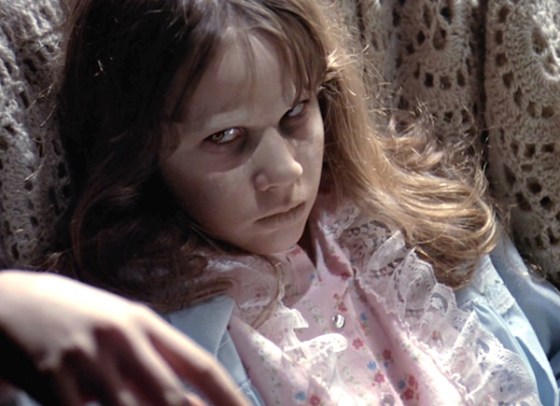
    Regan... or is it?

    It was surely an element of sensibilities being offended (especially in America), as much as it was actual horror, that provoked such radical reactions from audiences back in the day. Nowadays we’re a bit more deadened to those things — the last 40+ years have served up plenty of elaborate gore, and potty-mouthed pre-teen girls are more likely to be found in comedies (Hit-Girl is even younger than Regan when she utters the C word in Kick-Ass, for example). I also thought it frequently undermined its own intensity by cutting away from the scary scenes to more mundane stuff. Maybe the goal was to never give those scenes an ‘out’ — we always seem to leave them when supernatural stuff is still going on — but for me it killed the momentum that was building.

    That’s not to say the horrific and shocking stuff is no longer powerful. What really works in its favour is how long the film spends being grounded and plausible — most of the first hour is a ’70s social drama about a child with a mental health problem. That level of realism helps the later horror scenes be all the more effective. They quite quickly transcend the realms of the plausible (unless you’re some kind of religious fanatic, I guess), but the grounded setup lends weight to them nonetheless. The climax in particular — the actual exorcism — might just be silly without the realistic world it’s been placed in. Instead, it’s a suitably tense climax.

    The exorcism

    Obviously it was the extreme stuff that caught people’s attention and earnt The Exorcist a reputation that it still trades off to this day. However, I’d say it’s best regarded, not as a fright-fest, but as a film about characters: the mother who’ll do anything for her child; the priest battling with a crisis of faith. It’s a drama about real people in extreme circumstances, it’s just that these extreme circumstances happen to be horror movie fodder. In this respect it’s such a film of the ‘70s, which I mean in the best possible way.

    5 out of 5

    The Exorcist was viewed as part of my Blindspot 2017 project, which you can read more about here.

    * IMDb lists half a dozen other languages, but Arabic’s the only one I remember being significant enough to earn subtitles. ^

    Blade Runner 2049 (2017)

    2017 #132
    Denis Villeneuve | 163 mins | cinema | 2.39:1 | USA, UK & Canada / English | 15 / R

    Blade Runner 2049

    Last weekend, a film about an android negotiating an existential crisis when he learns he may actually be human, told over almost three hours with a slow pace in an arthouse style, topped the US box office. Put like that, Blade Runner 2049’s debut sounds like a stonking financial success. Alternatively, it’s a widely-advertised critically-acclaimed $150-million-plus effects-heavy sci-fi spectacle with a pair of movie-star leads, in which context its $33 million opening weekend only looks remarkable for how poor it is. For those of us who did bother to see it (and us Brits turned out — it did good numbers on this side of the pond), such concerns are almost immaterial. In creating a belated sequel to an innovative, influential, and beloved classic movie, 2049 has (to borrow a phrase from another unexpected big-screen sci-fi sequel) done the impossible — because it’s really bloody good — and that makes it mighty.

    Set 30 years after the original movie, 2049 introduces us to new characters and a new mystery: when blade runner K (Ryan Gosling) makes a shocking discovery at the home of a Replicant he’s just retired, it starts him on a mission to find something previously thought impossible that could have world-changing implications; something with connections to the events of 30 years earlier. While unfurling this mystery/thriller plot, 2049 is also about K’s personal development/crisis as a character. Although they kept it out of the marketing, it’s only a mild spoiler to say he’s a Replicant (as if the single-letter name didn’t hint at that already, it’s also mentioned casually within the first couple of scenes), and the case he works causes him to question his place in the world.

    Buried secrets

    This is a movie with a lot to think about. It doesn’t do the thinking for you either, instead leaving space for the viewer to interpret not only what themes they should be thinking about but also what they should be thinking about those themes. This seems to have been a little too much for some viewers — I’ve seen anecdotal reports of people falling asleep or walking out. That’s not necessarily just because they were asked to do some work, of course: it could also be the pace and length. It’s definitely a long film — a shade under 2 hours 45, though obviously there’s a fair chunk of credits — and, watching it with a grotty cold, as I was, it certainly felt long. But I would also put that entirely down to the cold. It’s not a mile-a-minute thrill ride of a movie, but I think it’s the length it needs to be. It leaves room for ideas to sink in.

    Not only that, it allows you time to luxuriate in the visuals. This is possibly one of the finest-looking films ever shot. Cinematographer Roger Deakins is long overdue an Oscar, we all know this, but if he doesn’t finally earn it for 2049 then there is no justice. If you’ve seen the trailer then you know the kind of thing to expect. When people say “you could hang any frame of this movie on your wall” it’s usually a ludicrous overreaction, but here it’s as true as it ever could be. (Also, having complained in several reviews recently that I think my cinema of choice is showing films too dark (a not unheard of problem — they run the bulbs too dim to save costs), 2049 looked absolutely fantastic. Maybe it’s just that other filmmakers aren’t as good as Deakins.)

    Hot robot-on-robot action

    It’s not just the film’s technical merits that recommend it either, as there’s an array of superb performances here. Gosling has a difficult job as K: he starts out almost as a blank, an emotionally reserved Replicant but also a character that we need to identify with, and later struggling with his innate programming as he’s presented with challenging ideas. It might be easy to do this in a very outward manner, all handwringing and moistened eyes and so forth, but Gosling keeps it low-key — in keeping with the overall style of the film, of course. I guess some will find him cold, but I still thought he was a relatable, likeable character.

    Elsewhere, Harrison Ford is definitely a supporting character, despite his prominent billing. That’s okay, though. He gets some great, meaty material — surely the best stuff he’s had to work with in a long time, and he delivers on it too. Deckard isn’t as obvious a personality as Han Solo or Indiana Jones, but it doesn’t really matter how much Ford does or doesn’t feel like his role of 35 years ago: Deckard has a place and a function and a story in this new narrative, and that he sells. As a fan, it’s impossible not to think of the long-standing debate from the first movie: is Deckard a Replicant? 2049 manages to smartly dodge this question that you’d’ve thought it has to answer. If you’re watching out for how it handles it, it’s an impressive bit of work. And the debate does still rage: as shown in a recent joint interview, Ridley Scott still thinks Deckard definitely has to be, but Denis Villeneuve disagrees. You can make up your own mind (if you think it even matters).

    Blade Runner 79, more like

    Among the rest of the supporting cast, the stand out for me was Ana de Armas as Joi, K’s hologram girlfriend. You may’ve seen some reviews that say 2049 has a “a woman problem”, and maybe it does, but I still thought Joi was an interesting, nuanced character. Her role is very much in how she affects K, that’s true, but that the film tackles a love story between a robot and an AI is fascinating in and of itself. Maybe theme trumps character. Maybe they contribute to each other.

    Really, it’s no surprise that 2049 has struggled at the box office. Despite trailers that emphasised the action, reviews were keen to point out it isn’t an action movie. Although they’ve mostly been glowing, maybe people looked beyond the star ratings to the content, which highlighted the truth: it’s a slow, considered movie; one that makes you think, rather than simply entertains. It’s not for everyone. All of that said, it’s kind of surprised me how few people it’s for: I’ve not even seen reviews pop up from many of the blogs I follow that routinely review new releases. (If you’ve posted one and think I’ve missed it, feel free to mention it in the comments.) One I did see is by long-time Blade Runner fan the ghost of 82, which is more spoilersome than this piece and so digs deeper into some of the film’s questions.

    Shoot to retire

    Now that it’s ensconced as a classic, it’s perhaps easy to forget that the original Blade Runner wasn’t massively popular with critics and didn’t do well at the box office back in 1982. It started out with a cult fanbase, which grew into the more widespread esteem it enjoys today. 2049 isn’t doomed to the same fate, but perhaps it’s destined for a similar one. Mainstream audiences might be ignoring it right now, but this is a movie that many people are going to be thinking about, talking about, rewatching, thinking and talking about some more, and being influenced by, for years — decades — to come.

    5 out of 5

    Blade Runner 2049 is in cinemas now. Go see it.

    My review of the film’s 3D version can now be read here.

    It placed 1st on my list of The 17 Best Films I Saw For the First Time in 2017, which can be read in full here.

    Musical Review Roundup

    My blog is alive with the sound of music, courtesy of…

  • Sing Street (2016)
  • Jersey Boys (2014)
  • Sing (2016)
  • Into the Woods (2014)


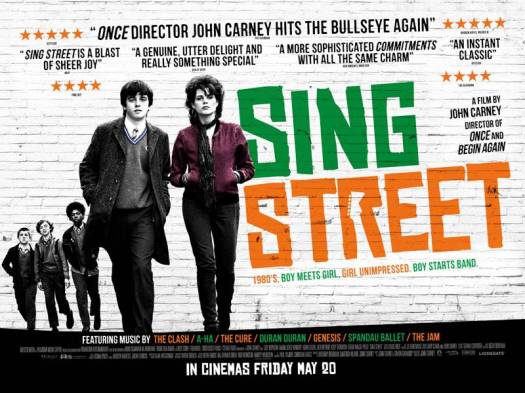
    Sing Street
    (2016)

    2017 #13
    John Carney | 106 mins | streaming (HD) | 2.35:1 | Ireland, UK & USA / English | 12 / PG-13

    Sing Street

    A struggling busker — sorry, a failing record exec — no, sorry, a misfit teenage boy… sets out to impress a beautiful fellow busker — sorry, a promising singer-songwriter — no, sorry, a cool girl… by helping her record a record — sorry, by coercing her to record a record — no, sorry, by persuading her to star in the music video for the record he’s recorded. Except he hasn’t actually recorded that record yet. In fact, he doesn’t even have a band.

    Yes, the writer-director of Once and Begin Again has, in some respects, made the same film again. Yet somehow the formula keeps working. Here there’s extra charm by it being school kids dealing with first love and finding their place in the world. It’s something we all go through, so there’s a universality and nostalgia to it that perhaps isn’t present in the story of twenty/thirty-somethings who are still floundering around (especially Begin Again, which made them cool twenty/thirty-somethings living in cool New York).

    It’s fuelled by endearing performances, particularly from young leads Ferdia Walsh-Peelo and Lucy Boynton, and a soundtrack of era-aping toe-tappers — in an alternate (better) universe, The Riddle of the Model and Drive It Like You Stole It competed for the Best Original Song Oscar, and one of them won it too. And those are just the highlights — the rest of the soundtrack is fab as well. I imagine if you were a music-loving teenager in the ’80s, this movie is your childhood fantasy.

    5 out of 5

    Sing Street placed 7th on my list of The 17 Best Films I Saw For the First Time in 2017, which can be read in full here.

    Jersey Boys
    (2014)

    2017 #97
    Clint Eastwood | 134 mins | streaming (HD) | 2.35:1 | USA / English | 15 / R

    Jersey Boys

    A musical biopic about Frankie Valli and the Four Seasons doesn’t seem like a very Clint Eastwood film at first glance, but when it turns out to be kind of Goodfellas but with the music industry, it becomes at least a little more understandable.

    Based on the hit Broadway musical, it retains a staginess of structure — the four band members take turns narrating the story by speaking to camera — while also opening out the settings so it feels less “jukebox musical” and more “biopic with songs”. It takes some liberties with the chronology of events for dramatic effect, but that’s the movies for you.

    The shape of the story feels familiar and it feels leisurely in the time it takes to tell it, but the songs are good and most of it is perfectly likeable. It’s by no means a bad movie, just not one that’s likely to alight any passion.

    3 out of 5

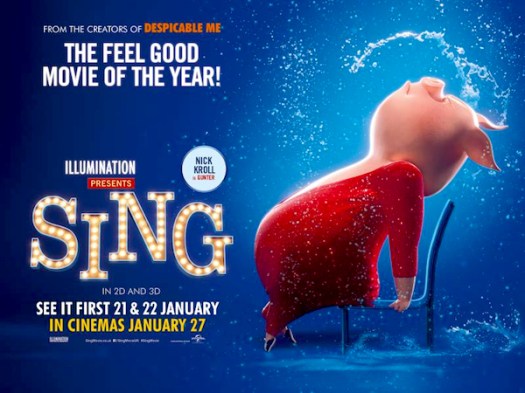
    Sing
    (2016)

    2017 #107
    Garth Jennings | 108 mins | download (HD+3D) | 1.85:1 | USA / English | U / PG

    Sing

    The seventh feature from Illumination (aka the Minions people) comes across like a cut-price Zootopia: in a world where animals live side-by-side in cities like humans, a struggling theatre owner launches an X Factor-esque singing competition to revive his fortunes. Naturally there’s a motley cast of participants, all with celebrity voices, and hijinks ensue.

    Apparently the film features 65 pop songs, the rights to which cost 15% of the budget — if true, that’s over $11 million just in music rights. The big musical numbers (all covers, obviously) are fine, with the best bit ironically being the new Stevie Wonder song on the end credits, which is accompanied by Busby Berkeley-ing squid. Elsewhere, there are some moments of inventiveness, but it doesn’t feel as fully realised as Zootropolis. Perhaps that’s part and parcel of Illumination’s ethos: to make films that translate internationally, presumably by being quite homogeneous. And to make them cheaply (their budgets are typically half of a Pixar movie), which has its own pros and cons.

    Anyway, the end result is fine. Much like Jersey Boys, Sing is perfectly watchable without ever transcending into anything exceptional.

    3 out of 5

    Into the Woods
    (2014)

    2017 #118
    Rob Marshall | 125 mins | streaming (HD) | 2.39:1 | USA, UK & Canada / English | PG / PG

    Into the Woods

    Fairytales are combined and rejigged in Stephen Sondheim’s Broadway musical, here brought to the screen by the director of Chicago. The original is a work that definitely has its fans, but doesn’t seem to have crossed over in the way of, say, Phantom of the Opera or Les Mis — I confess, I’m not sure I’d even heard of it before the film was announced.

    The film adaptation readily suggests why that might be. For one, it’s light on hummable tunes. It’s almost sung through, with only a few bits seeming to stand out as discrete songs in their own right. For example, it takes the opening number a full 15 minutes to reach its culmination, having been diverted into a few asides. Said song culminates with most of the main characters going into the woods while singing about how they’re going into the woods, and yet the film doesn’t put its title card there. The placement of a title card is a dying art, I tell you.

    Performances are a mixed bag. Everyone can sing, at least (by no means guaranteed in a modern Hollywood musical adaptation), and the likes of Emily Blunt, James Corden, and Anna Kendrick are largely engaging, but then you’ve got Little Red Riding Hood and her incredibly irritating accent. Fortunately, she gets eaten. Unfortunately, she gets rescued. On the bright side there’s Chris Pine, his performance well judged to send up the romantic hero role. You may remember Meryl Streep got a few supporting actress nominations for this, which is ludicrous. It’s not that she’s bad, but she’s in no way of deserving of an Oscar.

    There are witty and clever bits, both of story and music, but in between these flashes it feels kind of nothingy. It’s also overlong — the plot wraps up at the halfway point, with the second half (presumably what comes after an interval on stage) feeling like a weak sequel to the decent first half. All in all, another one for the “fine, but could do better” pile.

    3 out of 5

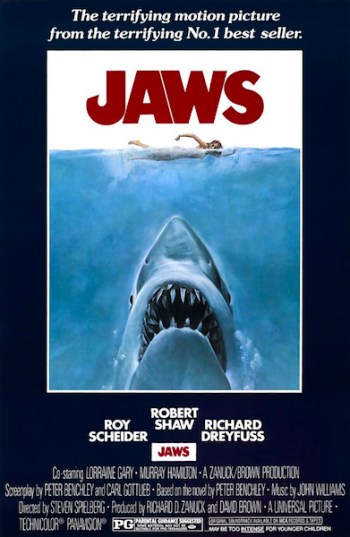
  • Jaws (1975)

    The 100 Films Guide to…

    See it before you go swimming.

    Country: USA
    Language: English
    Runtime: 124 minutes
    BBFC: A (1975) | PG (1987) | 12A (2012)
    MPAA: PG

    Original Release: 20th June 1975 (USA)
    UK Release: 26th December 1975
    Budget: $7-12 million (sources vary)
    Worldwide Gross: $470.6 million

    Stars
    Roy Scheider (The French Connection, All That Jazz)
    Robert Shaw (From Russia with Love, The Sting)
    Richard Dreyfuss (Close Encounters of the Third Kind, Poseidon)
    Lorraine Gary (Jaws 2, 1941)

    Director
    Steven Spielberg (The Sugarland Express, E.T. the Extra-Terrestrial)

    Screenwriters
    Peter Benchley (The Deep, The Island)
    Carl Gottlieb (Jaws 2, The Jerk)

    Based on
    Jaws, a novel by Peter Benchley.


    The Story
    As the seaside resort of Amity Island prepares for the lucrative 4th of July weekend, a series of violent shark attacks threaten the lives of residents and holidaymakers alike.

    Our Heroes
    Police chief Martin Brody is the one lumped with having to work out how to stop a man-eating shark, battling both small-town politics as well as the underwater predator. Eventually he’s aided by Matt Hooper, a young shark expert, and Quint, a salty old shark hunter.

    Our Villain
    A 25ft great white shark, with a taste for human flesh.

    Best Supporting Character
    Amity’s Mayor just wants what’s best for his town and its people — which, in this case, is having the beaches open for July 4th, whether people might get eaten or not.

    Memorable Quote
    “You’re gonna need a bigger boat.” — Brody

    Memorable Scene
    A group of young people sit on the beach at night drinking. The eyes of a boy and girl meet. They race off towards the sea, stripping as they go. She gets into the water first, while he’s too drunk to get his clothes off. She messes around in the ocean while he passes out on the sand. Then, she notices something underneath the water — something that grabs her — and… well, it doesn’t end well.

    Memorable Music
    John Williams’ famous, simple main theme is the definitive musical interpretation of approaching terror. When Spielberg first heard it, he thought it was a joke. Later, he said it was half of what made the film so successful.

    Making of
    Three mechanical sharks were built for the film, but no one thought to test them in water before taking them on location. They kept malfunctioning, causing a constant headache throughout production — because of them and other issues of shooting at sea, the film’s 55-day schedule ended up taking 159 days, and the $3.5 million budget ballooned to as much as $12 million. On the bright side, Spielberg had to work out how to shoot material around the unavailability of the sharks, which led to him taking a Hitchcockian approach of showing the ‘monster’ as little as possible, which was ultimately a benefit to the film’s effectiveness.

    Next time…
    Jaws was the highest grossing film of all time, so naturally there were a series of cash-grab sequels. As far as I was aware they were universally condemned, so I’d never paid them any heed, but I recently read a review that made me think I should give them a go. It said Jaws 2 wasn’t actually all that bad, Jaws 3-D was trashy fun, and Jaws: The Revenge… well, in for a penny, in for a pound, I guess. Incidentally, the last one is the film of which star Michael Caine famously said, “I have never seen it, but by all accounts it is terrible. However, I have seen the house that it built, and it is terrific.”

    Awards
    3 Oscars (Editing, Sound, Original Dramatic Score)
    1 Oscar nomination (Picture)
    1 BAFTA (Music (also for The Towering Inferno))
    6 BAFTA nominations (Film, Director, Actor (Richard Dreyfuss), Screenplay, Editing, Sound)
    1 Grammy (Original Score Written for a Motion Picture or Television Special)

    Verdict

    It’s easy to start discussing Jaws in terms of it being the first summer blockbuster, or its troubled production, or the effect it had on audiences’ desire to go swimming. But divorced from all that, as a film in its own right, it’s a thrilling adventure movie — a man vs. a shark, when it comes down to it. It’s so packed with memorable shots and moments — be they horrific shark attacks, improvised one-liners, or precisely calibrated jump scares — that it’s no wonder it made Spielberg’s name. Personally, I feel the pace flags a bit once the three men get on a boat and go shark hunting, which slightly holds me back from completely loving it. Quibbles aside, it’s still a classic of suspense.