
Fritz Lang | 83 mins | TV | PG
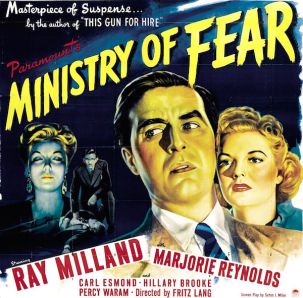 I like cake. It’s all soft and sweet and tasty. But I don’t like cake as much as Stephen Neale, the protagonist of Ministry of Fear.
Neale (played by Ray Milland) likes cake so much that, as soon as he’s released from an asylum at the film’s start, he goes almost directly to a nearby fête to win a cake. And win it he does… though as he leaves with his prize, he’s told he didn’t win it after all. But Neale loves cake so much that he pays them off so he can keep it. Then he gets on a train to London — and he loves cake so much, he can’t resist tucking in straight away. At least he’s kind enough to give a piece to the blind man who shares the car with him. Except the blind man whacks Neale over the head, steals the cake and jumps off the (fortunately, stationary) train with it. Not because he loves cake too, but we’ll come to that.
But the blind man — who isn’t actually blind, as you may have guessed — hasn’t counted on just how much Neale loves cake. He jumps off the train too, giving chase. The not-blind blind man shoots at him, but that’s not enough to deter Neale from cake. It’s only when a Nazi bomb drops on the cake, destroying it (and the not-blind blind man) that Neale finally gives up. And even then he goes back to look for the cake later in the film.
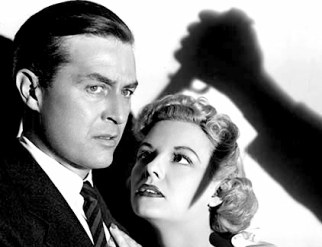 Ministry of Fear isn’t really about cake, but the opening 20 minutes or so plays out more or less as above and it is rather amusing. Less amusing — and, in fact, part of the film’s biggest problem — is a ‘humorous’ epilogue that returns to the cake theme. I found it hilariously funny, but unfortunately for all the wrong reasons. The other part of the problem is the abrupt ending that immediately precedes this brief coda. On the bright side, everything is resolved and you can imagine the post-climax resolution scene for yourself, but it still leaves the tale’s telling cut short.
To say too much about what Ministry of Fear is actually about would ruin it, which I don’t want to do because in fact it’s a great twisty little thriller, a rather Hitchcockian ‘wrong man’ tale with a baked MacGuffin. You might need a decent suspension of disbelief to get through it, as Neale races round London trying to find out the truth behind the activities of a wartime charity and its army of little old dears, but doing so rewards with a tale where you can never be sure who is on whose side and where any character will end up.
Director Fritz Lang brings his customary expertise to proceedings, with several shots and sequences worthy of appreciation in their own right.  The train cake theft and chase, for instance, could be thoroughly laughable thanks to the cake element and what’s clearly a studio-built wood/wasteland, but it’s atmospherically shot and, in its main burst of genius, scored only by the drone of a Nazi air raid taking place overhead. It makes for a more tense and effective soundtrack than most musical scores manage.
In spite of the potentially laughable opening and the need to suspend one’s disbelief — or, perhaps, because of it — Ministry of Fear is a most enjoyable wartime film noir in a Hitchockian mould.

 The debut feature from director Gurinder Chadha (of
 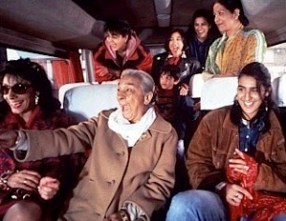 Indeed, there’s certainly evidence that the film was constructed with such an audience in mind: when the women settle down for a traditionally British ‘picnic on the beach’, we’re given a close-up to show they’re eating samosas and bhajis instead of sandwiches and what-have-you. If all the talk of pregnancies, abuse and racism sounds a bit serious, there’s also a good degree of humour and an appropriate lashing of sentiment.
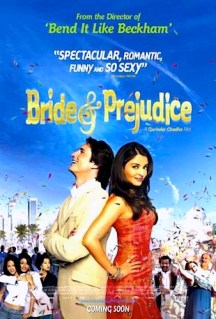 I don’t imagine Bride & Prejudice is going to convert many people who aren’t already predisposed to liking it in some way. That’s not to say it’s not good or doesn’t have potential crossover appeal, but it still has a whole list of things that will put certain viewers off.
 not to mention the numerous adaptations predating either of those, but Bride brings plenty that’s vastly different to the table. It converts the novel very accurately (as best I can tell, having only seen screen versions), retaining both the characterisation and the majority of the plot in a similar sequence of events.
 Little of the plot requires such modification, perhaps thanks to the culture it’s been grafted onto — the predominance of arranged marriages wouldn’t really work in a ’00s British setting — and those bits which are changed are relatively minor. Lydia (here, Lakhi) runs off with Wickham for an afternoon at the London Eye, rather than eloping; Georgiana (here, the slightly more modern Georgina) was impregnated at 16, less legally complicated than the novel’s 15.
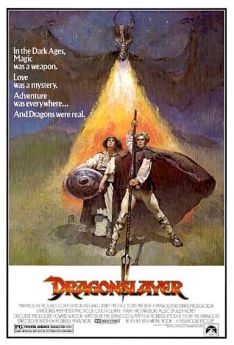 Back when he was still directing
  Vermithrax Pejorative is a long time coming, however, wisely kept off screen by director Matthew Robbins. It’s not that the monster shouldn’t be revealed, just that, like
 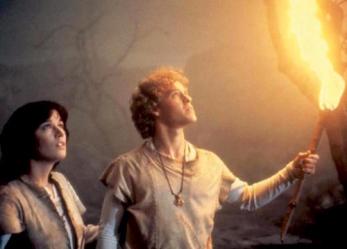 and giant monster than character development. Similarly, an interesting subplot about the move from The Old Ways of magic and superstition to The New Ways of Christianity feels like a good idea that hasn’t been fully integrated, made up of little more than a couple of passing nods and a negatively-inclined inclusion in the coda.
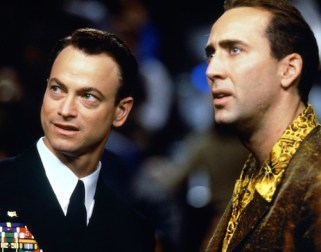 later seasons didn’t and, in my opinion, suffered. Johnny Depp-starer
 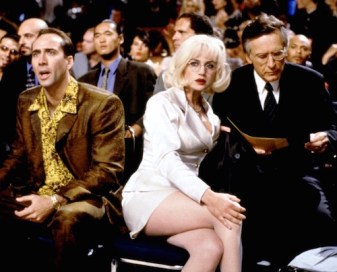 If there’s one significant flaw, it’s that the ending is too much based on convenience and coincidence; and someone in the editing room should’ve paid more attention to removing all references to the original, deleted ending in which the casino got flooded. I have no idea why that was removed — maybe someone thought it was a bit ludicrous. But it sounds more satisfying than what was included, which, as noted, relies on a handy spot of coincidence and at least one action that seems out of character. I can forgive it though, because I liked everything else. And the post-climax montage is a suitably downbeat ending to our hero’s story — another noir trait there.
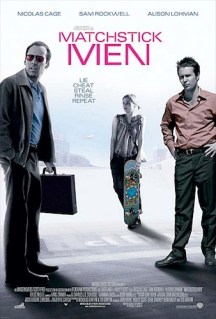 Matchstick Men ends with a twist. One of those great big changes-everything-you’ve-just-seen numbers that have a habit of making a film notorious. Yet I’m almost loath to mention it, because I’ve never read a review, preview, summary or what-have-you of the film that mentions there’s a twist. Maybe I’ve just been reading the wrong pieces; maybe no one cares; maybe they’re all just playing along trying to keep it secret. But not me, because I bloody hated it.
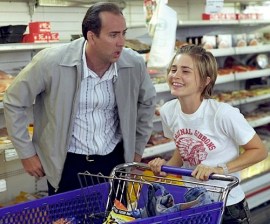 Twists are fine. Twists can be great. As I said, you can guess a twist is coming and it can still work. A really good twist works even when you know for certain it’s coming; its existence raises what you’ve seen, makes it all work even on repeated viewings when the element of surprise is obviously gone. Matchstick Men doesn’t have that kind of twist. It has the kind of twist that undermines everything you’ve just seen. Not because it’s illogical — it isn’t in the slightest — but because it tramples over the film’s emotional resonance, in my opinion.
 Alison Lohman is also exceptionally good as a 14-year-old girl. It took a scene or two to convince me, but after that I was plenty on board with it. It occasionally takes some effort to remind yourself she was 24. As the third lead, Sam Rockwell plays a typical Sam Rockwell part. He does it very well, naturally, and there’s nothing to fault him on, but he’s been better elsewhere. The rest of the cast are absolutely fine but not exactly called on much — this is Cage’s film, and to a lesser extent Lohman’s. They have the emotional journey, the film’s heart-and-soul around its long(-ish) con ‘plot’ (which could just be lifted from any episode of Hustle… except it’s not even that complex).
 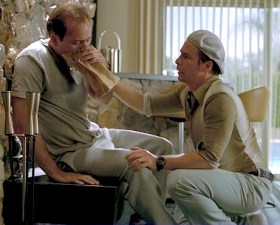 Matchstick Men was a lot better than I’d expected, because most of the coverage I remember shoved it aside as a middle-of-the-road side project for Scott. It’s definitely better than that, if still not the “sweep the Oscars” success
 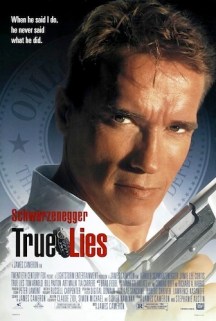 Quite how I’ve not got round to seeing True Lies until now is a little beyond me. Perhaps — no, definitely — if they’d re-released a better edition on DVD I’d’ve bought it and seen it then; but they never did, and so it’s taken ’til now to reach the top of my rental queue (not that my rental service works that way) and ‘force my hand’, as it were (because it’s certainly been on TV enough over the years).
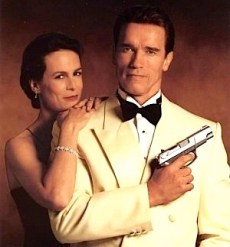 audacious things that might get laughed out in a straight actioner. The demise of the villain, for instance, is a great idea and great fun, but would be a step too far normally; but here that’s OK, because it’s allowed to be funny as well as cool.
 to do everything themselves (and even if they don’t their face gets CG’d on).
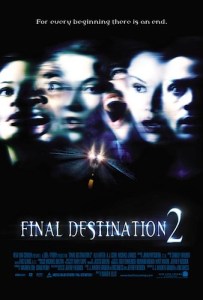 Final Destination 2 is daft. The concept’s daft, the new additions are daft, the characters are daft, and most of all the deaths are daft. And that’s why it’s an awful lot of fun.
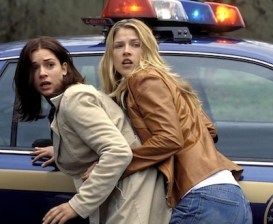 half the fun for the viewer lies in guessing what’s about to happen, and so scatter clues and hints to give us a fighting chance… something they don’t afford many of the characters, of course.
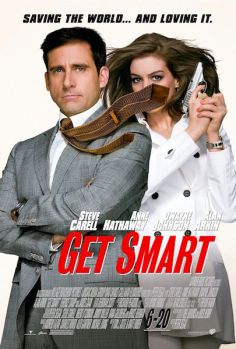 Get Smart, as you likely know, was a TV series in the ’60s, which makes one wonder how it’s taken so long to get to the big screen. I guess it didn’t have the same fanbase or perceived relaunchability that led to an endless array of big-screen versions of ’60s/’70s series in the last decade or two —
 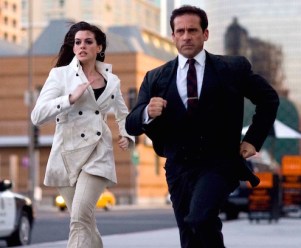 there’s a few action sequences that are surprisingly decent too, considering this is still primarily a comedy.
 to be the smarmy big shot who either ignores or specifically brings down a character like Carrell’s, but instead he’s one of his biggest supporters. (That he turns out to have been A Bad Guy All Along, Gasp! is beside the point.) The office bullies don’t actually have any power at all and are frequently brought down to size. It makes a nice change from the stock sitcom clumsy-hero-who-eventually-comes-good with irritating-and-condescending-higher-ups on the side, the pedestrian and unenjoyable fallback of too many comedy writers.
 but it’s asking a little too much from not necessarily sympathetic viewers.
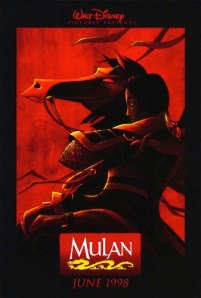 I realised recently that I haven’t seen an animated Disney film produced after
  (It’s this kind of thing that has caused uproar for
  100Films.co.uk