
Jon Favreau | 125 mins | Blu-ray | 12 / PG-13
With Thor out a couple of weeks ago and Pirates of the Caribbean 4 just hitting cinemas, 2011’s blockbuster season is well and truly underway. While you all head out to the cinema and enjoy this year’s delights (or disasters), I intend to do some catching up on the tonne of stuff I’ve missed from the last year or two (or three, or more).
Starting, naturally, here…
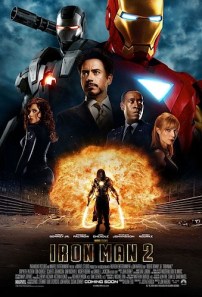 I’ve always contended that the first Iron Man film was overrated. That’s not to say it was a bad film — I gave it four stars and, having re-watched recently, I liked it even more — but I think it took critics and audiences by surprise and that led to a level of praise from both sets that was unduly high. It’s not unreasonable: who would’ve expected anything special from the movie adaptation of a B-list superhero, helmed by a low-recognition director, starring a one-time leading man just about on his comeback? When it turned out to be both fun and funny, I think people overreacted. I saw it later, after hearing all that praise, so I think (without wishing to sound immodest) my view was slightly more tempered.
It’s for similar reasons I think Iron Man 2 has been underrated — I would contend that it is, more or less, as good as the first film. That didn’t seem to be the consensus at the time of release, which ranged from mediocre to rubbish. I don’t agree at all — and, again, I think this is in part due to viewers’ expectations. When one thinks a first film is better than it is, expectations for the sequel are heightened; when said sequel is only as good as the first film really was, it looks a lot worse by comparison — it fails to reach the audience’s over-raised expectations.
That’s my take, anyway. This being a review, I shall now offer more thoughts on why I think it’s a good action-adventure flick.
 For starters, it relies on the story rather than the action. There are certainly some good sequences of the latter (more about those later), but there’s also a lot of story in between them — it’s not wall-to-wall explosions and punch-ups. Neither was the first, if you remember, and so it fits in that respect. It’s helped along by the ending of the first film, in which Tony Stark revealed he was Iron Man. That’s not something you do in superhero movies, which immediately lends this one a few new plot devices to play around with. Considering the burgeoning critical assessment that all superhero movies ever only tell the same two or three stories (an argument I think has a lot of validity), it’s nice to see anything to challenge the norm.
So does the reliance on technology. Yes, Batman uses kit rather than powers gifted via supernatural or ‘scientific’ means, but even Christopher Nolan’s real-world version of that character takes the tech as read and gets on with some moral-based superhero antics. Iron Man does less of the hero stuff (see again: fewer action sequences; also, Stark’s self-centred character) and indulges a little more in arms-race tech-development, a very plausible side effect of this superset being unveiled to the world. The development of the technology is as much part of this story as the genre-typical mental anguish of the hero(es) and/or villain(s), which, again, makes it a little different.
This time, Iron Man faces two enemies. A recipe for disaster, some would say — look at Batman & Robin or Spider-Man 3. That conveniently ignores Batman Returns or The Dark Knight though, doesn’t it. Here it works because they’re two notably different characters and they complement each other — 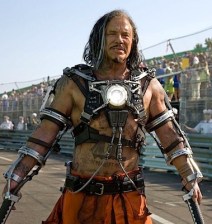 it’s the Penguin and whover-Christopher-Walken’s-character-was rather than Mr Freeze and Poison Ivy, if you will. They play to different sides of the hero: one is fighting Stark, one Iron Man (though there is naturally crossover); though they’re both intelligent, one functions as the brains and the other as the brawn. Mickey Rourke may go slightly underused, but it’s also part of the character, a quiet, thoughtful, intelligent hulk partnered with Sam Rockwell’s jabbering wannabe-Stark.
Turning to the action sequences, I think they’re better all round than the first film’s efforts. Iron Man comes up against things that are his match, rather than just the occasional virtually-unopposed rescue of a third-world village or what have you. The climax is certainly better than that in the original. Iron Man 1‘s climax was a brief encounter lacking punch, literally; here we have a more advanced villain with some variety in his weapons — it makes for a more visually interesting affair. Both films have been criticised for being just robot-on-robot fights, the same fault that riddled Transformers. I disagree. In Transformers you couldn’t tell who was who; in both Iron Mans, you can — that’s kinda important. Sure, a non-robot-suited villain would make even more of a change, but I don’t think it hampers this finale too much.
I also wonder if some negative reaction stemmed from being shown too much in the trailers. I distinctly remember how underwhelming I found Wanted at the cinema because I felt like I’d seen it all; 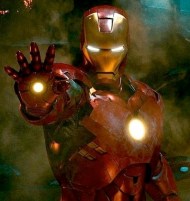 watched again later on Blu-ray, I enjoyed it a lot more. With Iron Man 2 I’m obviously distanced from trailers by a good year or so, and though one of their best moments is missing from the final cut, and the suitcase-suit is unavoidably spoilt by being so thoroughly screened during the promotion, watching now doesn’t have all the trailer-generated expectation to live up to. That famous Onion spoof about the first film’s trailer is, perhaps, even more applicable to the sequel.
Despite that cut I mentioned (the whole little sequence where Pepper throws Iron Man’s helmet out of the plane, for the interested; which, actually, would make a nice counterpoint to one of the final scenes — maybe that cut is a fail after all), other nice moments abound — Rhodey’s opening line, for instance, which acknowledges the change in cast member without harping on about it. Admittedly, however, there’s no comic highlight quite as memorable as the best bits from the first film, though I did laugh out loud plenty often throughout (when I was meant to, I hasten to add).
The greatest negative reaction, however, seemed to be reserved for one subplot: some called the film little more than a two-hour trailer for The Avengers. That’s unfair.  Aside from one unnecessary scene featuring Captain America’s shield and Agent Coulson leaving for New Mexico, and the fact that the film assumes everyone will know who Nick Fury is despite him being introduced fleetingly after the credits of the last film, the whole S.H.I.E.L.D./Avengers Initiative thing is worked into the plot well. If we didn’t know it was the beginning of the build-up to The Avengers, I think it would have sat much better with viewers. Even if it does end up blatantly laying the foundation for further stories, that’s hardly uncommon in franchise films of all kinds these days — at least we know this series will definitely pay it off, unlike so many franchise-wannabes that don’t make it past their first film. Plus, the film’s primary plot has its own villains and comes complete with a resolution; Fury, S.H.I.E.L.D. and co are a subplot that feed other subplots.
Naturally the film isn’t perfect — it’s a bit slow in the middle and some bits could stand to be chopped — but overall I think it stands up much better than the critical and audience consensus implied. While watching I kept waiting for it to turn sour; to suddenly see what everyone had moaned about. Halfway through the screen fades to black, then fades back up to introduce Nick Fury — “oh, here we go,” I thought, “everyone moaned about the Avengers stuff; this must be where the whole film goes south; and handily marked by that fade too” — but no, I kept on enjoying it. The clock kept ticking, it kept not getting bad.
I enjoyed Iron Man 2 more or less as much as I enjoyed Iron Man, and that’s rather a lot.

Iron Man 2 begins on Sky Movies Premiere today at 3:45pm and 8pm, and is on every day at various times until Thursday 26th May.
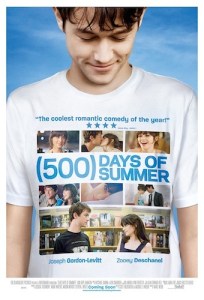 Directed by Marc Webb (
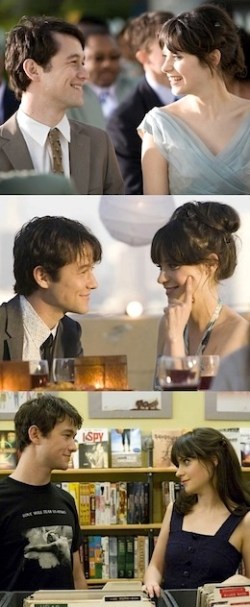 They all sit surprisingly well within the story though — yes, some (perhaps all) are showing off a bit, but in a way that, by and large, works. And I’m a little bit glad I can’t quite list them all, because half the fun of (500) Days of Summer is watching what looks like a borderline-mainstream indie rom-com that suddenly throws these curveballs at you.
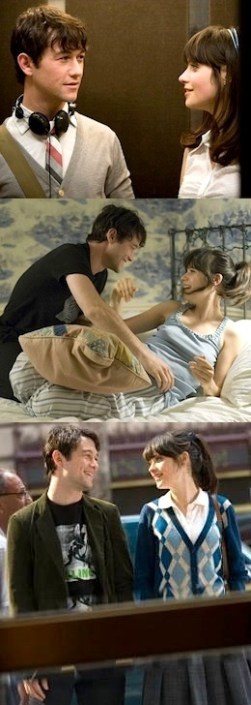 Not that those three roles are identical by any means, but you can see how one led to the other.
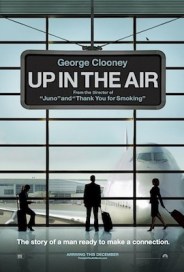 Sometimes, it’s best to just come clean: I don’t have much to say about Up in the Air.
 Cowriter-director Jason Reitman has created a surprisingly likeable film. It’s easy to see how Clooney’s character — very much the centre of the piece — could be irritating or vapid or any number of other negative adjectives, but instead he’s… well, he’s George Clooney, isn’t he? He’s all charm. If you were going to be fired, you’d probably want George Clooney to be doing it. For a character who is essentially an expansion of the
  Up in the Air got its Best Picture nom in the first year the Oscars went back to 10 nominations for the big prize. I’m not sure many would disagree that it’s one of The Other Ones — one of the ones that quite probably wouldn’t’ve been there if it hadn’t been for the category doubling in size. And if it was, it’d be The Other One — the token indie/comedy nomination that everyone knows isn’t going to win but was quite good all the same.
 There’s an argument that the less you know going into any film the better. Naturally there are some films this applies to more than others, and Exam is one such film. Eight young professional types go into a job exam/interview; the next hour-and-a-half is all mysteries and riddles — which is why you wouldn’t want to know too much.
 Such a contained story relies heavily on its characters and the actors’ performances. Largely a cast of un- (or little-) knowns, all are decent — one or two may be subpar, but I’ve seen a lot worse. I don’t quite understand how some viewers can find White, played by Luke Mably, to be a completely likeable character in spite of his obvious flaws — he has his moments, but surely he’s not agreeable overall? Not a jot. That said, his is the standout part, a scene-stealing performance from Mably. There’s no clear-cut audience-favourite, which (from reading a few reviews) seems to be a problem for some viewers. As far as I’m concerned, it’s a good thing: never mind the realism of there being one perfect person every viewer will love, audience-favourites will either predictably win or be shockingly dispatched, so what’s the point?
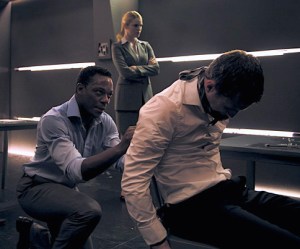 it’s quite nice to find a plot that doesn’t feel the need to tie everything in to its reveal; a plot that can wrong-foot you by occasionally focusing on something that’s ultimately irrelevant.
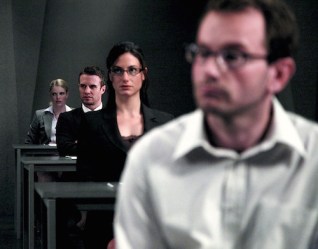 and films that invite pondering tend to invite repeat viewing; but then again it works equally well (better, ultimately) as a straight-up “what’s going on?” thriller.
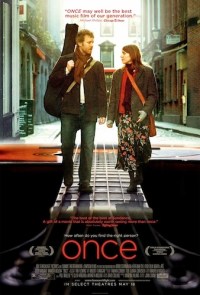 Once is a very modern indie musical. And I mean indie as in “indie film”, not “indie music”. Lord save us from a musical of indie music.
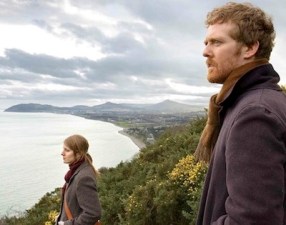 It’s a testament to the strength of the lead performances and the story they create that it’s not until the end credits roll you realise you never even knew their names.
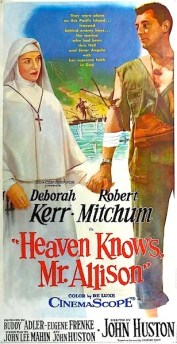 The title may sound like a ’40s rom-com or a ’70s TV sitcom, but Heaven Knows, Mr. Allison is nothing of the sort. It’s set in the south Pacific in 1944, at the height of World War II, and begins with titular US Marine Allison (Robert Mitchum) washing up on an island that’s occupied only by a novice nun, Sister Angela (Deborah Kerr). He was the only survivor of a Japanese attack on a submarine; she ultimately the only survivor of a Japanese raid on the island. With no hope of rescue they must plot their own escape.
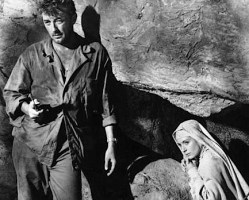 There’s also a kind of burgeoning romance between the two — as a novice nun she has yet to take her final vows — which creates a different kind of will-they-won’t-they than the usual love-hate dynamic. It all leads to a pleasing ending, where your expectations for what a Hollywood film will do (especially with the groundwork that’s been laid) are subverted in favour of a more plausible turn of events. It’s not the kind of ending that makes the film — it’s already done more than enough to hold one’s interest — but if done wrong I think it would have undermined the rest.
 The Girl Who Kicked the Hornets’ Nest — or, in America, Hornet’s Nest (oh, Americans!) — or, translated from the original Swedish, The Pipe Dream That Was Blown Up — or, according to a different translation, The Air Castle That Was Blown Up (guess that’s a cultural thing…) — is the third and final part of Stieg Larsson’s Millennium trilogy.
 while the villains futilely attempt to stop the heroes publishing everything they already seem to know.
 The other cornerstone of the film is Lisbeth’s trial for the attempted murder of her father at the end of Played with Fire. The final third of the film is dominated by a series of immensely satisfying courtroom scenes in which the defence trounce the opposition, not through American-esque grandstanding but through a quiet and thorough application of facts and truth. You can see the satisfaction bubbling under Lisbeth’s almost-static face as the prosecution unknowingly hang themselves, the defence — Mikael Blomkvist’s sister Annika, for what it’s worth — holding back her killer evidence until the prosecution have dug themselves a pit so deep even this mixed metaphor would be buried. Both Lisbeth and Annika walk all over them by remaining calm and logical, dispatching the case against Lisbeth in a way that becomes an absolute joy for the viewer.
 It means Lisbeth remains an unknowable, elusive mystery, but then isn’t that part of what makes her so fascinating? The full exposure of her troubled (to say the least) history in this episode clears up some of her ambiguity without lessening her as a character. It’s a testament to the understated excellence of the performance that actions as little as a smile or saying “thank you” are huge revelations.
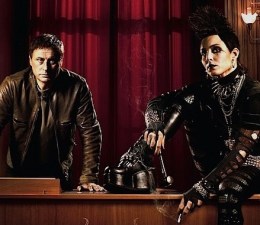 the second balances on top of the events in its predecessor. The difference is, I properly enjoyed Hornets’ Nest. I wouldn’t watch it again in isolation (unlike Dragon Tattoo, which doesn’t need its two sequels to function as a story), and perhaps it had too much going on for its own good — or perhaps I’m being too demanding of the intricacies of the investigation — but it’s a solid final episode with a lot of satisfying moments.
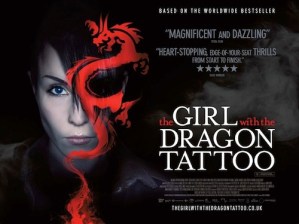 From the same production company that brought us the
  The original title translates as Men Who Hate Women, which is certainly very apt. The subject matter is grim and dark; horribly plausible, in fact. It’s unwaveringly depicted with some brutal, hard-to-watch scenes. They’re not exploitative though, as a lesser film merrily would be, and that makes them appropriate to the tale being told. Subplots about the two leads support the themes underpinning the main investigation — both about abuses of power, in different ways — justifying their apparent tangentiality, and consequently the film’s length.
 Despite the modern stylings, dark themes and attention-grabbing characters, much of the film unfolds as a procedural whodunnit like, for instance, the Wallanders, complete with piles of red herrings and last-minute twists. This is probably why the book has sold so well and the film has taken over $100 million worldwide: it tickles the same nerves as all those ever-popular TV police dramas. Indeed, this adaptation is rooted in a television miniseries (an extended version exists as two 90-minute TV episodes) but it doesn’t look like it: it’s quite beautifully shot; not showy or stylised, but there are some lovely shots of scenery in particular.
 With Dragon Tattoo featuring material that seems ideally suited to the director who gave us
  Bolt is the 48th film in Disney’s animated canon (whatever the official name for that is these days), from their CG-only era that filled most of the ’00s. It’s a period already remembered as When Disney Lost Its Way, after the second (or is it third? I forget) ‘golden era’ of the early ’90s; the time that produced flops like
 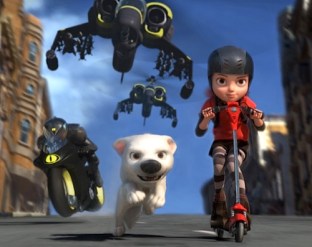 Also noteworthy are the action sequences. Far from being perfunctory attempts at liveliness, these are properly exciting, making full use of 3D CGI to create exciting and dynamic sequences. I’m not just talking about the couple we get from the TV-series-within-the-film either, but also the ‘real world’ ones as Bolt, Mittens and Rhino jump onto trains, out of moving vans, escape from a pound, etc. Of course, the TV-series-within-the-film is completely implausible — like you could film a TV show with massive action sequences in such a way that you only ever do a single take, never mind achieve all those effects on a TV budget. But then this is a film where a talking dog, cat and hamster work together to travel from New York to Hollywood entirely of their own volition — I think it’s safe to say no one’s aiming for documentary levels of realism.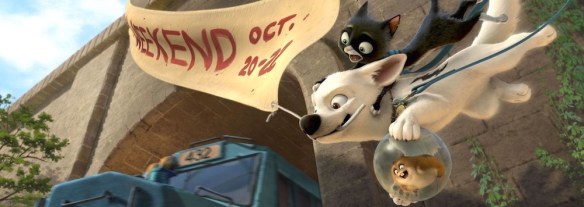
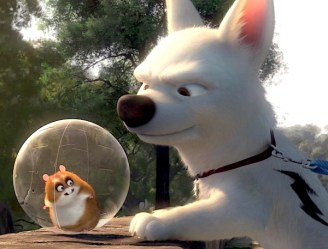 It would be easy to dismiss Bolt as part of Disney’s CG folly, especially as it stars Miley Cyrus and is immediately followed by their return to 2D animation, but I think that would be a mistake. It’s a fast-paced and fun adventure, with accurately-captured animals meaning it’s especially likely to appeal to dog lovers. Disney’s next golden era just might begin here.
 100Films.co.uk