Harry Potter and the Goblet of Fire (2005)

2013 #43a
Mike Newell | 157 mins | Blu-ray | 2.40:1 | UK & USA / English | 12 / PG-13

This review contains major spoilers.

Harry Potter and the Goblet of FireThe fourth Harry Potter film is the pivot around which the series revolves, in oh so many ways. Most obviously, it’s book 4 of 7 — the halfway point. It’s also where the books switch from short ‘children’s novel’ lengths to the huge tomes they eventually became. More importantly, it’s the instalment on which the overarching plot of the entire series hangs. Although each previous entry in the Potter canon contributed something to the mythology (even if sometimes its significance wouldn’t become apparent until much later), they’re still viewable as discrete adventures. So too is Goblet of Fire, for the most part — the exception being its final act, which kicks off the story that will consume the rest of the series.

The film is no less of a turning point, for its own reasons. Note that this is when the films’ marketing began to emphasise the ageing of the actors: the teaser trailer begins with shots of Harry, Ron and Hermione from each of the four films; the promotional TV specials go behind the scenes not only on the new film but also its predecessors; clearly substantial retrospective interviews were conducted too: watch the Creating the World of Harry Potter: The Magic Begins documentary on the Philosopher’s Stone Ultimate Edition and it tells the story of the films’ birth by mixing interviews not only from the sets of the first film and the ‘now’ of the final film’s production, but also in costumes and on sets from the fourth movie.
Harry Potter and the PictureIt makes sense: at this point the series was moving beyond your stock franchise length of “trilogy” and into less frequently charted waters, amid speculation that the leads would be recast. With Goblet of Fire being the last point you could reasonably pull that off, I imagine it paid to emphasise that these were the same kids — that we see a cast age in more-or-less real time throughout their childhood, including many small supporting roles as well as the leads, is one of the Potter films’ more unique highlights.

The other big behind-the-scenes decision was one of length. As noted, this is the first Potter story to explode from a short children’s tale, which could be adapted in full in two-and-a-half to three hours, to a lengthy novel that would require masses of time to cover in full. Considerations of spreading it across two films were reportedly dismissed when director Mike Newell promised he could do it in one, essentially by cutting subplots and extraneous material — much as Alfonso Cuarón had on Prisoner of Azkaban, but on a grander scale. (Imagine if they hadn’t made that choice: instead of eight films, the Potter series would have sprawled to 11 instalments!) The result of such editing here is a very direct film, rattling through its plot — even with stuff cut, there’s still a lot of story to cover.

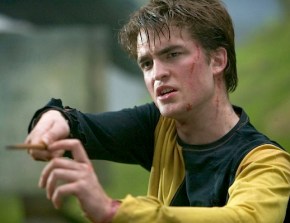
Said story concerns two foreign schools visiting Hogwarts for the Triwizard Tournament, a series of dangerous challenges, into which someone enters Harry against his will. It’s a nice clear through-line: a series of tasks, interspersed with investigations into who forced Harry to participate and why. It all comes to a head in one of the series’ most famous moments, the murder of Cedric Diggory. Harry Potter and the Death of DiggoryI can’t remember if Diggory’s meant to be a nice guy or an irritating jock, but here he’s played by Robert Pattinson, proving it’s not only his involvement with the Twilight franchise that makes him smug and annoying. Still, the impact of Diggory’s demise is still shocking and effective for those who don’t know it’s coming — this isn’t just a light series of children’s adventures any more. Of course, the death of a single-book supporting character is less impactful with an awareness of the franchise as a whole — there’s much worse to come, leaving this a mere opening move.
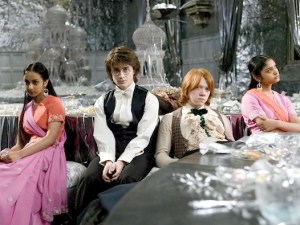
The other element that begins to creep in from this point is all the teenage romance stuff. Provoked mainly by the Yule Ball, with the guys having to pluck up courage to ask girls and dance lessons with teachers, the characters’ love lives start to become a notable factor. For all the plausibility and humour with which it’s depicted, there are times later when it will become a bit tiresome, especially in the novels. Fortunately, much of that’s internal monologue and subplot, and so goes astray here. Extra thanks to Mr Newell for that.

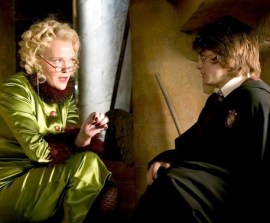
One of the more overlooked facets of Rowling’s work is her penchant for allegory and gentle satire. That’s understandable — they’re just Kids’ Books about magic, after all, and occasionally thuddingly written ones at that. Allegory you can take or leave (who’s really going to gain a perspective on HIV from Lupin’s struggle with lycanthropy?), but the satire is nice. Here it’s the press under fire. Rita Skeeter may have a greatly reduced role compared to the novel, Harry Potter and the Satire of the Pressbut her Quick-Quotes Quill — which, essentially, just makes stuff up — is present and correct. The next tale, Order of the Phoenix, carries on this motif (the press demonise Harry), as well as setting its sights on blinkered and ineffectual government, and the evils of exam-focused impractical teachers. It’s all rather pleasing, actually, and you have to hope Potter’s millions of readers took it in and learnt something.
It’s easy to let certain events overshadow the entirety of Goblet of Fire; to subsume it into the single long narrative that arguably takes over the later stories. But though it puts broader events in motion, this is still a self-contained tale all its own — and one of the series’ most exciting at that, between storming action sequences and some effective twists. There’s a fair argument to be made that it’s the film series’ best entry.

4 out of 5

In about a month, as I’ve already joined the Order of the Phoenix, uncovered the Half-Blood-Prince, and found both parts of the Deathly Hallows, I’ll offer an overview of the David Yates films

Harry Potter and the Prisoner of Azkaban (2004)

2013 #42a
Alfonso Cuarón | 142 mins | Blu-ray | 2.40:1 | UK & USA / English | PG / PG

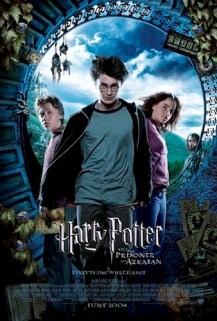
Harry Potter and the Prisoner of AzkabanPrisoner of Azkaban marks a significant turning point for the Harry Potter film series. Viewed now, it’s easy to see it as just Episode 3 of 8; a saga still getting underway. At the time, coming off the back of two incredibly successful films, it felt like a grand shake-up of an established formula.
It’s the first Potter to move away from a Christmassy end-of-year release slot, for one thing, debuting at the height of summer in May. That also made it the first to break the one-per-year release cycle they seemed to be aiming for, which would’ve emulated each film covering a single year of Harry’s time at school. The release date was only 18 months after Chamber of Secrets, but it had an impact — particularly to little Draco Malfoy, who seems to have undergone the majority of puberty in the short time between the end of Chamber and the start of Azkaban. I still remember my shock when he first appeared in the trailer — I thought they’d recast.

Most striking, however, is the new director. Alfonso Cuarón doesn’t ditch the faithfulness to J.K. Rowling’s novels that defined Chris Columbus’ opening pair, but he does ditch the slavishness, and brings a hefty dose of his own stylish directorial skill in the process. Azkaban is a fan favourite among Rowling’s novels, but Cuarón’s preparedness to change things when necessary made the film more of a hate object for some. The wider world had it right, however, because Azkaban was received as the best Potter yet and, I think, was the start of its rehabilitation from a fans-only series of Children’s Films to something that merited across-the-board full marks when Deathly Hallows Part 2 arrived seven years later.

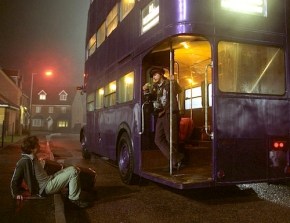
Harry Potter and the Knight BusCuarón and screenwriter Steve Kloves (who would pen every Potter film bar the fifth) focus in on the novel’s plot, ditching its copious world-building and backstory asides. This has both pros and cons. In the former camp, it leaves room for Cuarón to make something more exciting and filmic than Columbus — you can’t imagine the craziness of the Knight Bus in either of the previous films. It also keeps things moving forward, at quite a pace too, rather than meandering off here and there. Even the Quidditch match serves a purpose.
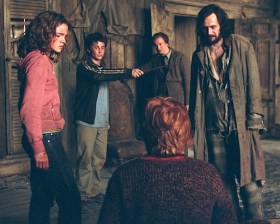
On the downside, it strips away some explanations that not only deepen the series’ world but, in some cases, help it make sense. We never learn the identity of Moony, Wormtail, Padfoot and Prongs (makers of the ever-so-useful Marauder’s Map), or quite why Harry thought he saw his dad by the lake with the Dementors. The former is only nice detail, I suppose, but the latter event makes much more sense when you know the full explanation from the novel. The story gets by without it, but those unfamiliar with the book who stop to think about things may consider it a plot hole, or at least a leap of logic.

The film introduces two of my favourite characters from the series: Gary Oldman’s Sirius Black and David Thewlis’ Remus Lupin. In slightly different ways they’re both outsiders — underdogs, as it were, if you’ll excuse the pun — but both honourable and powerful… but not as pompous as that poor description makes it sound. Harry Potter and the New CharactersThe film series doesn’t treat either of them particularly well compared to the books, but then supporting characters and subplots are the first things to go (quite rightly).

The other big cast addition is Michael Gambon, replacing Richard Harris as Hogwarts headmaster Albus Dumbledore. Gambon seemed all wrong when he first turned up, replacing the previous near-perfect casting choice. He’s more familiar now, making it harder to judge which actor is superior; but it’s difficult to imagine Harris getting to grips with some of the cheekier and more active things Dumbledore is called on to do later in the series. Was the requirement to recast a blessing in disguise? Perhaps.

Azkaban was a breath of fresh air when it was released in 2004, really kicking the Potter franchise into life creatively. I know I gave the first two four stars each, but having since watched this and Goblet of Fire, the opening episodes pale in comparison.

4 out of 5

Tomorrow, I put my name in the Goblet of Fire

Ted (2012)

2013 #42
Seth MacFarlane | 106 mins | Blu-ray | 1.85:1 | USA / English | 15 / R

TedThe first film from Seth MacFarlane, creator of Family Guy and American Dad!, part-time Oscar host and Proms singer (I kid you not), is the story of a boy and his teddy bear. Lonely little John Bennett gets a teddy for Christmas when he’s eight, makes a wish that the bear will come alive, and so it does. It’s sweet and lovely, because it’s a teddy. Then it becomes famous and grows up and turns into a foul-mouthed pot-smoking layabout living with a thirtysomething John (Marky Mark Wahlberg) and his girlfriend (Mila Kunis). But he’s still a loveable bear. Kinda.
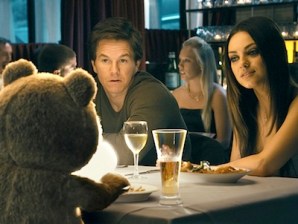
If you put together that plot description with “from the creator of Family Guy”, you get a pretty fair idea of what Ted’s like — and whether it’s for you or not. Sadly many people can’t do such simply maths, as evidenced by the swathes of bad reviews on LOVEFiLM, shocked by the film’s content. One moron even sat their little kids down in front of it, thinking it was a cute film about a cute talking bear being cute. Why do some people not research the films they show their kids? Even checking the certificate would’ve revealed it’s a 15 and not suitable for your 6 year old. But I digress.

Family Guy’s stock in trade is two things: non-sequiturs, which Ted replaces with a plot; and an edgy, borderline-offensive (or, to some people, offensive) sense of humour, which Ted retains, and in some cases pushes farther, unrestrained by the demands of US network TV. Personally, I like it, by and large. Some jokes cross the line into distasteful, but that’s par for the course. Some will find it all terribly juvenile. I was going to say you shouldn’t be expecting QI, The happy couple... and Tedbut then they’ve been known to get sidetracked into some smutty laughs on occasion, so that may not be the best example.
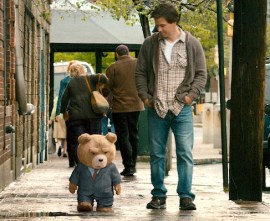
The film’s low point is its plot. It’s stock rom-com territory, in which a happy couple (spoilers!) break up and (spoilers!) get back together, with a climax-providing subplot lifted from Toy Story 2. If you’re looking for an original or thought-provoking story, Ted won’t be the place to find it, though it makes a good fist of telling it. But really, the draw is the talking teddy, and how he relates to the world in a teddy-like fashion. So what if the main story is a rehash? Plenty of comedies do that every year without bothering to add anything original, at least here the reality of what would happen if a teddy magically came to life is considered, and quite nicely handled too.

Without meaning to spoil any laughs, standout segments include a running involvement of the ’80s Flash Gordon film, which long-term readers of this blog will know I love at least as much as John and Ted, which culminates in an amusing trip; a hotel room brawl between John and Ted (if you watch it on Blu-ray, the five-minute Teddy Bear Scuffle featurette is worth a look for how they did this); and a minor array of cameos, from who’s doing the voiceover to someone who turns up twice without a single line of dialogue.

Ted in a suit still isn't Peter GriffinWahlberg performances swing between excellent (The Departed, I ♥ Huckabees) and awful (The Happening, Max Payne), seemingly at random, but here he’s closer to the former. MacFarlane voices Ted (as well as directing, co-writing and co-producing), which years of experience have left him very good at, even if he has to lampshade the fact he does sound rather like Peter Griffin. Among the rest of the cast, Mila Kunis is kinda unremarkable and kinda endearing, but either way surely beloved by teenage boys; Giovanni Ribisi turns up as a creepy loner (what else is new); and Patrick Warburton plays The Part Patrick Warburton Plays (what else is new).
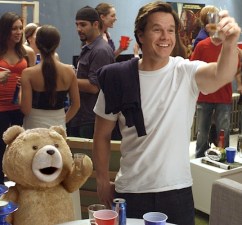
(Incidentally, there’s also an unrated version of Ted, which is so shocking that in the UK we gave it a… 15. It’s about six minutes longer and includes some alternate material as well as extensions. I went with the theatrical version because, well, I did. As ever, there’s a full comparison here, or a simple list on IMDb if you prefer. For the dedicated, the Blu-ray also includes 15 minutes of deleted scenes and 10 minutes of alternate takes, but I don’t know if there’s any overlap between that material and the extended version.)

Flash! Ah-ah!Ted is pretty much a walking talking definition of “not for everyone” — which is fine. If you like Family Guy, it’s definitely one to try (LOVEFiLM has plenty of “I love Family Guy but hated this grrr!” reviews too); if you dislike Family Guy, probably one to avoid; if you’ve never seen Family Guy, what can I say, that’s the standard reviewer’s barometer here. It is rude, is crude, and is mostly very funny. But, whatever you decide, don’t leave the kids with the movie about the talking teddy.
4 out of 5

Ted joins the Sky Movies Premiere line-up today at 4:25pm, is on again at 8pm, and several times daily thereafter, as well as on all their on-demand services and whatnot.

Ip Man 2 (2010)

aka Yip Man 2 / Ip Man 2: Legend of the Grandmaster

2012 #79
Wilson Yip | 104 mins | TV (HD) | 2.35:1 | China & Hong Kong / Cantonese, Mandarin & English | 15 / R

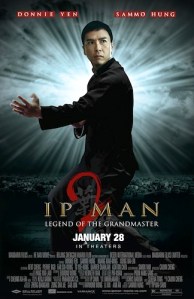
Ip Man 2Picking up more or less where the first film left off, this sequel sees Ip and his family settled in Hong Kong, struggling to get by as he attempts to set up a Wing Chun school against opposition from the existing establishments.

The main thing to note about Ip Man 2 is that it has stunning fight sequences, especially a large sequence in the fish market and a one-on-one tabletop challenge. The latter sees star Donnie Yen take on legend Sammo Hung, which I imagine was a treat for genre fans (though it’s not their first encounter). For those of us less well versed in this world, it’s still a bloody good fight scene.

The first Ip Man was about considerably more than just action, but that’s where its sequel sets its focus. Human drama remains, but it doesn’t ring quite as true and perhaps isn’t trying to be as much of a feature as before. Ip Man’s relationships with his wife and with his students are hinted, told with plenty of shorthand — she’s pregnant, goes into labour just before his big fight (not that he knows), that kind of thing. They’re quickly tucked away as something for those really interested, rather than playing an essential part.

The only major downside comes when the Brits turn up for the final act. Stereotyped and poorly acted, presented with palpable jingoism and xenophobia, A game of Hung Mantheir presence and storyline drag the film down.
Still, at least it’s all wonderfully shot. Dismissing the clichéd desaturated look of the last film, here we get something a little more colourful, though never close to garish, with well chosen angles and superlative editing.

Ip Man 2 doesn’t have the same majesty as the first, but there’s an enjoyably pulpish sensibility in its place. Fast-moving and literally action-packed, on that level it entertains.

4 out of 5

Harry Potter and the Chamber of Secrets: Extended Version (2002/2005)

2013 #40a
Chris Columbus | 174 mins | Blu-ray | 2.40:1 | UK & USA / English | PG / PG

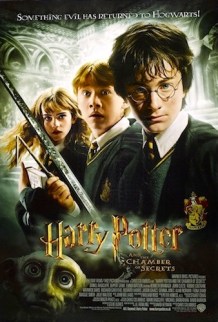
Harry Potter and the Chamber of SecretsThis extended cut takes the already-lengthy second instalment in the Harry Potter franchise and pushes it to nearly three hours (though if you lop off the extensive end credits it’s more like two-and-three-quarters). As with the extended version of the first film, it was originally created for the US TV premiere, then later released on the Ultimate Edition sets, and simply integrates the DVD’s deleted scenes back into the film.
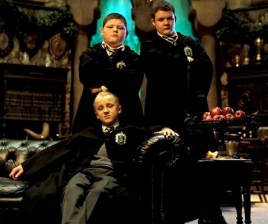
The difference in running time is 13½ minutes, spread across 19 different extensions. (Per usual, a list can be found here.) As you might guess, many are short snippets, running as little as 18 seconds when viewed among the deleted scenes (and those tend to include scene-setting bits from the theatrical version and a copyright notice). Unsurprisingly, then, many are of little significance, often just fleshing out minor characters (Colin Creevey gets to tell his backstory; Justin Finch-Fletchley gets to introduce himself) or adding comedy beats (a floating cake at the Dursleys’; Crabbe and Goyle bumping into ‘themselves’).

So are any especially beneficial? Well, one fleshes out what happened to the flying car (setting up its return to save the day a few minutes later), and there are extra moments to clarify Harry’s awareness of the other students’ worries about him. There’s a bit more Lockhart, once again showing how self-centred he is (it’s surprising how little Kenneth Branagh is in the film actually, so this is welcome), and a tiny bit more Quidditch. There’s also a nod to a subplot with Filch that then doesn’t go anywhere, and one or two minor continuity errors are accidentally introduced (the most obvious is that Hermione tells Harry and Ron they’ll need to take Crabbe and Goyle’s uniforms when using the Polyjuice potion, but then in a new scene she’s stolen some).

Harry Potter and the School BulliesThe longest extension comes near the start, when Harry misspeaks while using Floo powder and ends up in the nasty part of Diagon Alley. In the theatrical version he just walks out of the creepy shop, but here he has to hide as Malfoys Senior and Junior enter to sell some items. Though it has the advantage of showing us how Lucius treats his son when out of sight of more respectable wizards, and possibly seeds something for later films (what is the one item Malfoy isn’t prepared to sell?), it dilutes the introduction of Jason Isaacs’ villain, which in the theatrical version came slightly later in the bookshop, where he bumps into Harry, Hermione and the Weasleys as they’re leaving Lockhart’s signing. It’s a more effective, more dramatic introduction to someone who will become a major character as the series progresses.

The film itself has held up well over the last 11 years, I think. Columbus was oft derided as a mediocre director at the time; a workmanlike filmmaker installed to simply guide the book faithfully to the screen. He’s not exactly an astounding presence behind the camera, but he’s more than adequate, and some sequences even exhibit flair. The biggest downside of the adaptation, once again screenwritten by Steve Kloves, is that it lacks tension. J.K. Rowling’s mystery-laden plot is very well constructed, but the adaptation doesn’t pay enough attention to hyping up that it is mysterious. The most glaring omission is that Ginny Weasley, so central to the denouement, barely appears until the finale. On the bright side, the lengthy running time does allow more space for all of the familiar characters to grow — particularly the three leads, who already feel considerably older than in the first film (and this in the only Potter film that was story-accurately shot exactly one year later).

Harry Potter and the Annoying House ElfThere are, arguably, three notable additions to the cast this time out. The first is Lucius Malfoy who, as discussed, will come into his own later. Then there’s Gilderoy Lockhart, a preening wizard celebrity played with relish by Kenneth Branagh. He’s often very amusing and there’s not enough of him. And then there’s Dobby. Apparently Dobby is a beloved character; apparently kids really like him. I’ve always found him intensely irritating, and was surprised how much Rowling made me warm to him in Deathly Hallows. I thought that might make him more palatable at the start… but it doesn’t. He’s wonderfully realised, though — despite the age of the film, much of the CGI holds up really well.
Chamber of Secrets isn’t the best film the Harry Potter series has to offer — it lacks the introductory wonder of the first and the portentousness of later films. Viewed in isolation, it can also look like a total aside from the series’ main story arc… but, as those familiar with later events will know, there’s actually a lot of important stuff introduced (and, in some cases, dealt with) here. Whatever you think of Rowling as a writer, she did a helluva job plotting out her grand story over seven tales.

4 out of 5

In a fortnight’s time, I aid and abet the Prisoner of Azkaban

Harry Potter and the Philosopher’s Stone: Extended Version (2001/2004)

aka Harry Potter and the Bastardised American Title

2013 #38a
Chris Columbus | 159 mins | Blu-ray | 2.40:1 | UK & USA / English | PG / PG

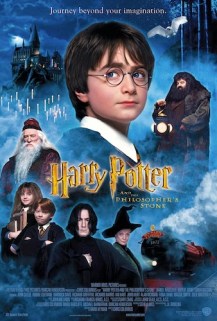
Harry Potter and the Philosopher's StoneOriginally created for the film’s US TV premiere in May 2004, then later released on the film’s Ultimate Edition in 2009 (and not making it to the UK in HD until the Wizard’s Collection last September), this Extended Version of the first Harry Potter film adds six-and-a-half minutes of new bits and bobs to the already lengthy adaptation.
Having not seen Philosopher’s Stone for something approaching a decade, I wasn’t sure I’d be able to spot what had been added, especially when the new inclusions were so small. And, indeed, I couldn’t — but the film all seemed so very familiar. As it turns out, there’s a very easy way to find out what’s new, as well as explain why it didn’t jump out at me: look in the disc’s deleted scenes section.

Included on the film’s original DVD release back in 2002, albeit under a series of frustrating mini-games, were six short deleted sequences and one extended one. I owned that DVD, and I found and watched those scenes… and it’s those and those alone that were added back into the film in 2004. I suppose that’s unsurprising really — they were fully mastered, and presumably if there’d been any more (or any more Chris Columbus was prepared for viewers to see) they would’ve been included on the DVD too. (If you own the US Ultimate Edition or any version of the Wizard’s Collection, the scenes can now be found in HD on the special features Blu-ray.)

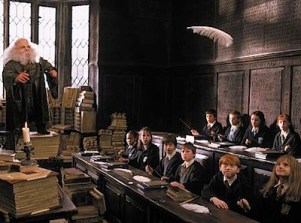
So what’s new? A couple of snippets of the Dursleys, a bit with Harry and Hagrid on the way to Diagon Alley, an extended scene in Snape’s first class, an extra beat with the three leads after they defeat the troll in the bathroom, an introspective moment at Christmas, and a fuller version of the kids finally discovering who Nicholas Flamel is.Harry Potter and the Floating Feather (See all of that with pictures here.) Are any of these of great consequence? Not really. I presume the first three were cut to get to Hogwarts that bit quicker, while the classroom scene displays a petulance from Harry that isn’t entirely in keeping with how he’s been presented to that point. The others were, I suppose, sacrifices for time and pace, though as they’re so short in such a long film, they hardly make a mark.

As for the film itself, it holds up surprisingly well after 12 years and seven increasingly-dark follow-ups. The child actors aren’t that bad, all things considered; the adult cast are a constant delight; the CGI looks surprisingly good (some digital stunt doubles notwithstanding); John Seale’s cinematography looks gorgeously film-like on Blu-ray (especially when you take a look in some of the documentaries that merrily mix clips from all the films — Half-Blood Prince in particular looks like a horrendous mess of OTT digital post-production).

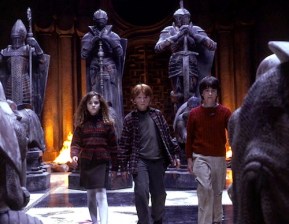
At the time Philosopher’s Stone received criticism for journeyman directing from Columbus and a too-faithful adaptation of Rowling’s novel. Ironically, one of the top threads on IMDb’s forum for the film now complains that it’s not faithful enough. The truth is closer to the former than the latter, but that doesn’t make it a bad film. True, it may struggle to convert those new to the world of Potter, and perhaps a Lord of the Rings-style brisk theatrical version followed by a more extensive and faithful Extended Edition would’ve been the way to go… but whereas every film of any quality can get such treatment these days, Harry Potter and the Game of Chessthat wasn’t common practice back at the turn of the millennium (unless your name was Ridley Scott), so the filmmakers can’t be blamed for not doing it. As it stands, I think they mostly struck a fair balance between fidelity and the fact it’s an adaptation. Similarly, Columbus’ direction is rarely exemplary, but it’s competent with some memorable moments.
Even if the Extended Version makes little difference (even for fans it couldn’t be described as essential), I still enjoyed revisiting Philosopher’s Stone. It marks the beginning of an attempt to re-watch the entire saga over eight consecutive weeks, which will hopefully be both fun and interesting — already, I’m spotting links and connections to later events that wouldn’t have been apparent when first viewing the film. Harry Potter isn’t everyone’s cup of tea, but I think they’re an entertaining, well-put-together series of fantasy adventures. Plus, as child-driven worldwide media phenomena of the 21st Century go, it’s the only one I can think of that isn’t offensively awful.

4 out of 5

Tomorrow, I open the Chamber of Secrets

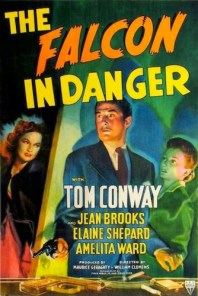
The Falcon in Danger (1943)

2012 #73
William Clemens | 67 mins | TV | 4:3 | USA / English | PG*

The Falcon in DangerWe’ve had the Saint in New York, in London, and in Palm Springs; soon we’ll have the Falcon in Mexico, in Hollywood, and in San Francisco; but here, he’s just in danger. He’s also in perhaps the best film either series has offered to date.
Ironically, the film begins with one of the worst plane crashes ever committed to celluloid. I’m not berating it for the special effects (they’re not incredible, but this is a ’40s B-movie — we’re not expecting much), but the way it’s shot and acted. The extras are appalling. Fortunately the film almost instantly picks up, offering a mystery worthy of Sherlock Holmes: said plane, noted as having several passengers when it left its previous location, is now completely empty of both passengers and crew. What the blazes?!

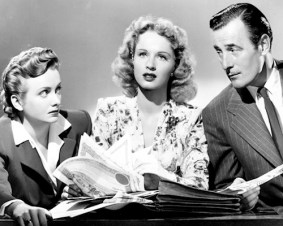
Fortunately, Tom Conway’s Falcon Mk.II is on hand to sort things out. It leads to a moderately intricate case of deception (of course — they didn’t really disappear), kidnap, ransom, theft, business intrigue, a suspicious antique dealership, a murderous guard dog, and a rollerskating rink (no, really). The humour is in shorter supply than in other entries — we’re mostly spared the bumbling cops, so it doesn’t suffer too badly for it. That said, the main ‘comedy’ comes from the Falcon’s latest fiancée, Amelita Ward as a Texan lass who’s distinctly annoying. Reviews abound that assert she completely ruins the film, but it’s not that bad. Three birdsThough the Falcon clearly agrees with everyone else’s assessment and shrugs her off as often as he can, to our benefit.
For I think the first time, the “distressed girl distracts the Falcon” coda actually leads into the next film (or seems to). Ironically, though that cast includes both of …in Danger’s female leads in new roles, the Hysterical Girl who leads the Falcon to it isn’t in it. Ah, ’40s cinema.

While some may lament the slightly more serious tone, then, The Falcon in Danger surely stands out as one of the more engrossing mysteries the series has to offer. I can’t say I’d complain if the remaining seven films followed such a line.

4 out of 5

* As with the vast majority of the Falcon series, The Falcon in Danger hasn’t been passed by the BBFC since its original release. Nonetheless, it’s available on DVD, rated PG. ^

The Hunger Games (2012)

aka The Hunger Games: The Unseen Version

2012 #75
Gary Ross | 143 mins | Blu-ray | 2.40:1 | USA / English | 15 / PG-13

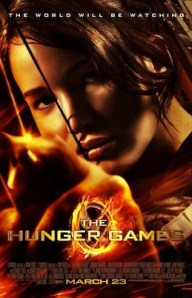
The Hunger GamesSeen by some as a Battle Royale rip-off and by others as no more than the new Twilight, The Hunger Games is different enough from its Japanese forebear and immeasurably better than that detestable cross-media abstinence-fest. Buoyed by edgy direction (much criticised but actually very solid), a well-realised science-fiction/fantasy world, and an engaging lead character (portrayed by a multi-Oscar-nominated star, no less), it transcends its young adult roots and rip-off reputation to become an engrossing action/adventure with political undertones. It seems the latter will be brought out more in three forthcoming sequels, which may make for an even richer parable.

4 out of 5

The Hunger Games merited an honourable mention on my list of The Best Films I Saw For the First Time in 2012, which can be read in full here.

In the interests of completing my backlog of 2012 reviews, I decided to post some ‘drabble reviews’ of a few films. In the future I may update with something longer, but if I don’t, at least there’s something here for posterity.

For those unfamiliar with the concept, a drabble is a complete piece of writing exactly 100 words long.

Yes, “science-fiction/fantasy” is one word.

Birth (2004)

In the interests of completing my backlog of 2012 reviews, I decided to post some ‘drabble reviews’ of a few films. In the future I may update with something longer, but if I don’t, at least there’s something here for posterity.

For those unfamiliar with the concept, a drabble is a complete piece of writing exactly 100 words long.

2012 #87
Jonathan Glazer | 93 mins | TV | 1.85:1 | USA & Germany / English | 15 / R

BirthControversial supernatural mystery drama. Nicole Kidman’s rationalist husband dies suddenly; years later, as she gets engaged to another man, a boy arrives claiming to be her husband reincarnated. More realistic art house drama about grief and insecurity than thrill-giving occult mystery, it nonetheless keeps you guessing as Kidman is slowly convinced by the boy’s tale, while family relationships collapse around her. Full of quiet understated performances, Kidman is particularly captivating and, as the boy, Cameron Bright is mesmerisingly unreadable. Poorly received, with some notable exceptions, Birth is a fascinating film that won’t appeal to everyone, but deserves the right audience.

4 out of 5

Avengers Assemble (2012)

aka The Avengers / Marvel’s The Avengers / Marvel Avengers Assemble / Marvel’s Avengers Assemble

2012 #78
Joss Whedon | 143 mins | Blu-ray | 1.78:1 | USA / English | 12 / PG-13

Avengers Assemble

I don’t think it’s a perfect movie. I don’t even think it’s a great movie. I think it’s a great time.

So says Joss Whedon, writer/director/creator of the generation-defining Buffy the Vampire Slayer, its spin-off Angel, the inimitable Firefly, its incredible movie send-off Serenity, the ground-breaking Dr. Horrible’s Sing-Along Blog, and, y’know, Dollhouse (which I’ve not seen). In short, I love the work of Mr Whedon. And, more relevantly, he’s also the writer/director of the film that represented the culmination of Marvel’s uber-successful Phase One cinematic experiment: the disappointing Avengers Assemble.

Yeah, I said “disappointing”.

Let’s tackle the big looming issue head-on: hype. Something can only be disappointing if you’re expecting something of it, and the big screen adaptation of Marvel’s long-running superhero team-up comic The Avengers certainly had more than its fair share of that. Built with subtle (and not so subtle) snippets of information through five preceding Marvel Studios films, this crossover had been teased for years, and it was a radically new method of franchise-building to boot. Mix in that most of these films and characters were very popular, and the fan-pleasing appointment of Mr Whedon, and you had a recipe for hype. In spite of this potentially damaging level of expectation, critics largely loved it, and audiences too (though there were dissenting voices — genre magazine SFX only awarded it 3.5 stars), and it outpaced everyone’s expectations to become the third highest grossing film of all time (it took more than Iron Man, Thor and Captain America combined).

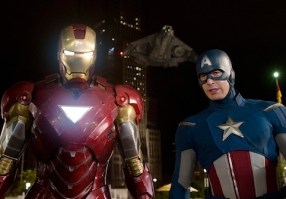
Captain Iron and America ManComing to it for the first time on Blu-ray, then, there’s an even bigger level of expectation attached. Iron Man had much the same problem five years ago, and I felt that had been overrated too. I don’t think either are bad films — I very much enjoyed Iron Man, and I enjoyed The Avengers, albeit more intermittently — but I don’t think either are as good as mass opinion holds.
The problem here is bringing together so many different characters from so many different films. If anyone can do it it’s Whedon, master of the ensemble cast in just about every one of his previous projects, but even he produces a leaden first act in which we’re re-introduced to everyone and they’re gradually brought together. This is the film’s worst segment — it’s a slow 20 to 30 minutes during which pieces are shuffled into place for what follows.

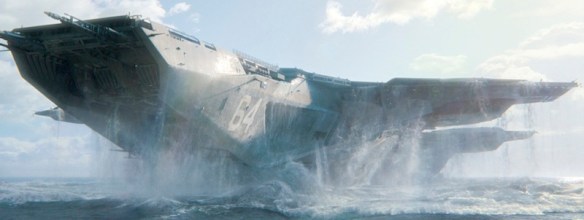
Even when it picks up, the plot’s scaffolding is on show: bits feel engineered merely to set up certain one-on-one face offs (Whedon makes sure nearly every hero has such a scene with Loki, for instance), or even to keep certain characters out of the way until the plot requires them again. People talk of the fantastic dialogue, but I found the odd good line in a sea of functional chatter. Maybe it plays better in a packed cinema. The action sequences are a similar affair, though they manage to have their cake and eat it with hero-on-hero duels at first meeting before united-heroes-vs-baddies later on. However, there are some bits that played well in the trailers which, in the film, feel like they were parachuted in to play well in the trailers. As the (excellent) Honest Trailer points out, however, one key mid-film sequence is all about the exciting event of… Iron Man repairing a ship. Woo.

This ship.

Despite the relatively moderate success of the non-Iron Man previous Marvel films, this largely draws its story from their sources. Boring old Captain America is the de facto lead, though of course Tony Stark steals the scene from him on numerous occasions — those worried the film would be seen as Iron Man and His Super-Friends weren’t wholly wrong (indeed, that’s virtually how the Radio Times describe it in their 22-word summary).

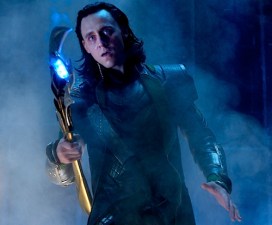
But, even more so, Whedon’s chosen villain and plot make this pretty much Thor 2. The evil so bad it has to bring all the heroes together is Loki, last seen falling to his doom at the end of Thor (well, if you watch the post-credits scenes he was doing something else, but as far as Thor’s concerned, he’s gone). His motivation, only passingly mentioned (so much so that some missed it and claim he’s destroying Earth “just because”), is born out of the events of Thor; as is world-shattering MacGuffin the Tesseract (again, it was first mentioned inHammer Time Thor’s post-credits scenelet); plus numerous events from that film are mentioned and discussed, I’d say more so than any of the other four preceding films (scenes that would have more specifically related to the events of Captain America were cut for time and pace — yes, believe it or not, some stuff was left out).
I don’t know how the film plays for total newbies — there must have been some in the audience, considering how much more the film made than its predecessors — but I think that in many respects you need to have seen all the previous films. You certainly need to know who Iron Man is and who Tony Stark is; the allusions to Steve Rogers’ past, and so why his character is the way he is, are all there; and, as discussed, Thor has the most bearing on the plot. Perhaps you could follow it without having seen any of them, but I’m willing to bet you’d be very aware you were missing backstory.

Looking ahead for a moment to Marvel’s forthcoming Phase Two (a series of sequels and one new film leading up to The Avengers 2), they’ve talked about keeping the individual characters’ movies standalone, so that each works as its own series. I can see how Iron Man 3 will be just fine (though even that will be building off his psychological reaction to the events of Avengers’ climax), as would a (second) Hulk reboot (besides, it doesn’t need to continue at all if it’s a reboot). Heck, even Cap might get away with it — having deleted the “coping with the modern world” stuff here, why not use it in Cap 2? And we can tell from the title that the main plot will derive from events in Cap 1. But The Avengers completely blusters on from the end of Thor, Puny Godmeaning Thor 2 is going to have to begin somewhere after what happened here, with very specific ramifications for its characters. Maybe they’ve got some damnably clever way around that. I doubt they think it matters any more anyway — who hasn’t seen The Avengers? And in the future, well, it’s up to the viewer to piece together which order all the disparate sequels and spin-offs go in.

And on matters of “screw later viewers!”… Technically I should probably subtitle this The Blu-ray Cut or something, for two reasons. 1) The Shwarma Scene, a short post-credits scenelette that was included on Marvel’s The Avengers but wasn’t ready in time for Marvel Avengers Assemble’s week-earlier theatrical release. It’s back now. 2) The Spear Tip, which there’s every chance you’ve heard about: fans complaining it’s gone missing on the DVD/BD; the BBFC investigating if Disney breached the Video Recordings Act; then discovering it was (sort of) their own fault for (sort of) not spotting the change; Disney saying it was never even there in cinemas (which the BBFC disagree with)… Sadly, the end result was Disney had done nothing illegal. It might’ve been nice if they’d been forced to do a recall and repress, because then they’d have had no excuse to not include the director’s commentary (missing from the UK release because it was recorded late and some idiot thought hitting an earlier date was preferable to including all the special features), but I don’t imagine that was ever really likely to happen.

I haven't discussed Maria Hill either, but here's a pretty pictureAnd the glaringly obvious thing I haven’t discussed is the title. Firstly, as you can see from all my akas at the top, no one can quite agree on what it’s meant to be. Secondly, there’s the highly contentious UK renaming. Did it need it? Patronised-feeling film and comic fans say “no”; but those aware of general public perception say that, either anecdotally or through research, normal Brits did report confusion with the classic ’60s spy series (and, presumably, the lamentable ’90s movie). Funnily enough, I think the new title actually works better in context. “What do we do now?” calls Agent Coulson. “Avengers Assemble,” comes the title card’s response. Well, it kinda works. And even then, what does it matter, really? Those people who went as far as importing a foreign DVD or Blu-ray just for the original title card need to get some perspective in their life. (If you did it for Whedon’s commentary, however, I completely understand. I saved money and pirated it (the commentary, not the whole film), which feels morally pleasing.)
I realise I’ve spent much of this review discussing the pre-release hype, what this means for the future of the franchise, and how they ballsed up the home entertainment release. That those are the elements most concerning me perhaps says something about my reaction to the film. And I haven’t even mentioned the distracting way the heroes all talk to each other without earpieces during the final battle, or Jeremy Renner’s comments about his disappointment at the treatment of Hawkeye (he has every right to be peeved), or the predictable inevitably over who gets killed off (of course someone gets killed off, that’s one of Whedon’s trademarks), or the resultant outcry from some parts of fandom, or even bits that were quite good.

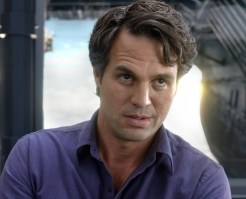
You'll like him more when he's angryAmusingly, one of the few bits even those in implacable love with the film sometimes criticise is Banner’s “I’m always angry” moment, which I thought was an awesome perspective on the character. It’s not just convenience either — it was put it in for a specific reason. I’ve lost the quote, but it’s something to do with how Whedon always feels somewhat angry at various things. I could identify.

Avengers Assemble left me with a bitter taste in my mouth. After all the hype and excitement, I just didn’t enjoy it that much. I tried, but it seemed slow to get anywhere, the dialogue didn’t zing as promised, some of the story seemed perfunctory and lacking requisite grandeur, there were little niggles like the earpieces… Perhaps it will fare better on repeat viewings, because there’s certainly entertainment contained within, and I’ll be divorced from such insurmountably high levels of expectation. But until then… disappointing.

4 out of 5

Avengers Assemble premieres on Sky Movies today at 4pm and 8pm, continuing for the next fortnight.

It merited an honourable mention on my list of The Best Films I Saw For the First Time in 2012, which can be read in full here.