
Rawson Marshall Thurber | 105 mins | streaming (HD) | 2.35:1 | USA / English | 15 / R
 The film that technically won Son of Rambow’s Will Poulter the Rising Star Award at the 2014 BAFTAs, We’re the Millers concerns SNL alumnus Jason Sudeikis attempting to pay off a drug debt by recruiting a fake family, with stripper Jennifer Aniston as his wife, homeless Emma Roberts as his daughter, and halfwit naïf Poulter as his son. Together they attempt to smuggle drugs across the border from Mexico. Hilarity ensues.
It’s not, generally speaking, “my kind of film” — that kind being (or “not being”, I guess) “modern mainstream American comedy” — but it’s the third feature from the writer-director of Dodgeball (his second doesn’t seem to merit anybody’s attention), a film I very much liked back-when, so I thought I’d give this a go. I’m glad I did, because while it’s not particularly remarkable, nor likely to redeem that entire genre for me, it is a suitably amusing and entertaining comedy.
The story’s ridiculous, of course, but it’s a comedy so that’s fine. Sudeikis is alright, though for someone apparently dubbed the funniest man in America (I swear I read that somewhere, but can’t find a citation now) this clearly isn’t showing his best work. There are flashes of inspiration though, not least the most perfectly-timed breaking of the fourth wall that you’ll see any time soon. The rest of the primary cast have the best material: Aniston and Roberts play against type (or at least expectation) as the worldly women, while Poulter gets the lion’s share of memorable moments. Well, him and Nick Offerman as the FBI agent they stumble upon. (Between this and The Kings of Summer I’ve ‘discovered’ Offerman this year, and I am amused.)
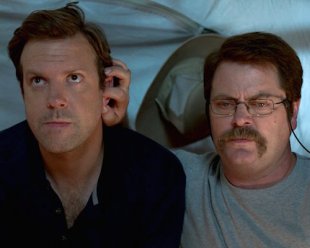 Reviews for We’re the Millers are resoundingly average across the board, remarkably so (which is why I’m remarking on it). The funny thing is, some critics begrudgingly admit they liked it while giving it half marks, and others are very down on it… while still giving it half marks. It’s the same story for user reviews on Letterboxd, etc. The consensus of more trusted sources is that it’s not a great movie by any stretch, but it’s funny enough and thus achieves its primary aim. And honestly, if a comedy amuses me then I’m happy — that’s its point; its purpose in existence. It doesn’t need to be revolutionary or spectacularly original if it’s still funny. Originality is admirable, but fades if someone does it better later. And if I wanted something deep, I’d be watching something else.
On these points, then, We’re the Millers is a surprising success.

This review is part of the 100 Films Advent Calendar 2014. Read more here.
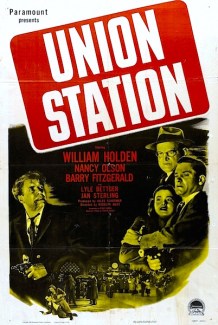 Often noted merely for being filmed in Los Angeles’ busy train station, there are some spirited defences of Union Station to be
  Based on a radio serial that spawned film serials, a famous TV series, and, eventually, comic books, The Green Hornet is a ‘superhero’ saga with a difference. For one thing, technically he’s just a vigilante — no superpowers here — and for another, as noted, it didn’t originate as a comic book. But that’s the milieu the character slots into these days, and so this attempted revival plays in that ballpark.
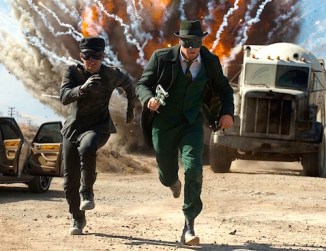 Well, screw them — The Green Hornet is brilliant. If you’re after the po-faced angsty worthiness of
 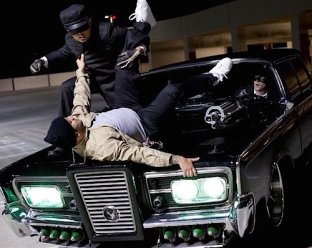 Then there’s Gondry’s direction, which is often as idiosyncratic as you’d expect. He’s at his peak during the action sequences, which explode in an array of effects and slow-motion to create multiple memorably unique fights and chases. Highlights are the first time Kato unveils his martial arts prowess, and the crazy car-driven climax. Chou and the tricked-out car, Black Beauty, are undoubtedly the stars of these bits — indeed, the film has an overall good line in making Kato the brains behind the operation. I imagine this is subverting the depiction of the Asian sidekick from previous versions, considering when they were made, but as I’ve never seen any I can’t comment fairly.
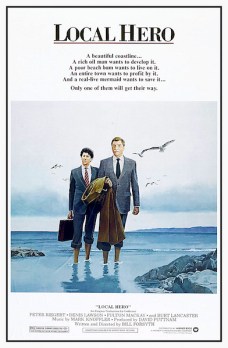 Gentle comedy in which Peter Riegert’s middle-management American oil exec has to persuade the residents of a Scottish village to sell up, unaware that they’re only too keen — for the right price. One of Quentin Tarantino’s Coolest Movies of All Time (
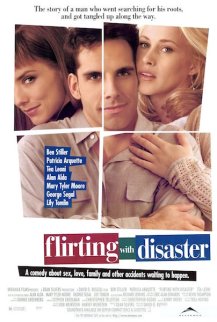 David O. Russell’s second feature sees adoptee Ben Stiller go on a kerazee road trip to find his birth parents, accompanied by dissatisfied wife Patricia Arquette and kooky adoption agency psychologist Téa Leoni, along the way bumping into Arquette’s high school crush (Josh Brolin) and his husband (Richard Jenkins). Cue an almost-PG-13 sex comedy told among sketch-like encounters with quirky people who turn out to not be Stiller’s folks.
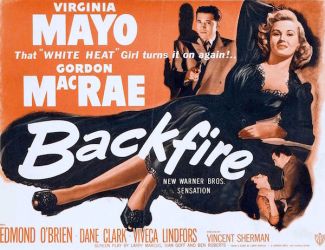 Before he was the romantic male lead in musicals like
  Besides, even if the film seems to forgo the usual gritty noir trappings for a pleasant “English murder mystery”-type tale at first, it actually has its fair share of dark elements and noir-ish features, which only increase as it goes on: secretive gangsters, nightclub singers, revenge shootings… Then there’s the photography which, again, transitions from a fairly ‘regular’ (for want of a better word) style early on, to a world of rain-slicked streets and high-contrast lighting.
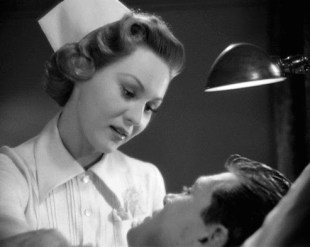 It’s in the latter’s case that the writing gets a chance to shine, too: the chief’s flashback is littered with snappy dialogue that feels kinda like he’s telling you the story himself, not just a matter-of-fact “here’s what happened earlier” objective account. Other flashbacks retain a degree of subjectivity — we only see events the characters could have witnessed, and in some cases the way they witnessed them (like the cleaning lady who only sees customers’ feet, before spying through a keyhole in a shot complete with keyhole matte) — but there’s an idea there, briefly glimpsed in that detective’s flashback, that would’ve made for an even more interesting film.
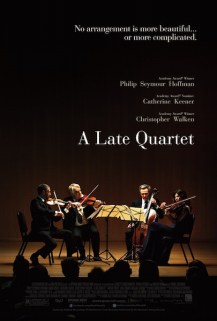 Set in the rarefied world of classical music performance, A Late Quartet charts the fallout among the members of a highly-acclaimed New York string quartet when their leader (Christopher Walken) announces his impending retirement.
 Where it does make a mistake is in divorcing Walken from the rest of the group for so much of the time. He ends up going to Parkinson’s groups and doing exercises as if this is some kind of “Issue of the Week” TV movie, while everyone else gets on with the plot. Some of the best bits belong to him though, like the story cribbed from a real musician’s autobiography.
 Based on the cult novel by Cracked.com editor David Wong, John Dies at the End is a bizarre horror-fantasy that defies easy explanation or summary.
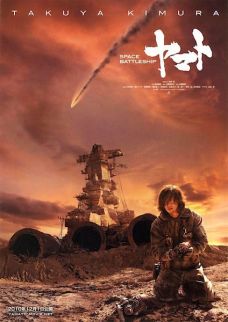 A live-action adaptation of the popular, influential and long-lasting anime franchise, known in the US as Star Blazers (here’s
  But this isn’t a mega-budget production (
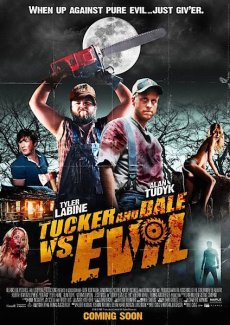 Riffing on the “evil hillbillies” horror sub-genre, a pair of simple country folk on a fishin’ holiday encounter a gang of college kids who, through a series of unfortunate coincidences, mistake them for murderous psychos — and decide to fight back.
 100Films.co.uk