2015 #141
Carol Morley | 102 mins | streaming (HD) | 1.85:1 | UK / English | 15
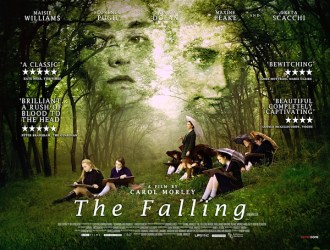 Inspired by real events, The Falling stars Game of Thrones’s Maisie Williams as Lydia, a 1960s teen with an awkward home life who is a student at a repressive girls’ school. She’s best friends with the popular and charismatic Abbie (newcomer Florence Pugh, next to be seen as the lead in Lady Macbeth (which seems to have bugger all to do with Shakespeare)). When Lydia starts fainting for no apparent reason, it leads to a fainting epidemic at the school that no one can explain. Is it caused by illness? Fakery? Something psychological? Or possibly even some kind of dark magic?
On Amazon Instant Video (where it’s available free to Prime subscribers from today), The Falling is billed as “a mesmerising psychological drama”, which isn’t too wide of the mark. However, presumably because of the prominent pentagram on the cover image there, all of the “customers also watched” recommendations are called things like The Exorcism of Molly Hartley, The Houses of Halloween, Haunt, Demonic, and Sinister House, or are other obviously-cheap-trashy-horror-looking films with less blatant names (like The Canal, Awaiting, and Robert (chilling!)). No wonder it has a low user rating if it’s a “psychological drama” being mainly watched by people who choose to pay to watch that kind of low-rent horror crap!
The Falling is certainly not low-rent horror crap. Is it a horror movie? Not really — there are no monsters, no jump scares, none of the obvious tropes; but it does have a distinctly unnerving air a lot of the time, and there are definite references to and hints about some kind of mysticism playing a role. It’s often incredibly atmospheric, with some beautiful cinematography courtesy of DP Agnès Godard and effective editing by Chris Wyatt.  Writer-director Carol Morley has kept the pace and tone slow, in an enchanting rather than ponderous fashion, but it’s a “not for everyone” pace nonetheless. For me, it only really lost its way as it moved into its final stages. Without wanting to spoil where it goes, in my opinion too much was explained, but at the same time it explained nothing.
Indeed, I feel it might’ve fared better overall if it had stuck with the magical-realist / folk horror / olde-worlde magik styles it veers towards early on. But then Lydia says she’s a rationalist, and I suspect Morley is too, and so they well know that such things as spells and lay lines have no bearing on the real world. If one wants to present the possibility of a real-world explanation for the film’s events — and, as they were inspired by actual events, I presume Morley does — leaving things at “because magik” isn’t going to cut it.
The immediately obvious explanation — certainly as far as the school’s teaching staff are concerned — is that the girls are faking for attention. One comment-review on a website asserts that “one of the central questions of the film is whether or not the girls were faking their illness,” before going on to outline how this could’ve been improved to make the film into an “entertaining thriller”. I think this is a prime example of reviewing what the reviewer expected or wanted rather than what they were given, because it didn’t seem to me that the issue of fakery was the “central question” here. Of course, that’s only my interpretation of the filmmaker’s intent, so no more or less valid than this other commenter’s; but I really don’t understand how you can watch The Falling and think it was anyone’s goal for this film to be considered an “entertaining thriller”. It’s simply not that kind of movie.
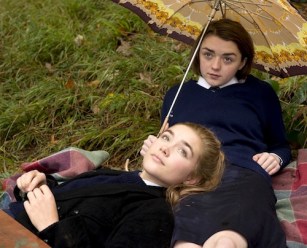 An element I do think was at the forefront of consideration is sensuality and sexuality, which plays a large and significant part in the film. Pretty much any movie bar “bawdy high school comedies starring obvious twentysomethings” seems to veer away from schoolgirl sexuality these days, wary of inevitable “OMG u a pedo” reactions, I guess. Sexuality does not equal pornography, though; and, as I alluded, here it’s played out as much through a heightened, tactile sensuality. It does probably ‘help’ that it’s a film written and directed by a woman — it would carry a very different, more Lolita-ish air if it had been written or directed by a man. What exactly it’s saying with all this is arguably as mysterious as the cause of the fainting epidemic, but then it’s all tied together: teenage years are a period of sexual awakening, of course, and if you’re in an environment where nearly everyone is of the same gender, and where such things are massively repressed… well, how is it going to manifest itself? If “sex” is somehow the cause of the fainting, it’s not because sex is bad, it’s because there’s no other appropriate outlet for it.
Or maybe that’s got nothing to do with it at all.
A lot of this has to be carried on the shoulders of a relatively young cast, but all are capable. Maisie Williams is by far the best known of the girls, though viewers of Ripper Street will recognise Anna Burnett. She was good in the Victorian detective series, but she’s even better here. Williams gives a strong performance too, afforded the ability to show some range and variety from Arya Stark (unlike her appearance in the currently-airing Doctor Who two-parter-that-isn’t, for instance). There’s also a quality adult supporting cast, including the likes of Maxine Peake (in an initially quiet but ultimately key role), Greta Scacchi, and Monica Dolan, while Peaky Blinders’ Joe Cole acquits himself well in the subtly complex role of Lydia’s brother.  Best of the lot, however, is Florence Pugh. Reportedly discovered when The Falling’s casting directors visited her school, you can see why she’s quickly been snapped up for a leading role. I wouldn’t be surprised if Hollywood come knocking looking to make her the next Kate Winslet/Keira Knightley/Gemma Arterton/etc “English rose”-type lead in some blockbuster or other.
The Falling is an odd film, really; though in many respects that shouldn’t come as a surprise. Some will love it; many will despise it. Personally, I felt a lot worked very, very well, but the bits that didn’t, well, didn’t. For what it’s worth, I ranked it 3.5, aka 7, on sites that have half-stars or are out of ten. It would’ve been a solid 4 if not for those niggles, but equally they’re not so bad to drag it down to a 3. Some viewers seem to put the niggles aside entirely and push it up into the 4.5 or even 5 margin; for others it doesn’t work at all, dragging it down much lower. Everyone’s reaction to any film is completely subjective and personal, obviously, but this is the kind of film where it’s more true than others — you can’t pigeonhole it like you can a superhero actioner, or a rom-com, or, well, most movies, to be honest. It’s part high school coming-of-age drama, part supernatural thriller, part kitchen sink drama, part arthouse tone poem. How well that uncommon mix works is entirely down to the individual viewer’s personal predilections.
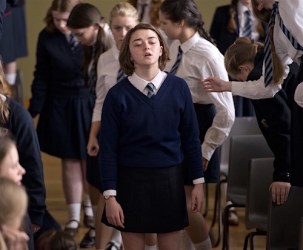 For me, it’s the kind of film that, with time and subconscious reflection, I may come to remember more fondly and be keen to see again, or all but forget. It’s the kind of film I could, without even re-watching it, re-evaluate and want on my year-end top ten, or could see on my top ten contenders long-list come January 1st and wonder, “dear God, what was I thinking?!” It’s the kind of film I’m not sure I wholly liked, but I’m glad I’ve seen.
As mentioned, The Falling is available on Amazon Prime Instant Video from today.
 In this ‘sequel’ to Inside Out, Riley is going to hang out with a friend… who turns out to be a boy, which sends her mum and dad — and their anthropomorphised emotions — into paroxysms of worry. Is this the 12-year-old’s first date?
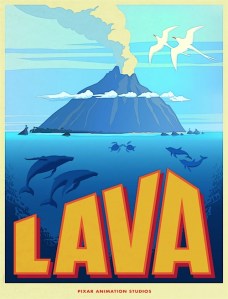 The short that accompanied Inside Out in cinemas is essentially a music video for a folksy ballad about a pair of volcanoes who are in ‘lava’ (read: love) with each other.
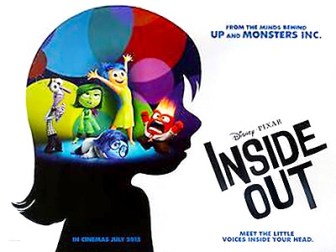 Pixar haven’t had the greatest start to the second decade of the 21st Century. After somehow managing to get lightning to strike thrice with
 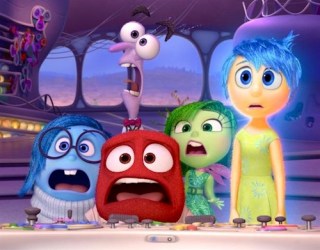 It surprises me not a jot that a Pixar film has been over-praised by critics and initial viewers. That’s pretty much my view of the their last couple of efforts before the recent doldrums, too. Those were, specifically,
 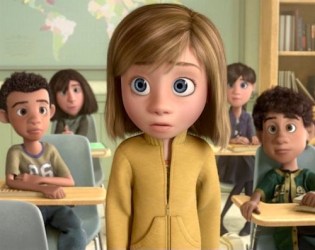 It certainly isn’t as clever or meaningful as some people have tried to make it out to be. For example, a whole internet discussion was sparked by the fact that Riley (an 11-year-old girl, remember) has emotions that are personified as a mix of male and female. When we get a glimpse inside other characters’ heads, their emotions are all of a single gender. ‘What is this saying?’, the internet wonders. Is it to do with the fact that all gender is fluid? That gender is fluid pre-puberty? As Riley is the only one with these mixed genders, are we meant to infer she’s transgender? Fertile ground for discussion. In fact, the answers are: no, no, and no. Director Pete Docter has said he just felt some emotions were more masculine (Anger in particular) and so that’s why they’re male in Riley’s head. Why the single genders in other characters? Shorthand. We only meet them briefly, after all.
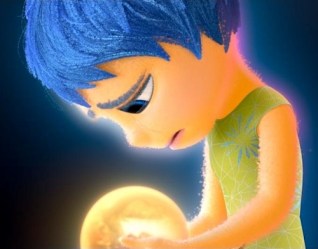 other than that the loose, floating, ‘bubbly’ edges of the emotion characters are quite neat. Apparently the effect was originally meant only for Joy and was immensely difficult to animate, but just as it was to be scrapped John Lasseter commented on how great it was and asked for it to be added to all the characters. Well done Mr Lasseter, though apparently it was an absolute headache for the technical team.
 This informative documentary uses interviews with all the key players to tell the story of how a small indie comic, created incidentally and published almost on a whim, became a true cultural phenomenon.
 As for this documentary, it nonetheless finds an almost emotional conclusion with Eastman and Laird today talking about the chain of chance and coincidence that brought them together three decades ago to accidentally create something that transformed their lives, and which continues to endure in all kinds of media (no one liked
 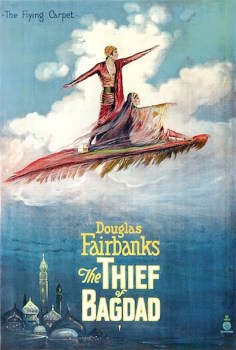 Douglas Fairbanks started out in comedies, where he was so popular he was quickly established as “the King of Hollywood”, which allowed him to attempt something different: an historical adventure film.
 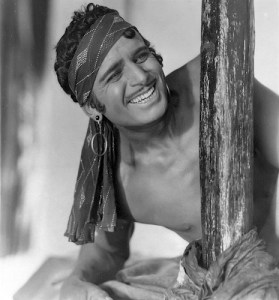 of course, which alerts the Mongol Prince to the attempted deception — though as he’s “the Governor of Wah Hoo and the Island of Wak”, he’s a fine one to talk. The thief manages to make it to see the princess anyway. She instantly falls in love with him, and he realises he loves her too, so can’t just kidnap her. His whole value system is undermined! But now he’ll have to win her hand by more honest means. Well, she already loves him, so he’s halfway there; but he’s an imposter, so there’s that to sort out yet.
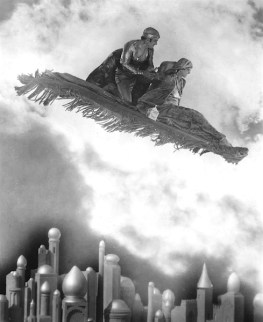 Even more impressive are the sets. The work of famed Hollywood designer William Cameron Menzies, at the time Fairbanks felt Menzies was too inexperienced to work on such a big project. Undeterred, he created a collection of detailed drawings and convinced the star/producer. No surprise that worked, because Menzies’ designs are extraordinary. His complex, detailed, unreal drawings are recreated accurately on screen (examples of this can be seen in the ‘video essay’ included on the film’s Blu-ray releases, for instance), using numerous techniques to create truly fantastical scenes: ginormous sets (they covered six-and-a-half acres), built on a reflective enamel floor (which had to be constantly re-enamelled throughout the shoot) and painted in certain ways to make them appear floaty; or glass matte paintings used to seamlessly extended or enhance shots. Reportedly 20,000 feet of film — that’s hours and hours worth — were shot just to test the lighting and painting of the sets.
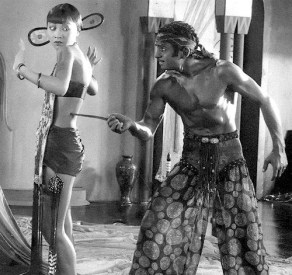 In a star-making supporting role, Anna May Wong is indeed memorable as a traitorous handmaiden. That’s more than can be said of her employer: Johnston is a bit of a non-starter as the princess, which I guess is what happens when you have to re-cast because your original choice departs part way through production. Comedian Snitz Edwards was also a mid-production replacement, drafted in to provide comic relief. It wasn’t necessary: he doesn’t add much, and Fairbanks had it covered.
 2015 Academy Awards
 I started the week by reviewing
 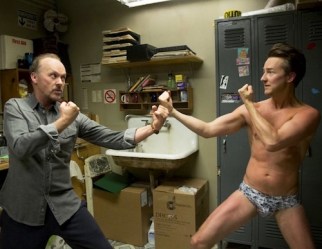 In part this is thanks to Keaton, who gives quite an immersive performance as the numbed, self-deluded star. Some people were very much behind him for the Best Actor gong, but I think it found its rightful home: Eddie Redmayne’s performance
 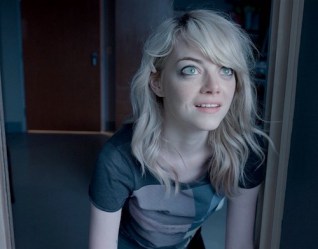 Famously, almost the entire film takes place in a single take. A fake one, of course. Well, I say of course —
 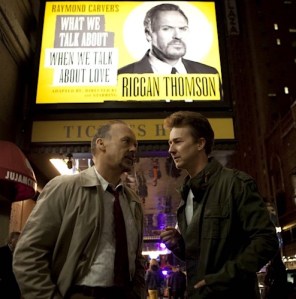 Birdman is an entertaining film, both funny enough to keep the spirits up and dramatic enough to feel there’s some depth there. It’s also a mightily impressive feat of technical moviemaking, but then I do love a long single take (even a fake one). Is it the Best Picture of 2014? Well, from the nominees, it’s not the funniest (
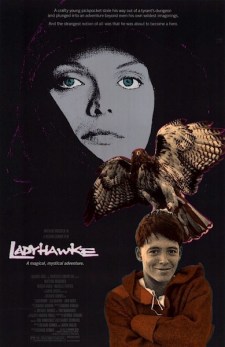 This is one of those films that crops up in the daytime TV schedules now and then and I’d always paid little heed to, because no one else seemed to. Then I read
  Here, there’s a good 45 minutes or so of mystery before said reveal. Obviously, therefore, it would work better as a fresh viewing experience if you didn’t know that going in; but it’s so fundamental to the setup (despite the focus on Philippe, it’s their story) that I wonder if anyone has ever seen it without knowing? On the bright side, it doesn’t really matter: this is not a film where the ‘big twist’ is the point.
 but Philippe occasionally addresses amusing asides to God, for example. It even wisely dodges special effects… most of the time. The few occasions on which it does make motions in that direction, it demonstrates why it was wise not to attempt them more thoroughly. These days they’d slather on the CGI, but shying away from such things is not just due to a lack of technology: it’s far more magical to not be too explicit.
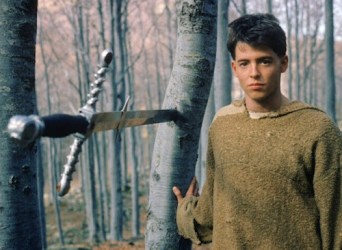 That’s the kind of age when one might be liable to fall in love with it; or, at least, people of (very roughly speaking) my generation would — I suppose Kids These Days fall in love with copious CGI, be that animated or ‘live action’. Anyway, I think it deserves to be less overlooked, and if you’ve never caught it (or not for a while) it certainly merits a chance.
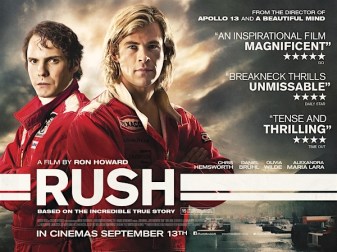 Screenwriter Peter Morgan (of
 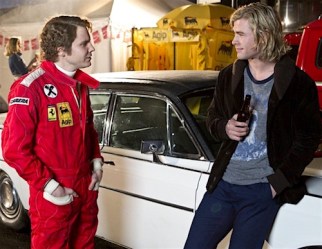 I presume the point of engaging with their personal lives away from the track was to add depth; to make sure it was a two-hander, rather than just about one or other of the drivers, and to ensure Hunt wasn’t just two-dimensional. However, without any growth on his part, or even some kind of active change, he’s just as flat, only now the star of some pointless scenes.
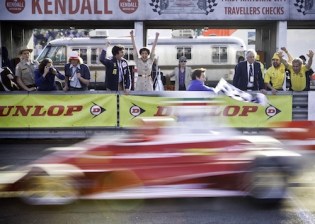 If that narrative fits snuggly into familiar plot beats, what are you meant to do? Change the truth to make it less like fiction? That’d be a first. Saying that, I’m taking it on faith (based on comments in the making-of) that the true story was so perfect you wouldn’t believe it if it had been fiction. Maybe they did streamline it. But assuming it’s real… well, it’s not the filmmakers’ fault if life imitates art.
 All in all, I’m a little surprised how well-liked Rush is. I mean, as of posting it’s at #162 on
 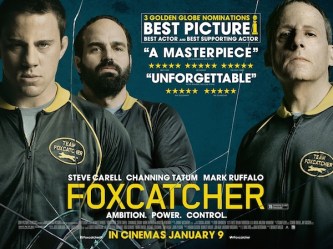 The director of
 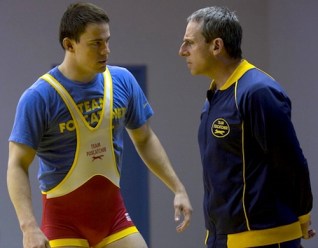 Fortunately, it has three leads who are up to carrying a narrative of that nature. In a rare dramatic role, and lumbered with a hefty prosthetic noise, Carrell’s John Du Pont almost feels like a caricature rather than a plausible human being… but apparently the film has actually toned down how odd the man was, so what are you gonna do? It’s a memorable performance none the less. Tatum is an understated lead, demonstrating he’s a better actor than you might expect as he displays emotional complexities in a man who doesn’t seem especially emotionally complex. Showing a character struggling with feelings he probably doesn’t quite understand is quite a feat, especially when it’s not explicitly conveyed in dialogue, so applause for Tatum there. Ruffalo, meanwhile, provides typically strong support, embodying a wrestler — right down to a very specific, unusual way of carrying himself — from the guy who plays Bruce Banner rather than the Hulk.
 making one wonder if anything the film may suggest is consequently wide of the mark.
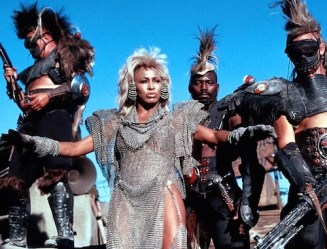
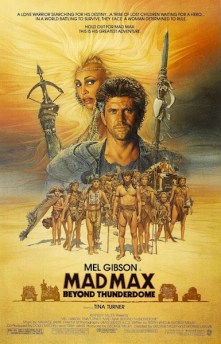 The third (and, for 30 years, final) Mad Max movie sees the titular post-apocalyptic drifter (Mel Gibson) rock up at last-outpost-of-humanity Bartertown in search of his pilfered car and camels. Max finds himself dragged before the town’s ruler, Aunty (Tina Turner), who has a job for him: kill the mutinous overseer of the city’s power supply, Master Blaster. As payment, she’ll arrange for the return of his belongings. The only conditions are he can’t reveal Aunty has employed him, and he has to do it in a fair fight in the town’s arena of combative justice — the Thunderdome. And then the story goes beyond that, funnily enough.
 I didn’t even notice the change in level until I read those comments afterwards. The film still reaches a 15 certificate in the UK, so clearly it isn’t toned down that much. And the lack of visible blood doesn’t mean it lacks creativity: Roger Ebert
 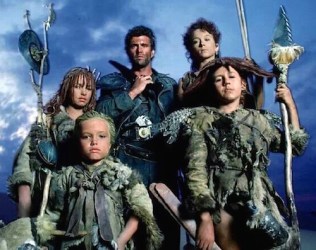 that have been forced to coexist because neither was enough to sustain an entire feature, but at least neither part feels unduly padded, meaning the narrative keeps on rolling. It doesn’t hit the same heights as the exceptional Mad Max 2 — especially with a climax that invites a direct comparison, and is good but not as good — but, as a post-apocalyptic action-adventure movie in its own right, it’s a good film.
 100Films.co.uk