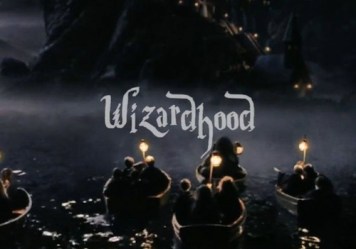
Wizardhood (2016)

2016 #186
edited by Tim Stiefler | 78 mins | download (HD) | 2.35:1 | UK & USA / English

WizardhoodAt the tail end of last month, a story did the rounds on entertainment sites about a fan edit that took the eight-film, 20-hour Harry Potter series and reduced it into a single movie that ran just 78 minutes — a reduction of over 93%. You see stories about these kind of fan edits all the time (or you do if you read certain sites, anyway), but I usually don’t get round to watching them. I mean, who has time for a dozens-of-hours supercut that puts every piece of footage from every Marvel movie (and short) into chronological order, or whatever? But as I was off to Harry Potter Land — and as it’s less than an hour-and-a-half long — I did make time for Wizardhood (like Boyhood, see?)

(I did debate whether this merited a new number, because it’s a fan edit of other people’s movies; but it’s such a radical restructuring of that material, and (as I’ll come to in a moment) it’s designed to function as a film rather than as a long video summary, so I’ve decided it does count, as would any official major re-edit.)

So how exactly do you go about making such a huge reduction? Is it just a really, really long “previously on”-style montage? No, thank goodness, it isn’t. What editor Tim Stiefler (a 27-year-old New Yorker, if you’re interested) has produced is less an abridgement and more a complete retelling of the Potter story. His cut doesn’t even attempt to tell whole swathes of the story, instead ditching them entirely. Stiefler has clearly tried to make a film out of this material, not just a long précis of the story. That means we don’t just get a series of vital scenes that further the plot. Instead, moments are allowed to play out a bit to convey their emotional impact or their humour. He’s even selected a couple of the series’ many action sequences, presumably based on the points in his cut that benefit from that adrenaline boost — just as you would if you were pacing a ‘real’ film.

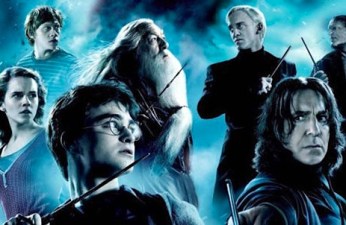
Harry Potter and the Streamlined StoryWizardhood focuses in on the main narrative of Harry vs Voldemort, and the need to destroy the Horcruxes. In practice, that means there’s a chunk of Film 1 to establish the world, followed by cursory scenes from Films 2, 3, 4 and 5, mainly for texture and pace, before great chunks of Films 6, 7 and 8 are used to complete the narrative. In the process it also focuses on certain characters. It’s centred around Harry, Ron and Hermione, obviously. The latter two are only really there because they’re always around Harry, although Stiefler makes a decent subplot out of their relationship. Also retaining much of their storylines are Dumbledore and Snape, who both have primary roles in Harry’s story. Draco Malfoy and Neville Longbottom get subplots, again mainly because they have vital roles to play in the main tale. There are a couple of scenes featuring major players like McGonagall, Hagrid, Ginny, and Umbridge, but otherwise every major character is cut: the Dursleys and Sirius Black don’t even appear; the likes of Lupin and Mrs Weasley are in a shot or two without any dialogue; and so on (I’m not going to list everyone!)

It’s a little hard to say how Wizardhood works as a standalone movie, because if you’ve seen all eight films in full then your brain can fill in the gaps. That said, it does seem fairly smooth. It’s so efficiently and cleverly edited that there are barely any lines or moments that aren’t relevant to the version of the story it’s telling, and the excised stuff is so thoroughly removed that you kind of don’t miss it. It’s not the ideal way to view the Harry Potter saga — it loses so much of the texture, the plot, the characters — but as an exercise in telling the series’ primary conflict in a single-film-length way, it’s an impressive piece of work.

4 out of 5

The full Harry Potter series is on ITV daily from Christmas Eve to New Year’s Eve, beginning with Philosopher’s Stone today at 1:30pm. If you want to see Wizardhood, you’ll have to go looking

Rogue One (2016)

aka Rogue One: A Star Wars Story

2016 #187
Gareth Edwards | 134 mins | cinema | 2.35:1 | USA / English | 12A / PG-13

This review contains major spoilers.

Rogue OneThe first live-action non-saga movie to take us to a long time ago in a galaxy far, far away, this initial entry in what is sure to be a never-ending series of so-called “Anthology” movies really puts the “War” into Star Wars.

It begins without the traditional opening crawl, which is somewhat ironic when you consider that, of all the Star Wars movies, this is the one that would most benefit from some scene-setting — fans are on a fairly sure footing, but casual viewers who still expect to see the further adventures of Rey, Finn, and BB-8 may be a little baffled. (And if you think the saturation media coverage will have prepared everyone, you’re underestimating Normal Folks’ capacity to be completely oblivious to movie news.) Anyway, where we actually are is 30-something years before The Force Awakens… but as this is a spoilery review you don’t need me to recap the plot, because you’ve not read this far if you haven’t seen the movie. Right? Good.

As I was saying, Rogue One is really a war movie, and is at its best when it’s consciously riffing off other (i.e. non-sci-fi) genres, like gritty World War 2 epics or daring heist thrillers. These are some new flavours for a franchise which has produced seven films in the action-adventure mould. Rogue One doesn’t deviate so far from that path — it’s a bit like Disney stablemate Marvel in that it mixes other-genre spice into the familiar recipe rather than striking out in a wholly different direction — but it’s enough to taste different.

HeistUnfortunately, the plot starts off almost as jumbled as my mixed metaphors there. “Jumbled” may be unfair, but it’s a little scrappy, initially jumping around all over the place in a way that’s tricky to follow even if you’ve read up on the film and have an idea who you’re being introduced to and why. It must be a right pain for neophyte viewers. There can be a fine line between praising a film for requiring its viewers to pay attention and do some work, and criticising it for being disarrayed and not making things clear. Personally, I thought Rogue One was sat right on that line for much of its first act, until a few big expositional infodumps come along to explain the storyline.

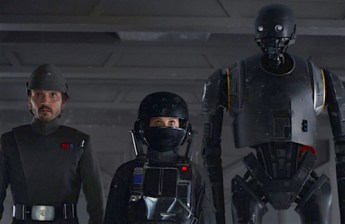
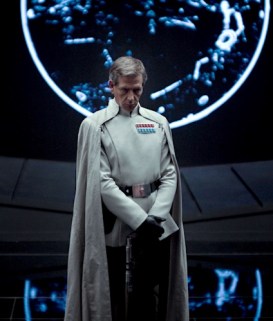
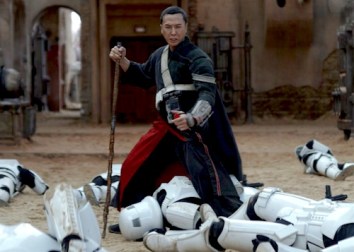
A primary cause of this is the number of characters we need to be introduced to. Presumably aiming for a Dirty Dozen / Magnificent Seven / men-on-a-missionpeople-on-a-mission… beings-on-a-mission vibe, it leaves things occasionally a little scattered until the team comes together. The resultant volume of heroes means the movie is arguably a little short on the kind of memorable characters Star Wars is loved for, although that doesn’t mean there isn’t good work here. Felicity Jones makes Jyn a likeable, moderately complex heroine, at least when she’s not delivering cheesy speeches. Ben Mendelsohn produces a reliably snake-like villain as Imperial Director Krennic, while Riz Ahmed once again injects a lot of personality into a somewhat underwritten supporting role. Donnie Yen and Jiang Wen make a solid double act who it would’ve been lovely to see more of in a sequel, and Alan Tudyk gets all the best lines as snarky droid K-2SO. Most ill-served are Diego Luna as a conflicted Rebel captain whose internal struggles aren’t fully brought out, Forest Whitaker as an ageing extremist, and Mads Mikkelsen, who is lumped mainly with exposition. The latter two at least bring extra-textual gravitas to their smaller roles.

KrennicThen we come to perhaps the film’s most discussed character: Grand Moff Tarkin, played by Peter Cushing’s computer-generated face overlaid on the motion capture and voice of Holby City’s Guy Henry. Leaving aside the ethics of the enterprise, I found the character’s presence to be pretty distracting: you know it’s CGI and you can’t stop focusing on just Tarkin’s face, trying to judge how effective or not it is. For me, it proves that CGI isn’t yet quite up to creating a fully plausible human being. Your mileage will vary on whether it’s suitably competent nonetheless or an ill-conceived failure.

Elsewhere, there are tons of little nods to the wider Star Wars canon, including the animated series: Whitaker’s character actually comes from The Clone Wars, where he appeared in four episodes; and there are half-a-dozen background references to ongoing series Rebels, most prominently the ‘Hammerhead’ ship, which was introduced there. Lucasfilm do seem very keen to emphasise that all these different media really are one interconnected universe, unlike so many other cross-format franchises, which accept everything as canon until the main series decides they want to contradict it. For example, while I was on holiday recently I visited the Star Wars exhibition they currently have at Disney’s Hollywood Studios, which features various displays of, say, villain’s lightsabers or pilot’s helmets that put real-life recreations of ones from The Clone Wars and Rebels right alongside those from the original trilogy and the prequels as if that’s exactly where they belong. I must commend Lucasfilm for such an unusual commitment to institutionally tying these things together, rewarding the investment fans will inevitably make in doing the same. It does mean I feel I need to get on with watching the six seasons of Clone Wars and three (or more) seasons of Rebels, though.

Donnie Yen: badassContinuing such comparison to the wider Star Wars galaxy, some have said Rogue One is the Empire Strikes Back of Disney-era Star Wars, because it’s the darker second (on the release schedule) film. Of course, the main reason it’s dark is that every major (new) character dies. You know what’s unique about Empire in the context of the entirety of live-action Star Wars movies? It’s the only one where no major character dies. Death isn’t the only signifier of darkness, of course, but my point is rather that I think people are grasping at straws if they think anyone inside Lucasfilm has consciously positioned Rogue One to serve an Empire-like role in their revived franchise. That doesn’t mean they’re not treating it seriously, mind: director Gareth Edwards has already revealed that the first draft had Jyn and Cassian survive the battle of Scarif, purely because the writers thought the execs would never agree to all the heroes being killed off, but those execs immediately suggested that everyone should die and that element was never questioned again. Yes, sometimes studio suits are actually on the side of narrative truthfulness.

Even if that got locked early on, other things certainly didn’t. The film’s reshoots made big news for no particularly good reason (it’s par for the course on blockbusters these days), but their results are easy to see thanks to the film’s trailers: there are a number of significant shots present there that didn’t make the final cut, suggesting some radically different events in the third act. You can watch a short compilation of those here. As far as I’m aware neither Edwards nor anyone else has said what was actually changed by the reshoots, but it would be interesting to find out. Considering the Scarif-set portion of the film is probably its most successful part, and that’s where the reshoots seem to have been focused, it might make a good defence of a process that is often seen as a sign of disaster (sometimes for good reason).

Star of deathMuch discussion of Rogue One seems to have revolved around whether it’s better than The Force Awakens. At the risk of sitting on the fence, I can see both sides. On the one hand, Edwards is a much more interesting filmmaker than J.J. Abrams. The latter is adept at aping the work of others, having now been in charge of multiple movies that are mostly derivative but nonetheless entertaining. Edwards’ career is still a little fresh and blockbuster-centric to risk describing him as an auteur, but his debut film was more indie than anything Abrams has even thought of creating, and his take on Godzilla attempted to be more interesting than the rote monster blockbuster it could’ve easily been. He brings similar qualities to Rogue One. On the other hand, that riskier take has resulted in a few fumbles, whereas The Force Awakens was a polished, crowd-pleasing entertainment. I’d hesitate to say I prefer one to the other because they provide slightly different thrills, but on a first viewing I did find Force Awakens more satisfying. Given time and distance, however, I wouldn’t be at all surprised to find Rogue One leapfrogging it in my estimations.

4 out of 5

The Transporter (2002)

100 Films’ 100 Favourites #94

Rules are made to be broken.

Country: France & USA
Language: English, French & Mandarin
Runtime: 92 minutes
BBFC: 15
MPAA: PG-13

Original Release: 11th October 2002 (USA)
UK Release: 17th January 2003
First Seen: DVD, c.2003

Stars
Jason Statham (Snatch., Crank)
Shu Qi (The Storm Riders, The Assassin)
Matt Schulze (Blade II, Fast Five)
François Berléand (Au Revoir Les Enfants, The Chorus)

Directors
Louis Leterrier (The Incredible Hulk, Now You See Me)
Corey Yuen (The Legend of Fong Sai Yuk, DOA: Dead or Alive)

Screenwriters
Luc Besson (Léon, Lucy)
Robert Mark Kamen (The Karate Kid, Taken)

The Story
Frank Martin is “The Transporter”, a driver for hire who moves people and goods, no questions asked. He never looks inside the package… until, on one job, the package moves. Finding a young woman gagged inside, Frank winds up embroiled in her rescue from some very bad men.

Our Hero
Frank Martin, expert driver (he’s the titular transporter after all) and martial artist, as handy with his fists as he is with a steering wheel. Lives by a simple set of rules… which he breaks, because it’s a movie and it needs a plot.

Our Villain
Darren “Wall Street” Bettencourt, an American gangster who initially hires Frank, then tries to kill him — even though he did a good job! And you thought people who left unnecessarily low feedback on eBay were a pain.

Best Supporting Character
Inspector Tarconi, the local police detective who’s on to Frank but can’t prove anything. Comes through in the end, becoming Frank’s ally in the sequels.

Memorable Quote
“Rule #1: never change the deal.” — Frank

Memorable Scene
Oil everywhere + people wanting to fight = ingeniously slippery combat. Seriously, that one scene is the main reason the entire film is here.

Technical Wizardry
Jason Statham did most of his own stunts, fighting, and driving. That included learning martial arts to supplement his kickboxing abilities and, for one sequence, actually hanging off the bottom of a truck with just a wire up his leg for safety.

Letting the Side Down
The trailer showed Frank deflecting a missile with a tea tray. A missile. With a tea tray. It was removed from the final cut because Statham didn’t think audiences would believe it, but c’mon, this is an action movie, and that’s silly-awesome. I mean, deflecting a missile… with a tea tray!

Making of
The oil in the famous fight scene is actually molasses syrup. Apparently it was very sticky, which is kind of the opposite to its purpose in the film, but that’s movie magic for you.

Next time…
Two direct sequels of typically decreasing quality; a spin-off TV series that ran for two seasons; and a reboot movie last year, which went down badly but I quite enjoyed (for what it was). Plus: a mini-empire of similarly-styled Euro-produced English-language action movies masterminded by Luc Besson, the most famous of which is the Taken series.

What the Critics Said
“Post-Ghosts Of Mars, if anyone had suggested that big, bald, brusque Jase could hold his own as an action hero, they’d have been laughed out of town. And while he doesn’t exactly deliver an acting masterclass (his ‘American’ accent doesn’t quite stand up to the rigours of actually opening his mouth and talking), this is all about kicking ass and taking names. […] The spirit of Hong Kong action movies hangs heavily over The Transporter, most notably in the CG-free fight scenes which, thanks to former fight choreographer Yuen, have enough zing and originality to satisfy even Hong Kong aficionados. […] simultaneously the best (the fight scenes) and worst (everything else) action movie of the year. Destined for drunken Friday night rental heaven.” — William Thomas, Empire

Score: 54%

What the Public Say
The Transporter doesn’t hold up as well on a rewatch as I would have hoped. It’s a bit stop-start and the ending didn’t feel as BIG as it should have been. At the same time, it has a couple of outstanding scenes and no review of this film is complete without a reference to and expression of WTF?! about the now infamous oil-slick fight scene. Truly a marvel of film thinking, then perfectly executed. […] The Transporter is exactly the kind of daft film that Hollywood became ashamed of making — and it really shouldn’t have.” — Steve G @ Letterboxd

Verdict

The Transporter is neither big nor clever. In terms of the former, it’s a relatively small-scale, low-key action movie, not some Hollywood extravaganza; and in terms of the latter, it’s a relatively small-scale, low-key action movie, so of course it’s not been pumped full of brains. Instead it’s pumped full of adrenaline, with a brisk running time that serves up impressively choreographed action at a solid rate, with an amenably light tone in between the combat. It also made an action star of Jason “The Stath” Statham, which I’m sure some people would thank it for. It certainly brought down the average age of participants in The Expendables.

#95 is… indestructible.

The Good Dinosaur (2015)

2016 #130
Peter Sohn | 90 mins | streaming (HD) | 2.35:1 | USA / English | PG / PG

The Good DinosaurOnce upon a time, Pixar could do no wrong. Then Cars happened; and worse, its sequel. Now, their movies remain an event, and some people still swear by everything they do, but I think there’s a greater awareness that they’re fallible. When it came out at the tail end of 2015, The Good Dinosaur was received as further evidence of that. Especially coming in the same year that gave us the universally praised (*coughoverratedcough*) Inside Out, it was instantaneously dubbed a “lesser Pixar”. But here is where completism has its merits, because I really enjoyed it.

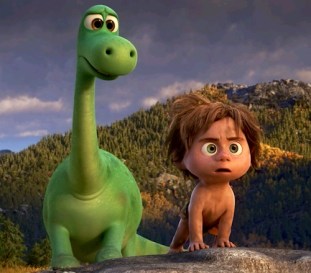
Set in an alternate world where the dinosaurs were never wiped out and so have evolved to the point where they talk, farm, etc, the film tells the story of little Arlo, an Apatosaurus who’s regularly overshadowed by his siblings. When an accident leaves him stranded many miles from his family he must make the long trek home, finding his inner courage on the way ‘n’ that kind of thing.

There’s no denying that The Good Dinosaur contains an abundance of re-heated elements: there are multiple plot beats shared with The Land Before Time, not to mention the general “talking child dinosaurs” thing; a major inciting incident is taken from The Lion King; the episodic structure is reminiscent of The Jungle Book; animated dinosaurs on photo-real backgrounds recalls Dinosaur; and the moral message and main character arc are lifted from any number of children’s animations. While I did find this bothersome at first — especially as the worst offenders are concentrated in the saccharine first act — by the time the film had settled into its meandering middle I came to quite like it.

MalickianPixar have on several occasions produced films with an innovative opening act that descends into derivative kids’ animation runaround territory. WALL-E and Up are the worst offenders for this; Inside Out does it too, though there’s more of a mix of the two throughout the film. For many critics and viewers, the quality of those openings seem to be enough to earn the films heaps of praise. The Good Dinosaur inverts the formula: the easy, overfamiliar material is at the start, while the more meditative, mature content comes later. Clearly this didn’t work for many viewers, so I guess the lesson for Pixar is to put the clever stuff up front if they want universal praise.

Instead, The Good Dinosaur was often dismissed as only being for very young children. Some bits do come over that way, but it has quite a harsh edge at times, and the scene where the heroes get high on rotten fermented fruit is freaky even for adults (or this adult, at any rate). It’s a bit of a tonal oddity in this respect, especially when you also factor in some of the leisurely, silent moments spent admiring nature that evoke a filmmaker like Terrence Malick. No, seriously. That’s helped by the animation being mind-blowingly good. Not so much the character animation (which is still strong — the character models are more detailed than you first suspect), but the scenery those characters are placed in… wow. If you didn’t know better I’m sure much of it could pass for photography. And the way they’ve achieved water, a notoriously hard thing to capture in CGI, is absolutely incredible.

You've got a friend in mePerhaps most powerful of all is the relationship it creates between Arlo and a young human child he befriends, Spot. With humanity in a much earlier state of evolution, Spot is basically characterised as a dog — the way he moves, comes to his name, follows scents, shakes, scratches and enjoys being scratched, and so on — so of course I warmed to him. Nonetheless, though the building blocks used to create their friendship are very familiar, the way the film sells its emotional arc is ultimately immensely effective. Its resolution may even bring a tear to the eye.

While it may take a while to warm up, The Good Dinosaur is ultimately a very affecting entry in Pixar’s canon. It’s by no means a perfect movie, but I do think it’s an underrated one. And, in all honesty, I enjoyed it more than Inside Out.

4 out of 5

The Sting (1973)

2016 #127
George Roy Hill | 129 mins | Blu-ray | 1.85:1 | USA / English | PG / PG

The StingSet in Chicago during the Great Depression, The Sting follows a young street-level con artist (Robert Redford) as he seeks revenge for his murdered partner by teaming up with a seasoned big-con pro (Paul Newman) to scam the mob boss responsible (Robert Shaw).

If that sounds like a somewhat violent crime movie… well, it kinda is. Although The Sting is often billed as a caper, sometimes even as a comedy (look at those grinning mugs on the poster!), it actually has more of an edge. I mean, it’s not The Godfather, but it’s not Ocean’s Eleven either. The star power and chemistry of Redford and Newman are what give the movie a buoyancy to overcome the storyline’s inherent darkness, though I wouldn’t say that reaches far enough to regard the film as a romp, which is the impression I’d obtained over the years.

Indeed, I wonder if it suffers from its age more broadly. Not because the filmmaking quality has dated (they may not make ’em like this anymore, but great filmmaking is timeless), but because it was so influential that it’s been copied to death. It still has a lot of points to commend it, but the heist — the driving force of the plot — lacks freshness to modern eyes. Newness is not the be-all-and-end-all, of course, but the con only really comes to life in a flurry of last-minute twists… most of which have also been copied ad nauseam, of course.

The Sting is certainly not a bad movie — and, for all my talk of it being mercilessly copied, it did manage to con me in a couple of places — but it wasn’t exactly what I’d anticipated. Perhaps I’ll like it more on some future re-watch.

4 out of 5

The Sting was viewed as part of my What Do You Mean You Haven’t Seen…? 2016 project, which you can read more about here.

Tomorrow Never Dies (1997)

100 Films’ 100 Favourites #91
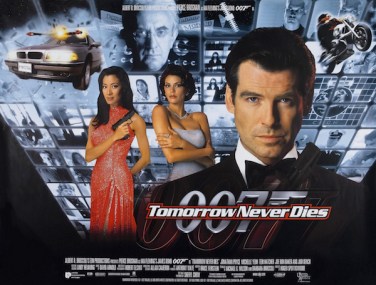
Yesterday is a memory. Today is history.
Tomorrow is in the hands of one man.
Bond. You know the rest.

Country: UK & USA
Language: English, German, Danish, Mandarin & Cantonese
Runtime: 119 minutes
BBFC: 12 (cut, 1997) | 12 (cut more, 1998) | 15 (uncut, 2006) | 12 (uncut, 2012)
MPAA: PG-13

Original Release: 12th December 1997 (UK)
US Release: 19th December 1997
First Seen: cinema, December 1997

Stars
Pierce Brosnan (Dante’s Peak, The Ghost)
Jonathan Pryce (Brazil, Pirates of the Caribbean: The Curse of the Black Pearl)
Michelle Yeoh (Supercop, Crouching Tiger, Hidden Dragon)
Teri Hatcher (Tango & Cash, Coraline)
Judi Dench (Mrs Brown, The Best Exotic Marigold Hotel)

Director
Roger Spottiswoode (Turner & Hooch, A Street Cat Named Bob)

Screenwriter
Bruce Feirstein (GoldenEye, The World Is Not Enough)

Based on
James Bond, a character created by Ian Fleming.

The Story
Secret agent James Bond is deployed to investigate a media baron who is plotting to ignite a war between the UK and China to further his business empire.

Our Hero
The name’s Bond, James Bond. In his second outing as agent 007, Pierce Brosnan has settled comfortably into his interpretation of the hero, a mix of Roger Moore’s eyebrow-raising levity with some of Sean Connery’s slightly harder, man-of-action edge.

Our Villain
Elliot Carver is a megalomaniac media mogul — the owner of the newspaper Tomorrow, who intends to secretly provoke a war in order to boost sales and ratings. James Bond does satire? Kinda.

Best Supporting Character
Wai Lin, a spy who’s investigating Carver for the Chinese. A skilled martial artist, she kicks all kinds of ass. Despite initial mistrust, she and Bond ultimately team up. Lin is arguably one of the first Bond girls who can genuinely claim to be a competent character in her own right. Still ends up sleeping with Bond, though.

Memorable Quote
Admiral Roebuck: “With all due respect, M, sometimes I don’t think you have the balls for this job.”
M: “Perhaps. But the advantage is I don’t have to think with them all the time.”

Memorable Scene
Remote control car, James Bond style: Bond lies in the backseat of his BMW, driving it around a multi-storey car park with his mobile phone, deploying its weapons against a gang of attackers. It was a fun concept back in ’97, but I imagine you could do it yourself with an app now. Apart from the weapons. And the legal implications. So maybe not.

Memorable Music
After the disastrous ‘modern’ score for GoldenEye, music duties were here handed to David Arnold. At the time he had composed the scores for Stargate and Independence Day, but, even more pertinently, he had produced Shaken and Stirred, an album of contemporary-styled covers of great Bond themes. The album was heard by iconic Bond composer John Barry, who then recommended Arnold to producer Barbara Broccoli. Arnold’s score is much more in-keeping with classic Bond music, but given a modern (well, ’90s) flavour. Backseat Driver, the soundtrack to my Memorable Scene pick, is a particularly great action cue. Arnold would become the series’ composer for the next four films, until Sam Mendes chose to use his regular collaborator Thomas Newman for Skyfall and Spectre. With Mendes moving on, perhaps Arnold will be back for Bond 25…

Write the Theme Tune…
Arnold wanted to have a hand in writing the title song and integrate it into his soundtrack, like the great Bond composers of old. To that end he wrote a theme sung by k.d. lang… which plays over the end credits and is titled Surrender, though has a tellingly prominent use of the phrase “tomorrow never dies” in its lyrics.

Sing the Theme Tune…
The producers went with a more marketable proposition for the final opening credits song, however, in the shape of Sheryl Crow, famous for her pop-rock-y hits like All I Wanna Do, A Change Would Do You Good, and Everyday is a Winding Road. In the pantheon of Bond title themes, her Tomorrow Never Dies sits firmly in the middle — it’s not a GoldenEye, but it’s not a Die Another Day either.

Making of
The film was originally called Tomorrow Never Lies, referencing Carver’s newspaper, Tomorrow. Some kind of production mix-up (a typo, a smudged fax — pick your story) led to it being misread as Tomorrow Never Dies, and the new, less meaningful title stuck.

This Category Sponsored By BMW
Apparently Tomorrow Never Dies was the first movie in history to have its entire budget covered by product placement endorsements — that’s over $100 million in advertising. Featured companies include BMW, L’Oréal, Heineken, Dunhill, Ericsson, Omega, Smirnoff, Brioni, Bollinger, and Avis, plus a tie-in game from Electronic Arts.

Previously on…
17 previous Bond films (which are all technically in the same continuity). The previous one, GoldenEye, was the first to star Pierce Brosnan and relaunched the series to mass popularity after a fallow period.

Next time…
Two more Brosnan Bonds, before he was unceremoniously dumped to reboot the series for the first time. With a 25th film now in the works, the series is set to continue indefinitely.

Awards
1 Saturn Award (Best Actor (Pierce Brosnan))
3 Saturn nominations (Action/Adventure/Thriller Film, Supporting Actress (Teri Hatcher), Music)
2 MTV Movie Awards nominations (Action Sequence for the motorcycle/helicopter chase (somehow it lost to Face/Off), Best Fight for “the fight between Michelle Yeoh and some ‘bad guys’.”)

What the Critics Said
“East meets West, yin meets yang and chop-socky meets kiss-kiss bang-bang in Tomorrow Never Dies, a zippy 007 romp that draws as heavily from the Asian action genre as from the formula that has served the series so well for 35 years. Goldeneye and Pierce Brosnan’s debonair Bond resuscitated the creaky franchise in 1995, but […] Tomorrow, jazzier, wittier and more costly than its predecessor, also comes closer to catching up with ’90s style and politics. […] Hong Kong kung-pow chick Michelle Yeoh, as the cool-headed Chinese agent Wai Lin, proves 007’s equal at kicking post-Cold War butt. The two take on craven communications baron Elliot Carver (Jonathan Pryce), a deliciously exaggerated — or is it? — composite of Ted Turner, Rupert Murdoch and the late Robert Maxwell. Carver’s not only the most plausible Bond nemesis ever but the perfect one for the current global villain shortage.” — Rita Kempley, The Washington Post

Score: 57%

What the Public Say
TND is somewhat underrated. Jonathan Pryce plays a villain who is essentially Rupert Murdoch smooshed together with Ted Turner. His plan isn’t to take over the world so much as it is getting rich by starting a war and then covering it on his news outlets. This just may be the most plausible Bond villain scheme of all times – which admittedly isn’t saying much. […] TND may not be among the best Bonds, but it’s got more going for it than I think it gets credit for.” — Lebeau, Lebeau’s Le Blog

Verdict

I know some of you will be thinking, “how can you leave out Goldfinger / Thunderball / The Spy Who Loved Me / For Your Eyes Only / The Living Daylights / Licence to Kill [delete according to personal preference] but include Tomorrow Never Dies?!” It’s true, TND is far from the most popular Bond film, but it was the first I saw on the big screen, and that gives me a certain soft spot for it. It’s not just that, though.

Here’s a thing: one of the criticisms levelled at the film is that it’s just an action movie, lacking the peculiarly Bondian thrills a Bond adventure should have. But if it is “just an action movie” then it’s the best action movie in the Bond series. The pre-titles gunfight at the arms meet, the ‘backseat driver’ sequence, and the motorbike-vs-helicopter chase are three of the finest action scenes in the entire franchise, and that’s without even touching on Michelle Yeoh kicking ass. Couple that with Brosnan still new and confident in the lead role, and Jonathan Pryce nibbling the scenery as a lightly satirical villain, and I think you have a Bond film that is pretty entertaining, even if it’s mainly on an adrenaline-pumping level.

#92 has… a friend in me.

Three Kings (1999)

100 Films’ 100 Favourites #90

They’re deserters, rebels and thieves.
But in the nicest possible way.

Country: USA
Language: English & Arabic
Runtime: 115 minutes
BBFC: 15
MPAA: R

Original Release: 1st October 1999 (USA)
UK Release: 3rd March 2000
First Seen: DVD, c.2001

Stars
George Clooney (Batman & Robin, Ocean’s Eleven)
Mark Wahlberg (Boogie Nights, The Fighter)
Ice Cube (Boyz n the Hood, Ride Along)
Spike Jonze (Being John Malkovich, Where the Wild Things Are)

Director
David O. Russell (Flirting with Disaster, Silver Linings Playbook)

Screenwriter
David O. Russell (Spanking the Monkey, American Hustle)

Story by
John Ridley (U Turn, 12 Years a Slave)

The Story
After ceasefire is called in the Gulf War, a group of American soldiers discover a map to a stash of gold stolen by Saddam Hussein’s forces. Setting out to steal it for themselves, the soldiers encounter a group of rebels who need their help and find their priorities changing.

Our Heroes
Army reservist Sergeant Troy Barlow and his friend, the comically naïve Private Conrad Vig, are the first to discover the map, which they take to Staff Sergeant Chief Elgin to translate. Then self-serving, disillusioned Special Forces Major Archie Gates turns up and convinces them to follow it to the gold. (Yes, despite the title, there are four of them.)

Our Villains
The war may officially be over, but the Iraqi Republican Guard are still the enemy.

Best Supporting Character
I know I mentioned him in the heroes bit, but Conrad is the de facto “fourth king”, so… He gets the lion’s share of either the best lines or the lines that set up the best lines.

Memorable Quote
Chief: “I don’t want to hear ‘dune coon’ or ‘sand nigger’ from him or anybody else.”
Conrad: “Captain uses those terms.”
Troy: “That’s not the point, Conrad. The point is that ‘towelhead’ and ‘camel jockey’ are perfectly good substitutes.”

Memorable Scene
Archie explains what actually happens when you get shot in the gut, complete with an explanatory cross-section of the human body, and bile.

Making of
The stories of behind-the-scenes conflict between director David O. Russell — still a relative newcomer, making his biggest movie so far — and George Clooney — dividing his time between E.R. three days a week and the film on the other four — are legendary. If you want a lengthy-ish full account, check out this trivia entry on IMDb.

Awards
1 Blockbuster Entertainment Award (Favourite Action Team — it beat Will Smith and Kevin Kline from Wild Wild West, and those were all the nominees)
1 Political Film Society Award (Peace)
2 Political Film Society Award nominations (Democracy, Exposé)

What the Critics Said
“[an] emotionally and politically responsible movie set in Iraq during the immediate aftermath of the gulf war — a damning yet idealistic satire about the motives behind U.S. foreign policy. The visuals are wild, the sound track has the audacity to underscore the subtext instead of just echoing the obvious, the comedy is irreverent and occasionally slapstick, and the metaphorical details are consistently strong. The movie even examines the conventions of star-studded actioners without stripping the leads of the charisma and apparent immortality of full-blown action heroes.” — Lisa Alspector, Chicago Reader

Score: 94%

What the Public Say
Three Kings, at its core, deals with serious themes and serious subject matter surrounding the end of the first Gulf War, and is therefore a war narrative before anything else. That being said, it’s refreshing how Three Kings doesn’t drown in its cynicism, isn’t exploitative in terms of gore or shocking violence, and isn’t hitting its audience over the head with either jingoistic propaganda or hamfisted pacifist social commentary. Moreover, Three Kings is funny enough often enough to be qualified as a comedy in its own right. It’s the humanist, dare I say, heartfelt combination of the two, that makes it a bonafide winner.” — The Celtic Predator, Express Elevator to Hell

Verdict

Writer-director David O. Russell may have become increasingly acclaimed this decade with Oscar-nominated movies like The Fighter, Silver Linings Playbook, and American Hustle, but for me this is still his best work. It mixes laugh-out-loud comedy with serious points about war and an ultimately emotional storyline, created with a filmmaking verve that is frequently exciting and inventive — something I’d argue is less present in Russell’s more widely-acknowledged work.

#91 never… lies dies.

Team America: World Police (2004)

100 Films’ 100 Favourites #89

Freedom Hangs by a Thread

Country: USA & Germany
Language: English, French, Klingon, Korean & Arabic
Runtime: 98 minutes
BBFC: 15
MPAA: R (cut)

Original Release: 15th October 2004 (USA)
UK Release: 14th January 2005
First Seen: cinema, 2005

Stars
Trey Parker (BASEketball, Despicable Me 3)
Matt Stone (BASEketball, South Park: Bigger, Longer & Uncut)
Kristen Miller (Cherry Falls, Puff, Puff, Pass)
Masasa (Kingdom Come, Angels & Demons)
Daran Norris (Comic Book: The Movie, Veronica Mars)

Director
Trey Parker (Orgazmo, South Park: Bigger, Longer & Uncut)

Screenwriters
Trey Parker (Cannibal! The Musical, The Book of Mormon)
Matt Stone (South Park: Bigger, Longer & Uncut, The Book of Mormon)
Pam Brady (South Park: Bigger, Longer & Uncut, Hot Rod)

The Story
Global paramilitary protectors Team America: World Police must battle both the machinations of terrorists and the criticism of Hollywood actors.

Our Heroes
Gary Johnston is just a Broadway actor, until he’s recruited into counter-terrorism force Team America: World Police to use his acting skills to save the world. The rest of the team include its boss, Spottswoode; Lisa, a psychologist; Sarah, who thinks she’s psychic; Joe, an all-American jock; and Chris, a martial artist with a hatred of actors — like Gary! There’s also their supercomputer, I.N.T.E.L.L.I.G.E.N.C.E., which stands for… um…

Our Villains
Kim Jong-il, the lonely leader of North Korea, and his threats to global security. His positions is strengthened by those liberal FAGs — that’d be the Film Actors Guild.

Best Supporting Character
Matt Damon!


Memorable Quote
“We’re dicks! We’re reckless, arrogant, stupid dicks. And the Film Actors Guild are pussies. And Kim Jong-il is an asshole. Pussies don’t like dicks, because pussies get fucked by dicks. But dicks also fuck assholes — assholes who just want to shit on everything. Pussies may think they can deal with assholes their way, but the only thing that can fuck an asshole is a dick, with some balls. The problem with dicks is that sometimes they fuck too much, or fuck when it isn’t appropriate — and it takes a pussy to show ’em that. But sometimes pussies get so full of shit that they become assholes themselves, because pussies are only an inch-and-a-half away from assholes. I don’t know much in this crazy, crazy world, but I do know that if you don’t let us fuck this asshole, we are going to have our dicks and our pussies all covered in shit.” — Gary

Quote Most Likely To Be Used in Everyday Conversation
“Matt Damon.” — Matt Damon

Memorable Scene
Puppets having sex. Sex, by puppets. Sexing puppets. Puppet sex.

Best Song
The titular refrain (“America! Fuck yeah!”) is perhaps the most memorable, though it has strong competition from Kim Jong-il’s I’m So Ronery, but my favourite song has always been the in-jokey, film-fan-y Montage. I certainly laughed far louder than anyone else in the cinema, anyway.

Technical Wizardry
Puppets! Considering the Gerry Anderson shows they’re emulating took multiple iterations and years of work to really perfect, Team America does a remarkable job out of the gate — and isn’t adverse to some puppet-based humour either, naturally.

Making of
Originally the Matt Damon character had a proper speaking part, because he’s a pretty intelligent guy really and Parker and Stone knew that. But then the puppet came out looking a bit, shall we say, ‘special’. With no time to remake it, they decided to have the character live up to how he looked: only capable of saying his own name. So it’s less a grand piece of satire on the self-involvement of Hollywood lefties, more an in-joke.

Awards
1 Empire Award (Comedy)
1 MTV Movie Awards nomination (Action Sequence for “the desert terrorist assault”)

What the Critics Said
“it’s hard not to guffaw with glee at the gross libelling and on-screen dismemberment of an array of ‘aware’ Hollywood stars (albeit in puppet form) and in which George W Bush’s war on terror is rendered in risible sub-‘Supermarionation’ form. The whole thing plays like Thunderbirds Goes to Hell and will doubtless offend all those numskulls who complained about the BBC’s transmission of Jerry Springer: The Opera. For that alone, it gets my vote.” — Mark Kermode, New Statesman

Score: 77%

What the Public Say
“The idea of the puppets in the first place is very clever, because when you make everything a puppet, everything becomes funnier. I think that the puppets themselves work so well because the creators knew their strengths and weaknesses. The puppets they use are pretty detailed and can do a lot of different kinds of movements. The team use these functions of the puppets for simpler actions (moving limbs and heads and so on) and make it look realistic. But how do you make a fistfight between two puppets look realistic? You don’t, just make some very basic and crude movements and the joke basically tells itself.” — Felix, FelixMovieThoughts

Verdict

The guys behind South Park spoof Michael Bay-style action movies — and by extension right-wing America’s view of its place in the world — through the medium of Thunderbirds-style puppets, which just heightens the ridiculousness. It’s a neat mix of clever satire and baser laughs, bolstered by surprisingly listenable musical numbers. It’s not always clever, and it’s never big (they’re puppets!), but it is funny.

#90 will be… following yonder star.

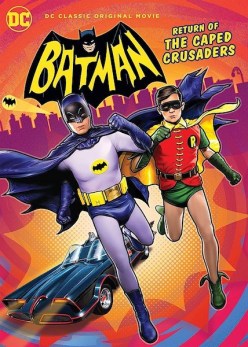
Batman: Return of the Caped Crusaders (2016)

2016 #174
Rick Morales | 78 mins | Blu-ray | 1.78:1 | USA / English | PG / PG

Batman: Return of the Caped CrusadersHoly nostalgia hit, Batman! This animated movie reunites the surviving stars of the enduringly popular ’60s Batman TV series (and spin-off movie) for a new adventure in the style of their classic ones — that is to say it’s funny and colourful, a world away from the Dark Knight version of Batman we’re so accustomed to these days.
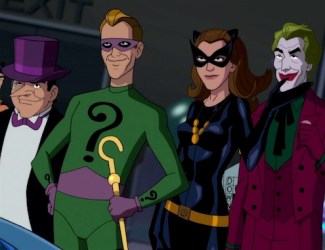
In some respects, that’s all you need to know in terms of a critical review of this film. If you’ve never seen the ’60s originals, it’s not really ‘for’ you. I mean, it’s perfectly accessible, I think, but it’s loaded with winks and nods to its inspiration. I definitely missed some of those because I haven’t watched the series for a while (I really need to get stuck into the Blu-ray set they released a couple of years back), but, from what I can remember, it captures their tone well. That is to say: on the surface it’s pulp superhero derring-do, but underneath it’s laced with a knowing wit and an awareness of its own glorious ridiculousness. The animated medium is used to push beyond what would’ve been possible in live-action TV 50 years ago, but I won’t go into detail so as not to spoil it for anyone who’s not seen it yet (though it screened in cinemas last month and has been out on disc on both sides of the Atlantic for a bit now).

The voice cast is headlined by — of course — Adam West as Batman, along with Burt Ward as Robin and Julie Newmar as Catwoman. West is nearly 90 now and you can hear that in his voice, but he’s still got it. You soon forget the old-age huskiness and just revel in his consummate skill at delivering his Batman just so; that earnest delivery of humorous material that led some people to miss for decades that the series was actually, Vile villainous verminfundamentally, a comedy. Conversely, Ward still sounds pretty spry, and is gifted plenty of those “Holy [insert something here], Batman!” catchphrases that never cease to be fun. Unfortunately, Newmar also sounds her age, but doesn’t seem to quite have the liveliness that West retains. In the behind-the-scenes featurettes she seems a delightfully kooky old bird (at the recording she’s wearing cat ears, for one thing), so it’s hard to resent her, but the portrayal of Catwoman as slinky and sexy feels a little… odd. On the bright side, it means you don’t get the uncomfortableness of West flirting with a much younger actress, even in animated form.

The rest of the cast has to be rounded out by replacements by necessity. The most famous foes from that era of the Bat — namely, the Joker, the Riddler, and the Penguin — are all in on the action, and voice actors Jeff Bergman, Wally Wingert, and William Salyers do a bang-up job recreating their recognisable tics. However, I think the biggest respect is due to writers Michael Jelenic and James Tucker. They’ve managed to pen something that feels like a tribute without being set in aspic; that’s genuinely fresh and funny in its own right, while also evoking the beloved classic that inspired it, including plenty of in-jokes and nods at other screen iterations of Batman. I also particularly enjoyed the alliteration-addled dialogue, because I do love a bit (or a lot) of alliteration. I’m a man of simple pleasures sometimes.

Batty Batman's back!On the whole, Return of the Caped Crusaders is a resounding success. It’s a fun return to a beloved incarnation of arguably the most popular superhero; a version who’d been somewhat left out in the cold for a couple of decades by a world that grew up a bit too much, but is now being re-embraced and held in deserved esteem. And, even better, there’s already a follow-up in the works. Holy must-see sequel, Batman!
4 out of 5

The Visit (2015)

2016 #124
M. Night Shyamalan | 90 mins | streaming (HD) | 1.85:1 | USA / English | 15 / PG-13

The VisitAfter a sidestep into big-budget director-for-hire movies that brought him even less acclaim than his last couple of self-penned efforts, once-fêted director M. Night Shyamalan goes back to basics with this low-key found-footage horror.
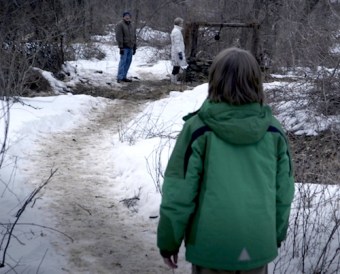
When their mother (Kathryn Hahn) goes on holiday with her new partner, teens Becca (Olivia DeJonge) and Tyler (Ed Oxenbould) go to stay with her parents, who she hasn’t seen or spoken to for years. Nana (Deanna Dunagan) and Pop Pop (Peter McRobbie) seem kindly, but no one will tell the kids what happened years earlier to leave the family estranged. But soon they discover the strange, disturbing behaviour of their grandparents, particularly after dark, leaving them to wonder just what they’ve let themselves in for…

Although Shyamalan has always moved in supernatural circles in his movies, and The Sixth Sense is labelled a horror because it’s about ghosts and has a few jumps, he’s not really directed a proper Horror movie before now. Nonetheless, it’s not surprising that his skill set lends itself to the genre. Although the found-footage format is a little forced at times (isn’t it always?), it’s also used effectively to create some nailbiting sequences, putting you alongside the kids as they fear just what the hell is going in. And some of it is pretty darn freaky. One sequence — a demented game of hide-and-seek underneath the house, where we’re aware of stuff going on behind the kids that they don’t see — is particularly terrifying.

DeJonge and Oxenbould make for naturalistic kids, with the latter’s affinity for rapping providing some necessary levity, while McRobbie and Dunagan (in a particularly bold performance) well negotiate people who can be sweetness and light one moment and blood-chillingly terrifying at another.

Well suspiciousOf course, there’s a big reveal to explain everything that’s been going. People call it a “twist” because it’s a Shyamalan movie, but it’s more of an explanation. I mean, what was going on had to be explained somehow, and the explanation comes at the point where you’d expect the explanation to be. I’m not saying it’s not a twist, because it does change what you think you’ve been seeing, but it’s also not a be-all-and-end-all kind of failed-rug-pull, which Shyamalan’s worst twist-obsessed efforts have been. This one works. Or, it did for me.

The same can be said for the film as a whole. The Visit doesn’t quite represent a full-blown return to form — it’s not got the sophistication of The Sixth Sense or Unbreakable, or even Signs — but it is an immensely effective scarer, which suggests there’s still some hope for Shyamalan’s flatlining career.

4 out of 5